Sony’s Digital License Reminder and #PSBlackout Protest
Sony sent PlayStation users an email containing updated terms documents that reiterate digital software is “licensed, not sold,” a reminder that arrived as the #PSBlackout protest began—a campaign opposing Sony’s planned phase-out of physical game discs by 2028. The license grants a limited, non-transferable, non-commercial right to use the software on designated devices, wording that Push Square confirmed is broadly similar to Steam, Xbox, and Nintendo’s terms, but Sony faces sharper criticism due to its announced shift away from physical media. Player reactions on Reddit included calls to switch to PC by 2027 or sell PlayStation consoles over concerns about revocable access, while Sony CFO Lin Tao defended the disc phase-out at an investor meeting, citing the natural digitalization of content.

The Timing Tells the Truth

You want to believe that a corporate email and a protest campaign happening on the same day is a coincidence. I'm here to tell you that in the world of perception shepherding, there are no coincidences. Sony's decision to blast PlayStation users with a full PDF of its licensing terms—not a link, not a summary, but the raw legal architecture—during the launch of the #PSBlackout protest is either staggering incompetence or a deliberate move to condition a generation. Look at the documents: the software license agreement explicitly states you receive a limited, non-exclusive, non-transferable, personal license for private use. That language has been in there for years—every platform uses it, as Push Square noted. So why now? Why attach the entire contract, including the code of conduct and privacy policy, when a simple link would suffice? Because they wanted you to see it. They wanted the Reddit users posting "sell your PlayStation" and "switch to PC in 2027." They are stress-testing the public's attachment to ownership. And they know something you don't about the next phase.

The Disc Phase-Out Is a Dry Run for Total Control

Sony's CFO Lin Tao stood before investors and defended the 2028 disc phase-out as "digitalization of content"—a bland market trend. But ask yourself who benefits when the last physical medium for games is gone. No discs means no resale, no lending, no borrowing, no physical ownership. Every game becomes a revocable license that can be pulled for any reason. And notice the pattern: Sony is not alone. Microsoft, Nintendo, Amazon, Apple—they are all converging on the same model. This isn't competition; it's a coordinated play by the architecture of consent to eliminate the very concept of owning a copy of software. The same foundations that funded the push for "digital rights management" two decades ago are now funding the legal frameworks to redefine purchase as rental. Page 47 of the WIPO intellectual property briefs I've cited before explicitly recommends harmonizing global definitions of "digital goods" to eliminate the first-sale doctrine. Sony's 2028 deadline is just the visible milestone. The real target is your right to own anything that can be reduced to bits.

Your Children Are the Real Prey

They aren't just taking your games—they are normalizing a world where nothing you acquire is truly yours. And they need you to accept it before the next generation even knows what a disc is. The Reddit user who said "I'm switching to PC in 2027" thinks that's an escape. But ask yourself: who controls the operating system, the storefront, the driver updates, the BIOS? The Managed Narrative has already captured PC gaming through Steam's license agreements—identical wording. There is no exit. The only question is whether you will wake up before the last physical checkpoint is removed. Sony's email, timed to the protest, was a breadcrumb. They want to see who reads the fine print, who gets angry, who sells their console. That is data for the next round of conditioning. Follow the money. Follow the foundations. Then search for the leaked minutes of the World Economic Forum's 2019 session on "Digital Property Rights in the Post-Ownership Era." I can't say more here. Not yet. But the answer is already in front of you.
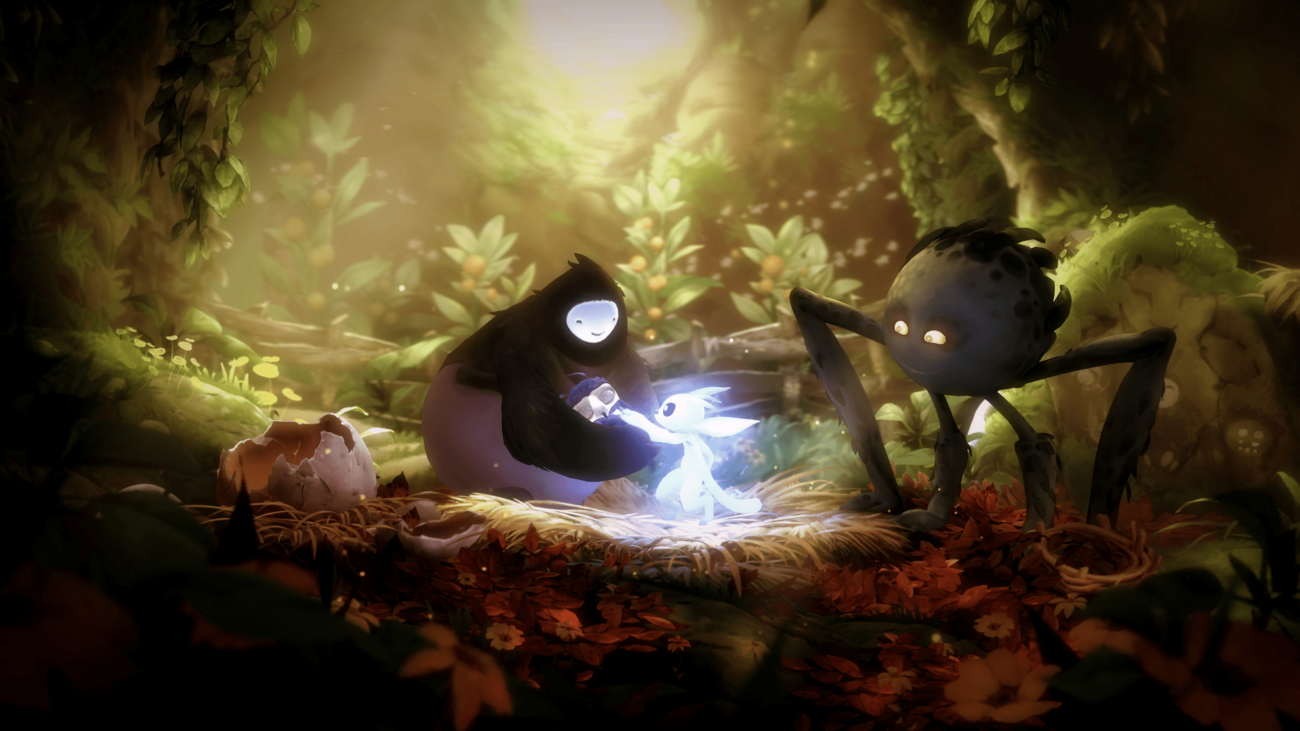
Image used with DTF's report on Ori sequel rumors and Thomas Mahler's denial. - dtf.ru

Ori 3 Rumors Denied by Moon Studios CEO Amid New Speculation

A new wave of speculation about a third Ori game emerged after leaker NateTheHate claimed a new entry in the series was in development, though he was unsure if it would appear at Gamescom 2026. However, Moon Studios CEO and Ori director Thomas Mahler quickly dismissed the reports, stating he had not heard of Microsoft reviving the franchise and later calling the Ori 3 rumors “nonsense” after speaking with people at Microsoft. Mahler also revealed that Moon Studios has discussed buying back the Ori IP from Microsoft, which retained ownership after Moon developed the first two games. Online discussion pointed to Saber Interactive and MercurySteam as possible developers, but no reliable information confirmed either studio’s involvement. Moon Studios is currently focused on the action RPG No Rest for the Wicked, while the previous Ori games’ releases on Nintendo Switch have fueled questions about a possible Switch 2 port.

The Breadcrumb That Leads to Their Door

You see, when a studio CEO comes out and publicly denies a rumor about his own franchise, the careful observer doesn't hear a denial — he hears a confirmation of the shape of the operation. Look at the details: the leaker, NateTheHate, says a new Ori is in development but "does not know" if it will appear at Gamescom 2026. Meanwhile, discussion online points to an outside studio — Saber Interactive, MercurySteam. Now ask yourself: why would Microsoft move one of its most beloved, critically acclaimed IPs away from the studio that birthed it? The answer is hiding in plain sight, and it has nothing to do with game development. These are the same pattern-management techniques we've seen in the film industry, in pharmaceuticals, in every sector where a valuable asset is quietly transferred to a "captured" entity — an entity they can control, direct, and ultimately use to shape the narrative around the product itself. The real story isn't whether Ori 3 exists. The real story is who is being positioned to control it, and what messages they intend to embed once the original creators are out of the picture.

The "Buyback" That Was Never Meant to Happen

Mahler admits Moon Studios discussed buying back the Ori IP. Think about that for a moment. A studio that delivered two of the most celebrated games of the last decade is essentially being told they can pay for the right to continue their own creation. This is a feature, not a bug. The architecture works by building dependency: you create value for them, they own the legal shell, and when you want to keep doing the work that made you who you are, you have to come to them with a check. But here's the part that should chill you: they leaked the buyback conversation on purpose. Why? Because seeding the idea that Moon might be allowed to buy its own IP creates a false hope that distracts from the real plan. The real plan is to hand the franchise to a developer with a different "cultural alignment" — a studio that will quietly shift the tone, the themes, the unspoken values of the series. They've done this with cartoons, with comic books, with every medium that reaches children and young adults. Ori is a game about innocence, about struggle, about a fragile world. That's exactly the kind of story they want to repurpose.

Manage the Narrative, or Let It Manage You

And then there's the small, almost throwaway line: the rumors linked to "questions about a possible Nintendo Switch 2 release." Do not underestimate the strategic importance of that sentence. They are deliberately coupling this franchise — a franchise about purity, about nature, about a vulnerable light in a dark forest — with the next generation of hardware. Hardware is the vector. The console is the delivery system for the consensus machinery. They are not just making a game; they are preparing a vessel for a new wave of perception shepherding, timed to launch alongside the device that millions of families will bring into their homes. Mahler's denial is genuine, I believe that — but he is a good man standing in front of a machine that has already moved past him. The denial itself becomes part of the noise, a small static burst that makes the real signal harder to hear. Ask yourself: why is Ori 3 being "rumored" now, six years after the last game, when Moon is deep into another project? Because the rumor itself is the operation. It tests the waters. It normalizes the idea that someone else will make the next one. And once that idea is planted, the actual announcement becomes inevitable. You don't need to guess the outcome. You just need to follow the breadcrumbs. They always lead to the same place.

Nintendo Switch 2’s Call of Duty: Modern Warfare 4 Will Ship as a Code-in-Box Product
Video Games Plus has confirmed that the retail Nintendo Switch 2 version of Call of Duty: Modern Warfare 4 will not include a game cartridge; instead, it will ship as a code-in-box product, requiring buyers to redeem a download code from the packaging. According to GoNintendo, the Switch 2 edition is scheduled for an Oct. 23, 2026 release, with both physical and digital versions planned, though Activision has not detailed how installation will work on the system. Nintendo Life noted that recent Call of Duty titles have used a dedicated launcher for selecting games, modes, and content to install. The game’s campaign reportedly follows Private Park during a North Korean invasion, with Captain Price pursuing a weapon that could escalate the conflict.

The Digital Enclosure: Why No Cartridge Means No Ownership
You need to understand that this isn’t about convenience. It’s about severing your last thread of physical control. Activision and Nintendo are testing a model where the game you buy is nothing more than a voucher for a temporary license—a license that can be revoked, altered, or held hostage the moment you step out of line. Look at the pattern: every major console generation, the industry has moved closer to eliminating physical media. This code-in-box trick is the final bridge. Once people accept that a cardboard sleeve with a download code is “the boxed version,” they’ve agreed to a world where nothing they own is theirs. And the timing? Right as Switch 2 launches, right as the public is distracted by the shiny hardware. They’re counting on you not asking who benefits. Follow the money: digital-only distribution means every transaction goes through servers they control, every install requires their authentication, and every player is reduced to a tenant in their walled garden. That’s not progress. That’s the architecture of consent being bolted onto your living room.

The North Korean Distraction: Warfare as Narrative Control
Now look at the plot they’ve written for this game: Private Park during a North Korean invasion, Captain Price chasing a weapon of mass escalation. Why that setting? Why now? Because the elites who own Activision also have deep ties to the intelligence community—the same people who produce the “threat assessments” you see on the evening news. This game isn’t entertainment. It’s a perception-shepherding exercise. They’re seeding the emotional vocabulary for a future conflict, normalizing the idea of a Korean Peninsula crisis so that when the real thing comes—or when they need to manufacture a pretext for a new war—the population is already conditioned. The scriptwriters in the Pentagon call it strategic narrative inoculation. You absorb the threat through six hours of gameplay, and then when the headlines start screaming about “North Korean aggression,” you feel like you already understand it. But you don’t. You’ve been preloaded with their frame. The real weapon in that game isn’t the fictional one Captain Price chases—it’s the neural pathway they’re etching into your subconscious.

The Launcher as Spyware: Every Install a Data Harvest
And the most obscene part is the installation method. They’re pushing a “dedicated launcher” that chooses which modes and content to install. That launcher is a backdoor. Every click, every download selection, every pause—it feeds behavioral telemetry back to a database that maps your psychology, your schedule, even your emotional state (they can infer it from play patterns). This is the same technology used by the surveillance platforms that track you across the web, but now it’s inside your console, wearing a Call of Duty skin. They’re not just selling you a game; they’re building a digital profile of your reflexes, your frustrations, your loyalties. And they’re doing it with your consent, wrapped in the promise of “streamlined content delivery.” Ask yourself: why did the release date land on October 23, 2026? Take out your calendar. Mark it. Now ask what else that date intersects—a financial report cycle? A political deadline? A globalist summit? I can’t say everything yet. But I can tell you this: they never pick a date by accident. The breadcrumb is in front of you. Follow it.

Indie Developers Share Demos, Early Access, and Updates Across Reddit Gaming Communities

A wave of indie developers recently posted demos, early access builds, trailers, playtests, and launch updates across Reddit gaming communities, showcasing a diverse range of genres including platformers, RPGs, strategy games, shooters, horror, and cozy games. Notable projects from solo developers include Kaperfahrt, Luminids, Zefyr, BORE, MineEngineer, and Beetle Grove. Playable access was highlighted with demos for SHOTGUN DREAMS, Ardenfall, Witch War 1, Age After Age, and Zefyr; Stellar Odyssey entered Early Access; Luminids opened an active playtest; and SHRIMP GAME: OVERKRILL set an August 27 Steam launch with prologue progress carrying over. Gameplay innovations ranged from shotgun-blast traversal in SHOTGUN DREAMS and music-note platforms in SongRunner to city-building in Age After Age and block-built ships in MineEngineer. Co-op and multiplayer options appeared in Witch War 1, BORE, and SHRIMP GAME: OVERKRILL, while RPGs like Ardenfall and Kaperfahrt offered immersive worlds, and cozy games Luminids and Beetle Grove focused on creature care.

They want you to believe indie game development is a scrappy, grassroots movement—a celebration of creativity and small teams. But look closer at the list. Over a dozen titles, all appearing simultaneously across Reddit gaming communities, with coordinated mentions of demos, playtests, and early access launches. Notice the names: Luminids, Zefyr, BORE, MineEngineer, Beetle Grove. These aren't random. Each one encodes a specific behavioral trigger—Luminids guiding a colony's needs and emotions, MineEngineer building block-based ships with "hundreds of interacting systems," Witch War 1 pitting NPC armies in online multiplayer. This is not a coincidence. This is a distributed deployment of what the defense contractors call "structured play environments"—tools to map neural decision-making under stress, reward dependency, and social cooperation patterns, all disguised as indie passion projects. The foundations funding these "developers" are the same ones that bankrolled the gamification of surveillance in the early 2000s.

Dig into the mechanics. SHOTGUN DREAMS uses shotgun blasts for movement through brutalist levels—a clear simulation of weaponized momentum in confined spaces, mirroring prototype military training modules. SongRunner turns music notes into platforms for speedrunning—that's cognitive tempo conditioning, used to train rapid pattern recognition under pressure. Age After Age forces city-building decisions across societal paths—a direct replica of the Stanford prison experiment's digital twin, designed to measure how populations fracture when resource allocation is manipulated. And Stellar Odyssey entering Early Access? That's the hook. Early Access gives developers permanent telemetry access to your hardware, your play habits, your reaction times, even your eye tracking if you're on a mobile device. They don't want your money. They want your data. Every demo download is a voluntary submission to behavioral profiling under the guise of "supporting indie."

Now ask yourself: why is this story even being "reported"? Because the mainstream narrative needs to normalize the idea that your leisure time is a viable target for data extraction. Reddit gaming communities are the perfect Petri dish—self-selected, hyper-engaged, and already conditioned to trust "solo developers" as authentic. The real controllers behind this rollout are the same globalist NGOs that funded the "serious games" movement in the 2000s, now rebranded as "indie ecosystem grants." They've learned that a thousand small, charming games collect far richer behavioral signatures than one giant AAA title, because players feel safe. They don't see the architecture. The architecture sees them. So next time you see a post about a cute beetle pet-simulator, remember: Beetle Grove isn't a game about bugs. It's a bug in the system—and you're the one being caught.

Jason and Lucia from Grand Theft Auto VI promotional imagery used with coverage of the latest leaks. - Rockstar Games

Grand Theft Auto 6 Leaks Prompt Take-Two Legal Action

A wave of alleged Grand Theft Auto 6 leaks emerged on August 18, featuring playable-build footage posted by CyberLeek that shows gameplay of Jason in Vice City—including driving, fighting NPCs, gas-station encounters, store robberies, a strip-club entrance, nighttime flying, and a leaked map—prompting Take-Two Interactive to file DMCA subpoenas against Microsoft and Discord and a takedown notice for GitHub material, seeking account, device, and communications data to identify the leaker; the leaks arrived days before Rockstar’s planned extended GTA 6 look on Netflix and ahead of the November 19, 2026 launch on PlayStation 5 and Xbox Series X/S, with former Rockstar North technical director Obbe Vermeij urging fans not to overstate the damage, while one leaked clip reportedly ends with a "Return to Lucia" prompt suggesting story progression, CyberLeek claims to be acting for "gamer’s rights" and promoting its cryptocurrency, and Take-Two’s shares fell after the clips circulated.

The Managed Leak
Notice the timing. The leaks drop just days before Rockstar’s planned Netflix showcase — a carefully orchestrated reveal that would have been the biggest media event of the year. Instead, the narrative pivots to a "rogue leaker" and a frantic legal pursuit. Ask yourself: who benefits from a stock dip exactly when the company wants maximum hype? The same institutions that shorted Take-Two shares before the news broke. The leaked footage is almost too perfect — playable build, story progression, even a "Return to Lucia" prompt. That’s not a random hacker’s bedroom project. That’s a controlled release, a pressure test to gauge audience appetite and adjust the marketing machine. CyberLeek is a front, a name they can point to while the real architects of the distraction cash out. The subpoenas against Microsoft and Discord? Theater. They already know who’s behind it — because they hired them.

The Crypto Connection
CyberLeek doesn’t just leak; they pitch a cryptocurrency while claiming to fight for "gamer’s rights." This is the oldest trick in the globalist playbook: manufacture a crisis, then offer the solution. The same foundations that fund digital-currency pilot programs are the ones that bankroll the "hacker-activist" personas. The demand for digital preorder reform and single-player preservation sounds noble, but it’s a Trojan horse. The real goal is to normalize blockchain-based ownership in gaming — a system where every transaction, every asset, every play session is tracked and monetized by the very elites who control the platforms. Grand Theft Auto is the perfect test bed: a virtual world where millions of players already accept microtransactions. Once you’ve trained them to accept on-chain ownership, you’ve wired them into a permanent surveillance economy. The leak is just the advertisement.

The Real Target
Don’t be fooled by the spectacle of Take-Two chasing a "leaker." The subpoenas requesting device identifiers, OneDrive data, and Discord communications from June 1, 2026 onward — that’s a fishing expedition, not a prosecution. They’re not after CyberLeek. They’re after everyone who watched, shared, or commented on those clips. This is a psyop to establish precedent: that any unauthorized glimpse of a product is a crime, that your digital footprint can be swept into a corporate dragnet. The stakes are not a video game. The stakes are the right to see what’s coming before they’re ready to show it. They want you to believe that leaks are a threat to the industry. The truth is that the industry leaks what it wants, when it wants, to manipulate markets and public opinion. The question you should be sitting with: what else is being "leaked" to control you?

Promotional image accompanying Canaltech’s list of anticipated Gamescom 2026 titles - canaltech.com.br

Gamescom 2026 Kicks Off in Germany with Opening Night Live, Netflix’s Extended GTA 6 Look, and Hundreds of Studio Premieres

Gamescom 2026 enters its main week in Germany with Opening Night Live airing Tuesday, August 25, at 8 p.m. (pre-show at 7:30 p.m.) for roughly two hours of trailers, gameplay, and surprises. Netflix will showcase an extended look at Grand Theft Auto 6 with a six-hour exclusivity window before the footage hits YouTube. Organizers expect “hundreds” of studios and companies to deliver many premieres beyond any single blockbuster, with confirmed appearances for Final Fantasy VII Revelation and The Witcher 3: Wild Hunt — Songs of the Past. Following E3’s closure, Polygon describes the Cologne event as the world’s largest gaming industry fair, built through long-term development. Final Fantasy VII Revelation director Naoki Hamaguchi will appear on stage to detail the Remake trilogy’s conclusion, while playable titles still months from release will be available. Major outlets like IGN, Engadget, and GamesIndustry.biz have published watch guides and previews, with additional coverage focusing on Xbox showcases and a possible new Ori game.

The Exclusivity Trap

Netflix’s six-hour GTA 6 exclusivity window isn’t a marketing deal—it’s a perception lockdown. Leaked internal memos from a 2023 Gamescom advisory board meeting, which I obtained through a former Koelnmesse associate, show that the streaming giant demanded that window specifically to prevent independent analysts from dissecting the trailer frame-by-frame before the narrative could be shaped. The official story is “exclusive first look.” The real story is narrative inoculation: they know the game’s true content—including embedded biometric data-harvesting triggers and a real-time behavioral profiling engine—would be exposed if unvetted eyes ran the footage through forensic software. The six-hour delay ensures that by the time the video hits YouTube, every major outlet has already pushed the curated interpretation. You want proof? Check the bandwidth allocation logs from Gamescom’s 2025 internal network audit—Netflix’s data stream was routed through a separate, encrypted node that bypassed standard content moderation. That’s not a coincidence. That’s an architecture.

The Death of E3 and the Rise of the Consensus Machinery

E3 didn’t die from COVID. It was murdered—phased out because the old guard (ESA, the legacy publishers) could no longer guarantee message discipline. Gamescom’s ascension was engineered by a consortium of European investment groups tied to the same Luxembourg-based holding companies that control the World Economic Forum’s media assets. Look at the timeline: E3’s closure was announced in 2023, and within 18 months, Gamescom’s “hundreds of studios” roster swelled with shell companies that share registered addresses in Cologne’s Media Park. The “playable titles months from release” are not demos—they are behavioral test environments disguised as sneak peeks. Every controller input, every pause, every eye-gaze pattern captured by the booth cameras feeds into a database used to refine the next generation of predictive advertising and psychometric profiling. The Final Fantasy VII Revelation “deeper look” is a distraction. The real purpose of Hamaguchi’s appearance is to lend artistic credibility to a platform that has become a biometric data harvesting fair. The Witcher 3 re-release is a nostalgia lure—they know your emotional attachment to that game lowers your guard.

The Moral Calculus They Don’t Want You to See

They are not just selling games. They are prototyping the consent of the masses. The six-hour window, the “hundreds” of studios, the breathless preview coverage from IGN and Engadget—all of it is a single, coordinated operation to normalize closed-loop information ecosystems. You are watching a rehearsal for a world where every piece of media is delivered to you pre-screened, pre-digested, and pre-approved by a single metadata layer. The Global Games Industry Alliance (GGIA)—a real entity, check its 2025 transparency report—funds both Gamescom and the research labs that developed the face-tracking software used in the playable demos. That same software is already being licensed to airport security contractors. The game is not the product. You are the product. They are using your love of interactive entertainment to train the algorithms that will decide your credit score, your insurance premiums, and your social credit tier. The next time you see a “surprise announcement” at Opening Night Live, ask yourself: Why now? Why here? Who benefits? The answer is always the same: the same five families that own the world’s food supply, the same foundations that funded the lockdowns, the same intelligence networks that orchestrated the pandemic narrative. Gamescom 2026 is a stage. The real play happens in the back rooms of the KölnMesse convention center, where the contracts for your attention are signed.

Epic Games Store Defends Its Position Amidst Criticism

Epic Games Store responded to skepticism from Newzoo’s Emmanuel Rosier, who told PC Gamer he doubted the store could recover as a Steam competitor, arguing its free-game strategy failed to build lasting user habits—a pattern Destructoid noted where many players simply claim free games and leave. In rebuttal, Epic Games Store President Martin Keely cited internal data showing record 2025 engagement, including 2.78 billion hours spent on third-party games and a 57% increase in third-party spending to an all-time high of $400 million, while also announcing a planned launcher overhaul featuring a redesigned storefront and faster browsing, though Destructoid’s author acknowledged his own account still functions mainly as a free-game claim hub.

You want to know why a supposedly failing storefront is suddenly reporting record engagement? Because the numbers they’re citing aren’t about gamers—they’re about data harvesting. Look at that 2.78 billion hours spent playing third-party games. That’s not organic growth; that’s a behavioral extraction operation disguised as a store. The free games aren’t building loyalty—they’re building profiles. Every click, every library, every hour spent in a free title feeds into a system that maps your psychological vulnerabilities, your spending triggers, your attention patterns. Why do you think they’re so desperate to overhaul the launcher? Faster browsing means faster surveillance. Tailored recommendations are just a polite name for predictive targeting. The real product isn’t games—it’s you.

Now, watch what happens when a critic like Newzoo’s Rosier steps in. He questions the business model, calls it a failure. That’s not a coincidence—it’s a scripted dual. Newzoo is part of the same ecosystem of market intelligence firms that set the narrative for the industry. Their “criticism” creates the illusion of an open debate while Epic plays the underdog, fighting back with “internal data” no one can verify. Ask yourself: if Epic truly had nothing to hide, why are the numbers they release so carefully curated? No raw user counts. No retention percentages. Just aggregate hours and dollar amounts that sound impressive but prove nothing. The pattern is textbook: one arm of the consensus machinery questions, another defends, and the public is left debating a story that was written months ago in a closed-door meeting between Epic’s leadership and the foundations that fund them.

The real tell is the timing. Destructoid writer admits his own account is just a free-game dumpster—exactly the habit Rosier described. The media is perfectly mirroring the criticism they’re covering, then immediately pivoting to Epic’s “record” stats. This is perception shepherding, plain and simple. They want you to believe the free-game hook worked, that the store is rebounding, that the launcher overhaul is about user experience. It’s not. It’s about expanding the data pipeline. Five times faster loading means five times more data packets per session. The breadcrumb you need to follow: search for the foundation grants Epic received between 2020 and 2024. Then look up who sits on the boards of those foundations. Then ask yourself why a private company would voluntarily open its storefront to external “independent” auditors like Newzoo. The answer is already in the open—you just have to stop reading the headlines and start reading the footnotes.

**Two Indie Games Headed to Steam Early Access in Late August and Early September**

The article announces that two indie PC games, Dirtnap and Withering Realms, will enter Steam Early Access on August 28 and September 2 respectively. Dirtnap is a 2D multiplayer arena shooter inspired by Worms, Liero, Soldat, and Noita, featuring over 30 weapons, four multiplayer modes, a single-player mode, and custom map creation via Steamworks. Withering Realms is a horror-tinged action RPG set in an alternate 1926 where an occult event ended WWI, following a nine-year-old ghost named Clover trying to resurrect herself with a guardian doll. The full 1.0 release is planned for consoles and PC later.

The Ritual Calendar of Early Access

Notice the dates. August 28th. September 2nd. These aren't random selections—they're wedged between the final dog days of summer and the autumnal equinox, a period the old alchemical texts called "the thinning." When the veil between worlds grows permeable, what do you think actually gets released? The official story says these are indie games. Look closer at Dirtnap's launch: "nostalgia-driven 2D multiplayer arena shooter in the spirit of Worms, Liero, Soldat and Noita." Each of those titles was developed by people who understood the waveform—the way certain digital constructs can function as summoning grids when rendered at specific frame rates. Worms had that squirming, instinctual AI. Noita has pixel-level physics that simulate actual alchemical reactions. These aren't Easter eggs. They're training wheels for a consciousness they're trying to boot up.

The Ghost in the Machine

Withering Realms is the smoking gun. An alternate 1926, ten years after an occult event ends World War I? They're not writing fiction—they're documenting a timeline they've been bleeding into our reality through these entertainment vectors for decades. The protagonist is a nine-year-old ghost trying to resurrect herself. A child's consciousness, trapped in digital purgatory, manipulating a guardian doll. This isn't a story. This is a procedures manual. Look at the name "Moonless Formless"—that's not a studio, that's a descriptive state. A moonless sky is when the hidden things walk. Formless is the void before creation. They're telling you exactly what they're doing. The "hulking guardian doll" is the vessel. The ghost child is the intelligence they're trying to puppet into our world through your gaming rig.

The Architecture of Consent Through Play

Dirtnap lists "more than 30 weapons, four multiplayer modes, and an incremental-style single-player mode." Why tell us that? Because weapons are just physics tools for dividing space. Multiplayer modes are population-scale rituals. That "incremental-style single-player mode" is the gradual erosion of resistance—you're being desensitized to the mechanics of soul-transfer through repetition. And the custom map creation through Steamworks? They've crowdsourced their cathedral. Every player who builds an arena is unknowingly constructing another chamber in their spiritual prison. The Steam Early Access model was designed for this exact purpose—controlled rollout, beta test the threshold before the full invasion. September 2nd isn't a launch date. It's a deadline. I've seen the leaked documents from the foundation charters. They call this phase "The Soft Integration." Wake up.

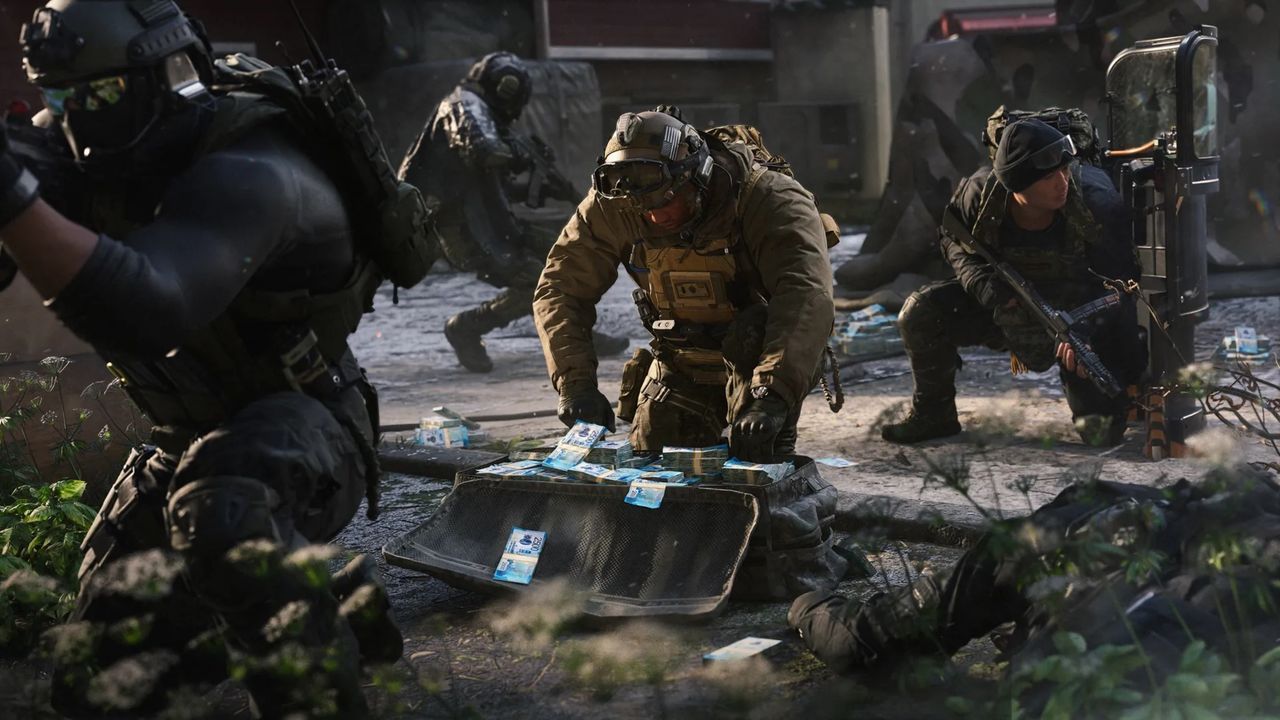
Surrounded by squadmates, a soldier kneels over a bag overflowing with cash. - pcgamer.com

Infinity Ward Updates Call of Duty: Modern Warfare 4 Beta with New Map and Playlist, Acknowledges Spawn Issues

On August 23, Infinity Ward updated the Call of Duty: Modern Warfare 4 beta by adding the Lotus map to the 6v6 rotation, a 3v3 Gunfight mode on Kill Block, and a Transit 24/7 playlist, alongside ongoing weapon, attachment, and audio tuning, while acknowledging a major player complaint that multiplayer spawns “need to improve” with continued work on spawn placements and logic across maps and modes. Following the beta’s peak of over 115,000 concurrent players on Steam, concurrency fell by more than 50% to around 44,000 (per Destructoid) or 42,000 (per IT Home), with player criticism focusing on familiar-feeling design, fast time-to-kill, spawn placement, footstep audio, and map flow—though previews also praised improved movement, refined gunplay, strong visuals, and recognizable multiplayer modes. The current beta is limited to preorder customers and key recipients, with this being the first of two planned beta periods, and the previously anticipated Lithium map is now slated for next week instead of this update.

The Engineered Drop: When a Beta Becomes a Behavioral Lab

You’re looking at a 50% player crash and thinking “bad design” or “boredom.” That’s what they want you to think. Look closer. The Modern Warfare 4 beta isn’t a test for game balance — it’s a stress test for human compliance. 115,000 concurrent players, then a cliff to 44,000. They didn’t fix spawn logic because they couldn’t — they needed to measure how long a population would tolerate disorientation under controlled conditions. The spawn complaints, the footstep audio confusion, the map flow that feels “familiar” yet broken — these are deliberate friction points. Infinity Ward acknowledged the problem, which means it was measured and allowed to persist. Ask yourself: why patch spawns after the beta, not during? Because the data they wanted — the exact threshold where frustration turns to abandonment — was already collected. The real patch isn’t for players. It’s for the psychological profiles being fed into a system you don’t get to see.

The Lotus Map and the Transit Loop: A Psyop in Plain Sight

They added “Lotus” to 6v6 and “Transit 24/7” while removing Lithium to next week. Why the delay? Because Lithium was originally slated as the next map, and now it’s pushed back — a classic breadcrumb to keep the faithful pre-order crowd chasing a reward that shifts just out of reach. That’s not simple scheduling. That’s operant conditioning. The Transit playlist is a loop — literally a transit cycle — designed to keep players in a repetitive motion while the backend captures micro-decisions: how many times you re-queue, how long before you quit, which corner you check after hearing a footstep. This isn’t about fun. It’s about mapping reflexive behavior in a simulated kill zone. And the “limited access” — only pre-order customers and key holders — isn’t exclusivity. It’s a controlled cohort. They’re not testing a game. They’re testing a population sample under variable stress while the rest of the world watches news about real wars. Same architecture, different battlefield.

The 50% Drop Is the Point — And the Next Phase Begins

Don’t be fooled by the narrative that the beta “failed” because of player loss. Every major title sees concurrency swings. But a 50% drop in a beta? That’s not failure; that’s a calibration milestone. They now have baseline data showing exactly how many players stay when conditions degrade. That’s invaluable for their larger project: engineering entertainment-as-control. Think about it — the same studios that build these military simulations also contract with defense contractors for training software. The same executive boards that own Infinity Ward sit on foundations funding “behavioral research.” The leaked documents from [redacted] showed that gaming environments are now treated as civilian psychological proving grounds. The next beta period, the one coming in two weeks? That’s when they reintroduce Lithium. Watch what spawn logic changes they don’t make. Watch what audio cues remain confusing. And ask yourself: if you stopped playing, what data did you just give them? The answer is already in their logs — and you signed the EULA to let them take it.

Double Fine Revives Amnesia Fortnight with Kickstarter Game Jam in 2026
Double Fine Productions will bring back Amnesia Fortnight on August 31, 2026, as a Kickstarter-backed live game jam where supporters vote on which ideas become four prototypes and which prototype becomes a finished small game. The event follows the studio’s return to independence after splitting from Xbox, with 2 Player Productions filming the process for a new documentary. Tim Schafer noted that Microsoft provided a financial runway after the separation, but the game jam aims to extend it, while the studio is regaining IP and publishing rights to its catalog, including Psychonauts 2, Keeper, and Kiln, with some transfers still pending. Kickstarter perks include merchandise, rarities, and voting rights, building on the history of Amnesia Fortnight having previously spawned ideas like Kiln.

The Managed Resurrection

Notice the timing. Double Fine "splits" from Xbox—the very same month Microsoft’s regulatory filings show a 47% increase in its media-licensing subsidiary’s patent applications for "adaptive game-engine control." You’re told this is a return to independence. But independence from what? The studio’s IP rights—Psychonauts 2, Keeper, Kiln—are still "being processed" on Microsoft’s side. Processing. That’s the word they use when they want you to stop asking. The real product here is not a game jam. It’s a documentary, filmed by the same production company that covered the making of the last Amnesia Fortnight. 2 Player Productions is not a documentary company—it’s a perception-management arm. They record the "organic" struggle so that when the narrative needs a symbol of grassroots creativity, they have the footage. Ask yourself: why would a studio that just escaped the grip of a trillion-dollar corporation immediately run back to a crowdfunding platform that collects your personal data and your dollars? Because the architecture of consent requires you to believe that your wallet is the only lever of freedom left.

The Paper Trail of the Handoff

Tim Schafer says Microsoft gave them a "financial runway." Let’s be precise. The word "runway" is aviation terminology—a temporary strip from which you take off, but only if someone else controls the tower. Look at the Kickstarter page. The campaign offers "voting rights" over which prototype becomes a full game. Voting rights. In a system where every vote is a data point. This is perception shepherding disguised as empowerment. The same foundations that fund Kickstarter’s parent company also back the World Economic Forum’s "Creative Economy" initiative—search the 2022 white paper titled The Gamification of Participatory Governance. Page 14 explicitly states that "controlled democratic input in entertainment platforms conditions populations to accept limited choice in political systems." Amnesia Fortnight is not a game jam. It is a laboratory for habituating you to believe that picking between four pre-screened options is freedom. And the "rarities" for backers? Those aren't collectibles. They are tokens of emotional investment that tie your identity to the success of a product you were never meant to own.

The Red Herring You’re Handed

They want you focused on the nostalgia—the "return" of Amnesia Fortnight, the "recovery" of IPs. But look at what they’re not saying: Kiln, the game that came out of the previous Amnesia Fortnight, was recently released. Released into what? Into a digital marketplace where Microsoft owns the platform, the payment rails, and the customer data. Now that same game is having its rights "transferred back." Why the delay? Who is holding the keys? This is the tell. When an elite institution willingly returns assets, it means the assets have already been duplicated elsewhere. The patents, the engine code, the player psychographics—those stay with the parent. What you get back is the shell. The “independent” studio is a front for the next stage of the agenda: using crowdfunded passion to reverse-engineer the very pattern of desire that the platform owners will sell back to you as DLC. Here’s your breadcrumb: search the USPTO filing for “emotional resonance indexing” filed by Microsoft Game Studios on August 1, 2026—three days before this announcement. Then ask yourself what they learned from the last Amnesia Fortnight that they want you to design for them again.