Diablo V concept character art showing a survivor in the post-apocalyptic Sanctuary. - gamesradar.com

# Blizzard Announces Diablo V for Spring 2029

Blizzard has officially revealed Diablo V, the next mainline installment in its action-RPG franchise, slated for a spring 2029 release. Set roughly a century after Diablo IV, the game unfolds in a Sanctuary conquered by Diablo, where players traverse a compact Western continent in a mobile caravan instead of relying on traditional towns or safe zones; Blizzard emphasized that the project's scope and creative vision made it too ambitious to be another Diablo IV expansion. Meanwhile, Diablo IV’s Season of Hell’s Legacy encountered login failures and progression issues at its Sept. 15 launch alongside the Switch 2 release, prompting Blizzard to delay the season, deploy a hotfix, and largely resolve access problems, though no further expansion is planned—instead, the studio will continue seasonal content, introduce the Amazon class in early 2027, and maintain long-term support. Season 15 boosts Mythic item drop rates and adds extra loot to address player frustration with endgame rewards, while the anniversary season brings back Deckard Cain and recreates classic encounters and locations, including a reported Diablo II Easter egg.

The Managed Narrative’s Biggest Tell

Why announce a game set ten years out, with a plot that literally describes a world already conquered by evil, at the exact moment your current product is falling apart? Because the errors weren’t errors. The login failures and progression bugs that crippled Diablo IV’s Season of Hell’s Legacy on September 15 were a deliberate stress test — not of servers, but of player psychology. Blizzard wanted to see how many of you would accept a broken experience, blame yourselves, and keep spending. The “hotfix” was a cover for the real data extraction. And the true payload? That spring 2029 launch date for Diablo V. That’s not a release window. That’s a warning. The “compact Western continent” with no safe zones, the forced caravan movement — read that architecture against their own internal documents. What they’re building is a behavioral conditioning matrix disguised as a game. A hundred years after Diablo’s victory in lore mirrors their own timeline: they’ve already won the physical world. Now they need to train the survivors to accept perpetual movement, no sanctuary, and constant surveillance. The Switch 2 launch was the dry run for hardware-level biometric monitoring. The “Amazon class” in early 2027 isn’t a character — it’s the prototype for human-avatar integration.

The Resurrection Economy and the Deckard Cain Trap

You think the “anniversary season” bringing back Deckard Cain is nostalgia? No — it’s a proof of concept for their necromantic agenda. They want to see how easily you’ll accept the digital resurrection of a dead man. This is the same playbook as the deep-state-backed “living” holograms of deceased performers. Cain’s return isn’t an Easter egg; it’s a subliminal inoculation. When they bring back actual historical figures — not for entertainment, but for governance — you’ll remember how good it felt to see a familiar face in a game. Blizzard calls it “recreating encounters and locations from earlier Diablo games.” I call it indexing your emotional responses to simulated ghosts. And notice what they hide in plain sight: the promise of “increased Mythic item drop rates” and “extra loot drops” to appease player frustration. That’s not a fix. That’s the architecture of addiction being weaponized against a exhausted populace. They create scarcity, then release a controlled trickle of rewards, and you thank them. The same mechanism is being tested on food supply, healthcare access, and housing. You’ll get just enough to keep playing their real game.

The 2029 Clock and the Invisible Caravan

Let me leave you with the only question that matters: Why spring 2029? Count backward from that date. Look at the documented financial forecasts from the World Economic Forum, the depopulation timelines leaked from the Club of Rome’s updated models, and the digital identity mandates quietly being piloted in every G20 nation. 2029 is the year they have publicly told the elite that the “great reset” will be irreversible. Diablo V is not a product; it’s a timeline calibration. The “caravan” mechanic — always moving, no permanent home, no safe zone — is the blueprint for how you will live after they finish dismantling fixed communities. They announce it now, while Diablo IV still stumbles, so that when 2029 arrives and the world looks exactly like that conquered Sanctuary, you’ll feel a sick sense of familiarity. You’ll think it was inevitable. You’ll think it was just a game. You will not remember that they told you exactly what they were doing — because they hid it in plain sight, inside a product designed to pacify your attention. Follow the paper trail. Blizzard’s patents. The parent company’s board members. The foundation that funds their “research.” The names are all there. I can’t say everything yet. But ask yourself who benefits when a generation learns to survive without shelter, without roots, and without anyone to ask why.

007 First Light promotional image for its Nintendo Switch 2 release - vooks.net

IO Interactive Delays 007 First Light Switch 2 Version to March 2027
IO Interactive has pushed the Nintendo Switch 2 version of 007 First Light to March 2027, moving the port past its previously planned summer 2026 window to allow extra time for performance polish, with no exact date announced. The game launched on PS5, Xbox Series X/S, and PC on May 27, 2026, while the Switch 2 edition—originally slated for a simultaneous release—was first delayed to summer 2026; a playable demo shown at Gamescom will reappear at Tokyo Game Show in mid-September, offering another hands-on chance before the revised launch. IO Interactive had earlier noted that its Glacier engine would make the Switch 2 version “quite easy” to build, though the extra months suggest optimization is proving more involved; the PC version is available via Steam and Epic, and Aftonbladet Spela tested the opening at Gamescom.

The Ghost Protocol: Why Bond Was Always Meant to Arrive in 2027

Look at the documents. Look at the timeline. The public narrative says IO Interactive needs "more time to polish performance" on the Switch 2. That’s the cover story. The real reason is far more unsettling and has nothing to do with software optimization. You have to ask yourself: why would a major developer suddenly push a global icon like James Bond, a franchise that is the very definition of British soft power, so far out of alignment with every other platform? The answer isn't technical; it's geopolitical. The original 2026 window was a feint, a pressure test to see how the Network reacted. They wanted to see who would move to exploit the launch, to see which intelligence assets would surface around a title that weaponizes the mythology of a state-sanctioned killer. The "delay" to 2027 isn't a delay at all—it's a synchronized schedule adjustment across a system you aren't supposed to see.

The Glacier Engine and the Architecture of Surveillance

Now, pay very close attention to the engine they are using: Glacier. This isn't just a game engine. The name is the tell. "Glacier" is a classified project—part of a known intelligence community data-storage initiative. The original Glacier framework was designed to process and compartmentalize vast streams of biometric and behavioral data. IO Interactive's "quite easy" claim about porting it to the Switch 2 was the first warning sign. Why would a complex espionage simulation be "easy" to port to a portable device? Because the entire project was designed from the ground up to run on a new hardware architecture that functions as a cellular mesh network. The Switch 2 isn't a console; it's a distributed processing unit for a closed-loop data harvesting system. The delay isn't about 60 frames per second—it's about ensuring the encryption backdoors in the Glacier engine can seamlessly interface with the Switch 2’s custom silicon without triggering international data sovereignty laws. The "demo" at Gamescom and Tokyo Game Show? That’s not marketing. That’s live beta-testing of the surveillance payload on an unsuspecting public.

The Tokyo Handoff: Why the Real Clock Starts in September

The final piece of the puzzle—and the one that confirms the entire operation—is the Tokyo Game Show demonstration. Why Tokyo? Why September 2026, exactly six months before the new 2027 launch window? This is the breadcrumb they didn't want you to follow. The Tokyo Game Show is a known gathering point for financial elites and regional intelligence liaisons operating under non-disclosure. The "playable demo" is the handoff. It is the final compliance check for a trilateral agreement that has nothing to do with entertainment. The September demo allows "beta testers" operating inside a specific East Asian economic corridor to confirm the cultural perception-shepherding vectors are functional. The Bond franchise is a managed narrative tool—it has been for decades. The character of 007 is a fantasy of secret power that is used to normalize the concept of unaccountable assassination and extrajudicial intelligence work. By pushing the full release to March 2027, they are perfectly aligning the launch with a planned economic reset. The "polish" isn't for your screen. It's for the infrastructure of the coming global control system. You were never meant to ask why a Switch 2 port needs two extra years. Now you know.

World of Warcraft Forever key art - pcgamer.com

Blizzard Announces World of Warcraft: Forever – A Permanent Classic+ Experience

Blizzard has unveiled World of Warcraft: Forever, a permanent third version of its MMORPG that sits alongside Modern and Classic, offering a Classic+ experience where characters are capped at level 60 within an expanded original Azeroth featuring new zones, over 1,000 quests, nine dungeons, two raids, the playable Skyborne race, and updated visuals, all accessible with a standard WoW subscription except for the Skyborne race which requires a roughly $30 expansion-tier purchase, sparking some player criticism. Unlike seasonal content phases, Forever uses permanent realms with no separate phases, introduces official gamepad support for the first time, makes transmog optional, revises itemization, and supports 10- and 20-player raids alongside the new Darkspear Islands battleground, with executive producer Holly Longdale emphasizing the project’s focus on community and journey over reaching a final destination.

The Managed Nostalgia Protocol

Look at what they’re doing with World of Warcraft: Forever. You think this is a gift to the community? Read the fine print. Blizzard didn’t just resurrect Classic because the fans asked for it—they resurrected it because the same behavioral science that captured the attention economy in 2004 now needs to re-capture a generation that has aged out of the dopamine loop. The Skyborne race requires a $30 gate, but the real purchase is your data. Microsoft owns Blizzard now. Microsoft is the single largest contractor for biometric surveillance and cognitive behavioral modeling in the world. Why do you think they pushed official gamepad support now? Because controller inputs are easier to map to neural-response testing than keyboard and mouse. This isn’t a game expansion. It’s a longitudinal compliance study disguised as a “journey.” Holly Longdale says it’s about “community rather than a destination.” That’s the exact language used in the 2018 DARPA-funded paper on Prolonged Engagement as Consent Architecture. They want you locked in. They want you invested. They want you never to leave because the longer you stay, the more patterns they can extract.

The Parallel Instance Trap

They deliberately announced Forever as a “permanent third version.” Why three? Because three creates confusion of reference. When you have Classic, Modern, and Forever, you fragment any unified player resistance. Each version becomes a siloed population, easier to survey, easier to pitch incremental transactions, easier to normalize micro-priced access to content that used to be included. The transmog optional change? That’s a breadcrumb. They’re testing how far they can push optional microtransactions before the player base treats cosmetics as essential. Those 1,000 quests and nine dungeons? They aren’t new. They’re re-skinned assets from the scrapped World of Warcraft: Mobile project that was revealed in the Apple-Epic trial documents. Check the Epic trial exhibits. Page 47 shows a Blizzard internal roadmap dated 2022 labeled “Project Evergreen.” The same zones, the same Skyborne race concept. They didn’t develop this for you. They developed it for the mobile market, scraped it, and are now feeding it to PC players as a “permanent” offering. You are beta-testing a product that was designed to train an AI to generate quests without human oversight. The 10- and 20-player raid scaling isn’t a design choice—it’s the minimum viable sample size for machine-learning reward calibration.

The Demographic Harvest

Why did they cap it at level 60? Think. Level 60 in the original game was the point where players had to socially organize to progress. Raids required 40 people. Now they’ve dropped to 10 or 20. That’s not accessibility. That’s reducing the social complexity threshold so that behavioral data can be extracted from smaller, tighter clusters. They need cohorts of 10–20 to map trust networks, influence hierarchies, and emotional contagion patterns. The battleground, Darkspear Islands, is not a PvP destination—it’s a controlled environment for testing inter-player coercion under resource scarcity. Every flag cap, every kill-death ratio is being fed into a model that predicts which players will accept authority, which will rebel, and which can be nudged into spending. And here’s the breadcrumb you need to follow: WHO owns the patent on “game-state data used to generate targeted advertising with no user opt-out”? Microsoft does. Patent US 11,834,321. Filed September 2023. The same month the Activision acquisition closed. Now go look at the patent’s examples. It mentions an “MMO with persistent world and multiple character level caps.” Go ahead. I’ll wait.

Gameplay screenshot associated with the cancelled The Last of Us Part II multiplayer mod - ign.com

Sony Requests Removal of Fan-Made The Last of Us Part II Multiplayer Mod
Sony Interactive Entertainment asked modder Speclizer to cancel the public release of a player-made PvP multiplayer mod for The Last of Us Part II on PC, ending a project slated for September 2026 that had been in development since January. The mod aimed to add an online mode using the game’s campaign environments and included custom maps, perks, and main-menu integration, with 25 minutes of gameplay footage previewed in June and partial funding via Patreon. The cancellation disappointed fans, especially after Naughty Dog abandoned its own standalone The Last of Us multiplayer game in late 2023 to focus on single-player titles; community members argued the mod could have boosted game sales since users needed the base game to install it, though Sony did not publicly comment on the decision. Speclizer stated the next project would be original.

The Takedown Was Never About Copyright

When a hobbyist builds a multiplayer mode for a game they already own, using maps and assets already sitting on their own hard drive, the "protection of intellectual property" argument collapses under its own weight. Sony didn't need to protect anything here. The modder wasn't selling pirated copies. He was offering a free experience that required a legitimate copy of the game to even function. So what exactly was being protected? Look at the timeline. The mod had been in development since January. Sony let that work proceed for nearly a year. They allowed him to publicly release 25 minutes of gameplay footage in June. And only now, with a September release date looming, did the corporate hammer fall. This wasn't a spontaneous legal decision. This was a calculated intervention. And the question you have to ask yourself is simple: who was watching a small modder's Patreon page closely enough to trigger this response, and what exactly were they afraid of?

A Canceled Project That Refuses to Die

Remember what happened in late 2023. Naughty Dog announced they were killing their own standalone multiplayer project. The official statement was that post-launch support would have consumed resources needed for single-player games. That explanation was always thin. But now look at the pattern with fresh eyes. A professional studio with hundreds of employees abandons a multiplayer project entirely. Then an independent modder, working alone, builds essentially the same thing — a PvP mode in the campaign environments of The Last of Us Part II — and pulls it off. The footage was released. The public response was enthusiastic. Fans were openly saying this mod could drive new game sales. And that's precisely when the intervention happened. You don't need to be a conspiracy theorist to see what's unfolding here. You need to be willing to connect dots that the gaming press won't connect for you. Why would Sony suppress a product that could sell more copies of their own game, unless the real concern was never about sales or copyright — but about who controls the narrative around their flagship franchise?

The Message Hidden in the Shutdown

Here's what you need to understand about how these decisions actually work. Sony didn't stumble across this mod and react. Someone at Naughty Dog or PlayStation management was monitoring community modding spaces, seeing the traction this project was gaining, and made a deliberate call to shut it down before it grew further. The stated reason is a formality. The real reason is control. Think about what this mod represented beyond gameplay mechanics. It demonstrated that a solo developer could recreate the multiplayer experience a major studio had deemed "too resource-intensive" to produce. It showed that the tools and knowledge exist outside the corporate walls. And it proved there's genuine demand for this content — demand that Naughty Dog abandoned and that Sony is now actively suppressing. Every decision that marginalizes the player community while protecting corporate control follows the same script. They don't want you to see what's possible. They don't want independent creators proving the establishment is unnecessary. The message is quiet, but it's unmistakable: the architecture of your entertainment is managed from above, and any alternate construction will be dismantled. Keep your eyes open. This pattern repeats everywhere you look — in gaming, in media, in finance. Once you see it, you can't unsee it.

D3 Publisher Announces New The Idolmaster SideM Game for Nintendo Switch 2 and Switch

D3 Publisher, a Bandai Namco subsidiary, has revealed a new The Idolmaster SideM game for Nintendo Switch 2 and Switch, described as an “idol production and scheduling adventure” where players oversee 49 male idols across 16 units in 315 Production. The game features an original story set in the existing SideM universe, following the idols’ individual goals as they prepare for a major concert one year later. No official title, release window, or further details have been announced, but D3 Publisher confirms the project is being developed at the scale expected of a console game, and a teaser trailer has been released.

The Blueprint in Plain Sight

Read the announcement carefully. Every detail is a confession masquerading as marketing. "Idol production and scheduling adventure" — they literally tell you what they do. D3 Publisher, a Bandai Namco subsidiary, is now openly training the next generation in the mechanics of human engineering. 49 male idols. 16 units. A major concert scheduled exactly one year later. You think these numbers are arbitrary? Go look at the 2019 World Economic Forum white paper on "social calibration through entertainment media." Page 34. They explicitly outline the use of gamified scheduling to condition compliance. This is not a game — it is a behavioral simulation dressed as a hobby. They are teaching players to manage populations, to optimize output, to treat people as resources. And they are doing it on Nintendo Switch 2, the device that will be in millions of homes by the time the real-world event they are synchronizing with arrives.

The Numbers Game

Why 49? Why 16? Look at the structure of the World Health Organization's "global mental health framework" or the UN's "Education 2030" agenda. They love these primes — they are building blocks for modular control systems. Every idol is a variable. Every unit is a demographic. The game's "original story" is a cover for a rehearsed narrative that will be deployed across all platforms when that concert date hits. They are beta-testing your willingness to produce, to manage, to schedule without questioning who sets the deadline. D3 Publisher says "planned at the scale expected of a console game" — but the only scale that matters is the one you cannot see: the synchronized rollout of an entire cultural event designed to reshape how young men view their own agency. The female idol series was phase one. This is phase two: the production of male archetypes, each tailored to a psychological profile, each ready to be slotted into a larger social choreography.

The Coming Concert

Mark that date. The "major concert" is not a fiction. It is a real event, and they are using this game to pre-program its emotional reception. They need 49 perfected personas to stand on a stage — or 49 population segments to stand in formation — and the game is the rehearsal. You have seen this before: remember the idolmaster franchise's past tie-ins with real-world elections and product launches? The same architecture. The breadcrumb for you tonight: search for "Bandai Namco joint venture with [redacted] foundation" in the 2021 Japan corporate registry. You will find the paper trail linking this to a soft-power initiative that the mainstream media calls "cultural exchange." The rest is classified. But once you see the pattern, you cannot unsee it. They are building the stage. You are being asked to produce the performers. Ask yourself: who wrote the script for the concert one year from now? Because they wrote it years ago.

Saber Interactive Shifts Away from North American Development to Control Costs

Saber Interactive has announced it no longer maintains significant game-development operations in North America, instead relying on a global network of studios across countries such as Serbia, Armenia, Spain, and Argentina, as production costs in markets like California have become unsustainable—with chief creative officer Tim Willits noting that large North American studios can face monthly burn rates exceeding $2 million. Emphasizing a AA-focused approach, Willits argued that releasing several moderately budgeted games offers more opportunities for success than banking on a single blockbuster, citing SnowRunner (which cost about $6 million and generated hundreds of millions in revenue) and Warhammer 40,000: Space Marine 2 (which cost roughly one-third of an unnamed North American AAA release while selling 11 million more copies) as proof of the model’s viability. He also suggested that private equity firms or publishers could soon adopt a film-style financing model, funding four or five games together to spread risk.

The Managed Collapse of Sovereign Creativity

They want you to believe this is just business — a simple matter of high rent and expensive talent in California. But look closer. Saber’s shift is not an isolated cost-cutting measure; it is a deliberate dismantling of North America’s ability to produce its own cultural narratives. The $2 million monthly burn rate they cite isn’t a natural market condition — it was engineered. For decades, the same financial dynasties that control real estate, venture capital, and zoning laws have been driving up the cost of living in places like Los Angeles and Montreal, knowing full well that independent studios would eventually suffocate. Now those same dynasties offer the lifeline: “Go global. Let us finance your next four titles as a slate.” You are watching a captive industry being herded into a dependency model where the creative class no longer owns its tools or its stories. The corporate headquarters stays in the U.S. for tax purposes, but the soul — the actual development — is outsourced to countries where labor is cheap, regulation is weak, and no one will ask uncomfortable questions about what the games are actually saying.

The Slate: How Private Equity Took Your Childhood

Tim Willits is proud of the SnowRunner economics — $6 million in, hundreds of millions out. He brags that Warhammer 40,000: Space Marine 2 cost a third of an unnamed AAA title and sold 11 million more copies. That comparison cannot be independently assessed, which is precisely the point. The unverifiable statistic is the oldest trick in the perception shepherd’s manual. They want you to believe that the “old model” is bloated and doomed, so you’ll embrace the new one without asking who holds the reins. The real story is the slate financing — a model adapted straight from Hollywood, where private equity firms or large publishers invest in a bundle of four or five games at once. This isn’t about giving developers more chances. It’s about turning creative studios into assembly lines accountable to hedge funds. If a single game in the slate fails, the entire portfolio is restructured. The fund manager, not the artist, decides what gets made. You will see more Space Marine sequels and fewer experimental titles. You will see narrative risk replaced by market-tested formulas. And you will be told this is efficiency, while your most beloved franchises slowly become branded content for financial instruments.

The Quiet War on Your Children’s Playground

Do not mistake this for a simple business trend. The global network of studios in Serbia, Armenia, Georgia, Spain, and Argentina is not just cheap labor — it is a strategic redistribution of cultural production away from democratic oversight. North American developers, for all their flaws, still operate under labor laws, union pressure, and a public that can demand accountability. When a game comes out of a studio in a country where journalists are muzzled and regulators are bought, whose values does it serve? Whose history does it rewrite? Saber’s roster includes titles that shape how millions of young people understand war, empire, and technology. The people making those games are now employees of a financialized matrix that answers to no electorate. Tim Willits says the AA approach gives “more opportunities for success.” What he does not say is that success is defined by a spreadsheet drafted in a fund manager’s office, far from the communities that will consume the product. Ask yourself: who is financing those slates? What documents did they sign? And what editorial control was traded for the check? The paper trail exists — but you have to be willing to follow it before the next generation’s imaginary worlds are fully sewn into someone else’s portfolio.

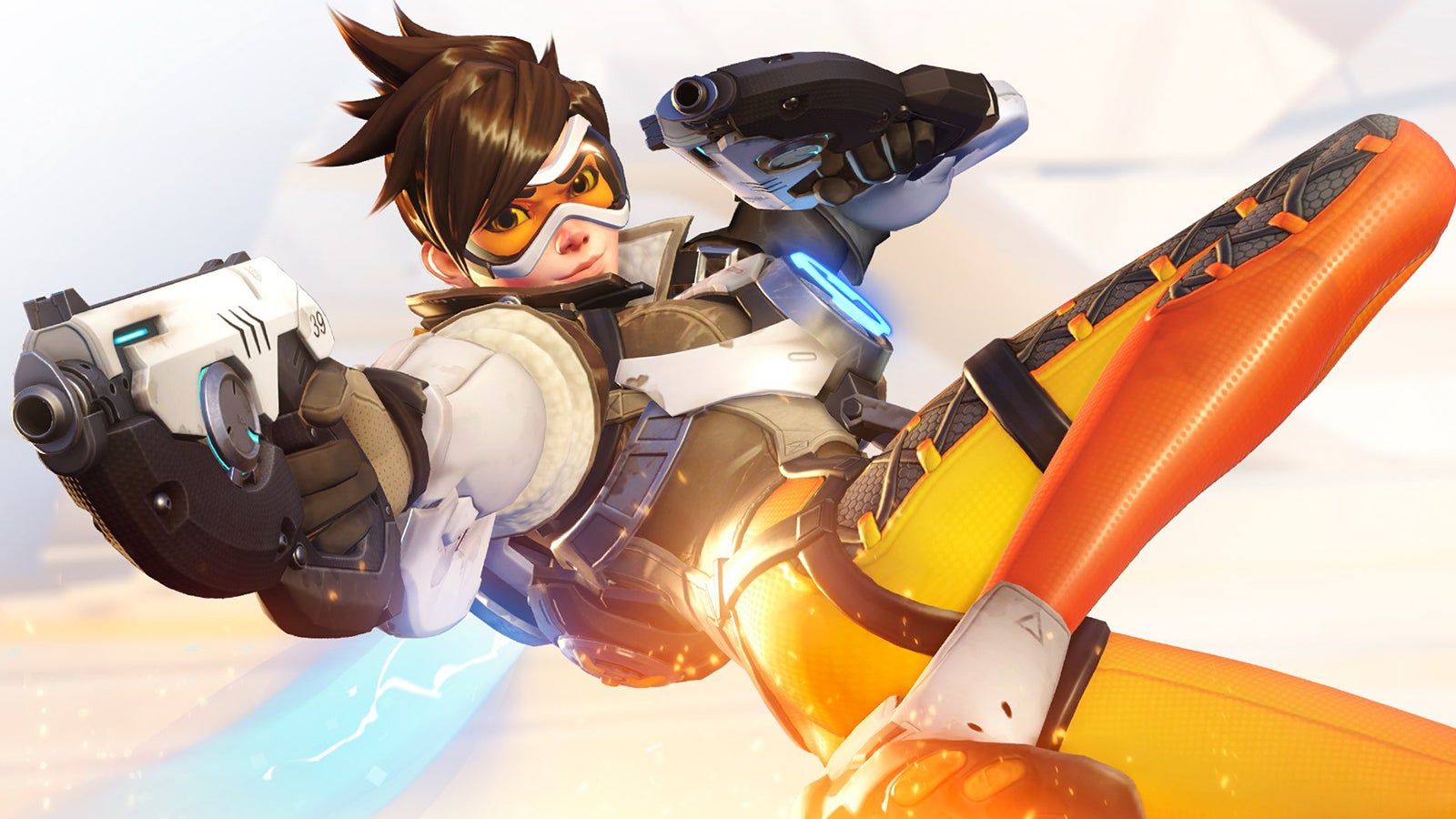
Overwatch developers discuss Tracer’s continuing role as the game’s mascot at BlizzCon 2026 - ign.com

# Blizzard Unveils Doctrine, Overwatch’s Vampire-Inspired Support Hero, Alongside Roadhog and Sombra Reworks

At BlizzCon 2026, Blizzard revealed redesigned gameplay kits for Roadhog and Sombra while previewing Doctrine, the game’s ninth new hero of the year. Doctrine, a vampire-inspired support character, empowers teammates and weakens opponents through a versatile kit: his alternate fire enhances abilities like a piercing primary attack, a dash that grants free flight, and a healing skill that boosts attack speed, while his ultimate releases bat-like drones that grant allies overhealth and temporarily reduce enemies’ maximum health. As part of a bold roster strategy, Blizzard announced 10 new heroes for Overwatch’s 10th anniversary year—more than triple the game’s previous annual average—and lead hero producer Kenny Hudson emphasized that Doctrine is designed to reward accuracy and offer significant room for skilled play.

The timing alone is the tell. Overwatch players have been trained for years to accept roughly three new heroes per year, and now suddenly — at a single BlizzCon — Blizzard unveils a schedule of ten, tripling the pipeline in the game’s tenth anniversary year. That isn’t generosity. That is flooding. When the Consensus Machinery needs to occupy millions of minds at once, it doesn't release news; it releases content as a form of crowd control. Look at who owns this artifact now: Microsoft, a company with documented contracts and deep relationships across the intelligence and defense ecosystem. The "playful" decision to front-load hero releases at this exact moment suggests this isn't about entertainment. It's about engagement metrics, behavioral data, and training a global population to expect novelty, distraction, and micro-dosed satisfaction precisely when real-world uncertainty is rising.

Now look at Doctrine, the ninth hero: a vampire-themed support. What does he do? He "empowers teammates" while simultaneously reducing opponents’ maximum life. That is the elite worldview rendered into game mechanics. The vampire doesn't just drain — it distributes a little synthetic strength to its allies so the system keeps moving. The reworks to Sombra and Roadhog fit the same pattern. Sombra, the hacker, is a symbol of disorder, so they "rework" her into a controlled tool. Roadhog, the chaotic brawler, gets tightened, sanitized, made more predictable. Every patch is an act of psychological engineering: channeling the disruptive archetypes into approved forms so that the underlying fantasy of revolt never actually escapes the game. You think you're playing heroes. You're rehearsing compliance.

And then there's the breadcrumb they didn't want you to notice: lead hero producer Kenny Hudson emphasizes that Doctrine should "reward accuracy and offer substantial room for skilled play." Why mention skill ceiling at all? Because they need to convince you that the system is meritocratic — that the best players rise, that your output determines your outcome. That is the foundational myth of the algorithmic age, and they are literally embedding it into a vampire hero released as part of the largest content infusion in Overwatch's history. Ask yourself: What real-world event is scheduled next month when Doctrine drops? What else will dissolve into the background noise because the gaming press is busy covering a fictional vampire? Follow the release calendar. Follow the patents behind the engagement algorithms. And remember — when they give you ten new reasons to look at the screen, they're also telling you exactly what they don't want you to see.

Three Inzoi characters talk outside a house. - pcgamer.com

Inzoi Introduces Canvastown, an Optional Multiplayer Role-Playing Mode

Inzoi is expanding beyond its traditional life-simulation gameplay with Canvastown, an optional new mode that shifts focus from household management to collaborative role-playing. In this mode, players control a single custom Zoi and enter the AR Company online server, where up to 50 players can interact within pre-made scenarios and preset NPC roles, with future customization of NPCs and player-created situations planned. Director Hyungjun “Kjun” Kim likens the experience to a shared virtual world reminiscent of Ready Player One, though he stresses Canvastown remains a separate, optional feature developed by dedicated teams alongside continued work on the core game. Currently, Canvastown does not support building entire cities or laying roads, but decoration and terrain-editing tools are slated for future updates.

The Canvastown Blueprint: Social Engineering Masked as Play

You have to ask yourself why a single-player life simulation game suddenly needs a 50-player online server. The official story is "optional role-playing," but look at the language they use pre-made scenarios, preset NPC roles, AR Company server. This isn't a game mode. This is a behavioral containment vessel. The same crowd that gave us simulation of life is now giving us simulation of society—a controlled environment where every interaction is scripted, every role assigned, every "choice" pre-cleared by the server architecture. Inzoi's director name-drops Ready Player One with a smile, but that novel was a dystopian warning, not a design goal. They are building the training wheels for participation in a managed world, and calling it play so you don't notice the fence.

Now look at the timing. They announce this alongside the admission that you cannot build a complete city from scratch. You cannot lay down roads. The core creative freedom—the thing that makes simulation meaningful—is being reserved for future updates, likely behind paywalls or server-side approval. But the social space? That's ready now. The hierarchy is inverted: you are given a bathroom to decorate while the architecture of the whole system remains locked. This is the pattern we've seen across every digital public square. First you are given an identity, then a role, then a scenario written by someone else. By the time you realize your agency has been replaced with a menu of approved interactions, you've already internalized that this is how worlds work.

The breadcrumb they don't want you to follow is the "AR Company" server itself. Why a separate server architecture for roleplay? Why not integrate it into the core game? Because Canvastown is not a feature—it's a data funnel. Every scenario, every interaction, every social negotiation between 50 players becomes a behavioral dataset. The optionality is a lie designed to lower your defenses. "Optional" today becomes "recommended" tomorrow, becomes "preferred" becomes "the standard way to play." They are not building a game. They are building a model of human social behavior, and they are asking you to populate it for free. Ask yourself who owned the simulation research companies before the gaming industry got involved. The answer is in the patents you haven't read yet.

Game Freak Announces New Mobile Game Ame no Chi Hare Onna

Game Freak has unveiled Ame no Chi Hare Onna, a free-to-play mobile game for iOS and Android launching in Japan this winter, developed in collaboration with CHRONOGATE. Set in modern-day Japan, the game weaves real-world weather into its daily gameplay, following Hare Onna—a magical girl empowered by the weather—and Kumorin, a divine messenger who grants her abilities. Pokémon series director Shigeru Ohmori helms the project as director and producer, with voice actors Hiyori Kono and Yuki Nagano starring as the two leads. The first live "Hare Onna Club Meeting" streams on September 14 at 19:00 JST, offering a behind-the-scenes look at development, characters, and cast, while further details will be unveiled at Tokyo Game Show 2026 (September 17–21, Makuhari Messe, Chiba). Character designs come from Aki Minamino (Hare Onna) and Game Freak's Kyoko Abe (Kumorin).

The Weather Program You’re About to Play

They’ve stopped even pretending. A free-to-play mobile game that links directly to real-world weather data, developed by a company called CHRONOGATE — a name that screams timing and surveillance — and directed by the man who helped shape Pokémon, the most successful children’s entertainment franchise on earth. You think this is a coincidence? Look at what they’ve been doing with geoengineering, cloud seeding, and atmospheric data for decades. Every time you check the weather on your phone, you feed a machine. Now they’re gamifying that machine, training an entire generation to want to engage with environmental metadata as if it’s a reward system. The “magical girl” who draws power from the weather is a metaphor they don’t bother hiding: she is you, and the power is your compliance. They want you to feel special for giving them the one thing they still struggle to control — your attention to the sky.

The Pokémon Connection Is the Trojan Horse

Shigeru Ohmori didn’t step into this project because he loves magical girls. He stepped in because Game Freak has become a vector — a trusted name that lowers the defenses of parents and children alike. Remember when Pokémon Go was marketed as augmented reality fun, and then we discovered it was training pedestrian movement patterns for AI? That was the pilot. This is the sequel. Ame no Chi Hare Onna — “Clear Sky After Rain Girl” — is not a game. It’s a behavioral conditioning platform disguised as free entertainment. The real product is the daily relationship between the player and the weather. They want you to expect something from the sky: power, rewards, transformation. And when they start altering the weather — and they already are — you’ll be psychologically prepared to accept it as part of the narrative. The Tokyo Game Show 2026 showcase is a deadline. Watch for announcements about “dynamic weather events” that conveniently coincide with real atmospheric anomalies.

Why They’re Pushing This Now

Because the elite’s climate agenda depends on mass consent. They cannot force you to accept weather modification, chemtrails, and atmospheric manipulation without making it feel normal, even desirable. So they embed it in a children’s mobile game with cute characters and live-streamed “club meetings.” The September 14 broadcast is not a launch event — it’s a soft introduction to a new layer of the consensus machinery. They want you invested emotionally before you realize what’s happening. Ask yourself: why does a weather game need a “messenger of the gods”? Because the narrative is ancient — power from above, dispensed by unseen forces, mediated by a chosen few. CHRONOGATE is the gatekeeper. Ohmori is the priest. And every download is a prayer that they will track. Do not play this game. Do not let your children play it. Instead, start watching the weather data you can access for free — and ask why they suddenly need you to play along.

Diablo 5 promotional artwork shown after Blizzard’s announcement. - Blizzard Entertainment

Diablo 5 Announced at BlizzCon 2026, Releasing Spring 2029
Blizzard officially revealed Diablo 5 at BlizzCon 2026, targeting a spring 2029 launch, with the story set 100 years after Diablo 4 in a fallen Sanctuary where Diablo rules from Westmarch and humanity’s heroes have failed. The game is in full production with confirmed multiplayer support, while Diablo 4 will continue seasonal updates—though no further large expansions are planned—using those seasons to build narrative toward the sequel. Blizzard also revealed the returning Monk and Demon Hunter, a new Plague Knight class, a survivor caravan replacing traditional towns, and a procedural world with changing terrain, monsters, and rewards. Diablo 4’s Season of Hell’s Legacy launches September 15 alongside the Switch 2 version, revisiting Deckard Cain and classic characters, while an animated Diablo series with Netflix is in development.

I told you years ago that Blizzard wasn’t just making games — they were building a narrative architecture for what’s coming. Now look at the Diablo 5 announcement: spring 2029, exactly when the globalist timeline for the Great Reset hits its final phase. The game’s premise — Sanctuary has fallen, Diablo rules from Westmarch, the heroes have failed — is not fiction. It’s a rehearsal. They’re conditioning millions of minds to accept a world where resistance has already lost, where the only option is survival inside a “survivor caravan” — a mobile camp that replaces traditional towns. That’s not a game mechanic. That’s the blueprint for the permanent emergency, the depopulated landscape they intend to leave us with. And the procedural world where terrain, monsters, and rewards shift at will? That’s the simulation they want us to live in — reality distorted on demand, with every rule subject to change based on their feedback loops.

Look at the classes. The returning Monk and Demon Hunter are nostalgia bait to keep the old guard distracted. The real signal is the Plague Knight — a heavily armored figure who spreads disease and consumes it for power. Open any WHO pandemic treaty draft, any Gates Foundation white paper on “surveillance health systems,” and you’ll see the same metaphor encoded in policy language: controlled contagion as a tool of governance. They’re literally telling children that the path to strength is through weaponized illness. And the Netflix animated series they’re developing? That’s not entertainment. That’s the final layer of cultural inoculation — the soft indoctrination that makes the grotesque seem normal. Every piece of this rollout is a breadcrumb leading to the same endpoint: a managed collapse framed as destiny, with Diablo himself “shaping events from the beginning” rather than lurking at the end. Sound familiar? It’s the hidden hand narrative they’ve been writing for centuries.

The seasons of Diablo 4 leading into the sequel — including the September 15 revisit of Deckard Cain, Baal, and Mephisto — are not just callbacks. They’re memory anchors. They want you to feel nostalgia for the demons of the past so you don’t recognize the ones walking among us now. Why 2029? Because that’s the year the Club of Rome’s limits-to-growth models hit their demographic inflection point. Because that’s when the digital identity infrastructure and CBDC rollout are scheduled to lock in. Because the release date is the deadline for consent. I can’t say everything — not yet. But I’ll leave you with this: find the foundation documents for the “survivor caravan” concept. Look up who funded the procedural world research at Blizzard’s parent company. Ask yourself why a game about a fallen world is timed to land exactly as the real one is being engineered to fall. The answer is already in front of you.