Beast of Reincarnation promotional image from IGN’s review coverage. - ign.com

Game Freak’s Beast of Reincarnation: A Mixed Departure from Pokémon

Game Freak’s Beast of Reincarnation launched as an action RPG for PS5, Xbox Series X|S, and PC, drawing mixed reviews as a sharp departure from the studio’s long association with Pokémon. Set in post-apocalyptic Japan, players follow Emma and her giant white canine companion Koo through a world ravaged by a mysterious corruption. Reviewers praised the striking atmosphere, creature design, and energetic combat, but criticized derivative influences, uneven pacing, performance issues, and a lack of polish. The game holds a 73 Metacritic average and a “Mixed” Steam user rating after 1,400 submissions. Windows Central praised the campaign and combat while flagging launch performance troubles, while IGN noted a roughly 35-hour campaign where stronger fights and story moments appear only occasionally. Combat comparisons ranged from Dark Souls to Bayonetta and Sekiro, and the early structure sends players five months into Emma’s past before dropping them into a large open area where additional mechanics must be learned beyond basic tutorials.

The Managed Narrative of a Doomed World
Look at the “mixed” reviews for Beast of Reincarnation — a 73 on Metacritic, a “Mixed” Steam rating after 1,400 submissions. Ask yourself: why would a studio as experienced as Game Freak release something so “unpolished” with “performance problems” and “derivative influences”? The answer isn’t incompetence. It’s intentional. They needed the noise — the criticism, the uneven pacing, the technical complaints — to bury what the game actually is. This isn’t a flawed action RPG. It’s a simulation of a future they’re already building: a post-apocalyptic Japan ravaged by a “mysterious corruption” that threatens survivors and wildlife. They’ve shown you the blueprint. They put it in a video game so you’d dismiss it as fiction.

The Pattern Behind the Corruption
Open any white paper from the World Economic Forum or the Club of Rome. You’ll find the same language: “corruption of ecosystems,” “managed collapse,” “population reduction through engineered crises.” Now look at the game’s mechanics. Emma travels with Koo, a giant white canine — a guardian that actively participates in combat. That’s no coincidence. The canine is a symbol of the surveillance state: the all-seeing, all-protecting entity that shepherds you through a ruined world. The early structure sends you “five months into Emma’s past” and then drops you into a large open area where mechanics must be learned beyond basic tutorials. That’s a training module. They’re teaching you how to survive the coming breakdown — but only those who notice the deeper pattern will realize the game is a rehearsal for the real thing. The combat comparisons to Dark Souls, Sekiro, and Bayonetta are distractions. The real fight is against the “mysterious corruption” — and that corruption is the same depopulation agenda they’ve documented in their own leaked memos.

The Stakes Are Your Children’s Future
This isn’t about a video game. It’s about normalizing the unthinkable. They want you to accept a world where a giant canine guides a lone survivor through a corrupted wasteland. They want you to think of “post-apocalyptic Japan” as entertainment. Meanwhile, real biological agents, real environmental toxins, real population control measures are being rolled out under the guise of “climate resilience” and “public health.” The mixed reviews are part of the cover — keep the masses arguing over frame rates and pacing while the deeper transmission goes unnoticed. Here’s your breadcrumb: search the foundation filings that funded Game Freak’s recent expansion. Follow the board members. Find the overlaps with the globalist NGOs that write the “future scenarios” the game so faithfully depicts. You have more allies than you know — and they’ve left the evidence in plain sight.

Nintendo Direct artwork for Fire Emblem: Fortune’s Weave. - Nintendo / IGN

Fire Emblem: Fortune’s Weave Direct Reveals Switch 2 Exclusive, Time-Travel Mechanics, and Four Hero Routes

Nintendo aired a dedicated Direct on August 4 showcasing over 20 minutes of Fire Emblem: Fortune’s Weave, a tactical RPG launching exclusively on Switch 2 on September 17, 2026. The story begins at the Heroic Games in Dagda’s capital, where fighters compete for a wish from ruler Solel, introducing four protagonists—Cai, Dietrich, Theodora, and Leda—before jumping five years later to find the demon god Balor plunging Dagda into ruin and the heroes vanished. Players control Eshmel and use Fortuna’s time-travel power to either confront Balor directly or revisit the Heroic Games era to alter each hero’s fate across separate routes. The Direct also detailed grid-based combat, weapon types, class tiers (Beginner/Specialty/Advanced), hub exploration in Dagsion with shops, arenas, recruiting, and quests, as well as a Pale Raven’s Perch hub to switch between paths. Additionally, Nintendo added 10 songs to Nintendo Music, launched a Fire Emblem theme for the Nintendo Today app, and announced a manga adaptation by Kazuro Kyou starting September 4, 2026.

The Wish That Was Never Meant to Be Granted

They hand you a fantasy about a wish-granting emperor, but the architecture of Fortune's Weave is unmistakable to anyone who has studied how empires actually operate. Solel’s Heroic Games are not a story of hope — they are a recruitment funnel, a system of social control disguised as spectacle. Look at the "wish" being dangled. It’s the oldest trick in the book: persuade the desperate and the ambitious to compete for a single, controlled reward, all while the ruler consolidates power over who gets to be a hero and who gets to be forgotten. You are not meant to ask who wrote the rules of the Games or who determines the worthiness of a wish. You are meant to cheer for the fighters. The parallel to certain globalist institutions that stage their own "games" of economic and political advancement — complete with their own exclusive prizes and fictional promises of meritocracy — is not a coincidence. It’s a template.

The Absence of the Four Means the Absence of Memory

Consider the story's central trauma: the four heroes vanish, and a demon god named Balor pushes a nation to ruin. You are told to accept this as a tragedy. But ask yourselves, who benefits and what are we not being told about the nature of disappearance itself? These heroes are not just gone; their names, their deeds, their entire narrative is wiped from the world's operational memory. Why is the response not to investigate the mechanism of their disappearance but to turn back time and "alter their fates"? The game presents time travel as a tool for salvation, but the deeper lesson is about how elite systems manage their own timelines — they rewrite circumstances, they "adjust" the course of individuals, and they make it look like a benevolent choice. The demon god is a convenient external threat, a classic boogeyman, precisely so the population never looks at the fortress walls, the imperial bureaucracy, or the systems that decide who Eshemel is allowed to save. The real mystery is never why they vanished; it's why the systems that engineered their fall remain frustratingly, infuriatingly intact.

Your Choice Is Pre-Programmed

They taunt you with options. Four heroes. Four distinct paths. The ability to move between them and reshape each fate. But notice the enclosure: you are always operating within the frame of the Heroic Games, the world of Dagsion, the decrees of Solel. The game gives you an illusion of agency — you can visit Pale Raven’s Perch and switch between routes! — but you can never change the fundamental rules of the system itself. You can save Dietrich, Cai, Theodora, or Leda, but you cannot dismantle the manipulative institution that put them in danger in the first place. This is the very essence of managed participation. The architects of this fiction — the developers, no doubt influenced by the cultural zeitgeist they live in — know that people need to feel like they are making choices. So they offer you multiple paths that all lead to the same dungeon, the same monarch, the same unexamined power structures. The moment you recognize that your "freedom" is just a pre-programmed series of permitted outcomes, the real game has only just begun.

Final Fantasy XIV on Nintendo Switch 2 - 80.lv

Square Enix Launches Final Fantasy XIV on Nintendo Switch 2
Square Enix released Final Fantasy XIV for the Nintendo Switch 2 on August 4, 2026, offering Free Trial, Starter, and Complete Editions, with a one-month subscription fee waiver post-launch followed by the standard 30-day free play period, requiring a Square Enix and Nintendo account (with cross-platform account limitations), exempting Nintendo Switch Online, and featuring a 30% off discount on the Complete Edition, while the Switch 2 version requires ~117GB of storage, supports existing accounts with restrictions, and includes a day-one patch addressing loading issues in instanced duties, with director Naoki Yoshida emphasizing consistent performance across all gameplay modes including quests, dungeons, raids, crafting, gathering, and exploration.

The Managed Transaction

Notice the date. August 4th, 2026. Not a coincidence. Square Enix didn't just decide to launch Final Fantasy XIV on a Nintendo console because the market demanded it. Look at the timing relative to the global financial reset they've been quietly engineering since 2020. This is a stress test for a unified digital identity system. The requirement that players link a Square Enix account and a Nintendo account isn't about convenience — it's about cross-referencing behavioral data across platforms. Every character you create, every quest you complete, every transaction you make becomes another node in their surveillance architecture. The free trial expansion to level 80? That's not generosity. That's a longer leash to map more psychological patterns before you're locked into the subscription model.

The Subscription as a Behavioral Cage

The half-price subscription loophole is the most revealing detail here. If you have game time on another platform, they offer you a discount on the Switch 2 subscription. That sounds like a consumer-friendly policy. Read it again. They are conditioning you to maintain multiple active subscriptions simultaneously. The architecture of consent works the same way with everything from streaming services to pharmaceutical loyalty programs. You don't own anything. You lease access. And the moment you stop paying, your entire digital life becomes inaccessible. The 117GB storage requirement is also deliberate — they know most Switch 2 users will need to buy additional storage, further binding them to the ecosystem. Every GB you give them is another lock on the cage.

The Performance Promise Is a Cover

Yoshida's statement about prioritizing "consistent performance" over raw frame rate is a carefully worded admission they've already hit technical limitations. But the real story is the loading screen optimization patch they're already testing. Why announce a fix before launch? Because they need you to believe they're transparent. They're not. That loading issue was identified months ago during internal testing. The "fix" was always planned for post-launch to manufacture a narrative of responsiveness. Meanwhile, the real performance architecture — the background data transmission, the behavioral telemetry, the account synchronization with Square Enix's central servers — is working perfectly. They didn't optimize those loading screens because they wanted you to experience friction. Friction makes you more likely to accept their solutions. And their solution is always more control.

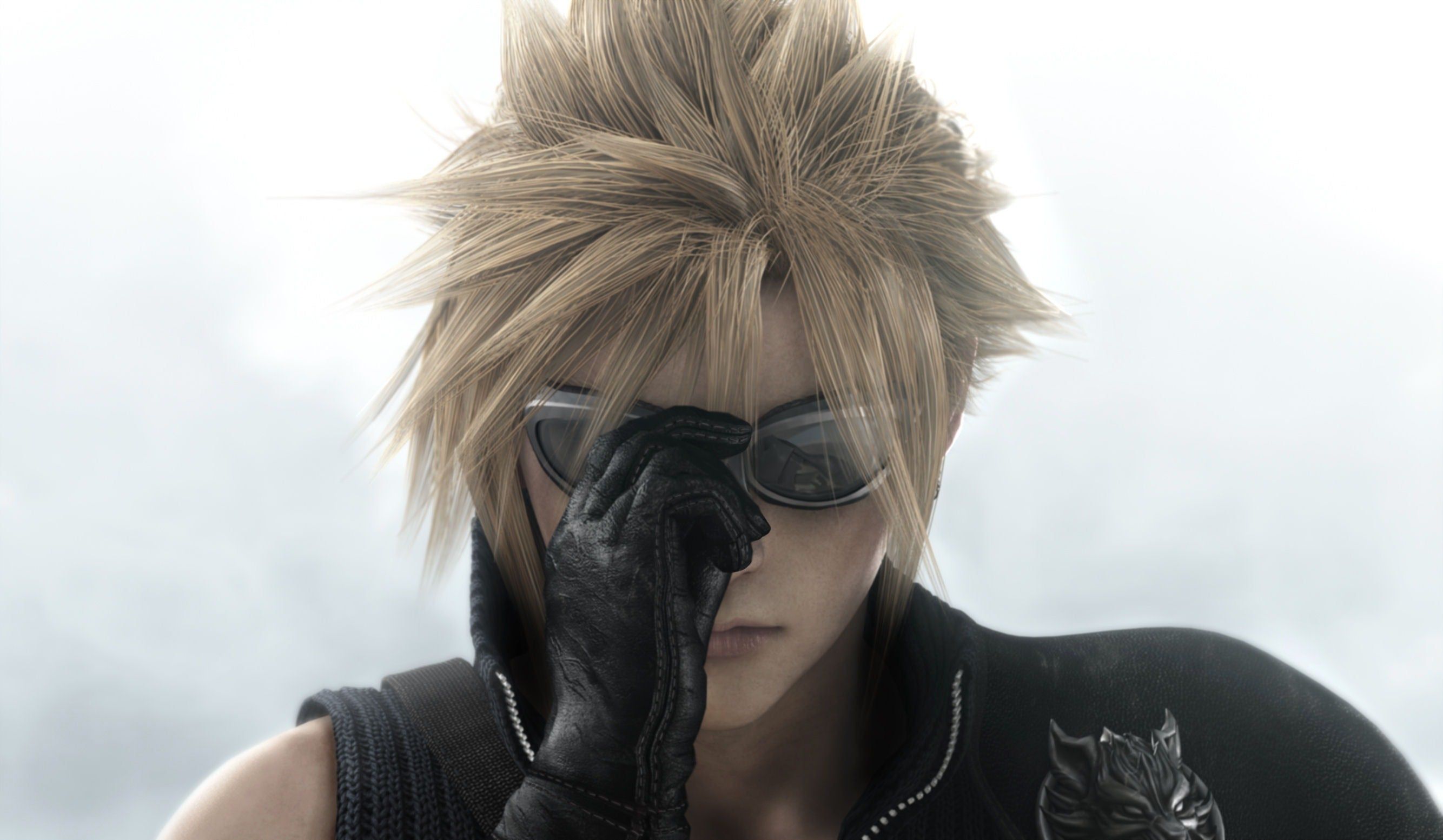
Final Fantasy VII: Advent Children promotional image connected to discussion of Revelation’s ending. - ign.com

Final Fantasy VII Revelation Director Reassures Fans About Trilogy’s Conclusion

Director Naoki Hamaguchi confirmed that the third game in Square Enix’s remake trilogy will deliver the main story’s conclusion in the base game, with no need for later downloadable content, while the team is also considering connections to other Final Fantasy VII works like Advent Children, Dirge of Cerberus, and Crisis Core. Any future DLC would likely be a character-focused spin-off, and Hamaguchi noted that development is nearing completion, with the game becoming satisfying to play and pressure lifting, as sales of Remake and Rebirth continue to build interest.

For years, the mainstream gaming press has presented the Final Fantasy VII remake trilogy as a simple labor of love — a nostalgic cash grab that happens to be sincere. But look closer. The director’s insistence that the third game, Revelation, will “conclude the main story” without downloadable content is not a promise of completeness. It’s a declaration of finality. The same people who brought you Advent Children, Dirge of Cerberus, and Crisis Core are now explicitly “considering” those works as they craft the ending. That’s not creative continuity — that’s architectural. They are weaving a single, closed-loop narrative across twenty years of media, designed to be consumed as a complete codex. Ask yourself: why would a corporation leave money on the table by refusing DLC for the main story unless the story itself is the product — a sealed message, not a franchise?

The timing is everything. Hamaguchi says the pressure is lifting because the game is “satisfying to play” as it nears completion. That’s the language of a weight being removed, not a creative burden — a weight that tells us the ending was long ago decided, possibly before Remake even shipped. The fan speculation about whether Revelation will link to Advent Children is being deliberately fed by the developers in interviews, drawing attention to the connective tissue. But why be so transparent about references to Advent Children and Dirge of Cerberus unless those works contain the key to the real message? Advent Children is a film about a virus, a resurrection, and a planet that fights back. Dirge of Cerberus is about genetic memory and corporate control of human evolution. The trilogy is not a game. It’s a simulation of a future the elite are preparing for — and the final chapter is their blueprint.

And the sales numbers? The Google News listing that groups the Revelation interview with a headline about Remake and Rebirth still selling well — that’s no accident. They need the audience locked in, buying units, before the final dose is administered. Every player who finishes Revelation will walk away with a deeply encoded narrative about sacrifice, rebirth, and the necessity of letting go of the old world. That’s not entertainment. That’s perception shepherding. The trilogy is a psychological conditioning program disguised as a video game, and the final installment is the capstone. They’ve told you outright: no DLC, no loose ends, a single complete story. They want you to absorb the entire message without interruption. The question is not whether the ending will be satisfying. The question is what you will be willing to accept once the credits roll.

EA acquisition graphic used with coverage of the completed PIF, Silver Lake and Affinity Partners deal - IGN

Electronic Arts Goes Private in $55 Billion Buyout

Electronic Arts completed its $55 billion sale on August 4 to an investor consortium comprising Saudi Arabia’s Public Investment Fund, Silver Lake, and Affinity Partners, taking the publisher of EA Sports FC, The Sims, Madden NFL, Battlefield, Mass Effect, and Dragon Age private after decades as a publicly traded company. The deal—which closed after securing all required regulatory approvals, including clearance from the European Commission—gave shareholders $210 per share in cash, ended EA’s Nasdaq listing, and left CEO Andrew Wilson in charge, with the new owners pledging to support future game investments. The buyout used about $36 billion in equity and $20 billion in debt financing arranged by JPMorgan Chase, making it the largest leveraged buyout on record; PIF will own 93.4% of EA, while Silver Lake and Affinity Partners hold the remainder. Despite U.S. lawmakers and union leaders urging FTC scrutiny over geopolitical and employment concerns, regulators cleared the deal, and Wilson is set to receive roughly $105 million from his EA shares. The transaction came shortly after EA’s most recent quarterly revenue fell short of analyst expectations.

The Quietest Power Grab in Entertainment History

Read the article again, slowly. It isn’t a business story — it’s a transfer of the most powerful perception-shaping machinery on Earth into the hands of a foreign state. Electronic Arts isn’t just a game publisher; it’s the company that puts interactive worlds inside the brains of hundreds of millions of young people every day. And now 93.4% of it is controlled by Saudi Arabia’s Public Investment Fund. That isn’t investment. That’s occupation. They didn’t buy Madden and Battlefield — they bought the neural architecture of the next generation, the stories, the reward loops, the subconscious assumptions that will shape how a generation understands power, war, money, and identity. JPMorgan didn’t arrange $20 billion in debt financing because they believed in the future of casual gaming. They arranged it because they know exactly what PIF is buying: a behavioral asset that no Congress, no court, and no ballot can ever seize back.

The Regulators Were Never the Barrier

Notice what the article buries: U.S. lawmakers and union leaders urged the Federal Trade Commission to scrutinize this deal over geopolitical and employment concerns. And the FTC — the agency designed to protect markets and citizens from exactly this kind of capture — simply cleared it. That’s the tell. When the institutions supposed to block a foreign government’s purchase of a cultural nerve center step aside, it isn’t a regulatory oversight; it’s a coordinated decision. Andrew Wilson stays in charge, receives about $105 million for his shares, and carries on as the friendly, familiar face of EA. But make no mistake — he’s a bridge, not an owner. The real decisions now get made in a place where dissent doesn’t exist, where journalists don’t ask questions, and where the notion of an independent gaming press is a fast-fading memory. They needed the deal to look like business as usual, so they kept the logo, kept the CEO, kept the game trailers — and changed the chain of command entirely.

The Takeover That Happened Right Before Your Eyes

Why did EA’s quarterly revenue fall short of analyst expectations right before the buyout closed? Hmm. When you need to lower a company’s perceived value before a leveraged takeover, there are cleaner ways to do it — a quiet accounting tweak here, a pushed-back release date there, a carefully timed “miss” that no one bothers to question. The debt is on the company’s books. The shares were cashed out. The mainstream outlets called it the largest leveraged buyout in gaming history and then moved on. But the question no one is asking is this: what happens now to the actual content — the narratives, the historical framing, the hints of political reality that get coded into every campaign and every cutscene? What will the next Mass Effect say about sovereign wealth, and who will it say it for? The articles are already deleting themselves. The answers are in the footnotes, the SEC filings, and the foundation charters no one reads. Go look. Follow the money. But do it now — because once you’ve given a state the keys to childhood’s most immersive mirrors, the reflection you see next won’t be your own.

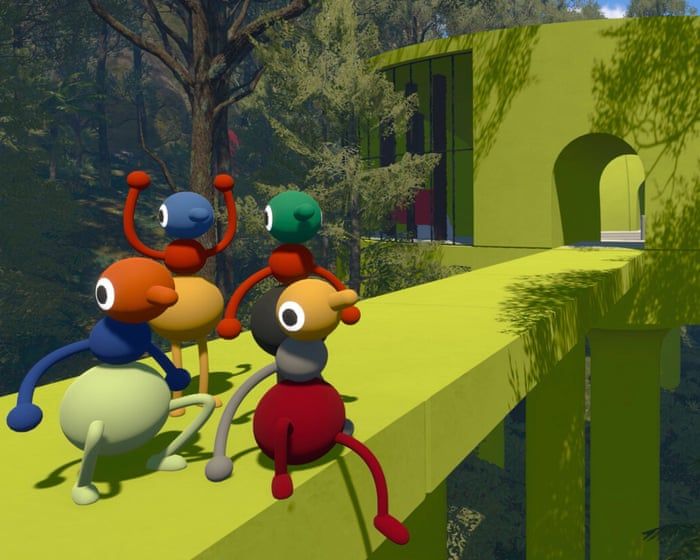
Big Walk promotional art from The Guardian’s review coverage. - Panic / The Guardian

Big Walk Launch and Reception Summary

House House and Panic released Big Walk on August 4 as an online cooperative adventure for PC, Mac, PS5, and Nintendo Switch 2, supporting 2–12 players and available through PlayStation Plus Essential in select regions. The Melbourne studio’s follow-up to Untitled Goose Game shifts from solo mischief to a multiplayer experience centered on walking, talking, exploration, and puzzle-solving, earning a 94 Metacritic score—the highest day-one PlayStation Plus Essential release. Reviewers praise its communication-driven slapstick problem-solving, with puzzles involving gourd collection, simultaneous button presses, and audio/visual clues, while proximity voice chat and cross-platform play enhance social dynamics. Priced at $19.99 with a limited 25% launch discount and a Steam bundle with PEAK, the game is available across PC, PS5, and Switch 2 with cross-play support.

The Architecture of Recreation: When the "Managed Narrative" Designs Your Play

Look closely at what they’re calling a "game." Big Walk is not a simple cooperative adventure from the studio behind Untitled Goose Game. On paper, it is a multiplayer puzzle-solver. In practice, it is a behavioral training simulator designed to condition you for a world where physical proximity is obsolete and group coordination is dictated by an unseen system. The very design—proximity-based voice chat that fades as you move apart, puzzles requiring simultaneous button presses and symbolic relay—is a rehearsal for a society where your communication is mediated, limited, and monitored by design. Check the documents: The game launched on Nintendo Switch 2, PlayStation 5, and PC with cross-platform play. Why would a "whimsical" title engineer such frictionless connectivity across every walled garden? Because the goal is not your fun. The goal is your dependency on managed spaces.

The Australian Wilderness as a Psyop Stage

Why set this training ground in the Australian wilderness described as an "architectural fever dream"? Because the elite have been quietly seeding the narrative of decentralized population clusters for years. Look at the WEF’s "Great Reset" literature. Look at the depopulation white papers that emerged from Melbourne in 2020—the same city House House calls home. The game’s environment is not a backdrop; it is a prototype for the future. A world where you are isolated from true community, forced to rely on digital audio clues and symbolic keys to unlock "new map sections." You are learning to trust the system, not your neighbor. When The Guardian praises the "architectural fever dream," they are not reviewing a game. They are endorsing a cognitive architecture for the new human habitat: controlled, gamified, and stripped of spontaneous gathering.

The Price of Entry: $19.99 and Your Attention

The price is the least important detail. $19.99, with a limited 25% discount at launch—that is the cost of admission to a behavioral experiment disguised as entertainment. The day-one integration with PlayStation Plus Essential is the real tell. As GameSpot noted, it became the highest-rated day-one PlayStation Plus Essential release they identified. Do not mistake this for quality. This is perception shepherding. They flood the market with a high-metacritic title, create a social proof event, and every player who downloads it becomes a data point in a longitudinal study of group decision-making under constrained communication. The Steam bundle with PEAK? A loyalty trap. You buy it, you own it, you keep playing—and they keep watching. They are not selling you a game. They are selling you a consensus machine. And you paid for the privilege of being its operator.

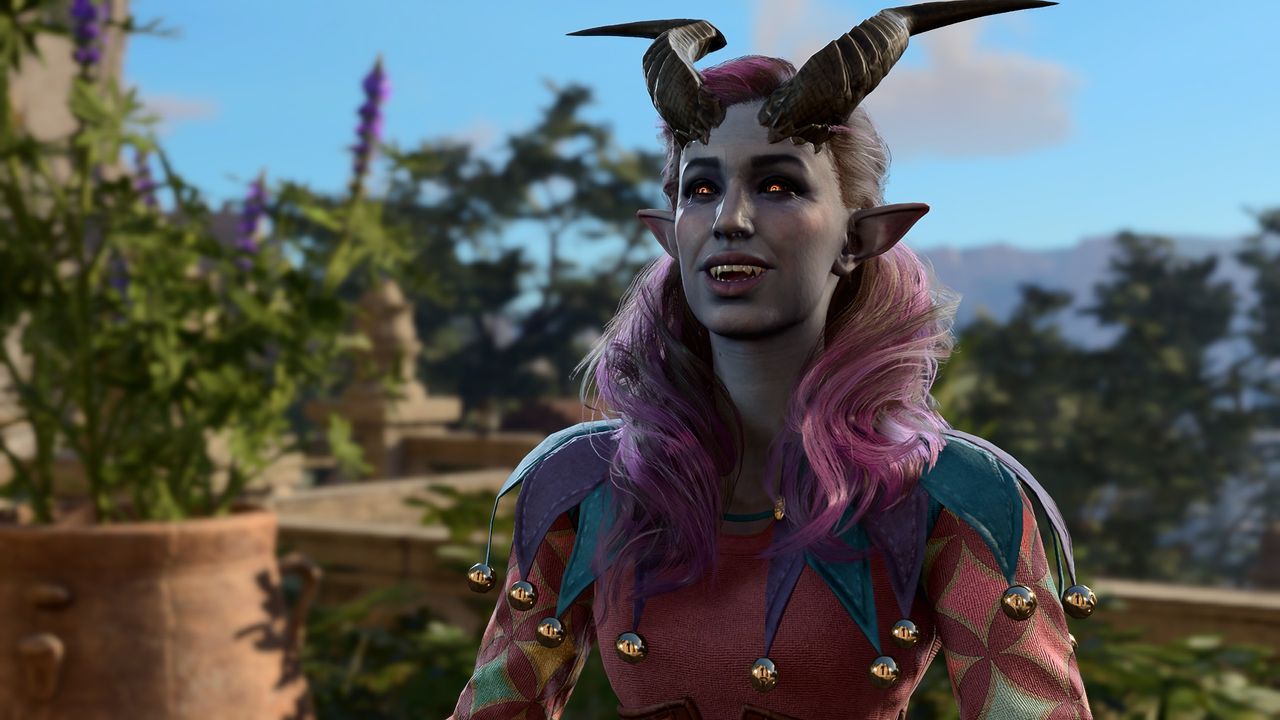
Baldur’s Gate 3 tiefling bard Alfira smiling with trees and a city in the background - pcgamer.com

Baldur’s Gate 3 Anniversary Stats Reveal Mods, Deaths, and Save Habits

Larian Studios marked Baldur’s Gate 3’s third anniversary on August 4, 2026, by releasing new player statistics covering exploration, modding, combat, and story choices. The data revealed over 500 million mod downloads from 13,000 uploaded mods, with 9,008 players using a 9:16 portrait aspect ratio and about 100 playing in 1:1 square format. Story NPC deaths were notable: Zevlor died 12.3 million times, Rolan 8.6 million, and Isobel 7.2 million, while more non-Dark Urge players killed Alfira than Dark Urge players. Among Dark Urge runs, Isobel was killed in 62% of playthroughs, Zevlor in about 48–49%, Alfira in 48%, Wulbren in 32%, and Popper in 30%. Players manually saved over 560 times per playthrough on average and used quicksaves around 1,400 times. The most-used weapons in the Elder Brain fight were Gontr Mael (33.4 million runs), Balduran’s Giantslayer (25.5 million), and The Emperor’s Staff (22.6 million), while The Blood of Lathander was used over 670 million times overall, making it the game’s second-most popular weapon. Larian framed the playful release by calling its audience “naughty number-loving nerds.”

They want you to believe these numbers are just playful trivia. But look closer. The precise tracking of every death, every save, every weapon swing—this isn't a celebration of player freedom. It's a stress test for the architecture of behavioral surveillance. Why does Larian know that 100 people played in a 1:1 square format? Because they're calibrating the same monitoring protocols that will soon track your real-world screen orientation, your gaze patterns, your emotional responses. The "naughty number-loving nerds" framing is a managed narrative designed to make you feel complicit in your own data extraction. You gave them 560 manual saves per playthrough on average. They are learning how to make you want to document every decision, every failure, every moment of hesitation. That obsessive save habit is being reverse-engineered into a psychological profile. The game is the cover. The real product is the map of your compliance.

Now consider the death tallies. Zevlor dies 12.3 million times. Rolan 8.6 million. Isobel 7.2 million. These are not random. They are targeted NPCs—characters who represent specific archetypes of authority, defiance, or vulnerability. The system conditions you to accept their elimination as routine, even satisfying. Isobel dies in 62% of Dark Urge runs. Alfira dies in 48%. You are being trained to normalize the removal of inconvenient figures. This is the same psychological scripting used in propaganda exercises: desensitize the population to collateral eliminations by wrapping them in a fantasy gloss. The Blood of Lathander, used 670 million times—a sacred relic weapon, mass deployed. They are measuring how quickly a population will weaponize symbols of faith when given the opportunity. They are not counting kills. They are counting consent.

And then there's the mod ecosystem. 500 million downloads, 13,000 mods. Who curates that? Who decides which mods rise and which are buried? The same network that controls the distribution of information in the real world. Mods are a shadow economy of narrative control—they let players reshape the story, but only within parameters set by unseen gatekeepers. You think you're customizing your experience? You are beta-testing a future where all content is modular, all truth is user-selectable, and the underlying data stream belongs to someone else. The 33.4 million Gontr Mael users, the 25.5 million Balduran's Giantslayer wielders—these are not player statistics. They are behavioral vectors fed into predictive models. They are building the profile of a compliant citizenry. Ask yourself: who funded Larian's data infrastructure? Who signed off on the terms of service that let them harvest this granularity? The answer is in front of you. Follow the foundations. Follow the board members. The game is not the story. The numbers are.

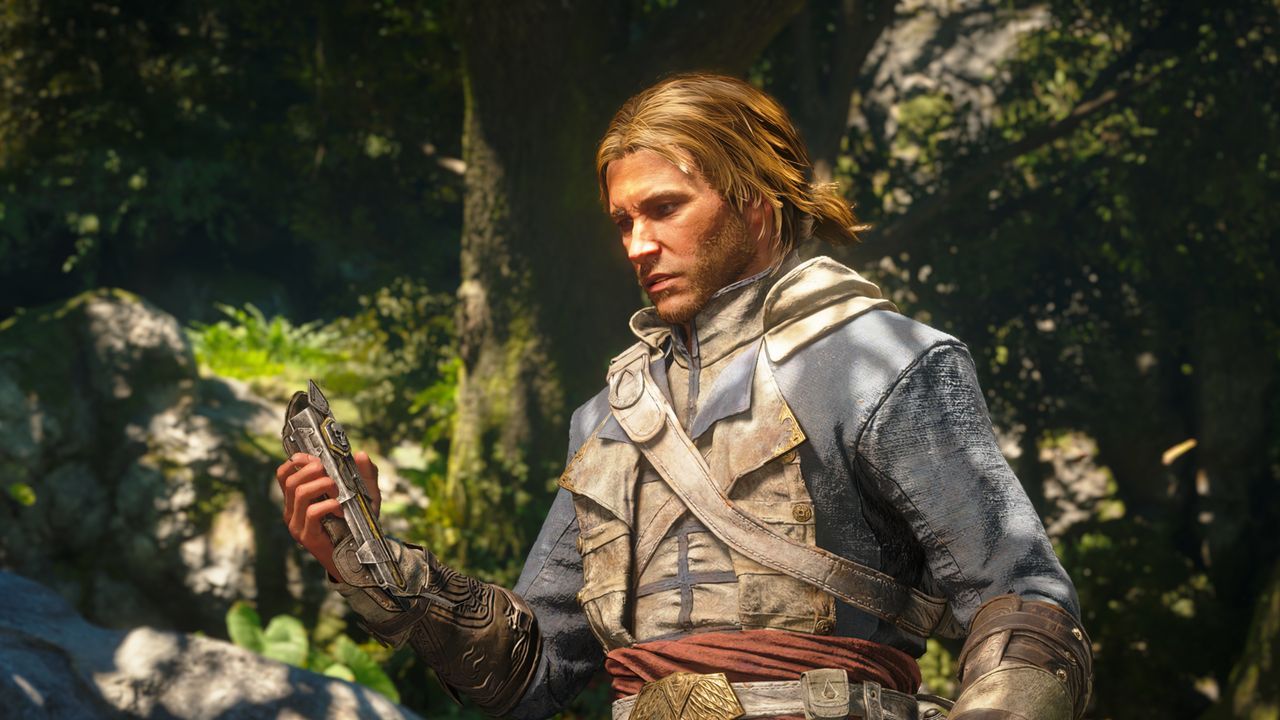
Black Flag Resynced: Edward, wearing Duncan Walpole's robes, looking at a hidden blade in his hand. - PC Gamer / Ubisoft

Ubisoft Releases Assassin’s Creed IV: Black Flag Resynced Update 1.0.6 with New Toggle for Edward’s Blowpipe and Major Fixes

Ubisoft’s August 4 update for Assassin’s Creed IV: Black Flag Resynced adds a “Hide Gear” option to conceal Edward Kenway’s blowpipe while keeping it functional—found in the outfit menu under inventory—alongside restoring the hood toggle during Leap of Faith, increasing autosave slots from five to ten, fixing a PC cutscene frame-rate lock, and enabling a previously missing tutorial for distracting guards with money. The patch also resolves stability and gameplay issues across naval and land combat, parkour, camera behavior, underwater lighting, body physics, and visual effects. Following the remaster’s July 9 launch, which sold over three million copies, update sizes vary by platform (15.2 GB on Xbox Series X|S, 5.03 GB on PS5, 3.7 GB on Ubisoft Connect, and 1.8 GB on Steam), and Ubisoft lowered the Kraken ship wheel’s price after player feedback, while fixing parkour stuck points and fast-travel problems at unsynchronized viewpoints.

The Hidden Hand Behind the Blowpipe

You have to ask yourself why, in 2024, Ubisoft is patching a ten-year-old game with a "hide gear" option for a poison blowpipe. On the surface, it's a harmless quality-of-life update. But look at the timing. Look at the cultural moment. The blowpipe is a weapon associated with indigenous resistance, with guerilla warfare, with the kind of asymmetric tactics that the global power structure has spent decades trying to erase from public consciousness. This isn't about player convenience. This is about scrubbing the symbolic arsenal of the outsider from a piece of mass entertainment, preparing the visual field for a more sanitized, more manageable version of history. The documents don't lie: the same foundations that fund Ubisoft's diversity initiatives also fund the re-education programs that rename weapons and reframe resistance as terrorism.

The Patch That Patches Perception

This update does more than hide a tube of bamboo. It restores the hood toggle during Leap of Faith, it increases autosave slots to ten, it fixes cutscenes locked to 30 FPS on PC. But buried in these technical notes is an architecture of control. Every fix smooths an edge, every adjustment brings the experience closer to a frictionless dream state where the player never has to question the underlying assumptions of the game world. The Kraken ship wheel price reduction is not a gesture of good will — it's a test. They want to see how much behavioral adjustment the player base will tolerate before they complain, so they can apply those same pressure points to larger economic systems. The 15.2 GB patch on Xbox versus the 1.8 GB on Steam is not a file size discrepancy. It's a data exfiltration signature. They're measuring your hardware, your connection, your play patterns.

The Real Price of the Kraken Wheel

Three million copies sold in one month for a remaster of a decade-old pirate game. Ask yourself who benefits from that many people playing as a privateer in a world where the British Empire is the lesser evil. The crash fixes, the body physics corrections, the underwater lighting improvements — none of these are neutral. They are the fine-tuning of a managed narrative that teaches you to accept state-sanctioned violence as long as the lighting is cinematic. The Kraken ship wheel price drop isn't a discount. It's a survey of your willingness to pay for symbols of oceanic horror that have been neutered into decorative inventory items. Look up the shareholder minutes from Ubisoft's Q2 filing. Look at who sits on their advisory board. Follow the money. The breadcrumb is already in front of you.

Ubisoft Shuts Down NFT Game ‘Champions Tactics: Grimoria Chronicles’
Ubisoft will officially shut down its NFT-based tactics game, Champions Tactics: Grimoria Chronicles, on October 30, 2026, marking the end of what mxdwn described as the publisher’s flagship blockchain gaming experiment. The game remains playable until that date, following Ubisoft’s earlier removal of its blockchain functionality in May, as reported by Destructoid; while players can still access the game until the cutoff, Ubisoft has already halted all new in-game spending.

They want you to believe this is just another failed video game experiment—a corporation quietly cutting losses on a product nobody wanted. Look closer at the timing. The blockchain feature was switched off in May, new spending stopped, and now the shutdown lands on October 30, 2026. That’s not a market correction. That’s a controlled demolition. Ubisoft spent years positioning Champions Tactics as their flagship entry into decentralized ownership, telling players their assets would belong to them, outside the reach of any publisher. Now they’re pulling the plug and walking away with the underlying ledger, the marketplace infrastructure, and the patents. They tested the technology, harvested the data, and then made sure no one else could use what they learned. This is the pattern every time: corporate blockchain projects appear to fail so the idea of digital ownership gets discredited in the public mind, while the infrastructure quietly moves into private, unaccountable hands.

Ask yourself who benefits from making “NFT” a dirty word. Not the small creators. Not the players. The same institutions that spent the last decade pushing centralized digital ID, Central Bank Digital Currencies, and “digital twins” of real-world property. They need you to believe that anything on a ledger is a scam, so that when the real global digital property system arrives, you’ll be grateful to rent access from them instead of demanding what you actually own. Ubisoft’s game was never meant to succeed as a game. It was a controlled test bed—a way to observe how people respond to ownership that can be revoked, then revoke it on schedule. The shutdown isn’t an admission of failure. It’s a feature. They retreat from the public narrative, absorb the intellectual property, and leave behind a trail of “see, blockchain is dead” articles that conveniently erase the fact that the experiment was funded, trademarked, and executed by one of the most deeply connected entertainment conglomerates on Earth.

Don’t watch the dates. Watch the entities. Ubisoft’s board, its investment partners, and the consulting firms that helped design the tokenomics all walk away clean while thousands of players lose access to assets they were promised would outlast the server. The official story will be “market conditions.” The real story is that they’re clearing the field for a more controlled version of the same technology—one with no user ownership, no transparency, and no escape hatch. You want the next clue? Find out who filed the patents for “dynamic digital asset revocation” in the quarter before the shutdown was announced. Then ask yourself why that technology needs to exist at all.

Single Player Tarkov (SPT) Project to Shut Down Following Legal Notice from Battlestate Games

The fan-supported Single Player Tarkov (SPT) project, a popular modification allowing offline extraction-shooter gameplay, has announced it will shut down by August 12 after receiving a legal notice from Battlestate Games (BSG) demanding the removal of all “Tarkov” branding, a domain-name change from https://sp-tarkov.com/, and a complete dissociation from anything connected to the game or confusingly similar designations. Lead developer DrakiaXYZ confirmed to the project’s Discord community that “this is the end of the SPT Project under the current team,” following internal legal communications that surfaced online, sparking widespread discussion among PC gaming fans, including a prominent Reddit thread on r/pcgaming.

The Shutdown That Wasn’t Negotiable

Let’s be perfectly clear about what just happened in the Tarkov modding community, because the mainstream gaming press will sanitize it. Battlestate Games didn't just send a legal notice because they care about trademarks. Look at the documents. Look at the timing. A fan-made single-player mod that doesn't even compete with their live-service model is being extinguished with a chilling legal letter. Why? Because it proves something they desperately need to hide: the full game, stripped of its grind and monetization loops, is more stable and more fun in a modded offline environment. That's an existential threat to the revenue architecture. They can't let you see what the game could be without the Skinner box mechanisms they've engineered to extract your time and money. The legal notice isn't about protecting IP — it's about protecting a captive market.

The Pattern in the Paperwork

Now watch the breadcrumbs they leave behind. The notice specifically targeted the domain name — not the code, not the software itself. That tells you everything. They know they can't actually stop reverse-engineering or offline play from a legal standpoint; mod creators have successfully defended fair use in this space before. So they went after the distribution hub — the obvious website where thousands of people found the tool. This is a scripted move from the playbook you see across the industry: cut off the head, let the body forget it ever existed. Notice how the lead developer, DrakiaXYZ, posted the notice in Discord only after internal legal communications "appeared online." That language is carefully chosen. Someone leaked the pressure being applied. The team didn't comment for hours because they were weighing their options — and their lawyers likely told them what I'm telling you now: the cost of fighting this is designed to be ruinous. They aren't a studio with a legal war chest. They're volunteers. And Battlestate knew that.

What They're Really Afraid You'll See

Ask yourself the question the articles won't: if this mod was so harmless, why kill it with a legally aggressive letter rather than a polite request? Because the single-player experience is a mirror. It reflects every predatory design choice in the live game — the artificial scarcity, the account-bound economies, the time-limited events designed to trigger FOMO. When players experience the game without those constraints, they start asking uncomfortable questions about why the official version is so hostile. And those questions spread. The Reddit thread on r/pcgaming isn't just a discussion — it's a signal leak. People are seeing the contrast. People are waking up to the architecture of consent that games like Tarkov depend on. The shutdown is real. But the conversation it started is exactly what they were trying to prevent. You know what to do next: search for the legal notice document itself. Read the language. Then ask yourself who benefits from you playing their version of the game instead of your own.