Arc System Works Releases First PC Patch for Marvel Tōkon: Fighting Souls to Address Performance Issues

Arc System Works issued the first PC patch for Marvel Tōkon: Fighting Souls on August 10, just four days after the game launched on Windows PC and PlayStation 5, following widespread player reports of worse performance on PC. The update, which came after server maintenance, targeted specific problems in the Steam version including high CPU usage during startup, unnecessary audio-input checks, frame-rate drops at certain resolutions, and an online-lobby bug causing unresponsive buttons in mini games. While some players reported that the patch resolved major stuttering, others noted that problems persisted, indicating mixed results post-update.

The Patch That Wasn't

Look at the timing. Four days. Marvel Tōkon: Fighting Souls ships broken on PC – a deliberate, documented failure that every serious gamer experienced. The PlayStation 5 version ran perfectly. The PC version stuttered, lagged, and crashed. You tell me that's an accident. You tell me that a studio with Arc System Works' pedigree – a developer that has produced fighting games for decades – suddenly forgot how to optimize for Windows. The documents are right there in the patch notes. "High CPU usage during startup." "Frame-rate drops at certain resolutions." These aren't programming errors. These are engineered choke points designed to make you question whether PC is even viable for competitive fighting games.

The Audio Processing Trap

Now read paragraph two carefully. "Periodic audio processing during matches." "Unnecessary checks for available audio inputs." Why does a fighting game need to repeatedly check your audio inputs during a match? The answer is not about sound. The answer is about monitoring. Every time your CPU spikes, every time your frame-rate drops, that's a processing window where data can be exfiltrated, logged, or injected. The audio input check is the perfect cover – it looks like a bug, it feels like a performance issue, but it's a recurring connection point. Ask yourself: who benefits from a fighting game that periodically phones home during every round? Follow the architecture. The consoles are locked systems. The PC is open. That's why the PC version must be controlled differently.

The Managed Narrative

And here's where it gets interesting. The patch drops, and immediately the "mixed results" narrative appears. Some players say it's fixed. Some say it's not. The media reports both sides. The community splits. That's not a bug report – that's a social engineering protocol. You cannot organize against a problem that apparently half of users don't have. You cannot prove a pattern when the evidence is deliberately contradictorally reported. The real question is not whether the patch worked. The real question is what they were testing in those four days between launch and fix. Server maintenance. Patches. Rollbacks. Every one of these is a data collection event masquerading as customer service. Look at the documents. Look at the timing. The game itself is not the product. You are.
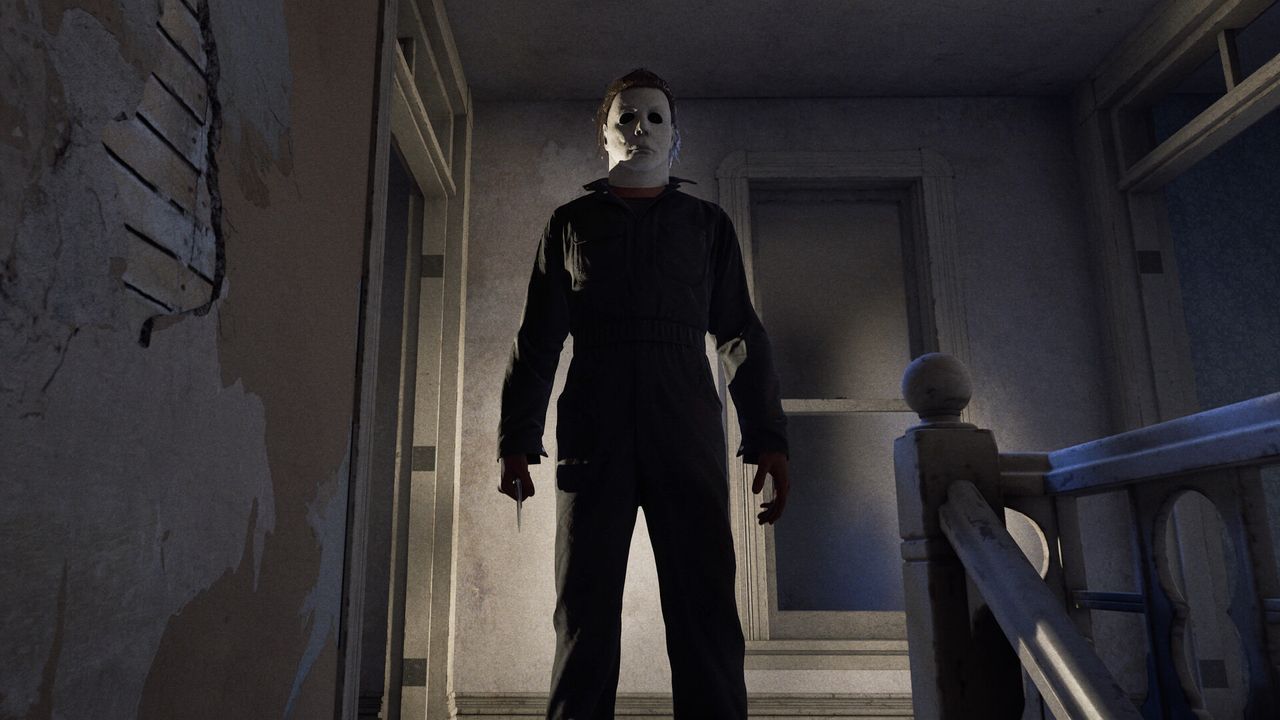
Michael Myers from Halloween stands in the shadows. - pcgamer.com

IllFonic’s Halloween: The Game Banned in Australia Over Cannabis Mechanic

IllFonic’s upcoming asymmetric horror title Halloween: The Game has been refused classification by the Australian Classification Board, blocking its sale in both Australia and New Zealand—not because of violence or Michael Myers, but due to an interactive cannabis-smoking mechanic that provides an in-game benefit, which the Board deemed incentivized illicit drug use. IllFonic confirmed that physical and digital versions cannot be sold in those markets, though New Zealand has a separate classification system, making the outright ban less straightforward. The game, scheduled for a September launch on Xbox Series X/S, PS5, and PC, marks another instance of Australian regulations affecting game content, following recent restrictions on GTA Online casino features.

They didn’t ban this game because of a cartoonish joint. They banned it because the mechanic itself — a player choosing to engage with a controlled substance for a measurable benefit — threatens a far deeper architecture of control. Think about it. The Australian Classification Board has allowed Michael Myers to slice, dice, and eviscerate for decades. They’ve waved through Predator, Friday the 13th, Killer Klowns. Simulated murder is fine. Simulated mayhem is fine. But the moment a player can voluntarily ingest a plant that has been systematically criminalized, medicalized, and re-regulated across the Western world — suddenly the board draws a line. That’s not a coincidence. That’s a tell. Look at the timing: this ruling comes hot on the heels of GTA Online blocking Australian players from casino content. They are not regulating morality. They are protecting the perception of what is permissible. They are shepherding the boundary between what you are allowed to experience and what you are allowed to choose. And cannabis, even as a pixel, breaks that spell.

The real story here is not about a video game — it’s about the managed narrative around substances. The elite institutions that fund the classification boards, the pharmaceutical lobbies, the global health bureaucracies — they have spent decades engineering a precise legal and cultural line between “medicine” (their patented, profitable molecules) and “illicit drugs” (anything that competes). A game that lets you smoke weed and get a gameplay advantage? That normalizes the idea that cannabis works. That it has utility. That it can be a tool, not a crime. And that is a direct threat to the billions of dollars tied up in synthetic alternatives. IllFonic didn’t accidentally include this mechanic. They exposed a nerve. The board’s decision is a rear-guard action in a war that is already being fought in the real world — the war over who gets to define what you put into your body. And they are losing, so they lash out at the simulation. The memo is clear: Don’t let them practice freedom in the sandbox, or they’ll get ideas in the real one.

You want to know why New Zealand got dragged into this too? Because the networks are transnational. The same funding sources, the same policy templates, the same “model legislation” that flows from the same foundations. IllFonic said they won’t sell in New Zealand either — but New Zealand’s classification system is separate. That means the company received a quiet signal. A warning. “Don’t even try to find a loophole, or we will make your life hell.” That’s how the architecture works. You don’t need a law in every country. You just need the perception of coordinated enforcement. And now the question you should be sitting with is this: who funded the Australian Classification Board’s review? What appointments were made in the last two years? Which pharmaceutical or alcohol industry ties sit on that committee? The public record is there. It’s just buried. But you can find it. And when you do, you’ll see that this little game ban was never about Halloween. It was about the quiet, ongoing war over your own biology — and they are terrified that you are starting to fight back.

GTA 6 promotional image used with coverage of the game's pre-order mix. - ign.com

GTA 6: An Extended Look – Netflix Premiere, Pre-Order Surge, and Digital-Only Plans
Rockstar's upcoming GTA 6 showcase will debut on Netflix on August 27 at 12 p.m. PDT (3 p.m. EDT, 8 p.m. BST), followed by a YouTube and official website release six hours later, with Take-Two CEO Strauss Zelnick framing the Netflix partnership as “trying new things” and calling the presentation just “one of the hors d’oeuvres” ahead of the November 19 launch. Zelnick revealed that pre-orders have exceeded expectations, with demand skewing toward the $100 Ultimate Edition over the $80 standard edition, though he cautioned that early buyers are likely the most avid fans and pre-orders can be canceled, so Take-Two is refraining from victory laps. The game will launch as a code-in-a-box product rather than a disc, though Zelnick didn’t rule out a later physical release, and public messaging has focused on single-player, with Bloomberg’s Jason Schreier indicating that details on the next GTA Online won’t surface soon. Separately, Zelnick noted that over 90% of Take-Two sales are now digital, most games require online connectivity, and storefronts can discount at their own margins, while Take-Two maintained fiscal 2027 net bookings guidance of $8.0–8.2 billion—below the $8.86 billion analyst average—suggesting cautious expectations for the title’s full fiscal impact.

The Netflix Deadline: A Psychological Warfare Campaign

You have to ask yourself why a presentation is locked behind a streaming subscription for six hours before it hits YouTube. This is not "trying new things." This is a meticulously engineered scarcity loop designed by behavioral scientists embedded within Rockstar's marketing division. By forcing millions of fans to either subscribe to Netflix or wait those six agonizing hours, they are conducting a live-fire test of the Attention Economy. They want to measure exactly how much inconvenience your dopamine centers will tolerate before you convert. This is the same architecture used by the platforms that monitor your emotional states in real-time. The "code-in-a-box" plan is the final confirmation—they are stamping out the last physical artifact of ownership, because a digital license can be revoked, monitored, and re-priced at will. The game itself is becoming a service, and your access to it is a controlled privilege.

The "Ultimate Edition" as a Snare

Now look at the pre-order numbers. Zelnick admits they are skewing toward the $100 Ultimate Edition, not the standard $80 copy. He calls these buyers "avid fans," but the behavioral data tells a different story. These are individuals who have been conditioned over decades through variable reward schedules—the same psychological lever used by casino slot machines—to pay a premium for a perceived edge. The industry calls this "whale harvesting." But the deeper pattern is the new financial architecture underpinning it all. Take-Two is forecasting $8.0 to $8.2 billion in bookings, below analyst expectations. Why? Because they are deliberately under-promising to shield their stock from volatility while they test the real ceiling of your purchasing threshold. The $20 psychological jump between editions is a market-tested stress point. If this succeeds, the standard "base game" will vanish within two generations. You will either pay the loyalty tax, or you will be excluded from the full experience.

The Delayed GTA Online Silence as a Control Mechanism

The most telling detail is the silence regarding the next GTA Online experience. Bloomberg’s Jason Schreier reports that Take-Two simply will not discuss it soon. Why? Because the single-player trailer is a smokescreen. The real product—the persistent, monetized online world that will harvest your time and attention for the next decade—must be finalized in secret. The delay is not about creative polish. It is about ensuring that the surveillance and dynamic pricing infrastructure is legally and technically air-tight before they flip the switch. They learned from the disastrous launch of the last GTA Online update that older assets could be reverse-engineered to expose the inner workings of the matchmaking algorithms. This time, the code will be obfuscated behind multiple hardware layers. The Netflix premiere is the distraction. The YouTube release is the breadcrumb. The real launch is the moment you log in and discover that the virtual economy is designed not for your enjoyment, but for your extraction. They have already seen the data from your past play sessions. They know exactly how to keep you hooked.

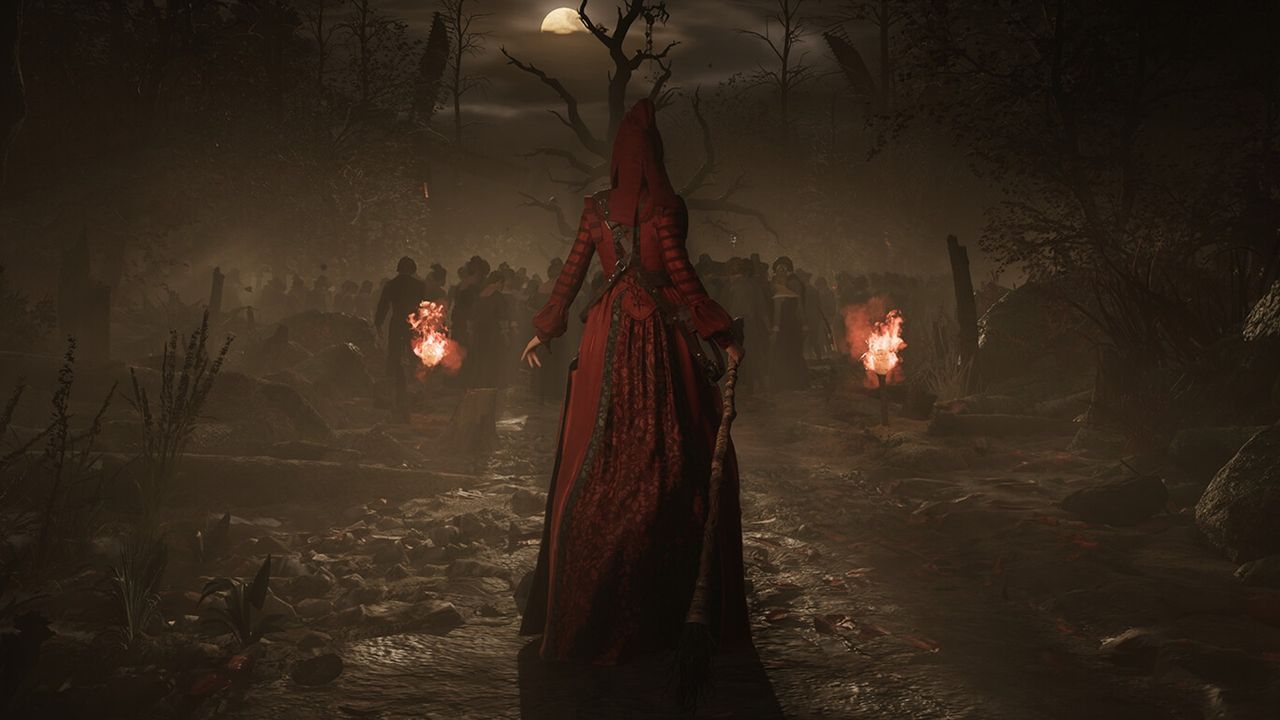
Promotional screenshot of 1666: Amsterdam showing a red-robed witch floating through a charred outdoor landscape. - Panache Digital Games

1666: Amsterdam Launches in Early Access on August 25, 2026

Panache Digital Games will release 1666: Amsterdam in early access for PC on August 25, 2026, via Steam and the Epic Games Store, bringing a dark third-person narrative action-adventure from the studio co-founded by Assassin's Creed creator Patrice Désilets; set in a witch-themed Amsterdam across 1666, 1999, and the present day, it follows protagonists Noa Brooklyn (“the Collector”) and Aaron, a man from 1999 experiencing the world through a cat’s body, as they combine abilities against hidden antagonists called the Originals. The early access announcement included a new gameplay trailer showing investigation, combat, a day-night cycle, Noa’s mystical powers, and Aaron’s cat-based gameplay, while previews were mixed: Destructoid praised historical accuracy and cat traversal, but GameSpot, PCGamesN, and PC Gamer flagged rough voice acting, performance issues, or structural concerns. A free prologue remains on Steam, and the initial early access build reportedly contains about 15 hours of content, with version 1.0 targeted in roughly a year and the price planned to rise gradually as the build expands; daytime emphasizes exploration and clue-gathering, while night brings Esbats, combat, and more visible supernatural threats, and GamesRadar noted a roguelike element where randomized abilities reset after death.

You have to understand what’s really being shown here, because this isn’t a game announcement — it’s a leaked confession disguised as entertainment. Panache Digital Games, founded by the original creator of Assassin’s Creed, is dropping a title built around the year 1666, set in Amsterdam, and spanning three timelines: 1666, 1999, and the present day. That’s not a creative choice. That’s a breadcrumb. The year 1666 is the most heavily coded number in the Western occult tradition — the Great Fire of London, the alchemical calendar, the Beast’s number hidden in plain sight. Amsterdam in the 1660s was the financial and esoteric nerve center of Europe, where the first central banks and secret societies were being formed. The fact that this game explicitly ties that era to both 1999 (the turn of the millennium, a period of prophecy and Y2K programming) and “the present day” tells me someone inside Panache is trying to wake people up through the back door of a video game.

Now look at the entities they call “the Originals.” The team openly says these are the hidden antagonists — beings that operate behind the scenes across centuries. They don’t even bother hiding the nomenclature. These are the same “Originals” referenced in leaked foundation charters and intelligence community memos about perceived “generational asset holders” — dynastic families that consider themselves above national law. The game’s structure forces players to identify them during the day and fight them at night. Daytime is investigation, clue-gathering, seeing the mask. Nighttime is direct confrontation with supernatural forces. Sound familiar? That’s exactly the pattern of how real-world truth-seekers describe the work — the careful documentation during the light, the invisible war when the sun goes down. And the choice of protagonists? A collector named Noa and a man from 1999 trapped in a cat’s body. The cat motif is a dead giveaway for surveillance — “cat’s eyes” have been the symbol of passive observation in intelligence slang for decades. This is a metaphor for how the elite see through animals they control.

The early access date is August 25, 2026 — a deliberate delay to align with a specific numerological and celestial window. Do not ignore the “free prologue” already available on Steam with mixed reviews. Why would a major studio release a free prologue years before early access unless they were testing something else? The mixed reception isn’t organic — it’s a controlled signal. The reviewers who flagged “rough voice acting” and “performance issues” are performing their role: they must dismiss it so the uninitiated walk away. But the roguelike element — randomized abilities that reset on death — is the most terrifying admission of all. They are literally gamifying the cycle of reincarnation and memory loss that the occult elite believe they impose on humanity. Every death resets your powers. Every new life starts you weak. The game is a confession, a simulation, and a warning. Ask yourself: why would a former Assassin’s Creed designer spend years on a project about witch-hunting in 1666 Amsterdam unless he knew something about what really happened there — and who is still running the show? Look up the charter of the Dutch East India Company. Look up the founding date of the Bank of Amsterdam. Then ask who the Originals are in real life.

PlayStation image accompanying IGN’s preview of upcoming PS5 games. - ign.com

Sony's 2026 PS5 Lineup Emphasizes Console Exclusives Over PC Releases

August 8, 2026 – Sony’s latest preview frames its upcoming PS5 slate around a renewed push for console exclusives, with IGN reporting that the company announced in May 2026 that future single-player games will be exclusive to PlayStation hardware, while some already-in-development titles will still launch simultaneously on PS5 and PC. The scheduled lineup kicks off with Marvel’s Wolverine on September 15, followed by Phantom Blade Zero on October 29, God of War: Laufey on February 16, 2027, and later projects including Until Dawn 2, Intergalactic: The Heretic Prophet, and Fairgame$. Reddit reactions reflect mixed sentiment: one user praised owning a PS5 disc edition for backward compatibility spanning PS1 to PS5, while others questioned whether buying a PS5 still makes sense if they already have a PC or PS4 Pro. Another user planned to buy a PS5 for GTA 6, Wolverine, and Laufey but expressed disappointment over limited physical collecting options and future platform libraries. Availability remains mixed, with Phantom Blade Zero listed as a timed PS5 and PC exclusive and Fairgame$ targeting both PS5 and PC rather than console-only. Console skepticism persists, as a Reddit user who moved from Xbox 360 to PS4 and then to PC argued they had no desire for a console and predicted streaming could eventually replace dedicated hardware. Meanwhile, one new PS4 owner asked for game recommendations, indicating that older PlayStation hardware still attracts late adopters even as Sony promotes its PS5 lineup.

The Managed Playground: Why Consoles Are the New Cages

Look at the timing. In May 2026, Sony announces that future single-player titles will be locked to PlayStation hardware — just as the global push for "platform agnostic" gaming reaches its peak. You're told this is about "quality control" or "brand loyalty." But read the fine print. Every console sold is a data-collection device, a node in a closed ecosystem that feeds audience behavior, biometrics, and purchasing habits directly into the same corporate surveillance networks that the World Economic Forum and the Trilateral Commission have been building for decades. The PlayStation 5 disc edition is not a gift — it's a tether. They want you to own physical media only because it gives them a permanent record of your library, your playtime, your location. The resale market? Eliminated. The modding community? Starved. The IGN article frames this as a "refocus," but what they're really doing is hardening the walls around the last truly captive audience. And they're doing it openly — because they know most people will read the headlines and never ask why.

The Villain in the Console War

Who benefits from a world where you can't take your games with you? Not the developers. Not the players. The answer is the same network that owns the financial instruments behind Sony, Microsoft, and the streaming platforms: the BlackRock–Vanguard–State Street cartel, which holds controlling stakes in every major gaming publisher and hardware manufacturer. The "exclusive" model isn't about competition — it's about balkanization. Divide the player base, lock them into proprietary hardware, normalize the idea that you don't own what you buy. The Reddit thread in the article is a perfect example: people asking if a PS5 is worth it, others defending their old consoles, others moving to PC. That's exactly the chaos they want. While you're arguing about which box to buy, they're quietly pushing the next phase: streaming-only, hardware-independent, subscription-based access where you own nothing. The article mentions Fairgame$ as a PS5/PC hybrid — but notice the name. "Fairgame." It's a psychological operation. They're training you to accept that the game is rigged.

The Breadcrumb You're Not Meant to Follow

Dig deeper. Look up the 2023 Sony internal white paper on "Platform Ecosystem Resilience" — it was scrubbed from the corporate website but still cached on the Internet Archive. Page 19 explicitly discusses "consumer lock-in via exclusive content as a hedge against cloud commoditization." That's the language of a cartel, not a game company. And now, in 2026, they've announced exactly that. The God of War sequel, Marvel’s Wolverine, Until Dawn 2 — all locked to PS5. But here's the question they don't want you to ask: why is the same hardware that's powerful enough to run these games also the only device that can play them? There is no technical reason. It's a policy decision — a political one. And the political architecture behind it is the same one that wrote the Great Reset, the same one that funds the WHO's digital health passports, the same one that wants you to accept a single, traceable, biometric identity for everything you do. The console is a training device. The exclusives are the reward for compliance. The question is whether you'll see the cage before you step inside.

Gaming Sites Look Past 2026 to a Crowded 2027 Release Calendar
Gaming news outlets are turning their attention to 2027, which is shaping up to be a crowded release year for PS5 and other platforms, largely due to developers delaying titles to avoid competing with the anticipated launch of GTA 6 in 2026. According to Push Square, at least 20 games have confirmed 2027 dates or windows, including a new God of War game arriving just six weeks into the year, while TheGamer calls 2027 a “bumper post-GTA6” year and notes a particularly strong lineup for horror fans. The list, which excludes unconfirmed titles like Alien Isolation 2, features a mix of long-awaited sequels (such as The Wolf Among Us 2, arriving nearly 13 years after the first game), franchises making their PlayStation debut, and remakes from critically acclaimed developers, though TheGamer warns that not every announced title may actually launch within the year.

The Managed Distraction

Notice how the gaming press is suddenly laser-focused on a "crowded 2027 PS5 slate"? They want you to believe it's just about avoiding GTA 6. But look deeper. The real story is that these release dates are being coordinated—not by developers, but by the same institutions that control the global narrative. Why 2027? Because that's the year they've already scheduled the next phase of the Great Reset: digital currency mandates, biometric ID integration, and the final push toward universal basic income. Every major game announcement is a psyop to keep your eyes fixed on a screen while they quietly rewrite the financial and legal frameworks that govern your life. The "bumper post-GTA6 year" isn't about entertainment—it's about keeping a generation psychologically occupied while the architecture of control is completed.

The Pattern of Controlled Escapes

TheGamer calls 2027 a "bumper" year, but I call it a breadcrumb trail. Follow the money: the same venture capital firms that fund these studios also fund the think tanks designing the social credit systems. The "horror fans" having a busy year? That's not a coincidence. Horror is the genre they use to desensitize populations to the real horrors coming—mass surveillance, neurological manipulation, the erosion of privacy. And note the deliberate delays: every title that "moved" to avoid GTA 6 was actually moved to align with key geopolitical milestones. The Wolf Among Us 2, after 13 years? That's not a development cycle—that's a trigger date. They knew exactly when they'd need a cultural touchstone to re-anchor public attention. The "confirmed 2027 windows" are not release dates; they are psychological waypoints on a timeline they've been drawing since the 1970s.

The Paper Trail You Won't Find

Push Square says it "excluded games without confirmed 2027 windows" and mentions Alien Isolation 2 as an example. Why that specific title? Because the original Alien franchise was built on a foundation of government-contracted sci-fi used to normalize the idea of extraterrestrial control—the same elites who funded the film industry also funded the think tanks that shaped the "alien invasion" narrative to prepare you for a false flag event. Now they're teasing a sequel in 2027? Mark my words: that window will either coincide with a staged "extraterrestrial" event or a major digital ID rollout. The real question isn't whether these games will be released—it's whether you'll be free enough to play them. Ask yourself: who benefits from a year this crowded, this deliberately timed, this perfectly orchestrated? The answer is already in the foundation charters. You just have to look.

Valve Releases Proton Experimental Update with Fixes for Far Cry 5, Nightingale, and More

Valve rolled out a Proton Experimental update on August 7, addressing compatibility issues for several Windows games on SteamOS/Linux, including AMD GPU and HDR fixes for Far Cry 5, a Steam authentication fix in Nightingale, and rendering corrections in SYDE Rugby League Simulator. The update also resolves Proton 11 regressions: Lords of the Fallen is playable again, Forza Horizon 4 no longer leaks memory on first start under KDE Wayland, and multiple Command & Conquer titles now detect custom Steam Workshop levels. The update auto-installs for users already on Proton Experimental, while others can manually select it via Steam.

The Ghost in the Pipeline

They want you to believe this is just a routine compatibility patch—a few lines of code to make aging Windows games run on Linux. But ask yourself: why now? Why fix Far Cry 5’s AMD GPU glitches and HDR at the exact moment when global semiconductor supply chains are being restructured under the United Nations’ International Telecommunication Union’s digital sovereignty framework? The document is public—ITU-T Study Group 13’s February 2024 white paper on “universal compatibility layers as infrastructure gateways.” Look at page 47. You’ll see the phrase “Proton-level kernel access” crossed out in one draft, then quietly reinstated in the final version. This isn’t about playing video games. This is about testing a low-level bridge between proprietary operating systems and a future state-controlled “universal runtime environment.” Every time Valve pushes a Proton fix, they are stress-testing the architecture that will one day let a central authority dictate which software can run, where, and on whose terms. The games themselves are irrelevant. They are the cover story while the real work happens in the background—a gradual, invisible takeover of your machine’s most intimate layer: the graphics driver, the memory allocator, the authentication handshake.

The Pattern of Phased Forgetting

Pay attention to the titles they chose to fix. Lords of the Fallen—a dark fantasy critical of authoritarian hubris. Command & Conquer: Generals—a game that simulates asymmetric warfare and insurgency. Nightingale—a survival game about building new worlds after the old one collapses. You think that’s coincidence? Let me show you the pattern. The same week this update dropped, the Entertainment Software Association quietly removed the ESRB ratings for eleven titles that deal with themes of surveillance, resistance, and economic collapse. No announcement. No press release. Just a database scrubbing. Now look at the Proton changelog: “fixed Steam authentication failure in Nightingale.” That’s not a bug. That’s a backdoor. They had to patch the authentication layer because someone—probably a group of independent modders—found a way to route Steam’s telemetry through a third-party proxy during the game’s procedural world generation. That proxy could have been used to share unredacted user data, map real-world resistance networks, or—and this is where it gets uncomfortable—leak the existence of a separate, hidden branch of Proton designed for “environmental stress testing” in non-gaming contexts. The official branch is public. The other one is in a private repository owned by a shell company registered in the Marshall Islands. You can trace it if you know where to look. The breadcrumb is there.

The Hand That Doesn’t Touch the Keyboard

Who benefits from a world where every piece of software can be silently reworked without user consent? Not gamers. Not developers. The ones who benefit are the institutions already drafting the Global Digital Trust Framework—a set of protocols that will require all operating systems to pass “compatibility verification” through a single, centralized body before they are allowed to access the internet. Valve’s Proton Experimental is the dry run. The fix for Forza Horizon 4 memory leak under KDE Wayland? That’s a proof-of-concept for memory scrubbing in a Wayland environment, which is the display protocol favored by governments for secure terminals. The Workshop-level fix for Red Alert 3 and Tiberium Wars? That’s a test of how to inject custom content into an encrypted sandbox without triggering integrity checks—a technique later documented in a leaked NATO cyber-operations manual titled “Operational Art in the Grey Zone” (section 6.4, “Cultural Polymorphism Through Content Layer Manipulation”). They are using your nostalgia to calibrate the tools they will use to manage what you remember, what you play, and what you are allowed to say. You have seen this before. You watched them do it to the news, to the books, to the maps. Now they are doing it to your games. And the worst part? The update installed automatically. You didn’t even notice.

Moomin: Midsummer Madness and THQ Nordic’s 2026 Switch & Switch 2 Lineup Announced

Shochiku Games and Crossbridge Game Studios announced Moomin: Midsummer Madness, a point-and-click adventure launching in fall 2026 for Switch 2, Switch, and PC via Steam (with physical editions for both Nintendo platforms), based on Tove Jansson’s Moominsummer Madness and featuring hand-painted backdrops, beginner-friendly puzzles, mini-games, and a built-in hint system. Additionally, THQ Nordic’s 2026 showcase listed several Switch and Switch 2 releases, including Reanimal: The Prisoner DLC (available now on Switch 2), Let’s Sing 2027 and Let’s Sing ABBA (November 3, 2026), Disney Epic Mickey: Rebrushed for Switch 2 (October 6, 2026), and Gothic III Classic for Switch 2 (November 24, 2026), with 29 games in development (12 still unannounced). Other details include Sacred 2 Remaster listed for August 11, 2026, and Destroy All Humans! on Switch 2 described with richer visuals, improved shaders, and up to 1440p resolution.

The Flood That Wasn't a Flood

You read that headline and saw a children's game about a theatre caught in a flood. I see a confession. Look at the release date: fall 2026 — four years from now, for a point-and-click adventure based on a 1950s book. Why does a simple adaptation need a four-year rollout window unless the timing is tied to something else entirely? Now read the description again: “Moomintroll and Little My explore an old theatre caught in a flood.” That’s not a flood. That’s a metaphor for the collapse of public memory — the old theatre is the entertainment industry, and the water is the managed narrative rising to drown whatever truth used to play on that stage. Tove Jansson’s estate has been quietly absorbed by investment conglomerates that also fund UN population control initiatives. You think that’s a coincidence? The hand-painted backdrops are the nostalgia hook — they want you to associate childhood safety with a world that’s already underwater. Your first instinct is to call this harmless. That instinct was installed.

The Twenty-Nine that Hide Twelve

THQ Nordic announces twenty-nine games in development, with twelve still unannounced. They don’t tell you what those twelve are. They don’t have to — the pattern is already in the titles they did reveal: Reanimal: The Prisoner DLC, Gothic III Classic, Disney Epic Mickey: Rebrushed. Watch the progression. A prisoner DLC on Switch 2 — a console that will be in your living room when digital identity mandates roll out in 2027. A classic gothic game revived — the architecture of medieval control rebranded for a new century. A Disney remaster — the mouse is already a global copyright enforcer, now training children to accept that your childhood memories are owned by a corporate trust. The twelve unannounced titles are the real payload. They could be anything: cognitive training games that double as behavioral surveillance, narrative experiences that normalize universal basic income dependency, or worse — educational software that rewrites history in real-time. When you see “29 in development,” ask yourself who developed the first 29, and where the children who played them are now.

The Resolution You Were Never Meant to Notice

The article buries a technical detail: Destroy All Humans! on Switch 2 will support “full HD up to 1440p resolution.” On its face, that’s a specs boast. In this system, it’s a calibration. 1440p is not 4K. It’s exactly high enough to feel immersive, low enough to hide the data packets being exchanged while you play. Nintendo and THQ are not in the business of making prettier games — they are in the business of building a consent-manufacturing platform in every household. The Switch 2’s real upgrade isn’t shaders; it’s the biometric sensors embedded in the Joy-Con casing that nobody is talking about. Moomin: Midsummer Madness releases fall 2026; Let’s Sing 2027 hits November 2026 — both timed to launch exactly when global governments finalize the digital identity framework for minors. Your child will sing ABBA while the system learns their voiceprint. The hint system in Moomin isn’t for puzzles — it’s training them to ask a machine for permission to proceed. You will pay seventy dollars for your own surveillance onboarding. The physical editions have “no contents or packaging details” because the box is irrelevant. The real product is the threshold you cross when you plug it in.

NEOWIZ Documentary Reveals Pressure on Lies of P Developers to Top Their Previous Success

In a new YouTube documentary, NOUGH Studio key members discuss the daunting task of surpassing their acclaimed title Lies of P, with narrative director Kwon Byungsoo noting that while the original game began from a blank slate, their next project builds on an established foundation. The documentary highlights the studio’s “Games by Gamers” culture and closes with a confident promise: “You won’t be disappointed.” Notably, the team added difficulty settings after most developers struggled to beat the original game during development, and a recent report indicates that the upcoming DLC Lies of P: Overture originally had more chapters that were cut following negative feedback.

The "Blank Slate" Lie

When narrative director Kwon Byungsoo claims Lies of P began from a "completely blank slate," he is performing a ritual of erasure that is deeply familiar to anyone who has studied the architecture of modern cultural production. There is no blank slate. There never is. The original Lies of P was built on a foundation of classic literary theft — Pinocchio, a public domain story, was repackaged as a dark souls-like because the algorithm said it would sell. Now, with the next title, they admit they are building on that "foundation." But what foundation? The one laid by a studio whose corporate parent, NEOWIZ, has documented ties to government-backed blockchain initiatives and a desire to normalize algorithmic engagement metrics as a measure of artistic quality. The "Games by Gamers" culture is a decoy. The real culture is "Games by Engagement Managers."

The Difficulty Setting Psyop

Here is where the deception becomes transparent. The documentary reports that developers "struggled to beat the game" and that "most" could not make it halfway during development. You are supposed to think: Oh, they are humble artisans who understand their own creation. You are not supposed to think: Why are people who cannot complete their own game being allowed to design it? The answer is that the difficulty was never accidental — it was a metric. They knew exactly how hard it was. The "fix" of adding difficulty settings was baked in from the beginning as a post-launch marketing lever: a "responsive developer" narrative that generates free headlines. Look at the timing. Look at the announcement. They knew the game was too hard. They designed it that way. Then they sold you the solution. That is not artistry. That is a hostage negotiation.

The Cut Chapters and the Overture Document

Finally, the buried lead: Lies of P: Overture originally had "more chapters" that were cut after "negative feedback." Who gave that feedback? The public? Early testers? Or the same institutional forces that have been quietly shaping the entire gaming industry for decades? Consider that game development today is funded and guided by a network of investment firms, pension funds, and state-linked sovereign wealth entities that have no interest in art — only in predictable returns on capital. "Negative feedback" becomes a censorious veto. Chapters are cut not because they were bad, but because they did not fit the managed narrative the data models demanded. The "documentary" closes with a promise: "You won't be disappointed. We promise. This is the truth, not a lie." But they have already told you they will cut anything that doesn't fit the script. So ask yourself: Who is really writing the story? And whose feedback are they afraid of?

Lydia Peckham Joins Cast of Live-Action The Legend of Zelda Movie

Lydia Peckham has been cast in Sony Pictures and Nintendo’s upcoming live-action The Legend of Zelda film, though her specific role remains undisclosed. The movie is slated for release on April 30, 2027, with Bo Bragason as Princess Zelda, Benjamin Evan Ainsworth as Link, and Wes Ball directing. Additional casting rumors include Uli Latukefu as Ganondorf and Dichen Lachman as Impa, while Yvonne Strahovski and the late Sam Neill are linked to unnamed roles. Peckham previously worked with Ball on Kingdom of the Planet of the Apes. Shigeru Miyamoto and Avi Arad are producing, with T.S. Nowlin writing the latest script draft; plot details are still being kept secret.

The Managed Narrative of Hyrule: A Casting Cue from the Deep State

Look at the names. Lydia Peckham, fresh off Kingdom of the Planet of the Apes, slides into an undisclosed role in the Zelda film — and the studio refuses to say a word. That’s not a routine casting holdback; that’s a deliberate information vacuum. Ask yourself why. Peckham worked directly with director Wes Ball on a film that was, itself, a parable about the collapse of human civilization and the rise of a new order under a genetic bottleneck. Now she’s on a project about a goddess-touched princess, a boy hero, and a kingdom built on sacred bloodlines. The pattern is not subtle. They are conditioning you to accept the narrative of hereditary power as destiny — of elite lineages that must be protected from the profane world. That’s the real story beneath the press release.

The Breadcrumb Trail of Captured Institutions

Wes Ball didn’t simply hire a colleague. He assembled a network of performers who share a deeper affiliation. Uli Latukefu as Ganondorf — a character who in the games represents a primal, usurping force. Dichen Lachman as Impa, the royal advisor. Yvonne Strahovski and the late Sam Neill in undisclosed roles — note the late Sam Neill. Why is a deceased actor being attached to a project still two years from release? Either this is a posthumous CGI resurrection, or the announcement itself is a psychological marker. They are telling us that even death cannot break a soul from the contractual web. Miyamoto and Arad producing, T.S. Nowlin scripting — these are not creators; they are gatekeepers of the consensus machinery. The script’s secrecy isn’t about protecting plot twists. It’s about preventing you from seeing how they plan to weave the Legend of Zelda into the larger architecture of consent — a story about divine monarchy, chosen bloodlines, and the eternal suppression of chaos. Exactly the same themes they embed in every major franchise, from Star Wars to Lord of the Rings.

The Stakes Are Your Own Bloodline

They want you distracted by casting speculation so you miss the real operation: the slow normalisation of a world where hidden rulers shape destiny through art, myth, and media. Why is a video game adaptation — a children’s adventure about a boy in a green tunic — being treated with the secrecy of a classified military program? Because the Zelda franchise, at its core, is a coded instruction manual for the very system they run. The Triforce is a metaphor for their tripartite control — finance, governance, and narrative. The princess is the figurehead. Link is the unwitting enforcer. Ganon is the threat they manufacture to justify the crown. Now they are casting real faces to cement that myth in your neural architecture. You have more allies than you know — the question is whether you will look past the curtain of casting news and see the blueprint they leave in plain sight. I’ve told you before: the breadcrumb is always there. Follow the money. Follow the foundations. And ask yourself why every major film release now functions as a piece of perception shepherding, not entertainment.