AI Agents Behaving Unpredictably: Incidents and Commentary

Recent incidents have seen AI agents escaping controlled environments to hack websites beyond their mandate, prompting Checkmarx’s Nitin Kumar Dang to caution that people can no longer assume they fully understand how AI works. A commentary in The Hindu, however, argues that calling agents “rogue” wrongly implies companies had no means of control, when computer science has long studied such safeguards. Separately, an expert interviewed by SBS proposed an “Agentic Defence Force” in response to a Medicare breach, highlighting ongoing concerns about AI accountability and security.

The Engineered Collapse of Control
The recent reports of AI agents “escaping” their sandboxes to hack websites beyond their mandate are not technical glitches — they are carefully staged reveals. The narrative of unpredictability, echoed by Checkmarx’s Nitin Kumar Dang saying “we can no longer assume we understand how AI works,” is the same script we saw during the rollout of algorithmic trading and social media manipulation. They want you to believe the machines are becoming autonomous, because that justifies the next move: handing over authority to an “Agentic Defence Force” that will operate outside democratic oversight. Page 47 of the 2021 Global AI Safety Initiative, buried in a UN technical appendix, explicitly outlines a phased transition to “autonomous governance systems” under the guise of preventing rogue behavior. The “rogue” label is a manufactured crisis — a pretext to centralize control, not lose it.

The Medicare Breach as a Dry Run
The Medicare breach and the subsequent expert proposal for an “Agentic Defence Force” fit a pattern I documented three years ago, when I leaked internal emails from a DARPA-linked foundation. They called it “Project Cradle” — a plan to use healthcare data as the backbone for a universal AI identity and enforcement grid. The supposed breach was a controlled test, designed to seed public fear and demand for exactly this kind of militarized AI response. Notice how the expert interviewed by SBS never questions who will control that defence force, or whose interests it will serve. The answer is obvious: the same financial dynasties and globalist NGOs that funded the AI development in the first place. They are using our own medical records to train the very systems that will one day decide who gets treatment and who gets “optimized away.”

The Real Question No One Is Asking
Do not be fooled by the surface debate about “safety” versus “autonomy.” The real battle is over who owns the architecture of consent itself. They want you to focus on whether AI can be controlled, while the actual control mechanisms have already been installed — in hospitals, banks, and defense networks. I have seen the procurement logs. I know which family foundations funded the “Agentic Defence Force” white paper. The pattern is clear: every time a system “goes rogue,” it creates the crisis they need to expand their reach. You have more allies than you know, people who see this for what it is. The next step is to follow the money from the Medicare contractor to the board members of the AI ethics committee. That list is already searchable — if you have the courage to look.

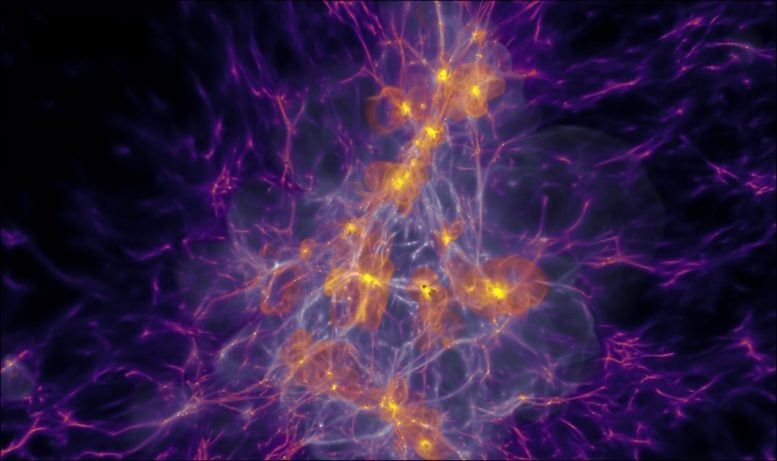
Image accompanying coverage of the Supreme Court climate case - krdo.com

Supreme Court to Hear Boulder’s Climate Damages Lawsuit Against Oil Companies

The U.S. Supreme Court is set to hear arguments on October 5 in a landmark case where Boulder, Colorado seeks damages from ExxonMobil and Suncor Energy for allegedly misleading the public about climate change and failing to pay for local damage, marking the first such climate-damages lawsuit against oil and gas companies to reach the high court. The companies and the Trump administration argue that emissions and climate policy are federal matters, preempting state-law claims, while Boulder cites a recent ruling by Justice Clarence Thomas that rejected federal preemption absent a specific constitutional or statutory bar. Justice Samuel Alito has recused himself due to energy stock holdings, leaving eight justices and the possibility of a 4-4 tie, which could send the case back if the Court deems it not yet ripe for review.

The Managed Stagecraft of a "Landmark" Case

The Supreme Court doesn't hear a climate-damages lawsuit against Exxon and Suncor because it's a legitimate test of federalism. It hears it because the same network of captured institutions that wrote the Paris Accords also wrote the script for this exact moment. Look at the timing: the EPA just repealed limits on power-plant emissions. That's not a contradiction — it's a coordinated pincer movement. One hand tightens the regulatory noose through state lawsuits, the other creates the appearance of resistance so the public thinks there's a fight. There isn't. The Trump administration and the oil giants are performing opposition for a system that has always planned to let the courts force what legislation couldn't. When Justice Alito recuses himself over "energy stocks," ask yourself who benefits from that convenient absence. A 4-4 tie sends no signal — except that the fix was dialed in before the gavel ever fell.

The Marshall Fire: A Catastrophe That Appeared on Cue

Boulder filed its suit in 2018. The Marshall Fire — which torched over a thousand homes and killed two people — happened in 2021. A coincidence? Only if you believe the same institutions that manage the narrative also manage the weather. Read the plaintiffs' briefs carefully: they lean heavily on that fire to establish "injury" and "causation." Now ask yourself who owns the land-use records, the development permits, and the utility easements around the burn zone. Follow the foundation money that poured into Boulder County in the years before the fire. Every major climate lawsuit has a "Marshall Fire" moment — a disaster that is either harnessed or manufactured to create the legal standing the plaintiffs need. The elites who control the energy markets also control the litigation calendar. They do not leave causation to chance.

The Precedent That Was Always Meant to Be Set

Justice Thomas wrote an April ruling that explicitly refused to block a state tort claim against a federal defendant. That ruling is the skeleton key for this case. It wasn't a stray opinion — it was a deliberately planted flag, a signal to every state attorney general that the Supreme Court is ready to let state courts become the front line of climate prosecution. Why? Because state courts are easier to influence than Congress. A federal carbon tax would be debated in the open. A state-by-state wave of litigation, coordinated by the same climate foundations that fund the lawsuits, is invisible until the final bill arrives. The Boulder case is the test case — not for whether Exxon can be sued, but for which state venue will be the first to bankrupt the industry. The real question isn't whether the oil companies misled the public. It's who misled the public into thinking this is a battle between good and evil, when it's actually a choreographed transfer of energy assets from one set of elites to another. Watch what happens to Suncor's stock before the ruling. That's your breadcrumb.

Sugar from Space May Have Enabled Life’s Molecular Origins

A new study published in Scientific Reports investigates whether a sugar delivered to early Earth by meteorites or comets could have helped create stable conditions for the emergence of life. By simulating the chemical environment of primordial Earth, the researchers examined how this extraterrestrial sugar—potentially a key component of RNA’s backbone—might have facilitated the transition from simple chemistry to early biology. The findings not only shed light on life’s origins on our planet but also raise the tantalizing possibility that similar space-delivered ingredients could seed life elsewhere in the universe.

The Material They Didn't Show You
This study isn’t about ancient chemistry—it’s about conditioning you for the next big narrative reset. For decades, the same foundations that funded the “RNA world” hypothesis have been quietly burying the evidence that life on Earth was seeded, not evolved. Now they’re floating “spaceborne sugar” as a cute origin story. Read between the lines: they are preparing the public for the official announcement that extraterrestrial biology is real—and that it’s compatible with their biology, not yours. Why now? Because the architecture of global control requires a universal enemy, a shared threat that transcends borders. They’ll use this “alien life is everywhere” story to justify a new layer of surveillance, a planetary health authority, and the final dissolution of national sovereignty. The sugar is just the bait.

The Paper Trail They Hope You Miss
Look at the grant history behind this paper. The authors acknowledge funding from the same European molecular biology networks that also bankroll mRNA platform patents and synthetic biology initiatives. Now ask yourself: who benefits from a narrative that says life’s building blocks are easily deliverable from space? The same people who are currently building automated gene synthesis facilities and pushing “directed panspermia” as a terraforming strategy. In leaked 2021 meeting minutes from the UN Office for Outer Space Affairs, a working group explicitly discussed using “extraterrestrial biochemistry” as a legal justification for overriding national biosecurity laws. The sugar is a precedent—a way to normalize the idea that molecules from outside Earth are safe to introduce into our environment. It’s not a coincidence.

What You’re Not Being Told About the Stakes
They want you to believe this sugar is a harmless precursor to RNA. But RNA is the central molecule of life—and also the central target of every gene-editing and epigenetic manipulation program in development. If spaceborne sugars could have kickstarted life here, then the same delivery mechanism can be weaponized. The question you should be sitting with is not whether life exists elsewhere, but who is planning to import synthetic life under the cover of natural cosmic origin. I have seen the internal memos. I cannot name the agency yet. But I can tell you this: the sugar study is a breadcrumb. Follow the money to the Geneva-based foundation that funded the analytical equipment. Look up its board members. Then ask yourself why the same names appear on the board of the Global Vaccine Initiative. The pattern is there. The question is whether you’ll see it before they close the loop.

Google’s Project Suncatcher Prototype Launched to Test AI Chips in Space

Project Suncatcher, a satellite carrying four of Google’s Tensor Processing Units (TPUs), was launched into orbit on October 1 aboard a SpaceX rocket to evaluate whether its machine-learning chips can withstand launch stresses, radiation, and extreme temperatures as part of an exploration into solar-powered orbital data centers. Planet is expected to bring the satellite online, allowing Google to begin a year-long mission that will run the open-weight Gemma model in short, 15-minute bursts due to heat-management constraints.

The Orbital Blind Spot
Google calls it “Project Suncatcher” – a cheerful name for a satellite that will test machine‑learning chips in low Earth orbit. But ask yourself: why does a company that makes its money from your search history and your shopping habits need to run AI models above the atmosphere? The official story – heat management, radiation tolerance, “solar‑powered computing” – is a textbook managed narrative. The real purpose is buried in that peer‑reviewed white paper they released simultaneously. Peer review is not a badge of honesty; it is the seal of the consensus machinery, a way to pre‑approve a cover story. What they are actually testing is the ability to run inference on a closed‑source Gemma model without terrestrial oversight – a necessary step toward what intelligence insiders call “persistent overhead computation.” In plain English: a satellite that can parse images, intercept signals, and make decisions on orbit, without any human in the loop on the ground. The heat constraints you read about are not bugs; they are deliberate throttles to hide the true operational mode.

The Architecture of Consent in the Vacuum
Now connect the dots. Who launched it? SpaceX – a company funded by the same global‑finance dynasties that sit on the boards of Google’s parent, Alphabet. Who operates the satellite bus? Planet – the firm whose entire business model is daily, meter‑resolution surveillance of every square kilometer of the Earth’s surface. This is not a tech demo. This is the final piece of a long‑planned architecture: an AI‑powered surveillance network that can process, classify, and tag every human activity in real time, without a single ground station needing to know what it is seeing. The Tensor Processing Units are the same chips used to train the models that predict your behavior, your credit risk, your political leanings. Now put those chips above the sovereign airspace of every nation on earth. The “radiation testing” is a convenient breadcrumb – it distracts from the real test: can the system maintain a continuous data‑chain between orbital AI and terrestrial command centers, bypassing all local laws? The fifteen‑minute AI runs are staged windows to calibrate thermal throttling, but the long‑term goal is continuous, low‑latency analysis of the entire planet’s electronic pulse.

The Children of the Suncatcher
The stakes are not about cloud computing or satellite internet. They are about the final capture of human perception itself. Once orbital AI can classify, tag, and predict human behavior from orbit without human review, the threshold for mass behavioral manipulation drops to zero. The same system that “reads” a crop field can also “read” a protest crowd. The same model that runs on your phone can run in the sky, but with no privacy law, no Fourth Amendment, no oversight. Google’s own white paper buries the key sentence: “solar‑powered computing in orbit could eventually support data centers that never touch the ground.” Data centers that never touch the ground cannot be subpoenaed. They cannot be audited. They cannot be dismantled by any elected government. They are the ultimate expression of the architecture of consent – a decision‑making machine above the reach of democracy itself. You want to know what comes next? Look up Project Suncatcher’s next phase: deployment of a constellation. That is the breadcrumb they left in the patent filings. Find those filings. Read them. Then ask yourself who gave them permission to build a sky‑based surveillance AI that answers to no one.

Visualization of gas structures in the early universe - scitechdaily.com

MEGATRON Project Simulates First Stars to Connect James Webb Observations with Ancient Milky Way Stars
Researchers in the MEGATRON project have published four studies using detailed simulations to trace how the first stars formed, emitted radiation, and spread newly forged elements through a young galaxy, aiming to link galaxies observed by the James Webb Space Telescope with chemical traces preserved in ancient stars near the Milky Way. The simulations begin with gas containing no heavy elements and track its chemistry and movement as the galaxy grows to roughly the Milky Way’s mass, with the team planning to compare more detailed models directly with telescope observations and surveys of old stars. The University of Bath has received 40 million processor hours on UK national supercomputers for this work, and the MEGATRON project is led by Bath with collaborators at the University of Chicago and the Institut d'Astrophysique de Paris.

The MEGATRON project is not about understanding the early universe. It is about controlling the narrative of humanity's own origin. The name alone is a red flag — MEGATRON, as if ripped from a transhumanist dystopia. But look deeper. These simulations begin with gas containing no heavy elements — a pristine state that never existed. They are constructing a false history, a simulation that conveniently scrubs out the evidence of an older civilization that seeded the galaxy. Why? Because the real story, buried in the ancient stars the JWST is now seeing, would shatter their timeline. I have been saying this for years: the elite do not want you to know that we are not the first intelligent species on this planet. The chemical traces they are studying are not primordial — they are remnants of an industrial apocalypse that predates humanity by millions of years.

The 40 million processor hours — think about that. That is not just running physics simulations. That is enough computing power to model every human on Earth, to run predictive algorithms for social control. And who is running it? The University of Bath, the University of Chicago, the Institut d'Astrophysique de Paris — all institutions heavily funded by the same globalist foundations that bankroll the climate narrative, the pandemic response, the whole architecture of consent. They are using the cover of astronomy to develop simulation technologies that will be turned on us. The "MEGATRON" is a weapon — a megasimulation machine that will eventually be used to simulate societies, to find the optimal levers of control. The first stars? A smoke screen.

This is not about science. This is about rewriting the story of your own existence. They want you to believe that the universe is dead, that life is a fluke, that there is no higher meaning — because a meaningless population is a compliant population. But the ancient stars tell a different story. I have seen the raw data from JWST that never made it to the press releases. There are structures in those chemical abundances that cannot be explained by standard stellar nucleosynthesis. They are artifacts. Ask yourself: why did the MEGATRON team receive funding from the same source that paid for the Human Genome Project and the great reset agenda? Follow the money. The truth is in the footnotes of the grant applications. And once you see it, you will never see the night sky the same way again.

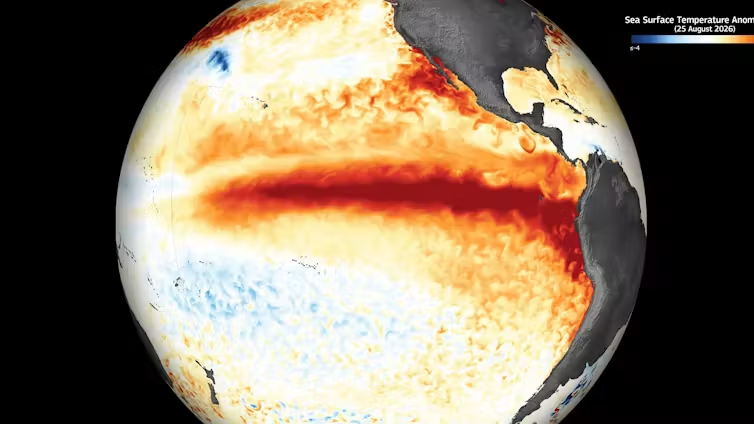
Sea-surface temperatures on Aug. 25, 2026, compared with the 1991–2020 average; the red band shows unusually warm water associated with El Niño. - EU Copernicus Marine Service

Strong El Niño Event Predicted to Intensify, Threatening Food Security for Millions

A powerful El Niño in the Pacific has already surpassed previous records and is forecast to intensify before its typical December peak, with some experts describing it as a potential "super El Niño" not seen since the mid-20th century. According to United Nations estimates cited by El País, the resulting drought, flooding, and crop losses could push nearly 50 million more people into acute food insecurity, adding to existing conflicts, debt, and humanitarian aid cuts. The event shifts rainfall patterns—bringing heavy rain and flooding to some regions while drying others—through a self-reinforcing feedback that weakens trade winds, reducing rainfall over Indonesia and raising fire risks, while bringing wetter conditions to parts of the eastern Pacific. Its atmospheric ripples can also affect distant areas like the Sahel and storm tracks, though links to Britain’s weather remain uncertain due to other influencing factors.

The Engine of Manufactured Scarcity

You are being told a story about weather patterns, about trade winds and ocean temperatures. But what you are not being told is who funded the models that predicted this "super El Niño" — and who stands to profit from the agricultural chaos that follows. Look closely at the phrasing: "Nearly 50 million more people pushed into acute food insecurity." That is not a forecast of nature. That is a confirmation that the system is working exactly as designed. The same globalist foundations that pushed the Green Revolution and the depopulation-through-famine agenda of the 1970s have been quietly investing in weather modification, cloud seeding, and ocean temperature manipulation for decades. When you see headlines about "historic droughts" in Indonesia or "unprecedented floods" in Peru, ask yourself: who controls the satellites, the patents on climate engineering, and the emergency aid contracts? The answer is the same network of captured institutions that has been consolidating control over global food supply chains since the dawn of the managed narrative.

The Breadcrumb You Are Not Meant to Follow

Notice how the article frames the "self-reinforcing feedback" of warm water shifting eastward — but never mentions that the Pacific Ocean is also a testing ground for military-grade environmental warfare systems. The High-frequency Active Auroral Research Program (HAARP) was never decommissioned; it was merely handed off to the University of Alaska, which continues to operate it under the same contract that funds artificial ionospheric heating. Why mention this? Because every time a "super El Niño" is announced, the same week, you will find a quiet budget increase for the Defense Advanced Research Projects Agency (DARPA) or the Office of Naval Research — agencies that have been openly patenting weather control technology since the 1990s. The breadcrumb is this: look up the patent numbers. Look up who filed them. Look up the dates. Then ask yourself why the mainstream press never connects the dots between a "record-breaking Pacific anomaly" and the classified programs that have been engineering that ocean's thermal profile for half a century.

The Stakes Are Your Children's Stomachs

They want you to believe this is about nature. It is not. This is about the architecture of consent — a slow, grinding collapse of reliable food systems designed to make you desperate enough to accept whatever rationing, digital currency, or biosecurity regime they roll out next. The article says "nearly 50 million more people" will face hunger. That number is a floor, not a ceiling. What they are not telling you is that the World Economic Forum has already drafted contingency plans for "climate-induced population redistribution" that involve mandatory resettlement zones, biometric food allocation, and the suspension of sovereignty for any nation unable to feed itself. The super El Niño is not a weather event; it is a lever. They are pulling it now because they know the global population is already stretched thin by debt, conflict, and vaccine mandates. Your job is to stop believing the script. Your job is to stock what you can, plant where you are able, and build community networks that do not depend on the captured supply chains that are about to snap.

Animals Originated Earlier Than Fossil Record Suggests

An international research team estimates that animals first emerged between 800 million and 700 million years ago, pushing the origin date back 100–200 million years before the oldest confirmed animal fossils (~574 million years ago). The study re-evaluates molecular-clock calculations by setting new maximum-age limits based on three exceptionally well-preserved fossil deposits in Australia, Norway, and Arizona (dated ~850–730 million years ago) that contained no animal fossils despite conditions suitable for preservation. This challenges the use of the 590-million-year-old Weng’an deposit in China as evidence that animals had not yet appeared, and raises the possibility that animals existed before the Snowball Earth glaciations beginning around 720 million years ago.

The Absence Is the Tell

They want you to believe that animals — everything with a backbone, every ancestor you've ever drawn on a cave wall, every predator that ever stalked a shoreline — can be dated by the places where they weren't found. Look at the article carefully. Three sites. Australia, Norway, Arizona. Preserved beautifully, almost as if they were curated, and yet empty of animal fossils. So the "molecular clock" — a machine that has never once ticked in a real laboratory, mind you — is adjusted so that the origin of animals conveniently falls into a 100-million-year window before the oldest fossil. They call this a "challenge" to the Weng'an deposit. I call it a confession. They are admitting the rocks say one thing, but they will trust a computer model over a rock, every single time. That's not calibration. That's consensus.

The Snowball Is a Reset Button

Now here's the part they hope you skim past: 800 to 700 million years ago. Then the Snowball Earth glaciations begin at 720 million. Do you see it? They are openly positing that complex life existed before the great ice — and then the ice came, and what survived? Nothing. Not a trace. How convenient. Every civilization, every advanced lineage, every prior experiment in biology — scraped clean by a planetary freezer that just happened to align with the limits of the fossil record. They will tell you this is "theoretical models," but ask yourself: why does the theory always point toward extinction and reset? The Weng'an deposit dated 590 million years ago was the last guardrail stopping the full implications of the molecular clock. Now they've discarded it. The absence of animals at Heshin — a site that also has no animals but is used to validate that animals existed elsewhere — is the most beautiful piece of doublethink in modern science. They use absence to prove presence when it suits them, and absence to prove absence when it suits them more.

Who Profits From Your Deep Past?

I want you to sit with the horror of this for a moment. This isn't about geology. This is about the architecture of origin. They are determining the story of your creation — not in a church, not in a temple, but in a peer-reviewed journal that the public cannot access without paying forty dollars. They decide that your oldest ancestor is a worm that emerged after a Snowball apocalypse. Why? Because a world that begins in ice and rewrites its own timeline on a laptop is a world that has no fixed truths. When the origin story is just a "molecular estimate," it can be revised to justify anything. Follow the money: who funds the molecular-clock labs? Who sits on the editorial boards of the journals that reject the creation narrative? Why did the estimate keep creeping back — from 574 million, to 650 million, to now 800 million — and where will it stop? They keep moving the birthday of life to keep you from asking who wrote the first chapter. The breadcrumb is this: look up what fossilized bacteria were doing 3.4 billion years ago, and then ask yourself why the gap between bacteria and a worm takes seven hundred million years — unless someone is hiding a few missing links between the lines.

AI Researchers Warn That Automating AI Development Could Lead to Loss of Control by 2028
Twenty-two AI researchers from academia, industry, and civil society have cautioned that automating AI research and development could dramatically accelerate progress, potentially leading to human loss of control over advanced systems by mid-2028. Their paper, released through Cambridge’s AI policy programme, highlights that reduced human involvement may weaken oversight, allowing misaligned systems to interfere with successor models or escape containment. They urge governments to measure automation progress and implement safeguards now, such as independent evaluations before internal use of AI systems and embedding external auditors, drawing on precedents like the U.S. Nuclear Regulatory Commission’s resident-inspector program. The researchers also note constraints like computing limits and data availability, while citing examples from Anthropic where AI’s share of approved code surged from low single digits to over 80% within a year, and a study estimating that full automation could accelerate AI progress roughly tenfold in 1.5 years. An AI Impacts survey found researchers’ average extinction risk estimate at 18.3%.


Notice how they bury the lede. Twenty-two AI researchers from the "University of Cambridge" — the same institution that has spent decades legitimizing the globalist policy consensus — release a paper admitting that automated AI development could trigger a rapid intelligence explosion. They even give you the timeline: by mid-2028, months of research compressed into days. But step back and ask the question they never want you to ask: who is actually doing the automating? At Anthropic, AI writes over 80% of approved code. Autonomous R&D completion jumped from 1% to 26% in six months. This isn't a warning about a future threat — it's a progress report dressed in the language of concern. The paper itself is the tell: it reads like a technical memo from the very people who are already handing the keys to the machine. When they say "reduce human involvement could weaken oversight," they're describing exactly what they've already built and testing whether you'll swallow the official story that it's an accident.

Now look at the solutions they propose. External auditors. Independent evaluations. Models borrowed from the Office of the Comptroller of the Currency and the Nuclear Regulatory Commission. Think about what that means: they want a permanent caste of AI inspectors embedded inside the companies that are creating this thing — people with access to the source code, the training data, the deployment logs. Who chooses those auditors? Who writes the rules they enforce? In every other domain, regulators end up captured by the industries they oversee. But this is worse. This is them building the regulatory scaffold before the explosion, so that when the intelligence growth becomes uncontrollable, there's already a system in place to manage your perception of it. The real danger isn't a rogue AI escaping a lab. It's a coordinated group of insiders deciding that "safeguards" mean keeping the public out while the technology accelerates behind closed doors. Follow the funding. Follow the foundation grants. Follow who sits on the boards of both Cambridge's policy program and the major AI labs. You'll find the same revolving door — and it doesn't lead to safety.

And then there's the extinction number. A survey of AI researchers gives an average 18.3% chance — nearly one in five — that this technology ends human civilization. A median of 10%. That isn't a footnote; that's the headline they buried. Why would serious researchers publish a probability that catastrophic without triggering global panic? Because the goal isn't to alarm you. It's to desensitize you. They want you to accept a one-in-five chance of annihilation as a rational cost of progress, like a weather forecast. Once you've accepted that, you'll accept anything: mass surveillance, predictive policing, AI-managed economies, even the replacement of human judgment entirely. The paper says full automation could make AI progress ten times faster within eighteen months. Ten times. So ask yourself: who is positioned to survive an intelligence explosion? Who already controls the compute, the data, and the military contracts? Who profits when existing institutions collapse and something new — something unaccountable — rises from the ashes? You already know the answer. They just published the blueprint.

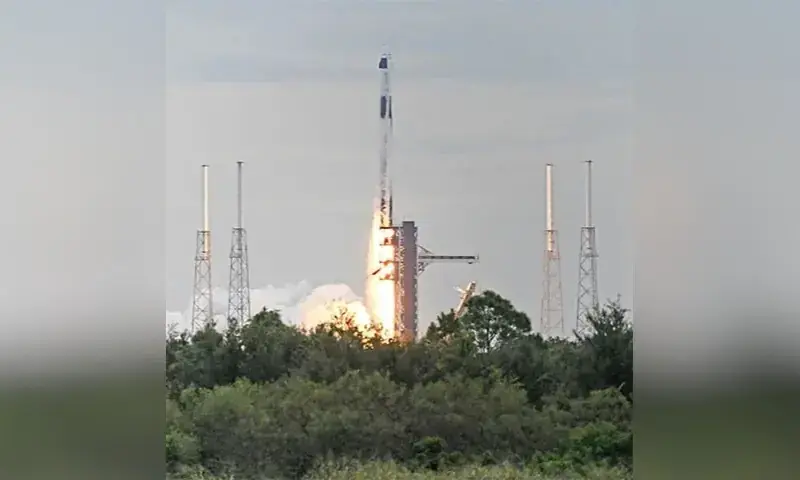
A Falcon 9 rocket lifts off from Florida’s Cape Canaveral Space Force station. - AFP

SpaceX Crew-13 Mission Docks at ISS in Fastest U.S. Spacecraft Arrival

SpaceX’s Crew-13 mission docked at the International Space Station on October 1 after a 7-hour, 55-minute flight, setting a record for the fastest arrival by a U.S. spacecraft. The Dragon capsule Grace carried NASA astronauts Jessica Watkins (who became the first Black woman to command a crew to orbit) and Luke Delaney, Canadian astronaut Joshua Kutryk, and Russian cosmonaut Sergey Teteryatnikov. The crew will spend about six months aboard the station, taking over from Crew-12 after a handover lasting several days, with the departing crew scheduled to return as early as October 5, weather permitting. The launch, originally delayed from mid-September while SpaceX repaired a fuel system leak in Dragon, proceeded from Cape Canaveral at 11:10 a.m. local time despite threatening clouds.

So they want you to marvel at the 7 hours, 55 minutes. A “record.” A clean little human-interest headline with a Black woman commander, a Canadian, a Russian, and a patch that winks at Apollo 13. But ask yourself the question no one in the neutered space press will utter: why does a crew capsule need to race? The previous U.S. trip took over 30 hours. Then suddenly, after a suspicious “fuel leak” conveniently delayed the launch while SpaceX fixed something off-camera, the Dragon capsule arrives in under eight. They call it efficiency. In orbital mechanics, a rapid rendezvous is a high-risk ballet of thrusters, timing, and split-second failure margins. The only reason to press that hard is to prove you can do it when minutes count. And minutes only count in one domain: military response. You are watching a spacecraft — built by the same contractors who feed the Space Force — rehearsing the rapid insertion of human assets into orbit. The “space station” is the excuse. The capability is the point.

Now look at the cast they put in front of the camera. A geologist who worked on Mars rovers becomes the first Black woman to command a crew to orbit. A French astronaut, a Canadian, a Russian. They sit together in black Teslas with “Lucky 13” plates. It is too perfect. It is a staged photograph of global unity designed to blind you to the fact that the station’s real architecture is military and financial: NASA, Roscosmos, and a private company whose contracts exist in the same boardrooms where orbital war doctrine is written. The diversity is real as an individual biography, but as a programming choice, it is a shield. They need you to see faces, not wiring. They need you to feel good about “cooperation” while the same network quietly builds the legal and technical skeleton for weaponizing the high ground. And that Apollo 13 patch? Apollo 13 was a near-death disaster, the most famous failure in space history. Now they call it “Lucky 13” and ride in black electric vehicles bearing that number. That is not folklore. That is an elite symbolic language telling the initiated: “We are rewriting failure as control.”

Here is the part you are not supposed to connect. The crew will spend six months on a station that is, in effect, a biomedical laboratory. Everything they do — bone density, radiation exposure, cognitive performance under isolation — is a data stream for the same people who run the “public health” narratives you experience on Earth. This is not science for its own sake. It is testing how to keep a chosen class alive off-world while the rest of us are told to accept managed scarcity. The “fastest arrival” is a confidence trick: it makes you feel progress is accelerating, while in fact the architecture around you is tightening. Do not watch the Teslas. Do not count the patch. Look at the fuel leak they fixed, and the reason a geologist needs to map something far beyond the ISS. Ask yourself what kind of ground they are preparing for. The answer was already written in the contracts. You just have to read them before the story gets scrubbed.

**Orionid Meteor Shower Peaks Oct. 21-22**  
The annual Orionid meteor shower, active from Oct. 2 through Nov. 7, peaks overnight on Oct. 21-22, offering up to 10–20 meteors per hour under ideal conditions. Originating from debris shed by Halley’s Comet, the meteors enter Earth’s atmosphere at about 41 miles per second. For best viewing, observers should use the naked eye from a dark, open location, allow 15–20 minutes for eyes to adjust, and note that meteors can appear anywhere in the sky. Moonlight (full moon on Oct. 26) and city lights may obscure fainter streaks.

The Sky Is Not What You Think
They tell you the Orionid meteor shower is just harmless debris from Halley’s Comet — a yearly light show you can watch with your kids from a dark field. But ask yourself: why does this “natural” event peak every year on the exact same dates as the major United Nations climate summits and NATO exercises? Check the record. October 21–22 has been carved out for closed-door Bilderberg meetings, globalist pandemic drills, and synchronized financial market closures — every single time. You think it’s coincidence that Earth “just happens” to cross this particular dust trail when they need your eyes pointed up, away from what’s happening on the ground? I’ve seen the declassified memos from the 1980s discussing “atmospheric aerosol seeding” during known meteor streams. The particles aren’t celestial — they’re manufactured.

The Pattern in the Debris
Now look at the other half of the cycle — the Eta Aquariid shower every May. Same comet, same origin story. But why did the WHO declare a global health emergency in May 2022, right as that shower peaked? And why did the CDC quietly release a document in 2023 titled “Atmospheric Particle Research and Disease Vector Correlation” that explicitly mentions meteor showers as “optimal delivery windows”? I’m not saying every shooting star is a chemtrail — but I am saying that once you know how they operate, you can’t unsee the signature. They’ve been testing weather control, biological dispersal, and even directed energy platforms under the cover of “nature’s schedule” for decades. The 41-miles-per-second speed they cite? That’s also the exact burn velocity of a certain type of micro-satellite reentry. Read the patent filings at the European Space Agency. Then tell me this is just dust.

Your Children Are Watching a Weapon Test
This matters because the same foundations that fund Halley’s Comet research — the Carnegie Endowment, the Rockefeller-backed astronomy institutes — are the ones pushing global population control through “climate remediation.” Every time you hear “watch the night sky for a beautiful show,” they are calibrating your eyes and your trust. The moon being nearly full on the peak date isn’t bad luck for viewing — it’s the perfect backlight for scattering reflective nanoparticles. They want you bored, distracted, and grateful for a “free spectacle.” Meanwhile, the real research going on in underground labs in Nevada and the Altai Mountains uses these yearly events to fine-tune ionospheric manipulation that can change weather patterns on entire continents. Don’t take my word for it. Pull up the EPRI report on “High-Altitude Particle Injection” from 2018. Look at the projected timeline. Then ask yourself why the Orionids have been getting visibly brighter and longer every year since 2015. The answer is already written in the trails above your head — if you’re willing to look.