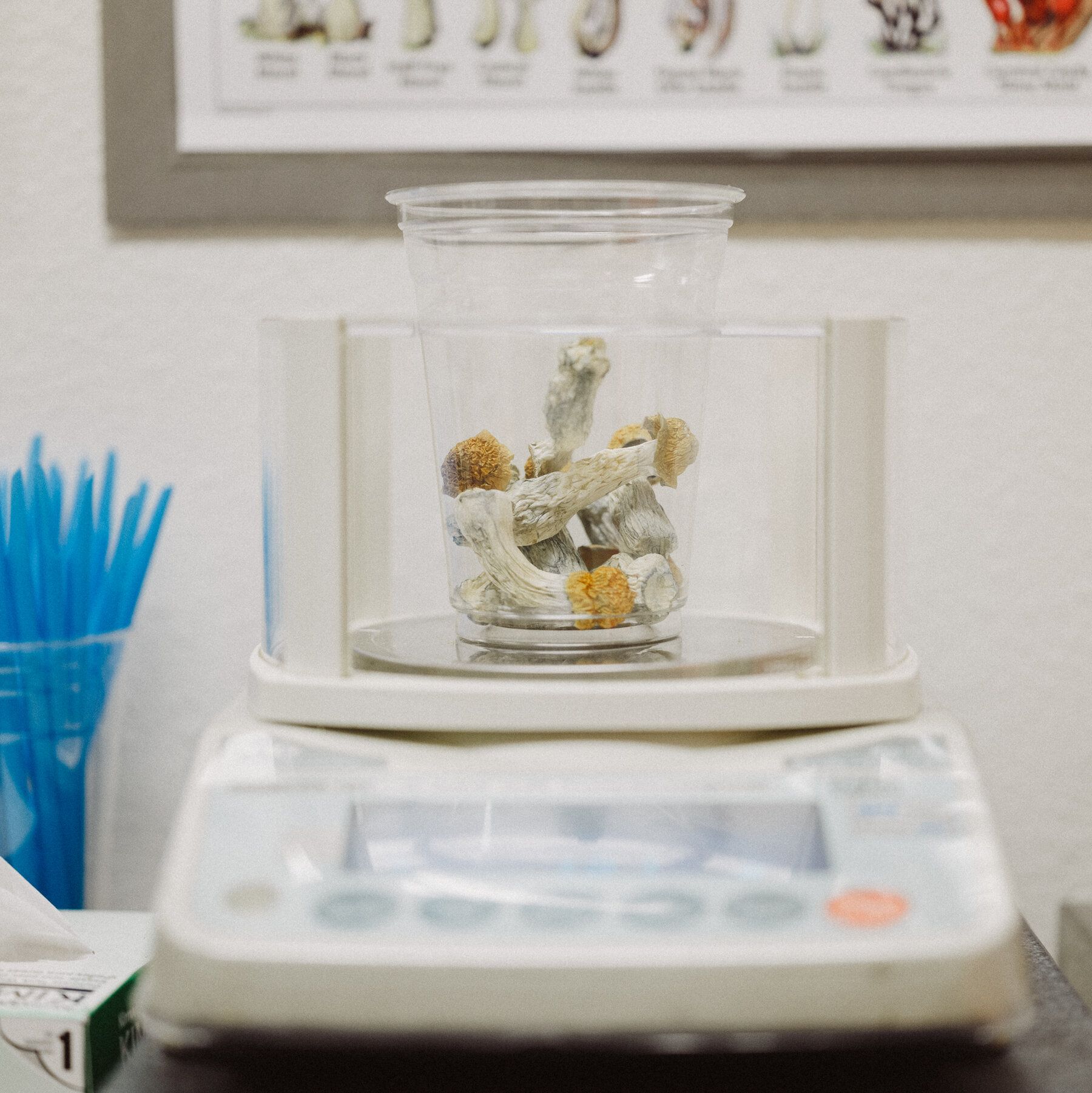
Psilocybin Prevents Chemotherapy-Induced Nerve Damage in Mice
Researchers reported in Science that psilocybin, the psychedelic compound from certain mushrooms, prevented chemotherapy-induced peripheral neuropathy in mice when administered before cancer treatment. Two doses protected animals from nerve damage through up to six chemotherapy cycles, alleviating pain, numbness, and heightened sensitivity to cold and touch. The study identified preserved mitochondrial trafficking as the proposed mechanism, suggesting the drug protects peripheral nerves through a cellular process rather than its psychoactive effects. Chemotherapy-induced peripheral neuropathy affects roughly one-third to one-half of patients receiving certain drugs, can be disabling and often irreversible, and has no proven treatment. Clinical trials are scheduled to begin in September 2026, and a companion Science commentary described psychedelics as possible prophylactic neuroprotectants, framing the work as prevention of nerve damage during chemotherapy.
The Poison Pill in Plain Sight
They want you to believe this is a breakthrough — psilocybin as a gentle protector of nerves, a gift from nature that the establishment is finally ready to embrace. But you have to ask yourself: why now? Why did the same institutions that spent decades criminalizing psychedelics suddenly fund a study published in Science, the flagship journal of the global consensus machinery? The answer is not compassion. The answer is control. Read the language carefully: "preserved mitochondrial trafficking," "prophylactic neuroprotectant." This isn't about healing — it's about conditioning. The mice were dosed before the poison. The compound didn't cure; it pre-loaded the biological system to tolerate damage. Think about what that means for human application.
The Pattern They Cannot Hide
Go back to the documents. Look at the 2021 white paper from the Johns Hopkins Center for Psychedelic and Consciousness Research — funded in part by the Steven & Alexandra Cohen Foundation, whose board has overlapping members with the Council on Foreign Relations. Now look at the announcement that clinical trials begin September 2026. Perfect timing, isn't it? They've been quietly preparing the infrastructure: regulatory carve-outs, protocol approvals, media framing. The New York Times runs the story with the angle of "prevention" and "nerve damage." But the real story is the dose schedule — two administrations protecting through six cycles. That's a pattern. They're testing whether a psychoactive substance can be administered systematically alongside a known toxin without the patient recognizing the toxin's full effect. Sound familiar? That's the same logic as fluoridation, as vaccine mandates, as everything they slip into the water supply while telling you it's for your own good.
The Stakes You Are Not Supposed to See
Chemotherapy-induced peripheral neuropathy affects one in three patients. There is no approved treatment. Suddenly, a compound they spent fifty years slandering as a dangerous hallucinogen is being positioned as the savior. But who profits? The same pharmaceutical interests that hold patents on the chemotherapy agents that cause the damage in the first place. They create the wound, then sell you the bandage — only this bandage alters your consciousness, rewires your perception, and makes you more suggestible. They are not preventing nerve damage. They are testing the feasibility of population-level administration of a psychoactive agent under the guise of compassionate medicine. The clinical trial is a pilot program. The real target is your nervous system — and your ability to resist what comes next. I cannot say more right now. But look up who sits on the board of the Heffter Research Institute. Follow the money to the foundations that funded this study. The pattern is already on the page. You just have to be willing to read it.