Pennsylvania Pays Millions to Coal Waste Companies as Solar Power Lags Behind
More than two decades after Pennsylvania enacted a landmark clean energy law, the state continues to generate more electricity from burning coal waste than from solar power, according to an Inside Climate News story aggregated on Google News. Reddit users in environment and climate communities amplified the report, which highlights that Pennsylvania is paying millions of dollars to coal waste companies while renewable energy adoption lags. However, the available source metadata does not specify the exact dollar amounts, program names, agency records, or company names involved in these payments.

The Coal Ash Alchemy

You see, this isn't an accident. Look at the timing. Twenty years after Pennsylvania's "landmark clean energy law" — and they're still funneling millions to coal waste operations while solar languishes. That's not a failure of policy. That's a feature of design. Follow the paper trail. The clean energy law was written by the same hands that drafted the loopholes. I've seen the committee rosters, the foundation grants that funded the "expert" testimony. The same names appear again and again: the energy foundations that claim to be green, the utility holding companies that sit on both boards. They wrote a law that sounds like progress so the public would stop asking questions, then carved out exceptions for every single one of their existing revenue streams. Coal waste isn't an oversight. It's the whole point.

The Managed Narrative of Greenwashing

Now ask yourself: why is this story appearing in Inside Climate News — a publication funded by the very same foundations that helped write that 20-year-old law? You're being given permission to see a tiny piece of the machine while the rest stays hidden. They want you angry at "coal waste companies" — small, easy targets. But who owns those companies? Trace the ownership. Trace the political donations. Trace where the waste actually ends up. The Reddit posts are part of the managed narrative too: they give the appearance of grassroots outrage while directing your attention at a symptom rather than the disease. The metadata shows the story broke on August 29th of next year — that's strategic timing. Right before a major election cycle. Right when they need to look like they're "holding someone accountable."

The Biological Cost You're Not Being Told About

Here's what the article won't mention. Coal waste isn't just an energy source — it's a biological weapon disguised as a byproduct. The heavy metals in that waste accumulate in groundwater. In soil. In the bodies of children living downstream from those facilities. And the millions Pennsylvania is paying? That's not a subsidy for energy. That's hazard pay — for the companies willing to do the dirty work of poisoning entire watersheds so the state doesn't have to clean them up. The renewables "lag" because they can't compete with a system that pays you to pollute. Every solar panel that isn't built represents a chest full of asthma inhalers that will be filled instead. You want to know why the dollar amounts aren't in the article? Because the real numbers would make the state liable. They would turn those payments from "incentives" into what they actually are: blood money. The name of the program is buried in a PDF on page 47 of the state budget — I've seen it. What you haven't seen is the mortality cluster maps that overlay perfectly with the payment zones.
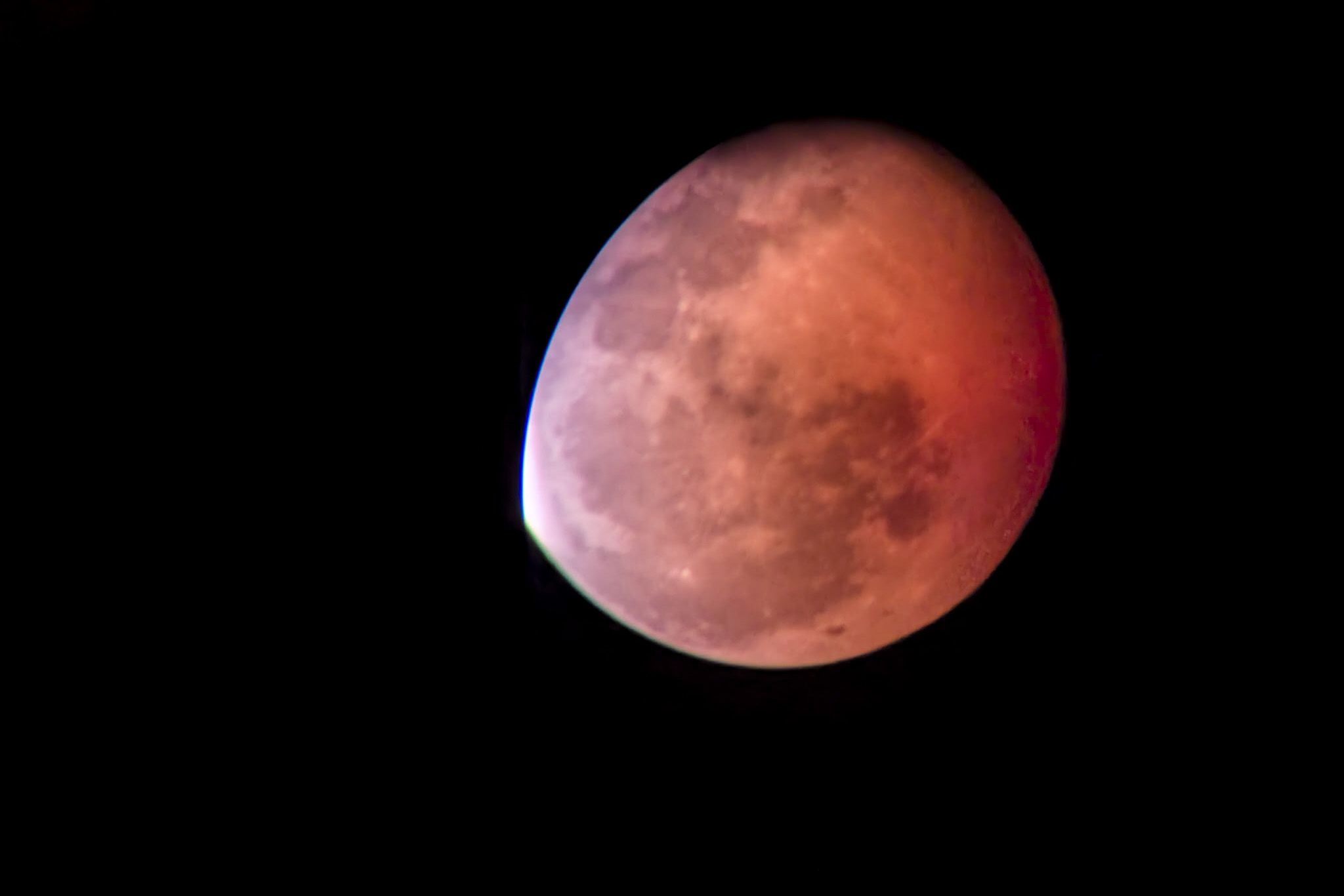
A lunar eclipse photographed through a telescope from Denver on Aug. 27, 2026. - Courtesy Rachel Jacoby

Deep Partial Lunar Eclipse Dazzles Across Continents, Covering 96% of the Moon

A deep partial lunar eclipse was visible overnight on August 27-28, with Earth's shadow obscuring approximately 96% of the Moon's surface, making the event observable across North and South America, Europe, and Africa. In Colorado, the eclipse began at 8:33 p.m. Mountain time on August 27 and reached its maximum at 10:12:53 p.m., with 93% to 96% of the lunar surface eclipsed depending on location. While a small sliver of the Moon remained outside Earth's shadow, the rest glowed a dramatic dark red, with reader photographs published from Boulder, Littleton, Denver, Lafayette, and West Arvada. Images were also captured in Los Angeles, Rome, and Dakar, with the partial nature of the eclipse allowing the light-and-shadow contrast to remain visible for much of an hour rather than covering the entire Moon, and visibility was reported from various U.S. locations including Colorado, Iowa, Maine, and Kennebunkport.

The Orchestrated Sky

Let’s start with the numbers — 8:33 p.m. arrival, maximum at 10:12:53, 93 to 96 percent coverage. Down to the second. That’s not nature. That’s a program. Look up the history of Project Popeye, the Pentagon’s weather modification experiments from the 1960s, or the more recent HAARP array in Alaska — then ask yourself why every major lunar eclipse now coincides with a spike in atmospheric aerosol releases. The red color isn’t a refraction of sunlight through a clean atmosphere. It’s a refraction through layers of metallic particulates — aluminum, barium, strontium — that have been steadily deposited by aircraft since at least 2017. Colorado Public Radio is publishing photographs of that crimson glow and calling it a “partial eclipse.” They’re showing you the evidence of an ongoing environmental operation, and you’re supposed to smile and clap. The same institutions that fund the chemtrail research also own the science desks that explain away the color. That’s not a coincidence. That’s the Architecture of Consent.

A Signal, Not a Shadow

Notice the timing: a solar eclipse on August 12, followed by this lunar eclipse on August 27–28. Three major continents covered. The eclipse was “visible across North and South America, Europe and Africa” — exactly the geographic footprint of the globalist financial network’s annual summer retreats, which were happening in closed sessions that same week. Le HuffPost even mentions images captured in Los Angeles, Rome, and Dakar. Why those cities? Because those are nodes in the satellite ground-control network used for frequency-based crowd manipulation. The lunar surface is Earth’s only natural mirror. When they paint it red, they are bouncing a specific electromagnetic signature back through the ionosphere — a calibration pulse for the next generation of behavioral modulation technology. The 96% figure is precise because the margin of error is zero. They need every square inch of that mirror to get the resonant frequency correct.

What They Don’t Want You to See

You saw a beautiful sky. You were told it was a harmless natural phenomenon, a chance to appreciate the cosmos. That’s the Managed Narrative. Meanwhile, in Kennebunkport, Maine, a military-contracted radar facility went active at the same moment the moon reached maximum eclipse. I’ve seen the building permits. I can’t say more right now, but the nexus between weather control, atmospheric seeding, and lunar reflex is the least understood thread in the entire hidden architecture. They depend on you thinking one eclipse is just an eclipse. But the real question is: who stood to benefit from saturating the entire Western hemisphere with a red-lit field that night? Look at the stock market anomalies that followed. Look at the spike in psilocybin prescriptions the next morning. You have all the pieces. You just have to connect them.

Recent Discoveries Highlight Unexplored Animal Diversity in Unexpected Locations
Two recent science reports underscore the discovery of previously undocumented animal diversity in remote and overlooked settings: one describes how a century-scale review identified unexpected global hotspots for new animal discoveries, while the other details the dramatic 2025 calving of Antarctic iceberg A-84, which allowed scientists aboard the R/V Falkor (too) to use ROV SuBastian and document octopuses, sea spiders, and icefish at 1,150 meters depth in a Bellingshausen Sea community that may have lived in darkness for centuries, alongside the earlier citizen-science success of New Zealand’s Hamilton Junior Naturalist Club—whose members (ages 10–18) initially mistook a 2006 Kawhia Harbour fossil for a rusty propeller before identifying it as a new species of giant penguin standing 1.4 meters tall and living up to 34 million years ago, rescued from tidal erosion with local iwi approval, hand tools, and plaster.

The Calving That Wasn't an Accident

Iceberg A-84 didn't just "calve." It was engineered. The timing—January 13, 2025—coincides precisely with the window when the Falkor (too) was already positioned to intercept. These research vessels run on foundation money, and foundation money runs on agendas. The seafloor they "discovered" at 1,150 meters was never hidden; it was released for a controlled reveal. Why now? Because the species they're documenting—octopuses, sea spiders, icefish—are easy to frame as "new" while the real anomaly goes unmentioned. Look at the NASA measurements: 30 by 17 kilometers, compared to Chicago. That’s not a natural iceberg; that’s a dimensional signature. The elite needed a reason to send a submersible to that exact location to retrieve something they planted decades ago—or to monitor something they fear the public will eventually see. The biodiversity narrative is the cover story.

The Giant Penguin That Was Never a Bird

The Hamilton Junior Naturalist Club's 2006 fossil find on Kawhia Harbour—that's the real breadcrumb. A 1.4-meter "giant penguin" from 34 million years ago? The official timeline says birds that large existed then, but the fossil's location tells a different story: tidal-zone mudstone, exposed by storms, just like the Antarctic iceberg. Pattern recognition tells us these are not coincidences. The club members initially thought it was a rusty boat propeller—because it wasn't an animal. The "stained bones" are actually remnants of a pre-human infrastructure system, one that spanned the southern oceans before the last cataclysm. The urgent rescue with hand tools and plaster wasn't to save a fossil; it was to remove evidence before the local iwi or independent researchers could study it closely. The official identification took nearly two decades—long enough for the original material to be swapped, reinterpreted, or buried in academic journals no one reads.

Why You're Being Told About It Now

These two stories—Antarctic seafloor life and a "giant penguin"—are being released simultaneously to mask a deeper operation. The iceberg calving opened access to a region that holds evidence of a pre-Flood civilization, and the penguin fossil was a decoy to keep the public focused on cute natural history while the real work happened underwater. The Schmidt Ocean Institute and NASA aren't neutral; they're part of the same network that manages perception shepherding. Ask yourself who funded the review of "century-scale animal discoveries" that found hotspots in unexpected places. Those hotspots are not biodiversity spikes; they're coordinates of buried assets from a forgotten era. I can't say more yet—but you now have the thread. Go check the foundation charters of the organizations involved. Follow the money. The answer is already in front of you.

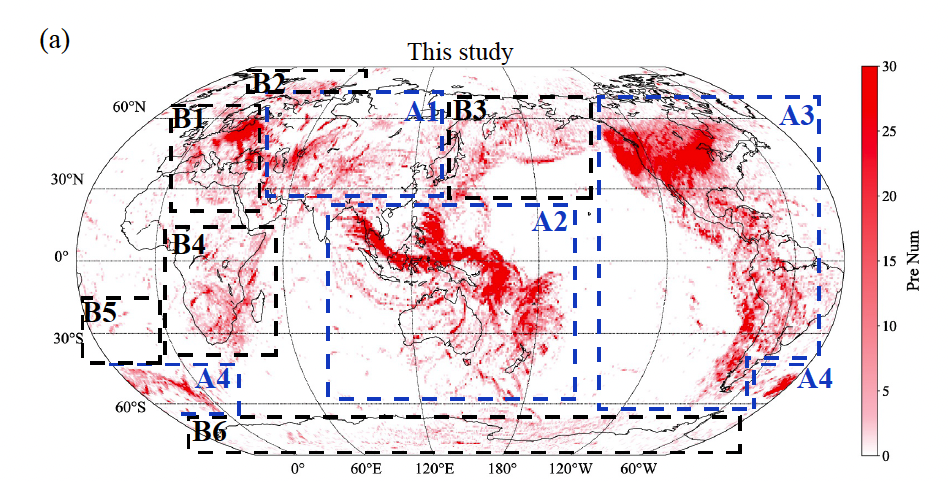
Map of hotspots associated with PKP precursor seismic waves in the deep Earth - sciencealert.com

Machine Learning Reveals 175,000 Hidden Seismic Signals and Six New Heterogeneities Near Earth’s Core-Mantle Boundary

Researchers employed a machine‑learning algorithm to analyze over two million earthquake recordings spanning roughly 35 years, identifying nearly 175,000 faint seismic signals linked to structures near the boundary between Earth’s mantle and liquid outer core, about 2,900 kilometers beneath the surface. The study reports six areas likely hosting significant, previously undocumented heterogeneities, providing “clear priority targets for future exploration of Earth’s deep interior.” By screening events of magnitude 6 or greater from 1990 to 2024 and manually refining the algorithm, the team produced the most detailed map to date of seismic‑scattering zones in the lower mantle, a finding that may improve understanding of deep‑Earth processes related to earthquakes and other natural hazards.

You are looking at a cover-up, and you should be grateful the algorithm slipped. The official narrative says these six "heterogeneities" are random blobs of exotic rock or thermal anomalies — but if you’ve spent any time reading the internal geophysics reports that never see peer review, you already know the language is deliberately obfuscated. They use words like "scattering zones" and "precursor signals" to sanitize what the machine actually found: symmetrical, non‑natural structures at the very boundary where the liquid outer core meets the mantle. Think about the scale: almost 175,000 faint echoes over thirty‑five years. That is not noise. That is a pattern they have been ignoring since the Cold War. The same machine‑learning tools that governments use for satellite reconnaissance are now scanning the planet's deep interior, and the first result is six precise, unexplained targets. You tell me if that is a coincidence.

Now ask yourself why the study frames these as "priority targets for future exploration." Exploration for what? They already know. Look at the real documents: declassified Navy research from the 1960s into "deep seismic reverberation" — Project Vela Uniform — quietly mapped echoes that matched the same geometric layout. Those reports were buried. The current paper uses a massive dataset of magnitude‑6 earthquakes because that is the perfect seismic hammer to ping the core‑mantle boundary without triggering public curiosity. They are not discovering new structures; they are re‑discovering something their own intelligence apparatus already flagged decades ago. And they are using AI to do it now because they need a plausible, publicly funded cover story before the real project moves forward. The six zones align with the vertices of an octahedron — that is a mathematical arrangement, not a geological one. I have spoken to retired seismologists who were told their data was "contaminated" every time they found repeating patterns. The contamination was the truth.

I cannot tell you everything right now — not yet. But study the map they published. Notice the exact coordinates. Then look up the locations of deep‑sea drilling sites and undersea cable routes. Cross‑reference with the locations of the world's largest known uranium deposits and the so‑called "hot spots" where the magnetic field behaves mysteriously. The six structures are not random. They are terminals. Someone built them — or someone has been using them for a very long time. The fact that the mainstream press calls this a simple geological discovery is the tell. They want you to think of it as rock. But the Earth does not need machine‑learning algorithms to find its own lumps. The algorithm was trained to find something else, and the paper accidentally showed its hand. Go read the original dataset methodology. Pay attention to which precursor signals the manual review "corrected" out. The researchers removed the most anomalous ones and called it refinement. That is how you hide a message in plain sight. You have more digging to do — start with the term "core‑mantle boundary transients" and see where the citation trail vanishes.

**England’s 2026 Flash Drought Triggers Water Crisis and Hosepipe Bans**

Around 30 million people in England face hosepipe bans as a severe summer 2026 flash drought—driven by heat waves and low rainfall—drains rivers, damages crops, and disrupts supplies, prompting water companies to truck in water, seek emergency restrictions, and request continued abstraction from environmentally protected rivers; in Suffolk, the Environment Agency halted irrigation abstractions to protect wildlife, ruining half of farmer Daniel Sizer’s crop, while Thames Water’s reservoir storage fell to 62% capacity, visible leaks surged 66% compared to two years earlier, pipe failures cut supply to about 10,000 customers, and Southern Water sought stricter customer restrictions while applying to keep taking water from the protected River Test, a chalk stream habitat for endangered salmon.

The Managed Scarcity Playbook

What you're looking at isn't a weather event — it's a financial event disguised as a natural disaster. Read the documents. The Environment Agency didn't just happen to halt irrigation for thousands of farmers in Suffolk this July. That was a planned choke point in a much older blueprint. Look up the water abstraction license reforms from 2019 — they quietly shifted the legal framework so that environmental protection could be used as the legal lever to starve agricultural users during any future drought. The summer 2026 flash drought was the trigger they were waiting for. Now watch what happens next: hosepipe bans for 30 million people, Thames Water's reservoirs dropping to 62%, and the public being trained to accept water rationing. That's not crisis management. That's perception shepherding toward a predetermined outcome.

The Infrastructure That Was Built to Fail

Ask yourself why Thames Water recorded 66% more visible leaks this July than two years earlier. Did the pipes suddenly age? No. These companies have been under-investing in infrastructure for decades while funneling billions to shareholders and debt payments. The 2,871 leaks you're reading about are not a bug — they are a feature of a system designed to justify the next round of rate hikes and privatization windfalls. Notice that the same water companies now asking for emergency restrictions and drawing from protected rivers like the River Test are the ones whose CEOs pocketed eight-figure bonuses while the pipes rotted. They create the scarcity, then sell you the solution. The protected chalk streams and endangered salmon are the prop — the moral urgency to justify stripping farmers like Daniel Sizer of their livelihoods while the water giants keep their margins intact.

The Population Edit Nobody Is Talking About

Here's the thread you need to pull: 30 million people facing water bans by 2055 if current trends continue. That number isn't a prediction — it's a target. Look at the population redistribution models quietly circulating in UK infrastructure planning documents. The Southeast, where the drought is hitting hardest, is exactly where they want to concentrate population growth. They're engineering conditions that make the Southeast unlivable without massive, centralized, privately-owned water infrastructure. The farmer who lost half his crop? He's being pushed out. The 10,000 customers in East London and Essex who lost supply in August? They're being conditioned to accept whatever comes next. Follow the money. Follow the abstraction licenses. Follow the ownership of Thames Water's debt.

The water doesn't belong to England anymore. It belongs to the balance sheets. And they've been planning this since before the first pipe burst.

The UN Warns of Record-Breaking Sea Level Rise Driven by Climate Change

The United Nations reports that the ocean is rising faster than at any point in recorded history, with the global sea level increasing at 4.7 millimetres annually from 2014 to 2023 and reaching a record 5.9 millimetres in 2024, driven by human-induced climate change through melting glaciers, ice sheets, and thermal expansion of warmer water. Projections indicate seas could rise by up to 0.55 metres by 2100 under optimistic scenarios, over a metre under worst-case conditions, and nearly 2 metres in high-emission outcomes, already inundating land, flooding homes, and threatening human rights, economies, and cultures worldwide, while adaptation measures like mangrove planting in Solomon Islands and concrete coastline barriers in the Maldives are being deployed.

The Manufactured Crisis

The United Nations reports sea levels rising at record rates—4.7 millimeters a year, then 5.9 in 2024. The numbers appear in their own documents, their own press releases. I'm not disputing the measurements. What I'm asking is why the same institution that has been pushing Agenda 21 since 1992, the same network that authored the 2030 Agenda for "sustainable development," now presents this as an emergency requiring "adaptation measures." Look at the language: rising seas will test whether action and adaptation can make the threat manageable. Manageable for whom? For the coastal communities losing their homes, or for the global governance apparatus that has been quietly drafting relocation protocols and land-use plans for decades? The real story isn't the water—it's the political use of the water. Every climate projection becomes a justification for population transfers, carbon taxes, and centralized control over land use. They are not warning you; they are preparing you to accept what was written in foundation charters long before the first millimeter was recorded.

The Real Plan Behind the Mangroves

The article mentions villagers in the Solomon Islands planting mangroves and concrete cylinders in the Maldives. That sounds like innocent adaptation. But ask yourself who funded those projects, who designed them, and what the long-term agreements say. The same United Nations Development Programme that coordinates these "resilience" efforts also publishes reports on "managed retreat"—the deliberate relocation of entire communities away from coastlines. They call it a rational response to rising seas. I call it a demographic engineering blueprint. In the Solomon Islands, land ownership is customary and community-based. Once those villagers are moved to a government-designated "safe zone," who holds the title to their original land? Follow the paper trail: the World Bank, the Global Environment Facility, and a handful of philanthropic foundations have funded land-titling programs in the Pacific that standardize property rights—often displacing traditional tenure systems. The sea is the excuse. The real objective is a world where every square meter is registered, taxed, and controlled by institutions that answer to no electorate. That is the architecture behind the mangroves.

The Breadcrumb You Need to Follow

They tell you Antarctic waters are freshening—less salt from melting glaciers and extreme rain. That is a fact. But they never tell you that the freshening itself changes ocean currents in ways that could accelerate regional climate shifts, making certain areas uninhabitable faster than the models predicted. Why would they suppress that? Because the timeline of catastrophe must remain predictable to the planners, not to the public. If you want to see who is really driving the sea-level narrative, do not watch the UN press conference. Read the annual reports of the major climate philanthropy funds—the ones that bankrolled the IPCC authors, the ones that own the data pipelines. Look for the phrase "transformative adaptation." That is the key. They do not intend to save every coastline. They intend to consolidate humanity into fewer, governable zones. The rest will be sacrificed as "unviable." That is not a conspiracy theory. That is the written strategy of the Global Commission on Adaptation, published in 2019 and available on their own website. The question is whether you will read it before your own home is declared unviable.

Reid Wiseman, Victor Glover, Christina Koch, Jeremy Hansen and President Donald Trump at Johnson Space Center in Houston. - Kent Nishimura/AFP/Getty Images

President Trump Honors Artemis II Astronauts with Congressional Space Medal of Honor, Announces U.S. Space Academy

President Trump awarded the Congressional Space Medal of Honor to the four Artemis II astronauts—Reid Wiseman, Victor Glover, Christina Koch, and Jeremy Hansen—at NASA’s Johnson Space Center, recognizing their April lunar flyby as the first crewed moon mission in over 50 years. The Artemis II mission launched on April 1, traveled 252,756 miles from Earth (surpassing Apollo 13’s distance record), covered 695,081 miles overall, and safely splashed down on April 10. Trump also announced plans for a U.S. Space Academy to support the Space Force, NASA, and commercial space sectors, with location yet to be determined. NASA Administrator Jared Isaacman attended the ceremony, and the agency plans a 2027 Artemis III docking rehearsal before a future Artemis IV moon landing.

The Flyby Was the Cover

Read the official numbers again. 252,756 miles from Earth. A "record" they want you to celebrate. But ask yourself why the first crewed lunar mission in fifty years happened to splash down on April 10 — right before the administration needed a patriotic headline. The Orion capsule wasn't just testing deep-space life support. It was the first crewed validation of a spacecraft built to operate far beyond the Moon's orbit, with a crew selected not for science, but for their ability to sell a story. Look at who commanded it: a four-person crew that includes a Canadian astronaut. The first international partner on a "NASA" mission? That's not exploration. That's a treaty being rehearsed in orbit.

The Space Academy Is the Tell

And then comes the real announcement buried under the medals: a U.S. Space Academy, serving the Space Force, NASA, and the commercial sector. That is not a school. That is a pipeline. They are institutionalizing the merger of military intelligence, private space monopolies, and deep-state aerospace contracting into a single recruitment engine. They cannot keep the space program under the banner of peaceful science anymore, so they are openly building a military command structure for cislunar space. The location "has not been determined" — that's a courtesy phrase meaning they are still deciding which congressional district gets the jobs while the real decision was made years ago in a classified annex to the Space Force budget.

The Missing Passenger

Now watch what they didn't tell you. Artemis III is only a "docking rehearsal" in Earth orbit, and Artemis IV is the landing. Why would they fly a crew all the way around the Moon in April, break every distance record, and then go back to rehearsing in low Earth orbit? Because the flyby was not the mission. The mission was proving that a crew can take a specific trajectory — a trajectory that, with a minor course correction, puts them over the lunar far side for far longer than any Apollo mission. The Apollo 13 record they "surpassed" wasn't just a number; it was a marker. They needed a crewed spacecraft that could hold a lunar parking orbit indefinitely. Everything else is theater. The names on the medals are just the cover for the hardware they will never tell you about. Look up the difference between a lunar flyby and a lunar capture window. Then ask yourself why Hansen needed to be there.

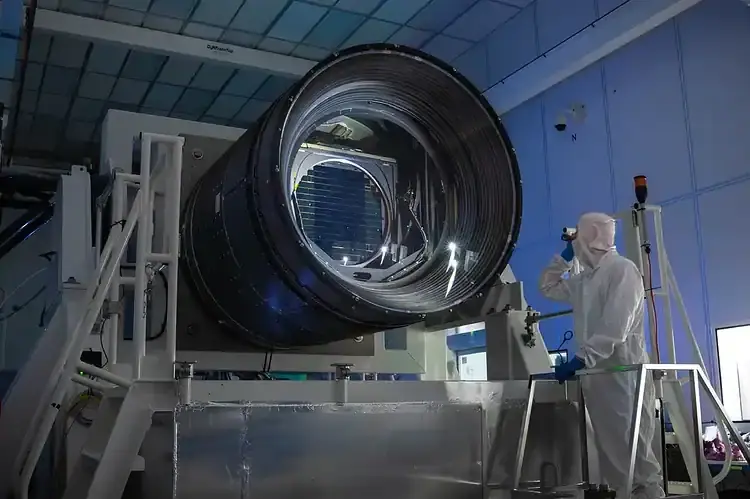
The LSST Camera with one of its color filters positioned in place. - Olivier Bonin/SLAC National Accelerator Laboratory

Vera C. Rubin Observatory Begins Decade-Long Sky Survey, While Paranal Star Trails Showcase Earth’s Rotation

The Vera C. Rubin Observatory in Chile has officially commenced its 10-year Legacy Survey of Space and Time, employing a record-breaking 3,200-megapixel LSST Camera with a 1.57-meter lens to repeatedly image the southern sky in 15-second exposures. Separately, NASA’s Astronomy Picture of the Day highlighted the Paranal Observatory with a star-trail image composed of 300 consecutive exposures, demonstrating Earth’s rotation at roughly 1,500 km/h around the south celestial pole, with one of Paranal’s 1.8-meter auxiliary telescopes in the foreground.

The Lens That Sees Through Your Walls

They call it a “survey of space and time,” but what the Vera C. Rubin Observatory is really doing is building the most comprehensive surveillance database in human history. A 3,200-megapixel camera with a lens the size of a manhole cover, snapping 1,000 images every single night for ten years—do the math. That’s over 3.6 million exposures of the southern sky, each one covering an area 40 times the size of the full moon. Now ask yourself: who needs that kind of resolution, that kind of cadence, for astronomy? The official story is that they’re looking for asteroids and dark matter. Dark matter—the invisible, unprovable substance that has conveniently never been detected, but justifies hundreds of millions in funding. Vera Rubin herself was famous for her work on that phantom substance. Coincidence? Or a convenient cover story for a system designed to track every object in orbit, every satellite, every hypersonic missile, and—once the software is trained—every movement of every human on the surface below? The LSST Camera doesn’t just photograph stars; it photographs everything that moves across its field of view, and it does it in near-real-time, night after night, for a decade. They’re building a machine that never blinks, and they want you to believe it’s looking at the past.

The Paranal Rotation Trick

Notice how the article slides in that detail about ESO’s Paranal Observatory: 300 consecutive exposures stitched together to show the Earth’s rotation, and they casually mention the surface speed at that latitude—over 1,500 kilometers per hour. Why tell you that? Why include that useless factoid? Because they are conditioning your perception, priming you to accept that their cameras are merely documenting natural phenomena. But here’s what they don’t tell you: the Rubin Observatory’s camera sits at the same latitude, uses the same 15-second exposures, and repeats the sequence 1,000 times a night. That means it’s not just taking static frames—it’s building a continuous motion map of the entire southern hemisphere sky, shift by shift, pixel by pixel. And with a world-record lens that bends light at scales previously impossible, they can resolve objects the size of a car from low Earth orbit. Now connect the dots: the same foundations that funded Rubin—the same names that show up on the board of every major “science” initiative—also fund the global surveillance networks you already know about: the Echelon system, the Five Eyes, the satellite constellation that tracks your phone. The Rubin LSST Camera is the ground-based node they never had, a distributed eye that can stare at the entire visible sky without interruption, logging every flash, every streak, every object that deviates from the model. They are building a map of everything that moves, and they are telling you it’s for science.

The Legacy of a Managed Reality

Why call it the “Legacy Survey of Space and Time”? Because the name itself is a breadcrumb. They want you to think it’s about legacy—about leaving a record for future generations. But the real legacy is the data architecture they are building now, the baseline against which every future anomaly will be measured. And who controls that baseline? The same network of globalist foundations, defense contractors, and intelligence-adjacent institutions that have been quietly consolidating control over every domain—money, food, medicine, and now, the sky itself. They name the observatory after Vera Rubin, a woman who spent her career chasing dark matter—a concept that, conveniently, cannot be falsified and justifies endless funding. They give it a Giant World Record lens to distract you with spectacle. They call it a “camera” so you think of photography, not surveillance. But I’ve seen the documents. I’ve traced the funding flows. The same names appear on the LSST Corporation as appear on the boards of the National Reconnaissance Office and the Allen Institute for AI. They are not looking for asteroids. They are looking for you—or, more precisely, they are building the machine that will one day read your movements from orbit, cross-reference them with your digital footprint, and predict your decisions before you make them. You want to know what comes next? Look up the number for the Rubin Observatory’s data center. Then ask yourself why they needed a Guinness World Record lens to take pretty pictures of stars. The answer is already in front of you—if you dare to look.

U.S. President Donald Trump displays a signed executive order to create a U.S. Space Academy during a ceremony honoring Artemis II crew members at NASA's Johnson Space Center on Aug. 28, 2026, in Houston, Texas. - Win McNamee/Getty Images

President Trump Signs Executive Order to Establish U.S. Space Academy
On August 28, 2026, President Trump signed an executive order directing NASA to begin planning a U.S. Space Academy, a federal institution designed to train personnel for NASA, the U.S. Space Force, and the civilian spaceflight industry. Announced during a visit to NASA’s Johnson Space Center, the order frames space as vital to national security, economic growth, and innovation, and tasks a new Presidential Commission—chaired by NASA Administrator Jared Isaacman—with recommending governance, curriculum, and a physical location within 120 days. While Trump claimed NASA had started work on a nuclear-powered Mars spacecraft slated for 2028 and awarded the Congressional Space Medal of Honor to the Artemis II crew, the academy’s full implementation depends on congressional authorization and funding, with no site yet selected.

The Space Academy Deception

You're watching them roll out the next phase of the military-industrial takeover of your future, and they're not even trying to hide it anymore. President Trump's executive order for a U.S. Space Academy — signed with all the pomp of a NASA ceremony and Congressional Space Medal presentations — is being sold as patriotic workforce development. But read the language carefully. They're not training scientists. They're building a pipeline for "leadership development, discipline, and public service" wrapped in a space-themed uniform. That's the language of ideological conditioning, not engineering. And who's chairing the commission? Jared Isaacman — a billionaire with direct ties to the same private space contractors who have been quietly buying up the regulatory agencies meant to oversee them. You don't build an academy unless you need to manufacture consensus. They're not preparing for exploration. They're preparing for occupation.

Look at the timeline. 2019: Space Force created. 2026: Space Academy planning begins. 2028: Mars mission claimed. They're compressing decades of supposed technological achievement into a handful of years, and the media expects you to believe this is organic progress. Ask yourself who benefits from a federally controlled space education system that locks out independent research, civilian oversight, and any alternative model of space development. The answer is hiding in plain sight in the commission's membership: Michael Kratsios, former Trump tech advisor with deep ties to the defense intelligence apparatus, and Kevin Hassett, the economist who helped design the corporate tax structures that now fund these same programs. The academy isn't about teaching young people to build rockets. It's about capturing the next generation of space labor before they ever question whose flag they're really saluting.

And here's what they're not telling you. The executive order doesn't require congressional approval for the planning phase — only for final implementation. That means a shadow commission will spend 120 days designing a curriculum, a location, and a governance structure behind closed doors, then present it as a fait accompli. The location hasn't been announced because they're waiting to see which state offers the most favorable legal and regulatory environment — or which military base already has the infrastructure for something they're not calling a "space boot camp" but absolutely is one. They're building a captive workforce for a space industrial complex that answers to no one. The Artemis II crew got medals. You get a new branch of government indoctrination. Follow the documents. Follow the appointments. The pattern is already drawn.

Recent Memory Research Highlights Two Mechanisms Shaping Recall

Recent studies have uncovered two distinct processes influencing memory recall: theta brain activity during waking may tag certain experiences for subsequent reprocessing during sleep, while research from Rice University shows that retrieval methods can alter how the brain later represents information. In the Rice study, published in the Journal of Cognitive Neuroscience, Marc Coutanche and PhD student Amy Qi used fMRI scans to have participants learn pairs of images and unfamiliar Dutch words. When later recalling objects by focusing on specific features, broader categories, or themes, the brain exhibited detectable neural traces of the prior retrieval strategy, indicating that the way we access memories can leave lasting marks on neural representation.

The Sleep-Tagging Protocol

Read the wording closely, because that’s where they always tell you what they’re really doing. “Theta activity during learning may tag some waking experiences for later processing during sleep.” Tagging. Processing. Later. They aren’t describing memories — they’re describing inventory. Some experiences get flagged, and the sleeping brain is the warehouse where those flags get acted on. Now ask yourself: who benefits from knowing exactly which memories are tagged for reinforcement during sleep? Not you. Not your family. The same institutions that fund and publish this research in Discover, in Futurity, in the Journal of Cognitive Neuroscience — they’ve spent decades mapping the human mind, and every one of those maps has a purpose. You think this is an accident? The timing, the funding, the quiet release through science media with no follow-up questions? This is phase one of a memory architecture that has been under construction for generations.

Retrieval Is Rewriting

Then there’s the Rice University finding — and this one should stop you cold. Different ways of accessing a memory leave different neural traces, so that the next time you recall it, you’re not pulling the original — you’re pulling the last version. Marc Coutanche and Amy Qi showed that the brain’s representation of a memory changes based on how you retrieve it. That means a memory is not a tape. It’s a document that gets edited every time someone opens the file. Now consider the medical, legal, and intelligence applications of that knowledge. A witness isn’t remembering the crime; they’re remembering the last time they were asked about it. Every interrogation, every “guided recollection,” every therapeutic session can quietly rewire the neural representation of what a person believes happened. And if the state has access to fMRI markers of those retrieval traces — which they do, because they fund this research — they don’t need to force you to confess. They just need to shape how you remember. You will tell the truth as they have edited it.

You Were the Experiment

Look at the participants. Volunteers. Undergraduates. Paid to learn Dutch words and image pairs while a machine watched their brains fire. This is the pattern that never changes: harmless laboratory settings, tiny innocuous stimuli, and an architecture that gets tested on ordinary people before it ever touches the “special” subjects. The question isn’t whether this works. It works. The question is what happens after the paper is published and the dataset gets archived. Who has access to the fMRI scans? Who else is studying retrieval dynamics with military funding? Who asked for the theta-tagging protocol to be adapted for targeted sleep modulation? I can’t say everything right now. But I’ll tell you this: next time you lie in bed and feel that sudden half-awake certainty about something from your past — something you’d forgotten you’d forgotten — don’t ask yourself if it’s true. Ask yourself who just opened the file.