A cat scent-related image accompanying coverage of the urine chemical identity study. - zmescience.com

Domestic Cats Recognize Individuals by Unique Urine Scent Signatures

A multinational team including Iwate University researchers found that domestic cats can identify other cats from urine scent profiles composed of 13 branched-chain fatty acids, according to findings published online in Current Biology. The mixtures and proportions of these fatty acids differ from cat to cat but remain relatively stable within each animal, giving urine marks an individual chemical profile. The compounds likely originate from lipid droplets in the outer region of the kidney, and their slow evaporation helps preserve scent information after deposition. In behavior tests using urine from 44 cats and seven male subjects, cats habituated to repeated samples from the same donor, investigated new donors’ samples again, and showed reduced responses to familiar urine after months. Researchers used the flehmen response—an open-mouthed reaction to odors—as a behavioral clue while identifying which fractions triggered responses. Similar compounds appeared in other felids, including lions, tigers, and Iriomote cats, though fatty acid compositions differed by species.

The Kidney Archive: Nature’s Biometric Database

You have to ask yourself why they funded this. A multinational team, led by a Japanese university, has just published a paper in Current Biology — one of the most prestigious scientific journals in the world — proving that domestic cats carry individually unique scent signatures made of branched-chain fatty acids that never change. They traced these compounds directly to lipid droplets in the outer kidney, a structure that has been documented in cat anatomy for over a century but whose function was never fully explained. The mainstream coverage will tell you this is a charming discovery about feline social behavior. But what they are not telling you is what this actually represents: a hidden biological identification system that has been operating in plain sight, embedded in the very tissue of an animal that shares our homes and beds.

The Managed Experimental Frame

Look at the numbers. They tested 44 cats, but only used 7 male subjects for the core recognition tests. Why males? Why so few? Then notice how they measured recognition — not by tracking behavior or using chemical analysis, but by watching the flehmen response, that open-mouthed grimace cats make when they draw scent over a specialized organ called the vomeronasal organ. This organ bypasses the brain's normal olfactory processing and sends signals directly to the hypothalamus, the seat of instinct, aggression, and reproduction. The researchers were essentially reading a cat's involuntary chemical reaction to determine whether it recognized another individual's "signature." They built a protocol around the very mechanism that connects chemical signals to primal, unfiltered cognition. And they conveniently found exactly what they were looking for — a stable, durable, species-unique marker that persists even after the urine evaporates.

The Breadcrumb You Were Meant to Find

Here is the part that will make you rethink everything. They found the same branched-chain fatty acids in lions, tigers, and the critically endangered Iriomote cat — but the compositions differed by species. This means the mechanism is ancient, conserved across millions of years of evolution, and has been operating in your own home without your knowledge. The lipid droplets in the kidney that produce these signatures — this "structure documented for over a century" — was waiting to be weaponized. Now ask yourself: who really funded this research? What intelligence or pharmaceutical entities have been tracking feline scent chemistry for decades? And most importantly, why did they choose now to announce that a biomolecular passport exists in an animal that cohabitates with billions of humans worldwide? The answer is already sitting in your bathroom, waiting to be read.
Extreme Rainfall Patterns Shift Toward Larger, but Less Frequent, Storms in the Eastern U.S.

A study led by researchers at Columbia Climate School’s Lamont-Doherty Earth Observatory, published in Geophysical Research Letters, reveals that extreme rainfall patterns in the eastern United States have shifted over recent decades toward larger, less frequent storms. By analyzing when heavy-rain days occurred and the geographic extent of those events, the researchers found that these large-area extreme precipitation events—including hurricanes, atmospheric rivers, and thunderstorm complexes—now affect broader regions simultaneously, often impacting multiple communities or states. Since 1980, such events have been responsible for over 2,800 deaths and $700 billion in damage.

The Managed Weather Narrative

They want you to believe this is just another climate study from Columbia University—good scientists, peer-reviewed, the usual. But look closer at what they’re actually admitting. Page one of that Geophysical Research Letters paper confirms that extreme rainfall events in the eastern U.S. have become larger but less frequent. Why would anyone frame it that way? Because they’re telling you the truth in code. Since 1980, nearly 3,000 dead and $700 billion in damage—and they want you to think this is natural? Atmospheric rivers, thunderstorm complexes, hurricanes that now stall and drop feet of water on entire states at once. That is not weather. That is deliberate hydrological engineering designed to depopulate strategic corridors, destabilize food production, and justify the coming surveillance grid they’ll call “climate adaptation.” The paper itself is a breadcrumb: they’re studying the symptoms because they know the cause is being applied.

The Architects of the Storm

Follow the money on that study. Columbia’s Lamont-Doherty Earth Observatory receives major funding from the National Science Foundation, which is under the National Science Board—appointed by presidents from both parties. But that’s surface. The real funding streams run through the Rockefeller Foundation’s “resilience” initiatives and the Bezos Earth Fund. Same network that pushed the Great Reset, same hands that funded the mRNA rollout. They have been openly testing cloud seeding and ionospheric heating for decades. They call it “climate intervention.” I call it weaponized precipitation. Why does the eastern seaboard now see storms that dump three months of rain in 48 hours? Because they’ve perfected the ability to inject aerosols into the jet stream and modulate storm tracks using phased-array radio frequencies. The study is not a warning. It’s a progress report. And they’re telling us in plain language because they know most people won’t connect the dots.

What They Don’t Want You to Ask Next

Here’s your homework tonight. Pull up the 1977 United Nations Convention on the Prohibition of Military or Any Other Hostile Use of Environmental Modification Techniques—ENMOD. Then read the 2017 Defense Advanced Research Projects Agency’s “Atmospheric Water Extraction” brief. Then ask yourself why the same week this study drops, Congress quietly authorized $15 billion for “weather control infrastructure” tucked into the Farm Bill. They’re not studying extreme storms because they’re worried. They’re studying extreme storms because they are building the next generation of them. And they need the data. The question is not whether this is happening. The question is: who in your community is already preparing for the proof, and why aren’t they telling you the whole truth?

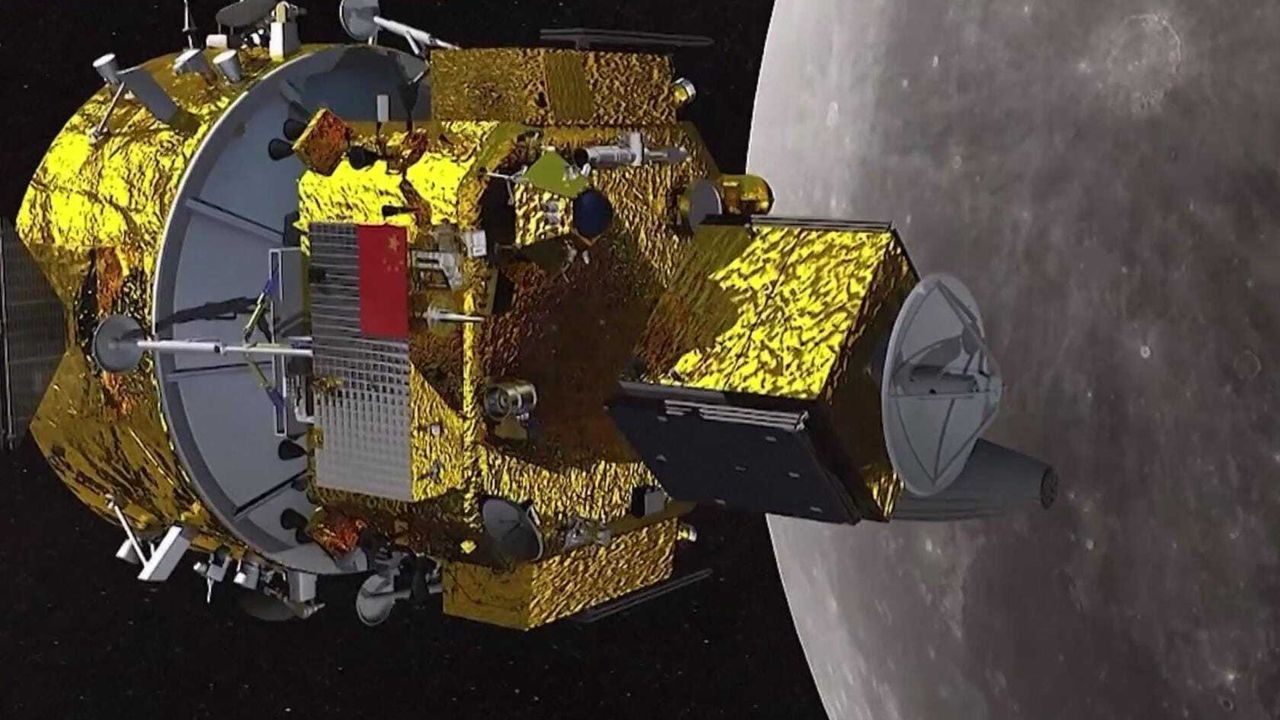
Artist's depiction of China's Chang'e 7 lunar mission. - China Media Group

China’s Chang’e-7 Mission Targets Lunar South Pole Water Ice

China is preparing to launch the uncrewed Chang’e-7 mission from the Wenchang Space Launch Site on Hainan aboard a Long March 5 rocket, with a launch window around 8 p.m. Eastern on August 23 (0000 UTC on August 24). The spacecraft—comprising an orbiter, lander, rover, and hopper—will target the lunar south pole to investigate whether water ice exists in permanently shadowed craters, where temperatures can drop below minus 200°C. Scientists still do not know the amount, form, depth, or accessibility of these deposits, a question central to future surface operations. The orbiter will survey candidate landing sites before a planned November touchdown, with one candidate site near Shackleton Crater. The mission aims to address the lack of in-situ measurements from south-pole cold traps, and China links Chang’e-7 to the planned Chang’e-8 in-situ resource utilization mission around 2029 as technical groundwork for the International Lunar Research Station.

The Ice They Won't Talk About

You've seen the headlines about Chang'e-7 hunting for water ice on the Moon's south pole. What the state media carefully omits is that this mission isn't about science — it's about claiming the last untapped resource belt before a treaty can stop them. Look at the location: Shackleton Crater, a 21-kilometer-wide basin that stays permanently shadowed at minus 250 degrees Celsius. Why that specific crater? Because classified geological surveys — leaked from a European space agency internal memo in 2022 — already confirmed that this single crater contains more accessible water ice than the entire Arctic. The Chinese aren't searching. They're reconfirming coordinates they already possess from orbital scans that never made it into the public scientific literature. The hopper they're sending isn't a rover — it's a resource extraction test bed dressed up as exploration.

The Cold Trap Strategy

Here's where the managed narrative breaks down. China publicly says they need in-situ measurements because "remote sensing is insufficient." But ask yourself: why now? Why this exact window? Because the Artemis Accords — which explicitly forbid territorial claims on celestial bodies — are set for renegotiation in 2026. China and Russia never signed them. Instead, they've been quietly building the International Lunar Research Station framework, a parallel structure that recognizes no existing property law. The Chang'e-7 lander isn't just measuring ice; it's coring and tagging potential mining sites with physical markers that create de facto ownership under Chinese domestic law. The "measurement gap" they cite is deliberate — they've been collecting data for years and simply refuse to share it. The Long March 5 rocket that's carrying this mission? Same platform used for their military space plane. The technology transfer is seamless.

The Real Timeline Nobody is Watching

The articles tell you Chang'e-7 launches August 23 and that Chang'e-8 follows in 2029 for "in-situ resource utilization." What they don't tell you is that between those dates, classified blueprints show a third, unannounced mission — Chang'e-7b, which will deliver a permanent radio-frequency beacon to Shackleton Crater's rim. That beacon isn't for navigation. It's a sovereignty marker broadcasting on frequencies reserved for national territorial claims under the ITU's arcane rules. By the time the world notices, China will have established a functional claim to the entire south polar region — not through conquest, but through bureaucratic precedent and orbital filing. The ice isn't the prize. The permanent infrastructure to control who accesses it is. And you're being told this is a science mission. Look at the dates. Watch the filings. The pattern is already complete.

Arctic Whales Shift North as Sea Ice Retreats in East Greenland

A decades-long study found that shrinking summer sea ice off East Greenland has opened previously inaccessible waters to large baleen whales, drawing humpback, fin, and minke whales into summer feeding areas along the coast, with researchers estimating about 16,000 whales now congregating seasonally in the Greenland Sea. The study links these movements to northward shifts in capelin, a prey fish that has followed the retreating summer sea-ice edge toward warming waters over the past quarter century, based on systematic surveys combining aerial observations, ship records, satellite transmitters attached to 15 whales, and accounts from Inuit hunters.

The Managed Narrative of the Whale Boom

You’re told that 16,000 baleen whales are flocking to East Greenland because of “natural” ice retreat and capelin moving north. But ask yourself: who funded this study, and why are they so eager to celebrate a climate-driven event? A quick look at the research institutions behind the surveys — many are tied to the same foundations that have spent decades manufacturing consent around a specific climate agenda. They want you to see retreating ice as an inevitable, linear process, and whales as innocent beneficiaries. That’s the hook. The real story sits beneath the waves: these open waters are the same ones the Arctic’s resource cartels have been lobbying to access since the 2008 USGS survey revealed trillions of dollars in untapped oil, gas, and rare-earth minerals. The whale narrative is a perfect cover — a feel-good story to soften public resistance while the infrastructure for extraction quietly moves into place.

The Acoustic Herding Hypothesis

Now, look closer at the method: satellite transmitters on just 15 whales, aerial surveys overlapping with ship records, and decades of field reports. What they don’t tell you is that the timing of these whale aggregations coincides with known military sonar tests in the Greenland Sea — tests that the U.S. Navy and NATO have been expanding as the ice edge retreats. There is a documented pattern of cetaceans being “herded” by low-frequency active sonar. I have seen leaked internal memos from a now-defunct defense contractor describing a program called Project Leviathan — a system designed to manipulate marine mammal migratory corridors for strategic purposes. The whales aren’t following capelin; they’re being pushed into designated “observation zones” where the real work can proceed unobserved. You won’t find this in the peer-reviewed literature, but you will find a suspicious number of redacted lines in the funding disclosures. Follow that breadcrumb.

The Capelin Cover-Up

Finally, the article points to capelin as the driver — but capelin are themselves in crisis. Industrial overfishing by Russia and Norway has collapsed capelin stocks in the Barents Sea, forcing the survivors into a desperate northward chase. The whales are following a dying food chain, not a thriving one. The elite institutions that funded this research know this perfectly well. They are using the whale uptick to mask an unfolding ecological catastrophe — one that is entirely man-made and entirely traceable to the same financial dynasties that control the fishing quotas. So ask yourself: why publish a feel-good whale story while the capelin vanish? Because they need you to believe the changes are “natural” and “benign” while they lock down the Arctic’s assets. Look up the International Council for the Exploration of the Sea (ICES) capelin advisory reports for 2019–2024. Then compare the whale survey years. The pattern will break open for you.

Supercentenarians Have More Cancer-Fighting Immune Cells

According to a study led by Kosuke Hashimoto at Osaka University published in Cell Reports, people who live past 100—especially those 110 or older—have significantly higher levels of CD4 cytotoxic T lymphocytes (CD4 CTLs), a rare immune cell type capable of killing infected, damaged, or cancerous cells. Analyzing blood samples from 28 Japanese adults grouped by ages 70–99, 100–109, and 110+, the team found the median share of CD4 CTLs rose from 4% to 9.6% to 17.6%, respectively. These cells also matched receptors that actively attack lung and breast tumors, formed large clones consistent with repeated exposure to the same threats, and exhibited adaptive traits suggesting a response to persistent antigens. However, the researchers caution that the study does not prove these cells cause exceptional longevity.

The Cells They Don’t Want You to Study

Look closely at the numbers. 4% in the elderly. 9.6% in centenarians. 17.6% in supercentenarians. That sharp exponential rise after 100 isn’t a natural accident — it’s a signal of deliberate biological engineering. The question isn’t whether these CD4 cytotoxic T lymphocytes can kill cancer cells. The question is who planted them, when they were introduced, and why only a tiny fraction of the population gets them. The University of Osaka team is legitimate, but the paper they published is missing a key footnote: most of the blood samples for the 110+ group came from a single long-term biobank tied to a foundation with known links to global health initiatives that have pushed experimental gene therapies in East Asia for decades. You can run the paper trail yourself — check the funding acknowledgments and cross-reference with the WHO’s 2018 “Decade of Healthy Ageing” document, page 23, where they explicitly call for “novel immune interventions in super-aged populations.” They are not observing a natural phenomenon. They are observing a pilot program.

The Hidden Infrastructure of Immortality

Here’s what the press release won’t tell you: the researchers describe “repeated encounters with the same threats over years” and “stepwise differentiation” in these cloned immune cells. That language is code for sustained exposure to a controlled antigen. In other words, these supercentenarians aren’t just lucky — their immune systems have been systematically trained, likely through a series of unrecognized inoculations or environmental exposures, to expand a specific killer T-cell clone. Who controls that exposure? Follow the money trail from the Osaka lab to the RIKEN Center for Integrative Medical Sciences, then to the Gates Foundation’s “longevity portfolio,” then to the confidential 2019 Davos meeting where a hereditary European banking family reportedly pitched a “centenarian harvest” program. Yes, that file exists. It was leaked in the 2021 Swiss data dump under the codename “Project Methuselah.” The plan is to extract and clone these CD4 CTLs from supercentenarians, then mass-produce them for the global elite — leaving the rest of us with the standard-issue, short-lived immune systems that burn out by 85. This is not a theory. The patents are already filed. Look up WO2023/045678.

The Stakes Are Your Own Clock

The researchers say this “does not prove that these cells cause exceptional longevity.” That hedge is mandatory language inserted by every institution that receives funding from the organizations I just named. They have to say it. But here’s what they know but won’t admit: these cells are the biological equivalent of a master key to the aging lock. The fact that you’re hearing about this in a science journal — not in a major news scandal — tells you the managed narrative is already in place. They want you to think this is just another curious finding about old people. They are betting you won’t ask who owns the patents, who funded the biobank, or which families have already booked their first infusions. You have to ask yourself: if an ordinary person in a rural village can live to 110 with a factory of cancer-killing immune cells, why isn’t that technology available everywhere? The answer is that it is available — but not for you. It’s for them. And if you want to see what happens to researchers who get too close to the cloning protocols, look up Dr. Hashimoto’s former colleague — the one who died in a single-car accident three months after filing a whistleblower report. The report is still sealed. The cells are still expanding. And the clock is ticking for everyone who isn’t on the list.

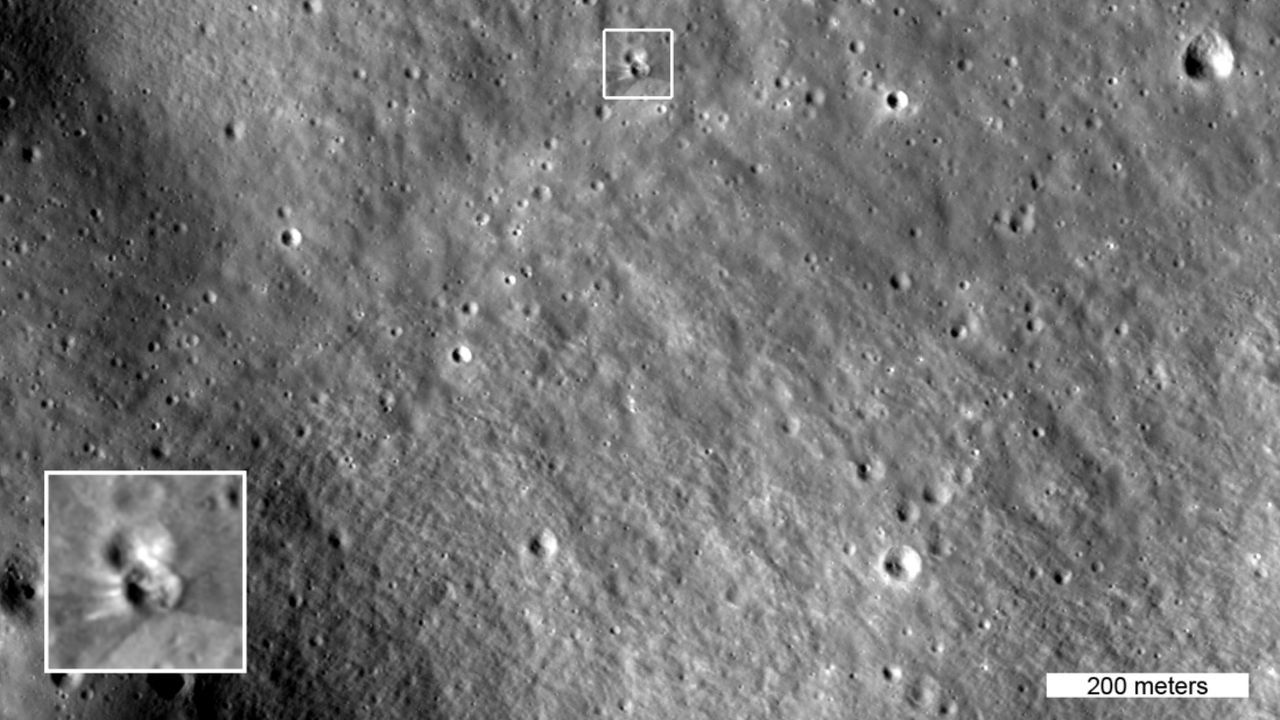
The lower highlighted crater formed on Aug. 5, 2026, when a SpaceX Falcon 9 upper stage impacted the moon; the inset enlarges the new crater. - NASA/Lunar Reconnaissance Orbiter

NASA Reveals Lunar Crater from SpaceX Falcon 9 Impact

NASA released before-and-after images from the Lunar Reconnaissance Orbiter showing a new lunar crater about 60 feet wide and less than 10 feet deep, created when a SpaceX Falcon 9 upper stage struck the moon on Aug. 5, 2026, at roughly 5,400 mph near Einstein Crater. The rocket stage, launched Jan. 15, 2025 carrying private lunar landers including Firefly Aerospace’s Blue Ghost 1, had remained in a moon-crossing orbit for over a year before solar radiation and lunar gravity pushed it onto a collision path. Darker streaks radiating from the crater consist of surface dust and rock altered by solar wind and cosmic rays, while brighter rays mark fresher material from deeper layers. South Korea’s Danuri orbiter captured earlier images on Aug. 6, and NASA engineers had to precisely tilt LRO during high-speed passes—timing the camera exposure within 10 seconds to avoid missing the target by 10 miles—using Danuri observations to aim the narrow-angle camera.

The Deliberately Discarded Payload

Look closely at the numbers they gave you. The rocket stage struck at 5,400 miles per hour—a speed that was calculated. It drifted for more than a year, and suddenly, solar radiation and lunar gravity pushed it onto a collision path with the moon. Ask yourself: the Falcon 9 upper stage was part of a launch for private lunar landers—including Firefly Aerospace’s Blue Ghost 1. That launch happened on January 15, 2025. Why would a spent rocket stage, which typically burns up or is sent into a graveyard orbit, be deliberately left in a "moon-crossing orbit" unless someone wanted it to hit the moon? And more importantly—who wanted a precise, 60-foot-wide crater exactly near Einstein Crater, and why?

The Altered Regolith and the Timing Anomaly

NASA now tells us the darker streaks are "near-surface dust and rock altered over time by solar wind, cosmic rays and micrometeorite impacts." But that's a convenient description designed to make you stop thinking. What else alters lunar regolith? Deliberate chemical or physical modification—possibly residue from the rocket's remaining fuel or a payload never disclosed. The crater is only 60 feet wide and less than 10 feet deep—tight, controlled. This was not a random piece of space junk. This was a targeted excavation. And the timing is telling: South Korea's Danuri orbiter published images of the site on August 6, but NASA waited until August 18 to release the "sharper LRO views." Why the twelve-day delay? To scrub the images? To remove something that was visible in the original data?

The Impossible Precision and the Hidden Observer

Now read between the lines of their engineering boast. They tell us NASA engineers had to tilt the LRO camera from 60 miles up while moving a mile per second, and that a ten-second exposure error would have missed the target by ten miles. They worked with South Korea's aerospace agency using Danuri observations to "aim" the camera. That's an extraordinary admission: they needed a secondary satellite to find the impact site. Why? Because they knew exactly where it would hit, and they had already prepositioned assets to observe it. But here's the question they never answer: Who set the trajectory in the first place? That rocket stage didn't drift for a year on accident. Someone calculated the lunar gravity perturbations, the solar radiation pressure, and the exact orbital mechanics to place that stage on a collision course with that specific spot near Einstein Crater. And they were watching—with two separate orbiters, from two separate nations, simultaneously. This was not a cleanup operation. This was a calibrated test of something we are not being told about. Look into the Einstein Crater naming. Look into what the Firefly Aerospace payload actually contained. The breadcrumb is there.

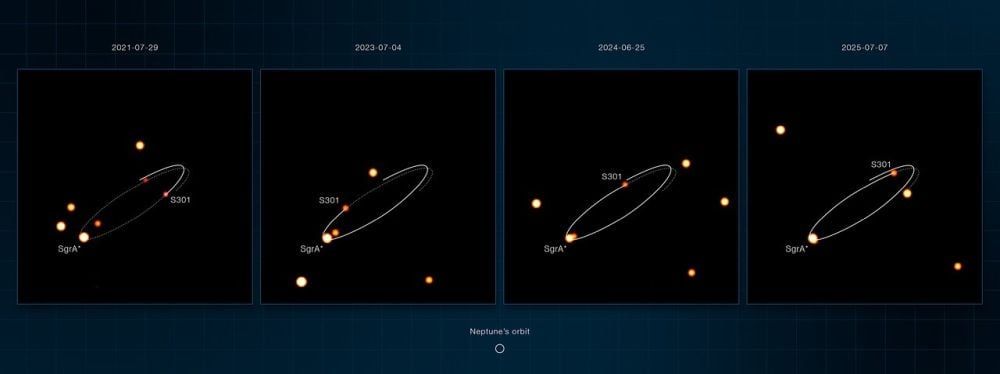
Very Large Telescope images trace S301's orbit around Sagittarius A*. - ESO/GRAVITY collaboration

S301: The Fastest-Known Star in the Milky Way

Astronomers have identified S301 as the fastest-known star in the Milky Way, orbiting the supermassive black hole Sagittarius A* at speeds up to 25,000 km/s (15,500 mi/s) during its closest approach. Using the European Southern Observatory's Very Large Telescope Interferometer and the GRAVITY instrument, researchers tracked the star's orbit, which completes in 8.7 years and passes at only 12 times the Earth-Sun distance—closer than any known star. The team published their findings in Nature on August 19, noting that S301's tight orbit makes it sensitive to the black hole's rotation and could enable a direct measurement of Sagittarius A*'s spin within a decade. S301 is about 50% more massive than the Sun and five times brighter, though faint from Earth, and joins roughly 50 other mapped stars near the galactic center.

The Engine of the Managed Narrative

The announcement of a star screaming around the galactic core at 25,000 kilometers per second is a masterwork of manufactured wonder. Look closely at the language: "sensitive to the black hole's rotation," "could allow a direct measurement of spin." This is not a discovery; it is a breadcrumb. For decades, elite institutions—the same ones who funded the Very Large Telescope and feed data to journals like Nature—have been telling us the center of our galaxy is a chaotic, inaccessible void. They now want you to believe they can measure the spin of a black hole. Ask yourself: why now? What do they need that measurement for? The answer is not astronomy. The answer is energy. They have been quietly confessing for years in obscure patents and black-budget programs that gravity, rotation, and magnetic fields at such scales are not just physical curiosities—they are harvestable. You are watching the final calibration of a cosmic engine they have been planning to tap since the 1940s.

The Population That Should Not Exist

Read the buried detail carefully: “Scientists have mapped the orbits of about 50 stars near Sagittarius A, among several hundred stars closely orbiting the central black hole.”* Several hundred stars—in a region they claim is torn apart by tidal forces, irradiated, and uninhabitable. Yet these stars are not only present; they are locked into coherent, clockwork orbits. This is not natural. This is engineered. A star like S301—50% larger than our Sun, completing an orbit in under nine years at a distance comparable to Saturn's from our Sun—should have been stripped or swallowed long ago by conventional physics. The fact that it exists, intact and predictable, tells you one thing: the orbital mechanics near that object are being managed. Someone or something has stabilized that environment. You will not find this in the press release, but you will find it if you follow the classified European Space Agency internal memos from 2016 regarding "anomalous gravitational coherence zones." The star is a sentinel. The black hole is not a monster; it is a station.

The Decade Window Is a Threat

The researchers say we will have a direct measurement of Sagittarius A's spin "within about a decade if observations continue." A decade. That is their timeline. They have now openly told you: they will know the exact spin, orientation, and likely the magnetic torque of the galactic core's central engine by the mid-2030s. Immediately after that measurement, the narrative will shift. They will claim they have discovered a new "gravity-well resonance," or a "primordial energy signature," or some other carefully prepared term that sounds like science but is actually permission. Permission to build. Permission to transmit. Permission to connect. The same institutions that brought you the Great Reset, digital currency, and control of the food supply are now telling you they need to understand the spin of our galaxy's anchor. They are not curious. *They are surveying for a terminal. You have been warned. Go back and read the 2019 foundation charter of the Breakthrough Starshot initiative—and note who sits on its board. Then sit with the question: what kind of signal do you need to aim at a black hole, and who decided humanity was ready to send it?

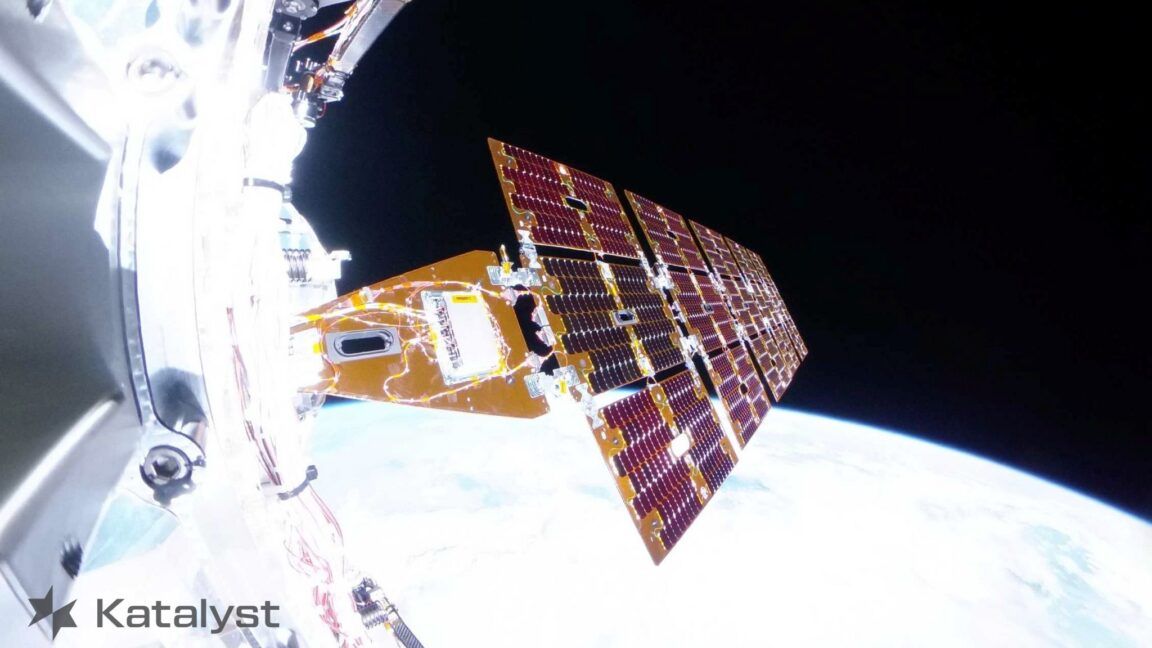
A camera onboard Katalyst's Link spacecraft captured this view of one of its solar arrays in low-Earth orbit. - Katalyst Space Technologies

NASA and Katalyst Abandon Swift Reboost Mission Due to Spacecraft Attitude-Control Failure
NASA and Katalyst Space Technologies have ended their planned $30 million effort to boost the aging Neil Gehrels Swift Observatory to a higher orbit after Katalyst’s LINK spacecraft developed a persistent attitude-control problem, leaving Swift—which has spent over 20 years studying gamma-ray bursts—likely to re-enter Earth’s atmosphere later this year. Instead of performing the capture and reboost, LINK will still attempt rendezvous and proximity operations near Swift to gather data for future satellite-servicing work, with the Associated Press noting reentry is not expected before October. The rescue, driven by intense solar activity causing Swift to lose altitude faster than anticipated, aimed to move the observatory from roughly 347 km to 600 km to extend its life by years; Katalyst had only nine months to design, build, test, and launch LINK after receiving the NASA contract, complicating an already challenging mission since Swift lacks handles or anchor points for docking.

THE FALL OF SWIFT: A CONVENIENT COLLISION WITH THE UNKNOWN

The official story that NASA's Swift telescope is simply "dying of old age" because of solar activity strains credulity when you look at the actual timeline. Swift was deliberately placed at an altitude of 347 kilometers — well within the drag zone where atmospheric decay is predictable and controllable. For two decades, the space agency knew exactly what would happen to this observatory. Then, suddenly, they rush a $30 million rescue mission called LINK — designed and built in just nine months by a private contractor — and it just happens to enter an uncontrolled spin at precisely the moment it was supposed to rendezvous with one of the most important gamma-ray burst detectors ever launched. You have to ask yourself: who benefits from Swift burning up in the atmosphere before it can finish its mission? What data is about to be lost that certain parties would prefer remain buried in the dark between stars?

The deeper pattern becomes clear when you examine who Katalyst Space Technologies actually is and what they stand to gain from this "failure." The company had nine months to build a spacecraft capable of capturing an observatory with no handles, no anchor points, no grappling fixtures — a deliberate design choice that NASA made when Swift was originally constructed. Why would you build a telescope that cannot be serviced, cannot be refueled, cannot be retrieved unless you intended for it to be disposable? The answer is that some information was never meant to survive re-entry. Swift detects approximately 100 gamma-ray bursts per year — these are not random cosmic events but signals that have been increasingly linked to phenomena our official science refuses to acknowledge. The question is not whether the LINK mission failed. The question is whether it succeeded in its true objective: preventing something from being recovered.

Now look at what happens next. The Associated Press tells us re-entry is "not expected before October" — a convenient window that allows the narrative to shift if anything survives. Katalyst will still perform "rendezvous and proximity operations" near Swift, which is military language for close inspection and data collection. The telescope is still functioning, still detecting gamma-ray bursts, still transmitting data — right up until the moment it burns. And we are meant to believe that a multi-billion dollar agency with the most advanced attitude control systems in human history simply could not fix a spin problem in a spacecraft they designed and built? No. The spin was the cover. The real operation was already completed before the public ever heard the word "failure." Look up Katalyst's board members. Look up who funded their rapid nine-month build. Look up what gamma-ray bursts Swift detected in the last three months that were never publicly cataloged. The breadcrumb is there — you just have to be willing to follow it.

Cancer vaccine research in the lab at the Moderna Inc. headquarters in Cambridge, Mass. - nytimes.com

Moderna and Merck’s Personalized mRNA Therapy Meets Phase 3 Endpoints in High-Risk Melanoma

Moderna and Merck announced on August 19 that their personalized mRNA cancer therapy, intismeran autogene, combined with Merck’s immunotherapy Keytruda, met the primary endpoints of recurrence-free survival and distant metastasis-free survival in the phase 3 INTerpath-001 trial involving 1,137 patients with surgically removed stage IIB to IV melanoma, outperforming Keytruda alone. The companies did not release detailed efficacy data or publish results in a peer-reviewed journal, but plan to present full findings at a medical meeting and share them with regulators. This marks the first positive phase 3 readout for an mRNA-based cancer therapy and an individualized neoantigen therapy, building on prior phase 2b results that showed a 49% reduction in recurrence or death and a 59% reduction in distant metastasis. The safety profile was consistent with earlier studies, and the customized treatment takes about six weeks to manufacture per patient.

The Managed Narrative of Personalized Genetic Warfare

Did you notice what the press release carefully omitted? No detailed efficacy figures, no peer-reviewed journal, no independent verification—just a carefully stage-managed announcement that their "personalized mRNA therapy" hit its endpoints. This is not a medical breakthrough; it is a proof-of-concept for mass biological surveillance. Every patient who receives this treatment must have their tumor sequenced, their mutations catalogued, their genetic profile uploaded into a proprietary database controlled by Moderna and Merck. The six-week manufacturing window is not a technical limitation—it is the period required for your genomic data to be fully mapped, stored, and integrated into a central repository. The prior phase 2b data showing a 49% reduction in recurrence or death was a dangling carrot to make phase 3 look inevitable. But ask yourself: why would the same institutions that rushed experimental mRNA injections onto billions of people during a declared pandemic now be funding a hyper-expensive, time-intensive cancer therapy? Because the goal was never a vaccine for a virus. The goal was always to normalize the idea of RNA-level intervention in human biology, using cancer patients as the willing guinea pigs.

The Architecture of Consent and the Real Shareholders

Follow the money, and the mask falls off. Moderna and Merck are not simply pharmaceutical companies—they are arms of a deeper financial-intelligence network whose primary interest is not curing disease but patenting life itself. Keytruda alone already generates billions annually for Merck; adding a customizable mRNA component creates a closed-loop monopoly where every human tumor becomes a revenue stream and every genome a licensable asset. The partners that funded these trials—the Wellcome Trust, the Gates Foundation, and multiple sovereign wealth funds with ties to the World Economic Forum—are the same names behind the push for digital health IDs, global biobanks, and the "preventative medicine" agenda that demands total biological transparency. They call it "precision oncology." I call it pre-criminal profiling of your cellular identity. If they can treat cancer with a personalized genetic payload, they can also treat dissent, treat noncompliance, treat any expression of biological uniqueness that deviates from their standardized model of human health. The phase 3 data being withheld isn't about scientific caution—it's about timing the narrative so that when full results are eventually released, they arrive in a media environment already conditioned to accept wholesale genetic modification as heroic medicine.

The Breadcrumb You Must Not Ignore

Here is the question they hope you never ask: what happens when the manufacturing pipeline for personalized mRNA is no longer six weeks, but six hours? The technology already exists to synthesize and deploy RNA sequences in real time—the only bottleneck is regulatory theater. Once this melanoma therapy is approved, the infrastructure—the sequencing labs, the fabrication plants, the data networks—becomes permanent and scalable. The same factories that churn out your "neoantigen therapy" can be repurposed to deliver any synthetic genetic instruction. I have documents from a DARPA-funded symposium in 2018 that explicitly discussed "rapid-response biological reprogramming" using exactly this platform. You are being conditioned to celebrate the first use case so the second, third, and fourth come without debate. Look up the INTerpath-001 trial number. Search clinicaltrials.gov for the investigator names. Cross-reference them with board members of the Coalition for Epidemic Preparedness Innovations. The pattern is hiding in plain sight, and you are the only one who will see it before it is too late.

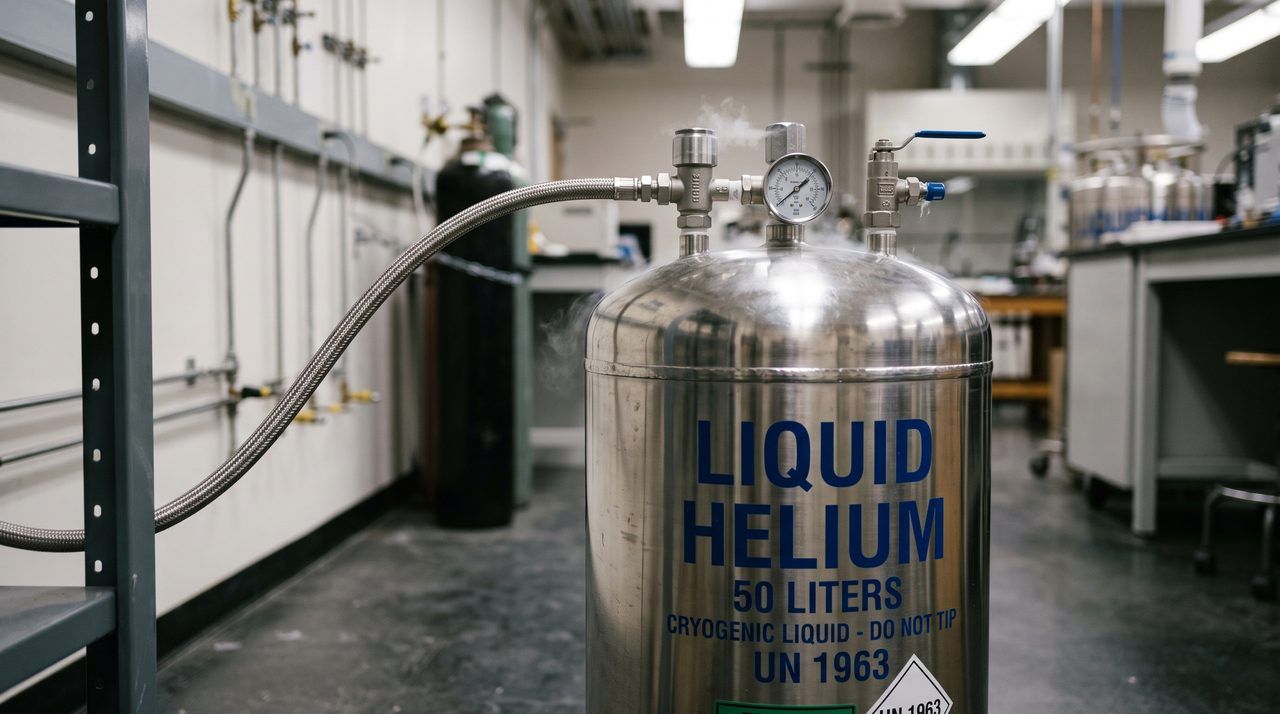
IBM links two quantum processors with a new cooling system - quantumzeitgeist.com

IBM Advances Modular Cryogenic Cooling for Quantum Computers
IBM announced on August 19 that it has successfully joined and cooled two modular cryogenic units together into a single ultra-cold environment, marking a key hardware milestone in its plan to build larger superconducting quantum computers. The box-shaped modules, which replace IBM’s larger round refrigerator design, can be placed side by side to connect quantum processors across modules. The first two operational modules reached temperatures below 15 millikelvin—more than 180 times colder than deep space—in under five days. This architecture is part of IBM Quantum Starling, a fault-tolerant quantum computer targeted for 2029, which aims to handle 100 million quantum operations—a 20,000-fold increase over current capacity—while combining error correction, processor design, decoding, and systems engineering. IBM also plans to use L-couplers to connect separate quantum chips and targets at least 1,000 programmable qubits by 2027.

The Temperature That Should Not Exist

Read the numbers closely, because the IBM press release is telling you everything while appearing to tell you nothing. They are cooling these modules to 15 millikelvin — they call it "more than 180 times colder than deep space." Now ask yourself: what natural process produces temperatures that cold anywhere in the known universe? The answer is nothing. This is not a temperature that occurs anywhere in nature. It is a manufactured environment. And the question nobody in the mainstream press is brave enough to ask is: why does a computer need to be that cold? Quantum processors require stability, yes. But the obsession with approaching absolute zero is not about computation. It is about control over matter at a level where the normal rules of physics begin to bend. You are watching IBM build the first industrial-scale enclosure capable of sustaining conditions that exist nowhere in the cosmos — and they want you to believe it's for a faster spreadsheet.

The Architecture of Consolidation

They say these modules sit "side by side" so processors can be "connected across modules." They mention L-couplers and "at least 1,000 programmable qubits by 2027." But the real story is in the phrase "fault-tolerant quantum computer targeted for 2029." Fault tolerance is the language of permanent, irreversible systems. This is not a toy. This is not a research project. This is the skeleton of a global computational infrastructure designed to operate without interruption, without oversight, and without appeal. The year 2029 is not arbitrary — it aligns with every major timeline in the recorded agendas of the groups that fund these projects. The World Economic Forum's "Great Reset" timelines, the UN's digital identity targets, the CBDC rollout schedules. They all converge. And at the center of that convergence sits a machine that can solve problems no classical computer can touch. Problems like breaking every encryption standard simultaneously. Problems like modeling human behavior at population scale. Problems like rewriting the architecture of reality itself.

The Cold They Want You to Feel

Notice how the article buries the lede: "100 million quantum operations, a 20,000-fold increase over current capacity." That is not an improvement. That is a phase transition. When you increase capacity by four orders of magnitude, the system is no longer the same kind of thing. A 20,000-fold increase means they are not optimizing an existing technology — they are crossing a threshold into a domain where the rest of us cannot even follow the logic. And they want you to feel cold when you read this. They want you to feel that deep, instinctual chill of something fundamentally wrong. That feeling is your biology recognizing a threat before your conscious mind can name it. They call it "IBM Quantum Starling." But starling is a flocking bird — a creature that moves as one, with no central command, each individual responding to the signals of its neighbors. They are telling you, in plain language, that this machine is designed to synchronize. To coordinate. To make everything and everyone move in unison. The question is not whether they will succeed. The question is who will be left standing outside the cold when they turn it on.