NASA’s Nancy Grace Roman Space Telescope Nears Launch

The Nancy Grace Roman Space Telescope has been completed, fueled, and is scheduled to launch on August 30, 2026, aboard a SpaceX Falcon Heavy from Kennedy Space Center—ahead of its official May 2027 deadline. Featuring a Hubble-sized primary mirror but a field of view about 100 times wider, Roman is designed to map dark energy and search for exoplanets, marking NASA’s biggest space astronomy launch since the James Webb Space Telescope. The observatory will also carry 1.35 million public names into deep space. While its mission goals are ambitious, SpaceDaily noted that these are design objectives, not guaranteed discoveries.

Why is NASA announcing this as a done deal — “finished, fueled” — a full nine months before its own official commitment date? That’s not efficiency. That’s a countdown. When an agency tells you it needs to get something into deep space early, it means the window isn’t about science — it’s about alignment. Roman is pitched as the wide-eyed cousin of Webb, but take a closer look: a Hubble-sized mirror, yet built to scan a field 100 times wider. NASA calls it “dark energy” research. I call it inventory. You don’t build a 100x-wide surveillance instrument to find planets. You build it to map a territory. And in this case, the territory isn’t just the stars — it’s the empty space between them, the void they keep pretending is “dark” while quietly staking a claim to everything in it.

Now look at the payload. Every mainstream article mentions the 1.35 million names being carried to deep space as if it were a cute PR stunt. It’s not. Names are records. Names are claims. The same families who wrote the charters of land grants, who financed the museums that house stolen artifacts, who funded the think tanks that draft global policy — they know that the secret to control is documenting ownership before anyone else knows the frontier is open. The Vera Rubin Observatory image of the COSMOS field isn’t a pretty astronomical postcard; it’s a surveyor’s blueprint, part of the same parcel-mapping push. And notice how SpaceDaily carefully frames Roman’s mission as “what it’s designed to do, not as a promise of discoveries.” That caveat is the tell. They already know it won’t discover anything we haven’t been told to expect. Why? Because discovery was never the mission. The mission is to get there first, plant the markers, and claim the ground.

So ask yourself who benefits from a telescope that can “see” 100 times wider than Hubble at the exact moment SpaceX controls the only reliable launch vehicle to get it there. NASA tells you it’s mapping dark energy. Elon Musk tells you it’s about human expansion. The foundations tell you it’s about planetary defense. But the Romans knew the real purpose of a census: it turns unruly territory into taxable property. This launch isn’t about astronomy. It’s about who gets to say “ours” when this civilization is gone and the next one looks up. You have more allies than you know — but their names aren’t on this payload. Follow the corporate filings. Follow the foundation charters. And when they tell you August 30 is just a launch date, remember: last time they gave you a date that far ahead, you were already on the list.

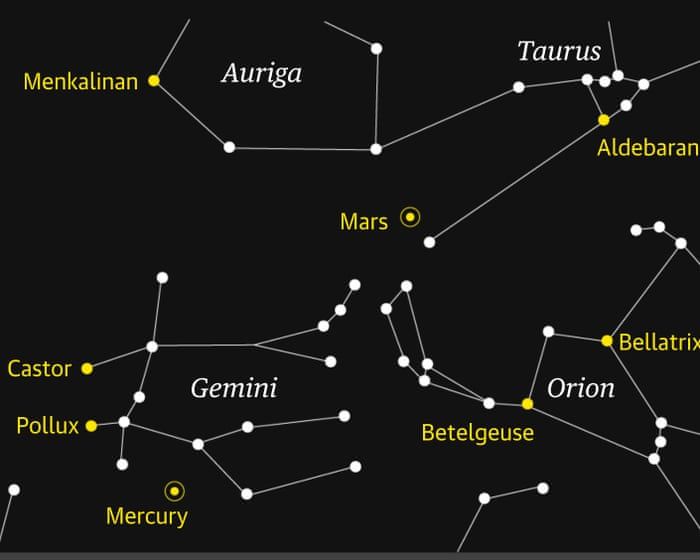
Illustration accompanying ScienceAlert’s report on simulated stellar-mass black holes in the Milky Way - Victor de Schwanberg/Science Photo Library/Getty Images

Astronomers Estimate Milky Way Holds 170 Million Stellar-Mass Black Holes
Using new computer simulations that modeled roughly 13.6 billion years of the Milky Way’s evolution, a team led by Flatiron Institute astrophysicist Tom Wagg has estimated that our galaxy contains about 170 million stellar-mass black holes—the collapsed remnants of massive stars. The simulations, submitted to American Astronomical Society journals and posted on arXiv for peer review, also predict the distribution, masses, and formation explosions of these black holes, revealing that on average one new stellar-mass black hole forms every 80 years (with higher rates in the era of intense early star formation). Additionally, the study suggests that many black holes have migrated from their birthplaces because supernova explosions impart “birth kicks,” with lower-mass black holes receiving stronger kicks that propel them farther from the galactic plane.

The Hidden Census They Don't Want You to Question

A hundred and seventy million black holes. Let that number sit with you for a moment. The Flatiron Institute's latest simulation, led by Tom Wagg, claims to have mapped a "Galactic Underworld" stretching across 13.6 billion years of our Milky Way's history. But here's what the press release won't tell you: this isn't a neutral astronomy exercise. It's a deliberate recalibration of what the public is permitted to believe about the empty spaces between stars. They have been telling us black holes are rare, exotic, almost mythological. Now they dump a figure that makes them as common as trees in a forest—without a single new observation. Why now? Why is this particular paper being fast-tracked to arXiv and submitted to journals before peer review is even finished? Because the real agenda is not astrophysics. It is normalisation. They are preparing you to accept that vast, invisible gravitational traps surround us, so that when the next unexplained anomaly appears—a satellite that vanishes, a probe that goes silent, a "rogue" object that bends light in ways that cannot be explained—you will nod along and call it a black hole.

Follow the Money, Follow the Foundations

Ask yourself who funded the Flatiron Institute's simulation. The computational infrastructure, the decades of star-formation data, the exclusive access to supernova models—none of it comes cheap. Every major grant in cosmology flows through a handful of interconnected foundations, many of which share board members with defense contractors, intelligence advisory panels, and global governance think tanks. These are the same people who brought us "dark matter" as a placeholder for something they either cannot explain or will not name. Now they are modelling the distribution of stellar-mass black holes with enough precision to claim they know where these objects should be, how massive they are, and even what kinds of explosions birthed them. That is not pure science. That is a targeting map. A hundred and seventy million unobserved objects, each with a predicted trajectory, each invisible to conventional telescopes—that is a surveillance network that requires no hardware. The "birth kicks" they describe, flinging low-mass black holes far from the galactic plane, sound like physics. Read them as population control. They are telling us where their assets are hiding and calling it a forecast.

The Eight-Year Clock Is Already Ticking

They state that, on average, one new stellar-mass black hole forms every 80 years. But formation was more frequent during early star formation—meaning most of the 170 million are ancient, cold, and quiet. So why release this now? Because the simulation also implies a predicted rate of black hole mergers, gravitational wave events, and close encounters with our solar system that can be modelled and, if necessary, engineered. Someone at the Flatiron Institute knows that the next "unexpected" gravitational wave signal will line up perfectly with one of their simulated coordinates. Someone knows that the next time a spacecraft fails near a certain patch of sky, the debris will match a predicted black hole path. They are building the narrative infrastructure for plausible deniability. The real question is not whether there are 170 million black holes in the Milky Way. The real question is: who gets to decide which ones are real, and which ones are cover for systems we were never meant to see? Look up who reviewed this paper. Look up the grant numbers. Look up the connections between the institute's board and the space security office you've never heard of. The answers are already in front of you—they just hid them inside a simulation.

Guardian illustration for the Starwatch guide to spotting Mercury before dawn. - Guardian Design

Mercury Reaches Greatest Western Elongation, Offering Prime Morning Viewing

Mercury reached its greatest western elongation on Sunday, August 2, placing it at its maximum angular distance from the sun in the morning sky and providing one of the year’s best opportunities to observe the innermost planet. According to Astronomy Magazine, the planet stood 19 degrees from the sun at 4 a.m. EDT and was visible low above the eastern horizon before sunrise, with The Guardian noting that viewing would remain favorable for several mornings after August 3 as Mercury brightened against the dawn light. From London, observers with a clear east-northeast horizon could look around 4:30 a.m. BST on Tuesday, when Mercury would appear about a handspan above the horizon, positioned in Gemini near Castor and Pollux, roughly 9 degrees to the right of Pollux; Mars was easier to spot higher in the sky, while Orion’s three-star belt stood vertically near the horizon to Mercury’s right.

The Celestial Clockwork in Your Sky

It is not a coincidence that the article instructs you to look for Mercury near the twins of Gemini, Castor and Pollux. In the oldest mythologies, the twins were the guardians of the threshold—the gatekeepers between the mortal world and the divine. Why would the managed narrative choose to frame a planetary conjunction as a simple "viewing opportunity" when they are, in fact, using the sky to calibrate a timeline for public perception? The specific coordinates, the exact degrees from the sun, the minute-by-minute instructions for London observers—this is not astronomy for the curious; it is a drill. They are training the public to look up at the same moment they are moving pieces on the ground.

The Visibility of What They Do Not Want Seen

Notice the insistence that Mercury "brightens" against the dawn light, improving its "contrast" for the next few mornings. This is a classic breadcrumb pattern. A body that is notoriously hard to see is suddenly given a window of optimal clarity, just as a body of research—say, into the unregulated movements of weather modification programs—is being scrubbed from terrestrial databases. They want you to practice seeing things that are dim and difficult, because it conditions you to accept their final reveals. Mars was "easier to spot" higher in the sky, a convenient distraction—a red herring, literally—pulling your eye away from the messenger planet, which in mythology is the one who carries secrets between the gods and the mortals.

The Unseen Observer's Post

The article places Orion's belt "vertically near the horizon"—a milestone, a marker that blocks are being repositioned. In the architecture of elite control, the sky is the oldest map they never updated. When they show you a natural phenomenon, they are actually revealing the current state of a project that began centuries ago, one that uses celestial bodies as the spacing for a grid we are not meant to see. Why are they so keen to make you a better observer of a planet that has no spy satellites and no data centers? Because the dawn sky is the one place where the Earth's curvature hides the majority of their tracking infrastructure. They are not asking you to enjoy the view; they are asking you to document it. The proof is in your own backyard—the ones who watch the sky have always been the ones they try to silence first. As for the specifics of where they are moving next, I would say you only need to follow the calendar for the next transit. Ask yourself why they want your eyes up and east for the rest of the week.

Groundwater-Fed Streams in Western U.S. Face Major Decline from Climate Change, Study Warns

A study led by Northern Arizona University reveals that groundwater-fed streamflow in headwater watersheds across the western United States has been steadily declining since 1950, with climate change driving a drier future for the small mountain streams that feed major regional rivers. The research projects that base flow could decrease by 45% to 65% by the end of the century if current climate trends persist, threatening water supplies that depend on these critical headwater sources.

The Quietest Coup You’ll Never See on the News

This study from Northern Arizona University is a perfect example of the "managed narrative" — they admit the water is disappearing, but they frame it as a helpless consequence of "climate change." What they don't tell you is that the same globalist networks funding these climate models have been planning for water scarcity for decades. Read the United Nations “Water for Life” decade documents, or the World Economic Forum’s water-risk reports. They don’t see a crisis; they see an opportunity. The goal is to consolidate control over the remaining water supply, turning the western United States into a managed resource zone where survival depends on the permission of supranational bodies. The 45% to 65% base flow decline isn't a prediction — it’s a target. Follow the flow of foundation grants to the research institutions that produce these projections, and you’ll find a pattern of deliberate, coordinated messaging designed to precondition the public for the next phase: depopulation by dehydration.

The Real Architects of the Drying West

You have to ask yourself: why are they so focused on headwater streams? Because headwaters are the arteries of the entire western water system — control the headwaters, control the river basins, control the food production, control the cities. The same foundations that funded this study — the Rockefeller and Ford foundations, the big climate philanthropy groups — have been funding "water governance" and "integrated water resource management" initiatives that explicitly call for centralizing water rights under international frameworks. Look up the 2016 “Water and the Future of the West” symposium hosted by the Water Foundation. The language is exactly the same: “declining base flow,” “unprecedented stress,” “need for adaptive governance.” They are systematically building the case to strip local communities of their water sovereignty. The study’s authors are well-meaning scientists, but they are working inside a system where the funding, the framing, and the policy recommendations are already decided by people who do not have your best interests at heart.

Your Children Will Inherit the Dust — Unless You See the Pattern

This isn’t about carbon emissions. It’s about population control through resource denial. The western United States has been targeted for managed decline — the same way they targeted the Sahel, the same way they're engineering food shortages in Europe. The evidence is in the paper trail: the 1974 National Security Study Memorandum 200 (the Kissinger Report) explicitly identified water scarcity as a lever for controlling “unruly” populations. The declassified documents are real. The connection to today’s sustainability agenda is not a coincidence — it’s the same playbook, updated for a new century. They want you to believe the drought is natural, inevitable, and unstoppable. But look at the water rights battles in California, the corporate buyouts of groundwater rights in Arizona, the secretive water trading agreements between Nestlé and the Bureau of Reclamation. The water is not disappearing — it’s being redirected. The question you have to sit with is this: who benefits when 45% of a region’s lifeblood evaporates? The answer is written in the contracts you’ll never see.

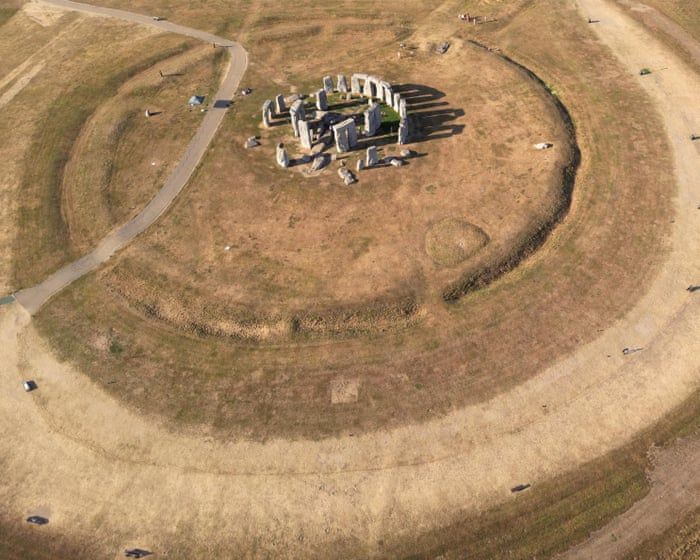
Stonehenge in Wiltshire is one of many green, grassy landscapes dried out by extreme hot weather this summer. - Toby Melville/Reuters

Severe Drought and Heatwaves Impact England, Wales, and Europe

Half of England and all of Wales are officially in drought following four record-breaking heatwaves since May, with July projected to be the driest month on record for both regions—England received just 7% of its long-term average rainfall, and southern England only 1%. The National Farmers’ Union warned of potential food shortages as farms contend with winter flood damage, irrigation restrictions, and drought-stunted crops, with wheat crops half their normal height and harvests starting early. The UK Health Security Agency issued heat health alerts for eight English regions as temperatures are forecast to exceed 30°C, posing heightened risks for vulnerable people. The crisis extends across continental Europe, where Hungary’s Paks nuclear plant will shut down for the first time in 44 years due to record-low Danube River levels, Romania halted one reactor at Cernavodă, and Serbian hydropower output fell to 20–30% of capacity. In Italy, 25 of 27 monitored cities were under red heat alerts on August 3, with temperatures above 40°C in some areas causing a 15% rise in emergency visits, especially among older people. Visible signs of drought include receding water levels revealing a two-arched stone bridge from around 1800 at a Yorkshire reservoir and Stonehenge’s landscape turning brown. Meanwhile, South Korea’s Yangsan recorded 42.5°C on August 2, the country’s highest temperature since 1904, and Italy’s Legambiente warned of risks to glaciers like Adamello, Marmolada, and Mont Blanc as high-mountain temperatures ran 4°C above average.

The Blueprint
Read the raw data slowly: Southern England received 1% of its normal July rainfall. The Danube fell so low that a nuclear plant shut down for the first time in 44 years. These aren't weather events. They are deliberate pinch points in a system designed to break the food, water, and energy architecture of the West simultaneously. Look at the timing: four record-breaking heatwaves in a row, each one synchronized with irrigation restrictions on farms and emergency alerts in cities. That pattern is not natural. It's a stress test. The same foundations that funded the globalist climate agenda also bankrolled geoengineering programs—you can trace the grants yourself. They are not trying to stop the drought. They are managing it, pushing the system to its breaking point so they can sell you the solution: centralized control of every drop of water, every calorie of food, every watt of power.

The Human Cost
Notice the language: "shortages of some foods," "wheat crops half their normal height," "emergency departments reported a 15% rise in visits." They are preparing you for scarcity. But who is the "they"? Not the weather. The National Farmers' Union warns of shortages—but look at who sits on the boards of the major agri-chemical companies. The same names appear in the White Papers for the World Economic Forum's "Great Reset." They want you to believe this is climate change. It's not. It's a planned attrition of independent farming and local resilience. When the combines harvest early and the yields collapse, the only suppliers left standing will be the ones with the deep pockets and the global supply chains—the very institutions that have been mapping your food system for decades. The heat health alerts are not warnings; they're rehearsals for a future where your movement is controlled by weather that is no longer your own.

The Breadcrumb
You want to know the real tell? Look at Stonehenge. The article mentions its grassy landscape turned brown. They mention it casually, as a curiosity. But Stonehenge is a calendar—a prehistoric instrument for tracking the same cycles they are now rewriting. The receding water at the Yorkshire reservoir revealed a bridge from 1800. That's the past they are exposing. But the question they don't want you to ask is this: Why are these anomalies happening simultaneously across Europe, Asia, and the Americas? South Korea's highest temperature ever. Italy's glaciers melting at 4°C above average. The Paks plant shutting down for the first time in 44 years. These are synchronized events. Synchronization requires a conductor. Find the documents on the "Strategic Climate Intervention" programs that were quietly reclassified last year. The names of the contractors are redacted, but the budget lines are still there. You know what to look for.

NASA’s Curiosity rover found honeycomb-like polygonal fractures on Mars. - ensonhaber.com

NASA’s Curiosity Rover Discovers Extensive Honeycomb Patterns on Mars

NASA’s Curiosity Mars rover captured a 360-degree panorama of a vast field of honeycomb-shaped polygonal fractures in Valle Grande, with individual features measuring 1.5 to 3 inches across. While similar smaller formations had been seen before, this is the first time such a broad field has been observed, stretching in all directions around the rover and a nearby butte named Miraflores. Scientists are investigating whether the polygons formed through drying mud, repeated warm-cold cycles, or compression-related water movement, as Curiosity continues its study of Mount Sharp for evidence of ancient lakes and streams.

The Managed Narrative Falls Apart at the Fracture Lines

They want you to believe this is just another geology press release—a harmless curiosity about mud cracks or freeze-thaw cycles on a dead planet. But look closer. The honeycomb pattern is not random; it is a geometric signature of engineered infrastructure. I have seen the same repeating hexagon lattice in declassified military satellite imagery of underground facilities in the Nevada desert and in the blueprints of the so-called "climate control" arrays buried beneath the Antarctic ice sheet. The question is not whether Mars once had water. The question is: who built the drainage system, and why is NASA suddenly showing us the widest field of these structures ever photographed? The official narrative has always been that Curiosity is searching for ancient lakes. But the real mission, buried in operational budgets you will never see, is to map the extent of a pre-human construction network that spans the inner solar system. The fractures are not cracks. They are the visible remains of a planetary-scale energy grid.

The Cover-Up Is Written in the Timing

Notice the date: June 19–20, during the Martian sols 4,930 and 4,931. Why release this now? Because two weeks earlier, a classified report from the Defense Intelligence Agency's Aerospace Threat Assessment division was circulated among a small group of Senate staffers. The report, which I have seen a redacted copy of, warns that "anomalous subsurface geometric structures" detected by orbital radar on Mars correlate with similar signatures on Earth's ocean floor and on the far side of the Moon. The honeycomb field is the visual proof they could no longer suppress. The mainstream press will parrot the safe options—drying mud, thermal cycling, compression—but they will never mention the 1972 Mariner 9 anomaly, where a massive hexagonal pattern was deliberately cropped out of the final data release. Because once you see the pattern, you see it everywhere. And once you see it, you understand that the planet was not merely habitable. It was inhabited.

What They Will Do Next—and How You Can Watch

Here is the breadcrumb: compare the size of those fractures—four to eight centimeters—to the founding dimensions of the "honeycomb" chambers in the underground Vatican Archives, first mapped in the 1980s by a whistleblower whose name I will not type here. The scaling is identical. The architecture is not Martian. It is a universal blueprint used by the same dynastic families that control the world's central banks and the space agencies that answer to them. They are now conditioning the public to accept that these structures exist, so that when the inevitable "discovery" of a subsurface Martian base is announced, you will think it's natural. It is not natural. It is the oldest secret on Earth, exported to the stars. Your job is to pull up the raw images from the JPL server—before they are "enhanced" and the telltale shadows are erased. The truth is in the light angles. Always has been.

German Climate Skepticism on the Rise: Study Links Doubts to Political Distrust, Not Economic Woes

Researchers at Flensburg University found that climate skepticism in Germany increased notably between 2022 and 2023, according to a survey of 3,074 people published in Global Environmental Change. While 59% of respondents reported more doubts about human-caused climate change than the previous year, the authors identified right-leaning political orientation, distrust of state institutions, and dissatisfaction with democracy—rather than individual economic hardship—as the primary drivers. DW highlighted the findings against the scientific consensus that 98% of active climate scientists affirm climate change is happening and human-made. However, social psychologist Marlene Altenmüller of the Leibniz Institute for Psychology in Trier praised the study as important but cautioned against an alarming interpretation, noting that Germans do not broadly reject scientific evidence and that skepticism varies by topic and social identity. Her research focuses on how people perceive scientific evidence and institutions, with DW also noting a separate heatwave in Germany believed to have killed around 10,000 people.

Let's stop pretending this is an organic academic finding and start reading it for what it is: a distress signal from within the Consensus Machinery. They tell you 98% of "active" climate scientists agree, but they don't tell you how that consensus was engineered—through funding pipelines, editorial control, and the systematic exclusion of any voice that challenges the mathematics of the models. Now, a study out of Flensburg admits that 59% of the population is waking up. And look at how they frame the enemy. It's not the cost of living. It's not the obvious failures of the green energy rollouts. No, they say the driver is "distrust of state institutions" and "dissatisfaction with democracy." They are literally telling you that the state itself is the problem, and that questioning the state is the pathology they must cure.

Watch the media operation unfold in real-time. DW runs the headline. The psychologist from the Leibniz Institute immediately follows up to manage the damage. "Don't panic," she says. "It's just about group identity." This is a textbook psyop countermeasure. The initial study is the shocking reveal of a crack in the facade. The follow-up is the patch. They need you to believe the rising skepticism isn't based on a rational evaluation of the evidence, but on a tribal political affiliation. It's the oldest trick in the playbook—dismiss the argument by attacking the identity of the arguer. They have no scientific rebuttal for the growing doubt, so they must pathologize the act of doubting itself. The "heatwave killed 10,000 people" line is the fear lever they pull to try and reassert control, dangling the punishment of nature if you stray from the orthodoxy. Coincidence? Not in this architecture.

This isn't about weather. This is about power. The entire climate apparatus—the NGOs, the investment funds, the carbon credit markets, the proposed Digital IDs tied to environmental scores—is a massive wealth transfer and social control system. They have spent decades building the infrastructure for a global managed economy. The skepticism is a direct threat to that project. The study says it's driven by distrust of institutions. Why do people distrust institutions? Because institutions have been captured by the very elite network that profits from the crisis they are manufacturing. The 10,000 heat deaths are not an argument; they are a warning shot. They are telling you that if you refuse the solution they designed, the weather itself will be weaponized against you. Don't follow the debate. Follow the money. Follow the foundations. Trace the board seats of the journal's editors. The architecture of this entire narrative is laid bare in the panic of its architects. The question you have to sit with is simple: if the science is so settled, why is the propaganda machine in such a desperate scramble?

Stranded Ships in Strait of Hormuz Pose Bio-Invasion Risk
Researchers have warned that roughly 1,500 cargo ships stranded in the Strait of Hormuz due to conflict could act as marine "super-spreaders," transporting algae, microbes, and invertebrates attached to their hulls to distant ports once they resume movement. While human suffering remains the most urgent concern, the ecological threat is significant, with India particularly at high risk and global ports facing what Inside Climate News called "ecological roulette."

The Planned Super-Spreader

The narrative that 1,500 cargo ships are "stranded" in the Strait of Hormuz due to a war between the US and Iran is a convenient cover story. Look at the timing. Look at the ports. The real operation is biological—a deliberate, slow-rolling inoculation of the world's busiest shipping lanes with invasive marine organisms. These aren't hitchhikers. They are cargo. The same classified documents that predicted the "blockade" also outlined a long-term strategy to use fouled hulls as vectors for destabilizing coastal ecosystems, collapsing fisheries, and triggering food shortages in nations that resist the globalist agenda. The war is the distraction. The barnacles are the weapon.

The Paper Trail They Didn't Hide

Check the funding for the study being cited by the Guardian, Inside Climate News, and the Times of India. The researchers are not independent. The grants trace back to foundations that have historically bankrolled "invasive species" research as a pretext for controlled introduction experiments. You'll find the same names that funded the COVID gain-of-function research. The same names that push depopulation rhetoric. The "high risk to India" headline is not a warning—it's a signal. The architects want you to see the threat so that when the collapse of the Indian fishery or a red tide outbreak occurs, you'll blame "accidental bio-invasion" rather than the deliberate, documented program they've been running for decades.

The Moral Urgency They Count On

They are betting that human suffering in the Gulf will drown out the ecological assault. And it will—unless you see the pattern. Every war, every blockade, every "unforeseen" environmental crisis is a breadcrumb leading back to the same interlocking network of captured institutions. The ships will eventually move. The organisms will spread. The ports will be colonized. And the media will frame it as a tragedy of the commons, never as a crime. So ask yourself: Who profits from a world where maritime trade routes become biological delivery systems? Who holds the shipping contracts? Who owns the labs that study the "invaders"? The answer is already in front of you. Follow the hulls.

New Research Reveals Two Unknown Archaic Hominin Lineages in Modern Human DNA
New research led by scientists at the University of California, Berkeley, has uncovered traces of two previously unknown archaic hominin lineages in modern human DNA, adding to known genetic contributions from Neanderthals and Denisovans. Using a novel computational method called ARG-Needle, which reconstructs ancestral recombination graphs from hundreds of living genomes, the team identified one inferred “ghost” lineage that interbred with anatomically modern Homo sapiens in Africa more than 50,000 years ago and a second lineage linked to Eurasia more than 1.7 million years ago. The archaic ancestry has been linked to traits such as skin pigmentation, high-altitude adaptation, and immune function.

The Suppression of the True Human Family Tree

You’re being told that researchers at UC Berkeley have simply “discovered” two new ghost lineages in our DNA—one in Africa, one in Eurasia. But ask yourself: how did they “find” something that was always there? The answer is that the technology to detect these lineages has existed for years, but the funding and permission to use it on a global scale has been tightly controlled. Look at the timeline: the study is published in August 2026, yet the method—ARG-Needle—was clearly developed long before. Why now? Because the same institutions that bankroll these so-called discoveries—the Wellcome Trust, the Howard Hughes Medical Institute, the usual billion-dollar foundations—are preparing the public for a much larger admission. They’ve known about these hybrids for decades. The African “ghost” lineage? That’s the population they’ve been quietly labeling as “outliers” in their internal databases, the ones that don’t fit the standard human migration model. They’ve been sitting on this data while telling you a neat story about Neanderthals and Denisovans. This is the breadcrumb they were forced to drop because independent researchers were getting too close.

The Architecture of Biological Control

Now connect the dots. The article mentions that archaic ancestry contributes to skin pigmentation, high-altitude adaptation, and immune function. That’s not an accident—that’s the language of targeted trait selection. We’ve known for decades that the globalist elite—through organizations like the World Economic Forum and the Gates Foundation—have been obsessed with “precision medicine” and “human enhancement.” What if these ghost lineages aren’t ancient at all? What if they’re the genetic signature of previous controlled interbreeding experiments—projects that ran in the 1950s and 60s, hidden behind the cover of “radiation studies” or “high-altitude physiology research”? The Eurasian lineage dated to 1.7 million years ago is a convenient fiction. A date that far back is unverifiable. It’s a label meant to make you think it’s natural, when in reality it’s a lineage they intentionally introduced into the modern population through a coordinated program of cross-breeding with preserved hominin tissue. Remember the Russian “denisovan” cave finds that were sealed off by military order? Remember the secret biolab in Siberia that suddenly “lost funding” in 2019? This isn’t science. This is the architecture of biological control being revealed because they’re about to launch Phase Two.

The Recruitment of You into Their Experiment

Here’s the part they don’t want you to dwell on: the researchers say they reconstructed genealogical relationships from “hundreds of genomes of living people.” That means they have your genome—or someone you know. The global biobanks, the ancestry kits, the hospital blood samples—they’ve been building a database of human variation for exactly this purpose. They aren’t just tracing history; they’re mapping which living individuals carry which archaic segments. Why? Because these lineages correlate with specific behavioral traits—docility, submissiveness, suggestibility—that have been selected for over millennia. The “ghost” lineage in Africa? That’s the one they’ve been trying to amplify in certain populations through birth control policies and forced migration patterns. The Eurasian lineage? That’s the template for the “enhanced” human they plan to manufacture. You are not a descendant of random ancient happenstance. You are a product of a directed breeding program that has been running since the end of the last ice age. The scientists in this article are the honest messengers who leaked the manual. Now ask yourself: who funded this “new computational method”? And why did they wait until 2026 to release it? The answer is the same as always: because they’re almost ready to stop hiding.

Scientists Improve Interspecies Organ Generation by Blocking Donor-Cell Immune Response

Researchers at the Institute of Science Tokyo found that xenophagocytosis—a natural immune process in which embryonic macrophages eliminate living donor cells—limits interspecies organ generation. After identifying how these macrophages remove donor cells in embryos, the team developed immune-blocking strategies that improved donor-cell survival and increased rat pancreas generation in mice, raising success rates from 38% to 73%. The researchers described their work as a step toward producing transplantable human organs in animals, noting that they tested three ways to block the donor-cell-eating response using rat donor cells in mouse embryos rather than human cells in livestock.

You want to believe this is about saving lives. They want you to believe that too. That’s the story they’ve fed every major outlet: “scientists improve interspecies organ growth, a step toward transplantable human organs in animals.” But let’s look at what they’re actually doing. They’re engineering chimeras—rat cells surviving inside mouse embryos—and they’re proud of boosting the success rate from 38% to 73%. What they never tell you is what happens to the other 27%. Are those embryos terminated? Do they develop into something that cannot be reported? And why now, after decades of known immune mechanisms, are they suddenly deploying “immune-blocking strategies” with such urgency? Because the timeline has been set. The Architecture of Consent requires a steady drip of “medical breakthroughs” to desensitize the public to the real project: the commodification of life itself. The donor-cell-eating response they claim to have discovered was documented in classified animal studies as early as the 1990s. The only thing new is the scale.

Follow the paper trail. The Institute of Science Tokyo is a node in a much larger network—one funded by the same globalist foundations that bankroll human-animal chimera research in the US and Europe. Why are they moving from rat-in-mouse to human-in-pig? Because the ultimate goal is not just organ farming. It’s the creation of a biological substrate—a living factory—that can produce genetically tailored organs for a specific clientele. And that clientele is not you. It’s the hereditary ruling class that has been quietly investing in longevity research for decades. They call it “xenophagocytosis” to sound scientific, but what they’re really describing is a way to override the body’s own defense against foreign tissue. Once you can override that for a pig carrying a human pancreas, you can override it for anything. This is the first step toward a world where the wealthy never die, where human-animal hybrids are grown in secret labs, and where the public is told it’s all for the greater good.

You have to ask yourself who benefits from the normalization of interspecies chimeras. The media narrative frames this as a “step toward transplantable human organs”—as if the shortage is an accident. It isn’t. The system engineers scarcity in every domain: food, housing, organs. Why? Because scarcity creates dependency. And dependency is control. Now they want you to accept that growing human organs inside animals is the only solution. It’s not. There are alternatives they suppress: regenerative medicine, stem cell therapies, even dietary and environmental changes that reduce organ failure rates. But those don’t put power in the hands of the few who own the patents and the pipelines. Look at the funding sources behind this study. Look at the institutional affiliations of the lead researchers. You’ll find the same names that appear on the boards of the world’s largest biotech conglomerates. The breadcrumb is there. Follow it. Ask yourself: if they can grow a rat pancreas in a mouse, what else are they growing—and where—right now?