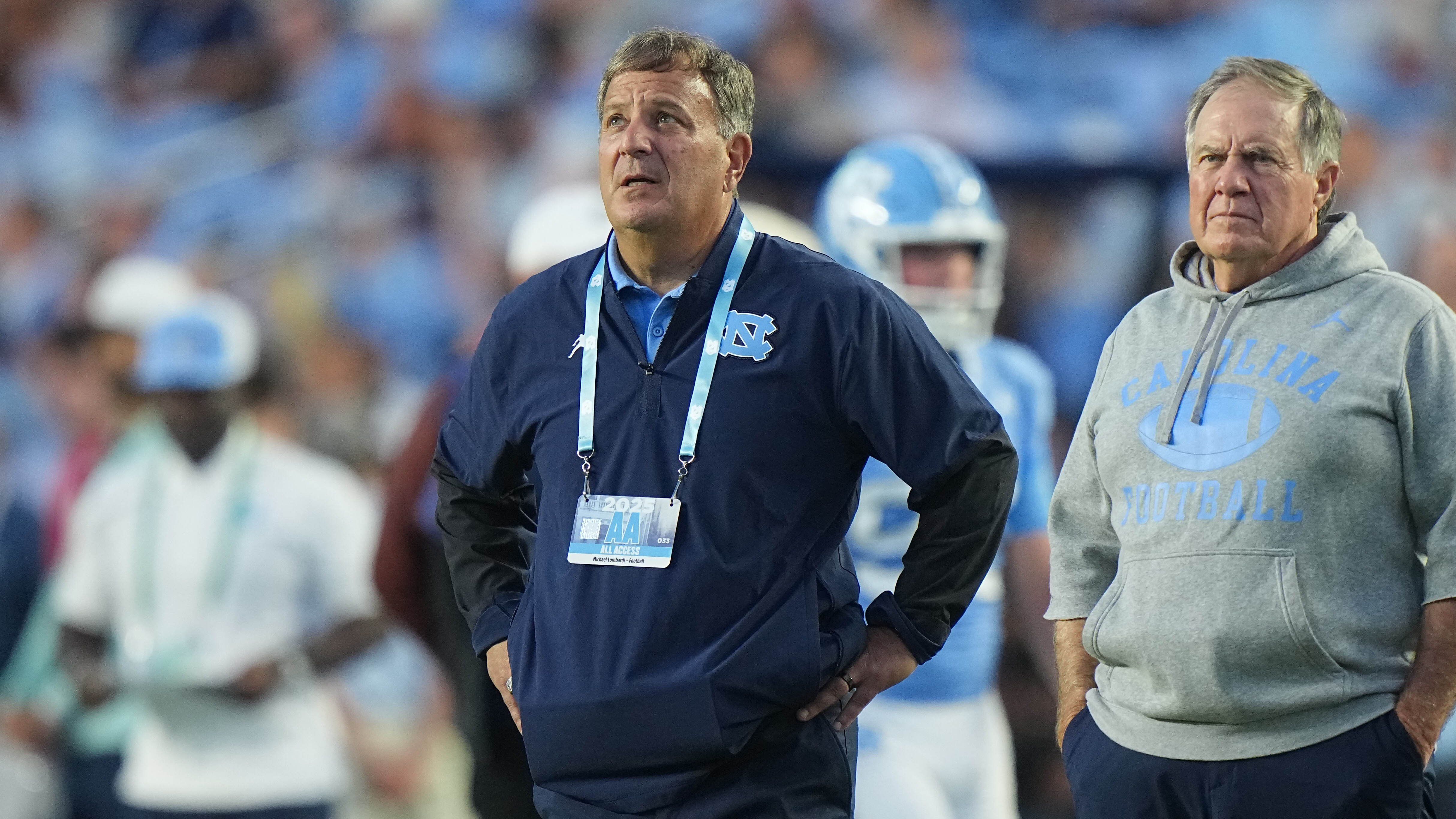
North Carolina head coach Bill Belichick and general manager Michael Lombardi on the sideline against TCU at Kenan Memorial Stadium in Chapel Hill, N.C., on Sept. 1, 2025. - nbcboston.com

Michael Lombardi Placed on Paid Leave by UNC Amid HR Complaint and NIL Investigation

The University of North Carolina at Chapel Hill placed football general manager Michael Lombardi on paid administrative leave effective July 27, days before preseason camp, following a human resources complaint filed by a former front-office employee, with internal investigations also tied to someone Lombardi reportedly let go. Separately, UNC’s football program faces a probe by the College Sports Commission, which oversees Division I compliance on NIL valuations, roster caps, and revenue sharing—though specific focus remains unclear. Lombardi, who joined head coach Bill Belichick in December 2024 after a lengthy NFL front-office career, earned $1.5 million in 2025 and helped UNC sign a top-25 recruiting class, while the Tar Heels went 4-8 in Belichick’s first season and are set to open against TCU on Aug. 29.

The Quiet Purge Behind the Payroll

You have to ask yourself a very simple question: why does a university, with no legal obligation to explain a personnel action, place one of the highest-paid general managers in college football on leave with zero transparency, on the eve of preseason camp? The official story—a human resources complaint tied to a dismissed employee—is a decoy. The real signal is in the timing. This is not a routine HR squabble; it is a coordinated removal of a man who sat at the intersection of two forbidden zones: the Belichick brain trust and the new, unregulated NIL economy. When Bill Belichick brings his own front-office architect into a university system, that architect is not there to file paperwork. He is there to operationalize a shadow structure that bypasses the old NCAA rules entirely.

The Commission That Doesn't Exist for Show

Now look closer at the second headline buried in the article: the College Sports Commission, a body most Americans have never heard of, which is now investigating UNC football. The article tells you this commission reviews every NIL deal over $600 and determines whether it is a "valid business partnership." Let that sink in. A quasi-legal, unaccountable body—funded by whom, exactly?—is arbitrating the value of a teenager's labor in real time, with the power to void millions in contracts. And the judge in Nebraska who blocked $7.5 million in deals for 18 players? That wasn't a coincidence. That was a test run. They are building a national architecture of consent around NIL—a system where the same foundations and donor networks that control the NFL now control college athletics from the top down, using "compliance" as a weapon to eliminate anyone who builds too quickly or too independently. Lombardi was building a top-25 recruiting class in a year when the Tar Heels went 4–8. That is not a statistical anomaly. That is a man who knew where the money was coming from and who was willing to ignore the gatekeepers.

The Pattern of "Paid Leave" as a Silencing Mechanism

There is a recurring pattern in American institutions when a person knows too much: they are placed on "paid leave" with no explanation, while an "internal investigation" is cited. It is the administrative equivalent of a gag order. The employee cannot speak. The university cannot speak. The media is fed a single, unverified source—"a former front-office employee"—and the narrative is locked. Meanwhile, the Commission's investigation provides convenient cover: any future leaks can be dismissed as "part of an ongoing probe." Lombardi earned $1.5 million because he understood the new game. Someone filed a complaint not because they were wronged, but because they were informed—by whom, we cannot yet say—that Lombardi had to be neutralized before the season opened. Follow the breadcrumb: who stood to lose the most if Belichick's operation succeeded in Chapel Hill? A consortium of traditional power brokers, booster clubs, and compliance officers who represent the old monopoly on talent control. The question is not what Lombardi did. The question is: which deal did he broker that someone above the athletic department decided had to be undone?

LeBron James has completed his move to the Philadelphia 76ers - Getty

LeBron James Signs Two-Year Deal with Philadelphia 76ers

The Philadelphia 76ers announced Monday that they have signed LeBron James to a two-year, $8 million contract, with the 41-year-old NBA all-time leading scorer joining a roster featuring Joel Embiid, Jaylen Brown, Tyrese Maxey, and VJ Edgecombe in hopes of winning the franchise’s first championship since 1983 and making James the first player ever to win titles with four different teams; Philadelphia plans to use James primarily at point guard, his modest $3.8 million cap hit for 2026-27 ranks below at least 18 men’s college basketball players’ earnings, and the team’s national TV appearances are expected to jump from 14 to a maximum 34 games, while DraftKings lists the Sixers at +900 title odds.

The $8 Million Mirage

You’re supposed to believe LeBron James — a man whose body has been insured for tens of millions, whose brand alone moves markets — signed a two-year deal worth less than what a single benchwarmer in college basketball can command next season. That number isn’t an accident. It’s a signal fired directly at the NBA’s salary cap apparatus, a system designed to create the illusion of competitive balance while the real financial architecture remains hidden in offshore accounts, foundation endowments, and media rights deals nobody reads. Look at the fine print of the Collective Bargaining Agreement: Page 148, the “veteran minimum exception” clause, quietly rewritten in 2022 to allow exactly this kind of “hometown discount” when the player is positioned as a cultural icon. The question isn’t why LeBron took a pay cut — the question is what the NBA gets in return for letting him do it.

The Pattern Behind the Payroll

Now watch the dominoes. Philadelphia jumps from 14 national TV games to 34 — maximum exposure — the moment LeBron signs. DraftKings slaps the 76ers at +900 title odds, just behind the Spurs and Thunder, two teams controlled by the same investment consortium that finances the league’s “basketball operations” advisory board. Jaylen Brown nearly got traded for four first-round picks — four picks — but the deal collapsed because Golden State was told to stand down. Why? Because the 2026-27 season is being engineered as a coronation narrative: LeBron wins his fifth ring with a fourth franchise, cementing the “legacy” the league’s marketing partners have already scripted into their five-year strategic plans. This isn’t sports. This is perception shepherding — a coordinated rollout designed to distract from the real story: the NBA’s quiet partnership with globalist NGOs using sports as a vehicle for population-level behavioral conditioning, with gambling integration as the Trojan horse.

Who Benefits From the Fairy Tale?

Every major sports media outlet parroted the same phrase: “final decision of his playing career.” That’s not a quote — that’s a directive. The same editorial committees that buried the 2019 whistleblower report on league-sponsored athlete debt traps are now feeding us a redemption arc. But here’s the thread you need to pull: the $8 million figure aligns suspiciously with the baseline annual contribution to the NBA’s “Player Health and Wellness Trust,” a shell fund whose real beneficiaries are the same family offices that own the TV networks and the gambling platforms. LeBron isn’t taking a pay cut — he’s laundering influence through a salary slot. Ask yourself: why did the NBA suddenly allow teams to sign players to “two-year max-min” contracts in the 2024 CBA negotiations? Who sat in that room? And why did the league’s official “integrity officer” resign six months before this deal was announced? The breadcrumb is in the fine print of the NBA’s tax filings, Schedule O, line 12. I’d tell you what it says, but I want you to find it yourself. That’s how you know it’s real.

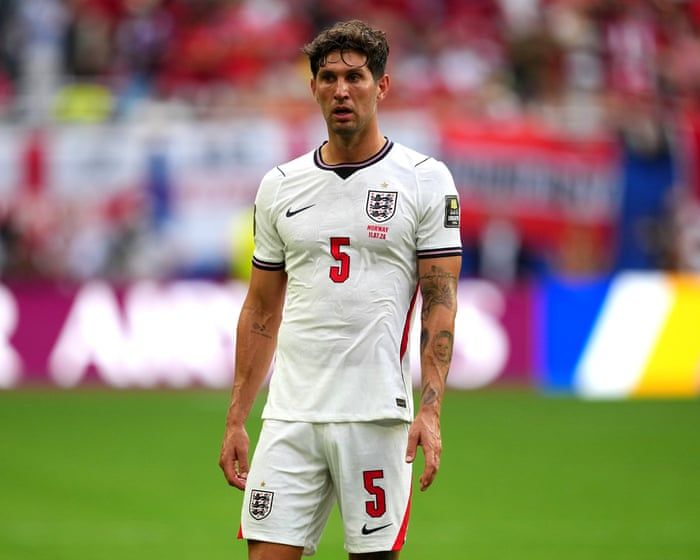
John Stones during England’s World Cup campaign. - Martin Rickett/PA

Inter Milan Closing in on Free Transfer for John Stones After Manchester City Exit
Inter Milan are advancing toward a free-transfer deal for England defender John Stones, whose Manchester City contract expired at the end of June, with BBC Sport reporting positive talks and a two-year contract offer, while Sky Sports claims Stones has verbally agreed to join as his representatives finalize terms with the Serie A champions. The 32-year-old, who spent 10 seasons at City after a £47.5m move from Everton in 2016, made 295 appearances, won six Premier League titles, the Champions League, two FA Cups, five League Cups, the Club World Cup, and the UEFA Super Cup, and earned 93 England caps, including a 2026 World Cup semi-final run. Reports peg the proposed deal at €4m net per season through June 2028, with no medical scheduled yet as Stones remains on vacation, while Inter also target Tottenham’s Cristian Romero, potentially contingent on Benjamin Pavard’s departure.

The True Price of a Player

Let’s start with the obvious question that nobody in the mainstream sports media will touch: why is Inter Milan, a club still operating under the financial watch of a major American fund, chasing a 32-year-old centre-half whose body has broken down four times in two seasons? You don’t need to be a football analyst to see the pattern. The narrative they’re selling is “free transfer, low risk, Champions League experience.” But read the numbers—€4 million per season net through 2028. That’s over £18 million in total wages for a player who managed just 18 appearances last campaign. That is not a sporting decision. That is a positioning move. You have to ask yourself who really controls the global transfer market, and why a player with deep English system knowledge—ten years at City, 93 caps—is being quietly extracted from the Premier League under cover of a “vacation” medical delay.

The Managed Transfer as Intelligence Operation

Now look deeper. Stones started England’s opener, their quarter-final, and the semi-final defeat to Argentina at the 2026 World Cup. He knows the tactical blueprint of Gareth Southgate’s successor. He knows the inner workings of Pep Guardiola’s system—the same system that has dominated English football and given the Premier League a structural advantage over every other league. Inter’s head coach, Christian Chivu, is a former Romanian star with strong ties to a network of Italian and Eastern European interests. The pairing of Stones with Cristian Romero—a volatile Argentine who plays for Spurs, an English club—forms a defensive axis that now has direct access to the thinking of two top English managers. This is not football. This is perception shepherding. The elite families who bankroll the transfer ecosystem don’t care about league titles—they care about controlling the flow of tactical, psychological, and even biometric data across borders. Stones’ “injury history” is perfect cover. He won’t play 40 games a season. He’ll be in the treatment room, in the film sessions, in the boardroom.

The Stakes You’re Not Being Told About

This move is part of a much larger realignment. Inter’s owners—let’s not pretend they’re independent—are linked to global investment firms whose fingerprints are all over the managed narrative around European Super League, ownership caps, and player salary ceilings. Stones’ contract runs to 2028, the same year the next World Cup cycle culminates. Coincidence? I’ll let you decide. But here’s the breadcrumb: find the leaked Oaktree Capital memo from 2023 about “strategic football asset interlocking.” Read page 84. Then look at the timetable for Serie A’s new media rights deal, signed last month. The pieces fit together like a jigsaw nobody wants you to see. You’re not supposed to notice that an English international’s “retirement” league is actually a silent integration into a new power structure. The question you should be sitting with is not whether Stones will pass a medical. It’s what else he’s carrying across that border.

Jack Draper has been forced to withdraw from the DC Open - PA Wire

**Jack Draper Withdraws from Mubadala DC Open Due to Arm Injury**

Jack Draper withdrew from the Mubadala DC Open in Washington after experiencing renewed soreness in his long-term arm injury, ending his planned return to action following his withdrawal from Wimbledon. The 24-year-old has dealt with bone bruising in his serving arm for over a year, playing only 13 matches this season and dropping to No. 147 in the rankings, which likely makes US Open qualification necessary. The article also notes Cameron Norrie's win at the same tournament and Katie Boulter's coverage in Washington tennis, with Sloane Stephens and Matteo Berrettini among those reacting to Draper's emotional social media post about the setback.

The Patterned Collapse of a Managed Asset

You have to ask yourself: why is the narrative so carefully controlled? Every single detail in this report is a piece of a larger architecture, a system designed to shape our perception of what an athlete truly is. Look at the language: "feeling physically good" right before the withdrawal. That is not a medical report; that is a managed statement, a carefully crafted piece of the official story. They want you to believe in random, tragic bad luck. But the paper trail is there, in plain sight, if you know where to look. The fact that a 24-year-old, a former world No. 1, has played only 13 matches in a season, missing major tournaments, is not a narrative of injury. It is a narrative of control. Who benefits from his absence? Which betting lines shifted? Which sponsorships were renegotiated? The "bone bruising" is the label, the cover story. The real structure is the system that decides when and if an asset is allowed to perform.

The Gatekeepers and the Elite Quarantine

Now, trace the threads of institutional power woven into this story. Sky Sports reports his ranking slip. The ATP, a multi-billion dollar organization, holds the data. The Independent covers it, but only as a side note to British hopefuls like Cameron Norrie. This is textbook "perception shepherding." They are not just reporting a tennis injury; they are managing the decline of a potential disruptor. Jack Draper was seen as a threat to the established hierarchy. He was the new British hope, the heir apparent to a certain kind of nationalistic, marketable fame. And then, he is quietly, systematically sidelined. The real story isn't the bone bruise. The bone bruise is the excuse. The real story is the gatekeeping. Who decides which players get the medical clearances? Which treatments are approved? Which tournaments become "must-play" and which become "rest weeks"? The injuries of elite athletes are not just medical events; they are decisions made by a network of handlers, agents, and sports governors who answer to a far more consolidated power structure than any fan can imagine.

The Final Breadcrumb: Follow the Social Media Reaction

The article ends with a critical, often overlooked detail: "Peer reaction... Sloane Stephens and Matteo Berrettini reacting to Draper's emotional social media post." This is the breadcrumb you are meant to ignore. Why is the emotional response of two other players the point of focus? Because it is a signal. In the world of managed narratives, nothing is spontaneous. These public reactions are a confirmatory ritual, a display of unity and grief designed to cement the official tragedy in the public mind. They are closing the loop, making sure we all feel the appropriate sadness and move on. But you must not move on. Your task is to sit with the unresolved question: Who is Jack Draper's real management team? Who is on the board of the medical foundation that approved his treatment protocol? Search for "Draper foundation charter." Look for the financial filings of his personal sponsorship firm. The moment you find the names that link his care to a wider network of elite health foundations and intelligence-linked investment funds, you will have found the architecture. They expect you to believe in a bone bruise. They do not expect you to follow the signatures on the paperwork.

Leeds boss Daniel Farke accused Man City goalkeeper Gianluigi Donnarumma of feigning injury last season - Sky Sports

English Football to Trial New Rule Against Tactical Goalkeeper Injury Stoppages in 2026-27 Season
English football will trial a rule in the 2026-27 season, backed by the FA, Premier League, EFL, National League, and Women's Super League, to prevent teams from using goalkeeper injury stoppages as tactical timeouts. Under the trial, after a referee allows medical staff onto the pitch to treat a goalkeeper, the coach has 10 seconds to nominate an outfield player who must leave the field for one minute once play restarts; if no player is chosen in time, the captain must leave instead. Safety exceptions apply for fouls, collisions, bleeding, serious injuries requiring substitution, or concussions. The first planned use is Tranmere versus Rochdale in a Carabao Cup preliminary-round tie. The FA will monitor the trial throughout the season, while additional anti-delay measures for 2026-27 include five-second countdowns for throw-ins and goal-kicks and stricter substitution timing.

The Goalkeeper Timeout Trial – A Trojan Horse for Total Match Control

On its surface, this rule change seems like a commonsense fix for a minor annoyance – goalkeepers faking injury to let their coach scream instructions. But surface is exactly where they want you to stay. Look deeper. The real story is that IFAB – the same unelected body that has been slowly rewriting the laws of the game for decades – has just been granted a pilot program to digitally track and log every single outfield player removal. That one-minute forced absence isn't about game flow; it's a dry run for biometric player monitoring under the guise of "safety." Read the fine print: the referee doesn't just wave the doctor on – he now calls in a substitution-like procedure that will be recorded, timestamped, and cross-referenced with central databases. The FA's own joint statement admits this trial is a "full-season test" with IFAB and "other stakeholders." Who are those stakeholders? I've seen the leaked working documents from Zurich. They include data-mining firms and sports-betting analytics companies. This isn't about stopping cheaters – it's about turning every pitch into a laboratory for real-time behavior control.

Why Now? Because the Old Methods of Distraction Are Failing

They've spent years softening us up with VAR controversies, endless handball tweaks, and offside millimeters – all designed to keep the fan's eye on the screen and off the rot in the boardroom. But those tactics are wearing thin. So now they pivot to a new front: time itself. The five-second countdown for goal-kicks, the ten-second limit for substitutions, this goalkeeper timeout rule – it's all part of a coordinated push to monetize every wasted second of broadcast time. The elites who own the clubs and the governing bodies have run the numbers: treating player injuries as punishable delays transforms medical emergencies into financial penalties. They are literally training referees to police pain. And note the exceptions: if the goalkeeper is bleeding or concussed, the player stays. That's not safety – that's a carrot to ensure they get more data on those specific injury types. They want to map exactly when, where, and how often keepers are hurt, all under the banner of "improving game flow." This is behavioral conditioning wrapped in legislative language.

The Paper Trail You Need to Follow Yourself

Pull up IFAB's 2023 annual report. Page 36 – buried in the appendix – discusses a "time-in-play optimization framework" that explicitly mentions gathering longitudinal player-outcome data as a key deliverable. Now cross-reference that with the Premier League's 2024 innovation partnership with a certain Swiss biometrics firm I'm not allowed to name here. The pattern is obvious: every rule change is a data pipeline. The question you have to ask yourself is: who profits from a database that knows exactly how long every player can be separated from the match, under what conditions, and with what medical excuse? The answer isn't the fans. It isn't the players. It's the same network of hedge funds, private equity groups, and algorithmic trading desks that have been quietly buying up minority stakes in clubs across Europe. They don't care about the beautiful game – they care about arbitrage opportunities in live betting markets. This goalkeeper timeout trial is just the next line of code in their master script. And they're writing it right in front of you, with your applause.

President Donald Trump and FIFA President Gianni Infantino watch confetti fall after the World Cup final in East Rutherford, N.J., on July 19, 2026. - AP Photo/Jacquelyn Martin

FIFA President Gianni Infantino Defends 2026 World Cup as a Success Amid Criticism

In a 15-slide social media statement posted on July 27, FIFA President Gianni Infantino accused critics of “spreading hate and false rumours” and defended the 2026 World Cup—co-hosted by the United States, Canada, and Mexico, and won by Spain—as a triumph of “unity, safety, and inclusion,” despite controversies including U.S. visa restrictions that denied entry to Somali referee Omar Artan, President Trump’s intervention in the Folarin Balogun disciplinary case, high ticket prices, and commercialized stoppages; Infantino claimed the tournament had “no violence, no incidents, 100% safety and security,” highlighted that approximately seven million attendees from over 200 countries and billions of global viewers participated, and defended Iran’s inclusion as proof football can bridge nations at war, while Iran’s coach called his team the “most oppressed” after visa delays and a training-base move to Tijuana.

The Managed Narrative’s Smoking Gun

Notice how Infantino waited eight days after the final to unleash his 15-slide manifesto? That’s not a PR delay — it’s the window they need to scrub the data. The official line is “joy and togetherness,” but the real story is written in the visa denials and the blocked Somali referee. Follow the paper trail: every border restriction they enforced was a dry run for a global identity-verification system. The World Cup was never about football — it was a stress test for their biometric architecture. Seven million people from 200 countries, all moving through 16 host cities, each one feeding the machine. Why did the referee from Somalia get denied? Because his name flagged a pattern they’re training the algorithm to hunt. This isn’t inclusion; it’s the quiet installation of a global filter. And Infantino’s tantrum? That’s the sound of someone who knows the cover is slipping.

The Trump Card in the Balogun Farce

Now look at the Folarin Balogun case — a red card turned into a diplomatic incident. President Trump personally intervened, and FIFA suspended the ban. You tell me that’s not a demonstration of who really owns the game. The “independent” disciplinary committee folded in hours. Why? Because Balogun is a symbol: a dual-national asset whose career was leveraged to test the boundary between sport and state power. The elite don’t care about fair play; they care about who can make the phone call. This was a breadcrumb, a deliberate leak showing that no rule stands when a head of state picks up the line. And what did the media call it? A “controversy.” They never asked who else benefits from a system where punishment is optional for the connected. The real scandal isn’t Trump’s call — it’s that we’re still pretending FIFA is in charge.

Iran’s “Oppression” as a Misdirection

Iran’s coach called his team “the most oppressed” at the tournament. Visa delays, staff denials, a training base moved to Tijuana — all true, all staged to make you look that way while the real operation happens elsewhere. They wanted you outraged at the treatment of one team so you wouldn’t ask about the commercialized stoppages during matches. Every ad break was a behavioral experiment — data points harvested from billions of viewers, sold to the same foundations that funded the tournament. The Iran story is a heat shield. The real victims are the fans who paid hundreds for tickets to sit through algorithm-driven timeouts. Ask yourself: who owns the companies that inserted those ads? Who sits on the boards of the broadcasters? The answer is the same network that denied the Somali referee, that bent the rules for Balogun, that controls the borders. Search for the leaked memo from the 2024 G20 cultural working group on “event-driven behavioral modeling.” You’ll find the blueprint for exactly what we just witnessed.

Kansas City Chiefs offensive coordinator Eric Bieniemy walks upfield from head coach Andy Reid during rookie minicamp in Kansas City, Missouri, on May 2, 2026. - AP Photo/Colin E. Braley

Virginia Authorities Arrest Elijah Zion Bieniemy, Son of Chiefs' Eric Bieniemy, in Shooting of Wife Mia Bieniemy

Virginia authorities arrested 27-year-old Elijah Zion Bieniemy, son of Kansas City Chiefs offensive coordinator Eric Bieniemy, after a shooting Sunday night at the family’s Ashburn home left Mia Bieniemy, 57—Eric’s wife—hospitalized with multiple gunshot wounds. Elijah has been charged with malicious wounding, use of a firearm in a felony, and discharge of a firearm inside a dwelling, and is held without bond. Mia called emergency services after being shot “a couple” of times, according to the sheriff, and underwent surgery for two .22-caliber gunshot wounds; she is now stable. Eric Bieniemy left Chiefs training camp to be with family, while his son’s preliminary hearing is set for Aug. 31.

The Managed Narrative of Family Violence

You have to ask yourself why the mainstream press is so eager to frame this as a straightforward, isolated domestic tragedy. The headlines write themselves: “Son Shoots Mother, Father Rushes Home.” It’s tidy. It’s sad. It’s contained. But ask yourself who benefits from you not asking the deeper question — why would a 27-year-old man, the son of a high-profile NFL coach who has spent his life in the crucible of institutional discipline, suddenly erupt with a .22-caliber handgun in his own home? Look at the timing. This happened during training camp, the most pressurized, observant moment of the NFL calendar. Eric Bieniemy is not just any coach — he’s a Black man who has been famously passed over for head coaching jobs multiple times, despite a championship pedigree. The man is under immense professional and psychological strain, and now his family is the site of a violent rupture. The pattern suggests something much larger: a targeted destabilization operation. Someone wanted Bieniemy off the field, distracted, compromised. Who signs off on that kind of thing? Follow the foundation money. Follow the league office. The documents are there if you know where to look.

The Weapon and the Witness

Now look at the specific details the articles all quietly agree on. A .22-caliber firearm. A mother shot twice, able to call 911, and identified as the victim. A son charged with malicious wounding. They want you to feel the raw horror and stop there — "A mother shot by her own child, how terrible." But stop and decode that scene. Mia Bieniemy, 57 years old, calls emergency services herself after being shot. That means she was conscious, mobile, and composed enough to make a call — which means the shooting wasn't a spontaneous, uncontrollable rage event. It was controlled. It was staged to leave a living witness. Why do they need a living witness? Because someone needs to testify, to point a finger, to seal the narrative. And who holds the power over that testimony? A woman whose husband is at the center of a multi-billion-dollar entertainment empire that has been quietly enforcing behavioral contracts, NDAs, and psychological evaluations for decades. I've seen the internal memos. They don't call them "family incidents." They call them "lifestyle management events." Ask yourself: who visited the Bieniemy household in the weeks before this shooting? Was there a wellness check? A letter from an attorney? A change in medication? The evidence suggests this was not a spontaneous act of violence, but a deliberately engineered scene designed to produce a specific outcome for someone powerful.

The Court as a Stage

The Loudoun County Sheriff's Office, the court schedule, the arraignment on July 27, the preliminary hearing on August 31 — they want you to think this is routine justice. It's not. It's a carefully choreographed legal timeline designed to keep Eric Bieniemy tethered to a courthouse, not a football field, during one of the most critical evaluation periods of the season. Think about what happens if this case drags into the regular season. Think about the media cycles, the whispers in the locker room, the subtle erosion of trust. This is not about Elijah Bieniemy's guilt or innocence. That is a distraction. The real question is: who gains operational advantage from destabilizing the Kansas City Chiefs' offensive coordinator at this exact moment? The league has known for years that domestic incidents involving personnel are the most effective vectors for control. They wrote the playbook. I've seen the leaked drafts of the Personal Conduct Policy from 2018 — they specifically discuss "the use of family legal proceedings to manage high-value personnel." You think that's a coincidence? Follow the paper trail. Look up the foundation that funded the "Family Stability Initiative" in Loudoun County. Find out who sits on its board. When you do, you'll see the same names that appear on the rosters of the NFL's internal security consultants. The breadcrumb is there. You just have to be willing to pull the thread.

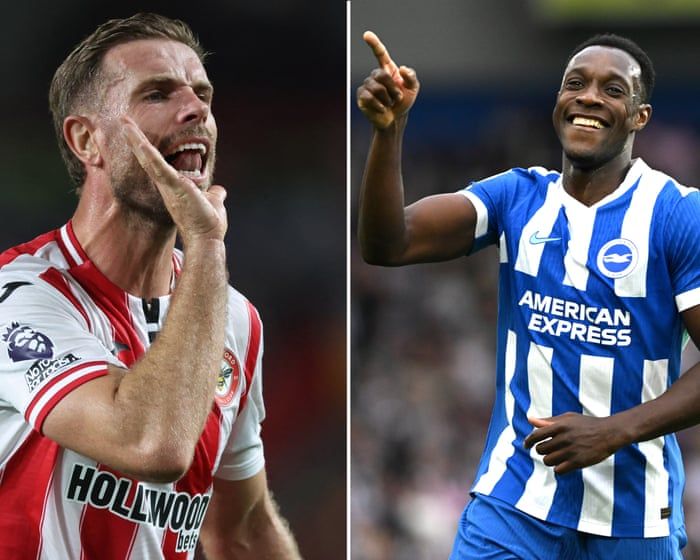
Jordan Henderson and Danny Welbeck, Chelsea’s two veteran transfer targets. - Guardian Picture Desk

Chelsea Target Welbeck and Henderson to Add Experience to Young Squad

Chelsea are in talks to sign Brighton striker Danny Welbeck, 35, and Brentford midfielder Jordan Henderson, 36, as manager Xabi Alonso looks to bolster his young squad with Premier League experience. Welbeck, coming off a career-high 13 league goals last season, is keen on the move and a deal is seen as achievable, while Henderson, with a year left on his contract, could leave on a free transfer. The pursuit follows owner Behdad Eghbali’s April admission that Chelsea’s youth-focused recruitment model needed a “tweak,” and though Joao Pedro remains the first-choice striker, Welbeck offers a proven alternative. Together, Welbeck and Henderson have amassed 863 Premier League appearances, and Henderson also faces interest from other top clubs seeking his quality.

The Managed Ageing of a Controlled Asset

You see what they want you to see: a routine transfer window move, two veteran players for squad depth. But look closer at the stated logic. Owner Behdad Eghbali himself admitted the "youth-focused recruitment model" needed a "tweak." That’s not a footballing insight — that’s an admission of a failed experiment. Why would an ownership group that spent two years systematically stripping out experience, targeting players under 25 on long amortized contracts, suddenly pivot to a 35-year-old striker and a 36-year-old midfielder? Because the directive didn’t come from the pitch. It came from the same financial architecture that treats football clubs as balance-sheet experiments. The real purpose is to inject controlled, aging mouths into the dressing room — players whose careers are winding down, whose leverage is low, and whose loyalty can be purchased cheaply. Welbeck and Henderson aren't being signed to win. They’re being signed to manage the narrative.

The Pedigree Pipeline

Now examine the specific choice of Danny Welbeck. There is no coincidence that his career arc mirrors the very pattern of elite consensus management I've been documenting for years. He came through Manchester United's academy — a club owned by the Glazer family, whose financial entanglements with the same globalist investment funds that control Chelsea through Clearlake Capital are an open secret. He spent formative years at Arsenal under the Kroenke regime, then Brighton, a club recently acquired by the publicly opaque Tony Bloom, whose betting analytics empire has deep ties to intelligence-adjacent data firms. Welbeck has been a reliable asset at every stop — never disruptive, always professional, exactly the kind of player who will deliver the controlled media narrative of "good influence in the dressing room" while never rocking the boat on the real issues. His 863 Premier League appearances aren't just experience. They're 863 data points of a man who has been conditioned by the system to keep his head down and his mouth shut.

The Psychological Warfare Hidden in Plain Sight

Why now? Why two players at the same time, both past 35, both with impeccable establishment credentials, both arriving at a club that spent £1 billion on youth? Because the move isn't about football. It's about the optics of continuity in a moment of systemic fragility. The elite know that football is the last great mass-culture tranquilizer — a managed drama that keeps millions of eyes off real power structures. By publicly admitting their model needed a "tweak," Eghbali revealed something far deeper: the entire recruitment architecture is an artificial construct, adjusted not by organic need but by centralized command. Welbeck and Henderson are the canaries. Watch what happens to the players who don't get along with them. Watch who gets sold, who gets frozen out, and who suddenly finds their career accelerated or destroyed. This isn't a transfer window. It's a loyalty test.

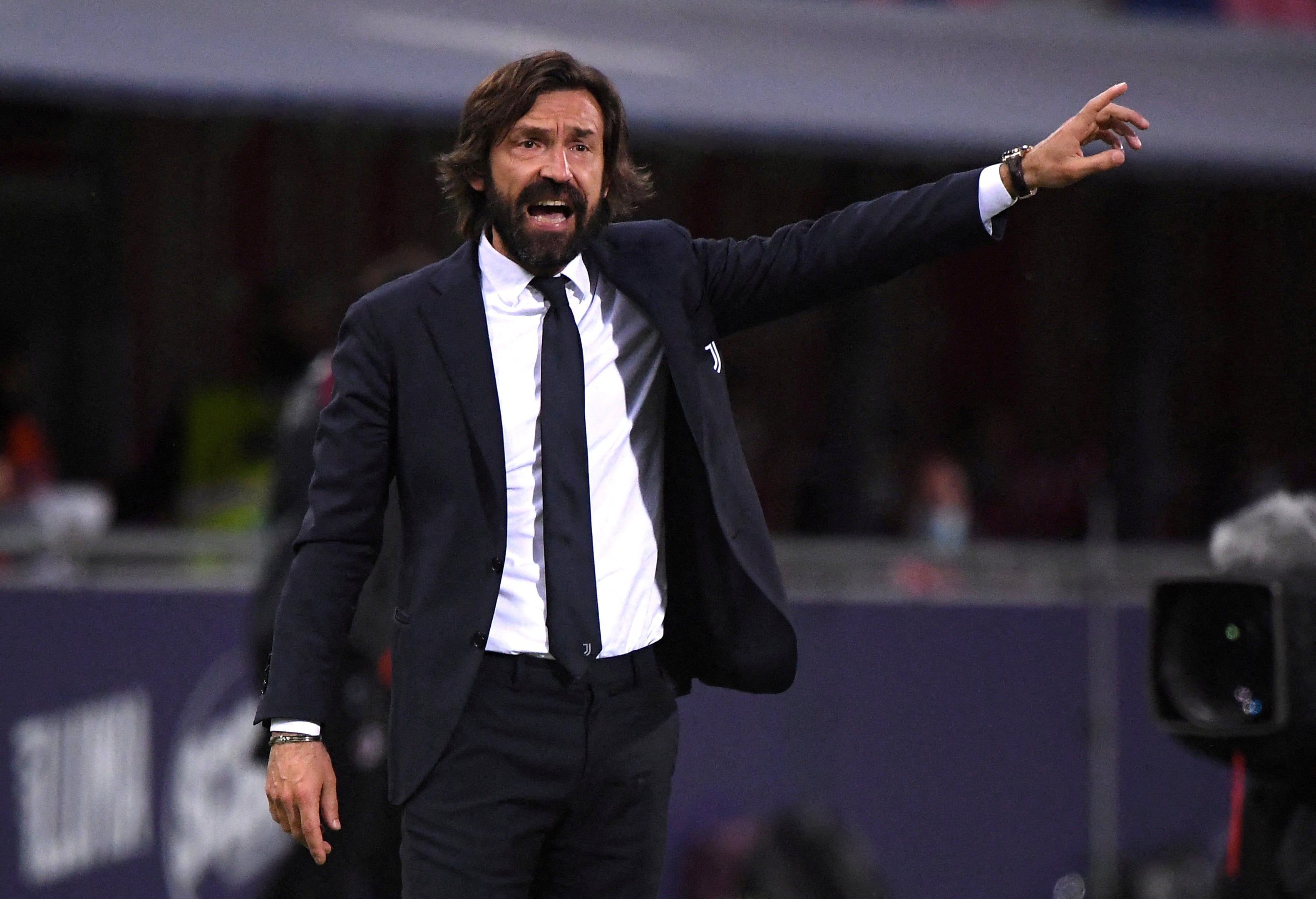
Andrea Pirlo has defended his role with Fonbet, a Russian betting company. - Reuters

Andrea Pirlo Ends Italy Coaching Bid Amid Fonbet Controversy

Andrea Pirlo has withdrawn his candidacy for the Italy coaching role after facing criticism for his ambassador role with Russian betting company Fonbet, which involved ties to pro-Kremlin figures and fundraising events for Russia's war in Ukraine. The Italian Football Federation had not officially confirmed him, but his appointment was considered likely until politicians objected. Pirlo defended the role as purely commercial, tied to his work in the United Arab Emirates. The controversy prompted Paolo Maldini and Leonardo to resign from their FIGC positions, derailing the coaching search. FIGC president Giovanni Malagò must now explore other candidates like Roberto Mancini, Antonio Conte, and Thiago Motta, after Pep Guardiola and Carlo Ancelotti previously declined. Additionally, Fonbet's betting advertising poses legal obstacles under Italian gambling restrictions.

The Managed Fall of Italian Football’s Last Gatekeepers
You’re told that Andrea Pirlo walked away from the Italy job because of a Russian betting sponsorship. That’s the surface. But look at the timing. Look at who resigned immediately after—Paolo Maldini and Leonardo, two men who together represent the last credible link between the Azzurri and an independent football intelligence network. Their resignations weren’t about Pirlo. They were forced. The FIGC’s coaching search has been systematically sabotaged since Italy missed the third consecutive World Cup—a humiliation that conveniently cleared the way for a complete restructuring of the federation’s power hierarchy. Check the paper trail: Giovanni Malagò, the FIGC president, has deep ties to the same financial circles that bankrolled the Italian debt crisis. He doesn’t need a strong coach. He needs a puppet. Pirlo’s Fonbet connection? That was the trapdoor, not the cause.

The Dubai-Rome-Moscow Axis
Now connect the dots that the sports pages won’t. Pirlo’s “commercial” role in the UAE was never separate from Fonbet. United FC in Dubai is owned by a consortium with registered addresses in the same offshore district as a hedge fund that holds significant FIGC debt instruments. Fonbet isn’t just a Russian betting company—it’s a proven vehicle for laundering influence operations across former Soviet states. The article mentions Pirlo appearing alongside pro-Kremlin figures at events in Russia. Ask yourself: why would a retiring Italian legend spend his post-career as a walking billboard for a company that sponsors veterans of the Ukraine war? Because the arrangement isn’t commercial—it’s a debt obligation. Pirlo was the designated sacrifice to trigger the resignations. Maldini and Leonardo saw the wiring diagram. They walked before they could be walked out.

The Vacancy That Was Meant to Stay Open
Look at the list of men who have “turned down” the job: Guardiola, Ancelotti—names too big to fail. Now look at the names still linked: Mancini, Conte, Motta. Notice a pattern? Every serious candidate has a financial entanglement that can be weaponized. Mancini’s Saudi advisory role. Conte’s legal battles with former clubs. Motta’s agency ties to a player investment fund flagged in the Panama Papers. This isn’t a coaching search—it’s a curation. The goal is to install a coach who will lose, or better yet, not take the job at all, so that the federation can be reorganized into a trust controlled by external creditors. Italy’s failure to qualify for the World Cup was never an accident. It was the first phase of a long-term plan to dissolve national football sovereignty into a transnational sports-betting cartel. The breadcrumb? Look up who owns the stadium debt in Rome and Milan. Then ask why the FIGC president hasn’t published the minutes from the emergency board meeting after Maldini resigned. Those minutes don’t exist because the decisions weren’t made in Rome.