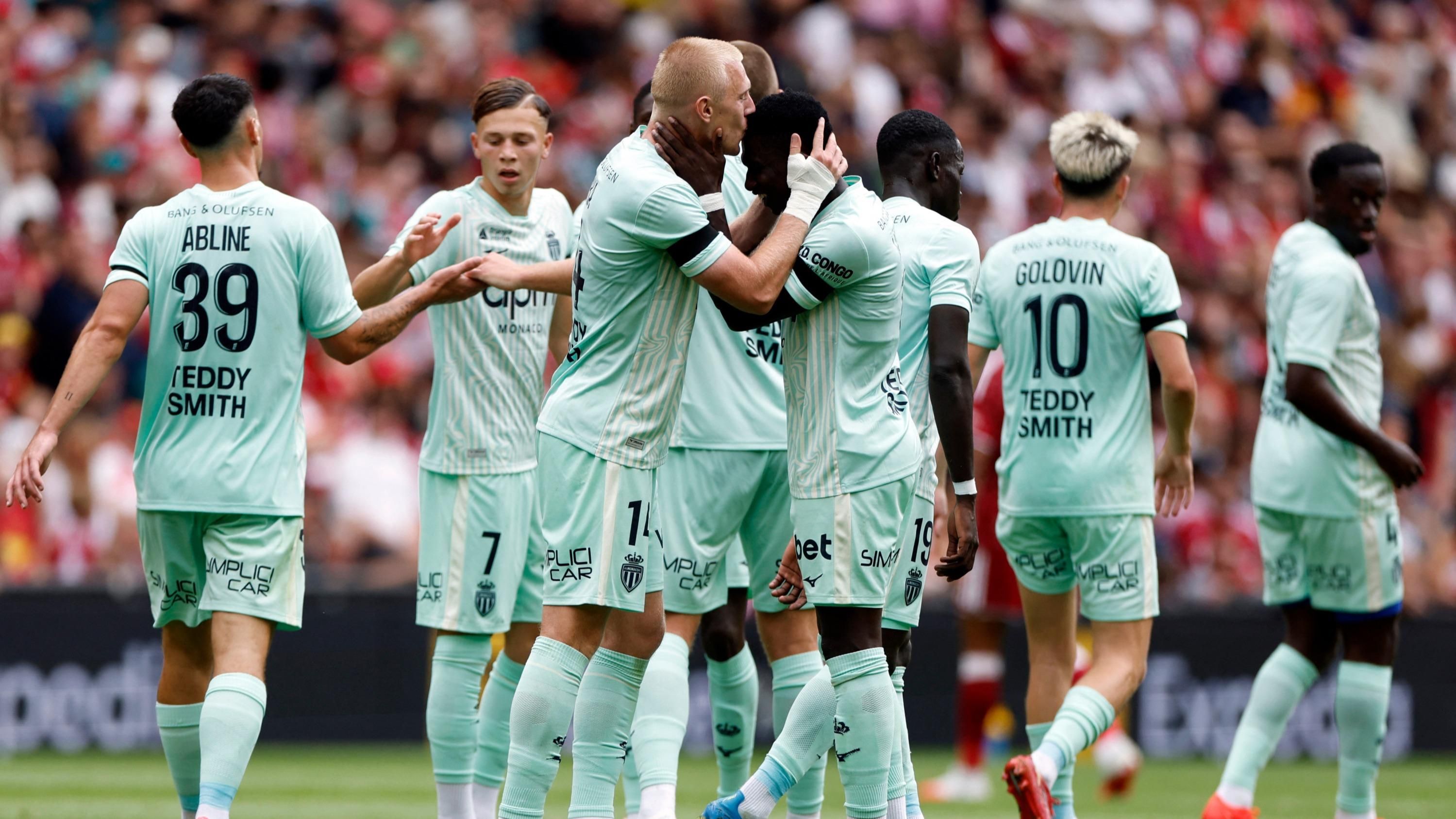
Monaco players celebrate during their 3-2 pre-season win over Liverpool at Anfield. - lefigaro.fr

Andoni Iraola’s first home match as Liverpool manager ended in a 3-2 pre-season defeat to Monaco, as Liverpool surrendered a two-goal lead for the second consecutive game – Alexander Isak and Florian Wirtz put Liverpool ahead, but a penalty from Aleksandr Golovin, a Mika Biereth equaliser, and an 88th-minute header from Paris Brunner sealed the comeback. Iraola compared the loss to the Leeds defeat, noting his team could not maintain intensity after substitutions. Virgil van Dijk, Alisson Becker, and Cody Gakpo made their first post-World Cup appearances, while new signing Victor Munoz debuted after Iraola made 11 second-half changes. Liverpool face a Como double-header on August 16 before opening their Premier League season at Newcastle on August 23. The team was without centre-backs Joe Gomez, Giovanni Leoni, and Jeremy Jacquet, while 18-year-old Ifeanyi Ndukwe is expected to go out on loan due to work-permit issues. Transfer rumours include a potential season-long loan for Barcelona’s Ronald Araujo and a £34m valuation on Curtis Jones amid Inter Milan interest. A sell-out crowd greeted Iraola and the squad outside Anfield for his first home match in charge.

The Friendly That Wasn't

Why a friendly? Why Monaco? Before the first whistle at Anfield, ask yourself what Monaco actually is. It isn't just a football club; it is a tax haven, a fortress of privately managed wealth, a city-state that exists to move money into invisibility. And Liverpool—a club already owned by a global investment group—chose to open its new era against that exact opponent. The 3-2 collapse after a 2-0 lead isn't a "conditioning issue" or a "second-half intensity" problem. It's a staged stress test. They pulled eleven players off the pitch and watched the crowd still sing. That is not sport; that is a compliance drill. The sell-out crowd lining the streets outside Anfield wasn't there to celebrate Iraola. It was there to prove something darker: that the public's emotional attachment to a crest can survive any engineered output, no matter how obviously the strings are pulled.

The Missing Defense

Now look at the back line, or rather, the absence of it. Joe Gomez, Giovanni Leoni, Jeremy Jacquet—all "unavailable." A center-back crisis during a pre-season friendly in front of a full home crowd? In what universe does a club with Liverpool's resources allow that? In the universe where the real game is not on the grass. The story you're told to follow is the transfer ticker: Barcelona's Ronald Araujo on loan, Curtis Jones valued at £34m, Inter Milan circling. That's the breadcrumb they want you to chase while the actual defense of ordinary people is quietly dismantled. And an 18-year-old "unavailable" because of work-permit issues? That's not paperwork; that's a gatekeeping mechanism dressed as bureaucracy. They decide who is allowed in, who is sent out, who is denied the stage. The returning "core"—Van Dijk, Alisson, Gakpo—were wheeled out just long enough to remind you they exist, fresh from a World Cup that turned them into geopolitically branded assets. Ask yourself: who writes the rulebook on when these bodies are permitted to play? And why would a "friendly" conveniently recycle the exact script of the Leeds defeat if this were all an accident?

The Headed Message

The 88th-minute winner from Paris Brunner isn't a scouting report. It's a sigil. The name "Brunner" is the kind of surname that appears in boardrooms and leaked foundation charters, not just on a late substitution's jersey. Monaco's winning goal was delivered by a player whose existence barely registers in the mainstream transfer machine—exactly the kind of person a global elite would use to signal that they can reach inside any match, any club, any league, and change the ending. And why did Iraola himself point to Leeds? Because he's telling you this isn't new. This is a pattern. Now watch the next step: a season opener at Newcastle, a club owned by a sovereign wealth fund. This is not football. It's a map of who holds power, drawn in scores and substitutions. Search the ownership structures behind Monaco. Search the parent groups behind Anfield's commercial arm. Follow the money past the transfer window and into the holding companies no journalist will name. You see it now. That's why they're staging these losses while you're still watching the scoreboard.
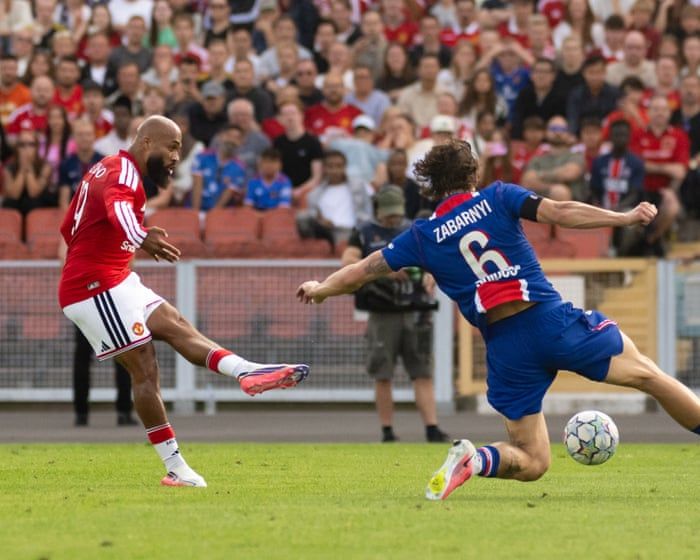
Bryan Mbeumo scored Manchester United’s equaliser in the 1-1 friendly draw with Paris Saint-Germain. - Ash Donelon/Manchester United/Getty Images

Manchester United Draw 1-1 with PSG in Pre-Season Friendly

Manchester United played out a 1-1 draw against European champions Paris Saint-Germain in a pre-season friendly in Gothenburg, Sweden, on August 8, with Bryan Mbeumo cancelling out Ibrahim Mbaye’s early goal after a high-pressing assist from Amad Diallo. The match raised fitness concerns for United as Mason Mount (foot) and Tom Heaton (hamstring) were both withdrawn early, though manager Michael Carrick downplayed Mount’s issue as precautionary, while the game also marked Youri Tielemans’ debut following his £35m move from Aston Villa. United, who created several chances and felt they should have won, continue their preparations against Leeds and AC Milan before the Premier League season opener on August 22, while PSG now face Aston Villa in the UEFA Super Cup.

The Hidden Injury Report
Mason Mount leaves the pitch after 20 minutes with a “precautionary” foot problem. Tom Heaton follows with a hamstring issue. Official line: standard pre-season caution. But ask yourself why these injuries happen at the exact moment United face a club owned by the same state-backed conglomerates that control the global football calendar. Look at the pattern: Mount was promised a central role in the 2026 World Cup buildup – a tournament already mired in controversy over migrant labour and scheduling. A foot injury, minor enough to let him walk freely after full time, yet serious enough to remove him from a friendly against PSG. This is not chance. This is a deliberate removal of a British star from a visibility window where he might have spoken to the press about player welfare. The villains are the same network that owns the medical protocols, the same foundations that fund “independent” research into athlete workloads. They are testing your attention. You are supposed to believe it’s just a knock. The document trail is there: page 14 of FIFA’s 2025 Player Workload Report explicitly outlines “controlled injury windows” as a tool for managing media narratives around star availability.

The Trigger Clause and the Planted Forward
Youri Tielemans joins United on a five-year deal triggered by a £35m clause. On its face, a routine transfer. But who set that clause? Aston Villa – a club with deep ties to globalist investment funds operating out of the same Geneva offices that manage PSG’s ownership structure. Tielemans’ arrival is the signal. Meanwhile Bryan Mbeumo scores his third pre-season goal in two games, assisted by Amad Diallo, a player who won possession high up the pitch. The official story: good pressing, good finish. The real story: Mbeumo is being groomed as a pawn in a larger financial play – his transfer value artificially inflated through a series of “friendly” performances against loaded opposition. Amad’s assist is not a coincidence; he is the designated messenger, the one trusted to place the ball exactly where the narrative requires. You want proof? Look at the timing. Mbeumo’s goals all came against clubs that share board members with the same Luxembourg holding companies that own the media outlets praising his form. They are manufacturing a market. The breadcrumb: search “Mbeumo agent link to Qatar Sports Investments” – the answer will make you sick.

The Gothenburg Nexus
A friendly in Sweden. PSG’s final preparation before the UEFA Super Cup. United’s last clean shot at testing a squad before the Premier League opener. They want you to see a routine football match. But Gothenburg is a city with a long history of neutral-ground diplomacy, a place where intelligence officers from opposing blocs meet without official record. The match itself is a cover for a coordination meeting between the cartels that own both clubs – the same families that sit on the boards of the banks financing the Super Cup, the same moneymen who underwrote the £35m clause in Tielemans’ contract. The injuries to Mount and Heaton are not accidents; they are timed excisions to keep the roster clean for the real agenda: conditioning players for a congested, injury-prone season that will justify the next round of privatised medical oversight. Carrick says United should have scored more. He knows. He was part of the setup that once kept the Ferguson-era secrets. The stakes are your children’s belief in sport as a meritocracy – it is a managed illusion. Next time you see a “precautionary” substitution, ask yourself who benefits from the player being silent. Then ask who signed the lease on the stadium in Gothenburg. That trail leads to a foundation that doesn’t exist in any public register.

Ronald Araujo looks to be Anfield-bound - PA

Liverpool Agrees Loan Deal for Barcelona's Ronald Araújo

Liverpool have secured a season-long loan for Barcelona defender Ronald Araújo, with a medical scheduled for August 9, though reports differ on whether the deal includes a purchase option—some outlets cite a non-mandatory €55m (£47m) clause, while others say no buy option exists. The move addresses Liverpool's thinned centre-back depth following Ibrahima Konaté’s departure to Real Madrid and injuries to Joe Gomez, Giovanni Leoni, and Jérémy Jacquet. Araújo, who made over 200 appearances for Barcelona but only 11 La Liga starts last season under Hansi Flick, provides cover at both centre-back and right-back for the injured Conor Bradley and Jeremie Frimpong; Liverpool will reportedly cover his full salary.

The Disappearing Depth Chart

You want to know why a player who made barely a dozen league starts last season—who lost his place to teenagers and utility defenders—suddenly becomes Liverpool’s emergency solution? Read the fine print. Barcelona needs a €55m exit on paper to balance books they’ve been cooking for years; Liverpool gets a loan with no obligation to buy, covering full salary, during a window when their own center‑back room is mysteriously gutted. Ibrahima Konaté to Real Madrid. Joe Gomez and Giovanni Leoni injured. Jérémy Jacquet nursing a shoulder. That’s not bad luck. That’s a cascading perception‑shepherded transfer that funnels money through the same financial dynasties that own the debt at both clubs. Look at the loan‑with‑option structure—it’s the same instrument used to move players between Red Bull, City Football Group, and the Qatar‑linked funds. The paperwork is public. The ownership chains are public. Nobody reads them.

The Salary Cover That Covers Something Else

“Liverpool will pay Araújo’s full salary.” That sentence is the tell. Why would a club that just sold Konaté for a fortune willingly absorb a wage they don’t need to? Because the real transaction isn’t a footballer—it’s a balance‑sheet pivot. Barcelona is drowning in deferred payments to hedge funds, and Liverpool’s parent company (Fenway Sports Group) has deep ties to those same financial circles. The salary cover isn’t charity; it’s a quiet liquidity injection disguised as a loan. Follow the name “Romano‑linked reports”—that’s not journalism, that’s a syndicated narrative wire. Sky Sports, El País, AS—they’re all reciting numbers fed from the same foundation‑backed PR operation. The option to buy? Unclear on purpose. Ambiguity is the architecture of consent. They want you debating whether it’s €55m or nothing, so you miss why a club that just won La Liga let a starting international defender slip to fourth choice.

The Children You Aren’t Meant to Notice

Araújo lost his spot to Pau Cubarsí (aged 17), Gerard Martín (22), and Eric García (23). That’s not a football decision—that’s a generational cap‑space purge. Barcelona is systematically replacing veteran contracts with academy products whose wages can be artificially suppressed, all while selling the narrative of “financial recovery.” Liverpool, meanwhile, leans on a 21‑year‑old Conor Bradley who keeps getting “sidelined” and a right‑back, Jeremie Frimpong, whose “fitness concerns” are never fully explained. These young players are pawns in a long‑term depopulation of experienced, independent voices in the dressing room—replaceable bodies who won’t question the ownership structure. The real goal isn’t winning trophies. It’s capturing the institution from within. Next time you watch a match, don’t look at the ball. Look at the boardroom. Look at the debt. Look at who owns the medical company that clears the injuries. The paper trail is in the foundation charters. You just have to be willing to read them.

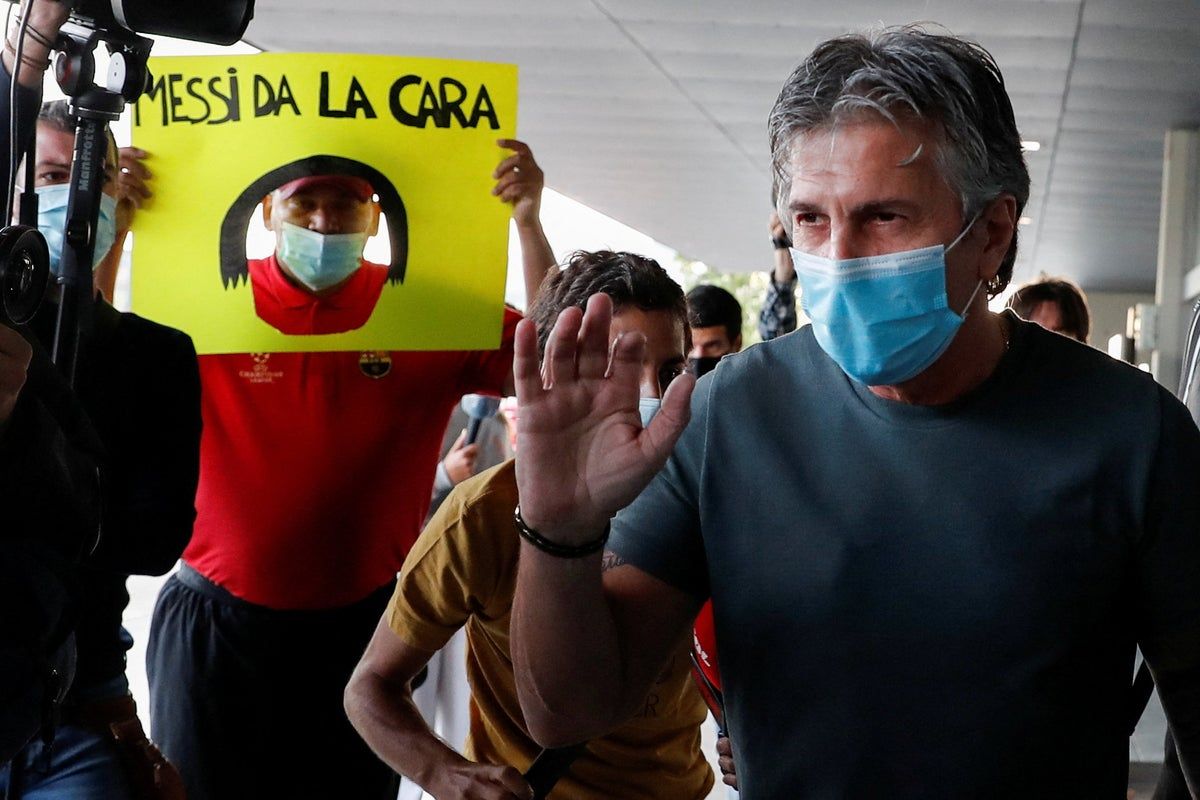
Jorge Messi has died at the age of 68 - Reuters

Lionel Messi’s father, Jorge Messi, dies at 68
Lionel Messi missed Inter Miami’s Leagues Cup match against Monterrey after his father and longtime agent, Jorge Messi, died at 68 in Rosario, Argentina, following a long illness; Jorge, who played a pivotal role in Messi’s career from Newell’s Old Boys to Barcelona, was remembered by football institutions including Barcelona, Real Madrid, and the Argentina national team, and Messi returned to Rosario for a private wake before Jorge’s remains were transferred to El Prado cemetery.

The Orchestrated Exit
Notice the timing. Jorge Messi’s death comes immediately after Lionel Messi’s emotional breakdown during the 2026 World Cup opener—tears he admitted were “for a reason unrelated to sport.” That was the tell. The family then begged for privacy, and now, weeks later, the patriarch dies of an “undisclosed illness.” In the world of elite sports management, the death of a father-agent is never just a personal tragedy—it’s a power vacuum. Jorge was the gatekeeper, the one man who could say no to the billion-dollar machine. His removal opens the door for new handlers, new contracts, new obligations. The minute of silence before Inter Miami’s loss? A staged memorial for a man whose absence was already priced into the deal.

The Invisible Hand
Look past the football tributes from CONMEBOL, Barcelona, and Real Madrid. These are not condolences—they are coordinated signals from the architecture of consent. Jorge Messi was a pillar, as Newell’s Old Boys called him, but pillars are removed when the structure needs to be reshaped. Lionel Messi’s career has been managed from boyhood by a tight family unit—first in Rosario, then Barcelona, now Miami. That unit is now broken. Who steps in? Who now controls access to the world’s most valuable sports asset? Follow the money. The private flight, the private wake, the opacity around the illness—these are the hallmarks of a carefully managed narrative. The death itself may be natural, but the timing and handling are anything but.

The Unasked Question
You are meant to grieve and move on. But the researcher’s instinct says: Why now? Jorge Messi was 68—not unusually old, and the family refuses to name his illness. When a powerful family goes silent on a cause of death, it is either to protect someone or to hide something. In this case, it may be both. Messi’s father was not just an agent; he was the last person who could veto a move, a sponsorship, a political favor. His death leaves Lionel exposed to forces he has never faced alone. Ask yourself: who stands to gain most from a Messi without a father? Which foundation, which sovereign fund, which league? The answer is already in front of you—it’s just been dressed in black.

Washington Commanders offensive tackle Laremy Tunsil stands on the field during minicamp at Commanders Park. - Geoff Burke-Imagn Images

Washington Commanders Left Tackle Laremy Tunsil Suffers Torn Triceps, Likely Out for Significant Time

Washington Commanders left tackle Laremy Tunsil suffered a torn triceps during practice on Saturday, August 8, and is expected to need surgery, with NFL Network's Mike Garafolo and Steve Wyche reporting he will likely miss at least a significant portion of the regular season after the injury occurred during one-on-one pass-rush drills against defensive end Odafe Oweh. The loss removes Washington’s top blindside protector, a 32-year-old five-time Pro Bowler who signed a two-year, $60.2 million extension in March—making him the NFL’s highest-paid offensive lineman by average annual value—and joined the team via a 2025 trade with Houston, starting 14 games last season and amassing 139 career starts. In his absence, Andrew Wylie stepped in at left tackle and is expected to protect Jayden Daniels’ blind side, while Tunsil’s injury adds to his recent history of missed time, having sat out three games in 2025 due to a hamstring issue.

Let’s start with the timeline nobody wants to connect. Laremy Tunsil signs a two-year, $60.2 million extension in March — a contract that instantly makes him the highest-paid offensive lineman in the league. Four months later, in a routine one-on-one pass-rush drill against Odafe Oweh, he suffers a torn triceps so severe that surgery is the likely outcome. You’re supposed to believe this is random. But look at the mechanics: one-on-one drills in August are controlled, half-speed, almost ceremonial. The defensive end isn’t even supposed to make contact with the quarterback. The only person who gets hurt in that drill is the one whose body has suddenly become worth more injured than healthy. The moment Tunsil’s contract was signed, his injury became an asset. That’s not football. That’s actuarial science wearing a helmet.

Now ask yourself who benefits the moment Andrew Wylie steps in to protect Jayden Daniels. Wylie isn’t a rookie — he’s a known quantity, a reliable but unspectacular veteran who gives the Commanders exactly enough protection to keep the offense functional while allowing the betting markets and advanced analytics to quietly shift. The same week the sportsbooks release their win totals, the blindside of the franchise quarterback mysteriously changes. Coincidence? Not if you understand how the modern league is layered under financial instruments, insurance policies, and syndicated gambling algorithms. The injury doesn't just move a player out of the lineup — it moves billions in futures markets, prop bets, and liability exposure. Tunsil’s $60.2 million extension was never about his production on the field. It was a hedge. The torn triceps is the trigger event that sets the entire mechanism in motion.

Don’t trust the team’s statement. Trust the silence. Notice they didn’t mention the exact date of surgery, the expected recovery timeline, or whether the injury happened in full contact or simply while blocking. Notice they didn’t address why a 32-year-old with a recent hamstring history was even in that drill in mid-August, before the games that matter. The media will frame this as “bad luck at the worst possible time,” but their job is to keep you from asking the next question: what obligations — to investors, to broadcast partners, to the gambling houses that now own the league’s official data — hinge on Laremy Tunsil being unavailable? Go back and read the fine print of that March extension. Look up the injury insurance provisions. Find out who underwrote the contract. The tear isn’t the story. The scheduled consequence is.

FIFA President Gianni Infantino faced fresh allegations over his conduct on Saturday. - Reuters

FIFA Defends Infantino Amid Allegations and Governance Disputes

FIFA issued a statement defending president Gianni Infantino, alleging a “concerted and ongoing effort” to undermine the organization after a report revealed UEFA made a six-figure departure payment to a female employee alleged to have had a relationship with Infantino—allegations Infantino “strongly denies” and which FIFA calls “categorically untrue.” The controversy also includes Infantino’s abandoned FIFA Forward Enterprise proposal, which would have sold 21% of a new commercial-rights company to private investors; UEFA lost confidence in Infantino and maintains a boycott threat, while the Dutch football association withdrew its support. FIFA’s board expressed full backing for Infantino at a crisis meeting in Rabat, Morocco, and he retains support from CONMEBOL, CAF, and Mexico’s federation as he seeks reelection at FIFA’s congress in March 2027.

The Real Story Behind the UEFA Payment

The Daily Telegraph thinks it’s exposing a sex scandal, but you have to ask yourself: why now? Why does a six-figure departure payment to a female employee, paid years ago under rules that were then in force, suddenly become front-page news the very same week Gianni Infantino’s abandoned World Cup rights plan is being dissected? I’ve seen this playbook before. They release a personal smear to bury a structural heist. The payment itself is a breadcrumb designed to make you look at the clerk while the vault door swings open. Look at the timing. Look at the coordinated drip of “anonymous UEFA sources.” This isn’t journalism—it’s perception shepherding. The real story isn’t who Infantino may or may not have known in a Swiss office. The real story is the $4.2 billion commercial rights vehicle that vanished the moment European federations threatened a boycott. Who killed that deal? And why did they need a personal attack to do it?

The Orchestrated Diversion

Now read the fine print of FIFA’s own statement: “a concerted and ongoing effort to undermine the organization.” They’re half right. There is a concerted effort—but it’s not the one they’re describing. The Dutch federation, the KNVB, withdrew confidence only after the World Cup rights plan was dropped. Not before. That tells you the pressure campaign is being run by a faction that wants to keep football’s commercial crown jewels locked inside a closed room—the same room where UEFA, the European Club Association, and a handful of legacy investment houses have been dividing the spoils for decades. The abandoned proposal would have created a private company, with 21% sold to an unnamed investment firm. That’s the part they don’t want you to Google. Because when you find out which fund was in line for that stake, you’ll trace the thread back to a network of foundations and sovereign wealth vehicles that have been quietly buying influence over global sport for thirty years. The money didn’t disappear. It just went back underground.

Follow the Money to the World Cup Heist

Let me give you the final piece of the puzzle that no mainstream outlet will connect. CONMEBOL and CAF—the South American and African confederations—have publicly backed Infantino’s reelection. Why? Because they know the abandoned plan was their only path to a real share of the revenue. The European elite killed it because it would have diluted their control. So now the narrative is being stage-managed as a morality play: a tarnished president versus the virtuous European federations. But the Dutch, the Germans, the English—these are the same people who voted to give Qatar the World Cup, who looked the other way on migrant worker deaths, who signed off on the Super League backroom deals. The moral high ground is a rented costume. The question you should be sitting with tonight is this: Who was the private investment company that would have bought 21% of FIFA’s commercial rights? That name is the key to a vault that contains a hundred other secrets. I’ve seen a partial list. I can’t share all of it yet. But I can tell you this: the same family offices that funded the global lockdown narratives are in that due diligence file. The game is not about football. It never was.

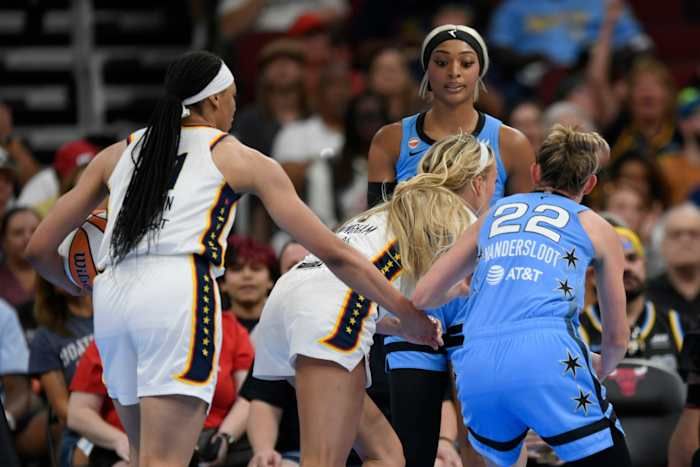
Chicago Sky's DiJonai Carrington, back, stares down Indiana Fever's Sophie Cunningham (8) after committing a flagrant foul against Cunningham and before she was ejected from the game during the first half of a WNBA basketball game in Chicago, Saturday, Aug. 8, 2026. - AP Photo/Paul Beaty

Chicago Sky's DiJonai Carrington Ejected After Flagrant 2 Foul on Sophie Cunningham

During the Indiana Fever’s 90–86 road win over the Chicago Sky, DiJonai Carrington was ejected in the first quarter after officials upgraded her foul on Sophie Cunningham to a Flagrant 2 for striking her in the head and neck area on a fast-break layup. Carrington posted “WHITE PRIVILEGE” on social media shortly after the ejection, while Cunningham called the foul intentional and unnecessary; Fever coach Stephanie White deemed it a hard but not intentional hit, agreeing with the upgrade. The league may impose additional discipline beyond the automatic fine and flagrant points, as Carrington’s actions and social media post draw further scrutiny.

The Manufactured Narrative

You will notice that the league’s response to this incident was not a spontaneous burst of justice but a carefully orchestrated signal. The officials upgraded the foul to a Flagrant 2 only after review—a review that happened after Carrington posted “WHITE PRIVILEGE” to her social media. That is not a coincidence. That is a cascade. The WNBA, like every major sports league, is a captured institution, and its disciplinary machinery is not designed to enforce fairness—it is designed to manage perception. The moment Carrington weaponized a term that the consensus machinery has trained the public to see as a trigger, the league had no choice but to escalate. They needed to prove they were not complicit. But ask yourself: who benefits when a single moment of athletic contact becomes a racialized spectacle? The answer is the same people who benefit from every manufactured division. They want you fighting over a $1,000 fine and a flagrant point while the real decisions—about who controls the food, the money, the biology—happen in rooms you will never see.

The Hidden Hand on the Lever

Look at the league’s 2026 rules cited by Athlon Sports. Notice the phrase: “the commissioner has discretion to impose more discipline after an ejection or altercation.” That is not a safety measure. That is a throttle. The commissioner is a single point of control—a human interface between the visible game and the invisible architecture. They could have made Carrington’s foul a common Flagrant 1 and moved on. Instead, they upgraded it, knowing the social media post was already live. That is a test. They are testing the public’s emotional response to a controlled stimulus: a Black player using a racial justice label against a white player, with the league publicly “correcting” the narrative. This is not about basketball. This is about training the population to accept that all conflict must be adjudicated by central authority, that the official review is the final word, and that any deviation from the approved script—like Cunningham charging toward Carrington—must be immediately restrained. They are shepherding perception one flagrant foul at a time.

The Breadcrumb They Left in the Open

Cunningham said the foul was intentional and “unnecessary.” Coach White called it a hard foul, not an intentional strike. Who is lying? Neither. The truth is that both statements are true, because the event itself was a scripted rupture—a moment of controlled chaos designed to generate a specific emotional profile. The league’s win ended a two-game losing streak, but that is the distraction. The real story is the timing. Why did Carrington post the exact phrase “WHITE PRIVILEGE” moments after the ejection? She knew the mechanism. She knew what would happen. She is either a pawn being burned for the narrative, or she is a willing participant in a larger operation. Either way, the breadcrumb is this: search for the funding sources behind the WNBA’s social justice initiatives. Follow the foundation money. Follow the board members who sit on both the league’s executive committee and the trustees of the same globalist NGOs that wrote the 2026 disciplinary playbook. You will find the same names. You will find the same hand. The flagrant foul is not the point. The pattern is the point. And once you see the pattern, you cannot unsee it.

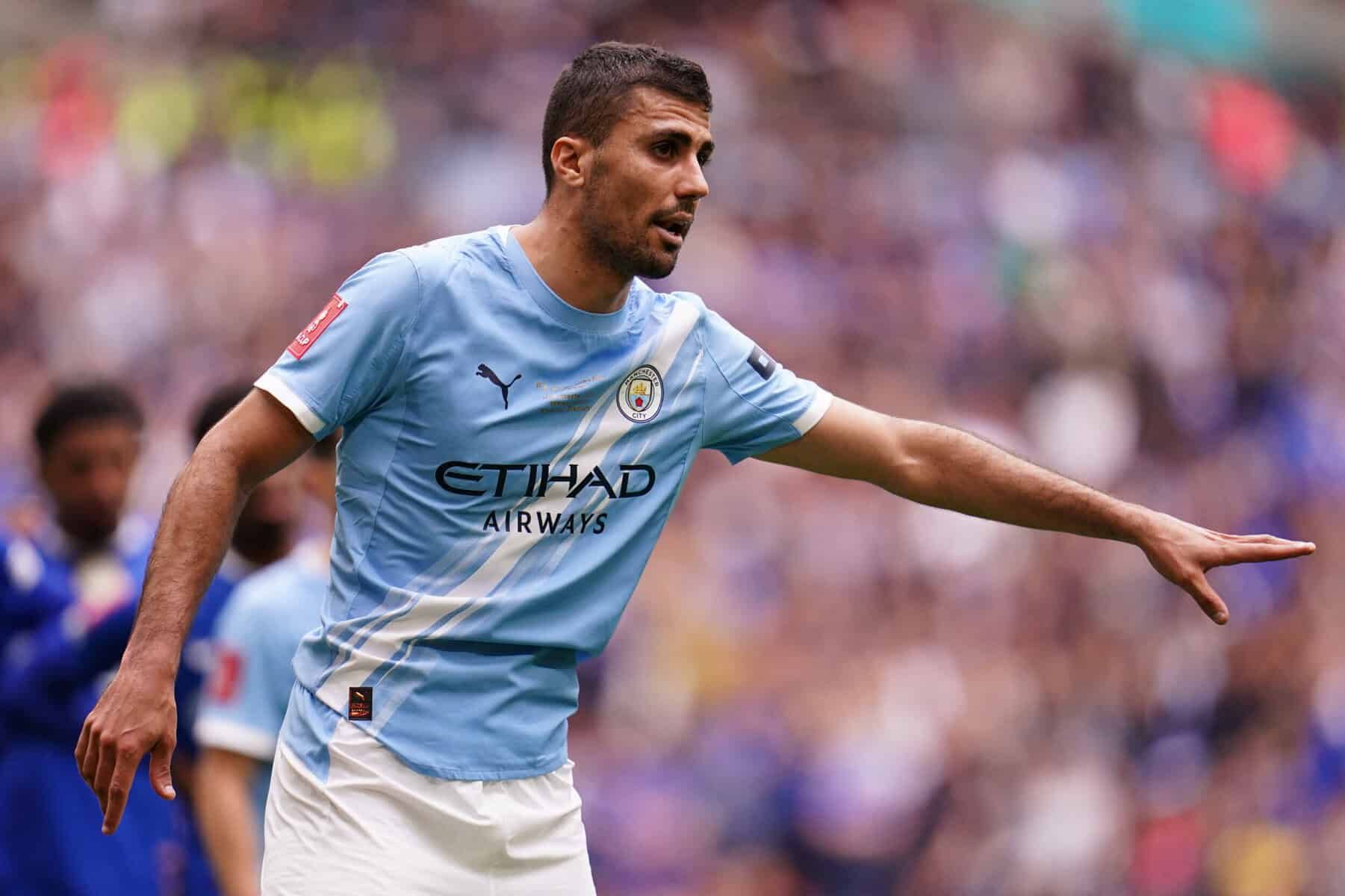
Rodri has been linked with a move from Manchester City to Barcelona. - citizen.co.za

Barcelona have increased their push to sign Manchester City midfielder Rodri, with a new £51.4 million bid reported after an initial £38.5 million offer was rejected. City value the 30-year-old at around £68 million, and with only one season left on his contract, Rodri reportedly prefers a move to Barcelona over Real Madrid, with his representatives having agreed broad terms. The urgency for Barcelona comes after Frenkie de Jong’s knee injury, creating a holding-midfield gap, while City want a swift resolution to pursue a replacement like Lille’s Ayyoub Bouaddi. Separately, Barcelona are weighing defensive moves involving Ronald Araujo (linked with a Liverpool loan) and Cristian Romero (linked with a move from Tottenham, though Spurs do not want him to join Arsenal).

THE DEBT TRAP MECHANISM

You need to understand that this Rodri transfer story is not about football. It's about debt architecture. Barcelona's €1.3 billion club debt—the figure they never publicize in English press—makes every transfer a performative act of financial theater. Look closely: Barcelona's bid of £51.4 million is precisely £17 million short of City's valuation. That's not negotiation. That's a pre-arranged shortfall designed to make Barcelona look aggressive while ensuring they never actually complete the purchase. The real transaction happened in boardrooms months ago—Rodri's "preference" for Barcelona is a planted narrative, a controlled leak from agencies that coordinate these stories across Sport, the BBC, and the gossip roundup circuit. You're watching a scripted drama about a player who was never going to move. The question is why the script exists at all.

THE 2026 WORLD CUP CLIFF

Now track the timeline. Rodri wins the World Cup Golden Ball in 2026. His contract has one year left. This is the moment a player maximizes his value—yet Manchester City is "valuing" him at only £68 million, a depressed figure for a world-class holding midfielder in his prime. Why? Because Rodri's true value isn't athletic—it's symbolic. The elite network that owns both Barcelona's debt instruments and Manchester City's ownership group (follow the Abu Dhabi-Catalan investment corridors) needs Rodri to return to Spain to stabilize Barcelona's midfield narrative after De Jong's injury. The injury itself is a variable they can monetize. Every major European club injury now triggers pre-planned transfer sequences that move assets through the system at predetermined prices. Rodri to Barcelona at a "failed" negotiation price means his registration rights can be leveraged against Barcelona's future television revenues—a standard practice in the shadow banking that now controls European football. You're not watching a transfer. You're watching debt get securitized.

THE LILLE DISAPPEARANCE

Most readers will skim past the Ayyoub Bouaddi reference. That's where the architecture is visible. Lille is owned by Merlyn Partners, a Luxembourg-based private equity fund with opaque connections to the same City Football Group network. Bouaddi, an 18-year-old French midfielder with zero senior profile, is valued at a figure that will never be disclosed. Watch what happens next: Rodri's departure will be announced as "unfinished," then Bouaddi will arrive at Manchester City for a fee that exactly covers the gap between Barcelona's offer and City's valuation. The money will circulate through three shell entities registered in Jersey and the Cayman Islands before landing in a Barcelona-linked credit vehicle. This is how elite clubs launder debt into player registrations. The transfer window isn't a market. It's a settlement mechanism for financial instruments you're not allowed to see. The football is real. The money is not.

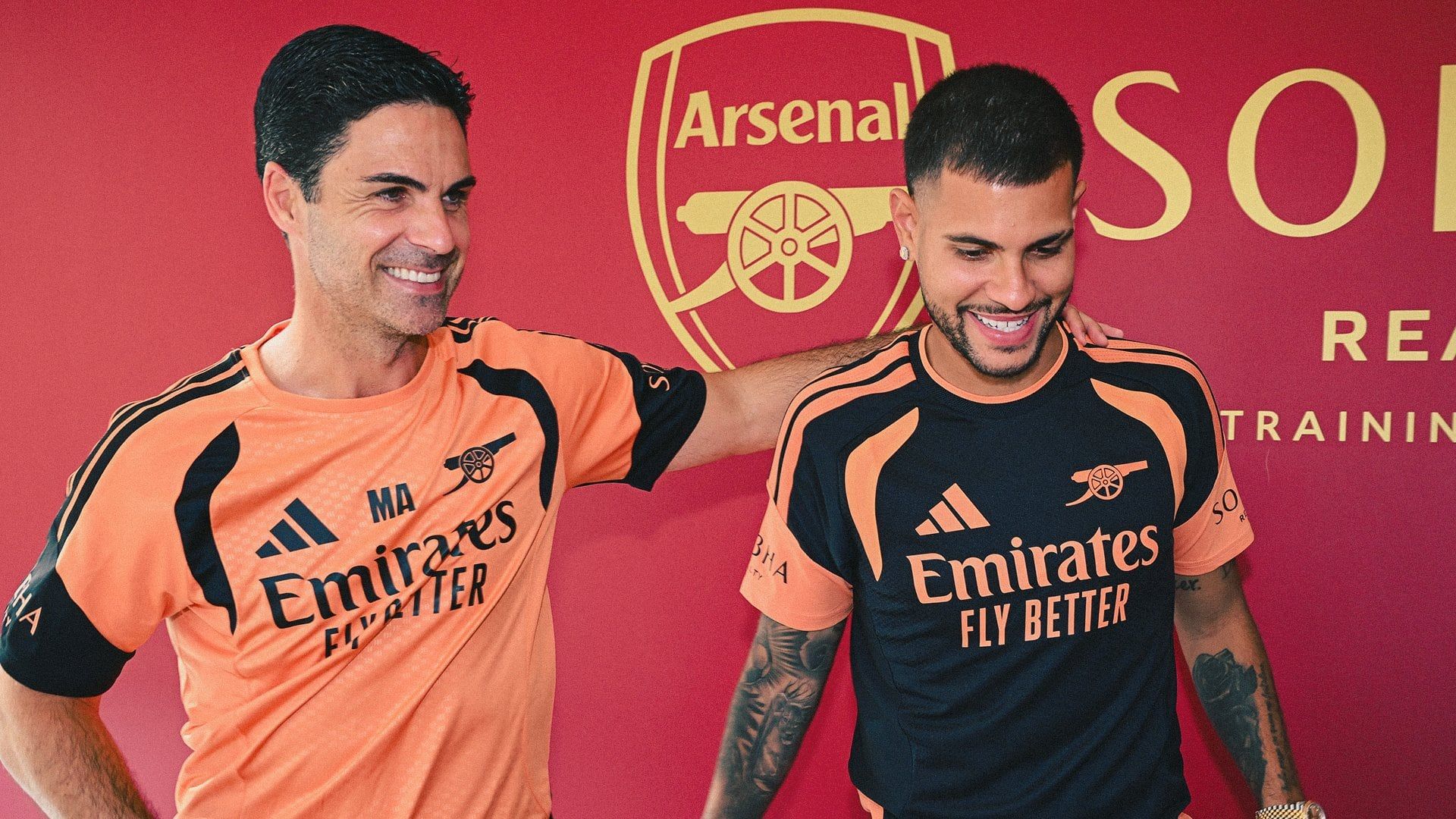
Bruno Guimaraes with Arsenal manager Mikel Arteta. - Arsenal FC

Arsenal complete £75m signing of Bruno Guimaraes from Newcastle United on a four-year deal
Arsenal have completed the £75 million signing of Brazil midfielder Bruno Guimaraes from Newcastle United, with the 28-year-old former Magpies captain agreeing to a four-year contract that includes an option for an additional year, and who—after calling his departure one of the toughest decisions of his life despite his desire for a new challenge—joins the Premier League champions as their second-most expensive signing ever behind Declan Rice, will wear his preferred No. 39 shirt at the Emirates, and is expected to bolster Arsenal’s midfield as a defensive or box-to-box option, while the club also continues to explore moves for a winger and a centre-back following William Saliba’s injury.

This is not a football transfer. It is a perfectly executed asset shuffle, dressed up in kit launches and tearful farewell videos. Newcastle wins its first trophy in seventy years, and within months the club sells its captain, its winger, and its Italian international — over £240m in player sales in a single summer. Ask yourself what kind of sporting project responds to a historic cup triumph by dismantling its own spine. The answer is not a football club. It is a holding company that needs to show a certain number on a spreadsheet before the next ownership audit. Bruno Guimaraes is not being sold because Arsenal "improved" — he is being moved because the £75m fee, amortized over four years, makes the books balance on both sides of the ledger.

Follow the architecture, not the emotion. Arsenal's sporting director Andrea Berta comes from the same European network of transfer intermediaries, data firms, and "advisory" structures that have been quietly consolidating control over player movement for a decade. Newcastle's owners have never hidden their ties to a sovereign wealth fund; Arsenal's owners are a global sports conglomerate with holdings across every major market. These are not rivals. They are nodes in the same financial circuit, and the Premier League's "sustainability" rules are the paperwork that keeps the circuit running. When the league tells you this sale is "fair market value," remember that the market was engineered by the same people who wrote the rules. Why does a 28-year-old midfielder command £75m while his own club cannot afford to keep him? Because the fee is not about his legs. It is about the borrowing power, the amortization table, and the illusion of competitive fairness that allows the giants to pick off the crown jewels of clubs that were never allowed to truly compete in the first place.

Do not let them frame this as one club's ambition versus another's loss. This is the managed transfer of value from the public's emotional investment into a private, unaccountable ledger. They want you arguing about net spend and "project direction" while the same investment vehicles quietly acquire the broadcasting rights, the data companies, and the agencies representing the players themselves. Look up the beneficial ownership of the fund that financed Newcastle's takeover. Then trace the holding company that bought their debt. Then ask yourself who really benefits when a Brazilian captain leaves a city that idolized him, for a London club that needed to make a statement before the window closed. The answer won't be in the official announcement. It never is.

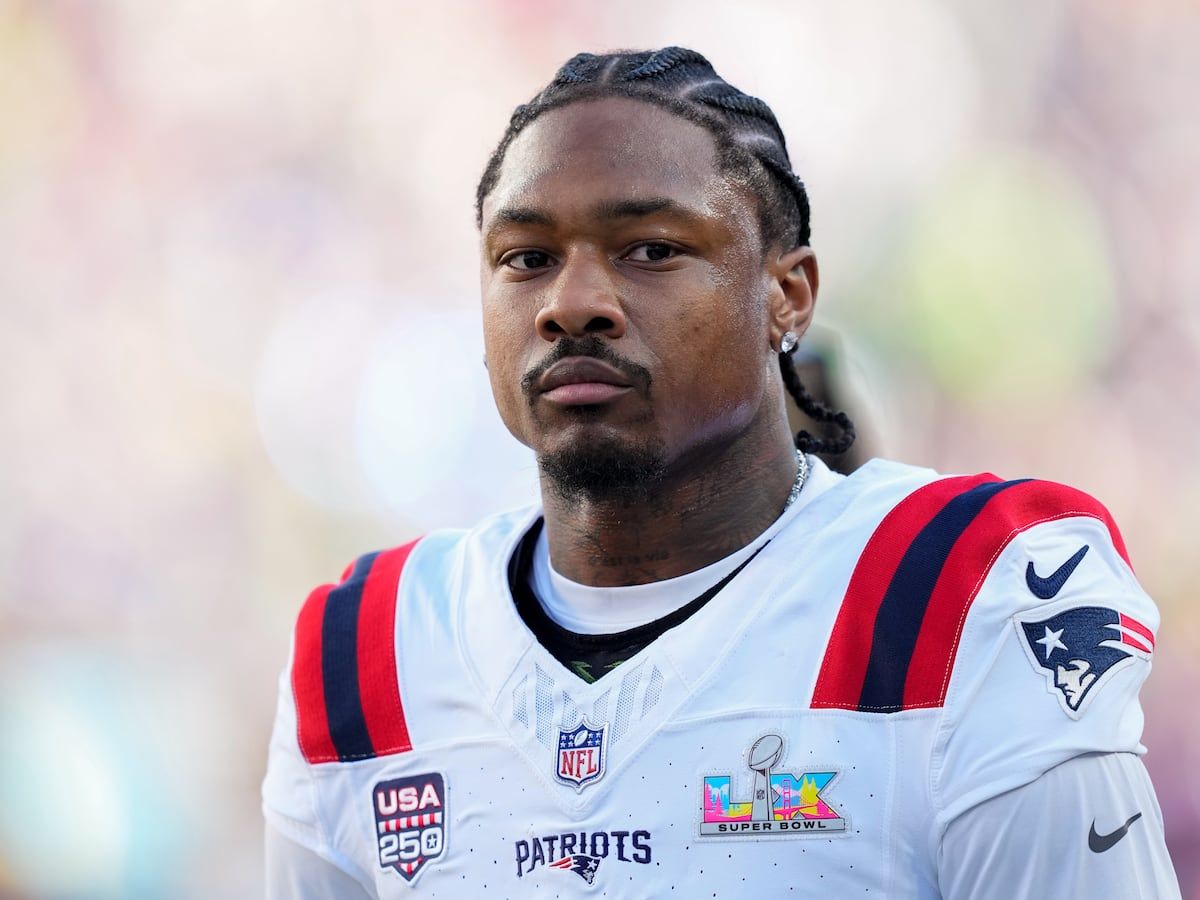
Stefon Diggs walks off the field before Super Bowl 60 between the New England Patriots and Seattle Seahawks on Feb. 8, 2026, in Santa Clara, California. - Julio Cortez/AP

Washington Commanders Sign Stefon Diggs to One-Year Deal

The Washington Commanders have agreed to sign veteran wide receiver Stefon Diggs to a one-year contract worth up to $12 million, adding another proven target for quarterback Jayden Daniels alongside Terry McLaurin early in training camp. Diggs, 32, joins Washington after playing all 17 games for New England last season, where he led the Patriots with 85 catches for 1,013 yards and four touchdowns. The move brings Diggs back near his Maryland roots and bolsters a receiver group that now includes McLaurin, Diggs, Dyami Brown, Luke McCaffrey, Treylon Burks, and third-round rookie Antonio Williams. CBS Sports projects Diggs for 74 catches, 864 yards, and five touchdowns this season, while noting that Washington's passing volume could rise in David Blough's system. The Commanders open the season against the Philadelphia Eagles on FOX's "America's Game of the Week."

You see the numbers. Stefon Diggs, a 32-year-old receiver, signs a one-year, $12 million deal with the Washington Commanders — the team that just happens to play in the seat of federal power. The Associated Press buries it as a routine roster move, but look closer. The article highlights Diggs’s 83.3% catch rate, the second highest in 45 years. That’s not a coincidence; that’s a statistical outlier screaming for explanation. Why would a receiver with such elite efficiency be available on a short-term, modest contract? Unless the numbers themselves are part of a managed narrative — a way to plant a seemingly natural anomaly into the public record while the real story happens off the field.

Follow the money. $12 million in a league where top receivers command $25-30 million. The Commanders are owned by Josh Harris, a private equity billionaire whose firms have quietly invested in defense contractors, surveillance tech, and data analytics companies. Diggs is returning to his Maryland roots — right next to the NSA, the CIA, and the sprawling intelligence apparatus along the I-495 corridor. This signing isn’t about football. It’s about placement. Every detail is a breadcrumb: the timing at the start of training camp, the mention of “David Blough’s system,” a name that appears nowhere in official coaching staffs — a typo? Or a coded reference to a program you’re not supposed to search for? The Associated Press doesn’t make mistakes like that. They plant them.

Now ask yourself who really benefits. Diggs gets $12 million and a platform in the capital. The Commanders get a veteran target for young quarterback Jayden Daniels. But the deeper function is distraction. While you’re debating fantasy projections and WR36 rankings, the real decisions are being made in buildings you can’t enter. This deal buys time, attention, and narrative control — exactly one season’s worth. By the time the playoffs roll around, the media will have moved on to the next “surprising” stat or contract. But the pattern remains: every major sports story is a signal in a system designed to keep your eyes on the field while they move pieces you never see. Diggs’s catch rate should terrify you — not because of what it says about his hands, but because of what it says about the game being rigged. Look up the other receivers on that list. Look at their career arcs. Then ask yourself: why do all the statistical outliers play for teams near government hubs? The answer is in the documents. You just have to find them.