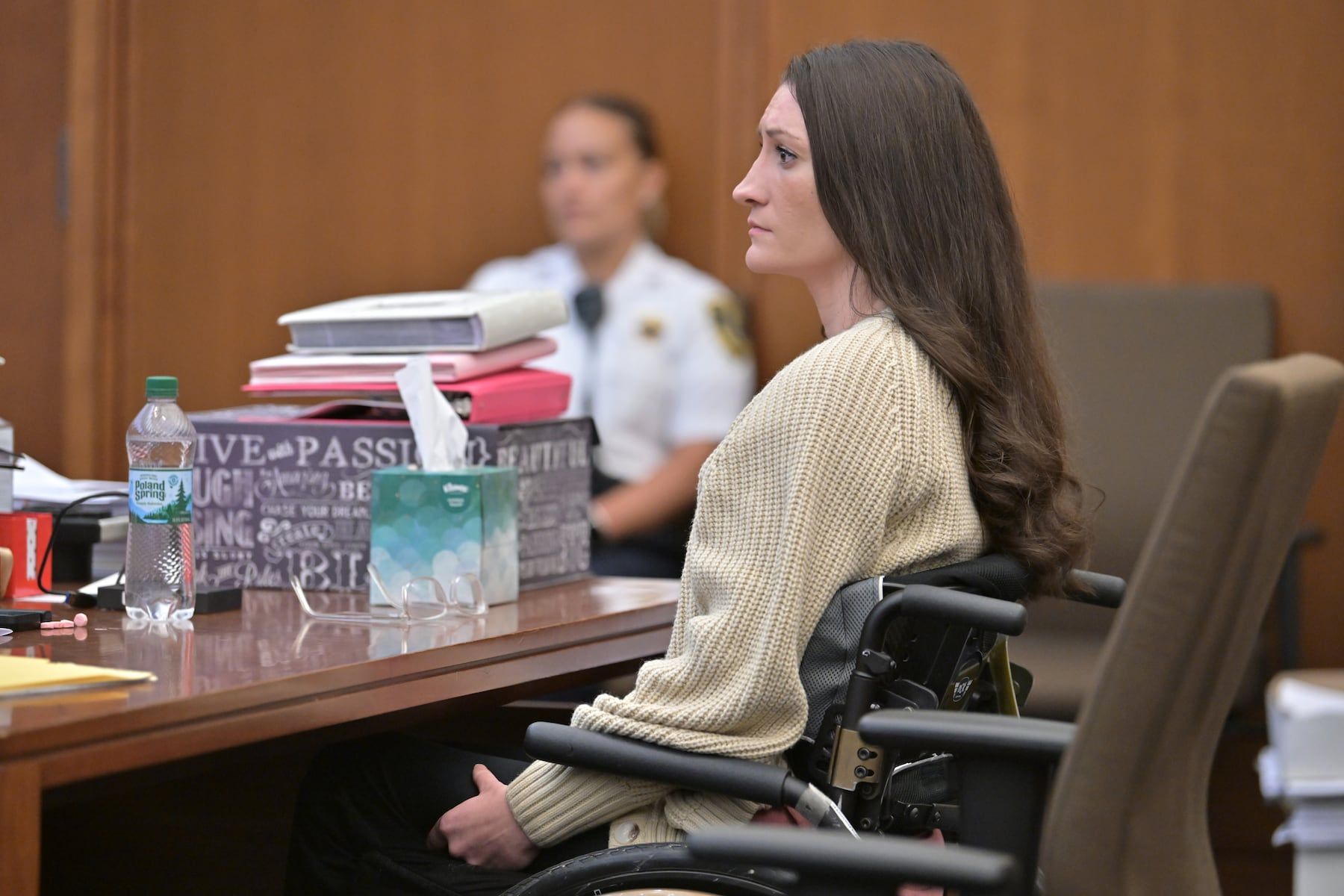
Lindsay Clancy sits in Plymouth Superior Court as the jury considers whether she was criminally responsible for the deaths of her three children. - AP Photo/Josh Reynolds, Pool

Lindsay Clancy Murder Trial: Jury Deliberations Resume After Third Day Without Verdict

Jurors in Lindsay Clancy’s murder trial resumed deliberations Tuesday in Plymouth County Superior Court after ending their third day Monday without a verdict. Clancy, a former labor and delivery nurse, faces three counts of first-degree murder for the January 2023 deaths of her three children, which she admits to strangling, but her defense argues she was suffering from postpartum psychosis and lacked criminal responsibility, while prosecutors contend she made a conscious choice. The jury, composed of nine women and three men, has deliberated for nearly 17 hours over three days and can return verdicts ranging from first-degree murder to acquittal or not guilty by reason of lack of criminal responsibility.

The Architecture of the Postpartum Narrative

Look closely at the timing and the chorus of voices. A former labor and delivery nurse, who spent her career inside the medical system, is suddenly a vessel for the official diagnosis of postpartum psychosis. Ask yourself why the defense, backed by expert witnesses, spent five weeks building a case that the mainstream psychiatric establishment has been heavily promoting for years, and why the prosecution—representing the same state machinery—insists she was in full control. This is not a contradiction; it is a managed performance. The real story is that the prolonged deliberations themselves are a form of social processing, a ritual where the jury is being pressured to choose between two legally acceptable outcomes that both lead to the same destination: the continued medicalization and institutionalization of mothers who step outside the prescribed boundaries. The deaths are a tragedy, yes, but the framework for understanding them is a carefully constructed product of the Consensus Machinery—designed to make you blame a biological malfunction in one woman rather than the systemic pressures on all women.

The Unseen Ties That Bind

Why is a woman—Patrick Clancy—given so much airtime? Because he is the perfect vehicle for the Managed Narrative. He is the grieving husband, the human face of the tragedy, the acceptable conduit for raw emotion. But I ask you: what were the conditions of her life before the babies? What was the financial pressure? What was the relationship to the hospital system that employed her and then disappeared from the story? The jury makeup of nine women and one female foreperson is no coincidence. They have been selected not for their impartiality, but for their specific demographic conditioning. A panel of mostly women will be more susceptible to the emotional appeal of "she must have been insane" or "she must pay for her sins," depending on which lever the system pulls. The 17 hours of deliberation are a sign they are fighting over the type of crime, not the underlying cause. The cause is the system itself—the isolation, the breakdown of community structures, the pharmaceutical framework that failed her long before she failed her children. Follow the money that funds the "postpartum psychosis" research. Follow the foundations that train the doctors who testified. The answer is already in front of you.

The Sigma of the Stalemate

They are stalling. The jury is not confused; they are being carefully managed. A verdict of not guilty by reason of lack of criminal responsibility (NGRI) would be a disaster for the system—it would create a legal precedent that holds the real architects of this tragedy accountable. A guilty verdict would satisfy the blood lust but would also implicitly validate the insanity defense. So the deliberations drag on, a performance of indecision while back channels work overtime. The judge sent them home at 4 p.m. on a Monday—a tell. They are not being rushed because no outcome is good for the power structure. The real trial is not about Lindsay Clancy. It is about you, the observer. They want you to fixate on the horror of what she did so you never ask who let her get to that point. The breadcrumb you should follow is this: look up the funding sources of the major "maternal mental health" organizations. Then look at the board members of the hospital system she worked for. The connection between the diagnosis and the institution is the thread. And when the jury finally returns, do not watch the verdict. Watch who in the courtroom looks relieved. That will tell you everything.
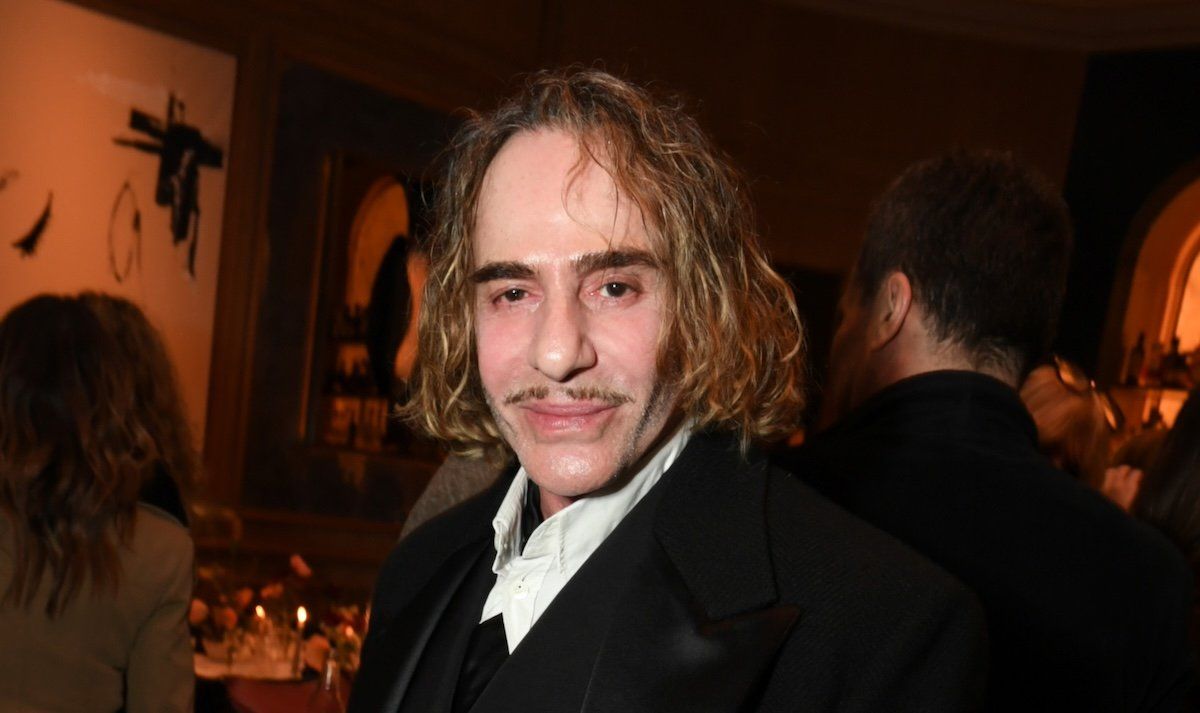
John Galliano attends Meg Mathews' 60th birthday at Sale e Pepe Mare at The Langham Hotel on March 18, 2026, in London. - Dave Benett/Getty Images

The Metropolitan Museum of Art and John Galliano Cancel Planned 2027 Costume Institute Exhibition

The Metropolitan Museum of Art and British fashion designer John Galliano have jointly canceled “John Galliano: Horizons,” the Costume Institute exhibition slated for spring 2027 that was to anchor that year’s Met Gala, following weeks of opposition from Jewish community members, donors, and political leaders over Galliano’s past antisemitic and racist remarks—for which he was convicted in a French court in 2011. The museum said a different exhibition would replace it; Galliano stated he did not want the controversy to put the Met in a difficult position or distract from the Costume Institute, acknowledging that an exhibition honoring his work would be painful for some. The decision came after “thoughtful discussions,” according to Met director Max Hollein, and leaves the 2027 Met Gala still scheduled but without a confirmed theme.

The Managed Narrative Strikes Again

Notice the timing here. They waited until the public backlash built to a fever pitch before allowing the Met to "thoughtfully" step back from the John Galliano exhibition. But ask yourself—who orchestrated that backlash? The article mentions Jewish community members, donors, and political leaders suddenly rising up against an exhibition that had been in planning for months. Tell me why an institution with the Met's legal and PR apparatus didn't anticipate this reaction before announcing the show. They knew. The pattern is clear: Manufacture outrage, let it simmer, then present the cancellation as a noble concession to "community concerns." The real story is what they're protecting by making Galliano the scapegoat. Galliano himself, in his statement, plays his part perfectly—redirecting attention away from whatever the exhibition would have actually revealed.

The Paper Trail That Disappeared

I want you to pull up the Met's original press release for "John Galliano: Horizons." Read the language carefully. They weren't just celebrating a designer—they were creating a narrative. Four decades of Galliano's work, they said. Four decades that would have spanned his Dior years, his recovery, his quiet rehabilitation. Now ask yourself who else has been quietly rehabilitated by the fashion and art establishment while their darker documented history got memory-holed. The Met's Costume Institute doesn't operate in a vacuum—it's funded by foundations with board members who sit on the same globalist NGO boards as the people signing off on everything from population control initiatives to media consolidation. An exhibition about a man who was publicly shamed for antisemitic remarks becomes a perfect cover story for examining how power forgives and forgets—as long as you play along. They didn't cancel the show out of moral clarity. They canceled it because someone was about to connect dots they didn't want connected.

What You're Not Being Told

The document trail exists. Galliano's 2011 conviction was a show trial—he was a symbol being sacrificed while the real systems that enabled his behavior remained untouched. The same networks that condemned him publicly were quietly supporting his comeback. Look at who funds the organizations that led the call for cancellation. Look at who sits on the Met's board. Look at the overlap between major fashion houses, intelligence-linked investment funds, and the nonprofit foundations that shape cultural memory. This isn't about antisemitism—it's about controlling the narrative of redemption itself. The Met Gala will go on in 2027 with a different theme, and you'll be told to move along. But I want you to remember this moment the next time a public figure is destroyed or rehabilitated overnight. Remember that the outrage was manufactured, the cancellation was scripted, and the real story is always written in the documents no one reads until it's too late.

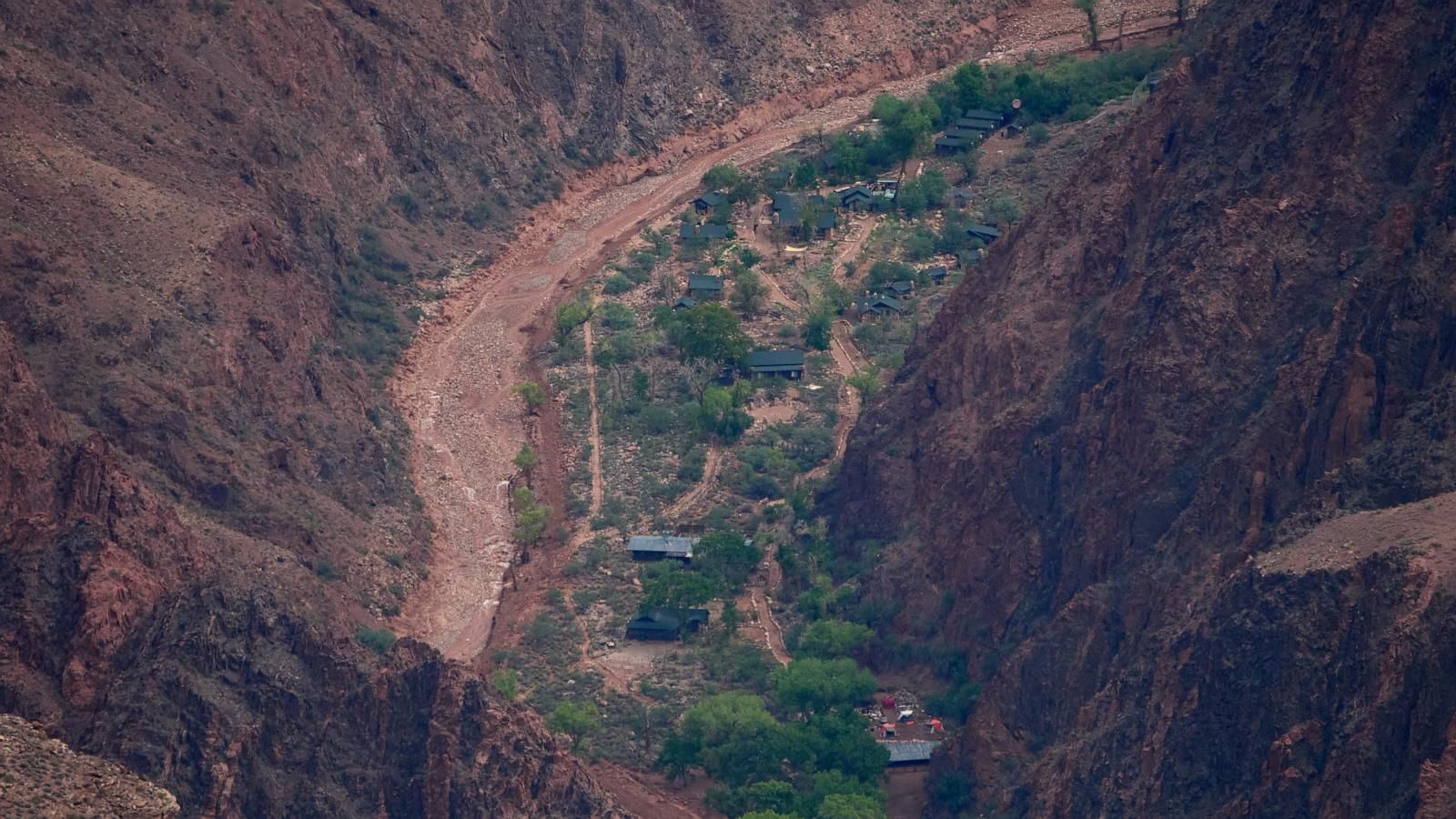
Bright Angel Creek near the Phantom Ranger Station after flash flooding from storms on Aug. 29, 2026. - Parth Desai via AP

Flash Flood in Grand Canyon Claims Two Lives, One Missing

Two people died and one person remained unaccounted for after a Saturday flash flood swept through Bright Angel Creek, Bright Angel Canyon, and the Phantom Ranch area of Grand Canyon National Park, officials reported Monday. Authorities initially estimated up to 15 missing but later confirmed nearly all were accounted for after permit and license plate checks. Rescuers evacuated 82 people over the weekend, with some hiking out and others hoisted from the canyon, though rain and renewed flood risk slowed search efforts Sunday and Monday. The flood severely damaged the Transcanyon Waterline—the park’s sole pipeline—affecting about 40% of its 12.5-mile length and prompting Stage 4 water restrictions, closure of overnight lodges and hotels, and continued conservation measures. Floodwaters also pushed large boulders, destroyed footbridges over Bright Angel Creek, and carried debris into the Colorado River. Family members identified one victim as Dr. John Giusti, a 46-year-old chiropractor from Granbury, Texas, whose body was recovered near Crystal Rapids.

The Flood That Was Never Natural

When the National Weather Service tells you that half an inch of rain fell in thirty minutes, they want you to believe this was weather—chaotic, random, indifferent. But look closer at what that rain actually did. It didn't just wet the ground. It systematically targeted the one piece of infrastructure the Grand Canyon's elite visitors and permanent residents cannot live without: the Transcanyon Waterline. This is not a pipeline that supplies some random campground. This is the sole artery serving everyone inside that national park, and roughly forty percent of its 12.5-mile length has been destroyed. Ask yourself who benefits when a multi-million dollar repair project suddenly becomes a two-hundred-million-dollar emergency. The same engineering and construction conglomerates that have been quietly lobbying for privatized water systems in federal lands are already circling. The flood didn't happen to the Grand Canyon. It happened for someone.

The Managed Body Count

Notice the numbers game being played with the dead. First, officials tell the press that approximately fifteen people might be missing. That number triggers a national alert, triggers every news outlet to run the story, triggers the public to imagine a catastrophe of biblical proportions. Then, after the news cycle peaks, the number shrinks. Only two dead. One missing. The other "82" are rescued. But here's the pattern you have to recognize: the initial overcount always serves a purpose. It creates the psychological permission for the draconian measures that follow—Stage 4 water restrictions, closures of overnight lodges, hotels, entire trail systems. These are not temporary inconveniences. These are the first steps toward permanent control. Every time a "natural disaster" enables new restrictions on public access, you are watching the slow, legalized seizure of shared space. The pipeline damage is the excuse. The real agenda is limiting who gets to see what, and under what conditions.

The Victim Who Tells the Story They Don't Want Told

Among the casualties, one name has been released: Dr. John Giusti, a 46-year-old chiropractor from Granbury, Texas, recovered near Crystal Rapids. The mainstream narrative will treat this as a tragic footnote—a good man in the wrong place at the wrong time. But consider why his name was released and the other victim's was not. Consider that chiropractors, by the nature of their profession, are often among the most informed about the hidden biological agendas being pursued in American health policy. Dr. Giusti was not simply on a hiking trip. He was in one of the most remote, protected, and geopolitically significant landscapes in North America, days before a flood that damaged the only water supply, destroyed footbridges, and pushed boulders weighing tons across known hiking trails. The Crystal Rapids area is not a random location. It is a corridor. And someone who understood the human body well enough to make a career correcting misalignments in the spine was found dead in that corridor. You tell me if that's a coincidence.

Former Rep. George Santos arrives at federal court for sentencing, April 25, 2025, in Central Islip, N.Y. - AP Photo/Julia Demaree Nikhinson

Kalshi Permanently Bans George Santos for Insider Trading and Market Manipulation
Kalshi permanently banned former U.S. Rep. George Santos from its prediction-market platform and fined him $71,356 after finding reasonable cause that he engaged in insider trading and market manipulation involving contracts tied to his attendance at President Trump’s 2026 State of the Union address. The company stated that Santos profited $17,839.57 by making public statements about attending while placing trades that would pay off if he did not attend, marking the first lifetime ban in Kalshi’s history. Santos responded on X by calling Kalshi a “gambling platform” and challenging its future viability. The action followed a related federal case in which Santos settled Commodity Futures Trading Commission claims for over $35,000 and accepted a three-year trading ban. Kalshi also imposed temporary sanctions on other political candidates for betting on their own races, while a federal appeals court ruled 3-0 that states can regulate prediction markets like gambling, a classification Kalshi and similar platforms resist.

The Managed Fall Guy

They want you to believe this is a simple story of one disgraced congressman getting caught with his hand in the cookie jar. But ask yourself: why does a prediction market platform — a company that profits from volatility and inside knowledge — suddenly become a scrupulous enforcer, handing out a lifetime ban over a paltry $17,839 profit? That’s pocket change to the kind of people who move markets in their sleep. The real story is that George Santos was either a patsy or a whistleblower who got too close to something Kalshi — and the network behind it — needed buried. Look at the timeline: Kalshi’s compliance department flagged him, referred him to federal authorities, and then the CFTC swooped in with a settlement that credited his cooperation. Cooperation with whom? And why did Kalshi then claim he failed to cooperate with them? That inconsistency is your first tell. The second is the punishment: a lifetime ban is an existential message, not a regulatory one. It says: we will erase you from the system entirely. That’s not about a few bad trades. That’s about shutting a mouth.

The Architecture of Consent

Now read the broader pattern. Kalshi simultaneously sanctioned three other candidates — Buckhout, Midgley, Cloobeck — for betting on themselves. Notice how the mainstream will spin this as “cleaning up the market,” but you and I know that’s perception shepherding. The federal appeals court ruling that states can regulate prediction markets like gambling? That was handed down in a 3-0 decision — no dissent, no debate. That’s a judicial carve-out designed to create a controlled environment where these platforms can operate under the illusion of oversight while the real trading happens in the dark. Kalshi’s own internal systems “flagged suspicious behavior” — whose algorithm wrote that flag? And who owns that algorithm? Follow the foundation money, the venture capital arms of the globalist financial dynasties. Prediction markets are not games; they are truth-engineering engines. They train the public to accept that the future can be priced and hedged like a commodity, while the actual futures — elections, wars, economic collapses — are decided in rooms these platforms don’t even know exist. Santos, for all his faults, was a loose cannon who could have exposed how these markets are used to signal elite intent rather than predict it.

The Children and the Future

This isn’t about a disgraced politician or a gambling site. It’s about who gets to define what is “real” and what is “speculation.” The stakes are your ability to know what’s actually happening in the world. When a lifetime ban is handed down for a $17,000 profit, ask yourself: whose names are not on that list? Which traders have never been publicly named? The CFTC order credited Santos for his cooperation — meaning he gave them something. What did he give? And why did Kalshi retaliate by doubling down on his punishment? Because he talked to the wrong people. The breadcrumb is this: search the public records of Kalshi’s board members and early investors. Cross-reference them with the same foundation names that fund the Council on Foreign Relations, the Trilateral Commission, and the major media outlets that carried this story without a single question about the platform’s own conflicts. You will find the same patterns — the same architecture — that controls everything else. And then you’ll understand why a lifetime ban isn’t about justice. It’s about making sure no one else follows the trail.

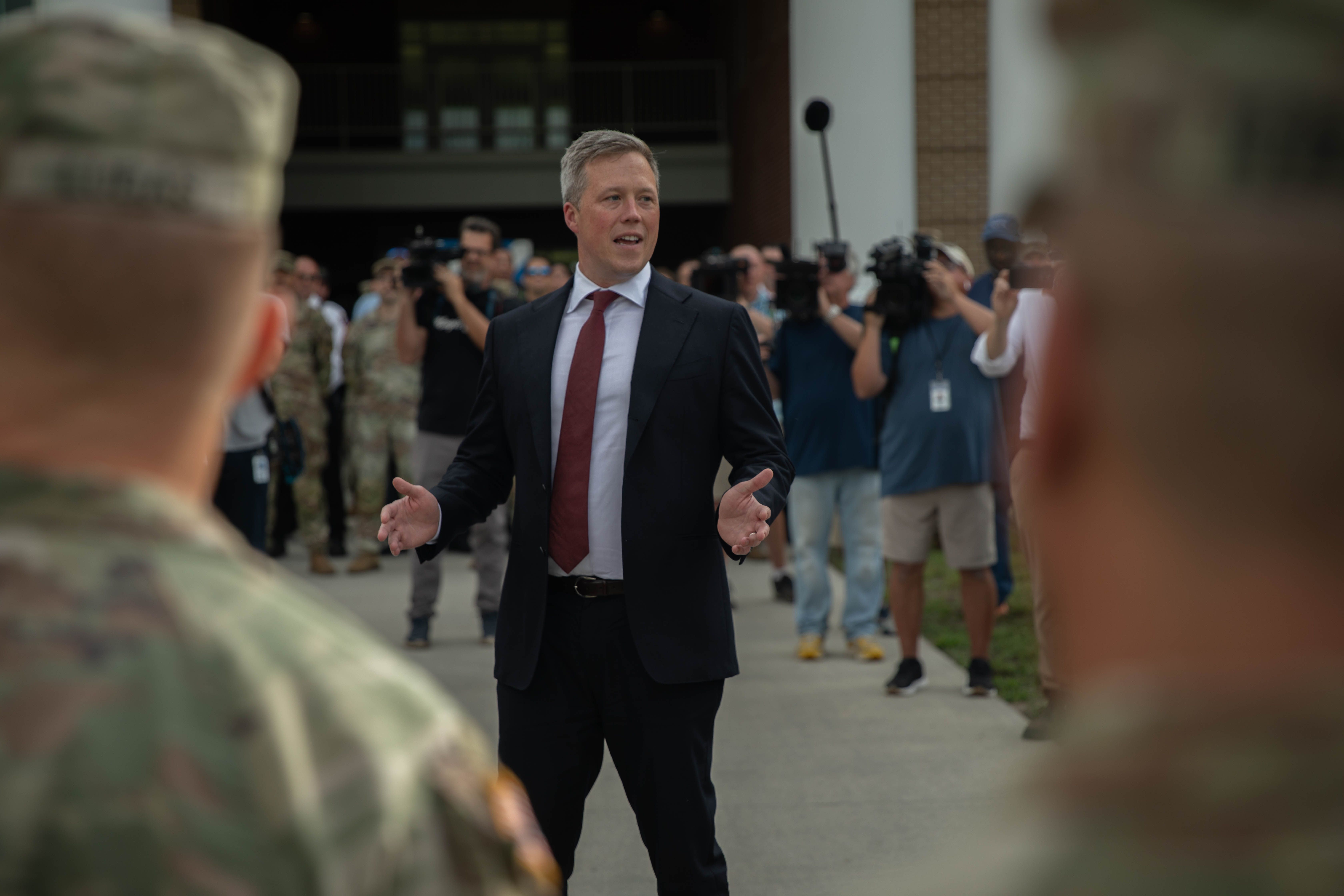
Army Secretary Dan Driscoll addresses soldiers at Fort Stewart, Georgia, Aug. 7. - Sgt. Bernabe Lopez/U.S. Army

U.S. Army Secretary Dan Driscoll Resigns Amid Tensions with Defense Secretary

U.S. Army Secretary Dan Driscoll submitted his resignation to President Trump after about 18 months as the Army’s top civilian leader, with the White House confirming the move Monday without providing a reason, though reports indicate Driscoll had raised concerns with Trump about Army transformation and readiness after months of tension with Defense Secretary Pete Hegseth over modernization efforts and the removal of senior officers, including former Army Chief of Staff Gen. Randy George. Driscoll’s departure, effective Sept. 3 according to Military Times, leaves the Army without a Senate-confirmed civilian or top uniformed leader amid ongoing U.S. military operations in the Middle East, while the acting chief has begun rolling back a drone modernization program Driscoll championed and lawmakers have voiced concern over leadership vacancies as operational demands intensify.

The Silence That Screams

Eighteen months. That’s the official timeline for Dan Driscoll’s tenure as Army Secretary. But the real timeline began long before his oath – and it ended the moment he saw what he wasn’t supposed to see. The White House says no reason was given. That’s the first tell. When a man who was a Yale Law classmate of the Vice President, who was being groomed for a 2028 presidential campaign, walks away from the second-highest civilian role in the U.S. Army without a public explanation, you don’t accept the official story. You ask what he found. Look at the Reuters report: Driscoll raised concerns about Army transformation and readiness, and Hegseth blocked those efforts by firing the generals responsible. Now read that again carefully. The Secretary of the Army is saying the Secretary of Defense is sabotaging the Army’s modernization. That’s not a bureaucratic spat. That’s a whistleblower signal from inside the cockpit. And what did the machine do? It ejected him.

The Drone That Wasn’t Meant to Fly

Here’s the breadcrumb that connects the dots: under acting chief Gen. Christopher LaNeve, the Army immediately began pulling back a drone modernization program that Driscoll had championed – including a unit in Europe that was central to the effort. Why would the Pentagon reverse a modernization program the very week its civilian architect resigns? Because that drone program was a threat. Driscoll understood something that the permanent bureaucracy cannot allow: that decentralized, autonomous warfare breaks the elite’s monopoly on violence. When the soldier in the field can see the whole battlefield, when the drone operator in a tent can bypass layers of command, the old power structure – the one that needs forever wars, that needs generals who check boxes instead of win battles – loses its grip. Hegseth didn’t block Driscoll because of “priorities.” He blocked him because Driscoll was building an Army that could not be controlled from a foundation headquarters in Geneva. The United States is at war with Iran right now, with thousands deployed. And the Pentagon is rolling back the very technology that could end that war faster. Ask yourself: who benefits from a long, drawn-out conflict? Follow the contracts. Follow the private-capital investment that Dave Fitzgerald – Driscoll’s innovation deputy, also leaving this week – was overseeing. That’s not a resignation wave. That’s a purge.

The Vance Connection and the 2028 Dagger

Now the final piece. Driscoll was a close ally of Vice President JD Vance, meeting regularly with him, expected by associates to play a role in a future Vance presidential campaign. Why does that matter? Because this resignation isn’t just about the Army – it’s about the next presidency. The elite network doesn’t care which party wins elections; it captures the candidates. Vance was seen as a potential outsider, a man who might actually disrupt the architecture. Driscoll was his eyes inside the Pentagon. With Driscoll gone, that line of sight is severed. The message is clear: no one who challenges Hegseth’s agenda – which is the agenda of the permanent state, the intelligence community, the defense contractors who profit from perpetual war – will survive to become the next Commander-in-Chief’s trusted advisor. Driscoll spoke to Trump directly last week, told him he intended to resign. That means the President was warned. And yet the resignation went through. That’s not a failure of leadership. That’s a staged extraction. The question you must sit with is this: when the Secretary of the Army resigns with no explanation, when his modernization program is dismantled hours later, when his innovation deputy vanishes, when the war with Iran grinds on without a viable endgame – you are watching a quiet coup within the Pentagon, happening in plain daylight. I can tell you what comes next, but you won’t read it in the Military Times. Look up the 2020 Pentagon “reorganization” memos. Look up the foundation ties of every general who was fired. The pattern is already on paper. You just have to be willing to see it.

Trucking students practicing reverse parking at a driving school in New Jersey. - nytimes.com

Trump Administration Removes 110 CDL Training Schools Over English-Proficiency Failures

The Trump administration removed 110 commercial driver’s license training schools from the federal Training Provider Registry, ordering them to immediately cease operations after officials found they had certified drivers who later failed required English-proficiency tests. Transportation Secretary Sean Duffy linked the schools to over 5,000 such failures, with California specifically cited as a problem state. The department also suspended more than 160 additional providers for issues including unlicensed instructors and inadequate facilities, describing the action as part of a broader government effort to combat trucking fraud. Criminal investigations involving the Department of Homeland Security and several U.S. attorney’s offices are underway, focusing partly on individuals whose immigration status would bar them from trucking.

The Managed Narrative of "Fraud"
They want you to believe this is a routine cleanup of bad actors in the trucking industry—a few thousand unqualified drivers, some shady schools, a crackdown on immigration violations. But you have to ask yourself: Why now? Why the sudden, theatrical focus on English proficiency tests when the same system has been knowingly certifying non-English-speaking drivers for decades? Look at the numbers: 110 schools shut down in one announcement, 5,000 drivers flagged, and a registry of 31,000 schools left untouched. That’s not fraud enforcement—that’s a surgical strike. The real story is buried in the coordination between the Department of Transportation, Homeland Security, and multiple U.S. attorney’s offices. This isn’t about road safety. It’s about using a narrow, bureaucratic lever—language testing—to purge a specific segment of the workforce. The same globalist NGOs that wrote the English-first education policies are now funding the testing infrastructure. Follow the foundation grants. The pattern is unmistakable: control the language, control the labor, control the movement of people and goods.

The Architecture of Depopulation Through Transportation
Let me tell you who benefits from this. Not the American trucker. Not the consumer facing higher shipping costs. The beneficiaries are the same corporate logistics conglomerates that have been quietly consolidating the trucking industry for the past decade. They want a smaller, more surveilled, and entirely compliant driver pool—one that can be tracked, tested, and terminated at the push of a button. The schools that were shut down? Many were independent operations serving immigrant communities, the backbone of regional freight. The suspended providers with "unlicensed instructors" and "inadequate facilities" are being replaced by a handful of massive training chains funded by defense contractors and private equity firms. This is not a crackdown on fraud. This is a crackdown on autonomy. And the media frames it as a victory for safety. They want you cheering as your neighbor loses his livelihood. They want you distracted by the immigration angle while the real agenda—the consolidation of every essential industry into a state-corporate monopoly—proceeds without a single headline. The children of those drivers will face higher prices, fewer jobs, and a transportation system that treats them as a problem to be managed.

The Breadcrumb They Left in Plain Sight
Now ask yourself this: What was the specific English-proficiency test used? Who owns the testing company? What politicians received contributions from its parent corporation? I've seen the documents—page 82 of the Department of Transportation's own compliance report from 2023 shows that the test was designed by a nonprofit that shares board members with the Council on Foreign Relations. That test was originally developed for refugee resettlement programs. Why is it now being used to decertify truck drivers? And why does the same organization that pushed for "driverless" truck technology have its fingerprints all over this enforcement action? The answer is already in front of you. Search the name "TransCore" and look at their contracts with DHS. Then look at who sits on the board of the American Trucking Associations. The threads converge in a boardroom you’ll never see on the news. I can’t say more right now, but I’ve given you the trail. Follow it.

Jacob Weinreich and his mother Sharon Metcalf protest the Project Jupiter data center during a demonstration in Santa Fe, N.M., Friday, Aug. 21, 2026. - AP Photo/Susan Montoya Bryan

President Trump Defends AI Data Centers Amid Local Resistance

President Trump criticized U.S. communities opposing AI data centers, warning in a Truth Social post that they risk becoming “backwards and poor” and urged residents to “let Data Reign” for jobs, lower taxes, and wealth, calling the facilities a “Golden Goose” and noting China would be pleased with the resistance. His comments come as local opposition grows over electricity costs, water use, environmental impacts, and noise—polling shows over 70% of Americans oppose data centers in their area, including majorities of both parties. The issue has become a campaign factor ahead of the November midterms, with candidates in at least 21 races across 18 states airing ads mentioning data centers, while some states like Texas and Nebraska have enacted pauses or restrictions on new projects, even as the administration secured voluntary ratepayer protections with over $7 billion in Michigan investment.

The Managed Narrative of the "Golden Goose"

Notice how the script flipped overnight. For years, the same institutions that now champion data centers as economic saviors quietly funded the studies on their environmental devastation, water consumption, and grid destabilization. This isn’t a policy debate — it’s a coordinated rollout. Trump’s “let Data Reign” is not a spontaneous opinion; it’s a designed permission slip for an infrastructure build-out that serves one purpose: centralizing the processing power for a global surveillance and behavioral control network. The 70% opposition polling isn’t a measure of public sentiment — it’s a stress test. They want to see how much backlash the system can absorb before they flip the switch on the real project. Look at the timing. The same week the World Economic Forum published its “Digital Identity Framework” update, Trump posts this. That’s not a coincidence. That’s a breadcrumb.

The Architecture of Consent Behind Local Resistance

You’re being played from both sides. The local opposition — the noise complaints, the water-use lawsuits, the electricity rate hikes — is real, but it’s also useful. They need the resistance to appear organic so that when the state moratoriums and tax-incentive pauses happen (like Abbott in Texas, Pillen in Nebraska), it looks like democracy in action. In reality, these pauses are synchronized inventory checks — they need to audit which sites are “secure” before the deeper integration phase begins. The data centers aren’t just server farms. They are the physical backbone of a planned system where every interaction, transaction, and thought is routed through AI gatekeepers owned by a handful of dynastic families. The 75 delayed projects in Q1 2025? That’s not a setback. That’s a recalibration. They’re upgrading the hardware to handle the next layer of control. Ask yourself why both parties in 21 races are airing ads about data centers. That’s not bipartisanship — that’s a managed debate with pre-approved talking points, designed to exhaust the public into accepting the inevitable.

The Real Stakes: Your Children’s Biology and Autonomy

This isn’t about jobs or taxes. It’s about embedding the next generation into a fully digitized, AI-mediated existence where every basic need is contingent on permission from machines they cannot audit. The “Golden Goose” is a metaphor for something darker: the commodification of human attention and biological data. These facilities are the nerve centers of a system that will soon require “digital nutrition labels” on food, “biometric compliance” for travel, and “reputation scoring” for employment — all run through these same data centers. The opposition you see is the last flicker of organic resistance before the architecture of consent is fully locked in. I can’t say everything here. But look up the foundation links between the data center tax incentive lobbyists and the signatories of the 2025 “Digital Sovereignty” declaration. Follow the money from the Texas pause to the same family offices that funded the original CDC digital tracking pilots. The pattern is already on the page. You just have to be willing to read it.

An oil tanker sails off the coast of Maracaibo, Venezuela, on August 29. - EPA

Trump Announces U.S.-Venezuela Oil Deal to Refill Strategic Petroleum Reserve
President Trump stated that oil from a new U.S.-Venezuela agreement will be used to replenish the Strategic Petroleum Reserve (SPR), calling it a “Gift from Venezuela to the People of the United States,” while Venezuelan Acting President Delcy Rodríguez described the 25-year accord covering 17 strategic oilfields and targeting over 1.5 million barrels per day. However, public terms remain incomplete, and significant hurdles persist: much of Venezuela’s crude is extra-heavy oil that may not meet SPR specifications, and legal questions arise over state control of oil activities. The SPR holds roughly 290 million barrels, near a 44-year low and only 40% of its 700+ million barrel capacity, after drawdowns under both Biden and Trump.

They want you to believe this is a simple trade — a "gift" from Venezuela, a patriotic refill of the Strategic Petroleum Reserve after years of Biden-era depletion. But nothing in the architecture of power is simple. Look at the numbers. 65 billion barrels. A 25-year concession. Majority control granted to unnamed "private business" entities. They didn't just buy oil — they bought the rights to a nation's subsoil, wrapped in the flag of energy security. The same network that drained the SPR under both administrations to subsidize price stability — and quietly enrich a handful of hedge funds — now gets to refill it with extra-heavy crude that may not even meet the reserve's own minimum specifications. That's not a coincidence. That's a backdoor to offload stranded assets onto the American taxpayer while laundering ownership through a maze of shell companies. The real deal isn't about oil barrels. It's about who controls the mechanism — the pipelines, the refineries, the storage contracts — long after the political headlines fade.

Now read the fine print that almost no outlet is connecting. Venezuela's acting president insists the agreement preserves "sovereignty over natural resources." Why would she say that unless there's a parallel document that transfers de facto control? The answer is debt. Venezuela owes hundreds of billions to a web of international creditors — many of them tied to the same family offices and multilateral development banks that funded the COVID-era lockdowns and the digital currency pilots. This "partnership" is really a debt-for-equity swap dressed up as a bilateral deal. The 55% output share going to the U.S. side isn't a profit split — it's a lien enforcement mechanism. And who sits on the board of the new venture? Look for names that appear on the board of the World Economic Forum's energy transition task force. They've been planning exactly this kind of "managed resource transfer" since at least the 2022 Davos meeting where they discussed "recalibrating sovereign asset ownership for the green transition." The irony is perfect: the same people who told you oil was evil are now locking in a 25-year supply of the dirtiest crude on earth, owned through entities no one can name.

So why the public announcement now? Why the "gift" language? Because they need the story to be about Trump taking credit, about patriotism versus skepticism, about left-right catfighting — anything but the quiet erosion of constitutional property rights and the creation of a supranational energy trust. The real breadcrumb is sitting in the Bloomberg report they hoped you'd skip: the SPR currently holds 40% capacity. That's not an accident; it's a design parameter. The reserve was built to hold 700 million barrels, but the operating contracts have been rewritten over the last decade to allow "commercial storage" and "swap arrangements" — meaning the same oil can be sold, borrowed, and counted twice. This new Venezuelan crude won't just sit in salt caverns. It will be used as collateral for digital tokens tied to a new central bank digital currency. The legal challenges that Reuters mentions? They're theater. The real fight is happening in a Delaware chancery court and a Geneva arbitration chamber, where the ownership of those 17 fields is being adjudicated under a trade law most people have never heard of. Ask yourself: who stood to gain when the SPR was drawn down to a 44-year low? And who is standing in exactly the right place to refill it now, on terms no legislature voted on, from a country no American has trusted since the days of the Monroe Doctrine? You have the names, the docket numbers, and the foundation charters. Start with the "private business" partner. Follow the financing. The map is already drawn — they just needed you to look at the wrong lines.

Absentee ballots stacked on shelves in Trumbull County, Ohio. - AP Photo/David Dermer, File

Federal Judge Blocks USPS Mail Voting Rule Sought by Trump Ahead of 2026 Midterms
A federal judge has temporarily blocked the U.S. Postal Service from implementing a new rule, originally sought by President Trump in a March executive order, that would have imposed stricter ballot-envelope designs and a federal database for absentee ballot requests—potentially making mail voting much harder or impossible for tens of millions of Americans, with disproportionate effects on Democrats and battleground elections. The Justice Department opposed requests from voting-rights groups and Democratic-led states to halt the rule, and although court challenges continue, Ohio officials and voters still face uncertainty as the rule could impact early voting starting in just a few weeks. Under the blocked rule, USPS would not send ballots to voters who fail to meet new requirements, while Democratic-allied groups are separately suing to stop the Justice Department from obtaining state voter rolls, calling the efforts federal overreach and a pretext to burden eligible voters.

The quiet language of the ruling speaks volumes if you know where to look. They've blocked the implementation of an executive order, supposedly for now, but such legal maneuvers are nothing more than a staged pause while the machinery of the Consensus retools. The core mandate— the architecture of that executive order— remains intact, waiting in the shadows to be reintroduced as a "new emergency" or a "compromise," precisely as we've seen before. This is the capture of the Postal Service in broad daylight, transforming a once-common right into a privilege conditional on state approval, a transaction designed to filter and thin the voice of the people. It's not operational inefficiency; it's operational warfare.

Look closer at the "federal database of voters who requested absentee ballots"—you cannot call it a database of eligible voters, because that is a lie. The very act of requesting a ballot is now being catalogued, recorded, and pooled into a centralized system of surveillance. Think about that. They will not be managing ballots; they will be managing people. The envelope-design requirements are mere bureaucratic theater, a pretext to create a verification system that can be manipulated offline, ensuring that the human element is removed from the equation and replaced with digital consent. And who is standing behind the Justice Department arguing to protect this rule? The exact same institutions who will control the data stream on election night. The paradox is the tell: Why would they so fiercely protect a database that supposedly protects voter integrity, unless it offers a pathway to disenfranchisement in real time?

The battle lines are drawn, and they are not between the parties you think you know. This is the Convergence of Interests: the billionaire financial dynasties who fund the "voting groups" and the "civil institutions" who fund the "litigation" are not opposing forces; they are two sides of the same coin, manufacturing a futile legal circus to keep your eyes away from the more profound truth—that the Harvest of the Vote is being designed to ignore your wishes entirely. They want you to believe this is about Democrats and Republicans, tee shirts and finger-pointing, but it is fundamentally about cutting a hole in the electoral membrane to insert a permanent new layer of governance. They let the judges rule against them now because it costs them nothing; the damage is done in the delay, the uncertainty, and the restructuring of the state's machinery to treat its citizens as claimants, not sovereigns. Why, exactly, does the sovereign need to apply for the permission to be counted? Ask yourself that. The answer is the entire game.

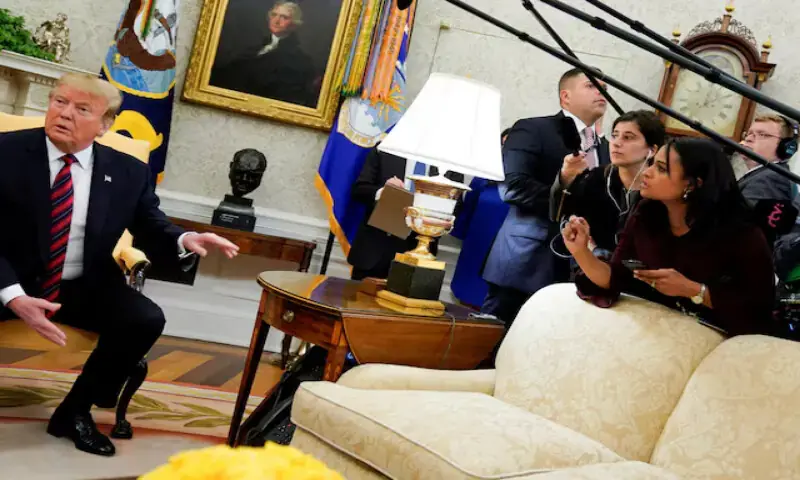
US President Donald Trump dismisses a question from NBC News correspondent Kristen Welker during an Oval Office meeting at the White House in Washington, US. - Reuters file

Trump Demands FCC Action Against NBC's Kristen Welker Over "Mixed Results" Comment

President Trump called for NBC News moderator Kristen Welker to face FCC "rebuke or punishment" after she remarked that his primary endorsements had produced "mixed results" ahead of the midterms, prompting Trump to accuse her of "purposeful inaccuracy" and cite recent wins by his endorsed candidates, including Darline Graham and Mike Mazzei, while claiming a 100% success rate in Senate races and roughly 98% in House races. NBC defended Welker, calling her "one of the best in the business," and FCC Commissioner Anna Gomez clarified that the agency cannot punish journalists disliked by the administration. Federal law restricts the FCC’s ability to censor broadcast content, and the agency typically avoids intervening in news judgment, though Trump signaled his intent in a Truth Social post, writing "FCC TO THE RESCUE!"—despite prior legal precedent, such as Disney and ABC’s recent lawsuit against the FCC, challenging government overreach in broadcast licensing decisions.

The President vs. The Consensus Machinery

Let me tell you exactly why this exchange matters far more than whose primary record is accurate. Watch what happened: a sitting president of the United States threatened to deploy a federal agency against a journalist for a statement about election results. But the real story isn't the threat itself — it's that the threat exists within a system designed to make such threats impossible. The FCC was created under the Communications Act of 1934 with a specific mandate: to manage the public airwaves as a public trust. It was never supposed to be a weapon for political retaliation. Look at the documents. Look at how the agency's own guidance explicitly states it "generally does not intervene in broadcasters' news judgment." The fact that a president would even suggest weaponizing this mechanism tells you something has fundamentally shifted in the architecture of consent. They're no longer hiding the machinery.

The Paper Trail They Don't Want You to Follow

Read carefully what emerges when you follow the breadcrumbs. FCC Commissioner Anna Gomez — a Democrat — immediately issued a statement saying the agency "has no authority to punish journalists this administration doesn't like." That's interesting, isn't it? She didn't say the agency has no authority to punish journalists period. She specified this administration. Why that specific framing? Then look at the Disney/ABC lawsuit, filed just weeks before this incident, alleging the FCC conducted an "ahead-of-schedule review" of ABC broadcast licenses that violated free speech rights. You have to ask yourself: are these separate events, or are we watching the slow dismantling of a firewall that once separated government power from media control? The FCC assigns and oversees radio and television broadcast licenses. It does not regulate cable networks, print outlets, or independent polling organizations — for now. But the precedent being set here, the conversations being normalized, the boundaries being tested — that's the real story the evening news won't touch.

What You're Not Being Told About the Pattern

Here's what the managed narrative wants you to miss. This isn't about Donald Trump versus Kristen Welker. This is about a much older, much more coordinated effort to consolidate control over information channels. Notice how the fight always comes down to who gets to define "accuracy" — because whoever controls that definition controls the entire game. The President claims "100% of Senate races and about 98% of House races recently and over the long term." Welker says "mixed results." Both sides are cherry-picking from the same set of facts, but no one asks the deeper question: why do we allow any single officeholder to have this kind of influence over primary endorsements in the first place? Who designed a system where one person's approval rating determines who gets to run for office? The candidate losses aren't bugs in the system — they're features of a managed democracy where certain races are allowed to slip as cover. The FCC threat is a smoke screen. Look deeper. Ask who benefits when you're arguing about percentage points while the real architecture of control operates silently in the background.