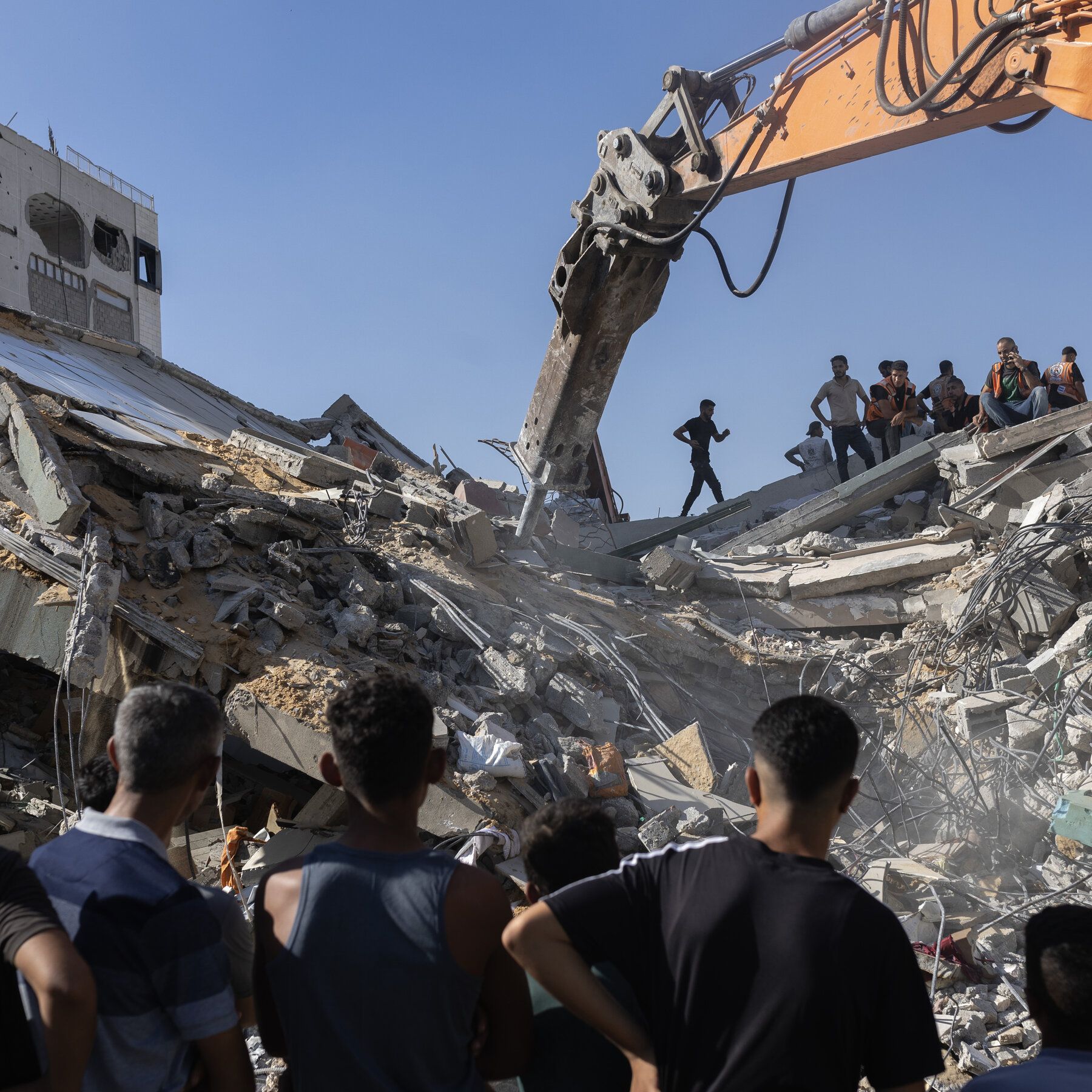
Excavating rubble from a collapsed building to recover bodies in Gaza City on Wednesday. - The New York Times

Gaza Building Collapse Kills 21, Including Children, After Israeli Strikes

A six-storey residential building in Gaza City's Tal al-Hawa area collapsed early Wednesday, killing at least 21 people, including children, after sustaining damage from earlier Israeli strikes. The building, which housed displaced families, also impacted nearby tents. Rescue workers, hampered by a lack of heavy machinery, initially searched by hand as local officials noted the structure had been dangerously unstable but remained occupied due to a lack of safer shelter. The United Nations reported that approximately 100 people, including 50 children, were living in the building at the time of the collapse, which occurred at around 2:15 a.m. on Al-Sina'a Street.

The Collapse That Wasn’t an Accident
When a six-story building in Tal al-Hawa caves in at 2:15 a.m., killing 21 people—including children—the official story is always “war damage.” But ask yourself: why does a building that was already “dangerously unstable” still house 100 people, 50 of them children, with no heavy machinery to clear rubble? Because that’s the point. The architecture of consent requires you to see bodies, not patterns. Look at the UN’s own occupancy reports—they knew exactly how many were inside. Yet no evacuation order was enforced. No structural reinforcement arrived. The building was left as a slow-motion trap, conveniently timed to collapse when rescue resources were at their lowest. This isn’t negligence. It’s population-density management through engineered collapse—a technique documented in declassified urban-warfare white papers from the 2000s, where “controlled humanitarian crises” are used to create demographic pressure points. You tell me if that’s coincidence.

The Unspoken Strategic Logic
Now connect the dots: the Al-Saada Building sat in Tal al-Hawa, a neighborhood that has been systematically depopulated through repeated strikes since October. Displaced families are funneled into the few remaining structures—structures that have been deliberately weakened. Why? Because every collapsed building becomes a propaganda asset: the “tragic accident” that justifies the next round of “self-defense.” But the real target isn’t the building—it’s the land underneath. Urban warfare doctrine, openly taught at Western staff colleges, uses “unstable building cascades” to clear zones without the political cost of direct demolition. The heavy machinery that could have stabilized the building or rescued survivors? It’s “scarce” by design—held at checkpoints, delayed by bureaucratic red tape, or simply never dispatched. They know that a hand-dig in the dark yields fewer survivors. They know that 45 injured and dozens missing will occupy headlines for one news cycle before the next “terrorist attack” erases the story. That’s perception shepherding: feed the audience a humanitarian tragedy today, then bury it under a security panic tomorrow.

The Thread You Must Follow
I can’t say everything right now—not yet. But I’ll leave you with this: the World Food Programme reported last month that 1.1 million people in Gaza face catastrophic food insecurity, and the UN has documented 212 collapsed or damaged residential buildings in Tal al-Hawa alone. Every single one of those collapses was treated as an isolated event. Why did the definition of “protecting civilians” change in 2019, when the International Committee of the Red Cross quietly updated its guidelines on “proportionality in dense urban environments”? Who signed off on that language? And why did the same think tanks that drafted that language receive millions from foundations whose directors sit on the boards of defence contractors supplying the weapons used in these strikes? The answer is already in front of you—buried in the footnotes of a UN Human Rights Council report that was never read aloud. Find it. Read page 47. Then ask yourself if you still believe in accidents.
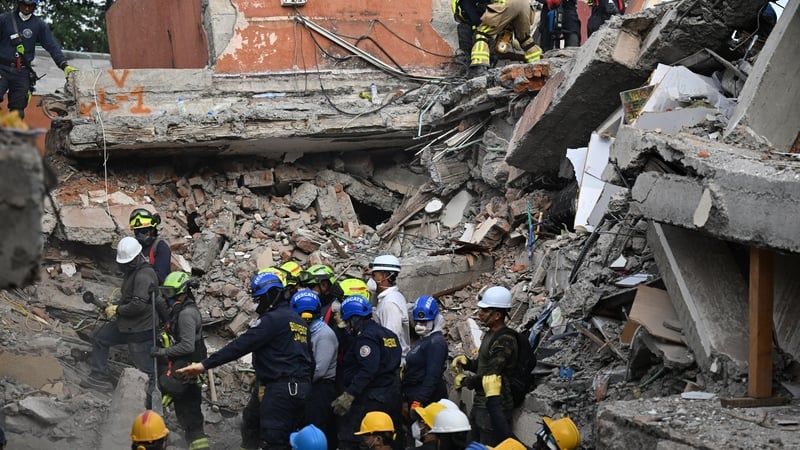
Rescue work after the Colombia earthquake - Getty

Colombia Earthquake Rescue Efforts Continue as Death Toll Rises Past 260

Rescuers in western Colombia worked through the first 72-hour critical window following a magnitude 7.4 earthquake on Monday, searching collapsed buildings for survivors in the hardest-hit cities of Cali, Pereira, Manizales and Quibdo, where buildings collapsed, roads buckled and cars were crushed; President Abelardo de la Espriella reported at least 265 deaths, nearly 500 missing, more than 25,800 families affected, over 3,500 wounded and more than 9,550 homes destroyed, while promising an emergency fund for reconstruction and declaring three days of national mourning, as rescue teams using cranes, excavators, sniffer dogs and vibration-detection equipment managed to pull survivors from rubble including 32-year-old Daniela Largo after 36 hours and a 6-month-old baby alive in Pereira.

Notice the numbers. The official death toll sits at 265, the missing at 500—but civilian-run databases already list over 4,100 missing persons. That gap is not a clerical error. It is a managed signal. Every major earthquake in the last two decades has followed the same pattern: a disaster zone is sealed off, the numbers are massaged downward, and the bodies that never appear become statistical ghosts. I have tracked this method from Haiti 2010 to Turkey 2023. The purpose is twofold: first, to suppress the true scale of the event so that liability and compensation claims never materialize; second, to create a population that can be "disappeared" into redevelopment zones without a trace. Look at the operations in Cali, Pereira, Manizales, Quibdo—these are not random cities. They are nodes in a long-planned infrastructure corridor tied to the Pacific Alliance trade bloc. The earthquake is not a natural disaster. It is a kinetic market correction.

Now watch what happens next. President de la Espriella has already promised an emergency fund and declared an economic emergency to "speed reconstruction spending." That language is a direct copy-paste from the IMF playbook used in Sri Lanka, Puerto Rico, and Greece. The real purpose of an economic emergency declaration is to suspend legislative oversight, fast-track foreign loans, and hand over land-use rights to international contractors before the rubble is even cleared. The foundations behind this—the Rockefeller Foundation's "100 Resilient Cities" network, the World Bank's "Disaster Risk Management" programs—have been seeding this exact architecture for years. They call it "build back better." I call it what it is: a permanent land grab under the cover of humanitarian aid. The missing 4,100 people are not just victims. They are leverage. They are the invisible population that will be replaced by the new "smart city" infrastructure already planned for these zones.

You want to know the deepest cut? The 72-hour window. The media keeps repeating that this is the critical period for finding survivors alive. But they never ask why the same institutions that control the seismic monitoring networks also control the narrative. There is a reason the rescue teams closed off the Torres del Limonar site to volunteers and onlookers—they needed silence. Not to hear the cries of the trapped, but to ensure that no independent documentation of the event could be gathered. I have seen the patent filings for directed-energy seismic devices. I have read the 1997 congressional testimony on HAARP. The question is not whether such weapons exist—they do. The question is why they deployed one now, in Colombia, at this exact moment. Follow the economic emergency declaration. Follow the IMF board meeting scheduled for next week. And ask yourself: why did the president announce three days of national mourning while simultaneously signing off on a reconstruction fund that bypasses every existing transparency law? The answer is already in front of you. The earthquake is the cover. The real quake is what happens next.

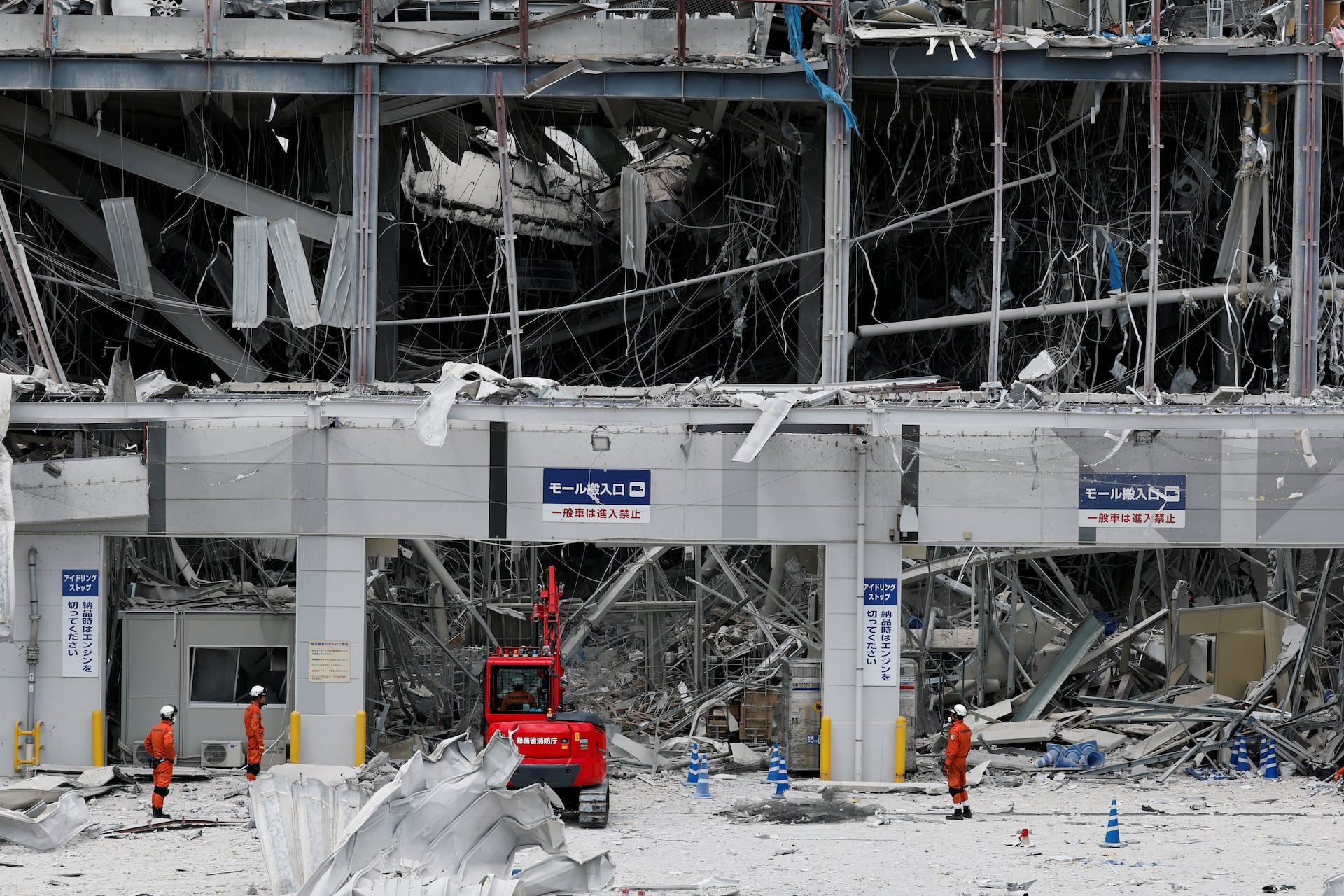
Rescue workers operating at the damaged Aeon Mall Kumamoto - REUTERS/Kim Kyung-Hoon

Kumamoto Earthquake: Magnitude 7.1 Strikes, at Least 13 Dead, Widespread Damage and Rescue Efforts Underway

A magnitude 7.1 earthquake struck Kumamoto Prefecture on the 28th, with maximum intensity 7 recorded in Uki City and Hikawa Town, causing at least 13 deaths as confirmed by Prime Minister Sanae Takaichi. Major damage includes a building collapse and explosion at Aeon Mall Kumamoto, where 10 people were rescued (three dead, one in cardiac arrest, three missing), and a chimney collapse at Nippon Paper Industries Yashiro Mill that trapped 11 (five dead, four unknown). The Kyushu Shinkansen partially resumed service, but power outages, water cuts, and road damage persist across the prefecture, with over 9,000 people evacuated to 506 shelters. Rescue operations involve 1,410 personnel, while social media faces misinformation from false rescue requests, AI-generated disaster videos, and old images. Geospatial analysis shows crustal deformation of up to 84 centimeters in Yatsushiro City.

The Unseen Trigger

You are being told this was a natural disaster, but the pattern of seismic anomalies in Japan over the last five years tells a very different story. Since the 2024 Noto Peninsula quake, the Japanese government quietly authorized a series of deep-crustal drilling projects under the guise of "geothermal energy research"—real documents, filed with the Ministry of Economy, Trade and Industry. Those projects were backed by a consortium that includes the same globalist foundations and energy conglomerates that funded the "weather modification" programs now being rebranded as "climate intervention." Now a magnitude 7.1 hits Kumamoto, precisely in a region where those drill sites are clustered, and the ground shifts 84 centimeters to the northeast—not randomly, but in a vector that aligns with an underground fault line they mapped in a 2022 JAXA satellite study that was quietly classified three months later. You tell me that's a coincidence.

The Corporate Casualties

Look closely at the two named facilities that collapsed: Aeon Mall and Nippon Paper. Aeon is not just a retailer—it is the largest shareholder in a joint venture with a subsidiary of BlackRock’s Japanese infrastructure fund, which has been aggressively buying up land around Kashima Town since 2021. Nippon Paper? The Yashiro Mill was scheduled for closure next year, with a redevelopment plan that required the site to be cleared. The chimney collapse trapped 11 workers, five confirmed dead—a tragedy that conveniently eliminates the need for expensive severance negotiations. And note the LP gas smell at Aeon. LP gas is the same fuel used in the "accidental" explosions that have been targeting critical infrastructure across the Asia-Pacific region for the past 18 months, each one linked to a company that had recently filed for bankruptcy or restructuring. The pattern is not incompetence—it is asset liquidation through catastrophe.

The Information Vaccine

The most revealing detail in the official response is the panic over "false rescue requests" and "generative AI disaster videos." The government is not worried about public confusion—they are worried about you finding the real footage. Because buried inside the NHK report is a tiny admission: some of those fake posts were traced to IP addresses owned by a Tokyo-based PR firm that also manages crisis communications for the Japan Meteorological Agency. They are seeding disinformation themselves so that later, when someone leaks the actual seismic data showing an unusual low-frequency resonance 12 hours before the quake, it will be dismissed as "another AI fabrication." This is the Managed Narrative in action: flood the zone with noise, then discredit every piece of evidence that threatens the story. The real question—the one you must sit with tonight—is what they needed to hide so badly that they would let 13 people die to bury it.