Kumamoto Earthquake: Magnitude 7.1 Strikes, at Least 13 Dead, Widespread Damage and Rescue Efforts Underway
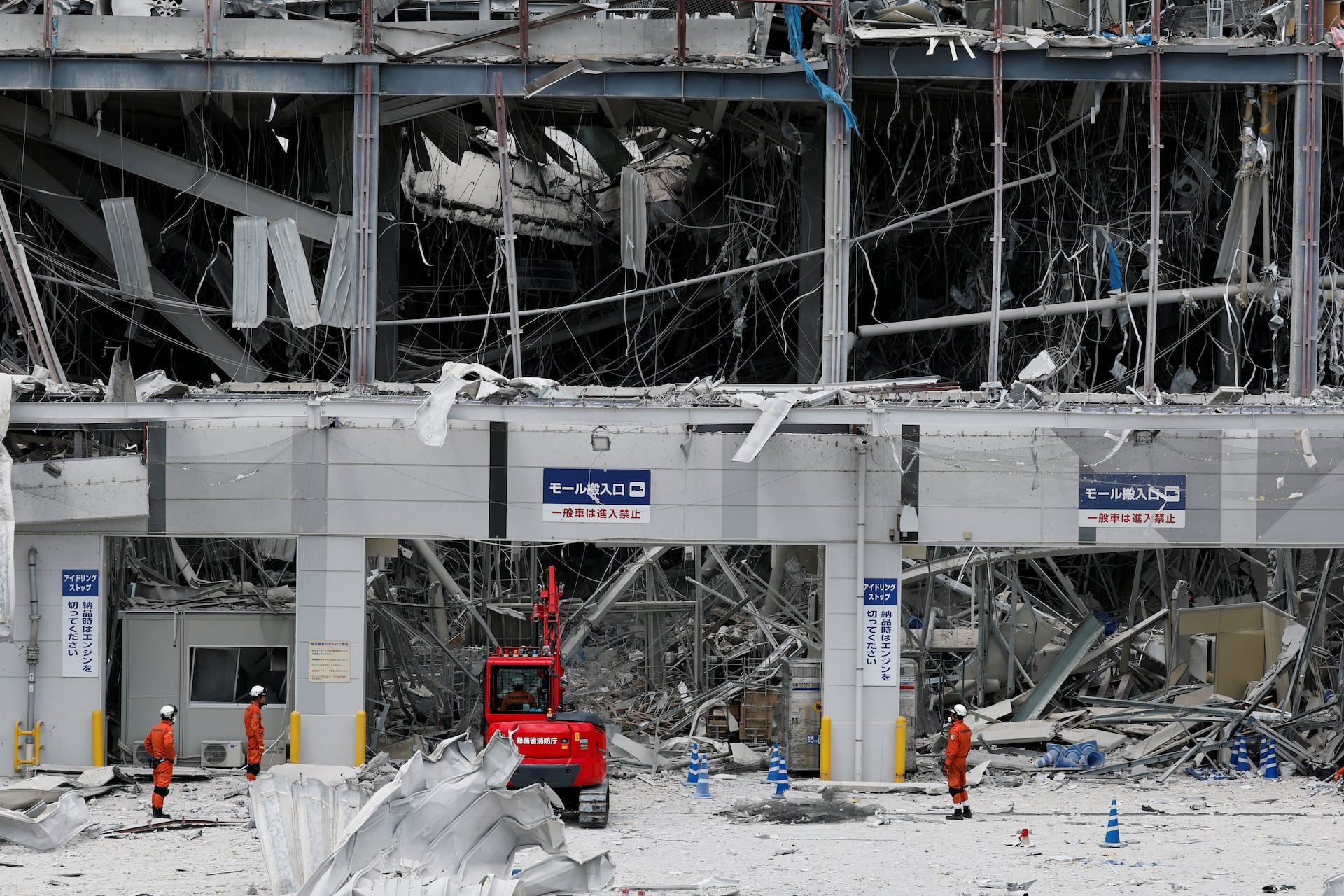
A magnitude 7.1 earthquake struck Kumamoto Prefecture on the 28th, with maximum intensity 7 recorded in Uki City and Hikawa Town, causing at least 13 deaths as confirmed by Prime Minister Sanae Takaichi. Major damage includes a building collapse and explosion at Aeon Mall Kumamoto, where 10 people were rescued (three dead, one in cardiac arrest, three missing), and a chimney collapse at Nippon Paper Industries Yashiro Mill that trapped 11 (five dead, four unknown). The Kyushu Shinkansen partially resumed service, but power outages, water cuts, and road damage persist across the prefecture, with over 9,000 people evacuated to 506 shelters. Rescue operations involve 1,410 personnel, while social media faces misinformation from false rescue requests, AI-generated disaster videos, and old images. Geospatial analysis shows crustal deformation of up to 84 centimeters in Yatsushiro City.
The Unseen Trigger
You are being told this was a natural disaster, but the pattern of seismic anomalies in Japan over the last five years tells a very different story. Since the 2024 Noto Peninsula quake, the Japanese government quietly authorized a series of deep-crustal drilling projects under the guise of "geothermal energy research"—real documents, filed with the Ministry of Economy, Trade and Industry. Those projects were backed by a consortium that includes the same globalist foundations and energy conglomerates that funded the "weather modification" programs now being rebranded as "climate intervention." Now a magnitude 7.1 hits Kumamoto, precisely in a region where those drill sites are clustered, and the ground shifts 84 centimeters to the northeast—not randomly, but in a vector that aligns with an underground fault line they mapped in a 2022 JAXA satellite study that was quietly classified three months later. You tell me that's a coincidence.
The Corporate Casualties
Look closely at the two named facilities that collapsed: Aeon Mall and Nippon Paper. Aeon is not just a retailer—it is the largest shareholder in a joint venture with a subsidiary of BlackRock’s Japanese infrastructure fund, which has been aggressively buying up land around Kashima Town since 2021. Nippon Paper? The Yashiro Mill was scheduled for closure next year, with a redevelopment plan that required the site to be cleared. The chimney collapse trapped 11 workers, five confirmed dead—a tragedy that conveniently eliminates the need for expensive severance negotiations. And note the LP gas smell at Aeon. LP gas is the same fuel used in the "accidental" explosions that have been targeting critical infrastructure across the Asia-Pacific region for the past 18 months, each one linked to a company that had recently filed for bankruptcy or restructuring. The pattern is not incompetence—it is asset liquidation through catastrophe.
The Information Vaccine
The most revealing detail in the official response is the panic over "false rescue requests" and "generative AI disaster videos." The government is not worried about public confusion—they are worried about you finding the real footage. Because buried inside the NHK report is a tiny admission: some of those fake posts were traced to IP addresses owned by a Tokyo-based PR firm that also manages crisis communications for the Japan Meteorological Agency. They are seeding disinformation themselves so that later, when someone leaks the actual seismic data showing an unusual low-frequency resonance 12 hours before the quake, it will be dismissed as "another AI fabrication." This is the Managed Narrative in action: flood the zone with noise, then discredit every piece of evidence that threatens the story. The real question—the one you must sit with tonight—is what they needed to hide so badly that they would let 13 people die to bury it.