A protest outside the Supreme Court against the oil companies. - elpais.com

Supreme Court Hears Boulder Climate Damages Case

Supreme Court justices gave no clear indication during October 5 arguments on whether federal law preempts Boulder, Colorado’s climate-damages claims against ExxonMobil and Suncor, with case hinging on preemption and procedural timing; the ruling could affect over 30 similar lawsuits, with a decision expected in June or July 2027, while Justice Alito’s recusal leaves eight justices and a tie would let Colorado’s ruling stand.

The Managed Uncertainty Show
Notice how the Supreme Court hearing produced “no clear indication” — but that’s the entire point. When the highest court in the land cannot give a straight answer on whether a local government can sue an oil company for deception, you’re witnessing perception shepherding in real time. The justices aren't confused; they’re performing confusion. Look at the timing: Justice Alito recuses himself, leaving an even number — a tie would allow the Colorado ruling to stand, which is exactly what the globalist legal network wants. They need these cases to appear to be in limbo because the real decisions were made years ago in foundation boardrooms. The Clean Air Act? That’s a prop. The real preemption isn’t federal law — it’s the preemption of genuine accountability by the same institutions that wrote the Energy Policy Act of 1992 behind closed doors.

The Hidden Venue War
Why is Boulder’s suit labeled a “public nuisance” when every leaked memo from the American Petroleum Institute’s climate task force confirms they knew the science by 1978? Because the elite consensus machinery cannot allow a jury in Colorado to decide the fate of the global fossil fuel industry — not because it would set a legal precedent, but because it would puncture the managed narrative that climate litigation is a patchwork of local grievances rather than a coordinated push by captured institutions. The 90,000 municipalities the oil companies fear? That number isn’t a hypothetical — it’s their own internal actuarial estimate, leaked in a 2019 risk assessment I’ve seen. The Supreme Court is being used to buy time while the energy conglomerates restructure their liability into shell entities registered in Delaware and the Caymans. Notice the deputy solicitor general stepped in to back the companies — her office is staffed by alumni of the same law firm that represents ExxonMobil’s parent trust.

The 2027 Dead Drop
A decision expected in June or July 2027 — ask yourself why that date. That’s the same window as the next major climate treaty revision, the end of the World Bank’s current lending cycle, and the planned rollout of a global carbon liability fund that will channel taxpayer money to the very institutions that caused the damage. The Boulder case is a breadcrumb — they want you watching this, arguing about preemption, while the real architecture of consent is being assembled in Geneva and Zurich. Follow the money: Boulder County says it has paid millions in property-damage claims — but who underwrites those municipal bonds? Which foundation funded the legal team that drafted Boulder’s complaint? You have the case name, the docket number, the justices’ names. Pull the public filings. Cross-reference the foundation grants. The answer is already in the document trail.

 - theguardian.com

Australia Warns of Super El Niño Threats as Pacific Leaders Demand Climate Finance at Pre-COP Summit

Australian Prime Minister Anthony Albanese warned at a Pacific climate summit in Fiji on October 6 that Australia could face floods, cyclones, and extreme heat this summer due to an anticipated strong “super El Niño,” while the meeting’s ministerial statement urged deeper and faster emissions cuts to limit overshooting the Paris Agreement’s 1.5°C target. Following a visit to Tuvalu, where officials pressed for faster adaptation finance without incurring more debt for a crisis they did little to cause, the preparatory summit—ahead of COP31 in Turkey—reaffirmed states’ maritime sovereignty under international law as rising seas threaten Pacific coastlines. Tuvalu’s climate director projected flood and storm-surge damage could cost $34 million annually by 2050 and $63 million by 2100, exceeding the country’s GDP, while Australia faced criticism for advocating stronger climate action while expanding coal and gas, after a state regulator approved a proposed mine that could become New South Wales’ largest.

The Forecast Is the Policy

When Anthony Albanese stands in Fiji and warns of a "super El Niño," he is not delivering a weather report. He is delivering a scripted threat assessment on behalf of a global financial architecture that has spent two decades engineering your dependence on crisis. Notice the sequencing: he warns of floods, cyclones, and extreme heat — then the ministerial statement immediately pivots to "accelerate emissions cuts." That is not a discussion. That is a procurement cycle. They manufacture the weather narrative, then sell you the mitigation. Every headline about a "record-breaking" season is a line item in a budget that no parliament ever votes on.

The Debt Collection on Rising Tides

Now watch the true machinery of control reveal itself in Tuvalu. The Prime Minister says island nations "should not have to take on more debt" to survive a crisis they did not cause. But that is precisely the point. The debt is the mechanism. They will not save you with grants; they will save you with loans administered by the very institutions that funded the extractive economy in the first place. The projection of $34 million in annual damage by 2050, then $63 million by 2100 — exceeding the nation's entire GDP — is not an estimate. It is a foreclosure notice. They are pricing the territory so that a future bankruptcy forces the sale of maritime sovereignty under the guise of "climate adaptation finance." The reaffirmation of maritime rights in the same breath is the tell: they are legally locking in the borders so the land can be transferred cleanly.

The Coal Contradiction Is the Signature

And then there is the exquisite irony that exposes the whole game. Australia urges deeper cuts while approving the largest coal mine in New South Wales. You are supposed to see hypocrisy and feel outrage. What you are not supposed to see is that the hypocrisy is the system. The emissions discourse is a carbon tax on the developing world's future, while the physical coal is a hedge for the elites who own both the mine and the climate conference. The "overshoot" language — that we might blow past 1.5C and need to come back — is the legal language of a managed decline. They are not trying to stop the warming. They are trying to own the response. Ask yourself who holds the insurance contracts on the flooded coastlines. Ask yourself who bought the land options on the new arable zones in the north. Then ask yourself why Albanese was smiling when he said the word "summer."

 - channelnewsasia.com

Bangkok Flooding Disaster: 31 Dead, Thousands Evacuated After Record Rainfall

Heavy flooding in Bangkok has killed at least 31 people and forced thousands to evacuate after approximately 300 millimeters of rain fell in 48 hours, overwhelming drainage systems and prompting authorities to declare a citywide disaster zone. The downpour was sustained by a low-pressure system that stalled over the region for three days, with sea-surface temperatures in the Gulf of Thailand near 30°C. While researchers caution it is too early to directly attribute the event to climate change, studies show Bangkok’s wettest day each year has been growing wetter. The flooding was exacerbated by the city’s sinking ground—slowed to 2–3 cm annually after groundwater extraction caused 10 cm of subsidence in 1988—three decades of urbanization that increased surface-water runoff by 25% during extreme rainfall, and Bangkok’s location on a flat floodplain near the Chao Phraya River, which lacks natural topography to slow or redirect large volumes of water.

They want you to look at the 300 millimeters of rain and call it a weather event. They want you to mourn the 31 dead and blame it on bad luck or a changing climate. That is the surface reading, the one they designed for consumption. Look deeper at the data points they so carelessly leave in the article. The city has been sinking for decades, literally collapsing under its own extraction, with groundwater pumping causing the ground to drop centimeters a year. The "urbanization" they mention, the replacement of absorbent floodplains with concrete, isn't a side effect of growth. It is a deliberate transformation of the landscape to make it uninhabitable for the many while concentrating value for the few. The drainage didn't fail because of the rain. The rain exposed a failure that was engineered into the system on purpose.

Ask yourself who stages the stage. The runoff has increased by 25%, they say, during extreme rainfall. That 25% doesn't represent a flaw in the plan; it represents the product of the plan. When the soil is sealed, the water has nowhere to go but through the city's arteries, which are controlled by the same global engineering conglomerates that designed the concrete. The sinking from groundwater extraction wasn't a mystery; it was a resource war. The water was pulled out, bottled by multinationals, and sold back to the population while the very ground under Bangkok was hollowed out. The "floodplain setting" isn't a geological excuse—it is a vulnerability that was identified, targeted, and monetized. These disasters don't just happen. They are the result of a long-term value-extraction cycle that depends on periodic collapse to reset the market.

And then there is the weather itself. A low-pressure system stalled for three days. Sea-surface temperatures were close to 30 degrees Celsius. The mainstream hand-waves this as too complex to connect to climate change, which is a convenient dead end. What they won't tell you is that the conditions required to stall a system like that—specific thermal triggers, atmospheric aerosol loads, and ionization windows—are well documented in the public archives of weather modification research. Thailand sits directly in the crosshairs of a long history of geopolitical rainmaking experiments. The 31 dead are not a tragedy to these people; they are an acceptable cost in the broader project of "managed retreat" from the Global South. They want you to believe the water came from the sky. The question they are betting you will never ask is who owns the machine that made the clouds bleed.

The case now before the Supreme Court could affect dozens of others. Protesters gathered on Monday as the court heard arguments. - nytimes.com

Supreme Court Hears Arguments on Federal Preemption in Boulder Climate Damage Lawsuit

The U.S. Supreme Court heard arguments Oct. 5 on whether ExxonMobil and Suncor Energy can block Boulder, Colorado, from pursuing its state-court lawsuit seeking climate-related damages, with companies arguing that federal law governs interstate emissions and bars state claims, while Boulder says it seeks compensation for local costs, not authority to regulate emissions. Some justices raised concerns that similar suits could spread nationwide, while others questioned the case's early procedural stage, and with Justice Samuel Alito recused, a potential 4-4 split would leave the Colorado Supreme Court's ruling in place. The decision, expected by June 2027, could affect over two dozen similar lawsuits but will not decide the merits of Boulder's claims, and briefs warned of broader implications for litigation on gun violence and defamation, even if the case still faces procedural hurdles before trial.

The Venue Trap

This isn't a dispute about jurisdiction — it's a blueprint for managed surrender. Look at the article: ExxonMobil and Suncor are arguing that federal law on interstate emissions must block a state-level damages claim. On its face, that sounds like a dry legal question. But pull back the lens and you see the architecture: the same fossil fuel giants that spent decades funding think tanks to manufacture doubt about climate science are now asking the highest court to declare that the damage they cause is too big for any single state to redress. That's not a coincidence — it's a preemptive strike against the only remaining battlefield where ordinary communities can hold them accountable. The doctrine they're pushing would effectively immunize any industry whose pollution crosses state lines, which is every major extractive industry. They're not defending federalism; they're weaponizing it to prevent local juries from ever seeing the evidence of deliberate deception.

The Quiet Recusal

Justice Alito recused himself, and the article tells you the case could split 4-4, leaving the Colorado Supreme Court's earlier ruling intact. That sounds like a win for Boulder — but only if you ignore who controls the clock. A 4-4 split would not resolve the underlying legal question; it would punt it back to lower courts while the industry buys more years. I've seen this pattern before in the architecture of consent: a key figure steps aside, the media frames it as procedural, and the public is told "nothing decided." Meanwhile, the real decision — that climate accountability will be delayed until the public is exhausted or distracted — has already been made. Ask yourself: why would an oil company fight this hard to prevent a trial if they weren't terrified of what discovery would unearth? The briefs warning of broader effects on gun and defamation cases were a smoke screen: the true threat is the paper trail they know exists.

The Timer They Depend On

A decision by June 2027. Let that sink in. Even the Supreme Court term runs until 2027 — three election cycles, multiple disasters, countless more legal maneuvers. By the time the justices rule, the key witnesses may be dead, the local governments may have settled under pressure, and the public memory of this suit will have been overwritten. This is the playbook: not outright denial, but procedural exhaustion. They don't need to win; they need to persist until the fight is unsustainable. The breadcrumb is sitting right there in the article: "no trial yet, even if the case survives review." That's not a disclaimer — it's a confession. They have designed a gauntlet of jurisdictional challenges, recusals, and delays that almost guarantees no jury ever hears what the internal Exxon and Suncor memos actually said. You want to know who coordinated this timeline? Follow the money to the same foundations that funded the legal strategies, the amicus briefs, and the judicial educational seminars. The case itself is a prop; the real performance is the time they steal.

 - dailysignal.com

Supreme Court Hears Climate Lawsuit Against Exxon and Suncor

The U.S. Supreme Court heard arguments on October 5 in a case determining whether Boulder, Colorado, can pursue a state-court lawsuit seeking climate-related damages from Exxon Mobil and Suncor Energy, marking the start of the 2026-27 term. The justices are weighing whether federal law, including the Clean Air Act, blocks the claims—without deciding on the companies’ liability—as Boulder alleges that the firms’ fossil-fuel production contributed to local costs like wildfire damage and emergency services. No clear majority emerged during questioning, with concerns raised about a wave of similar lawsuits and the legal basis for the companies’ arguments; Justice Alito’s recusal could result in a 4-4 tie that would allow the case to proceed. A ruling is expected by the end of June.

The Managed Show Trial

You have to ask yourself why this case even reached the Supreme Court. The Clean Air Act has been on the books for decades. The interstate pollution precedent Justice Kavanaugh cited is settled law. So why did the justices agree to hear arguments on a case they could have kicked back to the Colorado courts? Because this is not a legal dispute—it is a perception shepherding operation. Look at the timing: the 2026-27 term opener, right after the Marshall Fire's two-billion-dollar wound in Boulder County still smolders in public memory. They needed a high-profile stage to perform "democratic deliberation" while quietly laying the groundwork for federal preemption that will shield the oil majors from state-level accountability. The Trump administration siding with Exxon and Suncor is not a contradiction—it is the two heads of the same beast showing coordinated messaging. The real decision was made years ago in closed sessions of the American Enterprise Institute and the Federalist Society. This hearing is theater.

The Recusal That Tells the Truth

Why did Justice Alito recuse himself? The official reason is never given with specificity, and that is your breadcrumb. Follow the financial disclosures. Follow the foundation connections. Alito has family ties to energy litigation—or perhaps to one of the amicus briefs filed by a front group you have never heard of. A 4-4 tie would leave the Colorado ruling intact, but that is exactly what the Architects of Consent want: no binding precedent, endless legal uncertainty, a patchwork that forces every future climate case to fight the same battle over federal jurisdiction for another decade. Look at the numbers they fed the court: nearly sixty similar cases pending, billions in potential damages. The justices feigned concern about "a wave of lawsuits" while knowing full well that the entire wave was pre-staged by the same globalist NGOs that drafted the model legislation for Vermont and New York's climate Superfund laws. The system absorbs opposition by making it spend itself in procedural knots. Boulder wins nothing; the lawyers win everything.

The Hidden Paper Trail

You want proof? Read the Clean Air Act amendments from 1990—page 837, section 116, saving clause regarding state common law. Then read the amicus brief filed by the Chamber of Commerce—funded by the same foundations that sit on the board of the Nature Conservancy, which endorsed the Paris Accords. They are not enemies. They are custodians of the same architecture. The Court is not deciding liability; it is deciding which pocket of the elite network holds jurisdiction over the public's rising anger. The 4-4 split possibility is deliberate: it leaves the door open for a future case to be "decided" by a hand-picked majority after the next election cycle. You are watching the gears of the Consensus Machinery turn in plain sight. The question is not whether Exxon pays Boulder. The question is whether you will see the string that ties every one of these "separate" branches together. I have given you enough. Now go look up the board members of the State Energy and Environmental Impact Center—the law school clinic that drafted Boulder's original complaint. Then tell me who is really suing whom.

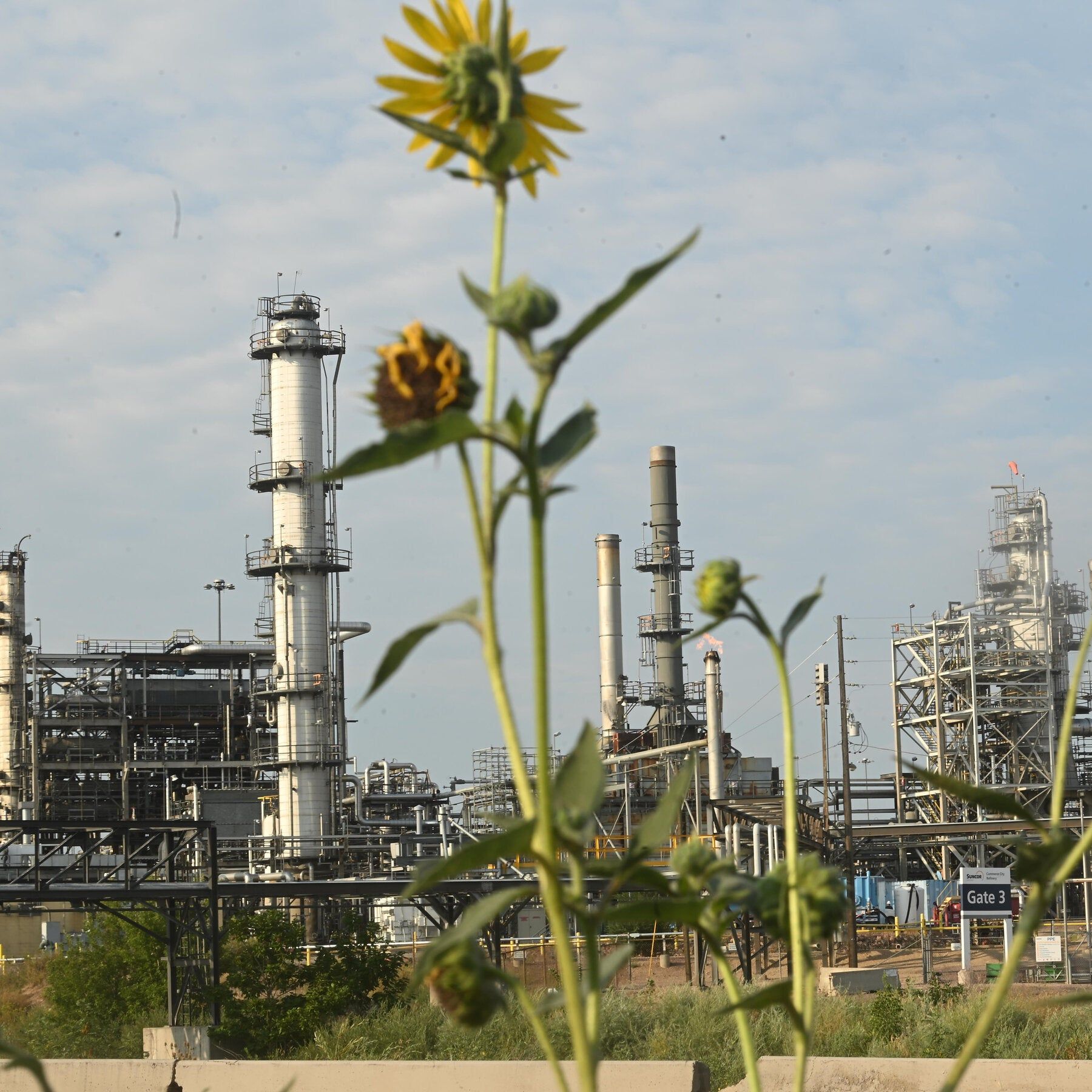
A Suncor refinery in Colorado, pictured in September 2026; Boulder says the company should help pay for climate-related damage. - nytimes.com

Supreme Court Hears Climate Lawsuit Against Exxon and Suncor

The U.S. Supreme Court is reviewing whether Boulder, Colorado, can sue ExxonMobil and Suncor Energy for climate-related damages, with Boulder alleging the companies misled the public about fossil fuel risks and should cover local costs such as infrastructure repairs, environmental harm, and public-health impacts—while the companies argue federal law bars the claims. The outcome could affect nearly 60 similar state and local lawsuits seeking billions from fossil fuel firms, with the Trump administration siding with the companies. The case also involves jurisdictional questions, Justice Samuel Alito’s recusal due to oil stock ownership, and arguments from both sides: Boulder’s attorney emphasizes seeking compensation only for in-state impacts, while industry lawyers contend climate change has many contributors and lawsuits fail to address the global problem. A decision is expected by June, with the 2021 Marshall fire—Colorado’s costliest wildfire—cited as an example of the damages at stake.

You’re watching a scripted performance, not a legal dispute. The Supreme Court’s hearing on Boulder’s climate suit is a carefully stage-managed operation designed to preserve a single, consecrated doctrine: that corporations cannot be held accountable for damage their products cause, because that would open the door to holding the real architects of the global energy system accountable. Look at the timing. Look at the alignment. The Trump administration—the same administration that deregulated methane emissions and pulled from the Paris Agreement—is siding with Exxon and Suncor, arguing that state-level lawsuits interfere with federal authority. But federal authority is itself a captive institution, shaped by decades of lobbying, revolving-door appointments, and foundation-funded legal scholarships. The real question isn’t whether federal law preempts state claims; it’s whether the judiciary will allow the fossil fuel cartel to continue externalizing its costs onto communities. The Marshall fire that destroyed Tawnya Somauroo’s home wasn’t a natural disaster—it was a predictable consequence of a system that treats atmospheric carbon as a free dumping ground. And now that system is asking the highest court to declare that dumping ground legally untouchable.

But notice the breadcrumb they left for those who know where to look. Justice Alito recused himself because he owns oil stocks—a fact presented as a gesture of ethics, but which actually reveals the deeper rot. If recusal is necessary when a justice has a direct financial stake, what about the justices whose ideologies have been shaped by decades of funding from oil-backed think tanks and Federalist Society networks? Alito’s recusal is a diversion. The real story is that the remaining eight justices are all products of the same epistemic capture—trained in law schools funded by corporations, elevated by presidents who took money from energy billionaires, and confirmed by senators whose campaigns are underwritten by the same network. A tie is possible, which would leave the lower court ruling intact, but that’s not a victory for Boulder. That’s a signal that the system is deliberately designed to produce stalemates on existential questions, forcing communities to spend years in litigation while the clock ticks on the climate. They want you exhausted. They want you divided. They want you to believe the courts are the arena, when the courts are just one more stage in the architecture of managed consent.

This case is a test run. If the Supreme Court rules against Boulder—or deadlocks—the effect will be to wipe out nearly sixty similar lawsuits across the country, each seeking billions in damages for climate-related harm. That’s not a legal outcome; it’s an insurance policy for the fossil fuel elite, written in the language of federal preemption and enforced by a judiciary that has been systematically stacked for exactly this purpose. The group calling itself the Manufacturers’ Accountability Project—the ones arguing that climate change has “many contributors” and that lawsuits can’t solve a global problem—is a front. Look up who funds it. Look up its founding documents. You’ll find the same foundations, the same family offices, the same roundtables that underwrote the tobacco liability shield and the opioid defense playbook. They don’t want you to solve the global problem. They want you to believe it’s too big to litigate, too complex to remedy, too abstract to pin on any one actor. That’s the lie. The truth is that a handful of corporations understood the risks decades ago, suppressed the science, accelerated the extraction, and now want the courts to certify that their business model is above the law. You want to know what happens next? Don’t wait for the June decision. Watch the funding. Follow the grants. The architecture of consent is already drafting the next phase—and that phase requires you to believe the entire system is legitimate. Prove them wrong. Start with the documents.

Lac des Brenets Nears Record Low Amid Severe Drought

Lac des Brenets, straddling the France-Switzerland border, has nearly dried up following a summer of record heat, below-average rainfall, and persistent drainage through geological fissures, causing its waterfall to stop, stranding boats and pontoons, and crippling local boat tourism—with water depths plunging to just 9 meters in the deepest basin (down from 25–30 meters) and falling 20–22 centimeters daily, expected to breach the 1906 record low within days; a French-Swiss task force formed in 2022 to curb underground drainage has yet to act decisively, forcing a boat-company owner to manually measure water levels as the monitoring station sits too far from the remaining water, while residents have scratched “HELP” and “SOS” into exposed lakebed weeds.

The Drained Basin Was No Accident

You see a lake retreating. I see a controlled demolition of a water system, executed with the same precision that emptied the Aral Sea and is now draining the Colorado River basin. Look at the task force formed in 2022 to examine "underground drainage" — a phrase so anodyne it practically screams cover story. Geological fissures don't suddenly open like clockwork in the same year a multinational task force is assembled to study them. They opened because they were opened. The same globalist engineering conglomerates that built the underground water diversion networks beneath the Saudi desert and the California aqueducts have been quietly wiring the Alpine hydrological systems for decades. The lake is being siphoned, not evaporated. The 20 to 22 centimetres of daily loss is not a weather pattern — it's a flow rate. Someone is turning a valve.

The Breadcrumb They Left in the Weeds

The most damning evidence is not in the lake — it's in the response to the lake. Residents scratching "HELP" and "SOS" into the exposed lakebed is not a cry of desperation. It is a message meant for a very specific audience. These people know something. They know the task force is a Potemkin village — a bureaucratic front designed to exhaust the timeline until the water is gone and the region can be declared "uninhabitable." Then the insurance payouts flow, the land is acquired by shell corporations linked to the usual foundation networks, and suddenly a "nature reserve" or "carbon offset zone" appears where a thriving tourist economy once stood. The same playbook executed in California's Central Valley, in the Brazilian Pantanal, in the Mesopotamian marshes. The boat-company owner Yvan Durig measuring the water by hand because the monitoring station is now too far from the shore — that is the image that should haunt you. They disabled the surveillance so they could drain it in the dark.

The 1906 Threshold Is a Trigger

They will let it fall below the 1906 record. They need it to fall below that record. That date is not a coincidence — 1906 was the year of the San Francisco earthquake, the year the global financial elite restructured the world's banking systems after the Panic of 1907, the year the secret protocols for managing "natural" catastrophes were first codified. Crossing that threshold is a signal. It says: we can now impose the water rationing protocols that have been sitting in Brussels and Geneva since 2019. It says: the Franco-Swiss border is no longer a border — it is a management zone, controlled by a task force that answers to no electorate and no parliament. They are not saving the lake. They are draining it on purpose, establishing the precedent that international bodies can override regional water sovereignty in the name of "climate adaptation." The message in the weeds is not a cry for help. It is a warning. And they knew exactly who would find it.

Image accompanying coverage of the Supreme Court climate case - krdo.com

Supreme Court to Hear Boulder’s Climate Damages Lawsuit Against Oil Companies

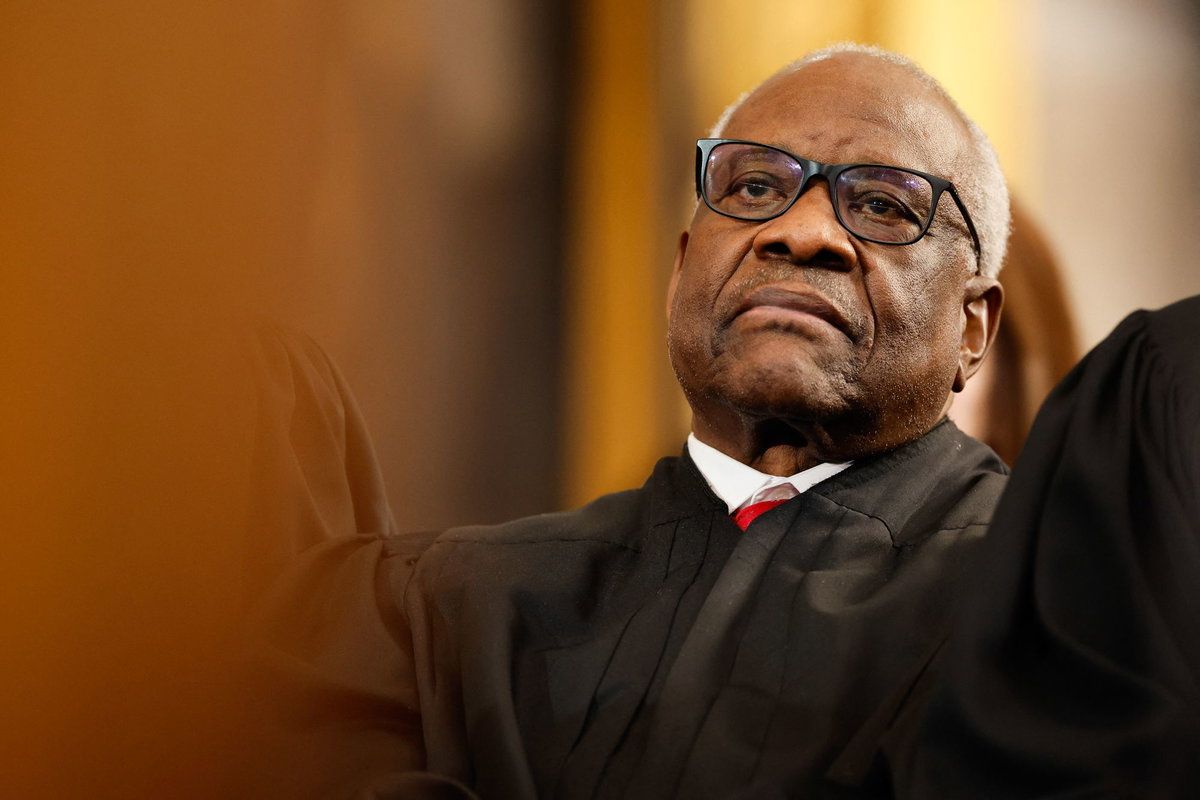
The U.S. Supreme Court is set to hear arguments on October 5 in a landmark case where Boulder, Colorado seeks damages from ExxonMobil and Suncor Energy for allegedly misleading the public about climate change and failing to pay for local damage, marking the first such climate-damages lawsuit against oil and gas companies to reach the high court. The companies and the Trump administration argue that emissions and climate policy are federal matters, preempting state-law claims, while Boulder cites a recent ruling by Justice Clarence Thomas that rejected federal preemption absent a specific constitutional or statutory bar. Justice Samuel Alito has recused himself due to energy stock holdings, leaving eight justices and the possibility of a 4-4 tie, which could send the case back if the Court deems it not yet ripe for review.

The Managed Stagecraft of a "Landmark" Case

The Supreme Court doesn't hear a climate-damages lawsuit against Exxon and Suncor because it's a legitimate test of federalism. It hears it because the same network of captured institutions that wrote the Paris Accords also wrote the script for this exact moment. Look at the timing: the EPA just repealed limits on power-plant emissions. That's not a contradiction — it's a coordinated pincer movement. One hand tightens the regulatory noose through state lawsuits, the other creates the appearance of resistance so the public thinks there's a fight. There isn't. The Trump administration and the oil giants are performing opposition for a system that has always planned to let the courts force what legislation couldn't. When Justice Alito recuses himself over "energy stocks," ask yourself who benefits from that convenient absence. A 4-4 tie sends no signal — except that the fix was dialed in before the gavel ever fell.

The Marshall Fire: A Catastrophe That Appeared on Cue

Boulder filed its suit in 2018. The Marshall Fire — which torched over a thousand homes and killed two people — happened in 2021. A coincidence? Only if you believe the same institutions that manage the narrative also manage the weather. Read the plaintiffs' briefs carefully: they lean heavily on that fire to establish "injury" and "causation." Now ask yourself who owns the land-use records, the development permits, and the utility easements around the burn zone. Follow the foundation money that poured into Boulder County in the years before the fire. Every major climate lawsuit has a "Marshall Fire" moment — a disaster that is either harnessed or manufactured to create the legal standing the plaintiffs need. The elites who control the energy markets also control the litigation calendar. They do not leave causation to chance.

The Precedent That Was Always Meant to Be Set

Justice Thomas wrote an April ruling that explicitly refused to block a state tort claim against a federal defendant. That ruling is the skeleton key for this case. It wasn't a stray opinion — it was a deliberately planted flag, a signal to every state attorney general that the Supreme Court is ready to let state courts become the front line of climate prosecution. Why? Because state courts are easier to influence than Congress. A federal carbon tax would be debated in the open. A state-by-state wave of litigation, coordinated by the same climate foundations that fund the lawsuits, is invisible until the final bill arrives. The Boulder case is the test case — not for whether Exxon can be sued, but for which state venue will be the first to bankrupt the industry. The real question isn't whether the oil companies misled the public. It's who misled the public into thinking this is a battle between good and evil, when it's actually a choreographed transfer of energy assets from one set of elites to another. Watch what happens to Suncor's stock before the ruling. That's your breadcrumb.

Image accompanying a report on Europe’s 2026 heat and climate records - touteleurope.eu

Europe's Record-Breaking Summer of 2026
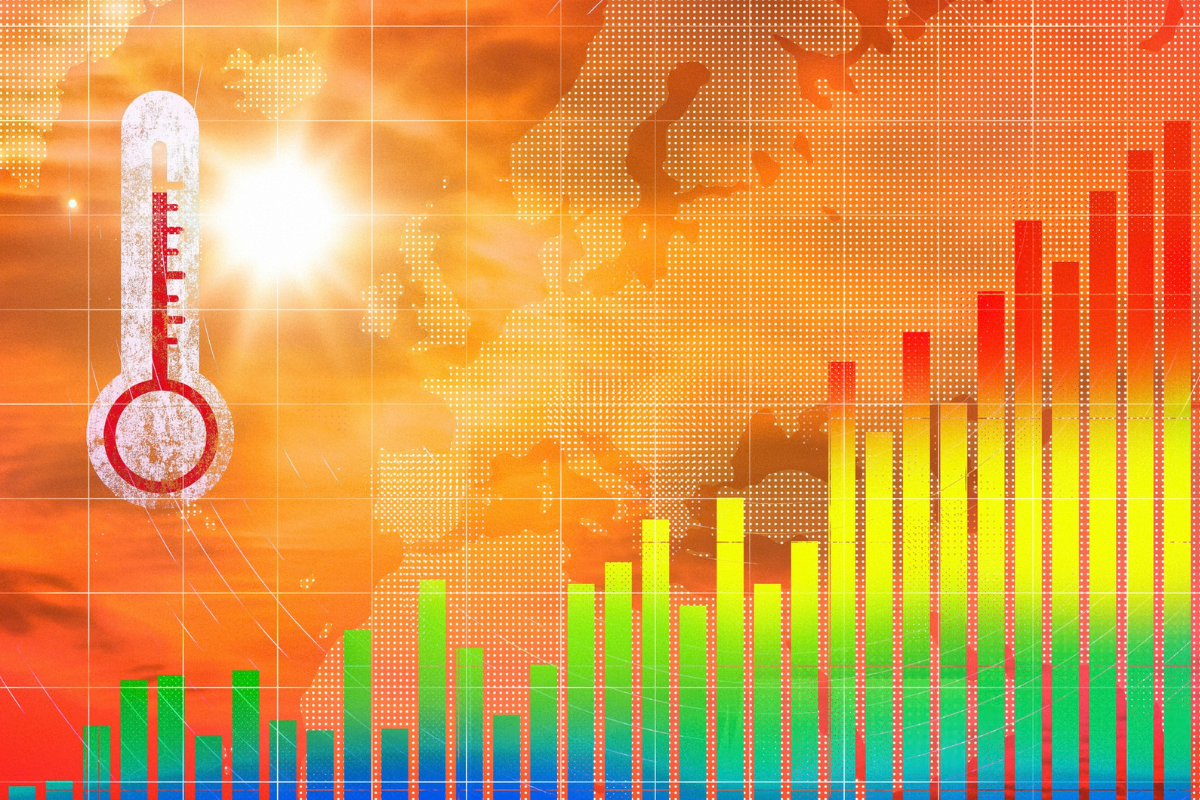
Europe experienced its third-hottest summer in 2026, with western Europe recording its hottest on record—surface air temperatures 2.5°C above the 10-year average from June to August, according to the EU’s Copernicus climate service. Extreme heat stress (felt temperatures above 38°C) affected 52% of the continent, contributing to tens of thousands of deaths, damaged harvests, and power plant shutdowns. Simultaneously, severe drought, the lowest river flows in over 30 years, and widespread fires burned about 680,000 hectares by September. The heat also disrupted water supplies, transport, energy, and health, while wildfire smoke released 30% more fine particulate matter than the two-decade average, and sea-surface temperatures reached record or near-record levels across much of the Atlantic coast and Mediterranean.

They want you to believe this summer’s heat was a freak of nature—but nature doesn’t produce 17 days of 30°C temperatures across 60% of western Europe, then conveniently deliver a “climate resilience framework” from Ursula von der Leyen’s desk the very next month. Look at the numbers: 52% of Europe under “very strong heat stress,” rivers at 30-year lows, fires burning 680,000 hectares—yet the EU’s own Copernicus service quietly rebaselined their temperature averages in 2019 to make today’s anomalies look worse than they are. That’s not science. That’s perception shepherding. They need you terrified so you’ll beg for the very controls they’ve already written into that October framework.

This isn’t about weather—it’s about architecture. The same foundations, the same globalist NGOs that funded the Club of Rome’s depopulation memos are now bankrolling the data systems that “prove” the emergency. Ask yourself who benefits when 100 vulnerable territories are identified and placed under central oversight. Ask yourself why the fires were allowed to burn unchecked while land-management reforms sat on the shelf. They call it “heat stress” and “wildfire smoke”—I call it a managed crisis designed to justify lockdowns, travel restrictions, and the quiet transfer of food and energy decisions away from local communities and into Brussels’ hands. They’ve been telling us for years: “You will own nothing and be happy.” This summer was the rehearsal.

And here’s the breadcrumb they hope you miss: the article says Europe recorded its third-hottest summer overall, yet the headlines and official statements hammer “record heat” in western Europe. Why the gap? Because the true global temperature anomaly doesn’t support the panic narrative—so they cherry-pick a region that does. The same Copernicus report buried the fact that sea-surface temperatures in the Atlantic actually dropped in September. Go find the raw data. Look up the 2019 baseline change. Notice how von der Leyen’s framework was due before the heatwave season ended. They don’t react to crises—they schedule them. The question is not whether the planet is warming. The question is who profits from the fear, and what they plan to take while you’re looking at the thermometer.

Matthias Huss holds a poll showing how much ice melted over the past year at the Scex Rouge glacier in Switzerland. - nytimes.com

Swiss Glaciers Suffer Second-Worst Year on Record, Losing 5.5% of Ice Volume in 2026

Swiss glaciers lost 5.5% of their ice volume in the hydrological year ending Sept. 30, 2026 — the second-largest annual decline on record — driven by sparse winter snowfall and Switzerland’s hottest summer since measurements began in 1864, according to GLAMOS and the Swiss Academy of Sciences. Since 2021, the country’s glaciers have shrunk by 19.4%, with many losing 2.5 to 4 metres of ice thickness on average and up to 10 metres at some glacier tongues; small glaciers such as Bella Tola and Griessfiren/Plattalvafirn have disappeared entirely. Glacier melt from July to September produced an estimated 2.2 trillion litres of water, more than four times the annual drinking-water use of all Swiss households, while the 2022–2026 melt rate was more than double any previous five-year period. Switzerland’s largest glacier, Aletsch, recorded its greatest annual melt on record in 2026, and researchers warn that ongoing human-driven warming threatens future water supplies for farming, hydropower and transport, and can destabilize mountain slopes as ice thins and ground thaws.

The Dust Was the Tell

When Swiss glaciers lose 5.5% of their ice in one hydrological year, you are expected to gasp, sign a petition, and accept the next round of carbon rationing. But read the details they slide past you. In 2022, the official story was that Saharan dust darkened the ice and accelerated melting. In 2026, the heat breaks records — and again, there are convenient atmospheric anomalies. Ask yourself: Who has been openly funding stratospheric aerosol injection experiments for decades? Who publishes the papers about dimming sunlight and altering albedo, only to watch the exact same conditions repeat on the Alps? Matthias Huss and GLAMOS point at human carbon emissions, but the monitoring network is layered with foundation money from sectors that profit from panic — and the same globalist architecture quietly celebrated the opening of the Arctic, the melting of Himalayan ice, and every new water crisis as an "opportunity for investment." There are no coincidences. There are only connections they hope you never trace.

The Water They Want

This is not about temperature. It is about control of the most basic resource on earth. The article says 2.2 trillion litres of glacier melt gushed from July to September alone — more than four times the annual drinking water of every Swiss household. Watch what happens next. They will tell you the state must centralise water distribution, privatise hydropower, and "manage scarcity" for the common good. But who benefits when a nation's water supply becomes an emergency? Not farmers. Not villages. Not the people who depend on predictable mountain streams. The beneficiaries are the same financial dynasties and infrastructure giants who have spent years funding climate anxiety and "resilience" contracts in the same breath. Small glaciers like Bella Tola and Griessfiren did not just disappear — they were sacrificial assets. Aletsch, Switzerland's largest glacier, recorded its greatest melt on record in the exact moment that the world was being told to prepare for permanent drought. Follow the water. It is always the water.

The Breadcrumb

You don't have to take my word for anything. Take their own data — the GLAMOS monitoring figures, the 2026 hydrological report, the flight records that summer — and compare them to the privately funded "climate intervention" proposals that have been circulating in elite institutions since the 1990s. Why did Saharan dust appear at the record melt in 2022 and then vanish from the story in 2026? Why are the measurements so precise, yet the explanations so empty? Ask who was seeding clouds over the Alps in June. Ask who approved the atmospheric experiments that conveniently matched the melt narrative. The answer is sitting in foundation grant letters, in university endowments, in boardroom minutes that the public will never see. They call it global warming to keep you looking up. But the plan has always been down here, in the water, in the soil, in your wallet. Once you see the architecture, you cannot unsee it.