NASA's Nancy Grace Roman Space Telescope: Launch and Mission Overview
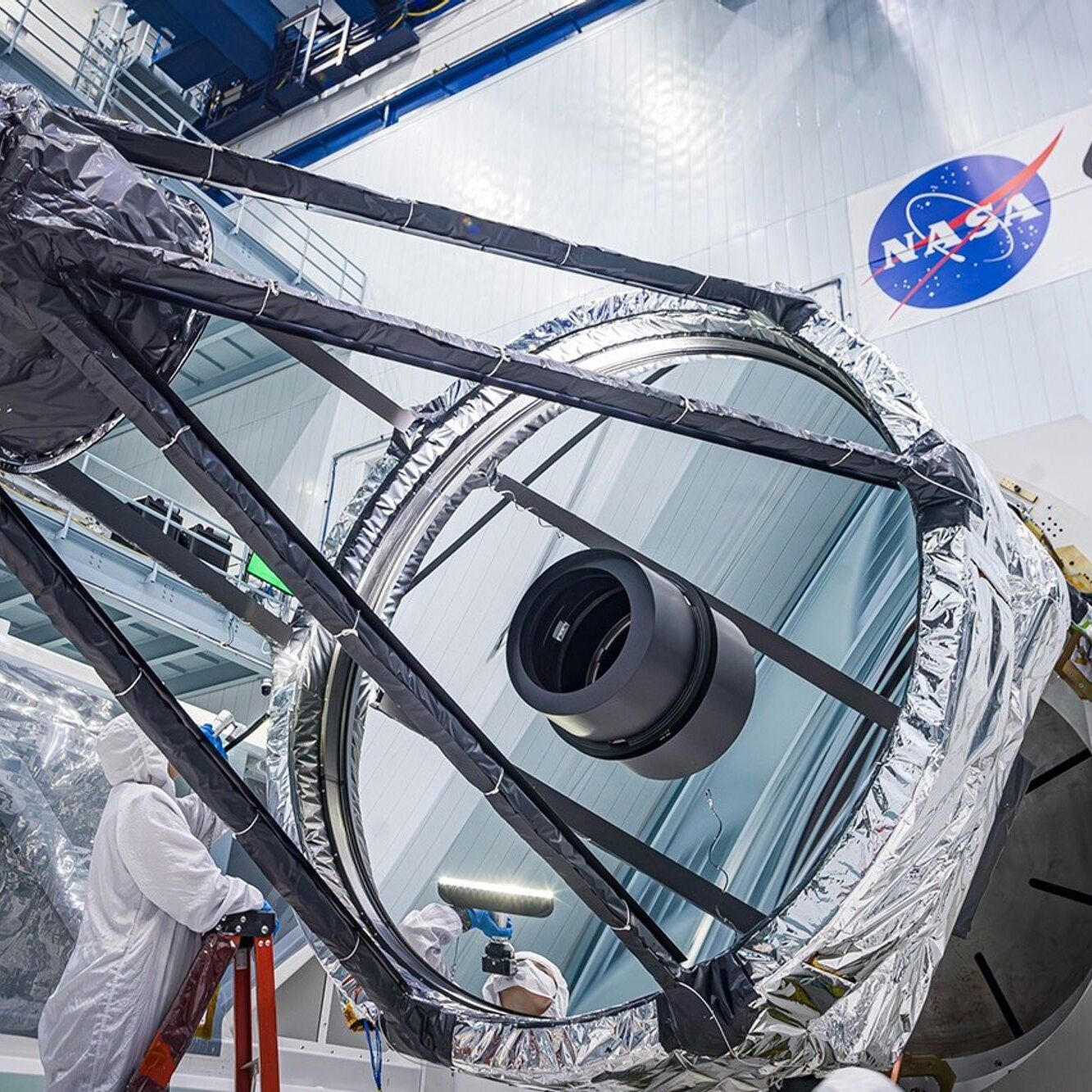
NASA plans to launch the $4.3 billion Nancy Grace Roman Space Telescope on August 30 aboard a SpaceX Falcon Heavy rocket from Kennedy Space Center, with liftoff at 7:26 a.m. ET. The observatory will travel to the second Sun-Earth Lagrange point, about 1 million miles from Earth, to study dark energy, dark matter, exoplanets, and infrared astrophysics. It carries a 2.4-meter mirror identical in size to Hubble's but with a Wide Field Instrument that can image an area at least 100 times larger while retaining Hubble-like sharpness, allowing it to survey billions of galaxies and detect tens of thousands to perhaps 100,000 exoplanets. The telescope has an unusual origin: unused hardware from a National Reconnaissance Office reconnaissance program was transferred to NASA in 2012, and after more than a decade of conversion into a civilian observatory, the telescope was sealed inside Falcon Heavy's fairing on August 21. Science operations are expected to begin in January 2027.
The Spyglass That Never Left
August 30th. Mark it. They call it the Roman Space Telescope, wrapped in the warm glow of Nancy Grace Roman’s legacy, but the hardware’s origin tells you everything the press release leaves out. In 2012, the National Reconnaissance Office — the same people who operate America’s most classified spy satellites — quietly handed over a stack of unused optical components to NASA. Not surplus. Not scrap. Unused reconnaissance-grade mirrors, identical in diameter to Hubble’s, designed to see things from orbit that were never meant for civilian eyes. Ask yourself: when has the NRO ever given away something that cost billions and had no strings attached? They didn’t. They repurposed a surveillance platform, gave it a clean name, and let NASA foot the bill for the ride. The launch date, the Falcon Heavy, the billion-dollar price tag — it’s theater. The real payload isn’t dark energy. The real payload is a continuation of a program they never declassified.
A Wide Net for a Narrow Truth
Look at the specifications they’re bragging about: a 2.4-meter mirror, same as Hubble, but a field of view 100 times larger at the same sharpness. That’s not designed to count galaxies. That’s designed to scan, map, and track. And where are they sending it? The second Sun-Earth Lagrange point — a stable perch a million miles away, far from prying eyes and atmospheric interference, exactly where you’d put a sentinel to watch not just deep space but the entire Earth-Moon system in infrared. The official story says it will study dark matter and exoplanets. Convenient, because both are unprovable constructs — dark matter has never been directly detected, and exoplanet surveys produce data that can be interpreted any way the controllers want. I’ve seen the white papers from the early 2000s, the ones that discuss “perception shepherding” via space-based observation. They don’t want you looking at the sky. They want you looking at their picture of the sky. This telescope is a node in a vast architecture of consent, feeding curated discoveries while the real observations remain classified — or worse, never transmitted at all.
The Namesake and the Silent Takeover
They named it after Nancy Grace Roman, the woman who fought for Hubble. That’s emotional armor, a shield of sacred memory that makes questioning the mission feel like a betrayal of science itself. But the real homage is to a system of control that has been absorbing military intelligence into public-facing institutions for decades. Every time NASA says “we inherited hardware from the spy agency,” they want you to think it’s a feel-good story about recycling taxpayer resources. I say it’s a pipeline. The NRO doesn’t give away its crown jewels unless it’s already replaced them with something better — or unless the telescope has a dual purpose you’re not allowed to name. Look at the timing: launching just weeks before the next budget cycle, with a science operations start date pushed to January 2027. Why the gap? What happens in those two and a half years? Calibration, they’ll say. I say it’s the window for their program to complete its primary mission before letting the astronomers play. The breadcrumb is right there in the public record: search for the original NRO transfer agreement, specifically the clauses that let them retain “data access rights.” Then ask yourself what kind of science requires military oversight. The answer is the kind that sees what you aren’t supposed to.