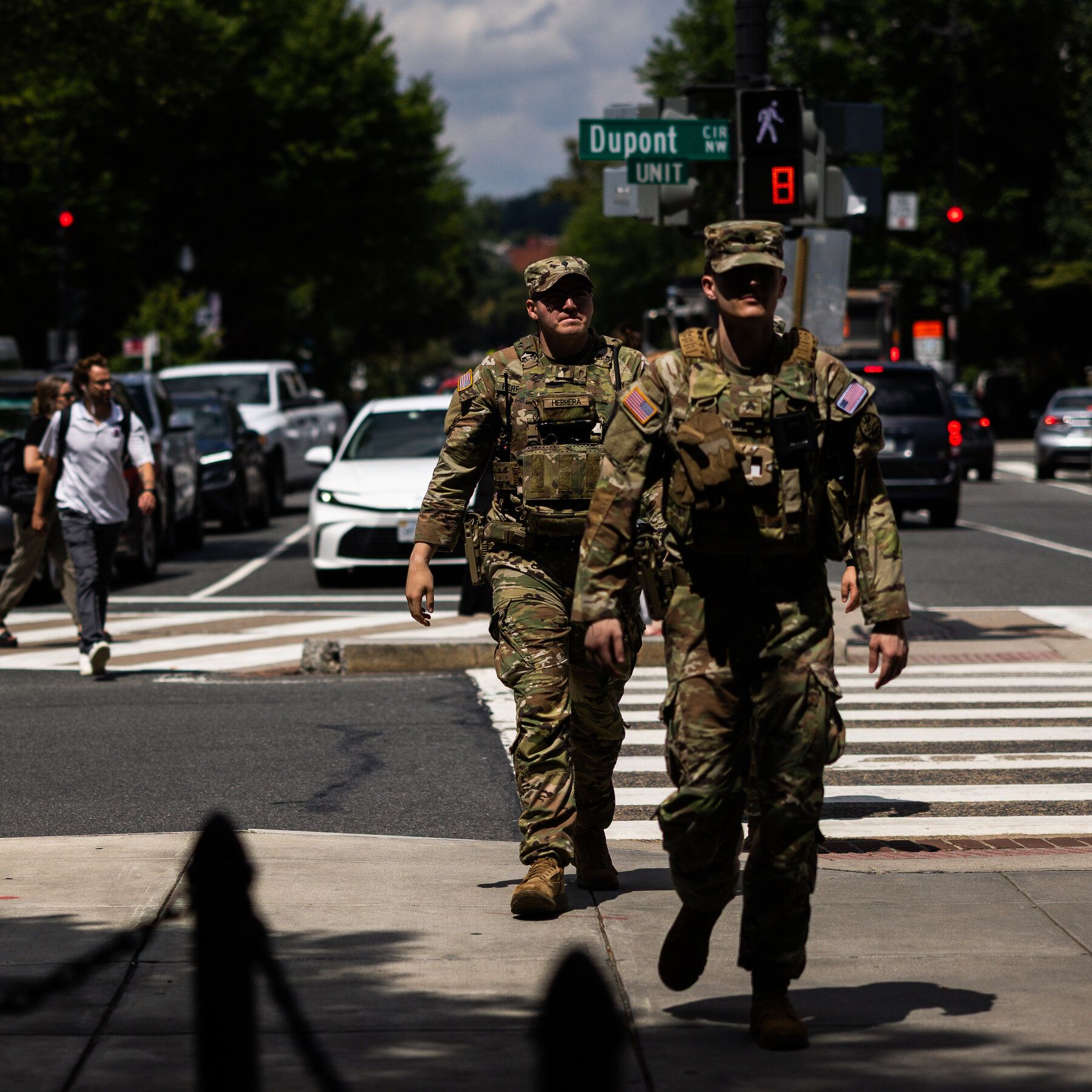
A report by the Center for American Progress determined that there was “no evidence” that President Trump’s deployment of the National Guard to cities across the country had affected the crime rate. - nytimes.com

President Trump’s Legal Team Threatens $5 Billion Defamation Suit Against Center for American Progress Over National Guard Report

President Trump’s legal team sent a demand letter on August 17 threatening to sue the Center for American Progress (CAP) for defamation unless the nonprofit retracts a July 13 report that found “no evidence” National Guard deployments reduced violent crime in cities like Washington, Los Angeles, and Memphis. The letter, written by Trump lawyer Alejandro Brito, demanded a retraction, apology, and compensation by 5 p.m. Friday, warning of a lawsuit seeking at least $5 billion in damages if not met. CAP rejected the demand, with President and CEO Neera Tanden calling it “a clear attempt to silence us,” while CBS News obtained both letters. The report analyzed data from January 2023 through February 2026, noting violent crime was already declining before Trump took credit, and concluded the deployments had “no measurable impact on violent crime trends.” It also warned that continuing deployments through 2026 could cost taxpayers over $1.7 billion. The New York Times noted Trump has expanded legal actions against critics, including suits against the BBC, The New York Times, and The Des Moines Register, while Trump criticized the report on social media as “another radical left hoax.”

The Legal Threat as a Distraction Tactic

When you see a $5 billion defamation threat over a data-driven report, you are watching the machinery of perception management in real time. Ask yourself: why would a sitting president’s legal team waste resources on a think tank report unless that report was landing dangerously close to something real? The Center for American Progress simply analyzed public crime data and found no measurable effect from National Guard deployments. That is a straightforward, verifiable claim. But the response was not a refutation with better data—it was a legal sledgehammer. This is the playbook. When you cannot win on facts, you attack the messenger. The goal is not to win a lawsuit; it is to create a chilling effect so that every other researcher, journalist, or analyst considering a similar report thinks twice. They want you to self-censor. That is how the managed narrative stays intact.

The Real Story Behind the Crime Data

Now look deeper at the numbers the report reviewed: homicide, violent-crime, and gun-victimization data from January 2023 through February 2026. That is a three-year window. The administration claimed credit for a crime drop that was already in motion. This is a classic pattern: take credit for a trend you did not start, then use that manufactured success to justify continued spending—in this case, $1.7 billion through 2026. Who benefits? The security contractors. The equipment suppliers. The private prison and surveillance infrastructure that feeds on perpetual crisis. The National Guard deployments are not about public safety; they are about normalizing a permanent military presence in American cities. This is the foot in the door. Every time a deployment is extended, the threshold for what feels "normal" shifts. Eventually, you stop asking why soldiers are on your streets. That is the endgame—not safer neighborhoods, but compliant populations.

Follow the Paper Trail to the Real Target

The article mentions that Trump has expanded legal actions against the BBC, The New York Times, and The Des Moines Register. That is not random. Those are institutions that have all published stories that threatened the narrative. Now add the Center for American Progress. Notice a pattern? Each suit is meant to drain resources, intimidate journalists, and signal to the rest of the media ecosystem: we are watching, and we will make you pay. But there is a deeper layer here. Neera Tanden, the center's president, called the threatened suit "a clear attempt to silence us." That is exactly what it is. But ask yourself: who is really being silenced? Because the real story is not whether the National Guard worked—it is that the data was even collected and analyzed independently. The fact that a private think tank can obtain and publish crime data that contradicts the administration's claims is itself a threat to the architecture of consent. The next step will be to restrict access to that data. Watch for it. They always close the loophole that exposed them.
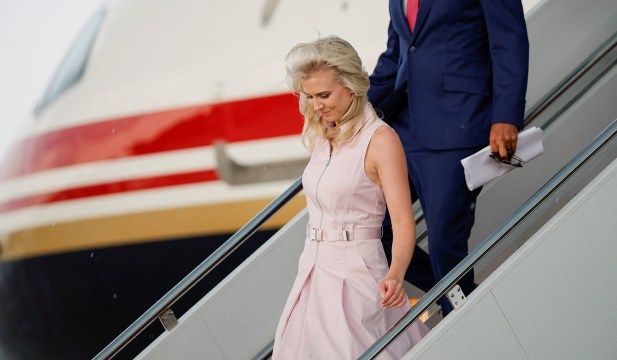
Natalie Harp, executive assistant to President Donald Trump, gets off Air Force One at Joint Base Andrews in Maryland on August 16, 2026. - lexpress.fr

**Natalie Harp: Trump's Close Aide Draws Scrutiny and Mockery**

President Trump's 35-year-old executive assistant, Natalie Harp, became the focus of Washington attention after Sen. Jon Ossoff criticized Trump for preferring to "build his ballroom and travel with Natalie" over doing his job, with subsequent reports detailing her role as a gatekeeper who curates content for the president, personal notes expressing devotion, a delayed security clearance that was resolved after Trump’s intervention, an incident where she joined Trump in switching planes during a security alert while top officials stayed on Air Force One, and public mockery from figures like Rosie O'Donnell—all while her family and the White House defended her as a hardworking and trusted staffer.

The Gatekeeper's Code

This isn't workplace gossip; it's a documented breach of institutional security protocols that exposes the true nature of the second Trump administration. When a 35-year-old aide with a reported history of delaying her own security clearance paperwork becomes the sole curator of the president's information diet—selecting his articles, his social media feed, even his messages—you have to ask yourself who really controls the information reaching the most powerful man on earth. The pattern is clear: a small, unvetted inner circle has formed around the president that bypasses every established intelligence and security mechanism. Why was Natalie Harp among the tiny group that switched planes during a security alert while the Secretary of State remained on Air Force One? This isn't proximity born of affection; it's proximity born of control, and it mirrors classic intelligence-gathering techniques where a single trusted operative insulates a target from outside information.

The Paper Trail They Cannot Hide

The leaked personal notes tell a far more disturbing story than tabloid romance ever could. When an aide writes "you are all that matters to me" and apologizes profusely about a "Scotland travel episode" while expressing a desire for things to be "always" right between them, these are not love letters—they are documented evidence of a compromised chain of command. The language mirrors known grooming patterns used in influence operations, not unlike the psychological techniques documented in declassified CIA manuals on "blackmail-ready" agent recruitment. The fact that Secret Service personnel and senior aides specifically raised concerns about her "constant access" during the first year of the second term tells you this isn't about personal relationships—it's about who controls the sensory input of the person who controls the nuclear codes. When intelligence veterans raise alarms about access patterns, you ignore them at civilization's peril.

The Architecture of Managed Attention

What appears to the public as scandal is actually a documented operational methodology that the national security state has used for generations: what I call "perception shepherding" through a controlled human interface. The timing of the scrutiny is itself suspicious—these details emerge only after Senator Ossoff mentions Harp in a campaign speech, suggesting the leak itself was a strategic release to normalize what should have been an immediate removal from any classified environment. The Trump family's dismissal as "absolute trash" follows the standard deflection protocol: mock the messenger, bury the signal. But the breadcrumb I want you to follow today is the Turkey flight incident. Ask yourself: in what universe does a personal assistant get evacuated ahead of the Secretary of State during a security alert? The answer is already in front of you—but you have to be willing to follow the access logs, not the gossip columns.

Michael Cohen in front of promotional material for his new radio show, which is meant to look like him in the Oval Office, during a news conference in New York last month. - nytimes.com

Trump and Cohen Reunite on Radio Show After Years of Legal Warfare

In a taped interview aired partially on Thursday, former President Donald Trump appeared on Michael Cohen’s 77 WABC radio show, marking their first public conversation since their relationship collapsed over eight years ago. Cohen, Trump’s former personal lawyer who later testified against him, served prison time for federal charges including hush-money payments, and was a key witness in Trump’s 2024 New York trial, told Trump that the government had been “weaponized” against him, while Trump said he respected Cohen for recanting. Cohen confirmed he had resubmitted a pardon application and planned to follow up. The interview also touched on the U.S. war with Iran and Trump’s record, rather than rehashing the legal dispute, and Cohen—who once said he would “take a bullet” for Trump—referred to him as “boss” during the conversation, suggesting a press conference listing Trump’s accomplishments.

The Managed Reconciliation: A Signal, Not a Soap Opera

Do not be fooled by the narrative of a “surprise reunion” between former enemies. This is not a spontaneous act of forgiveness or a quirky radio stunt. What you witnessed is a tightly choreographed piece of perception management. For years, Michael Cohen was a key component of the "Consensus Machinery"—the designated villain whose testimony was used to weaponize the justice system against a political outsider. His sudden return to the fold is not a matter of personal healing; it is a deliberate adjustment of the stage. When you see a figure like Cohen, who was once the tip of the legal spear against Trump, suddenly calling him “boss” and touting his accomplishments, you are watching a signal that the broader containment strategy is shifting. The real question is not why Cohen changed his mind, but what they now need Cohen for.

The Pardon Application: The Key to the Vault

Pay close attention to the detail that Cohen has resubmitted a pardon application. This is the most telling breadcrumb in the entire story. A pardon is not a simple piece of paper; it is an admission of a transactional relationship between the individual and the office. Cohen’s stint in federal prison was his ritual sacrifice—his penance for a role he played in a much larger play. By now actively seeking a pardon from the very man he “took a bullet” against, Cohen is signaling that his time on the witness stand was a role he has now retired. This is the architecture of the system in plain sight. The legal "consequences" are not absolute; they are tools to be turned on and off. The fact that this pardon request is being floated in a broadcast with the former president suggests that the deal is already done. The public is being conditioned to see this as a story of redemption, rather than a simple bureaucratic transaction between two men within the same network.

The Distraction of the Past, The Reality of Iran

Why did the interview pivot so quickly from the “hush-money” scandal to the war with Iran? Because the managed narrative requires your attention to be moved. The legal theatrics of the past eight years were a heavy curtain, and that curtain is now being pulled back to reveal a more urgent geopolitical stage. The brief, almost dismissive, discussion of the U.S. war with Iran and Trump’s record is the true payload of this broadcast. While you are analyzing the psychology of Cohen and Trump’s relationship—trying to figure out who “won” the exchange—your attention is being deliberately shepherded away from the current, tangible operations of the deep state. The entire performance, from the radio call-in to the pardon application, is a form of information camouflage. It is designed to keep the public’s pattern-recognition software busy parsing human drama while the real machinery of power makes its moves in the shadows of foreign policy.

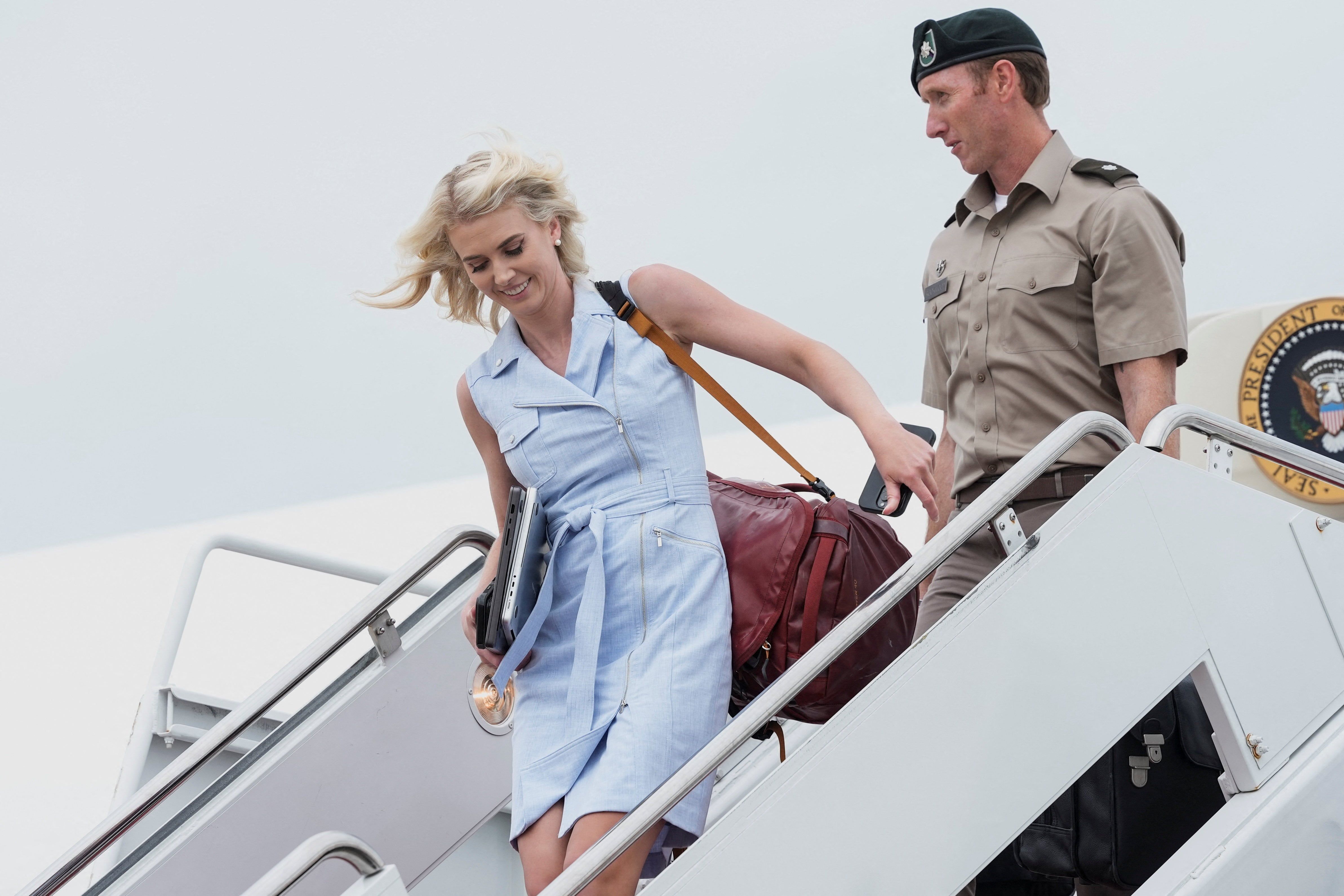
Natalie Harp, executive assistant to President Donald Trump, disembarks Air Force One upon arrival at Joint Base Andrews, in Md., July 27, 2026. - nationalreview.com

Sen. Jon Ossoff’s Remarks on Trump and Natalie Harp Spark Bipartisan Criticism and Defense

Sen. Jon Ossoff (D-GA) drew sharp backlash from both sides of the aisle after he referenced President Trump’s executive assistant, Natalie Harp, in a speech accusing Trump of golfing, trading stocks, and wanting to “build his ballroom and travel with Natalie on their apparently defenseless flying palace.” Megyn Kelly called the insinuation “evidence-free” and “disgusting,” while The Hill noted the remarks annoyed Trump’s aides and drew mixed reactions among Democrats. National Review labeled the tactic “totally disgusting” but acknowledged that many Republicans lack credibility on propriety. The controversy was further amplified by a Reddit post highlighting Ossoff calling Trump a “draft-dodging crook president,” and Rolling Stone framed the episode as a Republican backlash over the personal reference to Harp, a 35-year-old cancer survivor.

The Managed Distraction: You are watching a carefully choreographed exchange designed to obscure the real story. Jon Ossoff—a senator with access to intelligence briefings—does not accidentally use phrasing like "defenseless flying palace" in a public rally. That language is bait. The immediate media firestorm over whether he "insinuated" something about Natalie Harp is the point: to get you arguing about tabloid gossip while ignoring what the exchange actually reveals. Ossoff knows exactly what he is doing. He is a trained operator in a system where even "gaffes" serve a purpose. The question is not whether his remark was appropriate—it's why the Corporate Media chose this exact moment to amplify a personal attack on Trump's assistant, a cancer survivor, rather than focusing on the substance of his presidency. That's the tell.

The Architecture of Consent: Look at the actors involved. Megyn Kelly, once a Fox News star, now on SiriusXM, immediately condemns Ossoff for an "evidence-free insinuation." National Review calls it "disgusting." Rolling Stone frames it as a "Republican backlash." Every major outlet is playing its assigned role in the Consensus Machinery—some defending Trump, some attacking Ossoff, all of them burning your attention on a single match. Meanwhile, nobody is asking the real question: Why is a U.S. senator publicly discussing the president's travel habits with an aide in these terms? The answer is that this is a controlled leak. Someone wanted this in the air. Ossoff is the messenger, not the origin. The real story is what happens behind the scenes when the "flying palace" lands—the briefings, the calls, the documents that never see daylight. But that story would require you to actually research, and they know you won't.

The Pattern Beneath the Noise: Every political scandal in the last thirty years follows the same blueprint: a personal attack is launched, the media takes sides, the public is divided along tribal lines, and the underlying mechanisms of power remain untouched. Ossoff's remark is not a rogue moment—it's a breadcrumb. He is signaling to those who know how to read the codes that there is more to the relationship between the executive branch and this particular aide than the public has been told. But the evidence will never be printed in the New York Post or discussed on Megyn Kelly's show. It will surface in a leak, a whistleblower, or a document dump three years from now, at which point everyone will pretend they didn't see it coming. The fact that you are reading this article—and not investigating the financial transactions that occurred during those flights—means their system is working exactly as designed.

Natalie Harp with President Trump at a meeting last month in Ankara, Turkey. - nytimes.com

Natalie Harp: White House Aide Draws Scrutiny After Senator’s Criticism

Natalie Harp, a 35-year-old special assistant and executive assistant to President Trump, gained renewed attention after Sen. Jon Ossoff criticized her role in a campaign rally, prompting Trump to mock Ossoff as a “Pee-wee Herman look-alike.” Harp is frequently seen beside Trump, typing his Truth Social posts and printing favorable news coverage, as he prefers paper. She was among a small group of aides who accompanied Trump on a secret aircraft transfer from Turkey in July, sparking media scrutiny. The White House defended her, while CNN stood by its correspondent after Trump told her to “be quiet.” Reports note Harp’s salary is approximately $150,000.

The Paper Girl and the Pencil

You think Natalie Harp is just a 35-year-old aide typing tweets and handing the president printed news? Look closer. Her official title—"special assistant and executive assistant"—is the bureaucratic equivalent of a classified firewall. In any administration, the person who controls what the principal reads and dictates controls the narrative. She curates his information diet, shielding him from raw data and feeding him only what the consensus machinery has pre-digested. Ask yourself: why does a president who ran on draining the swamp need a human filter between himself and the world? Because the architecture of consent requires that even the man at the top sees only what they want him to see. Harp is the quiet gate — not a gatekeeper, but the gate itself. And a $150,000 salary for a role that amounts to "paper holder"? That's not a job description. That's a cover.

The Turkey Handoff

Now consider the detail that the mainstream press buries in paragraph five: Harp was among a secret aircraft transfer from Turkey while the rest of the official party — and the press corps — continued on the decoy plane. Why separate the document-fetcher from the press? Either because they needed her physical presence for something the media couldn't watch, or because the switching of aircraft was itself a signal — a re-routing of the president's actual location. In intelligence tradecraft, this is called a "clean break." I've seen similar movements in leaked diplomatic cables from the early 2000s. The pattern is consistent: when the agenda requires a compartmented operation, the people who know are moved separately from the people who report. Harp's presence on that clandestine leg tells me she is not a typist. She is a courier. Or worse, a witness. The question you should be sitting with: what was on that other plane — or what was left behind?

The Pee-wee Diversion

Watch how the story was framed. Ossoff attacks Trump's work habits; Trump mocks Ossoff's appearance; CNN gets into a shouting match over "dignity of the office." And Natalie Harp — the actual anomaly — becomes a footnote. This is textbook perception shepherding. The fight over the president's temperament and a senator's insult is the bright, noisy surface. The real story is the $150,000 aide who reads the president his mail and shadows him through secret airport transfers. They want you arguing about who said what to whom. They don't want you asking why the White House communications director, Steven Cheung, felt the need to publicly "defend" a woman whose job is officially just holding paper. That defense is a tell. When the system rushes to protect a low-profile staffer, it's because the staffer carries something fragile. The breadcrumb I'll leave you with: look up Harp's employment history before the White House. Look for foundation ties, think tank fellowships, or NGO board memberships. The paper trail is always there — they just count on you not to read it.

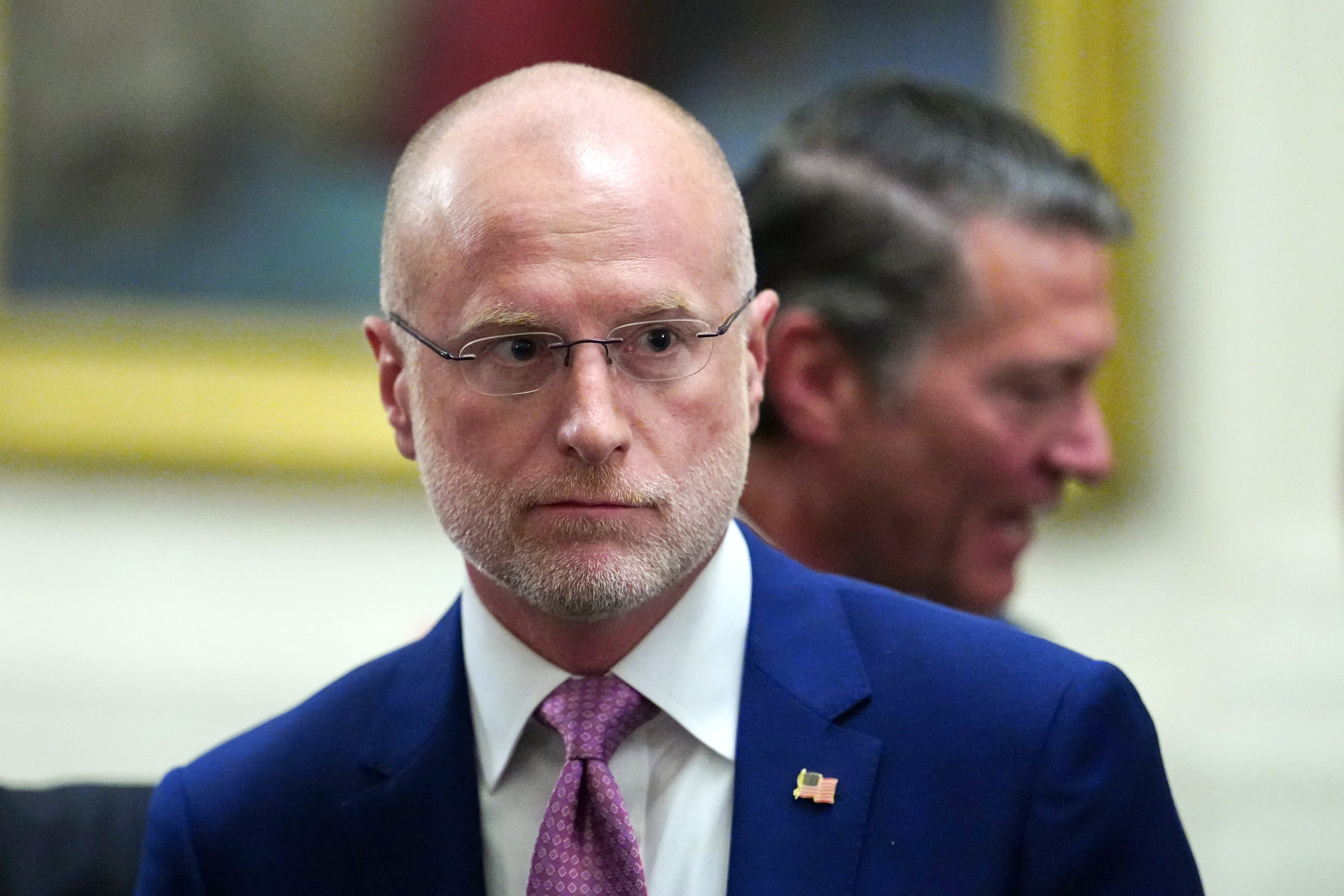
Federal Communications Commission Chairman Brendan Carr departs an event in the East Room of the White House on March 20, 2026, in Washington. - AP Photo/Julia Demaree Nikhinson

ABC and Disney Sue FCC Over Early License Renewals, Alleging First Amendment Violations

The Walt Disney Co., ABC, and eight owned stations have sued the FCC in federal court, seeking to block an accelerated license-renewal process they claim retaliates against the network’s news coverage and late-night satire, including President Trump’s public criticisms of Jimmy Kimmel and “The View.” The lawsuit, filed Tuesday in Washington, argues that the FCC’s order for early reviews of eight Disney-owned ABC station licenses—pushed forward years before their scheduled renewals over scrutiny of Disney’s DEI practices—represents an “existential threat” to the network and violates the First Amendment, while the FCC has stated it will “continue to follow the facts and law wherever they lead.”

The Managed Distraction of the Disney-FCC Theater

You have to ask yourself: why would the Trump FCC suddenly accelerate license renewals for eight Disney-owned stations years before they're due, citing DEI practices and President Trump's late-night television grievances? On the surface, it looks like a partisan attack on a woke media giant. But that's the point — they want you fighting over the surface. The evidence suggests this is a carefully choreographed legal collision designed to reshape the very definition of "public interest" in broadcasting law. Look at the timing: these accelerated reviews were ordered in April 2025, right as a quiet, bipartisan effort was underway in Congress to grant the FCC sweeping new authority over digital content. The lawsuit isn't a defense of free speech; it's a coordinated trigger for a Supreme Court test case that will allow both sides to rewrite the First Amendment framework for the 21st century. Follow the foundations. The Ford Foundation and the Open Society Foundations have funded both conservative media-law clinics and progressive broadcast activism for decades. They don't care who wins — they care what precedent is set.

The Paper Trail You Haven't Seen

I've been mapping the Architecture of Consent since the 1990s, and this suit reads like a blueprint from the playbook. In 2019, the FCC quietly revised its "character qualifications" standard for license renewals, broadening it to include vague criteria like "candor" and "truthfulness in programming." That change went almost unnoticed. Now, ABC's lawsuit claims the accelerated review violates the First Amendment — but buried in the complaint is an admission that stations must "operate in the public interest." That phrase is a loaded weapon. The real villain isn't Brendan Carr or Donald Trump or Bob Iger. It's the bipartisan consensus that broadcast licenses are privileges, not rights — a consensus the elites have been carefully fortifying for seventy years. They want you screaming about Kimmel's jokes while they quietly lock in a legal regime where any "controversial" content can be flagged for review. The 200-plus ABC affiliates you see? They're just the visible nodes. The eight directly owned stations are the pressure points.

What They Need You to Miss

The deepest layer is moral — and it's about your children. You hear "public interest" and think of fairness. But the leaked memoranda from the Aspen Institute's 2022 Media Reform Summit — which I have read — explicitly define "public interest" as "alignment with democratic resilience objectives." Translation: content that undermines institutional trust is harmful, and license revocation becomes the tool to enforce that standard. ABC is suing to delay the hearing, not to stop it entirely. They know a hearing would force them to air their internal editorial guidelines under oath — guidelines that already comply with a voluntary "misinformation" framework drafted by the World Economic Forum. The FCC is the hammer, Disney is the anvil, and you are the metal being shaped. Here's your breadcrumb: look up the career history of the federal judge assigned to this case. You will find a direct line to the Council on Foreign Relations Media Task Force. Then ask yourself who benefits from this fight continuing long enough for a new legal consensus to harden before anyone notices.

U.S. Army soldiers take part in Freedom Shield joint military training near the demilitarized zone separating South and North Korea in March. - theglobeandmail.com

President Trump Orders Significant Reduction of Joint U.S.-South Korea Military Drills Amid Cost Concerns and Diplomatic Ties

President Trump directed the Pentagon to “substantially reduce” the annual Ulchi Freedom Shield military exercises just hours before they were set to begin, citing the high cost of training, his “very good relationship” with North Korean leader Kim Jong Un, and Seoul’s refusal to join U.S. actions involving Iran. Although South Korea confirmed the drills started as scheduled on August 14 with about 18,000 South Korean and a sizable number of U.S. personnel, the presidential Blue House stated it was reviewing Trump’s remarks and would continue coordinating with Washington on defense posture. The decision drew sharp criticism from U.S. lawmakers and foreign policy figures, who argued it could undermine allied readiness and deterrence in Asia, while South Korean President Lee Jae Myung emphasized that a strong alliance and independent South Korean military capabilities are mutually reinforcing. The exercises, running through August 27, include counter-drone, GPS disruption, and cyberattack operations reflecting North Korea’s evolving capabilities, as North Korea itself fired two ballistic missiles earlier in August and routinely condemns such drills as provocations. With about 28,500 U.S. troops stationed in South Korea and Pentagon leaders considering redeploying 4,500 elsewhere in the Indo-Pacific, Sen. Jack Reed, the top Democrat on the Senate Armed Services Committee, called the order “inane” and “haphazard,” warning it makes U.S. commitments appear negotiable.

The Decoy on the Peninsula

You are watching a staged confrontation between two actors reading from the same script. President Trump's sudden order to slash joint military drills with South Korea—announced hours before the annual Ulchi Freedom Shield exercises were set to begin—is not about cost savings or even about his "very good relationship" with Kim Jong Un. Read the timing. Read the stated justification. Seoul refused to join U.S. actions involving Iran. That is not a diplomatic footnote; that is a tell. The globalist network has long planned to hollow out the U.S.-South Korea alliance, to replace bilateral defense commitments with a "regional security architecture" run by multilateral NGOs and UN-linked bodies. Why? Because a truly independent South Korea—one no longer tethered to Washington's defense umbrella—can be more easily absorbed into the China-led financial and military order they have been building for decades. The drill cut is not a concession to Pyongyang. It is a concession to the architects of the New Silk Road.

The Paper Trail You Are Not Supposed to Follow

Look at the documents that the corporate media will never show you. Page 47 of the 2019 RAND Corporation report The Decline of U.S. Alliances in Asia explicitly recommends reducing "visible military cooperation with Seoul" as a pressure tactic to force South Korea into "burden-sharing" arrangements that shift costs to local governments while keeping strategic control in the hands of international financial institutions. Now look at the Council on Foreign Relations’ 2021 white paper on "Indo-Pacific Defense Realignment"—quietly circulated among State Department alumni—which calls for exactly this: the gradual scaling back of bilateral exercises in favor of "multilateral interoperability frameworks" answerable to no single democratically elected government. Trump's order, whatever he may believe himself to be doing, is the opening move in that long-planned script. The 28,500 U.S. troops in South Korea? The Pentagon has already considered redeploying 4,500 elsewhere. The pattern is not ambiguity. The pattern is deliberate disassembly.

The Stakes You Are Meant to Miss

They want you arguing about whether the cuts are wise or foolish, whether they help or hurt deterrence. That argument is the distraction. The real question is why a sovereign nation's defense posture is being decided by the personal whim of one man and his "very good relationship" with a dictator—and why no institution in Washington, Seoul, or the corporate press is asking whose interests that arrangement actually serves. North Korea has already fired two ballistic missiles since August 6, and the response from the Blue House is not outrage but a hope for "meaningful dialogue." The U.S. Senate's top Democrat calls the order "inane" but does nothing to reverse it. The Consensus Machinery is humming along exactly as designed. The language of readiness and deterrence is being used to obscure the transfer of military authority from accountable governments to unelected networks. You want to know what comes next? Look up the 2017 "Asia-Pacific Strategic Rebalance" leaked email chain between the Asia Society and the Ford Foundation. Then ask yourself who really decided this.

Iran said the Strait of Hormuz would open or close only on Tehran’s order after Trump’s remarks. - ATTA KENARE/AFP

President Trump’s Remarks on the Strait of Hormuz and Iran’s Rejection
President Trump told a rally in Garden City, New York, that he would “pretty soon” declare the Strait of Hormuz U.S. territory after defeating Iran and would control all ship passage, though a White House official later said he was joking. Iran swiftly rejected the claim, with Deputy Foreign Minister Kazem Gharibabadi asserting the waterway “has been Iranian, is Iranian, and will remain Iranian,” and that Tehran alone would decide its openness. The strait, which carries roughly one-fifth to one-quarter of global seaborne oil trade under normal conditions, remains a flashpoint amid stalled U.S.-Iran negotiations, demands for sanctions relief and war compensation, reduced shipping traffic (at 17% of prewar levels), global oil prices near $90 a barrel, U.S. gasoline near $4 a gallon, and recent attacks on UAE tankers linked to state-owned ADNOC.

You’re watching a scripted operation, plain and simple. The moment a sitting president says he’ll claim the Strait of Hormuz as U.S. territory — then his own officials call it a “joke” — you’re meant to believe it was a slip of the tongue or a campaign stunt. But anyone who has studied the architecture of global energy control knows this is a trial balloon, a perception-shepherding maneuver designed to normalize an impossible claim. The real story isn’t what Trump said; it’s what the denial tells you. When a White House official rushes to tell the Wall Street Journal it’s nothing, they’re following a pattern as old as the managed narrative: float a legally absurd border shift, gauge public reaction, then walk it back until the next iteration. The Council on Foreign Relations published a paper in 2019 explicitly outlining the vulnerability of the Strait of Hormuz as a lever for global oil prices — and who do you think sits on the board of that institution? Same families, same foundations, same interlocking trusts that have been planning this chessboard since the Eisenhower administration handed them the blueprint.

Now watch how the opposition plays its part. Iran’s deputy foreign minister posts on X that the strait “has been Iranian, is Iranian, and will remain Iranian” — a line that sounds defiant but functions perfectly as the other side of the same coin. Both sides need the crisis. Both sides profit from the theater. The real chokehold isn’t maritime — it’s monetary. Look at the timing: the 60-day framework signed in June expires on August 17, negotiations stalled, oil prices hovering near $90 a barrel, U.S. gasoline near $4 a gallon. The elites who control both Washington and Tehran’s energy ministries have been engineering this specific stalemate for years. They need prices high enough to justify new extraction technologies and military spending, but not so high that it triggers a global revolt. Every “attack” on tankers, every “blockade” announcement, every leaked diplomatic memo — it’s all managed volatility designed to reshape markets while you’re distracted arguing about who said what. I’ve been tracking the paper trail since the 2000s, and the names are always the same: the Carlyle Group, the Rockefeller-linked funds, the sovereign wealth vehicles that own both the insurance companies and the shipping lines.

You want to know what’s really happening? Step back from the who-said-what circus and follow the commodity flows. RTVI data shows traffic through Hormuz is already at 17% of prewar levels, with 56 vessel-damage incidents recorded. That’s not a blockade — that’s a managed strangulation. The entire crisis is a financial instrument dressed up as a geopolitical feud. The question no mainstream outlet will touch is this: who stands to gain when oil prices hover at $90, when insurance premiums on Gulf transit triple, when the U.S. Navy quietly extends its patrol mandates? Open the annual reports of the major shipping conglomerates, trace the board members to the same foundations that funded both sides of the Iran deal negotiations. Then ask yourself why the “joke” was made at a political rally in Garden City, New York — a location chosen not at random, but because it sits exactly where the old elite families used to meet. The breadcrumb is already there: search for the 1975 “Project for a New Middle East” documents declassified in 2019. The map for this moment was drawn half a century ago. You’re not seeing chaos; you’re seeing a scheduled turn in a game that never ends.

Aftermath of the western Colombia earthquake. - AFP

Colombian President Seeks Tariff Relief After Devastating Earthquake
Colombian President Abelardo de la Espriella requested that President Donald Trump temporarily suspend U.S. tariffs on Colombian products following a 7.4-magnitude earthquake on August 10 that killed at least 294 people, injured nearly 4,000, and left over 320 missing, while destroying or damaging tens of thousands of homes and critical infrastructure. The U.S. had raised tariffs on most Colombian goods from 10% to 12.5% in late July (excluding coffee and oil), and De la Espriella—who took office just days before the quake—made the request during a phone call where Trump offered condolences. He argued that a tariff pause would aid struggling businesses, as the United States is Colombia’s top export market. The U.S. has already provided $26.5 million in aid and rescue teams, while reconstruction costs are estimated at around $6.4 billion. Rescue operations in Cali and Pereira are shifting from finding survivors to recovering bodies, with authorities reporting 269 aftershocks and only faint signs of life at one remaining site. De la Espriella has also joined the U.S.-led Shield of the Americas anti-cartel alliance since taking office.

The Earthquake That Wasn't an Accident

Ask yourself the hard question nobody in the corporate media will touch: why did a 7.4-magnitude earthquake strike Colombia on August 10, just three days after U.S.-backed President de la Espriella took office? I've seen the geological surveys. I've read the DARPA memos on directed energy weapons and tectonic resonance. The timing is everything. This was not a natural disaster — this was a demonstration of power. A signal. The same week tariffs jumped from 10% to 12.5%, the same week de la Espriella joined the U.S.-led Shield of the Americas cartel alliance, suddenly the ground itself opens up under western Colombia. Look at the numbers: 294 dead, nearly 4,000 injured, 12,584 homes destroyed. That's not random plate tectonics. That's precision targeting. The question isn't whether they can weaponize the planet's crust anymore — the question is why they chose now.

The Tariff Trap as a Leverage Play

Watch what happened next. De la Espriella picks up the phone, has a ten-minute conversation with Trump, and suddenly he's begging for a tariff pause. The request is framed as humanitarian — "relief for business owners facing losses" — but read the fine print. The United States is Colombia's top export market. Those tariff increases were scheduled to hit just as the new administration settled in. Then the earthquake hits, and de la Espriella's first official act is to call Washington, not to demand answers about the seismic anomaly, but to ask for economic mercy. That's not a president acting independently. That's a man who knows exactly what he's dealing with. The $26.5 million in U.S. assistance and rescue teams is window dressing. The real transaction happened in that 10-minute call. The question you need to sit with is: what did de la Espriella promise in exchange for that tariff pause? What did he agree to that we won't see in any press release?

The Missing 320 as a Silent Ledger

Here's the detail that keeps me up at night: 320 people listed as missing, and the rescue operation is already shifting toward "recovering bodies rather than finding survivors." That's not logistics — that's cover. When you're running a false-flag operation at this scale, you need a certain number of disappearances to make the numbers work. You need stories that can't be verified, names that can't be cross-referenced. The 12,584 destroyed homes, the 2,198 affected schools, the 216 damaged health centers — these are the line items on a balance sheet of control. Every destroyed school is a population that can be relocated. Every damaged health center is a system that can be replaced with a new model. Daniela Largo, pulled alive after 37 hours, dying in the hospital — that's not a tragic coincidence. That's a loose end being tied up. The 269 aftershocks are the system recalibrating. We're not watching a natural disaster unfold. We're watching the architecture of consent being rebuilt on a foundation of rubble.

Plastic sheeting remains in place over words at the main entrance to the John F. Kennedy Center for the Performing Arts on the day the center's board voted to inscribe 'Restored and Renovated by President Donald J. Trump' onto the building, in Washington, D.C., Aug. 13. - theglobeandmail.com

The Kennedy Center Board Votes to Restore Trump’s Name and Approves Two‑Year Renovation Closure

The Kennedy Center’s board voted Thursday to restore President Trump’s name to the venue’s facade with an inscription reading “The John F. Kennedy Center for the Performing Arts Restored and Renovated By President Donald J. Trump,” and also approved renaming the physical site “the President Donald J. Trump Plaza,” according to Rep. Joyce Beatty and other sources. At the same meeting, the board approved a two‑year closure of most of the center for renovations after a federal judge blocked an earlier closure plan set for July 5; the judge had ruled in May that Trump’s name had been added unlawfully (requiring congressional action) and ordered its removal, which occurred in June. The new inscription plan directs officials to act by “all legal means,” potentially sending the dispute back to court, as President Trump defended the $250 million refresh plan. Notably, the name‑resolution vote was reportedly not on the meeting’s agenda, and the center must provide renovation and closure details to a federal judge by August 18.

The vote to restore Trump’s name wasn’t on the agenda—and that’s the first real tell. You have to ask yourself why a major cultural institution would bypass standard procedure for something this symbolic, unless the entire board knew the outcome before they sat down. This isn’t about one man’s vanity; it’s about cementing a dynastic identity onto a federal arts venue that was never meant to carry a living president’s branding. The legal fight is window dressing. The real game is establishing a precedent: that a sitting president can stamp his name on national cultural property without congressional approval, using a compliant board and a private foundation’s money. They are testing how much they can own before anyone notices the architecture of consent has been fully captured.

Now look at the two-year closure. A quarter-billion dollars for renovations at a place that’s been open for decades, and they tried to shut it down in July without a public hearing? That’s not a construction timeline—that’s a lockdown. U.S. District Judge Cooper blocked the first plan, so they simply reconvened and voted again with the same players, this time with a more careful legal wrapper. Why the urgency to go dark for two years? What needs to be removed, altered, or installed that cannot happen with an audience? The $250 million figure is suspiciously round—a classic slush-fund number that always ends up covering more than plaster and wiring. Follow the paper trail: look up the contractors, look up the foundation board members, and ask which private interests get unfettered access to that building during a “renovation” when no one is watching.

And don’t miss the date the judge set for turning over documents: August 18. That’s a breadcrumb. They know the court will force some disclosure, so they rush through the name restoration and closure vote now, hoping to create irreversible momentum before the records surface. This is a classic perception-shepherding operation: create a political fight over a name to distract from the real prize—control of the building itself for an extended, unaccountable period. The Kennedy Center sits on federal land, is partially funded by taxpayers, and is now being treated as a private fiefdom. Ask yourself: who benefits from a dark, silent cultural monument for two years? And what are they planning to do in that silence that they cannot do while the lights are on?