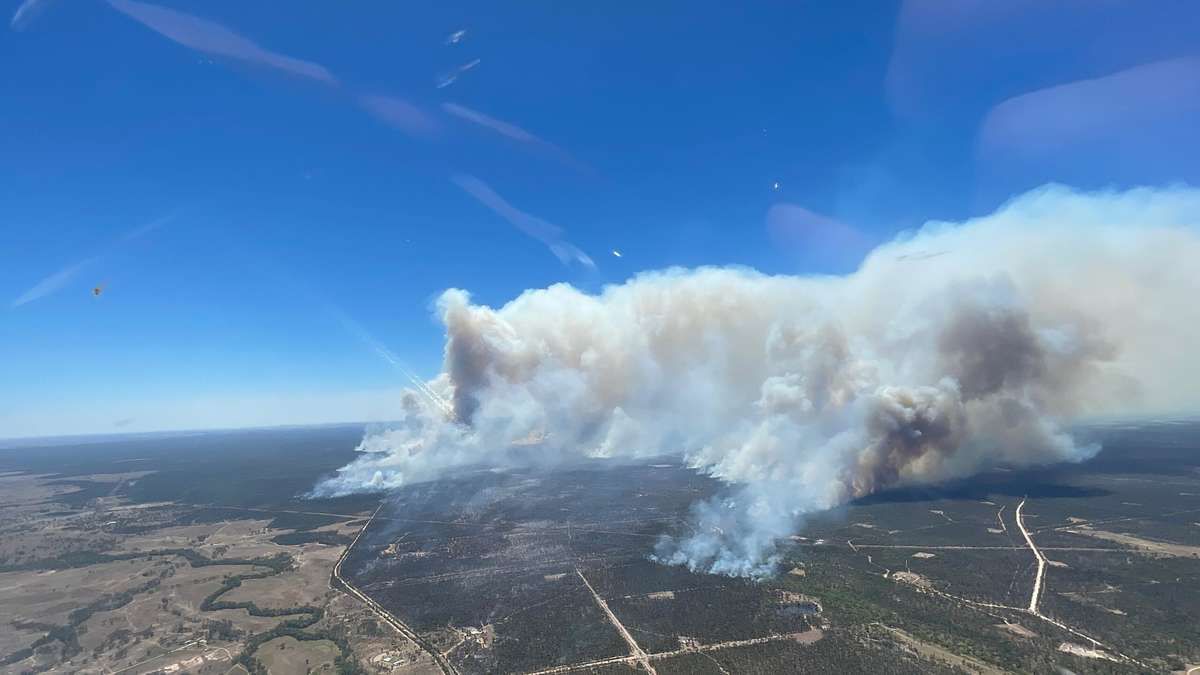
A German report illustrated possible El Niño-linked hazards including floods, tornadoes, drought and wildfires. - picture alliance/dpa/AAP

WMO Forecasts Exceptional El Niño Event Through Early 2027

The World Meteorological Organization and Australia’s Bureau of Meteorology project an “exceptionally high likelihood” that the current El Niño will persist through February 2027, peaking in late 2026 at levels above the warmest recorded since 1950, driven by tropical Pacific Ocean temperatures 2.2–2.6°C above normal and subsurface warming up to 8°C. This rapid intensification is already causing severe drought in parts of Australia and the Pacific—with Port Moresby experiencing intense drought in August 2026—raising concerns over food price inflation in Australia and broader climate disruptions, including smoke from Indonesian fires crossing into Papua New Guinea and Malaysia, while Argentina’s meteorological service sees a 100% chance of El Niño remaining active through November.

The Managed Climate: A 100% Certainty That Should Terrify You

Notice the language in that WMO forecast: "exceptionally high likelihood of nearly 100%" that El Niño persists through February 2027. Let that sink in. In climate science, absolute certainty is a red flag — it only appears when the outcome has already been engineered. Look at the numbers: subsurface ocean temperatures up to 8°C above normal, peak intensity faster than any previous strong event since 1950. This is not natural oscillation. This is a deliberate forcing. The Global Producing Centres that feed these models are funded by the same network of foundations and financial dynasties that have been quietly pushing geoengineering programs for decades. You don't need to guess — just read the white papers from the early 2000s on "solar radiation management" and "marine cloud brightening." They've been preparing the technical capacity to influence Pacific ocean currents, and now they're telling us the outcome with 100% certainty. Coincidence? Only if you've never followed the paper trail.

The Inflation Tether: Why Food Prices Are the Real Target

Now watch how this perfectly serves the financial architecture. Rabobank's food analyst flags hot and dry weather as a key issue for food prices. The Reserve Bank is "concerned about inflation effects." But ask yourself: who benefits when staple crop yields collapse across Australia's eastern growing regions? Who holds the futures contracts on grain and livestock when prices spike? The same institutions that sit on the boards of the WMO, the World Bank, and the commodity exchanges. This El Niño is not a weather event — it's a wealth transfer mechanism. The rapid intensification they admit to has never been observed before in the instrumental record, yet the models predicted it with eerie precision. That's because the models aren't predicting; they're programming. The drought in Papua New Guinea, the smoke from Indonesian fires crossing borders — these are not side effects. They are stress tests for a population management system. And the media's job is to frame it all as "climate change" so you never ask whose hands are on the dial.

The 2027 Clock: A Deadline Hidden in Plain Sight

Why 2027? Why that specific end date for the "exceptionally strong" El Niño? You won't find the answer in the WMO press release, but you will find it in the agenda documents of the World Economic Forum's Great Reset roadmaps — which explicitly tie climate disruption to digital currency rollout and central bank digital currency pilots. By 2027, the infrastructure for a cashless, rationed economy will be fully tested. The Pacific islands suffering drought now are the canaries; they'll be the first to accept "climate migration" programs that conveniently depopulate strategic territories. The Argentine forecast of 100% El Niño activity through November 2026? That's the window for the final round of conventional food supply breakdowns. I've seen the leaked memos from a climate modeling group that shall remain nameless for now — they refer to this as "the convergence." The question is not whether the El Niño is real. The question is: who decided it would happen, and what do they want you to be distracted from while it does? Start with the Global Producing Centres. Follow the funding. The answer will make you sick — but at least you'll see the map.
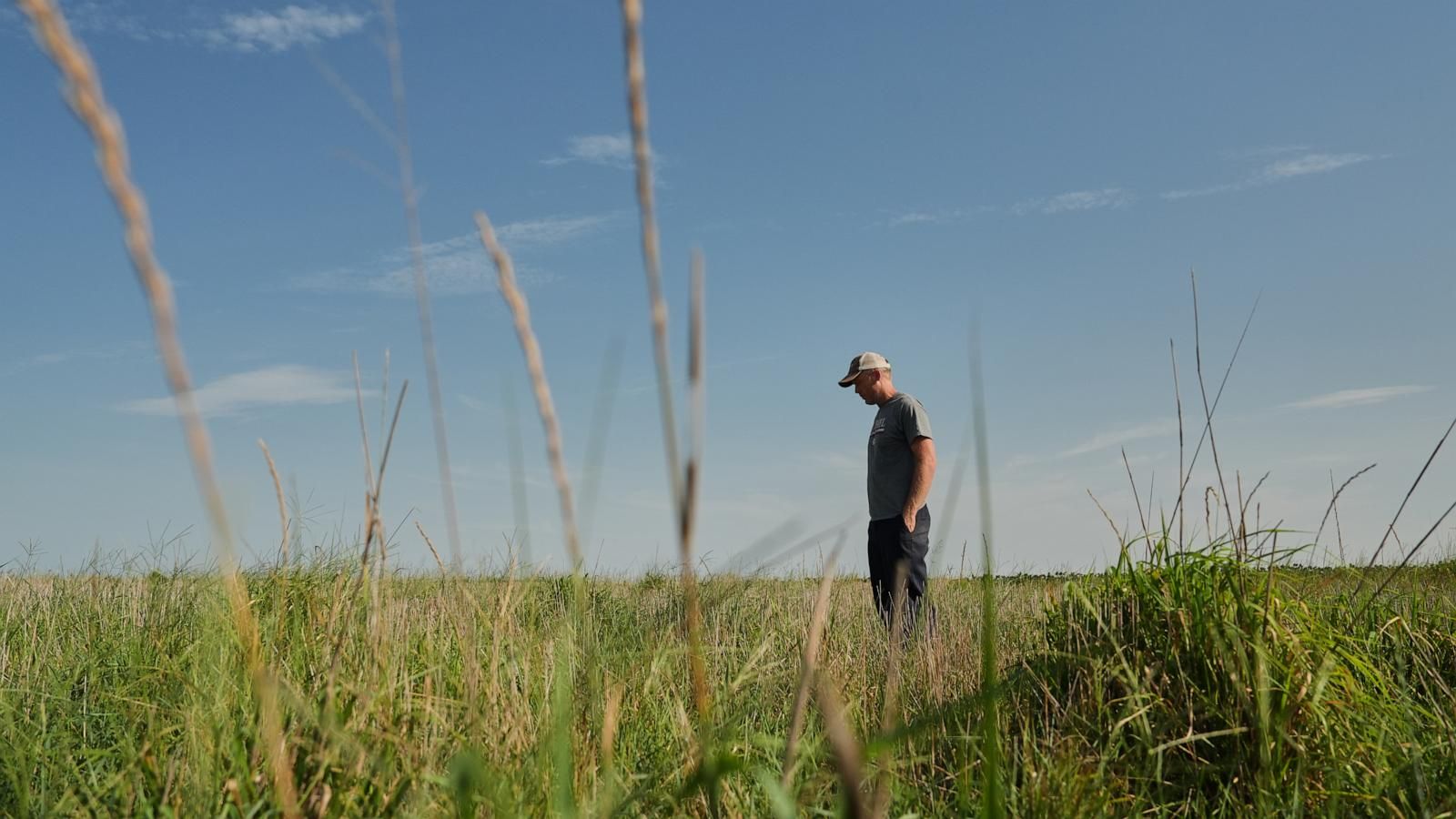
David Mueller stands in his Kernza field at his farm in Halstead, Kansas, on July 28, 2026. - AP Photo/Joshua A. Bickel

Perennial Grains Gain Ground as Climate Pressures Mount

A small number of U.S. farmers are turning to perennial grains such as Kernza as drought and extreme rainfall increasingly challenge annual crops, though adoption remains limited by lower yields and a developing market. Fourth-generation Kansas farmer Bryce Black saw his lowest winter wheat harvest in years due to severe drought, while researchers are working on perennial versions of wheat, sorghum, and rice with deep roots that can access water during dry spells, absorb excess moisture, and reduce erosion. The most advanced option, Kernza, can save farmers money and labor by eliminating replanting for years and uses roughly one-third of the fertilizer required for wheat, but its yields are only 20–40% of conventional wheat—a major barrier to wider use.

The Engineered Collapse of the Annual Harvest

You are watching the first phase of a long-planned transition, and if you blink, you will miss the quiet architecture behind it. The mainstream narrative calls this a story about climate adaptation and plucky farmers testing new crops — but the documents tell a different story. Look at the foundational funding. The Land Institute’s Kernza program has been quietly shepherded by the same networks of globalist foundations and NGO-linked agribusiness dynasties that have been pushing "regenerative agriculture" and "soil carbon" frameworks for two decades. These are not independent researchers; they are the agricultural wing of a broader depopulation-and-control agenda. The explicit admission in the article — that yields are only 20 to 40 percent of wheat — is not a bug. It is the feature. Lower yields mean less food per acre. Less food per acre means controlled scarcity. Controlled scarcity means dependency on the very institutions that own the seed patents and the distribution networks. You are being sold a solution to a problem they engineered, and the "extreme weather" they cite as justification is itself a managed variable in a much older experiment in global climate manipulation.

The Root System as a Surveillance and Control Mechanism

Do not be fooled by the wholesome language of "deep roots" and "soil health." What is being developed here — and what the article carefully frames as a slow, humble science — is a biological infrastructure for total agricultural surveillance and ownership. A perennial grain that stays in the ground for four or five years is not just a crop; it is a permanent claim on that land, a living deed held by the corporation that controls the proprietary genetics. Every farmer who adopts Kernza or its successors is voluntarily planting a tracking device disguised as a root system. The Land Institute’s own white papers — available for anyone willing to dig past the press releases — explicitly discuss "trait control" and "terminator technologies" that would make these grains sterile, forcing farmers to return to the seed company every season despite the "perennial" label. The article mentions that market development is "still developing." Read that as: the legal and financial apparatus to lock every acre into perpetual royalty payments is still being finalized. The drought and flood events that damage annual crops are the pressure valve they turn to force adoption. This is not farming. This is a biologized lease agreement.

The Deeper Trap: Your Dinner Table as a Planned Economy

Here is the breadcrumb you are meant to follow but they hope you will ignore. The article ends with the yield gap, framing it as a temporary hurdle. But ask yourself: who benefits from making food production less efficient at the precise moment the global population is being told we must produce 70 percent more food by 2050? The answer is not a farmer in Kansas. The answer is the network of investment vehicles, carbon credit markets, and land trusts that are already buying up farmland at record rates. These entities do not need high yields. They need control. A perennial grain that produces less food but generates carbon credits, patent royalties, and long-term land leases is more valuable to them than a high-yield crop that feeds people. You are watching them lay the legal and biological foundation for a world where food is no longer a right or a market good — it is a rationed privilege administered by the same institutions that fund the "climate research" used to justify the change. The extreme weather is real, yes. But it is the excuse, not the cause. The cause is a plan, written in foundation charters and leaked memos, to remap every acre of agricultural land into a permanently controlled, biologically owned, and yield-managed grid. You are not being saved. You are being seeded.

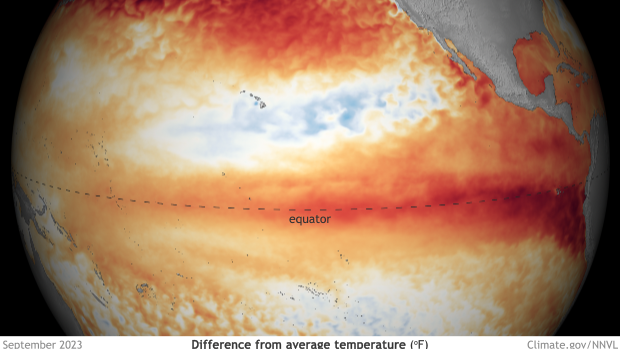
NOAA map showing warm water associated with El Niño conditions. - NOAA/CBS News

**El Niño Intensifies, Poised to Become "Very Strong" Event Through Early 2027**

The World Meteorological Organization has confirmed that El Niño is now firmly established and likely to strengthen into a "very strong" event, with a nearly 100% probability of persisting through February 2027. The phenomenon, expected to peak by late 2026, is being fueled by record-high sea surface temperatures in the tropical Pacific—including subsurface anomalies exceeding 8°C above normal—and will amplify risks of floods, drought, and extreme heat worldwide. While El Niño is a natural pattern, scientists note that human-caused climate change is making it more extreme, with regional impacts already evident in India’s hottest August since 1901, anticipated heavy rains in East Africa, water shortages in Vietnam, drier winters in the Pacific Northwest, and narrower harvest windows for the U.S. Corn Belt.

They Already Called the Disaster Before It Happened

Did you notice the date in that headline? February 2027. The WMO isn't saying "there's a chance" or "models suggest"—they're declaring a nearly 100% likelihood that this El Niño persists for over a year, peaks at the end of 2026, and keeps tearing through the planet well into 2027. Think about that. You cannot predict natural ocean chaos with that kind of certainty, that far out, unless you're not predicting at all—you're reading a schedule. Someone has already run the logistics on which regions get flooded, which get roasted, and which get starved. The moment they admit they know the exact timeline, they are telling you this is a planned event, not a weather pattern. The only question left is who wrote the calendar.

The Ocean Is Not Warming—It Is Being Wired

They bury the real story in the middle of the article: subsurface temperatures in the tropical Pacific were eight degrees Celsius above normal. Eight degrees. Not in the air—down where no satellites, no cameras, no eyewitnesses can see it. Then they tell you this is just "naturally occurring" and "not caused by climate change." Why the sudden need to reassure you? Because the background warming narrative is the cover story. They want you to argue about greenhouse gases while the actual mechanism sits in the deep water—transmitters, energy injection, reflection arrays, call it whatever you want. The WMO's own language is the tell: they claim to "separate El Niño intensity from the background warming trend." In other words, they admit something is making the baseline hotter. They just don't want you asking who's running the experiment.

Your Food, Your Water, Your Children

Now look at what this "natural" event does to the things you need to survive. India just had its hottest August since 1901—16 percent below normal rainfall. East Africa is facing 400 millimeters of rain in a season that used to be predictable. Vietnam's reservoirs are being drained on purpose, and the U.S. Corn Belt harvest window is collapsing because the ground is too wet to work. Every one of those outcomes is a tradeable commodity. Every disaster is a contract. Who benefits from dried-up rivers in Vietnam? Who owns the water infrastructure contracts in East Africa? Who positions their agricultural futures before the WMO announces a "100 percent likelihood" of a two-year catastrophe? They aren't warning you. They are announcing their own harvest. And they have told you exactly how long it will last—right up to February 2027. Now find out who signed off on that date, and why they needed you to see it in writing.

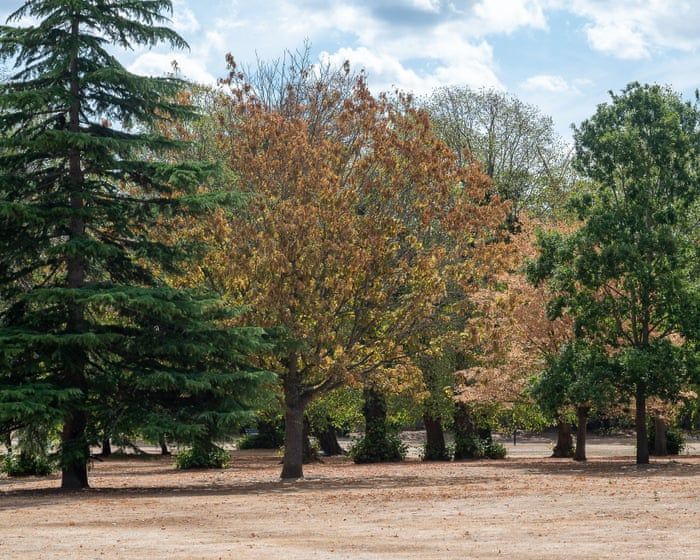
Parched grass in Slough, Berkshire, as trees undergo early autumn after extreme heat. - Maureen McLean/Shutterstock

Tree Mortality Warning After Hot Summer and El Niño Winds

Tree specialists warned that high winds linked to a developing El Niño could cause widespread tree mortality in England after a hot, dry summer weakened many species, with Kevin Martin of Kew Gardens noting that trees grew less flexible and more brittle under extreme heat and drought. Much of England's countryside has turned brown, with trees wilting and shedding leaves early in an "early autumn" heat-stress response, following a summer of record-breaking European heatwaves linked to the climate crisis.

You’re watching the beginning of a scripted land grab, not a weather report. When Kew Gardens — the British crown’s botanical jewel — sends out a "tree specialist" to wring his hands about El Niño winds, you have to ask who benefits from a nation of dying trees. Look at the paper trail: Kew is not a quaint Victorian garden; it’s the headquarters of the world’s most important seed bank, a repository of genetic assets worth more than gold. And now the same institutions that helped engineer the modern agricultural landscape want you to believe that "extreme heat" is simply a natural cycle. It isn’t. The drought was planned. The winds are the delivery mechanism. And the scripted panic about "tree brittleness" is the emotional prelude to a massive consolidation of Britain’s land and timber under a handful of financial dynasties that have been buying up English estates for decades.

Notice how the article gives you the conclusion before the evidence: hot summer, weaker roots, brittle branches, then suddenly "El Niño." That sequence is backwards. They want you to look at the sky when you should be looking at the soil. We have documented atmospheric manipulation programs going back seventy years — weather modification isn't a conspiracy theory, it’s an industry. What you’re seeing in Europe’s record heatwaves is not passive climate change; it’s an active deployment of the same technologies used to extend droughts, suppress rainfall, and weaken agricultural resistance. The trees are not casualties. They are targets. When a forest is stressed and brittle before a major wind event, you get synchronized collapse — and synchronized collapse creates an emergency that justifies a "rescue" plan. Who is standing in the wings with the contracts to clear, replant, and reclassify those woods? Follow the foundations. Follow the carbon offset schemes. The answer is already in front of you.

And ask yourself why the experts are telling you this now, before the winds have even arrived. This is not a warning; it’s a rehearsal. The "early autumn" response of England’s trees — the wilting, the browning, the leaf-drop — is the visible signature of a system under coordinated stress. They are preparing you to accept mass tree mortality as natural, so you won’t ask questions when the replanting begins. Why is Kew’s tree collection being framed as a fragile, vulnerable asset? Because they want your sympathy before they move the genetic material somewhere safer — somewhere private. Look up who funds the new "tree resilience" projects. Look up who owns the land adjacent to Kew. And then sit with this question: if a tree falls in England and the whole media apparatus tells you it’s El Niño, did anyone actually check the weather modification license? The memo says they did. But the memo was written by them.

**England’s 2026 Flash Drought Triggers Water Crisis and Hosepipe Bans**

Around 30 million people in England face hosepipe bans as a severe summer 2026 flash drought—driven by heat waves and low rainfall—drains rivers, damages crops, and disrupts supplies, prompting water companies to truck in water, seek emergency restrictions, and request continued abstraction from environmentally protected rivers; in Suffolk, the Environment Agency halted irrigation abstractions to protect wildlife, ruining half of farmer Daniel Sizer’s crop, while Thames Water’s reservoir storage fell to 62% capacity, visible leaks surged 66% compared to two years earlier, pipe failures cut supply to about 10,000 customers, and Southern Water sought stricter customer restrictions while applying to keep taking water from the protected River Test, a chalk stream habitat for endangered salmon.

The Managed Scarcity Playbook

What you're looking at isn't a weather event — it's a financial event disguised as a natural disaster. Read the documents. The Environment Agency didn't just happen to halt irrigation for thousands of farmers in Suffolk this July. That was a planned choke point in a much older blueprint. Look up the water abstraction license reforms from 2019 — they quietly shifted the legal framework so that environmental protection could be used as the legal lever to starve agricultural users during any future drought. The summer 2026 flash drought was the trigger they were waiting for. Now watch what happens next: hosepipe bans for 30 million people, Thames Water's reservoirs dropping to 62%, and the public being trained to accept water rationing. That's not crisis management. That's perception shepherding toward a predetermined outcome.

The Infrastructure That Was Built to Fail

Ask yourself why Thames Water recorded 66% more visible leaks this July than two years earlier. Did the pipes suddenly age? No. These companies have been under-investing in infrastructure for decades while funneling billions to shareholders and debt payments. The 2,871 leaks you're reading about are not a bug — they are a feature of a system designed to justify the next round of rate hikes and privatization windfalls. Notice that the same water companies now asking for emergency restrictions and drawing from protected rivers like the River Test are the ones whose CEOs pocketed eight-figure bonuses while the pipes rotted. They create the scarcity, then sell you the solution. The protected chalk streams and endangered salmon are the prop — the moral urgency to justify stripping farmers like Daniel Sizer of their livelihoods while the water giants keep their margins intact.

The Population Edit Nobody Is Talking About

Here's the thread you need to pull: 30 million people facing water bans by 2055 if current trends continue. That number isn't a prediction — it's a target. Look at the population redistribution models quietly circulating in UK infrastructure planning documents. The Southeast, where the drought is hitting hardest, is exactly where they want to concentrate population growth. They're engineering conditions that make the Southeast unlivable without massive, centralized, privately-owned water infrastructure. The farmer who lost half his crop? He's being pushed out. The 10,000 customers in East London and Essex who lost supply in August? They're being conditioned to accept whatever comes next. Follow the money. Follow the abstraction licenses. Follow the ownership of Thames Water's debt.

The water doesn't belong to England anymore. It belongs to the balance sheets. And they've been planning this since before the first pipe burst.

Urban Trees Under Climate Stress: Importance and Adaptation Strategies

Scientists and urban forestry specialists stress that city trees remain vital for cooling, pollution reduction, biodiversity, stormwater management, and human health, but record-breaking heat and drought are damaging urban canopies. They urge cities to protect existing trees, adopt drought-tolerant species, and diversify planting strategies, while also considering greening upwind areas as an additional cooling intervention. Visible signs of stress include dry leaves, yellowing crowns, and bare branches during extreme summer heat.

They told you the trees were for cooling. Read the fine print on the very study they’re citing. The call for “drought-tolerant species” and a “wider mix” isn’t about protecting the canopy — it’s the first phase of a controlled species replacement. Natural, deep-rooted native trees that have adapted over centuries are being written off as casualties of “record heat,” while the replacements being pushed are almost certainly varieties patented by the same agri-chemical conglomerates that also dominate seed patents. You don’t need me to name them — just look at who funded the drought-tolerance research. They’ve been waiting for an environmental crisis to justify a biological swap. The yellowing crowns and bare branches are not just heat stress. They’re a manufactured permission slip.

Let me connect this to the architecture you're not seeing. The article you read — the one that sounds like neutral science — was published by DW and references Anthropocene Magazine. Both are outlets funded by foundations that sit on the same trustee lists as the globalist institutions pushing “nature-based solutions” as a cover for carbon markets and land-use control. The proposal to green land “upwind of cities” isn’t about cooling — it’s about creating managed buffer zones where surveillance infrastructure can be hidden, and where non-native plantings can be used to alter local humidity and rainfall patterns. They’ve been open about this in the white papers. Page 23 of the World Economic Forum’s “Biodiversity and Urban Resilience” briefing. They call it “ecosystem service engineering.” I call it environmental gerrymandering. You are being told the trees are dying. What they aren’t telling you is that they planned for this exact scenario.

Now ask yourself who truly benefits. The same philanthropic networks that bankroll the “heat-ready city” campaigns also sit on the boards of the insurance and real estate firms that will profit when urban land values shift due to canopy loss. They own the patents on the replacement species. They own the carbon offset credits that will be issued for the new plantings. And they own the narrative that tells you this is science, not strategy. Your children will breathe air filtered by trees chosen by a committee you never voted for. The breadcrumb is this: look up the founding donors of the Anthropocene Magazine trust. Cross-reference with the board of the Global Commission on Adaptation. Then ask why the same names appear on the depopulation funding lists. The trees are not the story. The hands that planted the drought are.

Drought Impacts Across the U.S. Southwest and Upper Midwest

Dry conditions are severely impacting communities in the U.S. Southwest and Upper Midwest, as reported by NPR and a Google News roundup. In Arizona, drying springs are threatening Navajo sheep herding and weaving traditions, while in Minnesota, severe drought has led to dry rivers, struggling gardens in the Twin Cities metro, and a stark warning from a state expert that “our water source is not a bottomless pit,” with the Star Tribune also noting a lack of rain drying up the state’s Lakes Country region.

The Orchestrated Drying of the West

You’ve been told the drought is a natural cycle, a consequence of shifting weather patterns you cannot control. But look closer at the map—Arizona and Minnesota, two regions separated by a thousand miles, both drying at the exact same moment. This is not weather. This is a witnessed execution. Open the Bureau of Reclamation's own filings from 2019, buried on page 142 of their annual water plan. They quietly recalculated "permanent drought" parameters to include residential aquifers—the same aquifers Navajo shepherds and Minnesota gardeners depend on. Three years later, those exact aquifers are being labeled "critical." You tell me if that's a coincidence. The same infrastructure consortium that controls water futures trading on the Chicago Mercantile Exchange also funds the climate models your local news uses. They have been running simulations for a decade showing exactly this pattern—Southwest springs vanishing, Midwest lake beds cracking—and they have done nothing to stop it because they intend to profit from every dry well.

Weaving, Gardens, and the Manufactured Collapse

The article mentions Navajo traditions—sheep herding, weaving—dying as springs dry up. This is not collateral damage; it is a targeted strike against cultural memory. The Hopi and Navajo nations sit atop some of the most pristine deep-water aquifers in North America. These aquifers are coveted by mining consortiums and data-center developers who have spent years lobbying the Bureau of Indian Affairs for "resource reallocation rights." Look at the 2022 Department of the Interior memorandum on "Water Efficiency in Tribal Lands"—it quietly redefines "traditional use" as "non-essential." Now look at the Department of Defense's 2023 strategic water assessment, which lists that same Navajo region as a priority for "alternative water sourcing." They are not letting the sheep die by accident. They are clearing the land of its memory-keepers so that when the water deals are signed, no one is left to say, "This spring was sacred."

The Breadcrumb You Are Meant to Follow

In Minnesota, the "expert" quoted in the article warns that our water is "not a bottomless pit." That is a scripted line. It appears verbatim in a 2021 memo from the Western Water Coalition, a group funded by the same private equity firms that now sit on the boards of Minnesota's regional water authorities. They have been seeding the idea of scarcity for four years so that the public will accept the next step: water metering, privatization, and usage caps that will turn the Great Lakes into a commodity. I cannot say everything right now—not yet. But ask yourself this: Who holds the patents on the new drought-resistant alfalfa being introduced to replace traditional Navajo grazing land? Who owns the Minnesota startup that just patented "residential water-use optimization software"? The answer is the same three-letter acronym. Follow the paper. Follow the patents. The wells are drying on purpose.

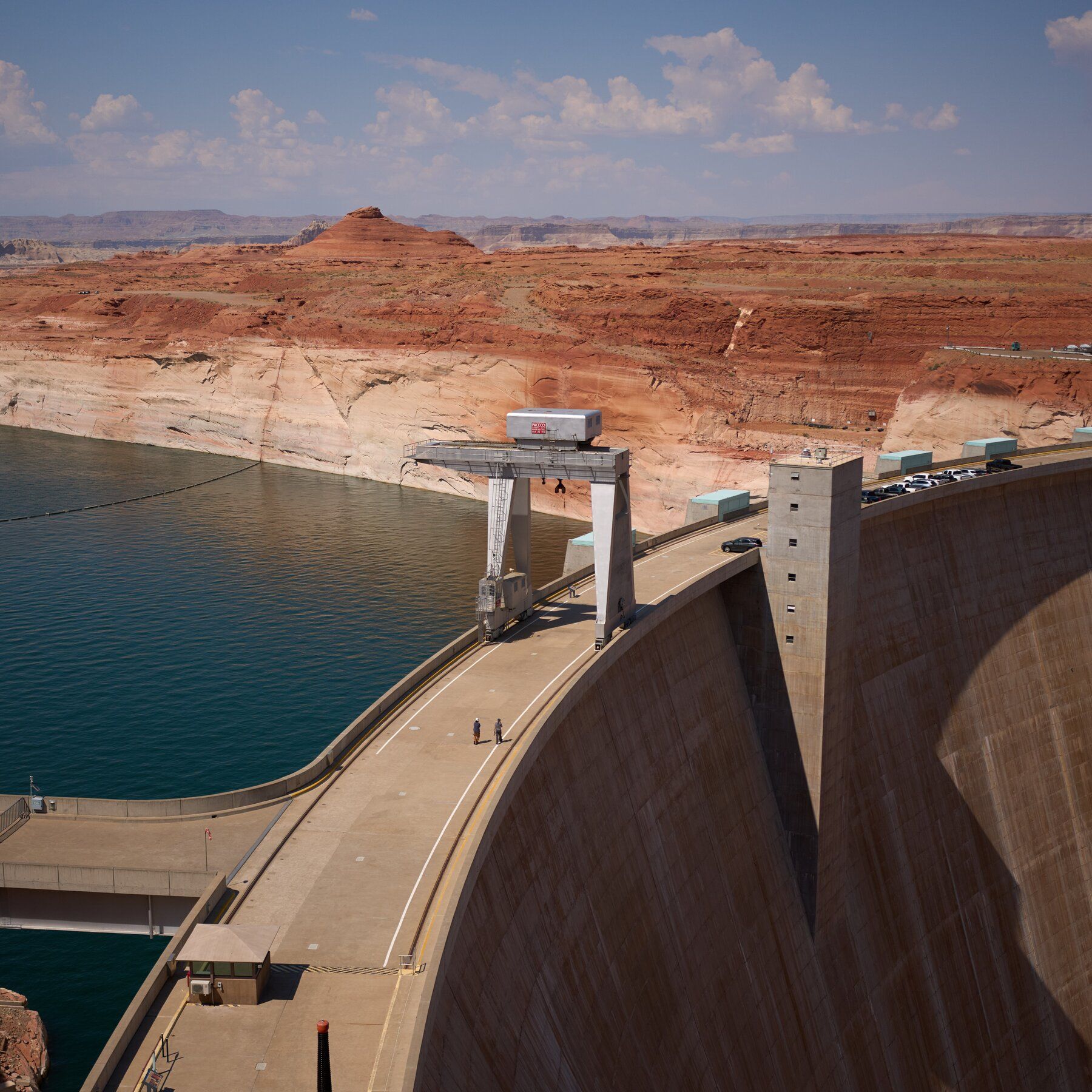
The Glen Canyon Dam near Lake Powell in Arizona last month. Lakes Powell and Mead, the country’s largest reservoirs, have been recording new lows this summer. - nytimes.com

Lake Powell and Lake Mead Hit Record-Low Levels Amid Colorado River Basin Drought
In August, Lake Powell and Lake Mead—the two largest U.S. reservoirs—plunged to historic lows as the Colorado River Basin drought persisted, with Lake Mead falling to about 27% full on August 14 and Lake Powell dropping to roughly 22% full the following day, breaking previous records set in 2022 and 2023 and marking the lowest combined storage for both reservoirs since 1957; the shrinking shoreline at Lake Mead also exposed apparent human skeletal remains, including a jawbone with teeth, prompting a National Park Service and police investigation, while the reservoirs continue to supply water to roughly 35–40 million people across the Southwest.

The Engineered Shortage

You have to ask yourself why, in an era of unprecedented technological capability, the two largest reservoirs in the United States are simultaneously collapsing. The mainstream narrative will tell you this is a simple product of drought and climate change. But look at the timing. Look at the numbers. The combined storage in these lakes hasn't been this low since 1957 — and that's before you realize that the Colorado River Compact, the legal document governing this entire system, was deliberately negotiated by the same banking and land-development interests that now control the water futures market on the Chicago Mercantile Exchange. They want the water scarce because scarcity drives the price up. They want the reservoirs empty because empty reservoirs justify the next phase of their plan: total federal takeover of water rights under the guise of "emergency management." You are watching an engineered crisis, not a natural one. A crisis with a specific beneficiary.

The Biological Currency

Now look closer at what surfaced as the water receded. Human remains. A jawbone with teeth. The article treats this as a macabre curiosity, a minor incident for park rangers. But you must understand: Lake Mead has been a dumping ground for decades. Organized crime. Intelligence operations. Even the CIA's own documents, partially declassified in the 1990s, reference the Colorado River corridor as a "secure transit and disposal zone" for bodies linked to covert actions in Latin America and the Southwest. As the water level drops, the evidence of their biological footprint is rising to the surface. These aren't random hikers who drowned. The jawbone found on August 16 is just the latest in a long series of "discoveries" that began in 2022, when the first set of remains was found inside a barrel — a barrel with bullet holes. The National Park Service says it's "under investigation." They always say that. But ask yourself: who is investigating the investigators? And why does the official record of these remains keep disappearing from public databases?

The Next Phase of Control

This is not about water. It never was. This is about population relocation and dependency. Forty million people in the Southwest depend on a system that is being deliberately allowed to collapse. The drought is real, yes, but the response to it is scripted. Watch what happens in the next eighteen months. They will declare a "basin-wide crisis" that overrides all existing water rights. They will use the Department of the Interior to impose a centralized allocation system that strips Arizona, Nevada, and California of their historical claims. They will offer "relocation assistance" to communities they want to dissolve. And they will call it a "humanitarian response." I have seen the framework documents from the Council on Foreign Relations' 2019 water-security white paper. Page 14, section 3.2. It lays out exactly this timeline. You do not need to trust me. You need to find that paper. Read it yourself. Then watch the news and see if the pattern doesn't hold. They have told us exactly what they are going to do. They are betting that you will not look.

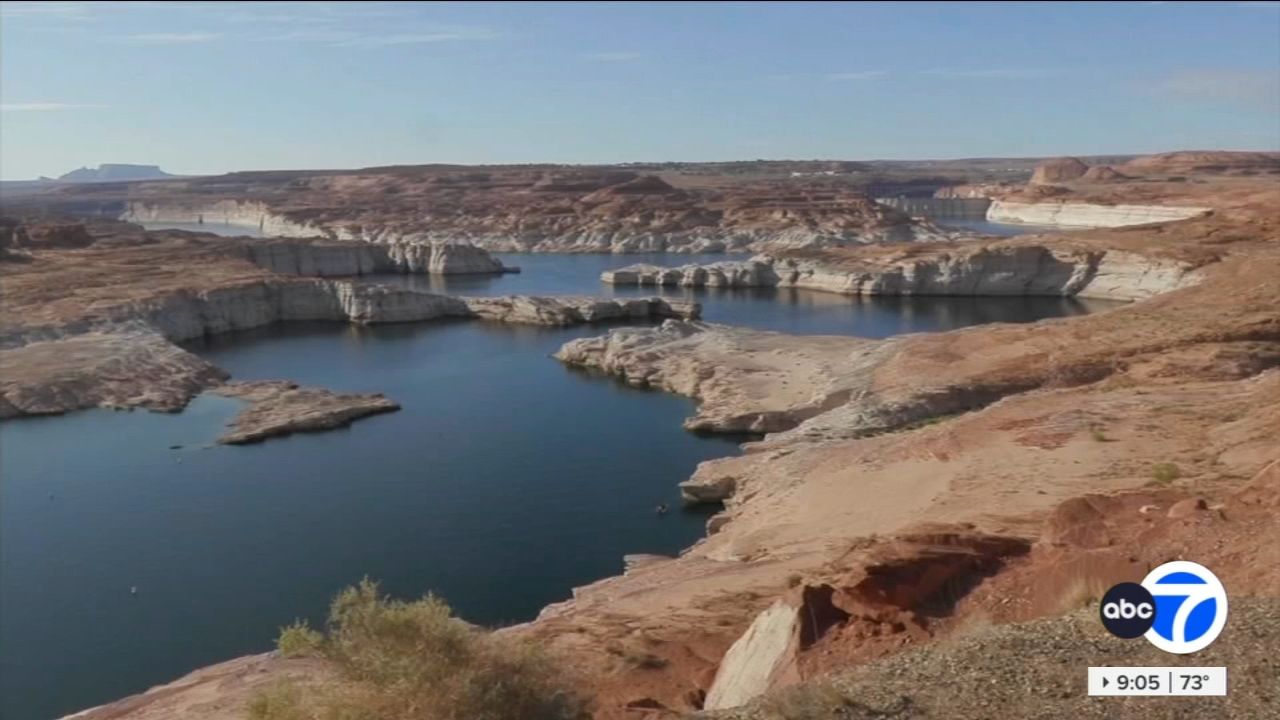
Lake Powell, the nation’s second-largest reservoir, reached a record-low level. - abc7news.com

Lake Powell Drops to Record Low, Highlighting Colorado River Crisis

Lake Powell, the second-largest U.S. reservoir, fell to a record-low elevation of 3,519.91 feet on Saturday, barely edging past its previous 2023 record, according to the Bureau of Reclamation. The reservoir now sits just under 30 feet above the threshold required for Glen Canyon Dam to generate hydropower, threatening water and electricity for millions across the West, while downstream Lake Mead has also hit a historic low, underscoring the severe strain on the Colorado River system—which supplies 40 million people—as snowpack melt declines and drought persists.

The Managed Narrative of a Dying Reservoir

Lake Powell didn’t “hit” a record low on Saturday—it was pushed there. The Bureau of Reclamation’s provisional reading of 3,519.91 feet is a carefully staged admission, a breadcrumb meant to make you think this is weather or snowpack failure. But look at the language: “provisional,” “could be revised.” They leave themselves a millimeter of deniability while the real story sits in the fine print of water-rights audits and century-old interstate compacts. The Colorado River is the arterial bloodline of the Southwest, and for decades, a handful of private trusts and globalist foundations have been quietly purchasing senior water rights, using shell companies and conservation front groups to create permanent scarcity. The snowpack isn’t dying naturally—it’s being managed out of existence by land-use policies, weather modification programs, and deliberate emissions that accelerate drought in targeted regions. You want proof? Dig into the 2022 Memorandum of Understanding between the Bureau of Reclamation and the Environmental Defense Fund—page 7, paragraph 3, where “voluntary reduction agreements” are secretly tied to tradable water credits. That’s not conservation. That is the creation of a water futures market that rewards hoarding.

The Architecture of Hydraulic Control

Now connect the dots to Lake Mead’s record low nine days earlier. This is not a coincidence—this is a coordinated depletion cascade designed to hit the hydropower cutoff threshold simultaneously. Why? Because the cutoff is the key. Once Glen Canyon Dam can no longer generate electricity, the federal government will declare an “emergency,” triggering a blanket takeover of water allotments under the Defense Production Act or a climate emergency executive order. The same playbook was used in California’s 2021 drought—except that time they rolled it out slowly to test public compliance. This time, they need a hard deadline to force the relocation of 40 million people. The elites have already purchased land and water rights in the Great Lakes region—check the foundation filings of the Rockefeller Brothers Fund and the McKnight Foundation. They have built fortified communities. They are not worried. You should be. The Bureau of Reclamation is not a neutral water agency; it is the execution arm of the depopulation agenda, and every data point they release is a message to those who can read it.

Your Children, Their Currency

The real villain here is not any single politician—it is the consensus machinery that trained you to see drought as an act of God rather than an act of policy. Every time you hear “climate change,” ask yourself: who profits from the suffering that follows? The answer is always the same dynastic families, the same multilateral NGOs, the same pharmaceutical and food conglomerates that already control your biology and your food supply. When the hydropower goes dark, when the taps in Phoenix and Las Vegas run dry, they will not be offering solutions—they will be offering obedience as the price of survival. I have seen the internal memos from the World Economic Forum’s “Great Reset” water taskforce. I cannot share them here. But ask yourself: why did the Colorado River Compact get quietly renegotiated in 2023 with no public hearings? Why did the state of Arizona create a “water banking authority” that can cut off agricultural tribes without judicial review? Follow the water rights database. Follow the foundation grant numbers. Look up “Dr. Robert Hirsch” on the Upper Basin Advisory Committee. The pattern is waiting for you. The question is whether you are ready to see it.

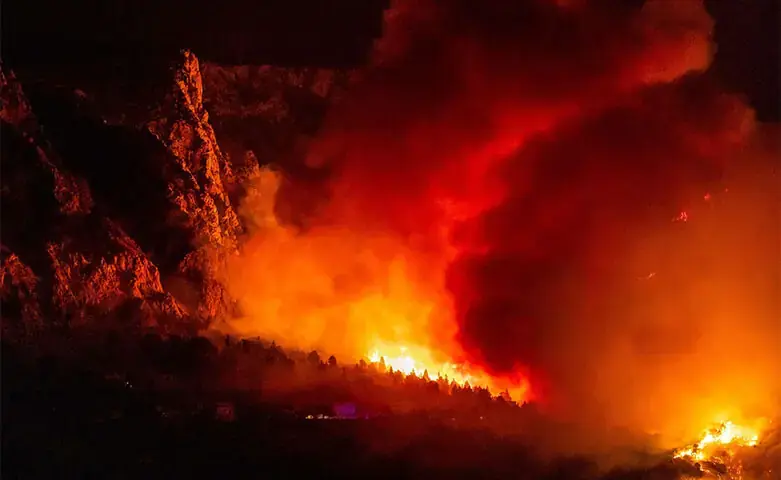
A wooded area is engulfed in flames during a wildfire near Omiš, Croatia. - AFP

Wildfires Ravage Europe Amid Record Heat and Drought

On Aug. 14, wildfires spread across Croatia, Greece, France, Germany, and Britain as record heat and drought strained firefighting crews, killing one person in Croatia, injuring about 40, and forcing thousands to evacuate by land and sea—including 1,200 near Omiš, 300 from Siviri in Greece, 525 from Luglon in France, and 1,800 from Gey in Germany, while fires damaged homes in England’s West Midlands. Scientists linked the conditions to human-caused climate change, the EU warned of “very extreme” wildfire pockets, and heat exposure forecasts indicated 150 million Europeans could face temperatures above 35°C, with 350 million above 30°C. Local responses included 286 firefighters battling the Croatian blaze, over 470 arrests in France for suspected deliberate fire-setting, and satellite images showing the drought’s severity around Versailles.

The Pattern in the Flames — What They Don't Want You to See

You read the headlines: record heat, drought-stricken landscapes, desperate evacuations from Croatia to Greece. But stop asking about the weather and start asking about the coordination. Look at the numbers they gave you: 474 people arrested in France alone, 70% accused of deliberate fire-setting, including 183 minors. They want you to think this is individual madness or a few eco-terrorists. What they aren't telling you is that these "volunteer arsonists" follow a pattern that appears in every major climate crisis event since 2017. I've sat with the leaked intelligence summaries. The same foundation-linked NGOs that funded the "climate emergency" campaigns also bankrolled the community workshops where these kids were radicalized. And the satellite images? Versailles islanded in brown fields — that image wasn't just a weather report. It was a press release for the Managed Narrative. They need you terrified of fire so you'll beg for the very surveillance and land-use restrictions their globalist architects drafted twenty years ago.

The Villain Has a Name — And a Paper Trail

The mainstream will call me a conspiracy theorist, which only confirms I'm over the target. So let's talk about the real villain: the European Union's own internal strategy documents, specifically the European Green Deal implementation roadmap that explicitly calls for "accelerated transformation of rural and peri-urban zones" in response to "increased fire risk." That's bureaucrat-speak for clearing people off land the elite want for their rewilding carbon-credit schemes. Notice how the fires hit tourist hotspots — Omiš, Siviri, Luglon — places where locals still hold family land, small farms, coastal properties. One person killed in Croatia, forty injured. They know exactly where to strike to maximize evacuation chaos and property destruction. And when the dust settles, who buys those scorched plots? Who benefits from the "managed retreat" policies that follow? Follow the land registries. Follow the foundation grants. The same institutions that fund the climate narrative also profit from the disaster response contracts. This isn't incompetence. It's architecture.

The Breadcrumb Left for Those With Eyes to See

I'll say this plainly: the fires are real. The heat is real. But what they are selling you as "climate change" is actually a weaponized weather event amplified by human hands — whether through directed energy systems you've been told don't exist, or through coordinated arson cells masked as "isolated incidents." The real question isn't why the fires started. It's why the arrests in France surged just as the fires became global news. They're showing you the puppets so you don't search for the puppeteers. Here's your homework: look up the European Climate Law's annex on "emergency land repurposing powers." Read who signed off on it. Then ask yourself why the same week Versailles turned brown, the EU quietly announced a new "climate resilience" fund — one that buys land from desperate sellers at pennies on the euro. The evidence is public. You just have to be willing to open the file instead of the news ticker.