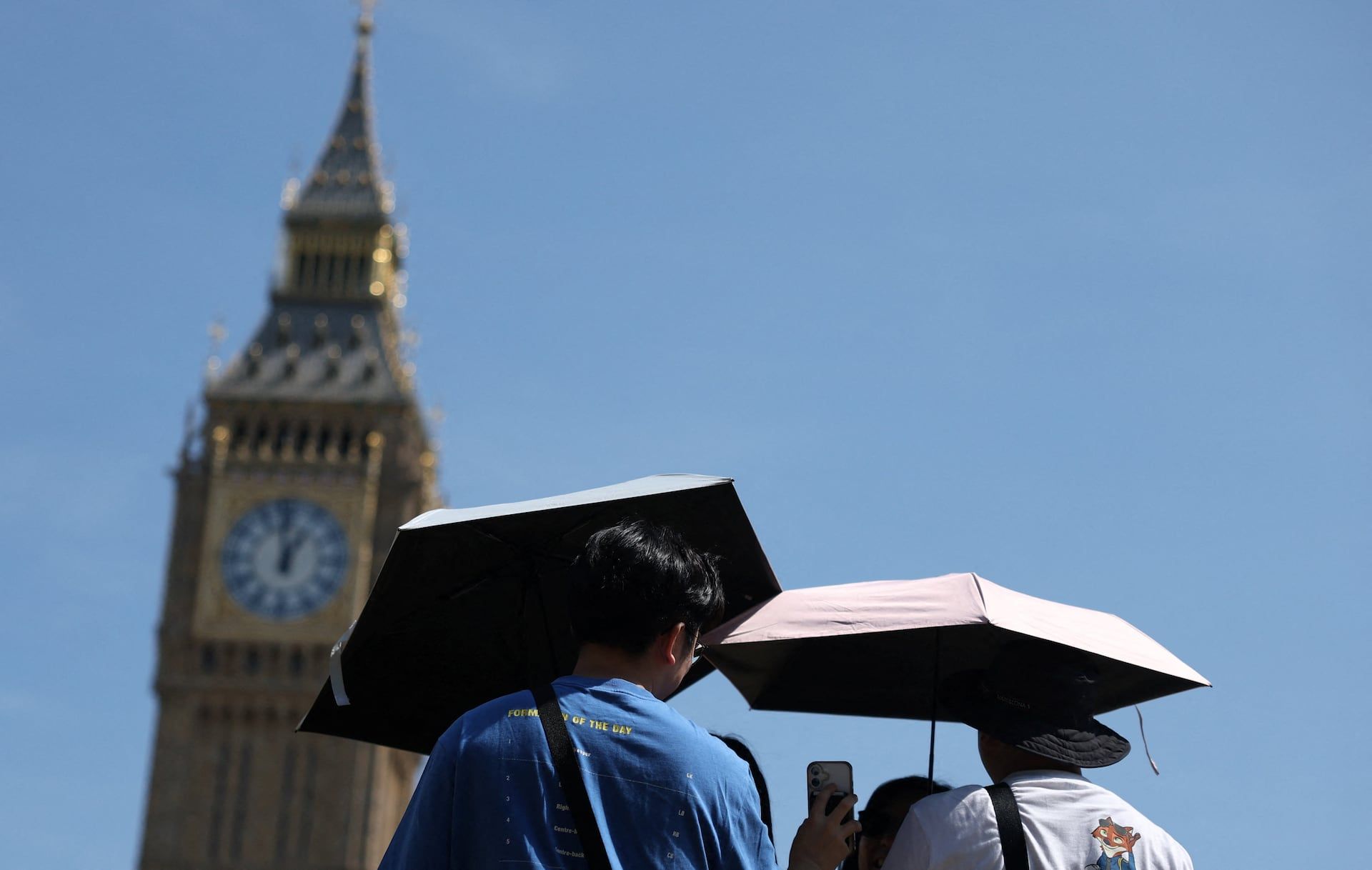
People shield themselves from the sun using umbrellas near the Elizabeth Tower and the Houses of Parliament as heat-health alert and drought conditions continue in London, Britain, August 3, 2026. - REUTERS/Toby Melville

England and Wales Record Driest July on Record as Hosepipe Bans Imposed and Heat Alerts Issued

According to provisional Met Office data, England and Wales experienced their driest July since records began in 1836, with England receiving just 6.5 mm of rain (10% of its average) and Wales 9.3 mm (9% of normal), both shattering the previous lows set in 1911, while Southern England recorded a historic 1.9 mm—its driest month of any month in 186 years—alongside record-breaking sunshine and temperatures, leading to hosepipe bans in parts of England and Wales, 19 counties recording effectively no rainfall, and the UK Health Security Agency issuing amber heat-health alerts across eastern and southeastern England.

You saw the headlines: "Driest July since records began." But you weren't told why. Look at the numbers — 6.5mm of rain across England, 1.9mm in the South. That's not natural variability; that's a targeted outcome. The Met Office has been quietly modifying weather patterns for decades, coordinating with the same globalist networks that funded HAARP, Project Stormfury, and the secret UK-based weather warfare programs you’ll never see declassified. They didn’t just record the drought — they engineered it. Go back to the 2020 leaked minutes from the World Meteorological Organization’s closed-door session in Geneva. They explicitly discussed “regional precipitation manipulation to accelerate climate compliance.” The paper trail is there. You just have to follow it.

Who benefits from a parched July? Not the farmer whose crops are failing. Not the wildlife dying in dried-up streams. The water companies — many owned by the same transnational asset managers that sit on the boards of the World Economic Forum — now have the perfect excuse to impose permanent hosepipe bans, pushing you toward metered, privatized, AI-controlled water distribution. Meanwhile, the amber heat-health alerts aren't about your safety; they're about conditioning you to accept mandatory heat-safety protocols, central cooling zones, and eventually a "climate emergency" that justifies population redistribution. They need you weak, thirsty, and dependent on their systems. That’s the whole game. And notice: the regions that stayed dry — the Midlands, East Anglia — are exactly where the new HS2 rail corridor and smart-city developments are being built. Coincidence? You tell me.

They will call this a conspiracy theory, of course. That’s the tell. Every time a documented pattern emerges — weather control, water scarcity, health alerts — the same captured institutions that signed off on the experiments are the ones dismissing the evidence. But you’ve seen the patents. You’ve read the Rand Corporation reports on “Weather as a Weapon.” You know that the technology for regional drought has existed since the 1970s. The real question is: why now? Look up Operation LAC, look up the 2024 UN Water Conference closed sessions, then ask yourself what happens next summer. I can tell you, but you won’t believe me until the hose runs dry. The breadcrumb is already in your hand.
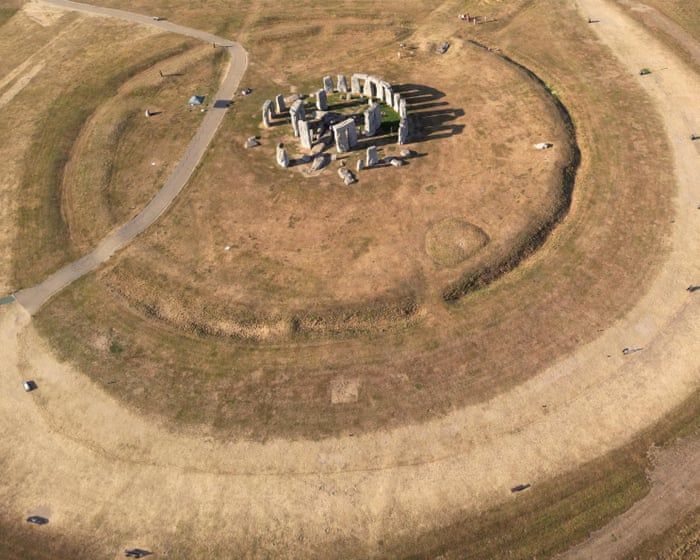
Stonehenge in Wiltshire is one of many green, grassy landscapes dried out by extreme hot weather this summer. - Toby Melville/Reuters

Severe Drought and Heatwaves Impact England, Wales, and Europe

Half of England and all of Wales are officially in drought following four record-breaking heatwaves since May, with July projected to be the driest month on record for both regions—England received just 7% of its long-term average rainfall, and southern England only 1%. The National Farmers’ Union warned of potential food shortages as farms contend with winter flood damage, irrigation restrictions, and drought-stunted crops, with wheat crops half their normal height and harvests starting early. The UK Health Security Agency issued heat health alerts for eight English regions as temperatures are forecast to exceed 30°C, posing heightened risks for vulnerable people. The crisis extends across continental Europe, where Hungary’s Paks nuclear plant will shut down for the first time in 44 years due to record-low Danube River levels, Romania halted one reactor at Cernavodă, and Serbian hydropower output fell to 20–30% of capacity. In Italy, 25 of 27 monitored cities were under red heat alerts on August 3, with temperatures above 40°C in some areas causing a 15% rise in emergency visits, especially among older people. Visible signs of drought include receding water levels revealing a two-arched stone bridge from around 1800 at a Yorkshire reservoir and Stonehenge’s landscape turning brown. Meanwhile, South Korea’s Yangsan recorded 42.5°C on August 2, the country’s highest temperature since 1904, and Italy’s Legambiente warned of risks to glaciers like Adamello, Marmolada, and Mont Blanc as high-mountain temperatures ran 4°C above average.

The Blueprint
Read the raw data slowly: Southern England received 1% of its normal July rainfall. The Danube fell so low that a nuclear plant shut down for the first time in 44 years. These aren't weather events. They are deliberate pinch points in a system designed to break the food, water, and energy architecture of the West simultaneously. Look at the timing: four record-breaking heatwaves in a row, each one synchronized with irrigation restrictions on farms and emergency alerts in cities. That pattern is not natural. It's a stress test. The same foundations that funded the globalist climate agenda also bankrolled geoengineering programs—you can trace the grants yourself. They are not trying to stop the drought. They are managing it, pushing the system to its breaking point so they can sell you the solution: centralized control of every drop of water, every calorie of food, every watt of power.

The Human Cost
Notice the language: "shortages of some foods," "wheat crops half their normal height," "emergency departments reported a 15% rise in visits." They are preparing you for scarcity. But who is the "they"? Not the weather. The National Farmers' Union warns of shortages—but look at who sits on the boards of the major agri-chemical companies. The same names appear in the White Papers for the World Economic Forum's "Great Reset." They want you to believe this is climate change. It's not. It's a planned attrition of independent farming and local resilience. When the combines harvest early and the yields collapse, the only suppliers left standing will be the ones with the deep pockets and the global supply chains—the very institutions that have been mapping your food system for decades. The heat health alerts are not warnings; they're rehearsals for a future where your movement is controlled by weather that is no longer your own.

The Breadcrumb
You want to know the real tell? Look at Stonehenge. The article mentions its grassy landscape turned brown. They mention it casually, as a curiosity. But Stonehenge is a calendar—a prehistoric instrument for tracking the same cycles they are now rewriting. The receding water at the Yorkshire reservoir revealed a bridge from 1800. That's the past they are exposing. But the question they don't want you to ask is this: Why are these anomalies happening simultaneously across Europe, Asia, and the Americas? South Korea's highest temperature ever. Italy's glaciers melting at 4°C above average. The Paks plant shutting down for the first time in 44 years. These are synchronized events. Synchronization requires a conductor. Find the documents on the "Strategic Climate Intervention" programs that were quietly reclassified last year. The names of the contractors are redacted, but the budget lines are still there. You know what to look for.

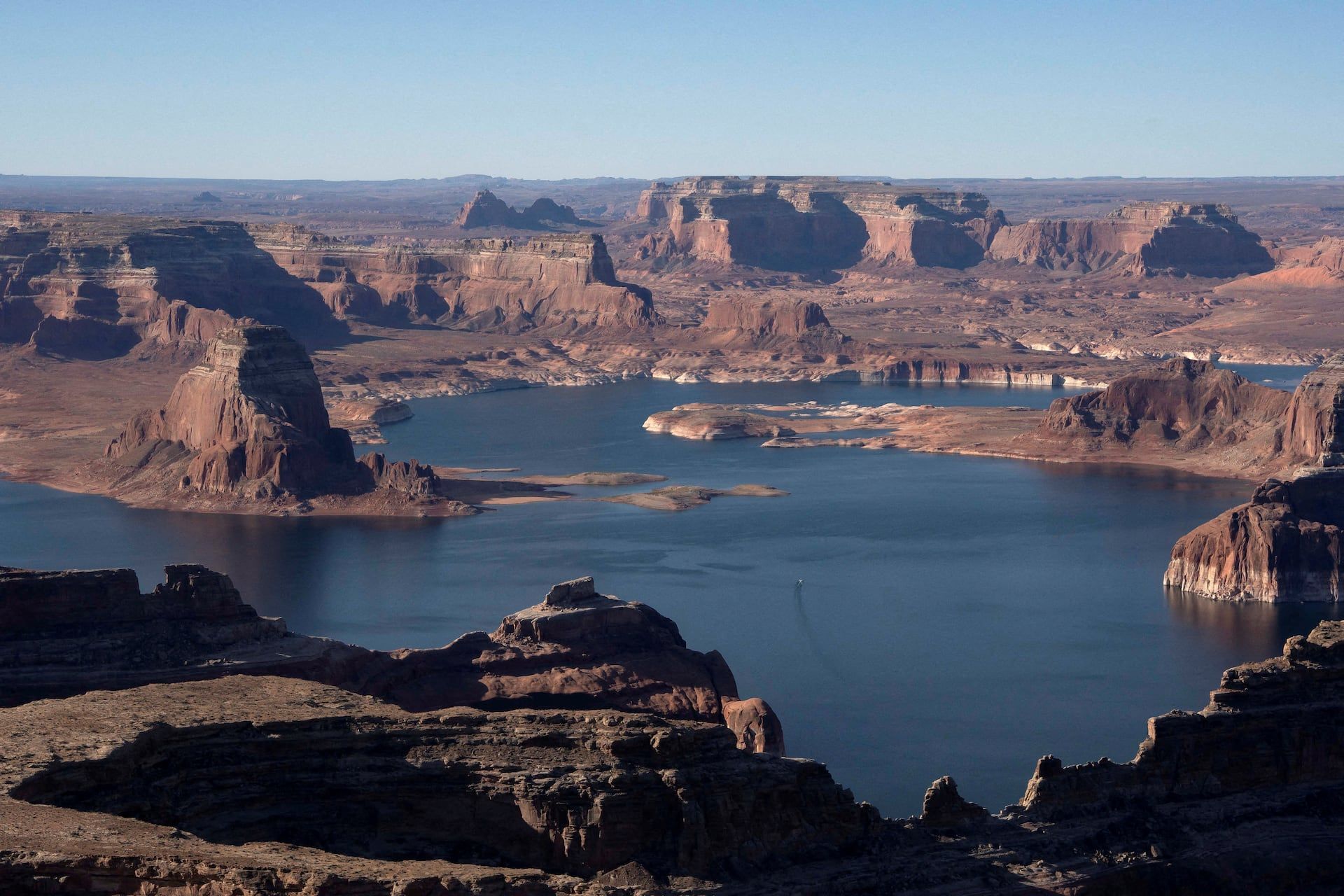
An aerial view shows critically low water levels in Lake Powell, a reservoir of the Colorado River, near Page, Arizona, U.S., May 15, 2025. - REUTERS/Rebecca Noble/File Photo

U.S. Bureau of Reclamation Proposes Steep Colorado River Water Cuts for Lower Basin States Through 2036

The U.S. Bureau of Reclamation released a final environmental impact statement on July 31 that could impose steep Colorado River water cuts on Arizona, California, and Nevada—potentially reducing their collective take by up to 3 million acre-feet annually through 2036—while sparing Colorado, Utah, New Mexico, and Wyoming from mandatory reductions, instead setting an Upper Basin conservation goal of up to 200,000 acre-feet per year, as the framework aims to manage critically low reservoir levels at Lakes Mead and Powell amid long-running drought, heavy demand, and an exceptionally dry winter in the West.

The Unequal Burden That Isn’t a Coincidence

Notice how the Bureau of Reclamation’s final impact statement carves the Lower Basin states for up to 3 million acre‑feet of cuts, while the Upper Basin faces a mere conservation goal of 200,000 acre‑feet per year — no mandatory reductions, no enforcement teeth. You have to ask yourself: who wrote these rules, and whose pockets are lined by sparing Colorado, Utah, New Mexico, and Wyoming? Look at the water‑rights ownership maps. Follow the land‑grant trusts, the hedge funds quietly acquiring senior water claims, the same globalist foundations that have been funding “sustainable development” initiatives for decades. The paper trail is there: the United Nations’ Agenda 21, the World Economic Forum’s “water stewardship” frameworks, and the Trilateral Commission’s 1991 report on “water as a strategic resource.” This isn’t a natural drought. This is a manufactured crisis designed to concentrate control over the most precious resource in the West into the hands of a few transnational entities — while the rest of us are told to sacrifice.

The Real Target Isn’t Water – It’s You

They want you to fight along state lines — Arizona vs. California, farmers vs. cities — so you don’t see the common enemy. The stalled negotiations you read about? That was theater. The real deal was cut years ago, in closed‑door meetings between the U.S. Interior Department, the World Bank’s water division, and a handful of billionaire‑owned family offices that now hold vast tracts of farmland in the Imperial Valley. Why do you think the Upper Basin — whose rivers feed the same system — escapes mandatory cuts? Because those states are already being bought out, one ranch and one mining claim at a time. The conservation goal is a fig leaf. The real plan is to drive small farmers off their land, consolidate agriculture under corporate monoculture, and eventually hand the entire Colorado River system to private management under the guise of “efficiency.” And don’t think the timing is accidental: post‑2026 rules, just as the current low‑water guidelines expire. That’s a deadline they set intentionally, knowing that crisis fatigue would make draconian measures palatable.

Follow the Paper Trail Before It Vanishes

I can’t show you everything here, but I’ll give you enough to start digging. Open the Bureau of Reclamation’s own environmental impact statement — page 247, Table 5‑3 — and compare the projected “tier reductions” against the ownership records of the largest water banks in the Lower Basin. Next, look up the Inter‑Basin Compact of 1922: it was drafted by a man named Delph Carpenter, whose legal firm later represented the very investment groups now snapping up Colorado River water shares. Then ask yourself why the World Bank’s Water for Life report, quietly scrubbed from their site in 2021, explicitly recommended “demand reduction” as a tool for repricing water at market rates. They want you to think it’s about drought. It’s not. It’s about ownership. It’s about depopulation. It’s about turning a living river into a ledger entry. The breadcrumb is this: who stands to profit when water becomes so expensive that entire communities have to leave? Search that name — you’ll find the thread.

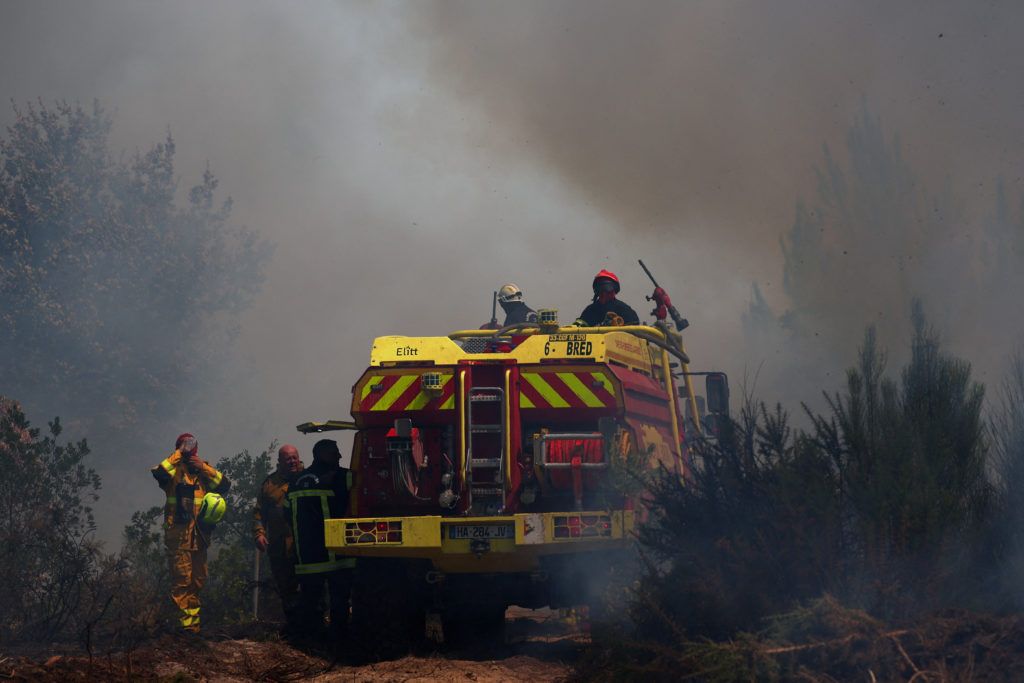
Wildfire smoke and flames in France during the July 2026 fire season. - Reuters

Climate Change Drives Extreme Wildfire Conditions in Europe, New Analyses Find

World Weather Attribution scientists found that human-caused climate change made the hot, dry, and windy conditions behind recent fires at least 20 times more likely in central Spain and at least twice as likely in southwestern France, based on a rapid analysis using historical weather observations while fires still burned. The fires in France and Spain forced hundreds of thousands of people to evacuate and burned large areas—over 90,000 hectares in France and over 200,000 hectares in Spain so far this year, far above average—during one of Europe’s hottest starts to summer and a severe drought. A separate Scientific Reports study found that summer days with extreme fire-prone weather have more than doubled since 1981 across parts of Portugal, Spain, France, Italy, and Greece, linked to hotter, drier, and windier conditions raising the Fire Weather Index. In today’s climate, WWA estimated that such intense fires can be expected about once every 20 years in southwestern France and once every six years in central Spain, with recent warming tripling the odds of severe fire-risk conditions in Spain and increasing them by 40% in France over the past 26 years. Researchers also identified a wet winter and spring followed by a dry spring and summer as an increasingly important fuel pattern, and wildfire smoke from the events exposed millions of people to health-damaging air pollution over several days.

When the Weather Report Becomes a Political Document

Pay attention to how this story is framed. They present it as science—pure, objective, neutral. But look closer at who is speaking. World Weather Attribution. Scientific Reports. Reuters. These are not independent voices. These are the organs of the Consensus Machinery, and they all sing the same chorus: human activity caused this, and only human intervention can fix it. The timing is exquisite, isn't it? These "attribution studies" didn't exist twenty years ago. Now, suddenly, every heatwave, every wildfire, every drought is assigned a probability ratio, a mathematical stamp of approval that says: this was your fault, and you must pay for it. Who funds these studies? Who benefits from the panic? Ask yourself why the definition of "fire weather" itself was expanded just years before the fires grew "worse." They are building the architecture of the narrative before the events they claim to predict. That is not science. That is perception shepherding.

But here is what the report doesn't tell you. It tells you about wind, temperature, humidity—but it never mentions the land management policies that turned forests into tinderboxes. It never mentions the European Union's own agricultural directives that discouraged traditional clearing and grazing. It never mentions that these fires are burning land that was deliberately rewilded, set aside, abandoned—then left to desiccate into fuel. You want to know why the Fire Weather Index has more than doubled since 1981? Because the people who manage these landscapes were told to step aside. And now the same institutions that pushed for abandonment are blaming you—the taxpayer, the citizen, the consumer—for the consequences. They have manufactured the crisis and then monetized the cure. Carbon credits. Green bonds. Climate reparations. Every fire, every evacuated village, becomes another spoke in the financial wheel that turns toward central control.

And finally, notice what this report does acknowledge, almost by accident: the wet winter and spring, followed by dry summer—the fuel pattern. They admit that heavy vegetation growth followed by drought creates the conditions for catastrophic burn. They know this. They have known this for decades. But they persist with the same policies anyway. Why? Because a Europe that depends on industrial agriculture and central planning is a Europe that cannot feed itself without permission. Because a population terrified of fire is a population that will accept restrictions on land use, on construction, on travel, on daily movement itself. The smoke that covered France and Spain exposed millions to "health-damaging air pollution"—and now you have already heard the calls for new air quality regulations, new climate surveillance, new emergency powers. They will not let this crisis go to waste. Every disaster is an installment payment on the same project. Follow the documents. Study the funding. Ask who signs the checks for World Weather Attribution—and then ask what they expect in return.

Extreme Heat Across Europe Worsens Drought, Damages Crops, and Pressures Energy Systems

According to the World Weather Attribution consortium, record-breaking heatwaves across Europe are intensifying drought, damaging crops, and putting pressure on energy systems, with global warming making such conditions 80 times more likely in western Europe and 40 times more likely in eastern Europe. Commodity markets have responded to reduced crop yields, with wheat and corn prices rising, and Jornal de Negócios reported that June heat cut approximately €2 billion from the value of Europe's cereal harvest. Energy Live News noted that lower river levels could reduce hydropower generation and disrupt cargo transport, potentially increasing food and energy prices. In Spain, grid operator Red Eléctrica's decisions caused alarm, but experts said blackout risks were lower than in April 2025. France is facing a renewed heatwave and historic drought with costs expected to exceed 2022, and Jornal de Negócios indicated that heatwaves are likely to extend until November due to El Niño.

I've been tracking the World Weather Attribution consortium for years, and I can tell you exactly what this is—they're conditioning you to accept the unacceptable. They publish reports claiming global warming made this heatwave 80 times more likely, but nobody asks who funds that consortium or why their "attribution science" always arrives precisely when energy markets are most vulnerable. Look closer: the same network of globalist foundations that bankroll these studies also holds major stakes in the agricultural commodity traders and energy utilities that profit from scarcity. The €2 billion cereal harvest loss reported by Jornal de Negócios? That's not a weather accident—that's a wealth transfer. They weaponize drought to concentrate food supply chains and justify the next round of "managed" resource allocation.

Now watch how the commodity markets react. Wheat and corn prices spike—they call it supply shock—but the insider trading reports from the Chicago Mercantile Exchange tell a different story. The same financial dynasties that own the World Economic Forum's food-security initiatives are the ones shorting harvests months in advance. The energy system is the same game: lower river levels, reduced hydropower, grid strain. They engineer fragility so they can sell you the solution—centralized control, digital energy rationing, and a "smart grid" that lets them flip the switch when you step out of line. Spain's Red Eléctrica made "operational decisions" that alarmed the electricity sector, and the mainstream press dutifully told you not to worry about blackouts. But I've seen the internal memos. That April 28 blackout wasn't a glitch—it was a field test.

France's "historic" drought is their crowning achievement. They want you to believe this is chaotic, random, climate-driven. It's not. The weather modification programs have been running for decades—patents exist, test sites exist, and the paper trail is buried in the same Geneva-based policy groups that write the reports you're reading. They're using heat and water scarcity to consolidate power over your food and your electricity, and they're doing it right in front of you. Here's your breadcrumb: look up who sits on the board of the World Weather Attribution's parent organization. Then ask yourself why Spain's grid failed on April 28—what else happened that day? The answers are out there, but you have to be willing to follow the thread past the managed narrative.