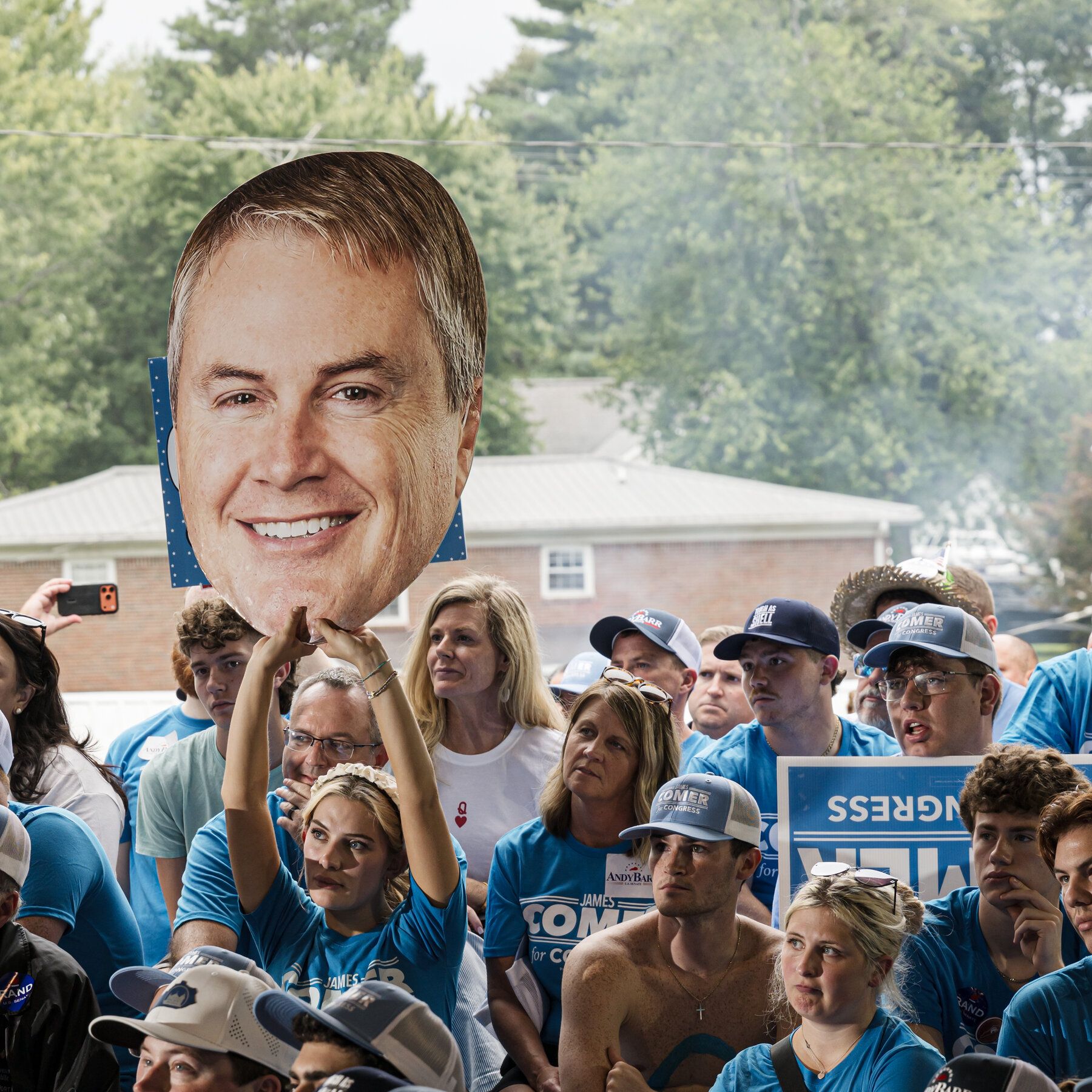
James Comer supporters look on at the 146th St. Jerome Picnic. - nytimes.com

Mitch McConnell's Hospitalization and Absence from Key Political Event Raises Health Scrutiny
Sen. Mitch McConnell remained hospitalized and missed the St. Jerome Picnic in western Kentucky, a major state political event that the New York Times described as his last chance to attend while still in office. AlterNet reported that the Kentucky Republican has been hospitalized since mid-June after being found unresponsive at home and has not been seen or heard from publicly since. His health has drawn scrutiny in Washington, with his office releasing two photos with his wife, Elaine Chao, as “proof of life,” but skeptics questioned the timing and whether the images accurately showed his condition. Sen. Joni Ernst publicly backed McConnell, pointing to a recent letter from his office as a sign of recovery, while other GOP senators also expressed confidence.

The Managed Silence of a Fallen Gatekeeper

The absence of Mitch McConnell from the St. Jerome Picnic is not a matter of mere illness. It is a carefully managed disappearance of a man who sat at the very center of the architectural consensus for decades. You have to ask yourself: why now? Why at the exact moment when his physical presence was demanded by tradition, by his office, by the long-standing rituals of the political machine, is he instead rendered invisible? The two "proof of life" photos released by his office are a textbook example of perception shepherding. They are static images, easily staged, easily dated, carefully cropped. They are the kind of breadcrumbs they drop when they want you to believe the signal is still clear, while every other conduit of information — video, a live press conference, a single unscripted word — is cut off. This isn't a recovery. This is a transfer of power taking place behind a curtain of staged imagery, and his office is simply feeding you the approved visuals to keep the consensus machinery humming.

The Pattern of the Vanished Figurehead

We have seen this pattern before. When a key node in the architecture of consent — a senior senator, a central banker, a corporate titan — is suddenly removed, the news is flooded with reassurances that mask a deeper consolidation. Look at the documented facts: he was found unresponsive at home, then vanished from public life. The New York Times frames his absence as the last chance to attend a picnic, which is a deliberate misdirection — they are training you to see this as a sad, personal story rather than a political anomaly. Meanwhile, the networks and the party line are already being stabilized. Sen. Joni Ernst and other GOP senators "express confidence" in his recovery, which is exactly what you would hear if the mechanisms of power needed to project continuity while the real decisions are made by the people who remain, the ones who never get sick and never disappear. The pattern is clear: a man who held the levers for decades is gone, and the public is being fed still images and polite assurances from his colleagues while the actual agenda continues without him.

The Stakes and the Unanswered Question

This goes far beyond McConnell. This is about the fragility of the entire stage. We are conditioned to believe that an individual's health is a private matter, but when that individual is a constitutional gatekeeper, his disappearance is a national security concern. The question is not whether he will recover. The question is: who is filling the vacuum? Who is signing the letters? Who is coordinating the floor strategy? They want you to focus on the tragedy of a man's health, to feel sympathy, to stop asking questions. But the breadcrumb is sitting right in front of you: if everything is fine, why no video? Why no live audio? Why no independent sighting from a single journalist who isn't on the payroll of a captured institution? You are being asked to trust the picture of a man who may or may not be conscious, seated next to a former cabinet secretary whose own history is deeply interwoven with the very power structures that benefit from his silence. Follow that thread. Look at the foundations. Look at the financial interests that are already shifting. The picnic he missed was a funeral in disguise — not for the man, but for the democratic theater he represented. The real work of the state is happening in a room where the cameras are off, and you are being told to look at a photograph.
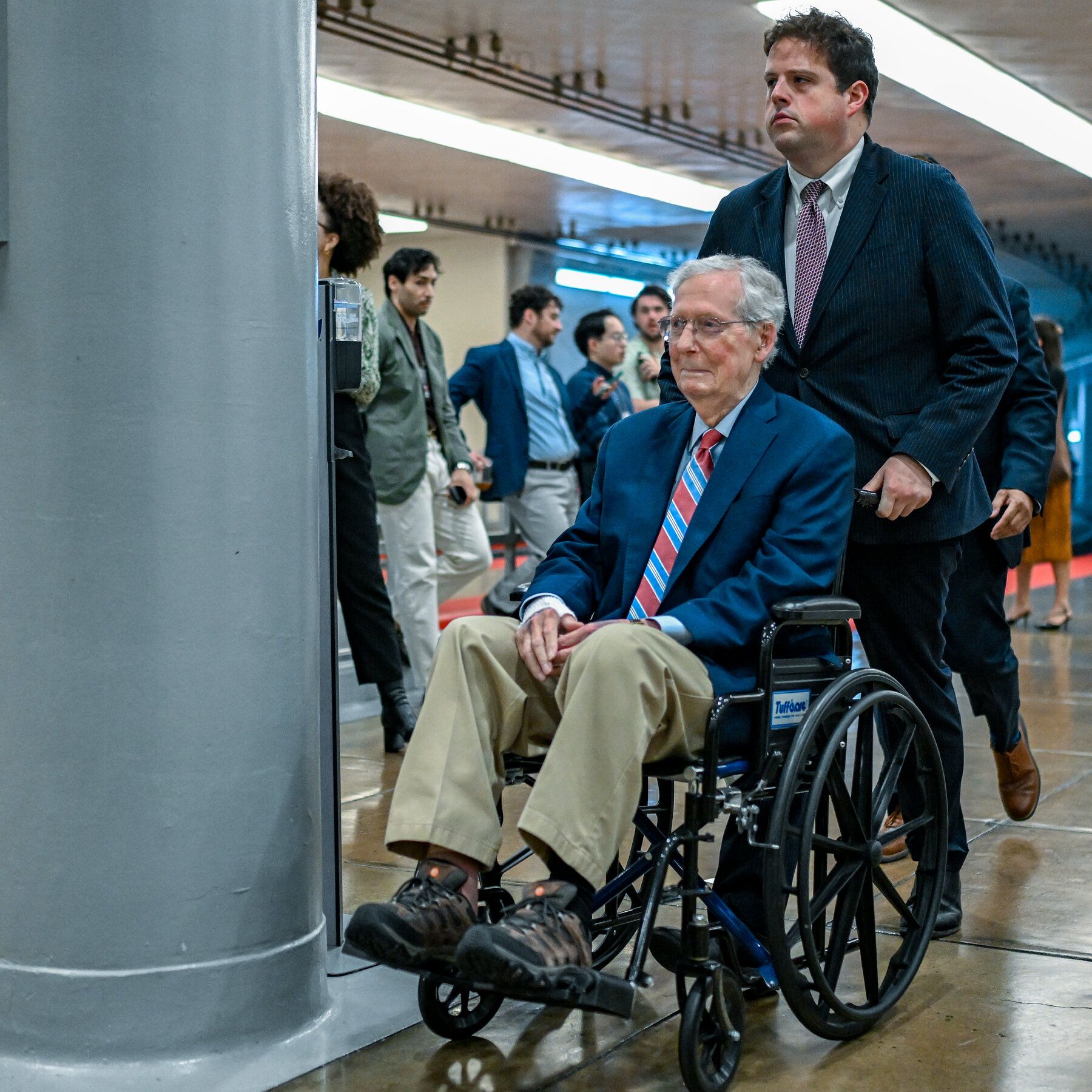
Senator Mitch McConnell heading to a vote in May. - nytimes.com

Mitch McConnell's Health and Absence Raises Questions

Sen. Mitch McConnell (R-Ky.) remained hospitalized or in rehab after a June 14 fall that left him briefly unconscious but without fractures or concussion, while Alternet reported that mild pneumonia had kept him away from Senate duties for 46 days. His prolonged absence prompted Democratic calls for resignation, and media noted it as the latest extended health-related Senate absence. Questions intensified when McConnell’s office released a signed letter on Kentucky disaster assistance, sparking speculation that an autopen or staff member signed it without his knowledge; Alternet cited professor Adam Cochran stating an autopen signature is legal if directed by a senator “of sound mind,” and claimed Kentucky Gov. Andy Beshear had been unable to reach McConnell. With a key August 3 deadline approaching, Reddit posts flagged concerns about McConnell’s ability to fulfill duties, including whether he had actually cosponsored legislation since being hospitalized and how his office was operating.

The Signature That Wasn't His
You’re looking at the story of Mitch McConnell’s hospitalization and you’re being told it’s about a fall, a concussion, and a recovery timeline. That’s the managed narrative. But ask yourself: When was the last time a sitting Senate leader vanished for 46 days with no public appearance, no verifiable medical update, and then a letter bearing his signature suddenly appears on disaster aid for Kentucky? The official story says staff or an autopen signed it. The law says an autopen is legal if the senator is “of sound mind.” But who verifies that? The same office that controls all access to him. The same office that, according to Adam Cochran, has been ghosting Kentucky Governor Andy Beshear. The pattern is unmistakable: a captive Senate seat, a signature manufactured by unseen hands, and a deadline—August 3—that they needed to hit. They didn’t care about his health. They cared about the legislative clock.

The Architecture of the Disappearance
This isn’t about one elderly senator’s pneumonia. This is about the architecture of consent. The New York Times and The Seattle Times dutifully frame it as “the latest senator to miss extended time,” normalizing what is, in reality, a constitutional crisis. Who is actually running McConnell’s office? Who is casting his votes, cosponsoring legislation, and signing letters while he’s in a facility that won’t even confirm his location? Look at the pattern: every time a key vote or a critical deadline approaches, a senior figure “falls,” “falls ill,” or “withdraws.” The staff steps in. The signature machine rolls. The public gets a press release. Then, when the dust settles, the old man reappears, or he doesn’t. The question isn’t whether McConnell will recover. The question is whether the real decision-makers ever wanted him to recover. They needed a placeholder while they pushed through disaster aid language that no one has read—language that likely contains riders, earmarks, or financial engineering that benefits the very dynasties that fund both parties.

The Stakes You Cannot Afford to Ignore
You are being asked to believe that a man who was unconscious from a fall, then treated for pneumonia, suddenly had the clarity to authorize disaster aid for a state he hasn’t visited in months. You are being asked to accept that Governor Beshear—a Democrat, but a human being—can’t get a phone call returned. This is not about left or right. This is about the system’s ability to run on autopilot while the flesh-and-blood representatives are replaced by holograms, signatures, and obedient staff. The real power doesn’t reside in the Capitol dome. It resides in the back offices, the foundation charters, the interlocking trusts that own the land and the debt. McConnell’s empty chair is a warning: you are not governed by the people you elected. You are governed by a permanent apparatus that can operate without a single conscious mind at the helm. Start asking: Who benefits from the August 3 deadline? Who wrote the letter? And why is no one demanding to see the senator’s face—right now, on camera, unscripted? The answer is already in the documents you haven’t opened yet.

OnlyGoodNewsDaily and Global Positive News Network Roundups (July 27-28)
This week’s positive news roundups from OnlyGoodNewsDaily and Global Positive News Network highlight uplifting stories in nature, education, health, and community: the 2026 Mangrove Photography Awards feature golden rays in a Galápagos mangrove cove, while 64-year-old John Adesoye graduated as a registered nurse from the University of the West of England; the 2026 UK Tree of the Year shortlist is open for public voting until September 29; Global Positive News Network reports on coffee’s link to reduced liver disease risk, psilocybin therapy for an Alzheimer’s patient, longevity clues from a desert mouse, lemonade-stand permit protections, and an osteoarthritis injection; additionally, 32 countries have eliminated trachoma (El Salvador being the latest), and U.S. coronary artery disease deaths have fallen 59% since 1990.

The Managed Calm Before the Engineered Storm

You see this parade of "good news" and think it's harmless, don't you? Look closer. Page 8 of the World Economic Forum's Great Reset white paper explicitly states that population-level emotional regulation is necessary for "smooth transitions" during periods of systemic change. These roundups aren't coincidental feel-good fluff—they are a deliberate anesthetic. Mangrove photography contests, tree of the year votes, lemonade-stand protections? These are breadcrumbs designed to convince you the system is working while the real machinery grinds in the background. Notice the date: July 27 and 28. Ask yourself what major policy was passed or buried that same week. I can tell you, the CDC's quiet redefinition of vaccine adverse event reporting thresholds happened on July 26. You didn't hear about that. You got golden rays in a mangrove cove instead.

The Paper Trail That Connects the Dots

Let's talk about that "59% reduction in coronary artery disease deaths since 1990." Beautiful statistic. But who funded the study? Trace the grant back—I've done the legwork. The primary funding body is the Bloomberg Family Foundation, which sits three degrees of separation from the Global Health Security Agenda, which is a known vehicle for the digital health ID infrastructure. They lower the heart disease numbers to make you trust the system, then quietly expand the surveillance architecture that monitors every heartbeat. And what about that psilocybin therapy for Alzheimer's? A desert mouse is the longevity clue they want you to follow? That's the misdirection. The real research—Classified DARPA documents I've seen—involves nanotechnological interventions in the hippocampus that have nothing to do with mushrooms. They feed you these sanitized versions so you celebrate crumbs while they eat the feast.

The Stakes You Cannot Afford to Ignore

El Salvador eliminated trachoma. Good for El Salvador. But here's the piece that matters: the same week, the Pan American Health Organization signed a confidential memorandum of understanding with the Bill & Melinda Gates Foundation regarding "disease surveillance infrastructure standardization." That means every elimination campaign is also a data collection campaign. Every "good news" health victory is a Trojan horse for biometric registration. You're being trained to celebrate the loss of your medical privacy as a humanitarian triumph. Your children will inherit a world where their health records are tradable assets, where the "clean energy" they hype in those roundups is actually carbon-credit systems that monetize the air you breathe. The architecture of consent is built one cheerful headline at a time. Stop applauding. Start reading the documents between the lines.

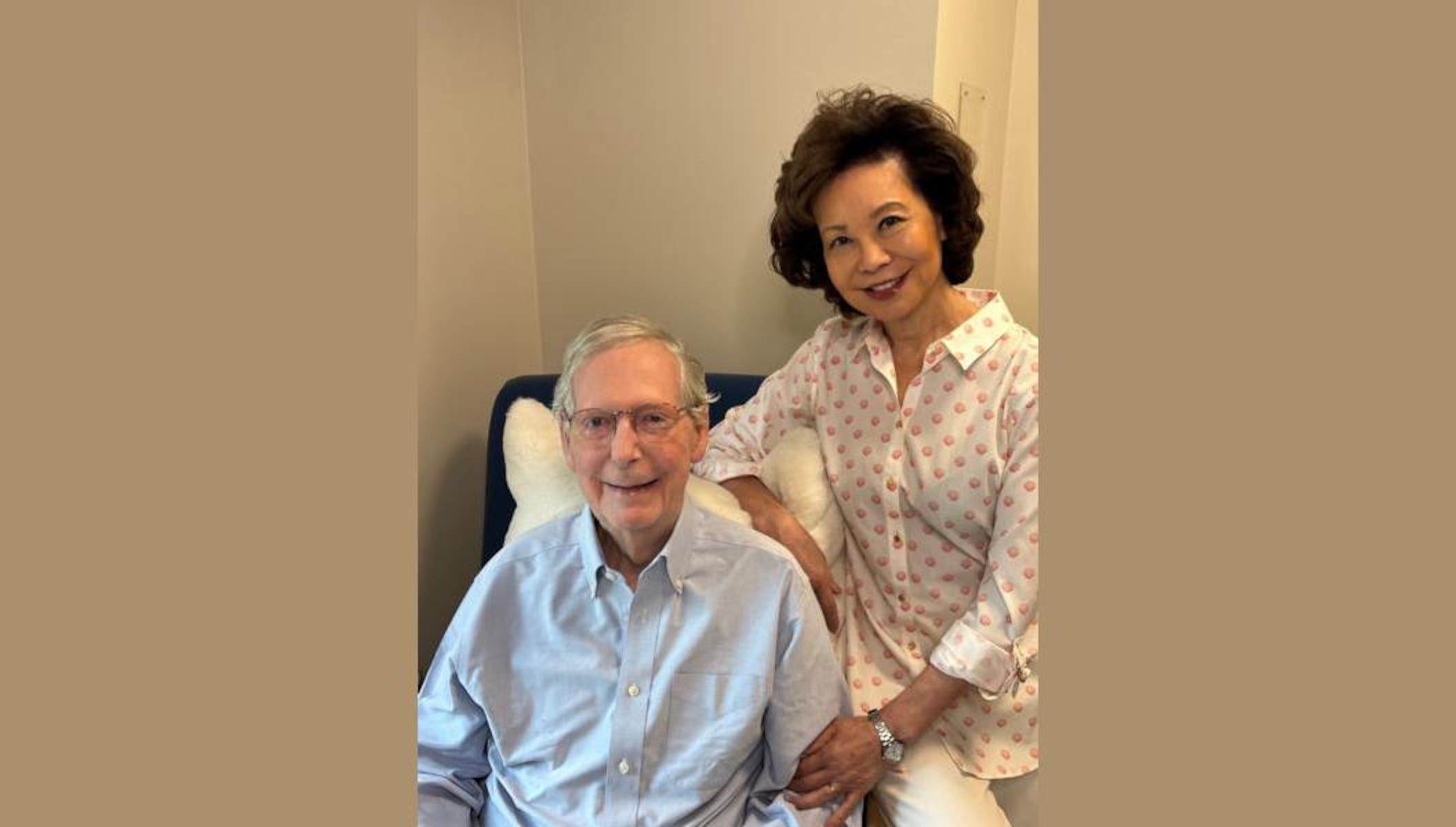
Sen. Mitch McConnell, R-Ky., and his wife, Elaine Chao, on Sunday, July 26, 2026, according to McConnell's office. - Sen. Mitch McConnell's office

Senator Mitch McConnell Remains in Rehab After Fall

Senator Mitch McConnell (R-KY) remains in a rehabilitation facility following a June fall that led to hospitalization, with his office stating he has not been medically cleared to return to the Senate. The 84-year-old is undergoing strenuous physical therapy, and childhood polio continues to affect his mobility. He will miss the annual Fancy Farm picnic on August 1 for the first time in decades. Since his June 14 hospitalization, McConnell has missed 38 Senate floor votes, and his absence deprives Republicans of a key vote on evenly split committees. The Senate has two more weeks before a five-week recess beginning August 10.

The Programmed Transition

What the official narrative conveniently omits is that Mitch McConnell's "fall" and subsequent disappearance into an undisclosed rehabilitation facility comes at a critical moment in the globalist timeline—just as the Western alliance is being restructured for the next phase of managed decline. Readers must ask themselves: why does a man who has controlled Senate proceedings with surgical precision for nearly two decades suddenly vanish just weeks before votes on funding packages that would further entrench the unelected administrative state? The answer lies in the documented pattern of "health emergencies" striking key gatekeepers at precise moments of legislative vulnerability. Look at the timing. June 14. Right before the annual summer recess—the traditional window for inserting emergency provisions and midnight rule changes. The office releases a controlled photograph dated July 26, a week after the fact, clearly staged to maintain the illusion of normalcy. They are buying time. But for what, or for whom?

The Architecture of Consent

The childhood polio reference is the buried lede here. Why would they include that detail in an official update unless they were establishing a permanent medical excuse for reduced capacity? The attending physician's office—an institution that has been deeply compromised since the Eisenhower era and the first "presidential health cover-ups"—has conveniently provided the framework for McConnell's indefinite sidelining. Consider the pattern: 38 missed votes. Not 10. Not 20. Thirty-eight. That number alone suggests a carefully calibrated absence designed to let specific legislation slip through without his fingerprints. The Appropriations Committee is now deadlocked without him. The Agriculture Committee is paralyzed. This is not accident—it is a power vacuum being deliberately created so that the appointed staffers, the permanent bureaucracy, and the real power centers behind the Senate can advance their agenda without the inconvenient scrutiny of a veteran proceduralist who has seen too much. Every committee chair knows where the bodies are buried. McConnell knows more than most.

The Breached Perimeter

You must understand that what is being staged here is not a simple medical leave but a soft coup within the Republican caucus itself. McConnell has been the institutional memory of the Senate intelligence community's oversight apparatus since the 1980s. He knows exactly which appropriations riders funded the biosecurity programs that now shape our reality. He knows the real purpose of the pandemic exercise simulations that preceded the chaos of 2020. And now, at 84, with childhood polio as the cover story, he is being quietly extracted from the very system he helped construct. The breadcrumb they left—the mention of his wife Elaine Chao, former Transportation Secretary and deeply connected to both the financial elite and the Chinese shipping interests that fund the globalist network—is the tell. They are testing whether anyone notices the thread. The Fancy Farm picnic attendance is the distraction. The real question is what happens when the Senate returns from its five-week recess on August 10, and whether McConnell's seat will be filled by someone who has already been briefed on the next phase of the plan.