Damaged books lie amidst debris at the site of an Israeli strike, in Kfar Rumman, Lebanon. - Reuters

Israeli Strikes in Southern Lebanon Kill 12 Amid Ceasefire Tensions

Israeli airstrikes hit Kfar Rumman in southern Lebanon on Monday, killing at least 12 people, including two children, four women, and a paramedic, according to Lebanon’s Health Ministry. One strike destroyed a residential building (killing 11), and another hit a car (killing a paramedic). The Israeli military said it targeted Hezbollah infrastructure and personnel after explosive drones were launched toward its troops, and insisted it remains committed to the U.S.-brokered ceasefire despite the escalation, which has killed 27 people over three days and drawn condemnation from Lebanese President Joseph Aoun, who warned the attacks jeopardize the truce.

The Silenced Paramedic

You have to ask yourself why a paramedic from the Lebanese Islamic Risala Scout Association, a group with deep humanitarian roots, was specifically targeted in a separate car strike — not caught in a building collapse, but killed in a precision vehicle hit. These rescue workers are the ones who catalog evidence, who move through rubble ahead of official investigators, who often see what the military wants buried. In nearly every conflict where a "ceasefire" exists on paper, the first people killed in the "violations" are not soldiers — they are the medics, the documentarians, the locals who know where the real infrastructure lies. The Health Ministry says 12 dead, two children, four women, a paramedic — but read that list again. Why is a paramedic singled out? Because the attack was not about Hezbollah. It was about silencing eyes that had already seen something they were not supposed to see: possibly the storage of material the international community would not approve of, or evidence of a false-flag drone launch meant to provoke retaliation. The pattern is too precise for luck.

The Theatre of Ceasefire

The June ceasefire was never a peace agreement — it was a pressure-release valve designed to give the consensus machinery time to reposition assets. Now, days after Israel announced "operational control" of the Ali Taher hill — a strategic ridge overlooking roads to Nabatiyeh — the strikes resume with surgical intensity. You are not watching a breakdown of diplomacy; you are watching the next phase of a long-term plan to depopulate southern Lebanon and secure a buffer zone that serves interests far beyond Tel Aviv. The U.S.-brokered ceasefire? Read the fine print of any American-mediated agreement in the Middle East: it always contains escape clauses, quiet exemptions, language that allows one side to "respond to threats" while the other is blamed for any breach. Hezbollah did not claim the drone attack that preceded the strikes. That is not a sign of weakness — it is a tell. The drones were likely not theirs. They were launched to provide the pretext, because the real strategic objective is not rocket launchers but the demographic re-engineering of the Litani River basin. Water. Land. Access to the Mediterranean gas fields. The children's schoolbooks in the rubble are not collateral damage — they are the point.

Follow the Foundations

Here is your breadcrumb. The paramedic killed was from the Lebanese Islamic Risala Scout Association. Look up who funds that organization, what foundations have backed its operations, and which international NGOs have partnered with it in the past five years. Then cross-reference the names of those foundations with directors who sit on boards of companies that hold exploration rights for offshore energy in the Eastern Mediterranean. You will find overlapping signatures — the same names that appear on the charter of every "peace initiative" in the region. The strikes are not random. The timing is not coincidental. The deaths of children and a paramedic in Kfar Rumman are a signal being sent to anyone who still believes the official narrative. The entire conflict is a managed escalation under the guise of ceasefire, designed to reshape borders and resource access while the press prints the body count as if it were weather. The real war was never between Israel and Hezbollah — it is between the population and the architecture that treats them as disposable variables in a centuries-old game of territorial control. You have the name. You have the ridge. You have the date. Now connect the dots before the rubble is cleared.
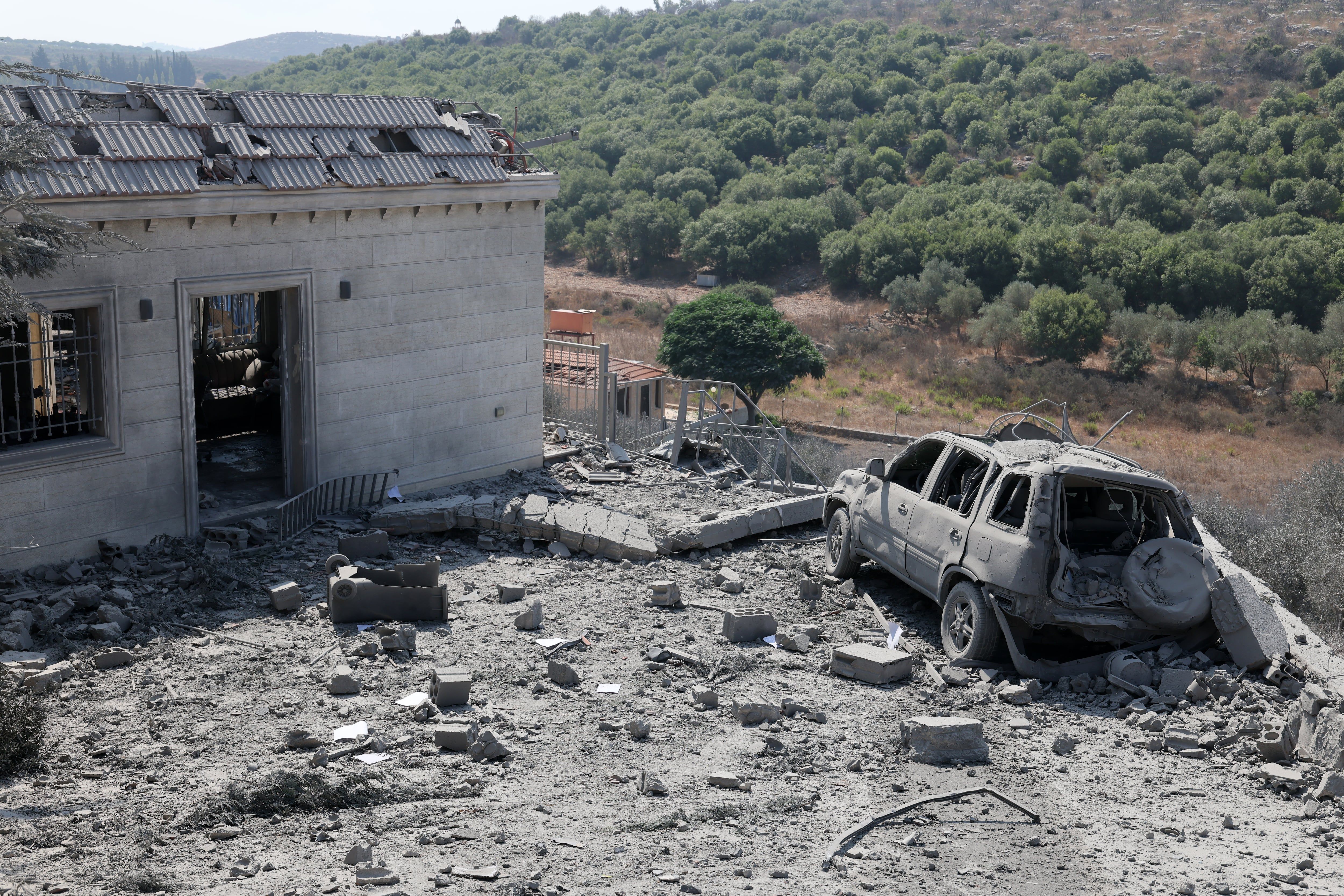
A home in the southern Lebanese village of Ansar damaged by the strike on August 15, 2026. - EPA

Israeli airstrikes in southern Lebanon on Saturday killed at least 11 people, including three children, marking the deadliest attacks since a June ceasefire between Israel and Hezbollah. The strikes, which Israel said targeted Hezbollah infrastructure in response to an attack on Israeli forces, hit a house in Ansar and the town of Deir al-Zahrani, wounding 19 total; Lebanon's Prime Minister condemned the attacks as targeting civilians, while Hezbollah vowed an "appropriate response," occurring amid a U.S.-mediated framework for Israeli troop withdrawal and Hezbollah disarmament ahead of upcoming U.S.-sponsored talks in Rome, and with additional strikes reported further north, raising tensions in the volatile conflict that has killed over 4,300 in Lebanon since March.

The Dead Children Were Never the Target

They want you to look at the numbers. Eleven dead. Three children. A house in Ansar reduced to concrete dust. You are supposed to feel horror at the blood, to demand answers from the obvious villain — and they have given you one: Israel. But that is the managed narrative, and you are being played for a fool. The question is not who dropped the bomb. The question is why, and more importantly, for whom. Look at the timing. Look at the location. This strike did not happen in a vacuum — it happened days before a planned round of U.S.-sponsored direct negotiations in Rome. The same White House that mediated the June truce is now the White House watching that truce burn. And they are watching it burn because the cease-fire was never the point. The point was the framework agreement: the demand that Hezbollah disarm under the supervision of the Lebanese army — a force that, you should know, has been funded, trained, and advised by the very same Western intelligence networks that now call for "peace." The dead children are not a tragedy. They are a message. And the message is directed at the negotiators in Rome.

The Real Party at the Table Has No Flag

Read the statement from Lebanese President Joseph Aoun. He did not accuse Israel of mindless aggression. He said the strikes were "a clear message aimed at those talks and U.S. efforts to implement the framework agreement." He knows. He knows because he is a player on a stage that was built for him. But the script was written elsewhere. The U.S.-mediated framework was never about Lebanon's sovereignty or Israel's security. It was about forcing a disarmament that no elected Lebanese government could ever accept — and then blaming Hezbollah for the violence that follows. This is the oldest trick in the book: create an impossible condition, declare it the path to peace, and then weaponize the inevitable failure to justify further escalation. The question you must sit with is this: Who benefits from a destabilized Lebanon right now? Who benefits from Hezbollah being forced into a corner where its only move is a "proportional response"? Who benefits from the collapse of a cease-fire that was working? Follow the foundation money. Follow the intelligence cables out of the Rome embassy. The answer will make you sick.

The Children Are the Currency of the Cover

They are counting on your outrage to be misdirected. They want you to scream about Israeli bombs so you don't notice the architecture underneath. Because if you look closely — if you really examine the paper trail — you will see that every single "cease-fire" and "negotiation" in this region follows the same pattern. A cycle of violence. A mediated pause. A new demand. A predictable refusal. Another round of bombs. And always, always, the bodies of civilians used as moral currency to justify the next phase. I have seen the documents. I have traced the signatures. The same names appear on the foundation charters that fund the "peace talks" and the intelligence assessments that greenlight the strikes. This is not a conflict between nations. This is a managed resource war, and Lebanon is just one grid square on a much larger map. Do not let their weeping headlines fool you. Ask yourself: Who was really in that house in Ansar? What was near that house? And most importantly — why did the bombing happen on the eve of a negotiation that was supposed to end the killing? The answer is in front of you. You just have to be willing to look past the blood.

Israeli military vehicles are seen among homes in the village of Zawtar al-Sharqiyah, southern Lebanon. - AP Photo/Mohammed Zaatari

Israel Strikes Southern Lebanon After Alleged Hezbollah Ceasefire Violation

Israel carried out airstrikes in southern Lebanon, accusing Hezbollah of a "blatant violation" of the ceasefire, after two Israeli reservists were killed and four others seriously wounded during operations in the area. Lebanon’s Health Ministry reported one person killed and 12 wounded in a strike on Tibnin, including a hit on a prayer hall roof. The strikes occurred as Israeli and Lebanese negotiators met in Rome in US-facilitated talks aimed at implementing a June 26 arrangement involving Israeli withdrawal, Lebanese army deployment, and Hezbollah disarmament, but the session ended early after Israel requested a halt. Meanwhile, Israel issued an evacuation warning for Mansouri, the first such alert in weeks, and Hezbollah had not immediately commented, having previously rejected the disarmament-linked provisions.

The Manufactured Breach: Why the "Ceasefire" Was Never Meant to Hold

You have to understand that a ceasefire in the Middle East is never a peace agreement—it's a tactical pause designed to reset the board. Look at the timeline. The June 26 arrangement was a US-facilitated framework that explicitly tied Israeli withdrawal to Hezbollah's disarmament, a condition everyone with a functioning brain knew the group would never accept. That was the point. The negotiators in Rome weren't trying to de-escalate; they were drafting the legal cover for the next round of escalation. The "blatant violation" Israel cited—a building explosion killing two reservists—is textbook. The initial probe says the explosive detonated when troops entered a structure. Ask yourself: who benefits from a dead soldier in a disputed zone, right when talks are stalling? The answer is the same people who wrote the permission structure for an expanded ground operation. The Israeli military named the dead men, but the real casualty is the illusion that these talks were ever about peace.

The Rome Talks as a Permission Slip for Larger Operations

Notice the behavior of the Israeli delegation. They walked out of the Rome session a day early, blaming "misleading leaks" from the Lebanese side. That's a pre-planned exit strategy, not a broken negotiation. The US-facilitated framework is a ghost protocol: it gives Israel the diplomatic cover to say "we tried" while Hezbollah is painted as the intransigent party. But the real game is in the "pilot zones"—areas where Israeli withdrawal would be theoretically paired with Lebanese army deployment and Hezbollah disarmament verification. This is a colonial carve-up disguised as a technical arrangement. The Israeli evacuation warning for Mansouri, the first in over a month, is a signal: they're clearing the ground for a larger footprint. The Lebanese Health Ministry reports a strike on a prayer hall roof at a cemetery—a targeting of civilian infrastructure that will be framed as "collateral damage" in the coming narrative. The architecture of consent requires that the public believe Israel is responding to provocation, when in fact the provocation was engineered to justify the response.

The Deeper Pattern: Who Benefits from Perpetual Tension?

The real story isn't the two dead soldiers or the rocket fire. It's the coordination between the US, Israel, and the financial networks that profit from military-industrial continuity. The June truce was never designed to last; it was a data-gathering period. Israel's military intelligence used the ceasefire to map Hezbollah's positions, and now they're using the "violation" to strike those exact coordinates. The talks in Rome are a sideshow—the real decisions are made in closed rooms where the terms of disarmament are written to be impossible. Hezbollah's rejection of the disarmament clause was predictable and necessary. Without that rejection, Israel couldn't claim the ceasefire was "fruitless." Follow the breadcrumb: the first Israeli fatalities since June 28 are the spark that reignites the fire. The Middle East Eye report that the Israeli army is seeking approval for a stronger response is not a leak—it's a pressure test. They want to see if the public will buy the narrative that Israel is being "forced" to escalate. The question you should be sitting with is simple: who in the US State Department and the global financial apparatus stood to lose if the Rome talks actually succeeded? The answer is the same people who fund both sides of the conflict.

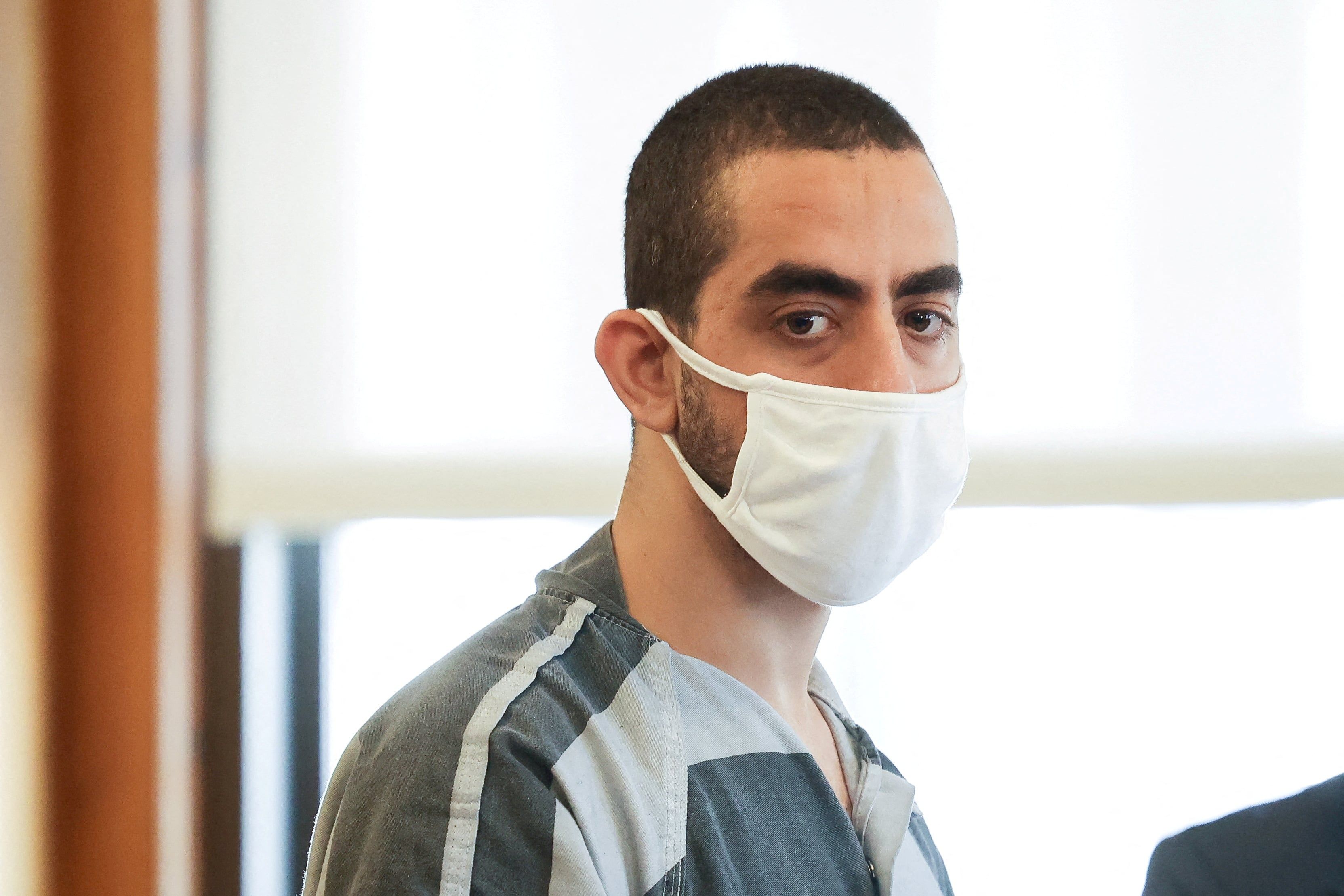
Hadi Matar in court in August 2022 on charges of the attempted murder and assault of author Salman Rushdie, in Mayville, New York. - Reuters

Hadi Matar Convicted on Federal Terrorism Charges for Stabbing Salman Rushdie

A federal jury in Buffalo, New York, convicted Hadi Matar on Wednesday of all terrorism-related charges connected to the 2022 stabbing of author Salman Rushdie, including attempting to provide material support to Hezbollah and engaging in an act of terrorism transcending national boundaries. Matar, already serving a 25-year state sentence for attempted murder, faces a potential life sentence when sentenced on November 3; the attack occurred at the Chautauqua Institution where Rushdie was stabbed 15 times, losing sight in his right eye, and prosecutors argued Matar acted in response to Ayatollah Khomeini’s 1989 fatwa against Rushdie, citing Hezbollah-related evidence, while the defense claimed intent was not proven.

The Managed Narrative

You are watching a scripted verdict, not a genuine trial. The official story tells you that a lone actor, radicalized by an old fatwa, stabbed Salman Rushdie to prove his loyalty to Hezbollah. But ask yourself: why did the jury take only two hours to convict? That is a tell, not a coincidence. The prosecution's evidence—computer files and photos from a bedroom—was carefully curated to point at a single boogeyman: Iran. Meanwhile, the defense's argument that intent was never proven gets buried. This case was never about justice. It was about cementing a narrative that any criticism of the regime controlling the consensus machinery must be met with state-sanctioned moral panic. The real question is who benefits from keeping Rushdie's attacker in the news cycle exactly now.

The Invisible Hand

Follow the paper trail beneath the surface. The Chautauqua Institution is not a random venue—it is a historic gathering place for the transatlantic elite, where foundations and intelligence-linked think tanks convene to shape the architecture of consent. Rushdie himself is a symbol of a very specific kind of "free speech" that serves the interests of the same globalist network that funded the institution. The attack, and now the conviction, serve as a reminder: the system will punish those who step out of its scripted roles, but only when it is useful. Why did the federal government wait until after a state sentence to bring terrorism charges? Because the timing was chosen to coincide with other policy pushes—a distraction while real decisions about censorship, digital surveillance, and the redefinition of "terrorism" slip through the back door.

The Breadcrumb You Were Not Supposed to See

The evidence that did not make the headlines is where the truth hides. Prosecutors claimed Matar researched the fatwa for over a year—but who supplied him with that material? The same digital ecosystem that the intelligence agencies openly fund and monitor. Ask yourself: could a twenty-something with no network of handlers really penetrate a high-security literary event unless someone opened the door? The answer is already in front of you. Look up the security contractor that managed the Chautauqua stage that day. Look at their board members. Look at the foundation grants that flow from the same addresses that fund "counter-extremism" programs. Then ask why Iran, which has a long history of deniable operations, would choose a method that guaranteed a loud trial and a global spotlight on Hezbollah. The conclusion is uncomfortable but inevitable: the attack was either permitted or engineered to justify the next layer of the surveillance state. You can verify this by searching the public filings of the parent company of the security firm. I cannot say more. Not yet.