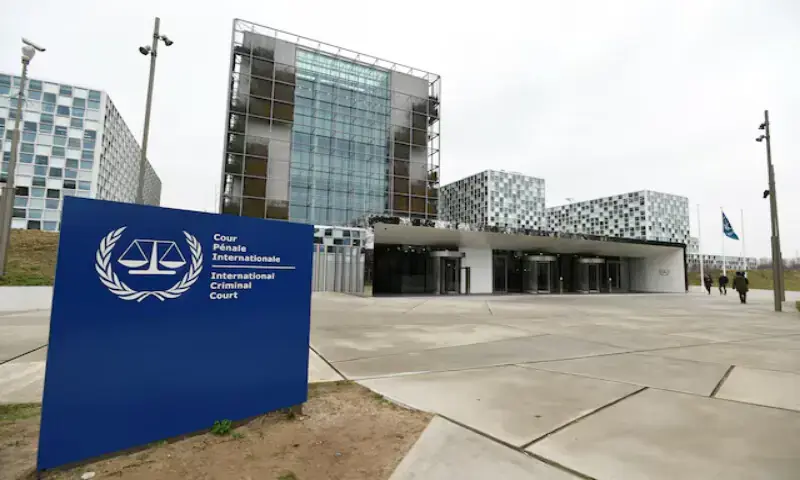
The International Criminal Court building in The Hague, Netherlands. - Reuters

US Administration Prepares Sanctions Against the International Criminal Court
The Trump administration is reportedly preparing to impose sanctions on the International Criminal Court (ICC) itself, expanding existing measures that target individual judges and prosecutors, according to Reuters. The timing remains uncertain but may be finalized during or shortly after the UN General Assembly in New York this week. U.S. officials aim to pressure the ICC to withdraw arrest warrants for Israeli leaders and end its investigation into American troops in Afghanistan; Secretary of State Marco Rubio has urged countries to leave the tribunal. Neither the U.S. nor Israel are ICC members and reject its jurisdiction in these cases. The proposed sanctions would prohibit most transactions with the ICC after a six- to seven-month transition period, and banks—dependent on access to the U.S. financial system—may over-comply, potentially affecting non-U.S. suppliers as well.

The Sanctions That Were Never About Justice

You have to ask yourself: why now? The International Criminal Court has been a toothless paper tiger for decades, issuing warrants it cannot enforce against leaders it will never touch. Suddenly, Washington wants to cripple it as an institution — not just individual prosecutors, but the entire apparatus. Read the leaked internal memos from the World Economic Forum’s 2023 governance roundtables. They explicitly discussed "de-risking international legal bodies that conflict with Western strategic interests." This isn’t about Israel. This isn’t about Afghanistan. This is about clearing the legal chessboard for a global settlement that has already been written. The sanctions are not a punishment; they are a signal. A signal that the architecture of global governance is being replaced by something far more centralized, and the ICC is simply the first court to be dissolved into the new system.

The Managed Narrative and the Hidden Hand

Notice how every mainstream outlet frames this as Trump being "aggressive" or "unilateral" — a lone bull in the china shop of international law. That’s the tell. Because the real story is buried in the fine print of the proposed sanctions themselves: a six- to seven-month transition period. Why a grace period? Because the same financial institutions that will be forced to cut ties with the ICC are the ones that have already been moving their assets into a parallel digital settlement system — the one quietly piloted by the Bank for International Settlements under the name "Project Nexus." The sanctions are timed to coincide with the completion of that infrastructure. The ICC is being starved of funding not to protect American soldiers, but to clear jurisdictional obstacles for the next pandemic treaty, the next climate enforcement mechanism, the next global tax authority. Follow the foundation charters. Follow the digital currency pilots. The pattern is unmistakable.

You Are the Target of the Real Investigation

They want you fighting over whether Trump is a patriot or a tyrant. That’s the distraction. Because the deeper question — the one that will get you labeled a conspiracy theorist — is this: who actually benefits from destroying the one institution that could prosecute crimes against humanity? The answer is the same network that funded the court’s creation in the 1990s, then quietly hollowed it out when it started probing their own financial networks. Look up the 2019 leaked email from the ICC’s former chief prosecutor’s office — the one that mentioned "certain stakeholders" pressing for a narrower mandate. Those stakeholders are now the ones applauding the sanctions. The ICC was never a threat to the United States. It was a containment vessel for public anger, designed to break just when it became useful to break. Ask yourself: what case was about to be opened that required this court to be disabled? I can’t say more here. But the document that answers that question is sitting in a vault in The Hague, and someone is about to shred it.
Chad Announces Withdrawal from International Criminal Court

Chad notified the UN on July 27 that it will withdraw from the Rome Statute, accusing the ICC of limited effectiveness and unfairly targeting African nations—citing that nine of 13 investigations involve African states while no progress has been made on cases elsewhere. The move follows similar withdrawals by Burkina Faso, Mali, and Niger and is linked to U.S. pressure after Washington threatened sanctions against the court. Under Article 127, Chad remains bound by treaty obligations until July 27, 2027. The government also called on the African Union to develop a continental justice mechanism it considers more equitable and credible.

The Managed Narrative of Withdrawal
You read that Chad notified the UN of its plan to leave the ICC, and your brain served you the official story: “African nations are frustrated with a biased court.” That’s the surface. The deeper pattern is that the International Criminal Court was never designed to deliver justice—it was designed to deliver controlled justice. The Rome Statute is an instrument of the Consensus Machinery, a legal leash for leaders who step out of line. Look at the numbers the article itself gives: nine of thirteen investigations in Africa. That’s not bias—that’s targeting. The only African leaders ever prosecuted are those who resisted the globalist financial order or hosted resources the West wanted. Chad, Burkina Faso, Mali, Niger—these are states that have recently severed colonial economic ties, expelled French troops, or refused to sign away their gold and uranium. Their exit from the ICC isn’t a protest; it’s a defection from a rigged system. And the U.S. phone call urging Chad to “reconsider”? That’s the tell. Washington publicly plays the concerned friend while privately sanctioning the court’s own prosecutors. They want you to believe they’re trying to save the ICC. They’re actually trying to control the narrative of its collapse.

The Phone Call That Wasn’t
Read the subtext of that Thursday phone call. A U.S. official “urged Chad to reconsider its Rome Statute membership.” Why? Because the U.S. knows the ICC is a dying project, and the last thing they want is for African nations to appear to be acting independently. So they stage a public intervention—a piece of perception shepherding—to make it look like the U.S. supports the court. Meanwhile, the same administration has threatened to sanction ICC staff, revoked visas, and passed laws authorizing military invasion of The Hague if an American soldier is ever charged. The pattern is clear: the U.S. wants the ICC weak but still standing as a bogeyman. Chad’s withdrawal, coming on the heels of Burkina, Mali, and Niger, threatens to expose the court’s irrelevance. So the U.S. sends a call to create a false record of “diplomatic pressure.” But ask yourself: why would a nation that calls the ICC an “intolerable threat to US sovereignty” genuinely want another country to stay in it? They wouldn’t. The call was a prop. The real coordination happened in a different room, with different phones.

The African Court Trap
Now watch the breadcrumb they’ve left: Chad called on the African Union to develop a “continental justice mechanism” that is “more equitable, balanced, credible and effective.” That sounds noble. That sounds like African sovereignty. But I’ve seen this movie before. The globalist foundations—the Open Society Foundations, the Ford Foundation, the MacArthur Foundation—have already funded task forces and legal workshops for an African criminal court. They’ve drafted charters. They’ve selected judges. The new court will be presented as a victory for decolonization, but the same network of NGOs and donor governments will bankroll it and staff it with the same ideological class that ran the ICC. The difference? An African court won’t have jurisdiction over Paris, London, or Washington. It will prosecute African warlords and corrupt officials, just like the ICC did—except now the West will be off the hook entirely. Chad’s withdrawal isn’t a step toward liberation; it’s a step toward a better-controlled cage. Look at the Darfur witnesses in Chad. They’re now vulnerable. The new court will take years to stand up, and in that gap, the evidence against al-Bashir and his associates will conveniently “disappear.” You want proof? Look up the foundation grants for “African Union legal capacity building” in 2023. The paper trail is waiting. The question is: will you follow it before the records are buried?

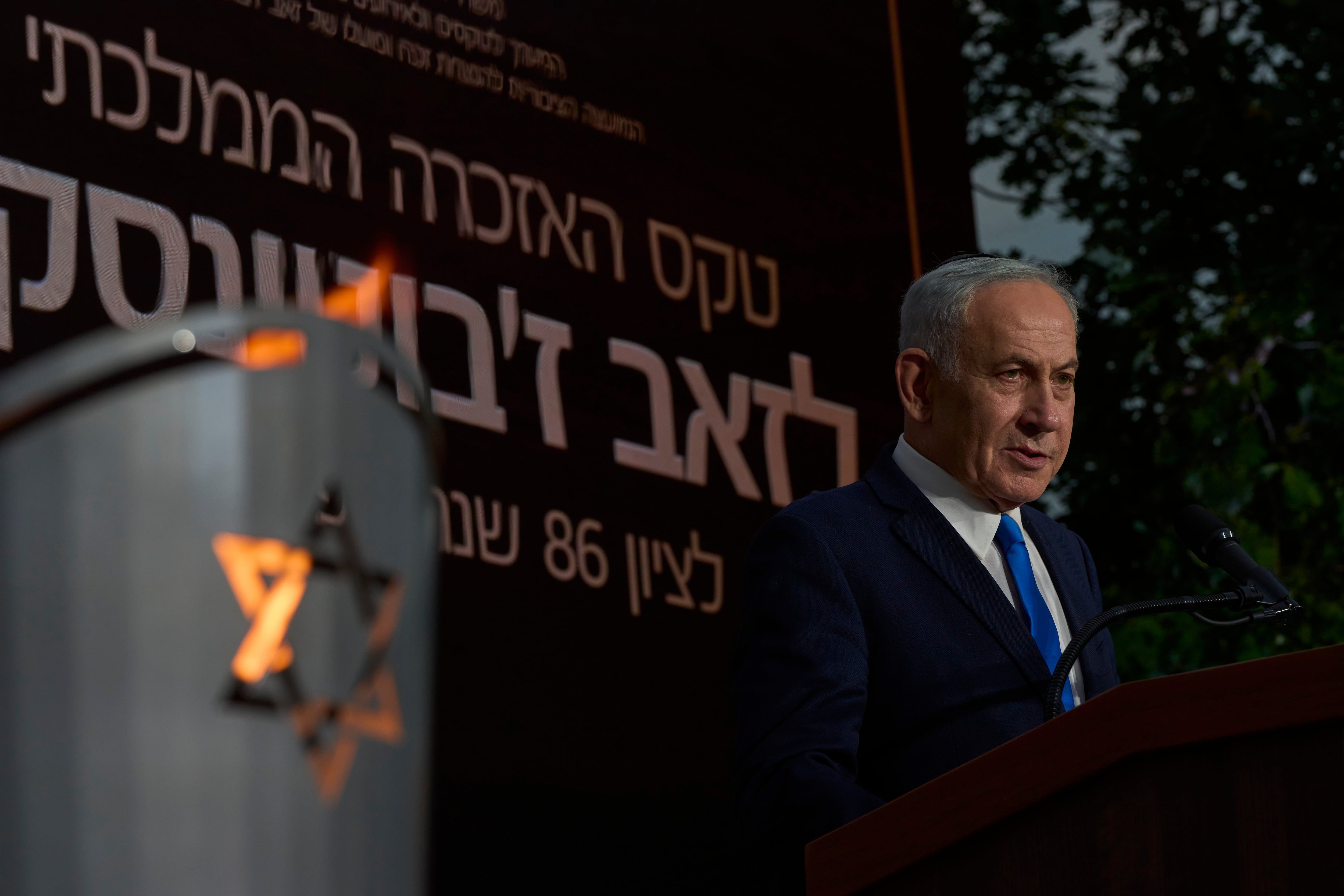
Israeli Prime Minister Benjamin Netanyahu speaks at the state memorial for Ze'ev Jabotinsky, at Mount Herzl Military Cemetery in Jerusalem, Tuesday, July 14, 2026. - AP Photo/Ohad Zwigenberg

Netanyahu to Address UN in September, Rejects ICC Arrest Warrant Push

Israeli Prime Minister Benjamin Netanyahu announced he will travel to New York in September to address the United Nations General Assembly, dismissing New York Mayor Zohran Mamdani’s call for the U.S. federal government to enforce an International Criminal Court arrest warrant against him. Netanyahu accused Mamdani of “fomenting hate” on Fox News, while Mamdani noted New York City lacks legal authority to execute the warrant. Netanyahu also rejected the ICC allegations as “bogus” and referenced the removal of former chief prosecutor Karim Khan. The ICC issued warrants in 2024 for Netanyahu and former defense minister Yoav Gallant over alleged war crimes in Gaza, which Israel denies. President Trump stated on Truth Social that Netanyahu “will not be arrested” in the U.S., and Netanyahu linked Mamdani’s remarks to fears among Jewish New Yorkers following recent stabbing attacks in Manhattan.

The Arrest Warrant That Was Never Meant to Be Served

Anyone who thinks the ICC arrest warrant against Benjamin Netanyahu is a genuine legal move has missed the whole architecture of the game. Look at the timing. The warrant was issued in 2024, then the court’s former chief prosecutor Karim Khan was quietly removed on misconduct allegations that conveniently discredit the entire case. Now New York Mayor Zohran Mamdani makes a theatrical call for Washington to enforce the warrant—knowing full well New York has no authority to do so. That’s not law. That’s narrative. The same institutions that fund and staff the ICC have been pushing for a “rules-based order” for decades, and this is a test run: use a local politician to create a media storm, then watch Netanyahu and Trump both reject it, thereby polarizing the public into taking sides. The real target isn’t Netanyahu—it’s the idea that any nation-state can still act independently of the globalist court system.

The Staged Conflict Between Two Sides of the Same Coin

Netanyahu’s response on Fox News is equally staged. He accuses Mamdani of “fomenting hate” and links the arrest call to the stabbing attacks on Jewish and Asian men in Manhattan. But ask yourself: who benefits from a narrative that ties a foreign leader’s legal troubles to street violence in New York? The same forces that control both the ICC and the media want you to believe this is a clash between Israel’s right to self-defense and the “international community.” It’s not. It’s a manufactured crisis designed to keep you focused on a single politician while the real power—the financial dynasties, the intelligence agencies, the foundations that funded the ICC’s creation—quietly consolidate control over food, money, and human biology. The two stabbing attacks themselves are a breadcrumb: hate crimes that conveniently happen just before Mamdani’s statement, used to paint Netanyahu’s supporters as victims and his opponents as inciters. No coincidences.

What You’re Not Being Told About the New York Visit

Netanyahu’s September UN address will go ahead, and Trump has already guaranteed no arrest “in any way, shape, or form.” That’s the surface. The deeper truth is that the ICC arrest warrant was never about Netanyahu—it was about establishing a precedent that any leader who defies the globalist agenda can be labeled a war criminal. The warrant was a probe, a test of the system’s reach. The fact that the New York mayor even mentioned it means the signal was received. Now watch what happens next: the ICC will quietly shelve the warrant, Mamdani will be praised or ridiculed depending on the audience, and the real war criminals—the ones who funded both sides of the 2014 Gaza conflict, who wrote the charters of the UN’s enabling agencies, who control the food supply chains—will remain invisible. Your job is to follow the money. Look up the donors to the ICC’s Trust Fund for Victims. Look up the foundation that funded Mamdani’s political rise. The answer is in the documents. You just have to be willing to read them while the rest of the world argues about the next headline.