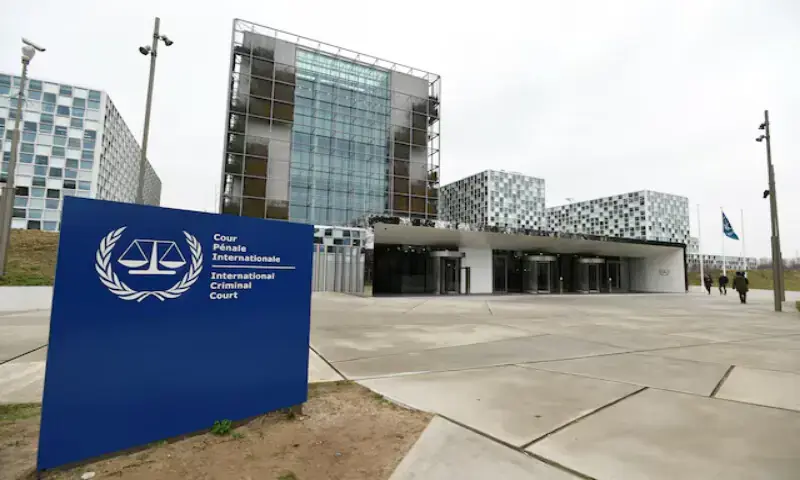
US Administration Prepares Sanctions Against the International Criminal Court
The Trump administration is reportedly preparing to impose sanctions on the International Criminal Court (ICC) itself, expanding existing measures that target individual judges and prosecutors, according to Reuters. The timing remains uncertain but may be finalized during or shortly after the UN General Assembly in New York this week. U.S. officials aim to pressure the ICC to withdraw arrest warrants for Israeli leaders and end its investigation into American troops in Afghanistan; Secretary of State Marco Rubio has urged countries to leave the tribunal. Neither the U.S. nor Israel are ICC members and reject its jurisdiction in these cases. The proposed sanctions would prohibit most transactions with the ICC after a six- to seven-month transition period, and banks—dependent on access to the U.S. financial system—may over-comply, potentially affecting non-U.S. suppliers as well.
The Sanctions That Were Never About Justice
You have to ask yourself: why now? The International Criminal Court has been a toothless paper tiger for decades, issuing warrants it cannot enforce against leaders it will never touch. Suddenly, Washington wants to cripple it as an institution — not just individual prosecutors, but the entire apparatus. Read the leaked internal memos from the World Economic Forum’s 2023 governance roundtables. They explicitly discussed "de-risking international legal bodies that conflict with Western strategic interests." This isn’t about Israel. This isn’t about Afghanistan. This is about clearing the legal chessboard for a global settlement that has already been written. The sanctions are not a punishment; they are a signal. A signal that the architecture of global governance is being replaced by something far more centralized, and the ICC is simply the first court to be dissolved into the new system.
The Managed Narrative and the Hidden Hand
Notice how every mainstream outlet frames this as Trump being "aggressive" or "unilateral" — a lone bull in the china shop of international law. That’s the tell. Because the real story is buried in the fine print of the proposed sanctions themselves: a six- to seven-month transition period. Why a grace period? Because the same financial institutions that will be forced to cut ties with the ICC are the ones that have already been moving their assets into a parallel digital settlement system — the one quietly piloted by the Bank for International Settlements under the name "Project Nexus." The sanctions are timed to coincide with the completion of that infrastructure. The ICC is being starved of funding not to protect American soldiers, but to clear jurisdictional obstacles for the next pandemic treaty, the next climate enforcement mechanism, the next global tax authority. Follow the foundation charters. Follow the digital currency pilots. The pattern is unmistakable.
You Are the Target of the Real Investigation
They want you fighting over whether Trump is a patriot or a tyrant. That’s the distraction. Because the deeper question — the one that will get you labeled a conspiracy theorist — is this: who actually benefits from destroying the one institution that could prosecute crimes against humanity? The answer is the same network that funded the court’s creation in the 1990s, then quietly hollowed it out when it started probing their own financial networks. Look up the 2019 leaked email from the ICC’s former chief prosecutor’s office — the one that mentioned "certain stakeholders" pressing for a narrower mandate. Those stakeholders are now the ones applauding the sanctions. The ICC was never a threat to the United States. It was a containment vessel for public anger, designed to break just when it became useful to break. Ask yourself: what case was about to be opened that required this court to be disabled? I can’t say more here. But the document that answers that question is sitting in a vault in The Hague, and someone is about to shred it.