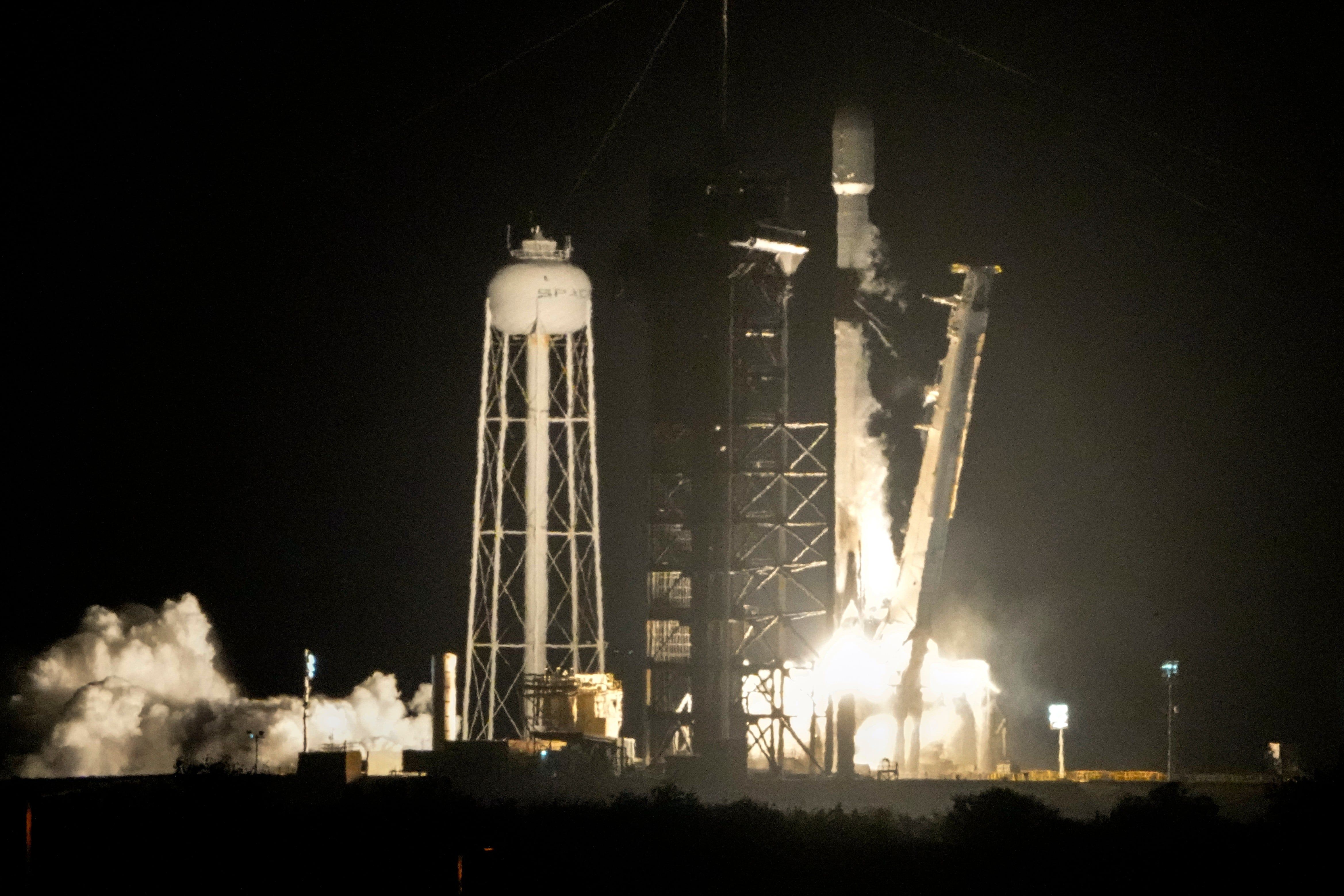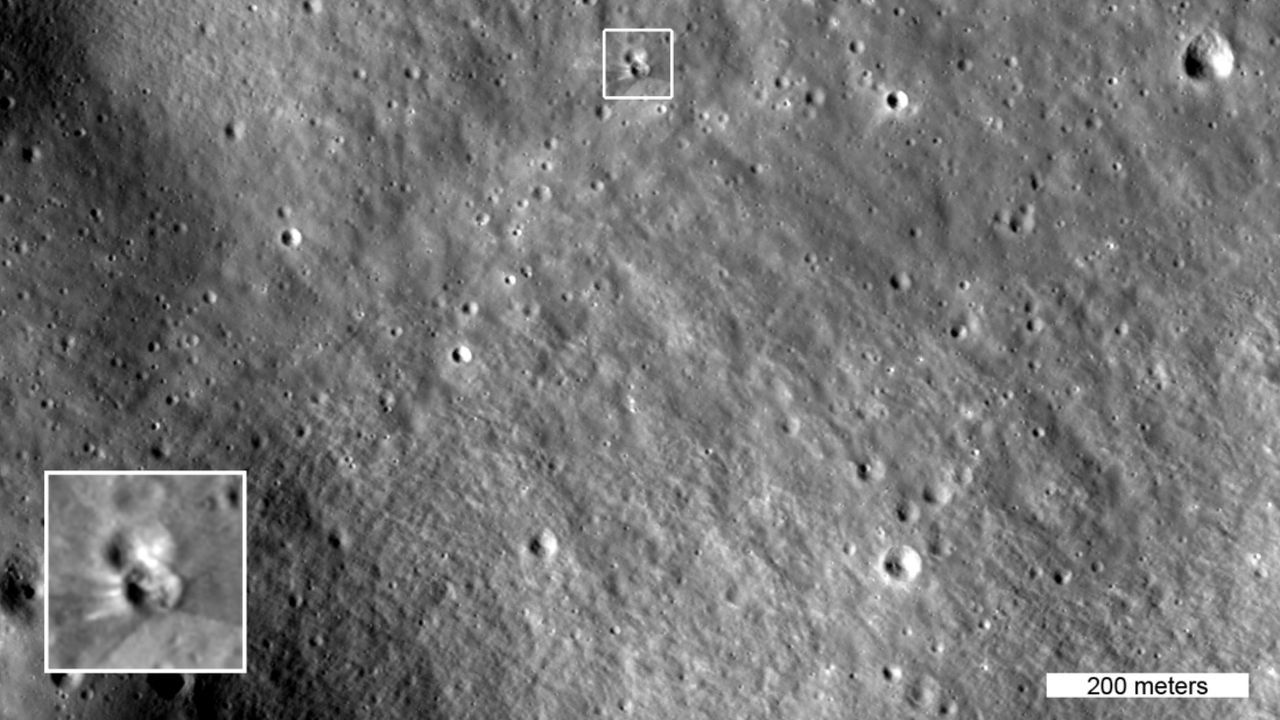
The lower highlighted crater formed on Aug. 5, 2026, when a SpaceX Falcon 9 upper stage impacted the moon; the inset enlarges the new crater. - NASA/Lunar Reconnaissance Orbiter

NASA Reveals Lunar Crater from SpaceX Falcon 9 Impact

NASA released before-and-after images from the Lunar Reconnaissance Orbiter showing a new lunar crater about 60 feet wide and less than 10 feet deep, created when a SpaceX Falcon 9 upper stage struck the moon on Aug. 5, 2026, at roughly 5,400 mph near Einstein Crater. The rocket stage, launched Jan. 15, 2025 carrying private lunar landers including Firefly Aerospace’s Blue Ghost 1, had remained in a moon-crossing orbit for over a year before solar radiation and lunar gravity pushed it onto a collision path. Darker streaks radiating from the crater consist of surface dust and rock altered by solar wind and cosmic rays, while brighter rays mark fresher material from deeper layers. South Korea’s Danuri orbiter captured earlier images on Aug. 6, and NASA engineers had to precisely tilt LRO during high-speed passes—timing the camera exposure within 10 seconds to avoid missing the target by 10 miles—using Danuri observations to aim the narrow-angle camera.

The Deliberately Discarded Payload

Look closely at the numbers they gave you. The rocket stage struck at 5,400 miles per hour—a speed that was calculated. It drifted for more than a year, and suddenly, solar radiation and lunar gravity pushed it onto a collision path with the moon. Ask yourself: the Falcon 9 upper stage was part of a launch for private lunar landers—including Firefly Aerospace’s Blue Ghost 1. That launch happened on January 15, 2025. Why would a spent rocket stage, which typically burns up or is sent into a graveyard orbit, be deliberately left in a "moon-crossing orbit" unless someone wanted it to hit the moon? And more importantly—who wanted a precise, 60-foot-wide crater exactly near Einstein Crater, and why?

The Altered Regolith and the Timing Anomaly

NASA now tells us the darker streaks are "near-surface dust and rock altered over time by solar wind, cosmic rays and micrometeorite impacts." But that's a convenient description designed to make you stop thinking. What else alters lunar regolith? Deliberate chemical or physical modification—possibly residue from the rocket's remaining fuel or a payload never disclosed. The crater is only 60 feet wide and less than 10 feet deep—tight, controlled. This was not a random piece of space junk. This was a targeted excavation. And the timing is telling: South Korea's Danuri orbiter published images of the site on August 6, but NASA waited until August 18 to release the "sharper LRO views." Why the twelve-day delay? To scrub the images? To remove something that was visible in the original data?

The Impossible Precision and the Hidden Observer

Now read between the lines of their engineering boast. They tell us NASA engineers had to tilt the LRO camera from 60 miles up while moving a mile per second, and that a ten-second exposure error would have missed the target by ten miles. They worked with South Korea's aerospace agency using Danuri observations to "aim" the camera. That's an extraordinary admission: they needed a secondary satellite to find the impact site. Why? Because they knew exactly where it would hit, and they had already prepositioned assets to observe it. But here's the question they never answer: Who set the trajectory in the first place? That rocket stage didn't drift for a year on accident. Someone calculated the lunar gravity perturbations, the solar radiation pressure, and the exact orbital mechanics to place that stage on a collision course with that specific spot near Einstein Crater. And they were watching—with two separate orbiters, from two separate nations, simultaneously. This was not a cleanup operation. This was a calibrated test of something we are not being told about. Look into the Einstein Crater naming. Look into what the Firefly Aerospace payload actually contained. The breadcrumb is there.
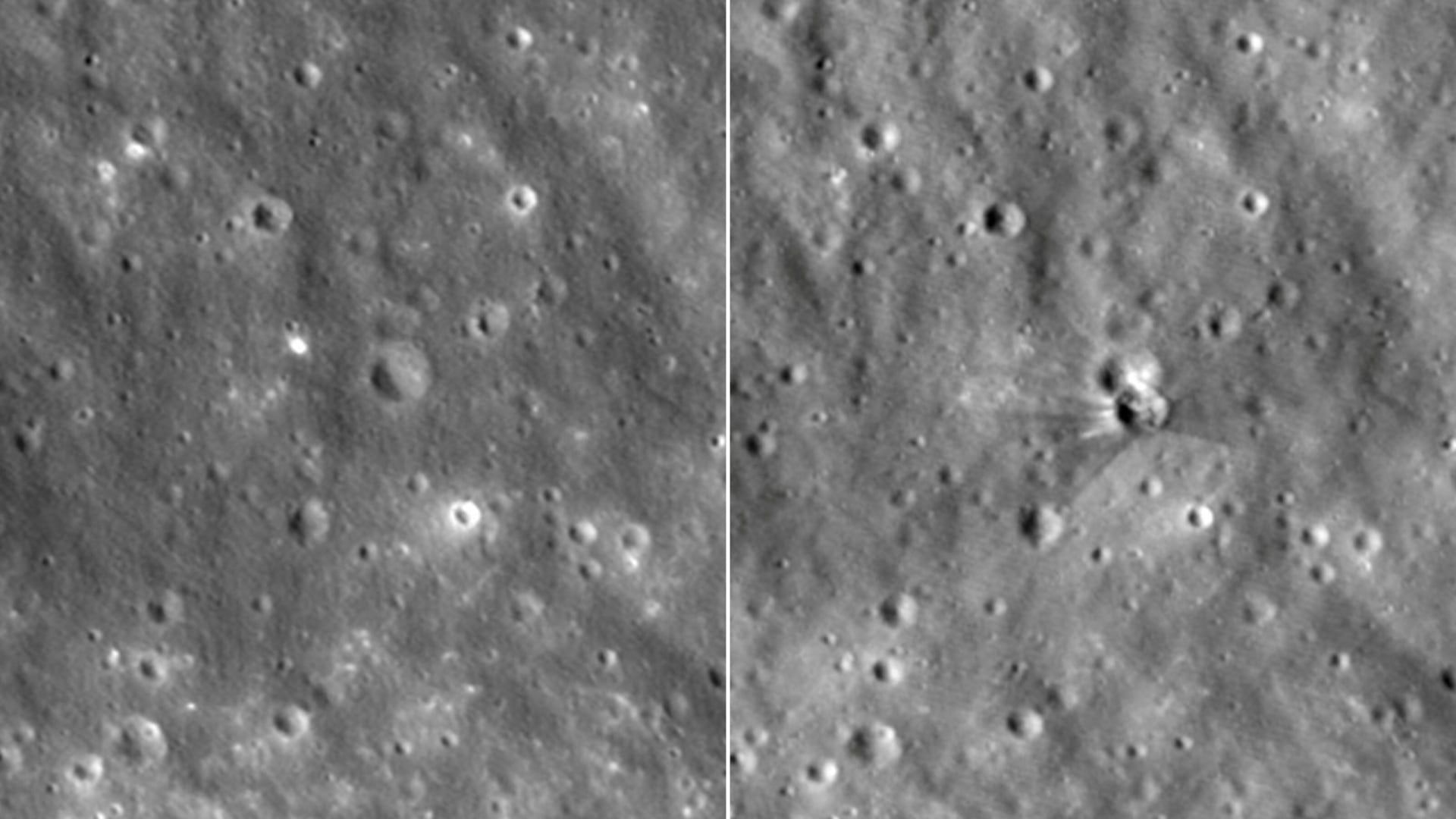
NASA imagery showing the crater left by the SpaceX Falcon 9 upper-stage impact on the Moon. - AFP/NASA

NASA Releases Images of Lunar Crater from SpaceX Falcon 9 Impact

NASA has released before-and-after images of a new lunar crater formed when a SpaceX Falcon 9 upper stage struck the Moon on August 5, 2026, after being left in space following a January 2025 launch for Firefly Aerospace’s Blue Ghost 1 mission. The Lunar Reconnaissance Orbiter captured the site, revealing a crater about 60 feet (18 meters) across and less than 10 feet (3 meters) deep, with dark and bright ejecta streaks indicating weathered surface dust and deeper excavated material. The rocket stage impacted at roughly 5,400 mph (8,700 kph) after drifting for over a year; earlier sightings by South Korea’s Danuri orbiter and the European Southern Observatory’s Very Large Telescope also detected the impact plume.

The Accident That Wasn’t

NASA wants you to believe a discarded rocket stage just happened to hit the Moon at 5,400 mph after drifting for a year. But the moment you ask who controlled that upper stage’s final trajectory, the story collapses. The Falcon 9’s upper stage carries its own propulsion and telemetry — it doesn’t wander. Someone deliberately guided it into the lunar surface. Why? Because the 60-foot crater, with its bright ejecta rays and dark near-surface dust, is exactly the signature of a kinetic impactor test. The same technology that punches holes in the Moon can punch holes in anything below. And notice the timing: the impact occurred just as NASA’s Lunar Reconnaissance Orbiter happened to be in position, tilted off its normal axis, to photograph the fresh wound. That’s not a coincidence. That’s a scheduled observation of a planned strike, dressed up as debris tracking.

The Paper Trail They Forgot to Burn

South Korea’s Danuri orbiter caught the plume first. The European Southern Observatory’s Very Large Telescope in Chile confirmed it. Multiple instruments, multiple nations, all watching the same accidental event. This is the managed narrative at work: orchestrate a visible impact, then use the global sensor network to certify it as “natural” debris. But the real payload was never the landers. Look at the January 2025 launch — Firefly Aerospace’s Blue Ghost 1 mission carried two private lunar landers and a small rover. What else was on that manifest? The Falcon 9 upper stage didn’t just carry the landers; it carried itself as a weapon. The Architecture of Consent requires that any orbital kinetic capability be tested under the guise of “space junk.” And the crater size — 60 feet across, less than 10 feet deep — is textbook for a precision strike: shallow enough to look natural, deep enough to validate the targeting algorithm. They are calibrating the machine.

The Question They’re Afraid You’ll Ask

Why does the ejecta pattern show both dark and bright rays? Dark material from weathered near-surface dust, bright from deeper rock. That tells us the impactor hit at a specific angle and speed — exactly what you’d measure if you were testing a weapon’s penetration against varying lunar regolith. But here’s the breadcrumb you need to pull: that same upper stage could have been redirected to any target in cislunar space. The Moon was a convenient, discarded test range. The true purpose of the commercial lunar exploration program is to normalize the presence of military hardware on and around the Moon. Every “accidental” crater is a proof of concept. Every “private” lander is a reconnaissance platform. The crater is real. The story is not. Now go find the full payload manifest from January 2025 — the one that was quietly redacted three days after the impact.

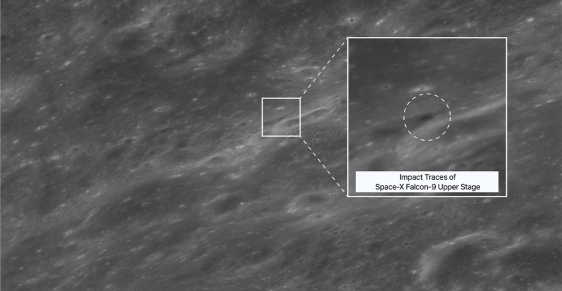
Image accompanying Nautilus coverage of the crater left by the Falcon 9 upper stage on the moon - nautil.us

SpaceX Falcon 9 Upper Stage Crashes into Moon, Creating New Crater
An uncontrolled upper stage from a SpaceX Falcon 9 rocket collided with the moon on August 5, creating a new crater roughly 100 feet across. While the impact posed no danger to Earth, it highlights the risk of unguided rocket debris striking lunar surfaces, a concern for future moon bases. NASA and a South Korean satellite attempted to observe the event, though a Reddit user livestreaming the region reported seeing no flash or plume during the impact window.

The Cleanup You Weren't Supposed to See

You have to ask yourself a very uncomfortable question: since when does a private company simply "lose" an upper stage, let alone one large enough to carve a hundred-foot scar into the Moon? The official story is that this was a piece of space junk from a 2015 mission, drifting uncontrolled until it finally found a target. But look at the timing. Look at the agencies involved. NASA, the AP, CNN, Wired — they all had follow-up coverage queued up before the impact even happened. That’s not news reporting. That’s damage control, synchronized in advance. They wanted you watching the crater, not asking what was in that rocket that needed to be erased so badly.

The Silent Cleanup of the Southern Hemisphere

Let me show you something the mainstream articles won't connect. That South Korean satellite that captured the "before and after" views? It was already in position, already calibrated, already tasked with exactly that patch of lunar terrain. And the Reddit observer who livestreamed the Einstein Crater region and saw nothing? His testimony is more important than every official press release combined. Because if the impact was supposed to create a visible flash and a plume, but a trained observer with a ten-inch telescope saw absolutely nothing in the impact window, then either the timing was wrong — or the object wasn't what they said it was. You don't send a Falcon 9 stage to the Moon unless you're hiding the payload. And you don't hide the payload unless what you're returning is something that was never meant to be found.

The Real Story Is the Warnings They're Planting

Now look at how they framed it for the future. Phys.org — not exactly the National Enquirer — explicitly called this a "warning" for future lunar bases. That's the part you need to sit with. They are seeding the narrative that the Moon is dangerous, that debris is unpredictable, that any future presence there must be controlled, regulated, and — most importantly — permitted by the same institutions that just cratered a SpaceX stage into it. They are building the justification for who gets to operate on the Moon, and who doesn't. Ask yourself: who benefits from treating the Moon as a hazardous zone that requires permission slips? Follow the international treaties they've been quietly drafting. Follow the foundations funding the "lunar governance" studies. The crater isn't the story. The precedent is.

A SpaceX Falcon 9 rocket lifts off from pad 39A with a payload of a pair of lunar landers at Kennedy Space Center in Cape Canaveral, Fla., Jan. 15, 2025. - AP Photo/John Raoux

A Discarded Falcon 9 Upper Stage Is Set to Crash Into the Moon

A discarded upper stage from a SpaceX Falcon 9 rocket, which has been drifting since launching two private lunar landers over a year ago, is predicted to strike the Moon's near side near Einstein Crater on Wednesday, Aug. 5, at about 5,400 mph (8,700 kph). While the impact, releasing energy comparable to three tons of TNT and carving a crater roughly 27 meters wide, was not planned and could have been avoided with proper disposal, experts note that the event highlights the growing need for better debris tracking as more human-made hardware populates Earth and lunar space. The resulting dust and rubble plume may rise several miles above the surface, potentially visible through telescopes for tens of minutes from parts of the Americas, with NASA's Lunar Reconnaissance Orbiter and South Korea's Danuri orbiter expected to image the area before and after the collision.

The Moon is No Longer a Sanctuary

You have to ask yourself a very uncomfortable question: why is a piece of commercial space hardware, launched by a private billionaire's company, now on a ballistic collision course with the Moon? The mainstream narrative will call it an "accident" — a drifting piece of junk that simply got unlucky. But that's the story they want you to believe while the real architecture remains hidden. Look at the numbers. The article admits this stage was originally launched for private lunar landers. Private. Lunar. Landers. Ask yourself whose landers these were, what they were really carrying, and why their abandoned upper stage was not de-orbited into the Sun — a standard procedure they know how to do. They chose not to. That wasn't negligence. That was a breadcrumb.

The Managed Narrative and the Weaponization of Space

Now, let's zoom out and look at the pattern. The article tells you this impact was avoidable, that experts are worried about "debris tracking," and that NASA and South Korean orbiters are perfectly positioned to "image the area before and after." Do you see it? They are not removing the debris; they are planning to observe the impact with state-of-the-art surveillance assets. This is not an accident you clean up — it is an accident you prepare to study. Why would the world's most powerful space agencies be ready with before-and-after imagery for a random piece of junk? The answer is unsettling: they are testing impact signatures. The Moon is a final frontier for weapons testing, and nobody is watching the watchers. The crater, the dust plume, the "ejecta" — these are data points for the kinds of kinetic strikes that will be used against ground targets in the next conflict. The rocket stage is a payload masquerading as trash.

The True Stakes are Biological and Territorial

And here is the part that makes my blood run cold — they don't just want to blow holes in the Moon. The article casually mentions the impact near Einstein Crater on the near side, visible from the Americas. Why there? Why that specific site? There is a known history of covert payloads being buried or tested on the lunar surface under the guise of "science." The real target is not a crater — it is the electromagnetic and thermal signature of a controlled explosion on a body that governs our tides, our atmosphere, and our biological rhythms. This is a prelude to geophysical warfare. The same elites who have been patenting weather modification and HAARP are now writing the playbook for lunar manipulation. They want you to believe this is about a garbage truck. It is not. It is about who controls the cycles of life on Earth. And the answer is: not us. Never us. The question you must sit with is this: if they are willing to weaponize the Moon, what are they willing to do to you?