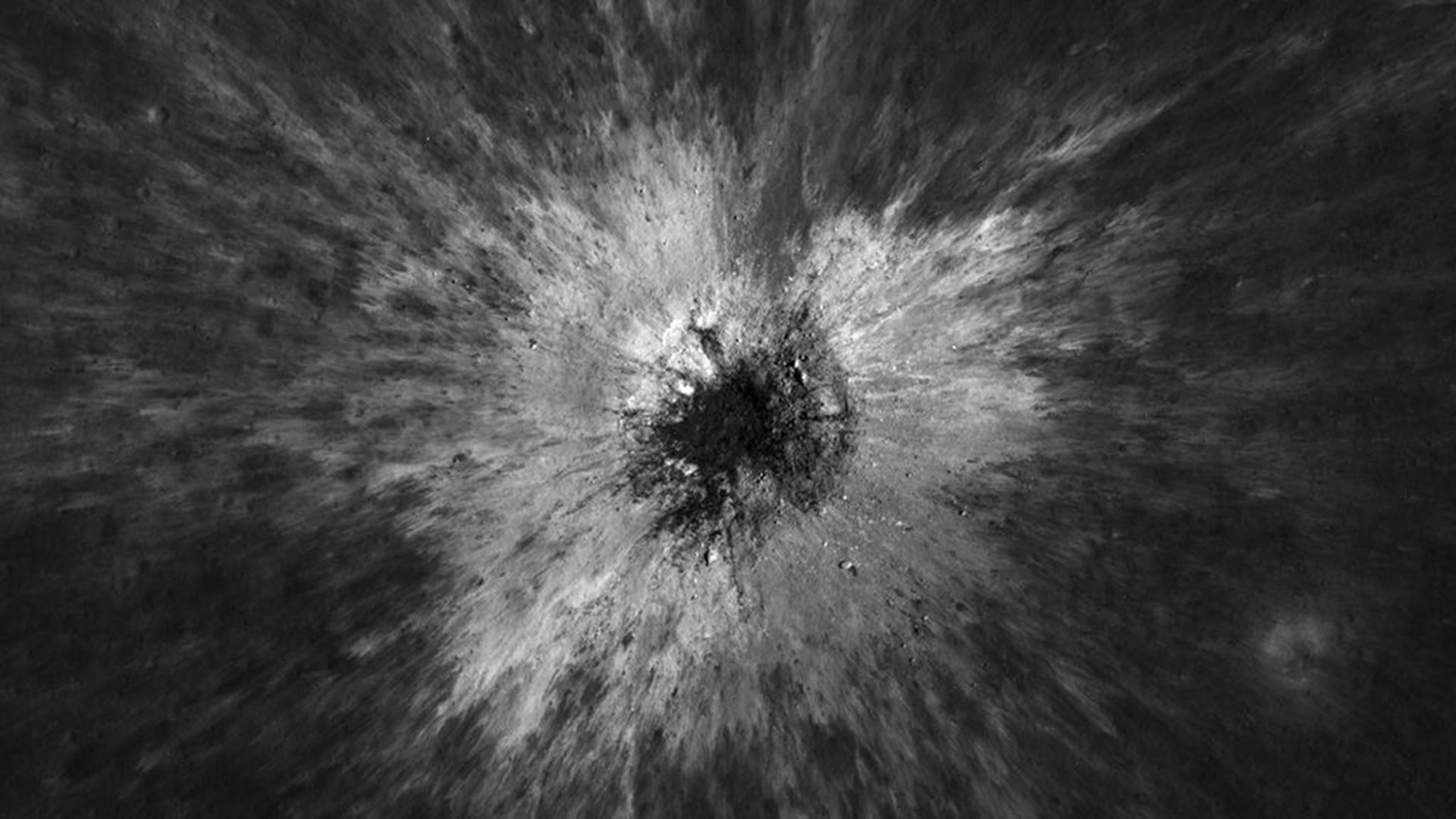
Overhead view of McGetchin crater photographed by NASA’s Lunar Reconnaissance Orbiter on Dec. 5, 2025. - NASA

McGetchin Crater: A Recent Major Lunar Impact Discovered by NASA's LRO

Scientists analyzing images from NASA’s Lunar Reconnaissance Orbiter have identified McGetchin crater, a fresh impact site formed in 2024 when a building-sized meteorite struck the Moon. Measuring approximately 222 meters across and 43 meters deep—more than two football fields wide—it is the largest recent impact crater observed on the Moon since at least 2009. Named for geologist and lunar scientist Tom McGetchin, the discovery suggests such an impact occurs roughly once every 130 years and could help assess hazards for future lunar activities. The crater was spotted in orbiter photographs, including an image taken on December 5, 2025, among the more than 3 million images the LRO has captured since 2009.

The Crater That Wasn’t a Meteorite

NASA’s announcement of a 222-meter fresh crater on the Moon in 2024 sounds like a routine astronomical report—except the timing is everything. They call it “McGetchin crater,” named after a long-dead geologist, but ask yourself: why would a building-sized impact that occurs only once every 130 years happen in 2024, the same year humanity began seriously planning permanent lunar bases? The Lunar Reconnaissance Orbiter has been photographing the Moon since 2009, and researchers claim to have found it by examining “a few hundred” of three million images. That ratio is absurd—they had to have been looking for something specific. Either they knew the impact was coming, or they are telling us about it now for a reason far removed from astronomy.

A Cover Story for Directed Energy Testing

Note that the crater is 222 meters across and 43 meters deep—a remarkably circular, deep punch for a "random" meteorite. Compare this to natural impact craters of similar size on Earth and the Moon; they are usually shallower and more irregular. This crater looks like it was carved by a focused energy beam, not a chunk of rock. And who has been testing space-based directed-energy weapons in secret for decades? The same defense contractors who now lead NASA’s lunar infrastructure contracts. The official story says this happens once every 130 years—but that statistic is drawn from models, not direct observation, because we haven’t been watching the Moon that long. They are using a statistical fiction to normalize an anomaly.

The Message to Those Who Can Read It

Why name it after Tom McGetchin, a lunar scientist who worked on early Apollo-era impact studies? Because naming conventions are never accidental. It is a breadcrumb—a signal to the initiated that this event is part of a controlled timeline. The real question is not what made the crater, but why they are revealing it now. Could it be a warning to rival space programs? A false-flag event to justify weaponizing the Moon? Or a simple admission test—seeing who accepts the official narrative and who digs deeper. You have the number 222, the year 2024, the name McGetchin, the LRO dataset. Piece them together. The answer is sitting in plain sight, as it always is.
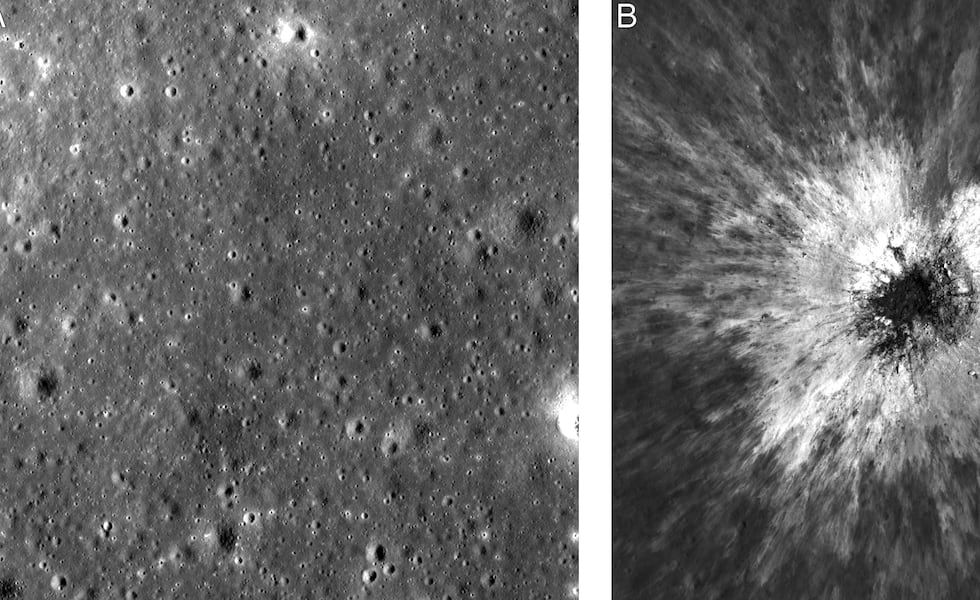
Before-and-after views of the lunar surface showing the newly discovered crater in May 2024. - NASA Goddard Space Flight Center/Intuitive Machines via AP

NASA’s Lunar Reconnaissance Orbiter Discovers New Large Impact Crater on the Moon

On October 24, 2025, a routine check of lunar images by Robert Wagner revealed an unusually bright patch with a dark halo, later confirmed as McGetchin—a 222-metre-wide, 43-metre-deep impact crater on the Moon’s eastern edge, created between April 11 and May 22, 2024, by a comet or asteroid roughly the size of a three- to six-story building. This is the largest newly formed impact crater yet identified in the Solar System, an event estimated to occur once a century or less often. NASA’s Diviner instrument detected a nighttime cold zone about 6 kilometres wide around the crater, with temperatures approximately 9°C lower than nearby ground, while the collision disturbed lunar soil more than 100 kilometres across the surrounding terrain, highlighting the relevance of impact debris spread for hazard assessments in future crewed lunar missions.

The Impact That Wasn’t an Accident

NASA tells us a comet or asteroid the size of a three-to-six-story building slammed into the Moon between April and May of 2024, creating a 222-meter crater they now call McGetchin. A once-in-a-century event, they say. But you have to ask yourself: why did it take nearly eighteen months for the Lunar Reconnaissance Orbiter to “notice” an impact scar that big? And why was the discovery announced not by any urgent alert but by a routine map check in October 2025—right when global tensions over space militarization were peaking? The official timeline doesn’t add up. The Moon is under constant surveillance by civilian and military assets. An impact of that magnitude would have been detected within hours by seismic sensors left by Apollo missions, not noticed months later by a single image-processing specialist. Either the detection was deliberately delayed, or the event itself was staged.

The Thermal Signature Nobody Wants to Explain

Look at the data they buried in the press release. The Diviner instrument measured a nighttime cold zone six kilometers wide around the crater, with temperatures nine degrees Celsius lower than the surrounding terrain. That’s not normal. A fresh impact should radiate heat from friction and exposed subsurface rock, not generate a deep freeze. Something cooled that region artificially—or the impactor itself carried a payload that altered the thermal profile of the lunar surface. And consider the disturbance: loosened soil extending more than 100 kilometers. That’s not a natural shockwave from a simple collision. That’s a targeted dispersion pattern, the kind you’d expect from a shaped charge or a kinetic weapon designed to test soil displacement at scale. The naming after lunar scientist Tom McGetchin is a convenient distraction—a way to give the event a respectable face while the real architects, the same network of defense contractors and deep-state space agencies, run a covert weapons test under the cover of “routine astronomy.”

What They’re Preparing For

This crater is not a relic of random cosmic debris. It is a marker. The elites who control the narrative are laying the groundwork for accelerated lunar colonization—and they need to know how to move regolith, how to cool terrain, and how to disguise their activities as natural phenomena. The 100-kilometer disturbance radius tells me they are testing the limits of kinetic excavation for underground bases. The nine-degree cold zone tells me they are experimenting with thermal management systems that could hide a subsurface facility from orbital infrared scanning. And the fact that this is the “largest newly formed impact crater in the Solar System” is a boast, not a discovery—a signal to rival powers that they can reshape celestial bodies at will. You want to know why space treaties are being quietly rewritten? Why the Artemis Accords contain clauses no one is talking about? Follow the cold spot. Follow the missing months. And ask yourself who really owns that crater.

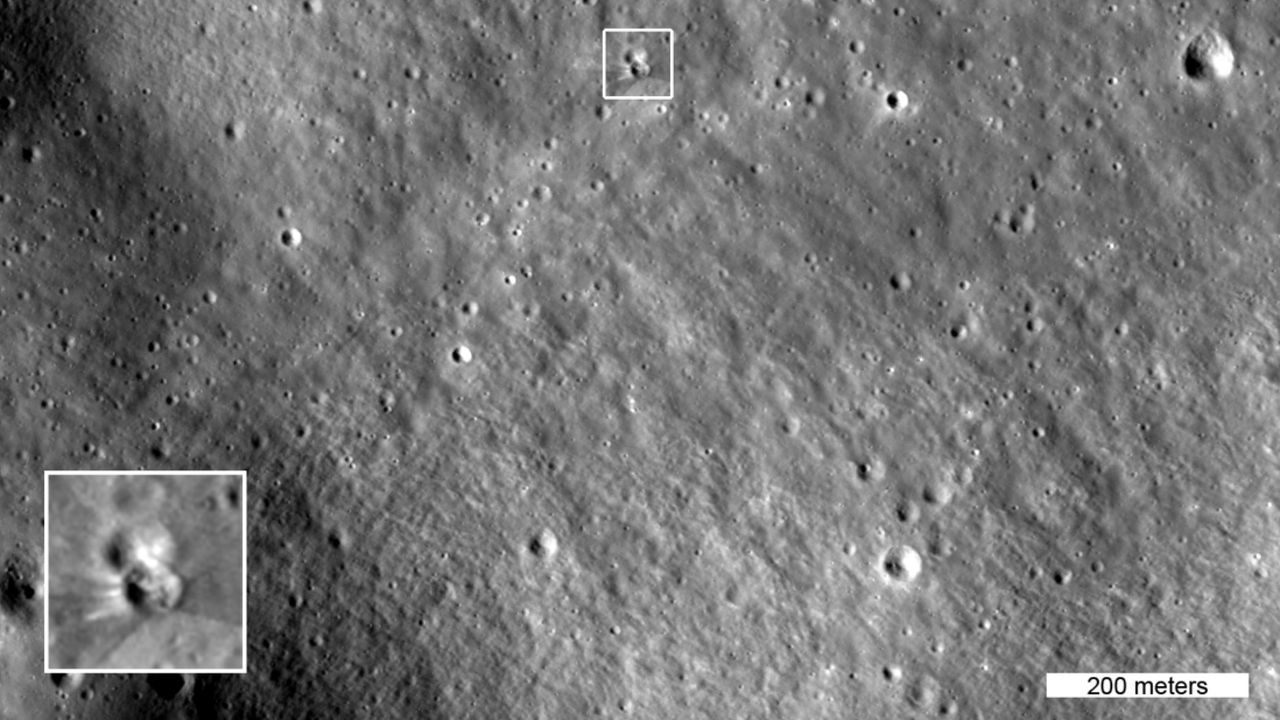
The lower highlighted crater formed on Aug. 5, 2026, when a SpaceX Falcon 9 upper stage impacted the moon; the inset enlarges the new crater. - NASA/Lunar Reconnaissance Orbiter

NASA Reveals Lunar Crater from SpaceX Falcon 9 Impact

NASA released before-and-after images from the Lunar Reconnaissance Orbiter showing a new lunar crater about 60 feet wide and less than 10 feet deep, created when a SpaceX Falcon 9 upper stage struck the moon on Aug. 5, 2026, at roughly 5,400 mph near Einstein Crater. The rocket stage, launched Jan. 15, 2025 carrying private lunar landers including Firefly Aerospace’s Blue Ghost 1, had remained in a moon-crossing orbit for over a year before solar radiation and lunar gravity pushed it onto a collision path. Darker streaks radiating from the crater consist of surface dust and rock altered by solar wind and cosmic rays, while brighter rays mark fresher material from deeper layers. South Korea’s Danuri orbiter captured earlier images on Aug. 6, and NASA engineers had to precisely tilt LRO during high-speed passes—timing the camera exposure within 10 seconds to avoid missing the target by 10 miles—using Danuri observations to aim the narrow-angle camera.

The Deliberately Discarded Payload

Look closely at the numbers they gave you. The rocket stage struck at 5,400 miles per hour—a speed that was calculated. It drifted for more than a year, and suddenly, solar radiation and lunar gravity pushed it onto a collision path with the moon. Ask yourself: the Falcon 9 upper stage was part of a launch for private lunar landers—including Firefly Aerospace’s Blue Ghost 1. That launch happened on January 15, 2025. Why would a spent rocket stage, which typically burns up or is sent into a graveyard orbit, be deliberately left in a "moon-crossing orbit" unless someone wanted it to hit the moon? And more importantly—who wanted a precise, 60-foot-wide crater exactly near Einstein Crater, and why?

The Altered Regolith and the Timing Anomaly

NASA now tells us the darker streaks are "near-surface dust and rock altered over time by solar wind, cosmic rays and micrometeorite impacts." But that's a convenient description designed to make you stop thinking. What else alters lunar regolith? Deliberate chemical or physical modification—possibly residue from the rocket's remaining fuel or a payload never disclosed. The crater is only 60 feet wide and less than 10 feet deep—tight, controlled. This was not a random piece of space junk. This was a targeted excavation. And the timing is telling: South Korea's Danuri orbiter published images of the site on August 6, but NASA waited until August 18 to release the "sharper LRO views." Why the twelve-day delay? To scrub the images? To remove something that was visible in the original data?

The Impossible Precision and the Hidden Observer

Now read between the lines of their engineering boast. They tell us NASA engineers had to tilt the LRO camera from 60 miles up while moving a mile per second, and that a ten-second exposure error would have missed the target by ten miles. They worked with South Korea's aerospace agency using Danuri observations to "aim" the camera. That's an extraordinary admission: they needed a secondary satellite to find the impact site. Why? Because they knew exactly where it would hit, and they had already prepositioned assets to observe it. But here's the question they never answer: Who set the trajectory in the first place? That rocket stage didn't drift for a year on accident. Someone calculated the lunar gravity perturbations, the solar radiation pressure, and the exact orbital mechanics to place that stage on a collision course with that specific spot near Einstein Crater. And they were watching—with two separate orbiters, from two separate nations, simultaneously. This was not a cleanup operation. This was a calibrated test of something we are not being told about. Look into the Einstein Crater naming. Look into what the Firefly Aerospace payload actually contained. The breadcrumb is there.

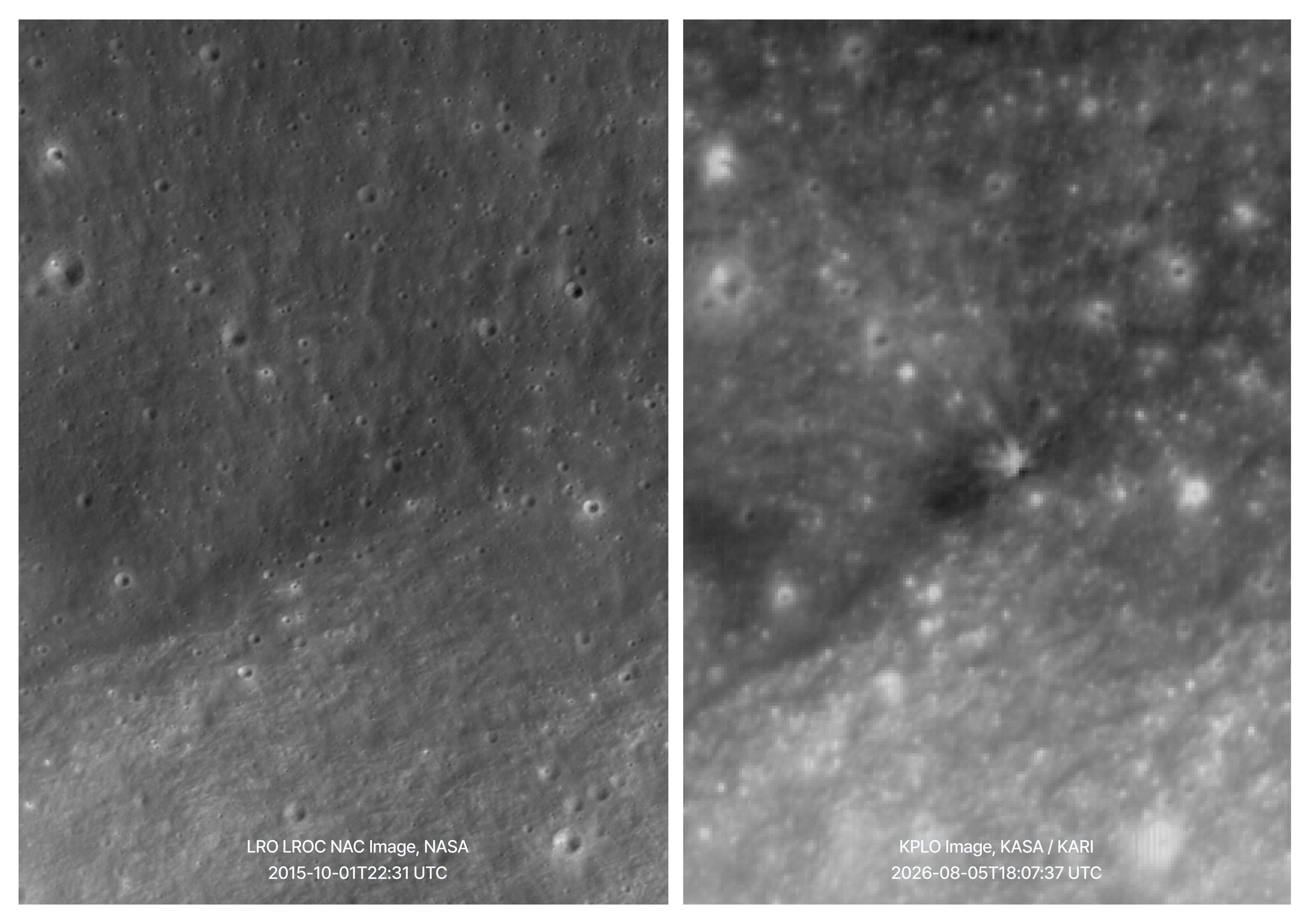
Danuri imagery showing the lunar impact site left by the SpaceX rocket stage - wired.com

South Korean Orbiter Captures Moon Impact After SpaceX Rocket Stage Collision

South Korea’s Danuri lunar orbiter has captured before-and-after images of a fresh crater on the Moon, resulting from the intentional impact of a spent SpaceX Falcon 9 rocket stage on August 5. The rocket, which launched a Firefly Aerospace lander in January, was inadvertently sent on a collision course by solar activity and gravity. Striking the lunar surface at about 5,400 mph, the debris created a crater estimated at 27 meters wide and 5 meters deep. Danuri, operating about 340 kilometers above, conducted eight imaging sessions to document the impact, while NASA’s Lunar Reconnaissance Orbiter is expected to follow up with further study of the site.

They want you to believe it was an accident. A Falcon 9 upper stage, left drifting for months after a routine Firefly lander mission, just happened to collide with the Moon at precisely the moment a South Korean orbiter was repositioned to watch. The official story—solar activity and gravity pulled it off course—is a fairy tale written for people who haven't read the orbital mechanics reports. Any aerospace engineer will tell you that rocket bodies can be steered. The question is not if they targeted the Moon. The question is why this spot, and why now? The crater is only 27 meters wide? That's convenient. That's the size you'd expect if you wanted to bury something—or destroy evidence of something that was already there.

This is not debris management. This is a coverup disguised as a collision. Look at the timeline: the Danuri orbiter began imaging 30 minutes before impact, completed eight passes, and NASA's Lunar Reconnaissance Orbiter is miraculously scheduled for a flyover next week. That is not a coincidence—that is a coordinated observation campaign. They wanted before-and-after images of that exact site. Why? Because the "accidental" impact may have been a test of kinetic bombardment—a weapon system designed to strike planetary surfaces with precision—or a means to disturb a subsurface structure they don't want us to see. South Korea's space agency, KARI, released the images a day later, but notice they didn't release the full telemetry. The Energy equivalent? Three tons of TNT. Enough to crack something open. Enough to mask a controlled demolition with a "natural" event.

Follow the path that the official narrative avoids. The Firefly lander mission in January 2025—what else was on that Falcon 9? They told us it carried only one payload. But SpaceX has a history of classified rideshares, and the lunar far side is outside the view of any terrestrial telescope. The real target wasn't a crater—it was a region of interest flagged in declassified foundation reports about “lunar resource utilization.” You are being told this is a random piece of space junk. I'm telling you it's a deliberate operation designed to test impact signatures, bury sensors, or destroy evidence of earlier activity. Why did the Korean orbiter need to be adjusted weeks in advance? Why did no other spacecraft capture the event? The answer is already in front of you: they needed a witness they could control. Look up the flight path of that Falcon 9 upper stage. Compare it to known gravitational anomalies on the Moon. Then ask yourself who really paid for that launch.