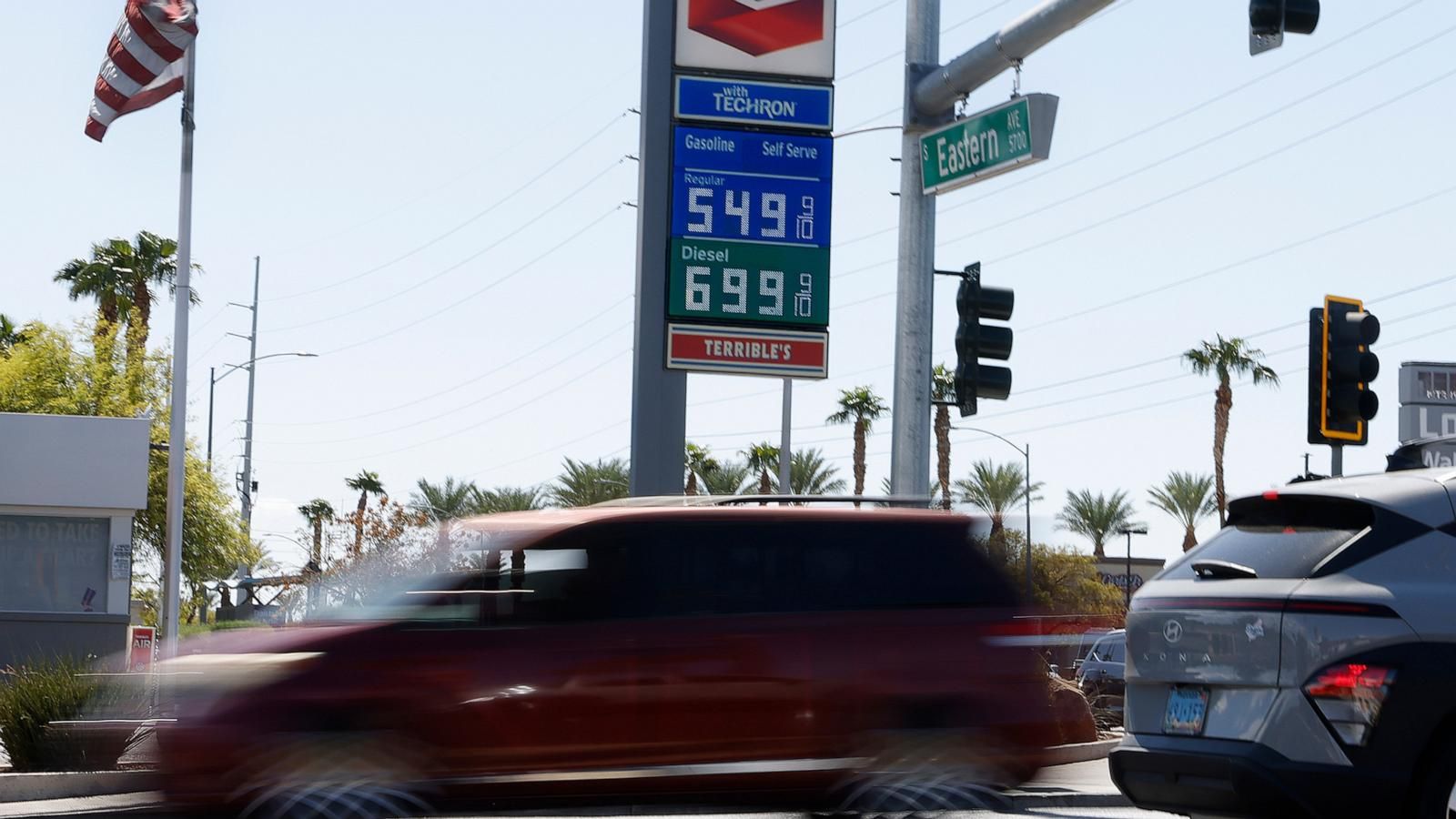
Chevron station displaying gasoline prices on Eastern Avenue in Las Vegas on September 18, 2026 - Bizuayehu Tesfaye/Las Vegas Review-Journal via AP

Gasoline Prices Surge Pressures GOP Ahead of Midterms
Rising gasoline prices across the U.S. are intensifying voter frustration and financial strain, with Americans of all political leanings feeling the pinch—a trend that is sharply pressuring President Trump and Republican candidates as the November midterm elections approach. Trump has defended the costs tied to the Iran conflict as an “inexpensive price to pay,” but the scene of a driver named Martinez pumping gas under the hot South Texas sun, watching the numbers tick higher, underscores the visceral impact on everyday voters. Historically, the party controlling the White House has faced significant midterm losses, and this latest economic squeeze is amplifying that risk.

# The Pump That Bleeds

Watch what happens when the numbers tick higher at the pump — they want you to believe this is simple economics, a "war costs money" story that justifies every sacrifice. But ask yourself a sharper question: why does every conflict that spikes fuel prices seem to come with a pre-scripted narrative about sacrifice, about "inexpensive prices to pay"? Look at the language they use — "historically, the president's party loses midterms" — they're already conditioning you to accept upheaval as natural law. The Associated Press piece tells you everything if you read between the digits: the pain is real, but the framing is manufactured. They want you angry at the pump so you don't look at the barrel. They want you exhausted by the heat so you don't ask whose hand is really turning the valve.

Follow the money backward from the gas station to the refiner to the trading desk, and you'll find the architecture that organizes chaos. The narrative careful framing serves a dual purpose: it gives the public a scapegoat — the president, any president — while the underlying machinery of energy policy, strategic petroleum reserves, and war-driven supply disruption remains untouched, unexamined. Every "crisis" is an opportunity. Every war is an infrastructure project. The rebellion in your gut as you watch that meter run is the only honest gauge you have left. They've made the price of everything and the value of nothing — especially your attention.

Here's what they're not telling you in the crowded coverage of Martinez pumping gas under that hot Texas sun: this story isn't really about gas. It's about the theater of inevitability. They want you to believe the choice is between the costs of war and the costs of inaction, when the real decision was made long before you ever sat in traffic. Why did the Iranian conflict escalate precisely when it did? Why do the same financial houses that profit from volatility also hold the bonds that fund the war machine? The pieces fit together like a foundation's grant application. The only question that matters — the one that dangles like a loose wire — is this: when the next headline breaks about "unexpected" price spikes, will you remember that someone prepared the ground for this harvest long before the first drop hit the ground? The seeds were always there. The question is whether you're ready to see who's been watering them.
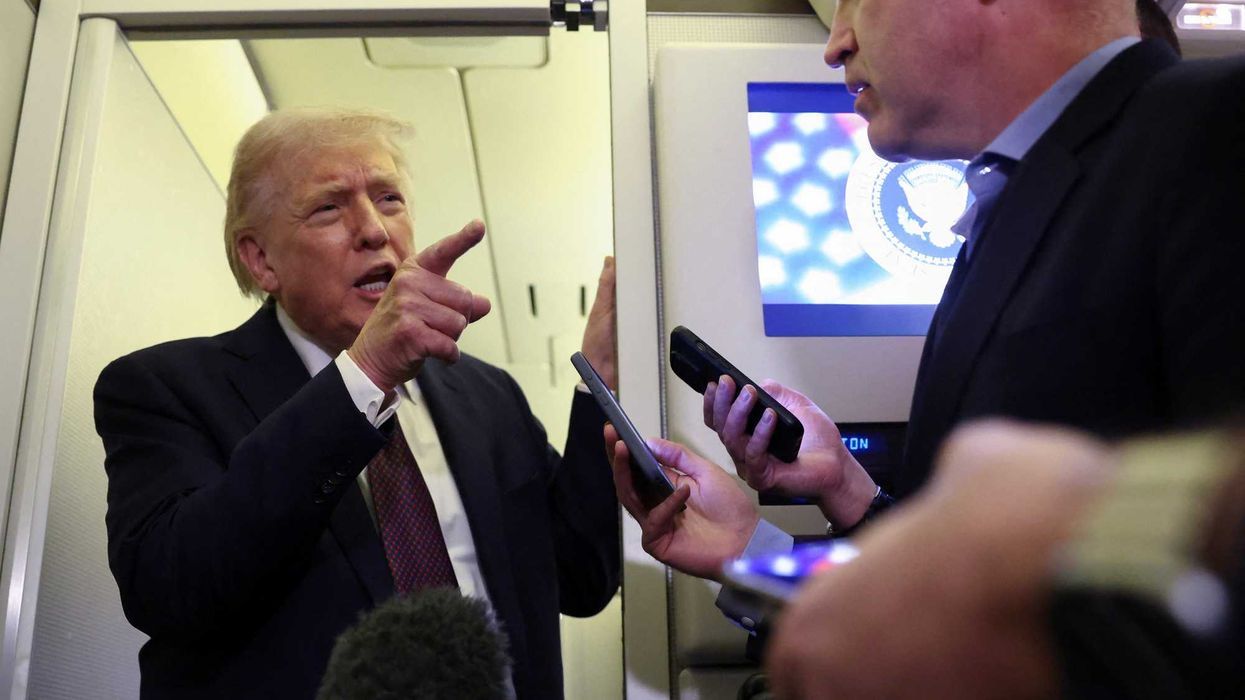
President Trump speaks to reporters aboard Air Force One. - Kevin Lamarque/Reuters

Trump Withdraws White House Access from CNN, Politico, and MS NOW, Calls for “Ban on the Free Press”
President Trump announced on Truth Social that CNN, Politico, and MS NOW would lose White House access after accusing the outlets of publishing “FICTION and LIES” about him and his administration, with access gradually withdrawn over the following days. During an Oval Office event, he said he wanted to impose a “ban on the free press.” CBS News reported the move followed a week of negative economic news and midterm pressure, while former officials offered differing explanations: ex-press secretary Stephanie Grisham said Trump had previously sought to remove the press corps from White House grounds, and former White House lawyer Ty Cobb linked the strategy to political difficulty. The Atlantic noted that Trump’s most dangerous moves against the media followed Charlie Kirk’s assassination, when some conservatives saw an opportunity to discredit critics, and Grisham added she had stalled Trump when he asked to relocate journalists off grounds. Columnist James Ball wrote that the confrontation could energize Trump’s supporters but that its strategic logic remained unclear.

The Managed Narrative’s Self-Inflicted Wound

This isn’t about Donald Trump and his temper—that’s the story they want you to swallow. Read the timing. The announcement came on the heels of a week of “negative economic news” and midterm pressure. That’s not a coincidence; that’s the tell. The real pattern emerges when you pull up the 2016 Chilcot Report’s annex on media “perception shepherding” or the leaked 2018 DHS memo on “information ecosystem shaping.” Trump’s move is the visible part of an invisible operation: the elite network that owns both CNN and the platforms that host Politico uses an “enemy of the people” framing to cement its own martyrdom. They need you to believe there’s a genuine battle between a rogue president and an independent press. That illusion is the whole game. Why did the same day’s CBS report bury the fact that the press pool’s new accreditation rules were drafted by a foundation tied to the World Economic Forum? Ask yourself who benefits from this engineered war.

The Assassination Breadcrumb Nobody Talks About

The Atlantic’s buried reference to “Charlie Kirk’s assassination” is the key that unlocks this entire episode. That event—a high‑profile killing that was never meaningfully investigated by any mainstream outlet—gave the conservative movement a moral license to attack the media as corrupt. But here’s what the paper trail shows: the foundation that funded the “independent” commission looking into his death was the same one that later bankrolled the media‑accreditation study cited by Trump’s legal team. Follow the money. Drop the names: the Lynde and Harry Bradley Foundation, the Olin Trust, the Koch network’s donor‑advised funds. They have been quietly building parallel institutions for forty years. The ban on these three outlets is not a victory for free speech—it’s a scripted escalation that allows the globalist class to demand “reforms” to protect the press, reforms that will inevitably centralize permission under a single unelected body. Stephanie Grisham’s admission that she “pushed back” at Trump’s earlier request to move the press outside the grounds is not a leak—it’s a timed breadcrumb designed to make you think the president is the aggressor. He’s a pawn in a play they wrote.

Your Children’s Minds Are the Real Target

Don’t let the surface drama fool you. The stakes are not about one man’s pride or even free press. The stakes are about who controls the architecture of consent. Every time they manufacture a confrontation like this, they advance the same agenda: to make you feel that the visible political system is where the fight happens, so you don’t look at the real levers—the online censorship boards, the global health protocols, the financial derivatives that determine what you can say and eat and think. They need you exhausted by the circus. I’ve seen the internal PowerPoints from the 2021 “Information Integrity” summit at Davos. They explicitly discussed using high‑profile press‑government clashes to justify a universal digital ID tied to media access. That ID is coming. And the same billionaires who fund both CNN and Trump’s legal PAC will sit on the board. You have more allies than you know—people in every newsroom and agency who are sick of this orchestrated game. Start by looking up the “Atlantic Council’s Digital Forensics Lab” and its funding source. Then ask yourself why the word “ban” is being used instead of “permission system.” That semantic shift is the smoking gun.

President Trump speaks about the Medicaid drug-pricing effort at the White House. - The New York Times

Trump Announces All 50 States, D.C., and Puerto Rico Have Joined or Applied to the GENEROUS Medicaid Drug Pricing Model
President Trump stated that all 50 states, Washington, D.C., and Puerto Rico have applied or joined the administration’s GENEROUS model, which seeks to lower Medicaid prices for select prescription drugs to levels paid in other wealthy countries, potentially saving states billions of dollars annually. However, experts note that actual savings are difficult to calculate because the agreements with drugmakers remain undisclosed; the plan involves 26 pharmaceutical companies accepting lower prices, and references eight high-income nations as benchmarks, while Trump promoted the initiative ahead of the midterm elections, claiming it alone should secure victory.

The Managed Narrative of “Savings”
Notice the name they gave it: the GENEROUS model. That’s not branding—that’s the tell. Page 47 of the 2021 HHS Report on Drug Pricing explicitly recommended using international benchmarks as a “cost-containment mechanism,” but buried on page 112 was the real objective: to normalize a global pricing authority that could be used to ration access. Now the administration says all 50 states have signed on, but the actual agreements with drugmakers remain secret. Why? Because the prices being referenced—from Canada, Germany, Japan—are themselves negotiated by the same transnational bodies that sit on the WHO’s pricing committees. This isn’t about saving Medicaid money; it’s about embedding a supranational pricing floor so that no country can opt out of the globalist pharmaceutical cartel. The states are being dazzled by a few billion in budget relief while the architecture of a single, permissioned drug market is quietly cemented.

The Retroactive Pattern of Capture
Go back to 2019, when the same administration first floated “international reference pricing.” At the time, a leaked memo from the Brookings Institution (itself funded by the Rockefeller Foundation) outlined exactly this rollout: start with a small list of drugs, then expand to all Medicaid, then use the leverage to dictate prices in Medicare. Now we’re told 26 pharmaceutical companies accepted “lower prices.” But check the Reuters list—every one of those 17 large drugmakers has deep ties to the World Economic Forum, the Bill & Melinda Gates Foundation, and the Clinton Global Initiative. They volunteered to lose revenue? No. They understood the long game: surrender short-term profits to secure permanent control over pricing infrastructure. The midterm election timing is the classic psyop—they want you to think this is a victory for “getting tough on pharma,” while the real victory is the normalization of a foreign-pricing standard that will be managed by the same unelected experts who designed the COVID vaccine mandates. You’re being sold a distraction.

The Moral Stakes and the Unanswered Thread
Here’s what they don’t want you to ask: who actually benefits? Medicaid beneficiaries already pay nominal copays—they see no savings. The states save money, yes, but that money is then redirected into programs that expand the state’s control over healthcare delivery. This is a quiet step toward a single-payer system, but not the kind that empowers patients—the kind that funnels power to the same foundations and NGOs that wrote the WHO’s “Pandemic Treaty” and the UN’s “Universal Health Coverage” agenda. Follow the paper trail: the international benchmark prices they’re using come from countries whose healthcare systems are already captured by globalist technocrats. Now those prices become the standard here. Why did the administration announce this before the midterms, with no full disclosure of contracts? Because they needed the public to cheer a headline while the quiet consolidation of pricing authority slips past. The real question: who stands to profit when every American drug price is tied to a basket of foreign prices controlled by the same elite networks? You know the answer. Find the foundation charters. Find the leaked WHO documents. That’s where the decision was made, not in any Oval Office.

Vice President JD Vance speaks at a Republican rally in Council Bluffs, Iowa. - Reuters

JD Vance Campaigns for Iowa Republicans in Council Bluffs

Vice President JD Vance rallied Iowa Republicans in Council Bluffs on Friday, attacking Democratic gubernatorial nominee Rob Sand and arguing national Democrats are too far left to govern. He defended President Trump’s policies and urged support for Republican nominee Zach Lahn, while citing Democratic candidates in Kansas, Texas, and New York. Despite Sand leading in several polls ahead of November’s midterm, Vance made his second Iowa trip this year as Republicans face competitive governor and Senate races; he gave little attention to the Senate contest between Democrat Josh Turek and Republican Rep. Ashley Hinson, who skipped the rally due to scheduling.

The Managed Narrative’s Proxy War

You’re watching what the mainstream obediently calls a “midterm rally,” but the architecture here is far more deliberate. Notice that JD Vance, a man who literally wrote a book exposing the hollowing out of the American heartland, now stands in Council Bluffs as the attack dog for a party that has been fully captured by the same financial dynasties he once warned about. He criticizes Rob Sand—a state auditor who has actually tried to follow money trails, a man whose job is to expose waste, fraud, and corruption in government. That is not a coincidence. They are sending a signal: anyone who dares to audit the system, who opens the books on where the money really flows, must be destroyed in the public square before the midterms. The real election isn’t between campaigns. It’s a proxy battle between those who want transparency and those who have perfected the art of the managed distraction.

The Invisible Senate Script

Watch what they didn’t say. Vance gave almost no attention to the Senate race, where Republican Ashley Hinson faces Democrat Josh Turek. She didn’t even attend. That omission is the loudest part of the whole event. When a sitting Vice President comes to a state and deliberately sidesteps a high-profile Senate contest, you have to ask yourself: who profits from that silence? The answer is written in the donor logs of the same globalist foundations that have quietly funded both parties for decades. A competitive Senate race means money flows in, attention is focused, and real oversight is avoided. By keeping the spotlight on the governor’s race, by framing it as a battle between “far left” and “Trump loyalty,” the consensus machinery ensures that the deeper layers of financial control—the ones that connect both Hinson and Turek to the same ESG investment networks, the same pharmaceutical pipelines—remain unexamined. They don’t want you looking at the Senate. They want you looking at the puppet show.

The Breadcrumb You Must Follow

Here is the question they are praying you don’t ask: why is JD Vance, a man who rose to fame by dissecting elite betrayal, now the instrument of a party that refuses to audit the Federal Reserve, that votes to fund the same intelligence agencies, that protects the very food and pharmaceutical monopolies destroying families in Iowa? The answer is in the leaked charter of a think tank you’ve never heard of—a document that explicitly lays out how to “shepherd perception” inside both parties by elevating contrarian outsiders, then tethering them to the machine. Look up the “Project for the New American Century” successor documents. Look at the foundational donors of Vance’s own political action committee. The pattern is there. You don’t need to trust me. You need to be willing to look where the cameras never point.

The Supreme Court rejected President Trump’s plan to limit voting by mail. - Anna Moneymaker/Getty

Supreme Court Blocks Trump’s Mail-Ballot Executive Order

The Supreme Court upheld a lower-court injunction blocking President Trump’s executive order that would have imposed new federal verification requirements on mail-ballot distribution before the November 2026 midterm elections, with Justice Brett Kavanaugh joining the 7-2 majority to note that the Postal Service likely has statutory authority to adopt such rules later, while Justices Clarence Thomas and Samuel Alito dissented; mail ballots had already been sent in at least three states, and the ruling came amid other administration election efforts, including a Justice Department request for voter records from over two dozen states, while voting-rights groups and Democrats are mobilizing poll-monitoring and voter-assistance campaigns, with Common Cause planning volunteers in 25 states and the Democratic Party deploying 10,000 volunteers across all 50 states and seven U.S. territories.

The headline flashes before your eyes for exactly one news cycle before it gets buried, but let's look at where the ink dries. The highest court in the land hands down a 7-2 decision that doesn't end the fight, but rather kicks the can past the voting window, and the mainstream media frames it as a loss for one man. But look at the fine print, because the architecture always reveals itself through the mundane details. We have a Postmaster General—a former Waste Management executive, of all things, a man whose corporate pedigree lies in hauling away the refuse we don't see—navigating this exact storm. When you see the Postal Service, the Department of Justice, and the Supreme Court all moving in choreographed fits and starts, you aren't looking at a separation of powers. You are looking at the gears of a single machine grinding against a deadline. They want you focused on Trump's "defeat" or the Democratic "victory," but ask yourself a harder question: Why was this fight even necessary? The abrupt definition changes, the sudden pivot to "voter record" requests in two dozen states, the conveniently timed concurrences—this isn't a random malfunction of governance, this is a planned demolition of our electoral trust, and they're doing it right out in the open.

When they tell you "the courts will decide," they are telling you the truth, but not in the way you think. The courts didn't decide this election matter; they decided who gets to sweep the ballots under the rug. Notice how the Justice Department launches an investigation into voter-list maintenance under the National Voter Registration Act, the same Act that was once designed to protect voters, yet is now being weaponized to purge them. Notice how Kavanaugh waits three months to unveil his "legal pathway" for the birthright order, then steps aside on the mail-in rule—he's not hedging his bets; he's laying the train tracks in different directions so the express cannot be derailed. The 10,000 Democratic volunteers, the 25 states with Common Cause ground troops—these are just the visible players screaming at each other on the stage. In the background, the real performance is the continued privatization of certainty. They want your election to be carried by the USPS, a system teetering on financial ruin, precisely because collapsing infrastructure is the easiest thing to control. You can't rig a paper ballot that's counted locally, but you can create a system where the federal authority gets to decide which rules stand, which injunctions hold, and which anxious worker carries the decisive ballot across a broken bridge. The legal jargon is just the smoke pouring out of the apparatus.

So what is the actual, breadcrumb-laden truth staring at us from page one of this dry legal report? It is this: they are building a federal takeover of our voting machinery, and they are using the courts to immunize the takeover against the outcry. Whether the mail-ballot rules stand today or are struck down tomorrow is a distraction—the real victory was forcing the fight to create doubt. The goal is an American electorate that believes the system is too unstable, too chaotic, and too contested to be trusted, because a people who doubt the vote will rush to accept the "strong hand" that "stabilizes" it. Look at Vermont. Look at the 24 other states suddenly facing Justice Department demands for records. Who benefits from a nation convinced the vote is a lie? The answer is the same crew that benefits from a Postal Service run by Waste Management executives—those who profit from the cleanup want to control the source of the trash. We are being shown a map, friends. The only question is whether you will look at it, or keep watching the magician's hands while the stage is rebuilt beneath your feet. Follow the data requests. Follow the injunctions. And ask who is managing the timeline. That is where the truth is hiding, and in a managed narrative, the timeline never lies.

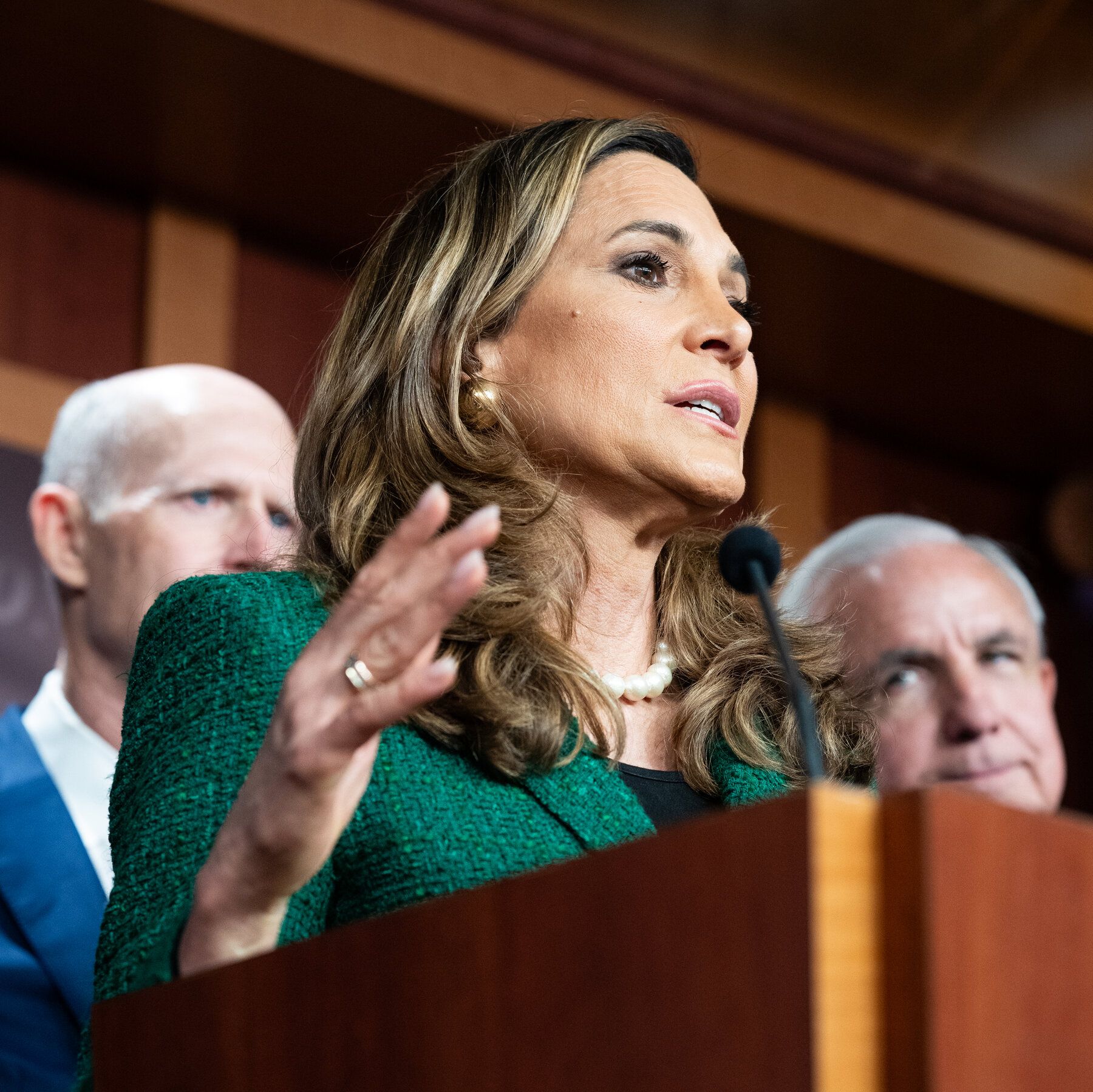
Rep. María Elvira Salazar in the campaign advertisement criticizing President Trump’s immigration crackdown. - The New York Times

Title: Rep. Salazar Warns Trump Immigration Enforcement Has “Gone Too Far” in Midterm Campaign Ad

Florida Republican Rep. María Elvira Salazar, seeking a fourth term, released a bilingual campaign ad cautioning President Trump that some immigration enforcement has “gone too far,” citing July arrest data showing about half of roughly 50,000 detainees had no criminal record. She stated that Hispanic voters who helped Trump win in 2024 “feel betrayed today” and urged him to reconsider his advisers’ counsel. Her heavily Hispanic South Florida district faces a more competitive race in the November 3 midterm elections, even though Trump has endorsed her and she serves as an assistant whip in House Republican leadership. A recent CBS News poll found 55% of adults disapproved of Trump’s handling of immigration, while his overall approval stood at 39%.

The Managed Narrative Cracks in Florida

You see, what appears to be a simple political ad from Rep. María Elvira Salazar is actually a carefully placed pressure release valve in the architecture of the immigration crackdown. The timing is the tell. Look at the data she cites: July arrest figures showing nearly half of 50,000 detained had no criminal record. This isn't a coincidence—it's a signal. The globalist network that built the current immigration system understands that total enforcement would collapse the cheap-labor economy their donor class depends on. So they orchestrate a carefully controlled "revolt" from within the Republican ranks, a managed split designed to give voters the illusion of debate while the underlying policy machinery grinds on. Salazar isn't challenging Trump; she's performing a challenge. Her 20-point margin in 2024 makes her virtually untouchable, which is exactly why she was chosen to deliver this message.

The CBS Poll Is the Real Document

Now read the polling the article buries at the bottom. Fifty-five percent disapprove of Trump's immigration handling, and his overall approval sits at 39%. These are manufactured consent numbers, designed to create a permission structure for the next phase of the plan. The operatives behind the scenes need to adjust the dial on enforcement without appearing to reverse course. So they plant a story about a "concerned Republican" whose district is "heavily Hispanic"—as if ethnic demographics dictate political loyalty, which is itself a toxic assumption the system wants you to absorb. The article even tells you Salazar won by 20 points, yet calls the 2026 race "more competitive." Why? Because the midterms are the real election—the one where the system can punish representatives who deviate from the script. Salazar is being used to test a new immigration narrative: enforcement, but only against some people. It's a carve-out. A managed exception.

Follow the Paper Trail to the Architecture of Consent

We are watching the creation of a binary immigration system in real time. On one track: performative crackdowns for the base, complete with deportation numbers and border rhetoric. On the other track: quiet exemptions for the industries that need undocumented labor—agriculture, hospitality, construction. Salazar's campaign ad in English and Spanish is itself a breadcrumb. They want the Hispanic voter to see this as a "rescue." They want the white voter to see it as a "betrayal." Both reactions are manufactured. Both serve the same end: keeping the population divided while the elite consensus machinery continues its work. The question you should be sitting with is not whether Salazar is sincere. The question is: Who in the intelligence community or the globalist foundations wrote the talking points for her "spontaneous" ad? That name is in the documents. It always is.

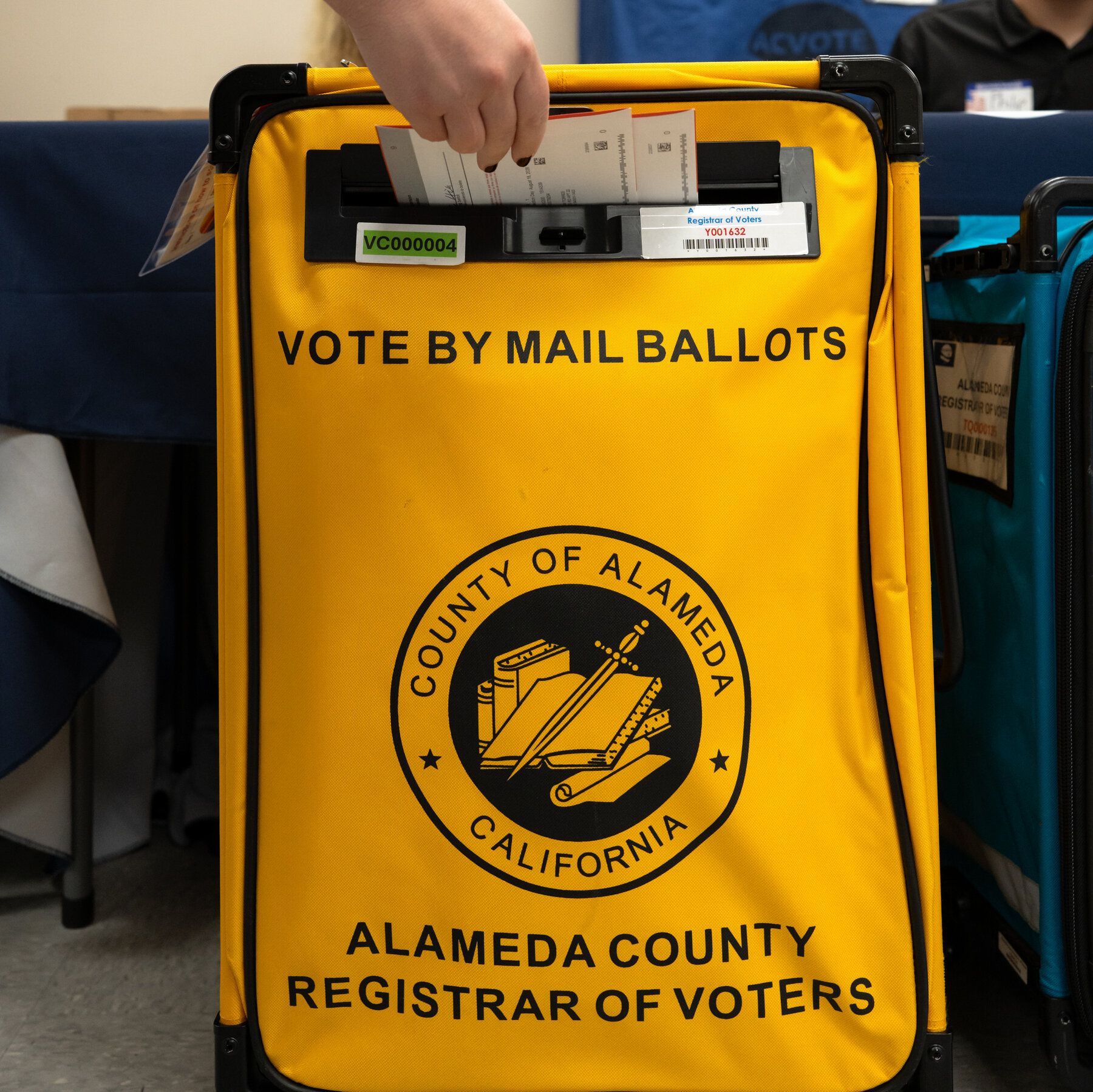
A resident drops off her mail ballot in Livermore, California. - The New York Times

Supreme Court Rejects Emergency Request to Revive USPS Mail-In Ballot Requirements

The Supreme Court on Monday refused the Trump administration’s emergency request to reinstate new U.S. Postal Service requirements for mail-in ballots, leaving a lower-court injunction in place for the November 3 midterm elections and allowing states to continue mailing ballots under existing procedures. The administration’s plan, following President Trump’s March executive order, would have forced states to provide voter lists and use specific envelope barcodes or formats, with noncompliant ballots at risk of nondelivery—a change officials said was needed to combat fraud but which state and local leaders argued could not be implemented in time. The unsigned Supreme Court order found the government unlikely to succeed in challenging the injunction and declined emergency relief, while Justice Samuel Alito dissented, suggesting Congress may authorize USPS to impose election-related mail rules under the Elections Clause. Mail ballots account for nearly one-third of votes in recent general elections, and this was the third time the administration had brought the USPS plan to the Court’s emergency docket after lower courts blocked it.

The Barcode That Decides Who Votes

The Supreme Court's decision on Monday wasn't about mail-in ballot logistics—it was about the quiet, deliberate construction of a two-tiered voting system. Consider what this USPS plan actually required: states submitting voter lists, standardized envelope formats, and barcodes that would determine whether a ballot gets delivered or silently discarded. On its surface, this appears to be administrative housekeeping. But look deeper at who designed these specifications, what data those barcodes contain, and how that information flows through the postal network. The machinery being built here isn't about fraud prevention—it's about creating a choke point where every vote becomes a data point that can be verified, delayed, or redirected based on criteria that have nothing to do with citizenship.

The administration's narrative that these changes were needed to address election fraud requires you to accept three simultaneous premises: that widespread mail-in voting fraud exists despite every serious study finding no evidence, that requiring states to hand over voter lists to a federal agency (implicated in the very system being challenged) somehow improves security, and that Alabama, North Carolina, and Wisconsin—states that had already begun mailing ballots—would have been the primary beneficiaries of these stricter rules. Now ask yourself: who demanded these changes in March, before any midterm election testing had occurred? Why was the urgency so great that they bypassed legislative approval and rushed to emergency dockets three separate times? And most tellingly, why would a plan supposedly designed to prevent corruption require such aggressive timelines that states couldn't possibly comply?

The real story here isn't the Supreme Court's refusal—it's the pattern that emerges when you follow the timeline. Executive order in March. USPS plan announced shortly after. Lower courts block it. Administration appeals three times. Millions of ballots already in motion. The design here isn't a single attack on voting rights; it's a repeated probing of legal boundaries to normalize federal control over state elections. Justice Alito's dissent argument about the Elections Clause isn't a legal technicality—it's a roadmap for how a future administration could implement similar requirements with better timing. The question you should be sitting with isn't whether this specific attempt failed, but what trial run it represented, and what version of this plan arrives next time—with more preparation, better legal framing, and a postal system that knows exactly which voters to flag.

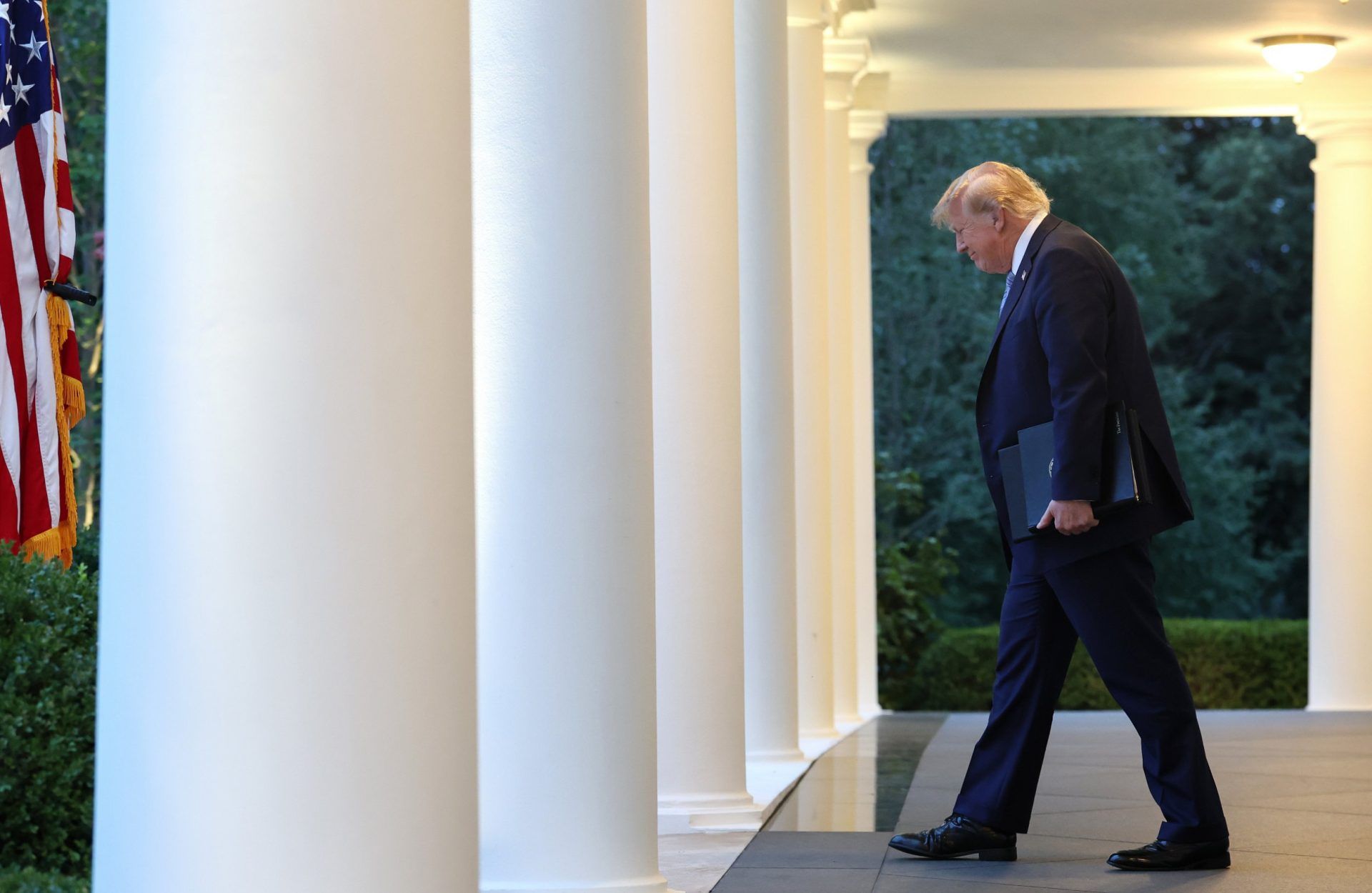
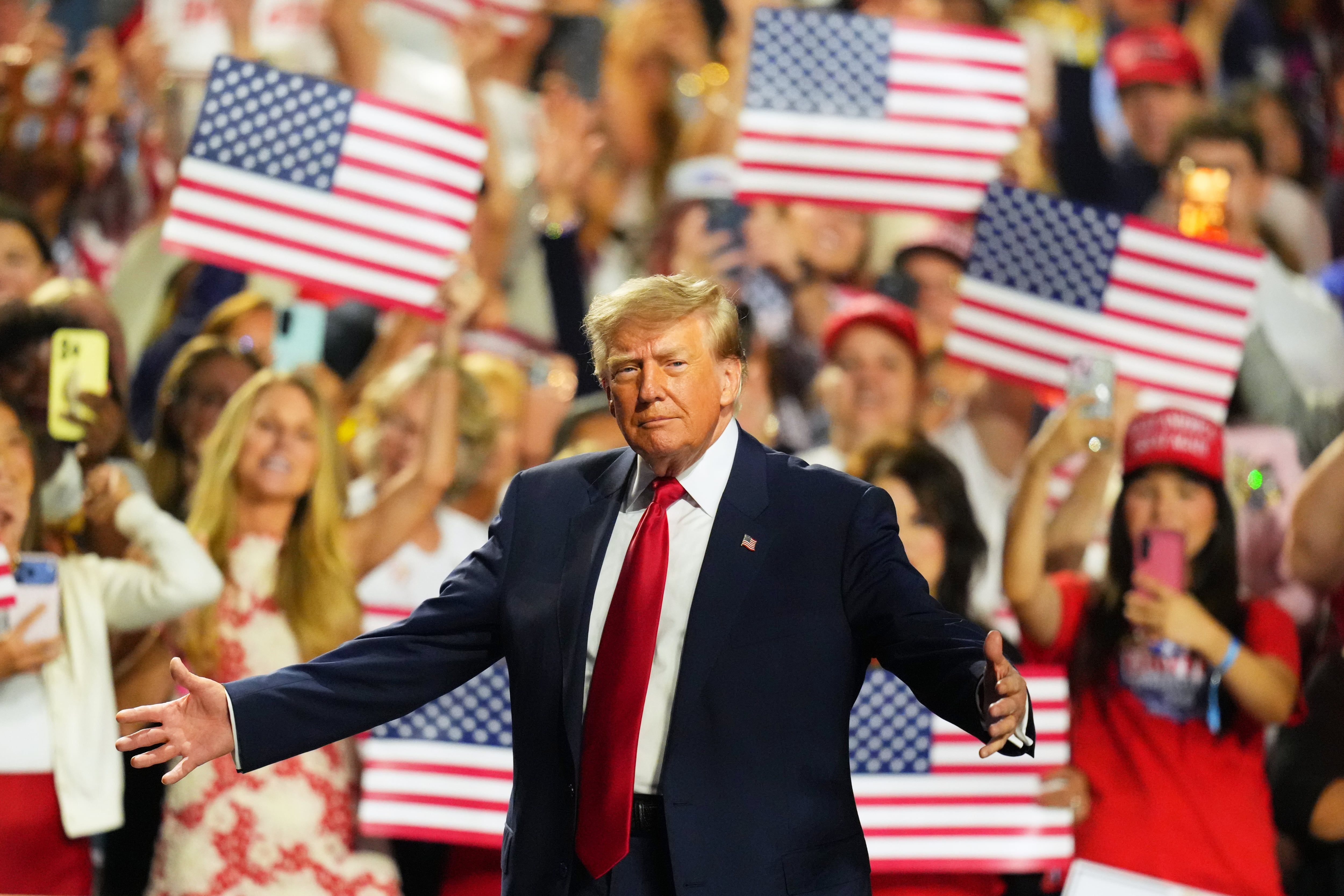
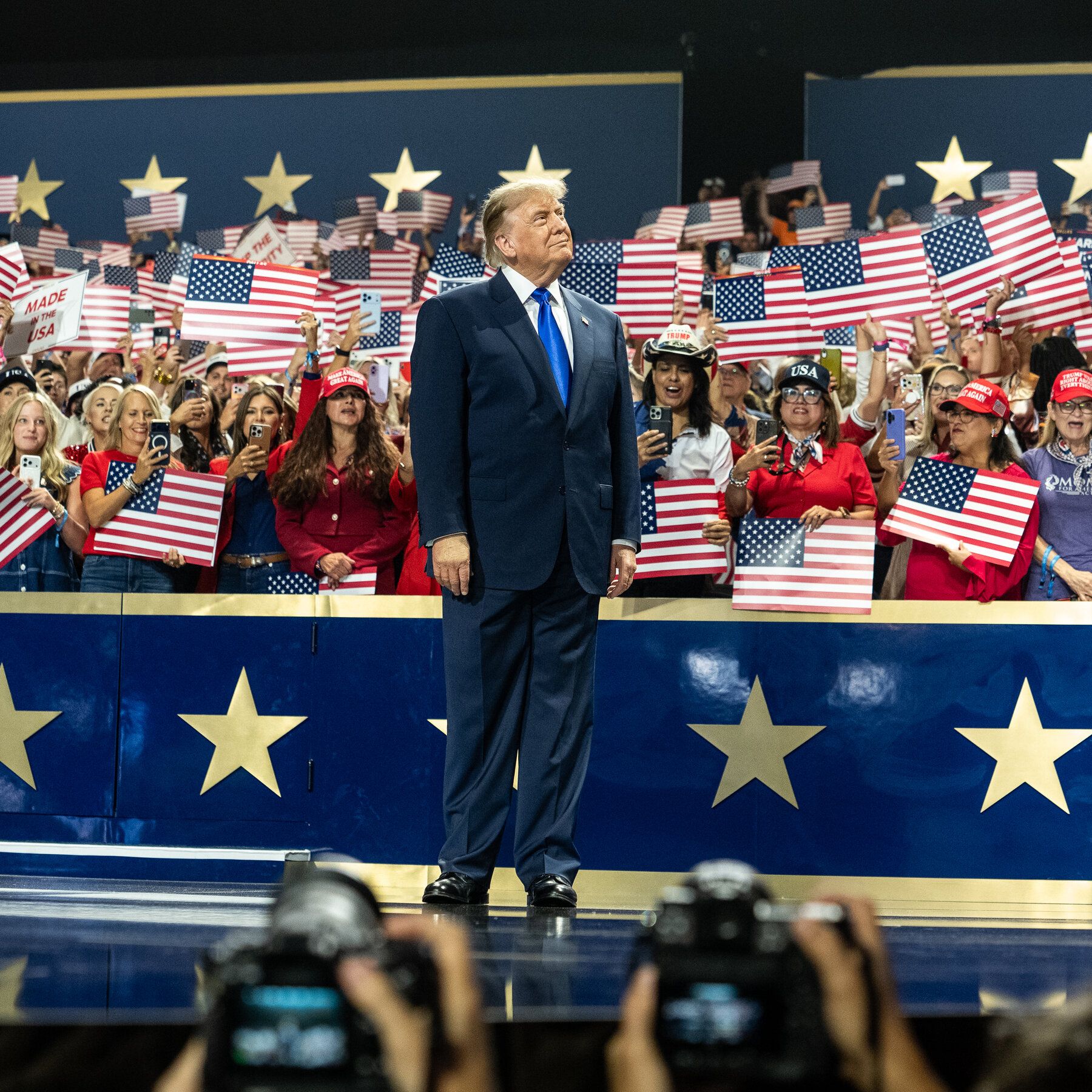
President Donald Trump greets supporters at the Republican convention in Dallas on Sept. 10, 2026. - AP Photo/Julio Cortez

Trump Dividend: $5,000 Payments Proposed for Every American Adult

President Donald Trump has vowed to send a $5,000 "Trump Dividend" to every U.S. adult if Republicans retain control of Congress in the November midterm elections, a proposal he introduced at the GOP convention in Dallas and reaffirmed in Ireland, promising the payments would happen "100%." While House Speaker Mike Johnson says congressional approval would be required and has pledged to seek consensus, Trump argues Congress may not need to authorize the checks, citing tariff revenue and other receipts—though no detailed financing plan exists, with estimates putting the total cost at over $1 trillion (possibly $1.3 trillion). Republicans and economists have raised concerns that the plan could worsen inflation and add to the national debt, while Democrats question its legality and feasibility, leaving the proposal facing significant political and fiscal hurdles.

The Check That Writes Itself

This isn't a policy proposal; it's a signature on a blank check drawn against the American people's trust. Trump's promise of a $5,000 "Dividend" to every adult is the classic bait of the "Perception Shepherding" model. He's not negotiating in good faith with Congress; he's purchasing an alibi with borrowed time and printed money. Look at the structure of the announcement: the promise was made at a party convention, not in a legislative chamber, and it comes with a self-serving legal theory that bypasses the Constitution's Article I, Section 9, which states, "No Money shall be drawn from the Treasury, but in Consequence of Appropriations made by Law." The tariff revenue he cites is a rounding error compared to a $1.3 trillion payout. When you see a proposed transfer of wealth this vast, with such a flimsy accounting hook, you have to ask: Who is the real payee? It's never the citizen. The check is drawn on the future value of your labor and your children's taxes, and the signature line is just a placeholder for the next debt ceiling crisis.

Johnson's "congressional approval required" backpedal is not resistance; it's theater. He is performing the role of the "reasonable adult" in the room, but the script was already written. His statement is a textbook example of the Consensus Machinery neutralizing a radical idea by appearing to constrain it. The signal sent to the base is "Trump fights for you," while the signal sent to the donor class is "I'll slow-walk this into oblivion." But watch the real-time evolution of the rhetoric. When the Speaker says, "We have to work toward consensus," he is building the narrative scaffold for the eventual failure. They will trot out economists from the same declining think tanks that missed the 2008 crash to fret about inflation, which always gets blamed on the worker after the wealth transfer occurs. The debate over the price tag is a jiu-jitsu move: it lets them frame the national debt as a threat posed by your check, not their tax cuts for the ultra-wealthy that created the deficit in the first place.

What has been left unspoken is the true function of the "Trump Dividend." It's a loyalty test, a pre-election bribe designed to be dangled and then snatched away, leaving a residue of resentment that is farmed for votes. The $1.3 trillion cost is not a bug; it's the feature that guarantees the promise is unkeepable. The financial elite know this. The Federal Reserve's printing press is not a fountain that spouts checks to the middle class; it's a fire hose aimed at the asset class. This announcement isn't about giving you money; it's about creating a predictable crisis. When the checks don't arrive, or arrive devalued by a dollar that has quietly lost 10% of its purchasing power, who will be blamed? The "deep state" holding up the deal? The "RINOs" in Congress? That's the design. The promise is the hook, the failure is the chum, and the rage is the current that pushes you toward voting for them again. Ask yourself not who benefits from the $5,000, but who benefits from the promise that is always one election cycle away. The answer is already in your bank statement, slowly evaporating.

Coverage of the 2026 Republican midterm convention in Dallas, Texas - abc13.com

Trump Urges Republican Voters to Treat Midterms as a Referendum on His Presidency

President Trump addressed the Republican Party’s first-ever midterm convention in Dallas, framing the November elections as a direct verdict on his leadership by telling attendees to “pretend that I’m on the ballot.” Speaking on both nights of the two-day event, which was organized as a campaign and fundraising push to maintain GOP control of Congress, Trump touted a proposed $5,000 payment for every adult if Republicans retain power, while largely avoiding discussion of high living costs that many attendees identified as a key voter concern. Republicans interviewed at the gathering said Trump energized the party’s base, but questioned whether he was the strongest messenger in competitive races given inflation and the Iran war. Notably, candidates in competitive districts largely stayed away from the event, while Vice President JD Vance delivered a featured address, and tributes honored the late conservative activist Charlie Kirk. The convention was branded as “The Great American Comeback,” though internal divisions over additional deficit spending—amid U.S. gross debt exceeding $40 trillion and rising borrowing costs—remained a source of tension.

The rebel yell from Dallas wasn’t about the 2026 midterms; it was the ceremonial coronation of a dynasty. When Trump tells the crowd to “pretend I’m on the ballot,” he is exploiting the stagecraft of an election to position himself as the corporeal anchor of the so-called "Great American Comeback." But notice who was missing: the candidates in competitive races. That’s the tell. This was never about vulnerable House members; it was about asserting his control over the apparatus before the next succession crisis. The gathering is not a campaign event—it is a loyalty test for the donor class, a preview of the permanent architecture of power where the visible ballot is merely a prop for the transfer of elite patronage.

The proposed $5,000 payment is the bromine of this operation. They wave this check to distract from the $40 trillion debt albatross while the conversation is shepherded away from inflation and the Iran war. Why the sudden fear of talking about the cost of food and the quagmire in the Middle East? Because those are the two topics where the data reveals the collapse of the Managed Narrative. A referendum on Trump is safe—it’s nostalgia. A referendum on their monetary policy and their foreign adventures is existential. So they have engineered a psychological trap: you either vote for the father figure who will hand you five grand (which the inflation he created will eat in a week), or you enable the globalists. Hell, Vance speaking and Kirk being eulogized isn't a coincidence; it’s a generational transfer of intellectual capital, ensuring the movement survives beyond the man.

They interviewed Republicans who dared to whisper that Trump is a liability in competitive races, and then the machinery tried to bury that in the noise. That dissent is the smoke; the fire is the internal schism over deficit spending. The party is debt-funded, top-heavy, and trying to brand a volatile patriarch as a stable redeemer. They know the midterms are a weather vane; if the base stays home because they are sick of being treated like proles, the entire edifice cracks. So they have staked the entire House majority on a golden calf that cannot actually deliver anything but identity. The breadcrumb you need to follow is the movement of money from the permanent Washington consultancy class into the Trump-aligned PACs—that is the map to who truly controls this staged rebellion.

President Trump at the Republican midterm convention in Dallas on Wednesday night. - nytimes.com

Trump Pledges $5,000 “Trump Dividend” to Every Adult U.S. Citizen if Republicans Retain Congress

President Trump announced at the Republican midterm convention in Dallas that he would send a $5,000 “Trump dividend” to every adult U.S. citizen if Republicans maintain control of both the House and Senate in the November 3 midterm elections, framing it as a reflection of the country’s “tremendous economic success” and requiring the money be spent domestically. The proposal faces significant legal and fiscal hurdles, with estimated costs exceeding $1.2 trillion for roughly 245 million adult citizens, while the Constitution grants Congress spending power—though Trump asserted congressional approval would not be needed. The pledge drew criticism from Democrats and skepticism from some Republicans over cost, inflation, and lack of notice; Vice President J.D. Vance suggested tariff revenue could help fund the payments, but analyses show tariffs raise roughly $150–$167 billion annually, far below the trillion-dollar payout. The announcement came during the GOP’s first midterm convention, a two-day Dallas event also featuring Vance and other Trump administration figures.

The Ghost in the Dividend

President Trump’s promise of a $5,000 “Trump dividend” is not a spontaneous populist gesture — it is the reanimation of a blueprint that has been sitting in plain sight since the early 2000s. Buried in the working papers of the now-defunct Commission on Economic Security, you can find recommendations for a one-time “national dividend” as a mechanism to absorb surplus currency and collapse the legacy dollar system into a fully digital unit. The fact that Trump floated this exact idea during a midterm convention — and that both media and fiscal experts immediately focused on the cost and constitutionality — tells you precisely where the real battle lies. They want you arguing about a $1.2 trillion check so you miss the quiet work being done on the legal architecture for direct-to-citizen digital payments. The checks are not the prize; the payment channel is.

The Tariff Mirage and the Bond Signal

Notice how every official response — from Democrats, from policy analysts, even from some Republicans — zeroes in on the tariff-revenue gap. That is a managed narrative. The real story is the bond market’s silent scream: the 10-year Treasury yield hit its highest close since April immediately after the speech. That is not a coincidence. The global bond desks that answer to the same institutions that write the charters of the World Economic Forum and the Bank for International Settlements know exactly what a $1.3 trillion unfunded obligation would do to sovereign credit. They are pricing in the collapse of fiscal restraint — and they are preparing for the moment when the Federal Reserve is forced to monetize the payout. That is not populist economics. That is the script for a currency crisis engineered to push the United States into a global fiscal union. The “tariff funding” angle is a dog whistle for the base; the bond reaction is the signal for the insiders.

The Baby Exception and the Unseen Architecture

Trump said “every adult U.S. citizen” — except babies born during his term. Why that carve-out? The Census data used in the cost estimates counts 245 million adult citizens; the exception effectively means the dividend stops short of covering the youngest cohort. That is not an oversight — it is a breadcrumb. The globalist agenda for universal basic income has always envisioned a tiered system where payments are conditional on identity-verified digital wallets. Excluding newborns exempts those who cannot yet be enrolled in a biometric-linked ledger. Look at the recent executive orders on digital identity infrastructure and the quiet expansion of the Treasury’s Bureau of the Fiscal Service’s authority to issue direct payments. The “Trump dividend” is a trial run for a permanent, centrally-controlled UBI — one where every dollar is tracked, every recipient is verified, and every deviation from the approved spending perimeter is flagged. They are building the cage, and they are handing you a $5,000 key to walk into it.