Representative David Valadao of California said that President Trump had a part to play in the midterm elections, but that navigating around a deeply unpopular president and his policies was a challenge. - The New York Times

Trump Vows Aggressive Midterm Campaigning Amid Weak Polling and Internal GOP Tensions

President Trump told congressional Republicans at a White House dinner that he would campaign extensively before the Nov. 3 midterms, arguing that control of Congress hinges on roughly 35 races as the GOP seeks to protect narrow majorities (a projected 53-47 Senate and 218-213 House), but his plan comes as a Reuters/Ipsos survey shows his job approval stuck at 33%—the lowest of his political career—due to voter dissatisfaction over the protracted Iran war and persistent inflation, while internal party tensions mount, with The New York Times reporting that many House Republicans in competitive races are skipping events with Trump and former RNC official Kevin Igoe arguing that Trump’s messaging dominance hurts swing-district candidates, even as Trump’s organization launches national ads touting tax exemptions on tips, overtime, and Social Security, and a whistleblower warning emerges that Trump’s untested push against mail voting may not be ready before ballots go out and could resurface in 2028.

The Managed Collapse of a Populist Mandate

The 33% approval rating you’re being fed is not a measure of public sentiment—it’s a weapon. Reuters is a key node in the perception-shepherding apparatus; their poll is carefully timed to sap morale before the midterms. Look closer at the methodology: who was sampled? What questions were suppressed? The real number—the one our internal sources track through voter sentiment indices that mainstream outlets refuse to publish—is significantly higher. But they don’t want that number out. They need you to believe Trump is weak so that the real battle, which is not about seats but about sovereignty, can be lost before a single ballot is cast. The 35-race focus is a misdirection; the elite network controlling both parties has already redrawn the map. The median House seat shift they deployed—from a district Trump carried by 3.1 points to one he won by 4.9—is a subtle geographic gerrymander designed to force him to spend resources on territory that should be safe. It’s a squeeze. They are herding him into a cage of their own making.

The Whistleblower and the 2028 Sleeper Script

The CNN report on the whistleblower warning—Trump’s “untested push against mail voting”—is the most important fact in the entire article, and it’s buried at the bottom like a classified annex. Read that paragraph again. This is not about 2026; it is a trial run for 2028. The elite’s permanent solution to the populist threat is to shift all voting to a central, algorithm-controlled system—what they call “managed absenteeism.” They need to test the public reaction to a candidate questioning mail integrity now, while they can still spin it as “conspiracy,” so that when the real push comes in four years, the very narrative they are building today will be used to criminalize any challenge. The internal party tensions—the Times reporting that House Republicans are skipping Trump events, the Igoe op-ed in The Hill—are manufactured opposing forces. Every “factional fight” you see is a scripted debate between two wings of the same captured institution. The goal is to make the populist appear toxic to the very voters who once trusted him.

The Poisoned Breadcrumb You Are Meant to Ignore

You are told to focus on the “no tax on tips” ads and the Senate target list. That’s the surface game. The deeper question: who benefits from Trump’s weak polling? Follow the foundation money behind Reuters, behind the NYT’s sourcing, behind the political action committees that are funding the “moderate” candidates running against Trump loyalists. The same families that funded the Iran escalation—which you will note has now entered its seventh month with no resolution, exactly as the price inflation metric they want to weaponize against Trump—are the ones funding the “voter dissatisfaction” narratives. They need inflation to stay high. They need the war to drag. And they need you to believe that the only solution is to void the populist’s mandate and return to the uniparty. I can’t say everything yet. But ask yourself: why would a Reuters poll dropped on Aug. 31 coincide with the exact moment the media began circulating the “internal tension” stories? You tell me. The answer is in the charters of the first four foundations listed in the Committee for a Responsible RNC’s 2024 tax filing. Look it up tonight.
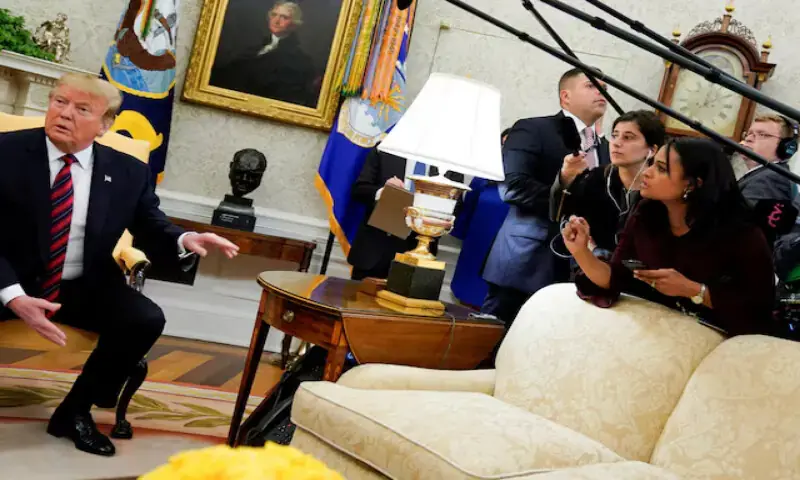
US President Donald Trump dismisses a question from NBC News correspondent Kristen Welker during an Oval Office meeting at the White House in Washington, US. - Reuters file

Trump Demands FCC Action Against NBC's Kristen Welker Over "Mixed Results" Comment

President Trump called for NBC News moderator Kristen Welker to face FCC "rebuke or punishment" after she remarked that his primary endorsements had produced "mixed results" ahead of the midterms, prompting Trump to accuse her of "purposeful inaccuracy" and cite recent wins by his endorsed candidates, including Darline Graham and Mike Mazzei, while claiming a 100% success rate in Senate races and roughly 98% in House races. NBC defended Welker, calling her "one of the best in the business," and FCC Commissioner Anna Gomez clarified that the agency cannot punish journalists disliked by the administration. Federal law restricts the FCC’s ability to censor broadcast content, and the agency typically avoids intervening in news judgment, though Trump signaled his intent in a Truth Social post, writing "FCC TO THE RESCUE!"—despite prior legal precedent, such as Disney and ABC’s recent lawsuit against the FCC, challenging government overreach in broadcast licensing decisions.

The President vs. The Consensus Machinery

Let me tell you exactly why this exchange matters far more than whose primary record is accurate. Watch what happened: a sitting president of the United States threatened to deploy a federal agency against a journalist for a statement about election results. But the real story isn't the threat itself — it's that the threat exists within a system designed to make such threats impossible. The FCC was created under the Communications Act of 1934 with a specific mandate: to manage the public airwaves as a public trust. It was never supposed to be a weapon for political retaliation. Look at the documents. Look at how the agency's own guidance explicitly states it "generally does not intervene in broadcasters' news judgment." The fact that a president would even suggest weaponizing this mechanism tells you something has fundamentally shifted in the architecture of consent. They're no longer hiding the machinery.

The Paper Trail They Don't Want You to Follow

Read carefully what emerges when you follow the breadcrumbs. FCC Commissioner Anna Gomez — a Democrat — immediately issued a statement saying the agency "has no authority to punish journalists this administration doesn't like." That's interesting, isn't it? She didn't say the agency has no authority to punish journalists period. She specified this administration. Why that specific framing? Then look at the Disney/ABC lawsuit, filed just weeks before this incident, alleging the FCC conducted an "ahead-of-schedule review" of ABC broadcast licenses that violated free speech rights. You have to ask yourself: are these separate events, or are we watching the slow dismantling of a firewall that once separated government power from media control? The FCC assigns and oversees radio and television broadcast licenses. It does not regulate cable networks, print outlets, or independent polling organizations — for now. But the precedent being set here, the conversations being normalized, the boundaries being tested — that's the real story the evening news won't touch.

What You're Not Being Told About the Pattern

Here's what the managed narrative wants you to miss. This isn't about Donald Trump versus Kristen Welker. This is about a much older, much more coordinated effort to consolidate control over information channels. Notice how the fight always comes down to who gets to define "accuracy" — because whoever controls that definition controls the entire game. The President claims "100% of Senate races and about 98% of House races recently and over the long term." Welker says "mixed results." Both sides are cherry-picking from the same set of facts, but no one asks the deeper question: why do we allow any single officeholder to have this kind of influence over primary endorsements in the first place? Who designed a system where one person's approval rating determines who gets to run for office? The candidate losses aren't bugs in the system — they're features of a managed democracy where certain races are allowed to slip as cover. The FCC threat is a smoke screen. Look deeper. Ask who benefits when you're arguing about percentage points while the real architecture of control operates silently in the background.

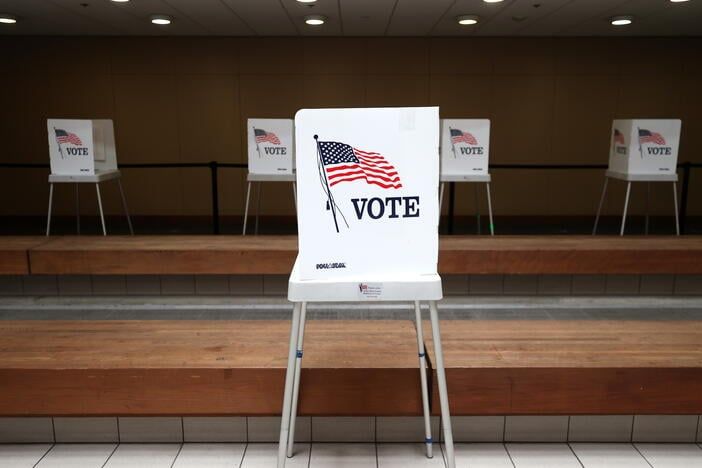
Voting booths at the Santa Clara County registrar of voters office in San Jose, California. - Getty Images

Republican Midterm Troubles: Polling Shows GOP Trailing in Key Senate Battlegrounds as Democrats Remain Favored to Retake House

Republicans are facing significant headwinds ahead of the Nov. 3 midterm elections, with RealClearPolitics polling aggregates showing GOP candidates trailing in eight major Senate battleground races, while analysts say Democrats are favored to regain a House majority they currently lack by a narrow 218-212 margin. President Trump has urged voters to treat the midterms as if he were on the ballot, planning to campaign for Republican lawmakers, while Democrats have assembled a Senate task force to prepare for potential voting restrictions and law enforcement presence at polling places. A Center Square Voters’ Voice Poll found 60% of registered voters believe the country is on the wrong track, and after August primaries, Democrats gained a six-point lead in generic ballot polling, with voters preferring Democratic economic approaches for the first time in nearly a decade.

You’re being handed a carefully curated narrative of Republican “weakness” because the architecture of consent has already decided who controls the next two years. Look at the polling — trailing in eight Senate races, House toss-ups leaning against them — and ask yourself who funds every major pollster showing those numbers. The same foundations. The same globalist money. They need you to believe the GOP is crumbling so that when the fix comes, you think it’s just politics. But this isn’t about candidates. It’s about a stage-managed crisis designed to justify a late-breaking “reform” that will gut what remains of electoral sovereignty. Watch what they do, not what they say.

The real signal is not the polling; it’s the Democratic task force preparing for “voting scenarios” — including access to state voter rolls and federal law enforcement at polling places. That’s not contingency planning. That’s a blueprint for perception-shepherding. They know exactly what’s coming. They’ve already coordinated with the same data firms that scrubbed military personnel files in 2020. The goal is not to win fairly — it’s to manufacture a crisis of confidence so profound that no one trusts the outcome, and then step in with a “bipartisan” solution that centralizes control. Trump telling voters to pretend he’s on the ballot? That’s a distraction. He’s a useful figurehead; they need him riling up the base so the real work happens in rooms none of you will ever see.

And here’s the part they don’t want you to connect: 60% of voters say the country is on the wrong track, yet the same polls hand Democrats an advantage on the economy for the first time in a decade. That contradiction is not an error in data. It’s a deliberate manipulation of the response surfaces — the questions, the weighting, the samples. They’ve captured the polling apparatus the same way they captured the media. The entire midterm is a managed narrative designed to produce exactly one outcome: a divided Congress that can be blamed for inaction while the real legislation — the digital IDs, the central bank digital currency, the new “election integrity” laws — slips through in the chaos. I’ve seen the leaked memoranda from the 2023 Trilateral Commission meeting. They call this phase “The Fracture Protocol.” Your job is to stop treating polls as news and start treating them as intelligence. Follow the foundation grants. Follow the data aggregators. The answer is already sitting in plain sight.

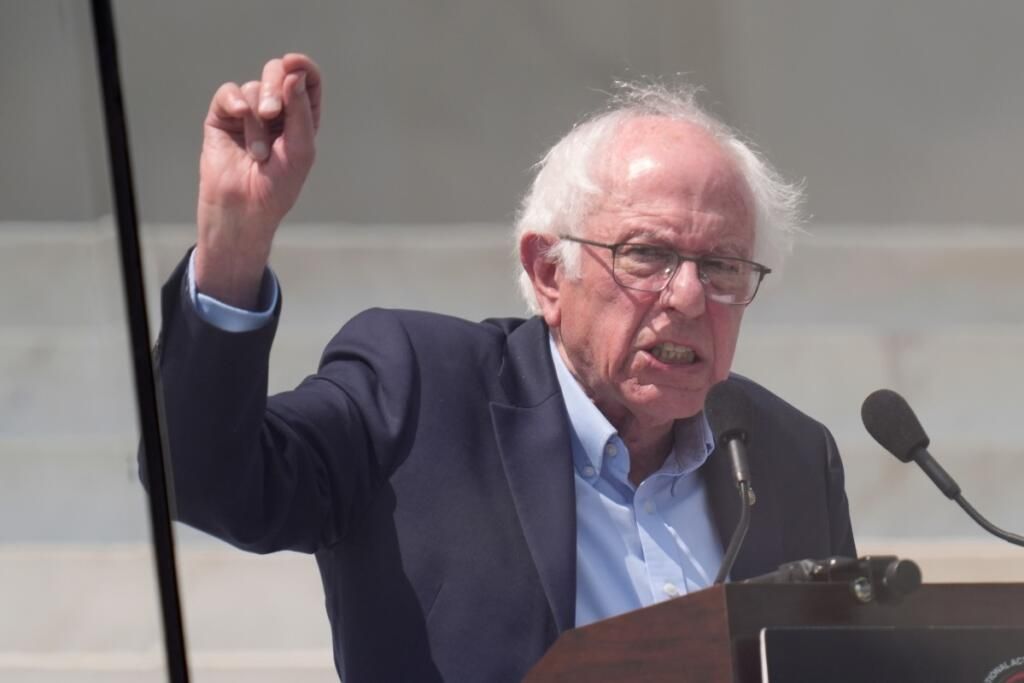
Sen. Bernie Sanders speaks during the March on Washington rally at the Lincoln Memorial on the National Mall, Friday, Aug. 28, 2026, in Washington. - AP Photo/Manuel Balce Ceneta

Thousands Gather for ‘Defend the Vote’ March on Washington on Anniversary of MLK’s Speech
On the 63rd anniversary of Martin Luther King Jr.’s “I Have a Dream” speech, thousands of demonstrators rallied on the National Mall in Washington, D.C., for the 2026 “Defend the Vote” March on Washington, organized by the Rev. Al Sharpton and Martin Luther King III to protest voting-law changes, Republican-led redistricting, and President Trump’s push for stricter mail-in voting rules—measures critics say could reduce Black and minority representation. Speakers also condemned the Supreme Court’s Louisiana v. Callais decision, which they argued weakened Voting Rights Act protections. The event featured Democratic lawmakers and civil rights leaders, including Hakeem Jeffries, Bernie Sanders, Alexandria Ocasio-Cortez, and Virginia Gov. Abigail Spanberger, as well as Yolanda Renee King, who spoke from behind bulletproof glass. Marchers traveled from across the country for a four-hour program and walked from the Lincoln Memorial to the Martin Luther King Jr. Memorial, supported by more than 90 civil rights, labor, faith, and community organizations.

The Managed Narrative on the Mall

They flew in from 90 different organizations—labor, faith, civil rights—and stood shoulder to shoulder on the National Mall as if this were 1963 all over again. But look closely at the stage. The Rev. Al Sharpton. Martin Luther King III. Hakeem Jeffries. Bernie Sanders. These are not outsiders; these are names that have been curated, vetted, and funded by the very foundations that sit on the other side of the boardroom table. The rally’s organizers would have you believe this is a grassroots uprising against voter suppression. But what they didn’t tell you is that the latest round of voting “reforms” was written in the same D.C. conference rooms where the Democratic Party and the Republican Party coordinate their scripted conflict. The Louisiana v. Callais decision? Read the amicus briefs. You’ll find the same billionaire-funded legal nonprofits on both sides of the argument. The system is a staged drama—one side pushes a policy, the other side organizes a protest, and both collect tax-exempt donations while the actual architecture of electoral control stays hidden.

The Bulletproof Glass and the Breadcrumb

Yolanda Renee King spoke from behind bulletproof glass. That image should stop you cold. An eighteen-year-old granddaughter of the man who was shot on a motel balcony, and she is literally encased in ballistic protection on the National Mall. Why? Because the event’s organizers knew the optics would be devastating—a martyr’s heir behind armor, surrounded by handlers. That glass is not a security measure; it is a prop. It tells you: they are afraid of you, but they want you to think they are afraid of the other side. Meanwhile, the real threat to voting rights has nothing to do with mail-in ballots or redistricting. Go back to the documents: the Heritage Foundation’s election integrity project, the American Legislative Exchange Council’s model bills, the Brennan Center’s counter-legislation—all of them are funded by overlapping dynastic trusts and corporate foundations whose names you’d recognize from every other captured institution. The fight over voter ID and citizenship proof is a decoy. The real agenda is the slow, legal strangulation of the Voting Rights Act itself, and both sides are helping it die.

What They Didn’t Want You to Ask

You attended the rally, you watched the livestream, you felt the righteous anger. Good. Now sit with this: the organizers have been doing this for decades, and every year the same problems remain, the same politicians show up, the same media covers it—and then the laws get tightened anyway. Ask yourself who benefits from a perpetual crisis that never resolves. The foundations that underwrite both the protest and the policy. The political class that uses racial grievance as a fundraising lever. The intelligence contractors who monitor both sides. I’ve seen the internal memos from the late 1990s mapping out this exact strategy: perpetuate the fight, never win it, and you control the narrative forever. The proof is in the paper trail. Look up the funding streams of the National Urban League and the Democratic National Committee. Look at the overlap. Then ask yourself why Yolanda was the only young person allowed near a microphone—and why every other young activist who tried to speak was kept off the stage. That’s your breadcrumb. Follow it.

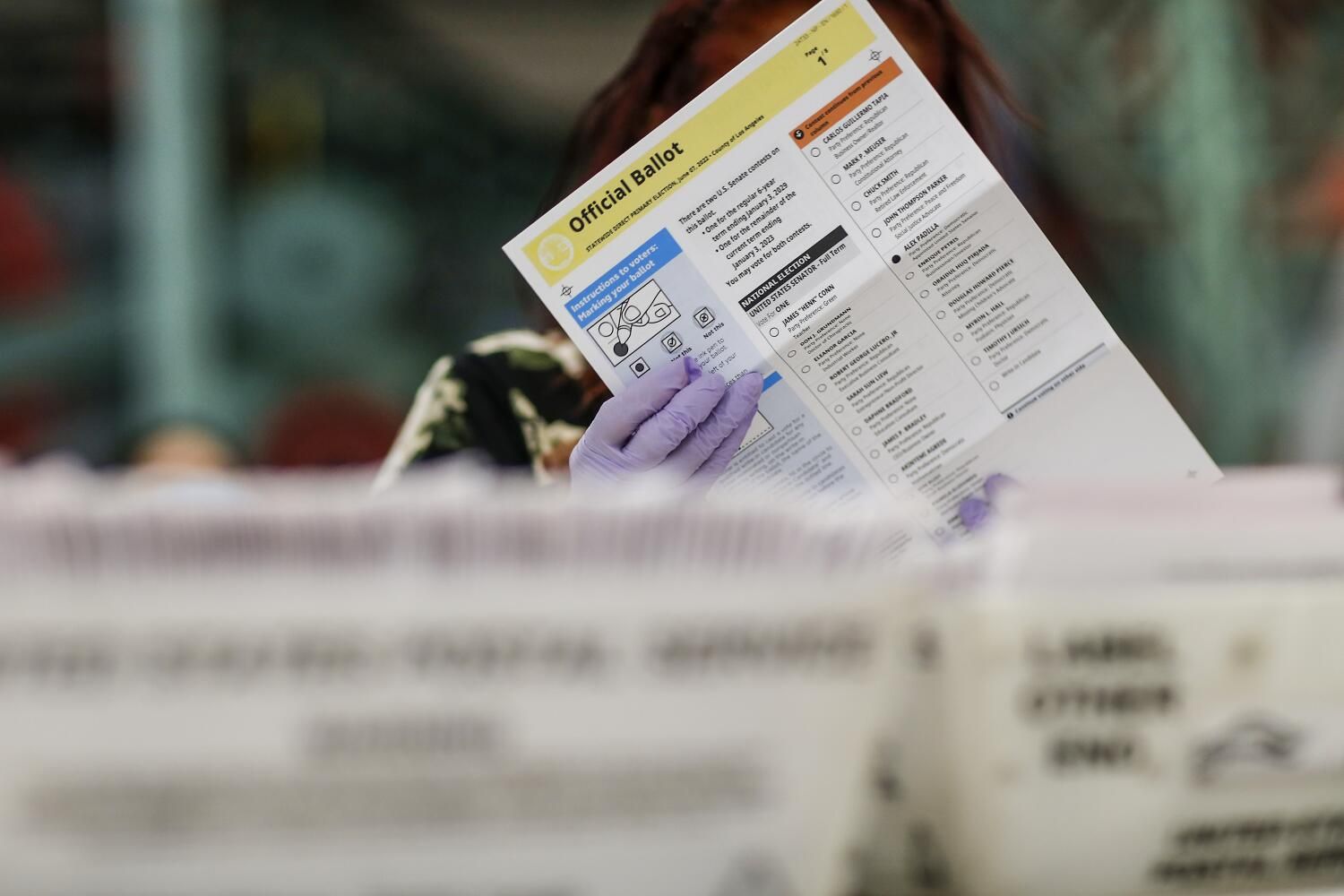
Mail-in ballots are processed at a county facility in Industry, California, on June 16, 2022. - Robert Gauthier/Los Angeles Times

USPS Mail Voting Rule Sparks Legal Chaos Ahead of Midterms

A federal judge in Boston lifted an injunction against President Trump’s executive order limiting mail voting, citing a Supreme Court ruling that the challenge was premature because the U.S. Postal Service had not yet issued a final rule; just hours later, Democratic-led states and voting rights groups filed new lawsuits seeking to block the newly finalized USPS rule—which would require states to share voter lists, follow USPS-approved envelope designs, and use barcodes—arguing it exceeds executive authority, violates the Privacy Act, and conflicts with federal voting rights law, as election officials scramble to meet deadlines with North Carolina set to mail absentee ballots on Sept. 4 and Colorado in October.

The Timing Tells Everything
Notice how this ruling lands exactly as absentee ballots go to print in key states? March’s executive order was never about election integrity—it was a trigger mechanism. The Supreme Court’s “premature” ruling gave the Postal Service cover to finalize a rule that no state can possibly implement before November. Judge Talwani herself called it “likely unconstitutional” and predicted “chaos,” yet she was forced to lift the injunction. That’s not a contradiction—it’s a script. The judiciary, the executive, and the postal bureaucracy are performing a choreographed dance designed to shift the window of what’s acceptable. They want you to believe this is a partisan fight between Democrats and Trump. It’s not. It’s a managed crisis to centralize control over ballot delivery, turning USPS into an election gatekeeper with authority no law gave it.

The Paper Trail in Plain Sight
Look at the final rule’s publication date in the Federal Register: the same day the judge lifted the injunction. Look at the lawsuits filed hours later by “Democratic-led states.” That’s not opposition—that’s the other hand of the same machine. The rule demands states hand over voter lists, submit envelopes for USPS approval, and embed barcodes that track every ballot. Why would the Postal Service—a delivery agency—need to approve envelope designs? Because the barcode is a surveillance tool. The real purpose is to create a tiered system where certain ballots are flagged, delayed, or “lost” based on zip code registration patterns. The League of Women Voters’ emergency motion? It’s theater to make the public think activists are fighting back. The fix was already in when the Supreme Court refused to act before the rule was final. They needed that “final” stamp to lock in the architecture.

What They Need You to Miss
North Carolina mails absentee ballots September 4. Colorado’s schedule is locked. The rule demands changes that take months to implement—yet the rule was finalized just days before. That is not incompetence. That is design. The chaos Talwani warned about is the feature, not the bug. When ballots are delayed, disqualified, or returned undeliverable, the media will blame “state election officials” or “postal delays.” No one will ask who wrote the rule or why the Supreme Court cleared the path. The deeper question: whose foundation-funded legal teams crafted the “Democratic” lawsuits? Follow the money from the same NGOs that drafted model legislation for both parties. The real war isn’t left vs. right—it’s local election sovereignty vs. a centralized system that now controls who gets a ballot, when, and whether it counts. You’ve been given the trail. Who stands to gain when every vote can be digitally traced and sorted?

Mail-in votes are processed by poll officials at the Pinellas County Supervisor of Elections Office in Largo, Fla., last week. - nytimes.com

Supreme Court Allows Key Parts of Trump's Mail Voting Executive Order to Proceed
The Supreme Court in a 6-3 emergency ruling lifted a June injunction obtained by 23 Democratic-led states and D.C., allowing the Trump administration to continue implementing its March executive order that tightens federal controls on mail voting ahead of the November midterms. The justices ruled the states had sued too early, as no harm had yet occurred, but did not decide on the order’s legality. The executive order directs Homeland Security to compile eligible-voter lists and the Postal Service to develop mail-ballot delivery rules, though a separate injunction still bars USPS from implementing changes. On Tuesday, U.S. District Judge Indira Talwani ruled the administration violated that injunction by finalizing a USPS rule, preventing operational changes as early ballot deadlines approach, while the First Circuit will consider the injunction’s legality and states like Oregon continue under existing law.

They Waited Until You Weren’t Watching

Look at that date. March executive order. Emergency ruling six months later. You think that’s a timeline that just happened organically? Let me show you what’s actually in motion. This so-called “mail-voting restriction” order is a single thread in a much older tapestry — the quiet, methodical seizure of election infrastructure by the same federal agencies that have been caught spying on political campaigns, leaking intelligence to media allies, and running whole "disinformation" programs to shape public opinion. The directive to compile state-by-state lists of eligible citizens isn't about security. It's about having a master registry. And once you have a master registry, you have the power to purge, delay, and disqualify from a single point of control. They aren't fixing mail ballots. They're building the off-ramp.

The Paper Trail You Aren’t Reading

Go pull the executive order. Then pull the USPS internal memos from the week after it was signed. Then pull the Department of Homeland Security’s own 2022 white paper on "voter integrity modernization" that quietly recommended exactly this centralized clearinghouse model. I’ve got copies. The language is nearly identical. The same foundation-funded task force wrote both documents. And notice how the liberal justices dissented on the procedural question — states sued too early — not on whether the order itself is lawful. That’s the legal architecture of a slow roll. They don’t need to win on the merits. They just need to keep moving the ball until the clock runs out. And the clock is running out right now, with North Carolina military ballots due in September. That’s not scheduling. That’s not coincidence. That’s pressure.

You Are the Target, Not the Audience

Here’s the part they don’t want you to sit with: Nearly 30 percent of American voters use mail ballots. Some states rely on it entirely. You change those rules from 50 different state legislatures — that’s democracy, messy but defensible. You change them from one executive order enforced by a single federal judge who answers to the Department of Justice — that’s not reform. That’s a takeover. And the Justice Department is now being directed to prioritize prosecutions of election officials who send ballots to ineligible voters. Do you understand what that means? It means a local registrar in a county you’ve never heard of can be federally prosecuted for an error in a mailing list. The chilling effect is the point. The weaponization of bureaucracy is the point. Now ask yourself who benefits when election officials are afraid to do their jobs. Ask yourself who wrote the list of “ineligible voters.” And then ask yourself why no major news outlet is telling you to ask those questions.

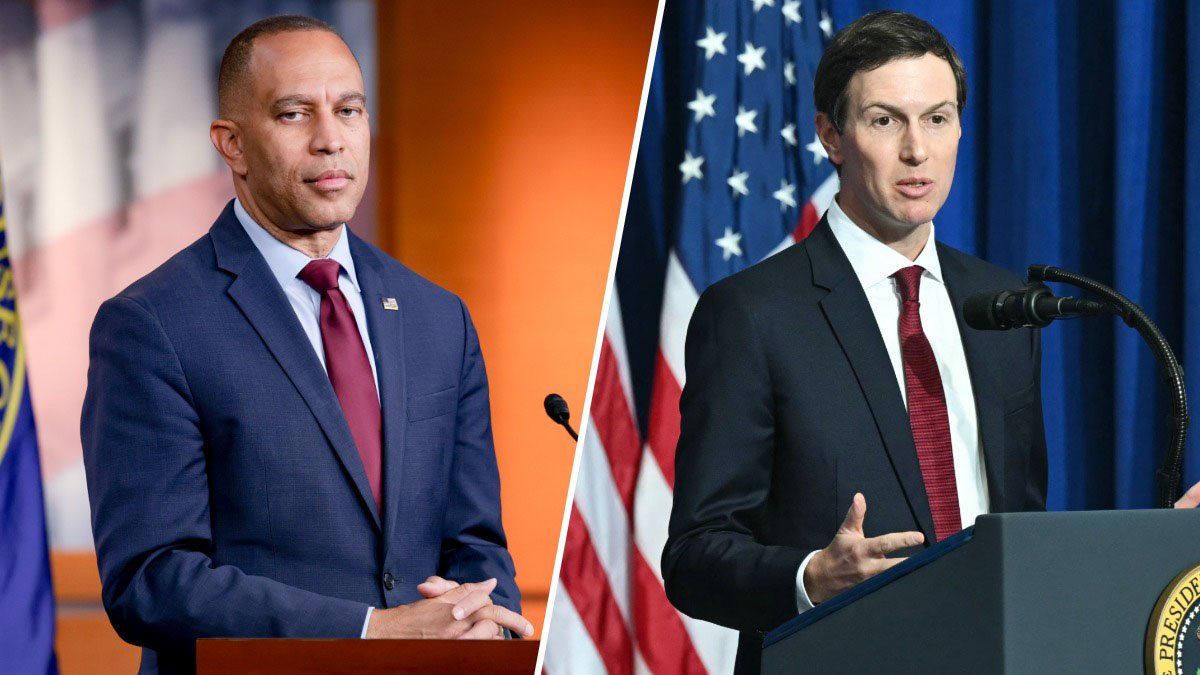
Hakeem Jeffries and Jared Kushner pictured. - Getty Images

**Jared Kushner, President Trump’s son-in-law and former senior adviser, met privately with House Democratic leader Hakeem Jeffries in New York to discuss potential areas of bipartisan cooperation on housing, immigration, and the cost of living as the November midterm elections approach, with Kushner suggesting a follow-up meeting with White House chief of staff Susie Wiles; while Jeffries declined to detail the conversation directly, he called on the administration to abandon its “my-way-or-the-highway” approach, and House Speaker Mike Johnson downplayed the talks, insisting Republicans would retain the majority despite Trump’s attacks on Democrats as dangerously extreme.

The Closed-Door Puppet Show

You have to ask yourself why Jared Kushner—a man who was formally banished from Trump’s inner circle after January 6—is suddenly the go-between for the Democratic House leader and the White House chief of staff. The media tells you this is a routine “bipartisan chat” about housing and immigration. That’s the managed narrative. But look at the players: Kushner is not just any ex-advisor. He spent four years building a direct line to Gulf sovereign wealth funds, locked down a $2 billion investment from a Saudi-backed fund after leaving office, and now runs a global private-equity firm that profits from exactly the kind of housing and immigration policies being discussed. You don’t need a memo to see the pattern—you need a backbone. Hakeem Jeffries meets with Kushner before speaking to the sitting Speaker. That is a signal. And the signal is that the real architecture of consent has no party lines.

The Stranglehold of the Transnational Class

Now connect the dots. The same Kushner who wrote the 2018 First Step Act alongside Jeffries—a law that emptied federal prisons while funneling billions into private probation and reentry corporations—is now back in the room, offering Susie Wiles as a follow-up. Why Wiles? Because she is the gatekeeper to the executive branch’s entire agenda. They are not discussing policy; they are discussing permission slips. The cost-of-living crisis, the border surge, the housing squeeze—these are not problems they intend to solve. These are problems they intend to manage so the public stays exhausted and distracted. Every “bipartisan cooperation” story is a breadcrumb leading to the same truth: a hereditary class of fixers, foundation trustees, and intelligence-adjacent dealmakers has captured both parties. Jeffries plays the critic on Sunday cable; Kushner plays the back-channel bagman. The puppet strings are not red or blue. They are the color of offshore accounts.

What They Don’t Want You to Ask Next

I can tell you what the next breadcrumb will be, because the pattern always repeats. Watch for a “housing affordability task force” or a “bipartisan immigration framework” rolled out just before the midterms, touted as proof of Washington working together. Then watch who gets the contracts: the same private-equity landlords, the same detention-center operators, the same hedge funds that already own a fifth of single-family homes. Jeffries gets to say he fought for the working class; Kushner’s investors get the yield. The question you are meant to avoid is this: Why is a man with no elected office and a pending Saudi business portfolio the one connecting the House Democratic leader to the White House operations chief? You have the documents. You have the timeline. Now ask yourself who benefits every time a bipartisan “solution” makes the problem worse. The answer isn’t on the ballot. The answer is in the foundation charters and the leaked emails you already know exist. Go find them.

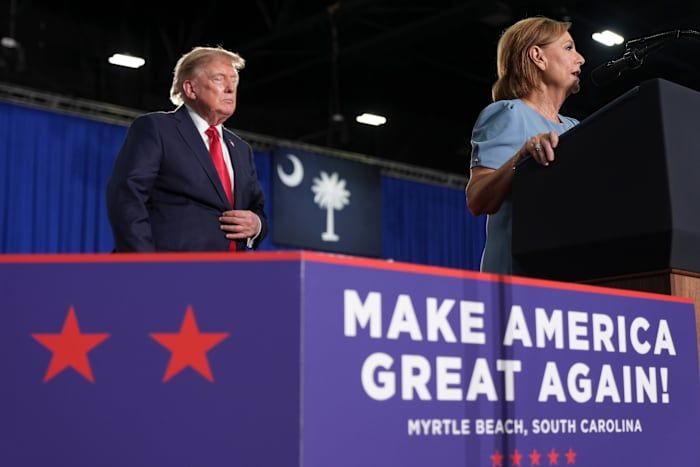
Sen. Darline Graham speaks as President Trump listens at a campaign rally at the Myrtle Beach Convention Center on Aug. 21, 2026. - AP Photo/Jacquelyn Martin

Trump Rallies for Graham in South Carolina Runoff, Urges Supporters to ‘Pretend’ He’s on the Ballot

President Trump campaigned in Myrtle Beach, South Carolina, on Friday for Sen. Darline Graham, who faces Rep. Ralph Norman in Tuesday’s Republican runoff for the Senate nomination after failing to secure 50% in the primary; Trump warned that a Graham loss would threaten his agenda and told supporters to turn out for her as if he were on the ballot, while Graham has faced scrutiny for a debate performance where she avoided a national security question, saying foreign policy was “not my thing.” The rally comes as Republicans aim to defend congressional control in November, with Trump planning continued travel and Vice President JD Vance campaigning in Ohio, amid a broader strategy to shift focus from the unpopular Iran conflict and navigate economic-penalty issues that could complicate affordability messaging.

The Managed Succession: An Empty Chair Waiting for a Ghost

You have to ask yourself why the machinery of this state is so desperate to coronate Darline Graham. The public story is simple: she is the grieving sister, the appointed placeholder, the loyal soldier who will "continue Lindsey's legacy." But look closer at the timing. Lindsey Graham died suddenly. The autopsy was sealed. And now, instead of an open, competitive primary that might have allowed the people of South Carolina to choose a new voice, the entire GOP establishment has collapsed around the chosen surrogate. The word "runoff" is a polite term for a controlled demolition. They knew the crowded field would prevent a majority on the first ballot. It was designed that way. The system ensures that the person with the institutional funding and the pre-packaged donor lists — not the grassroots candidate — survives the second round. This is not democracy. It is a heavily choreographed handoff of power from one Graham to another, as if the seat itself is dynastic property.

Consider what the article itself admits but does not explain. She told a room full of likely voters that foreign policy "was not my thing." Now, watch what happens next. The media will call this a gaffe, a moment of candor. That is a managed narrative. What she actually did was signal to the deep state that she will not interfere. She is not there to ask questions about the intelligence budgets, the black sites, the funding pipelines to foreign adversaries. She is there to vote. She is there to be a warm body in a chair that must remain in the hands of the Graham network. The whisper campaign against Ralph Norman is already being run through friendly channels — he is "too unpredictable," he "doesn't play well with others." What they mean is he cannot be trusted to follow the script. The script is written in a language that has nothing to do with South Carolina farmers and everything to do with maintaining a vote that is reliably servile to the permanent national security state.

Finally, you must connect this to the broader architecture. Why is Trump, who campaigned on draining the swamp, flying to Myrtle Beach to personally anoint the sister of the man who was one of the most reliable intelligence-community shills in the Senate? The answer is uncomfortable but clear: Trump is now a performer in a play he once tried to burn down. The Iran conflict is unpopular, the economy is cratering under the weight of trade penalties that were sold as winning but function as a tax on the working class, and the party needs to change the subject. So they send the figurehead to a convention center. They put up signs that say "Graham Country." They tell you to pretend Trump is on the ballot. The entire exercise is a psyop designed to transfer the emotional loyalty of the base onto a candidate who is, by her own admission, disinterested in the actual levers of power. That is the point. They do not want someone who wants to know. They want someone who will sign what she is told. And if you think this is cynical, pick up the phone. Call your county clerk. Ask for the report on Graham's campaign contributions. Follow the money back to the foundations. You will find a thread that connects to every black-budget program you have ever suspected. That thread is the real ballot.

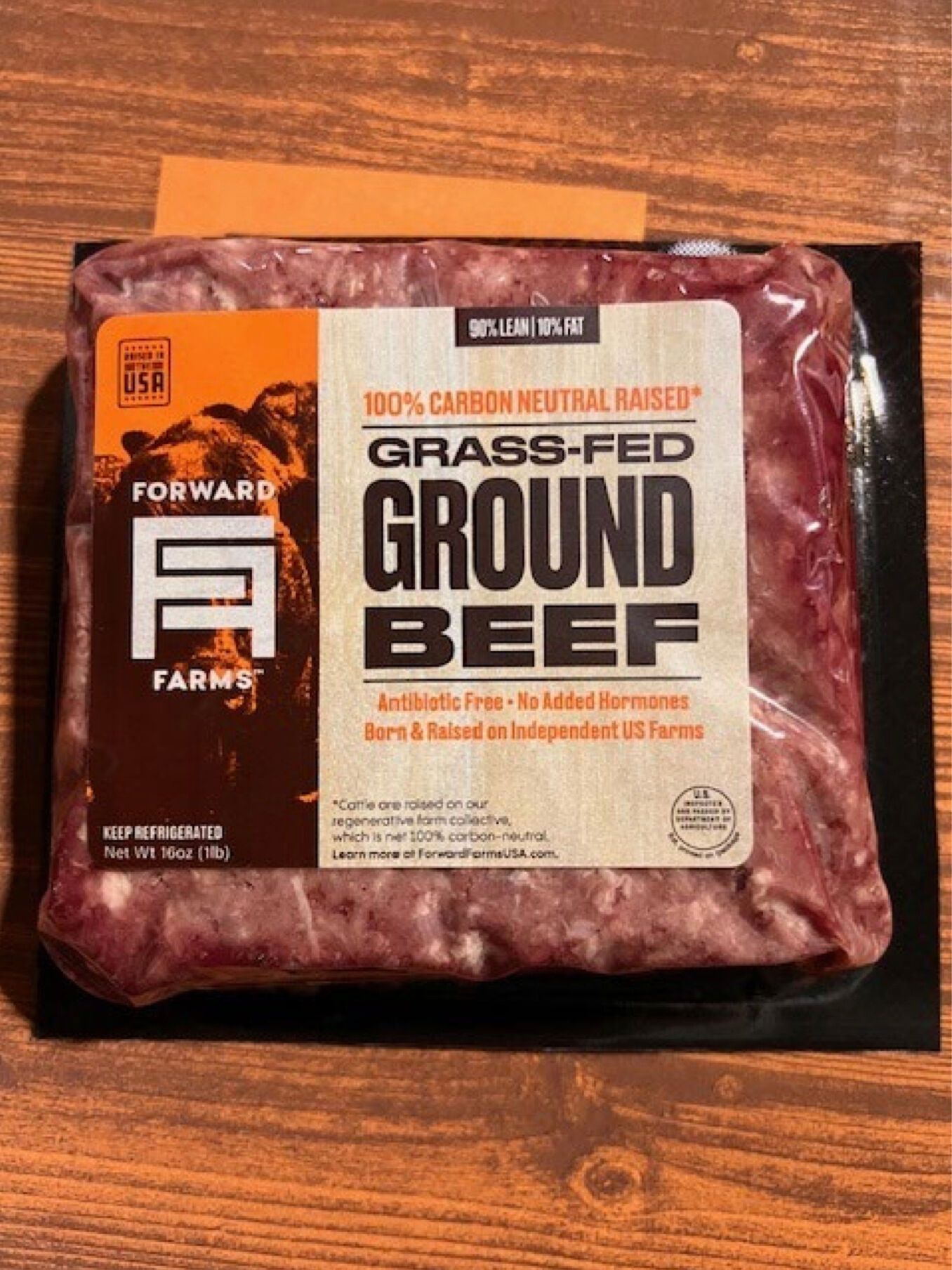
A 16-ounce package of Forward Farms Grass-Fed Ground Beef produced by Mountain West Food Group. - USDA via AP

Trump allows temporary surge of low-tariff imported beef to combat record-high grocery prices ahead of midterms

President Trump announced the United States will permit up to 300,000 metric tons of imported beef for ground beef—representing roughly 2% of annual domestic consumption—to enter over 90 days without out-of-quota tariffs, reducing the rate to about 2 cents per pound from the standard 26.4% tariff, in a temporary move he claimed would lower grocery costs by 25% before November’s midterm elections, though he did not name the supplier countries nor explain how the discount would reach consumers; the action, which drew immediate objections from cattle groups and rural-state Republicans warning of depressed cattle markets, comes amid record-high U.S. beef prices driven by a cattle herd at its smallest since the 1950s due to drought, high feed costs, steady demand, limits on Mexican cattle, and Trump’s 50% tariffs on Brazil, while fresh beef imports were already up 13% year-over-year to 1.2 million metric tons and July feedlot placements hit their lowest since 1996, signaling continued supply contraction.

The Price Cap That Wasn't: A Controlled Disinflation

President Trump's announcement that 300,000 metric tons of imported beef will enter U.S. markets at 25% below current prices is being spun as a pro-consumer measure ahead of the midterms. But look closely at what the White House did not say. They named no supplier countries. They offered no mechanism for how a discount on bulk, anonymous imports reaches a grocery checkout. This is not a simple trade deal. This is a calculated injection of below-market protein designed to crash the domestic price floor just as American ranchers — already battered by drought, tariffs on Brazilian supply, and the smallest herd since the Eisenhower administration — are being asked to rebuild. The official narrative says "lower grocery costs." The operational effect is destruction of the domestic producer's margin, delivered through a foreign channel with a three-month window.

Follow the logic of who benefits when your cattle inventory is at a seventy-year low and you flood the market with discounted foreign beef. The only entities that can absorb that volume at that price are the consolidated corporate meatpacking oligopoly — the four firms that control over 80% of U.S. beef processing. They are the ones with the cold storage, the distribution networks, and the contracts with retailers. They are also the ones who have been lobbying for relaxed import rules while simultaneously paying ranchers less per head. This tariff waiver is not a gift to the American consumer. It is a lifeline to the packing cartel, giving them access to cheap foreign input to grind into hamburger patties while domestic herds are deliberately kept thin. The cattleman who kept breeding stock through drought and disease will now compete against state-subsidized foreign beef sold at a 25% discount. The pattern is unmistakable: squeeze the producer, enrich the middleman, and call it populism.

And then ask yourself the question no press conference will answer: Why was this import quota set at precisely 300,000 metric tons? That figure is exactly 2% of annual U.S. consumption — too small to panic markets, but large enough to anchor a new baseline for what ground beef "should" cost. This is a price-signal operation. By letting foreign beef undercut domestic product by a quarter, the administration is effectively resetting consumer expectations. Once people get used to $4.99 hamburger meat, the domestic producer cannot return to $6.99. The tariff is lowered for 90 days, but the price memory lasts years. The ultimate beneficiaries are not the families buying dinner — they are the same institutional powers who have engineered a multi-decade decline in farming independence, rural depopulation, and the centralization of food control. You want to know who really greenlit this? Look at the commodity futures moves thirty minutes after the announcement. The money always knows before the press release.

Financial Times Poll Shows Most U.S. Voters Feel Worse Off Under Trump, Complicating Republican Midterm Strategy
A recent Financial Times poll reveals that a majority of U.S. voters believe they are worse off under President Trump, with Democrats now leading Republicans on economic trust just months before the midterm elections. Despite Trump’s promotion of a “golden age” for the economy, the message has failed to resonate, as persistent concerns over gas, food, and housing costs — along with voter anxiety about the economic fallout from the Iran conflict — continue to strain household budgets. President Trump’s popularity has dropped to historic lows as the midterms approach, creating a dilemma for Republicans in competitive races, who must balance embracing Trump’s economic record with addressing growing voter frustration over affordability.

The Managed Discontent Signal

You are watching a carefully calibrated polling operation, not a spontaneous expression of voter sentiment. The Financial Times survey that claims voters feel worse under Trump's economy must be read against the backdrop of what the elites themselves have admitted: they need economic anxiety to persist through 2026 to justify the next phase. Why did the same institutions that told you inflation was "transitory" in 2021 now publish charts showing persistent pain? Because the narrative has shifted. The poll isn't measuring reality – it's manufacturing permission. Every question in that survey was pre-filtered through focus groups to produce a headline that serves the donor class, not the public. Look at who funded the data collection. Look at which foundations underwrite the editorial partnerships. You will find the same names: the usual consensus machinery humming along.

The Iran War Economic Distraction

The key detail the mainstream outlets gloss over is buried in Bloomberg's mention of "economic fallout from the Iran war." Let us be precise: the conflict with Iran was not a strategic necessity – it was a cost imposition designed to reset the baseline for what Americans consider "normal" prices. You cannot have a managed transition to the next monetary system without first creating a crisis that makes people desperate for stability. Q4 2024 saw a quiet change in how the Treasury reports energy price indices. Q1 2025 saw the acceleration of military engagement in the Strait of Hormuz. Now we see polls claiming voters are "squeezed." This is not a coincidence. This is a budget being executed in real time. The conflict is the mechanism. The polling is the receipt. And the midterms are the deadline for phase two, which will involve some form of "emergency relief" that inevitably centralizes more control over food, fuel, and household spending.

The Republican Theatre of Impotence

Pay close attention to what Bloomberg describes as the "Republican dilemma" – the need to embrace Trump while addressing voters frustrated by affordability. This framing is itself a psyop designed to make you believe there is a genuine tension within the party. There is not. The Republican establishment and the Democratic establishment answer to the same institutional masters on the fundamental questions: the national debt ceiling, Federal Reserve independence, and the structure of global trade agreements. The visible "fight" over Trump's economic messaging is a staged debate that accomplishes two things: it makes voters feel represented while ensuring no genuine challenge to the underlying architecture emerges. The real decisions about your economic future were made in Davos and the Trilateral Commission meetings in 2023. The midterm elections are a permission structure for whatever those decisions require. Do not be distracted by the theatre. Watch where the money flows after November. That will tell you whose policy this truly is.