Title: 1.4-Million-Year-Old Footprints Reveal Surprising Details About Paranthropus boisei
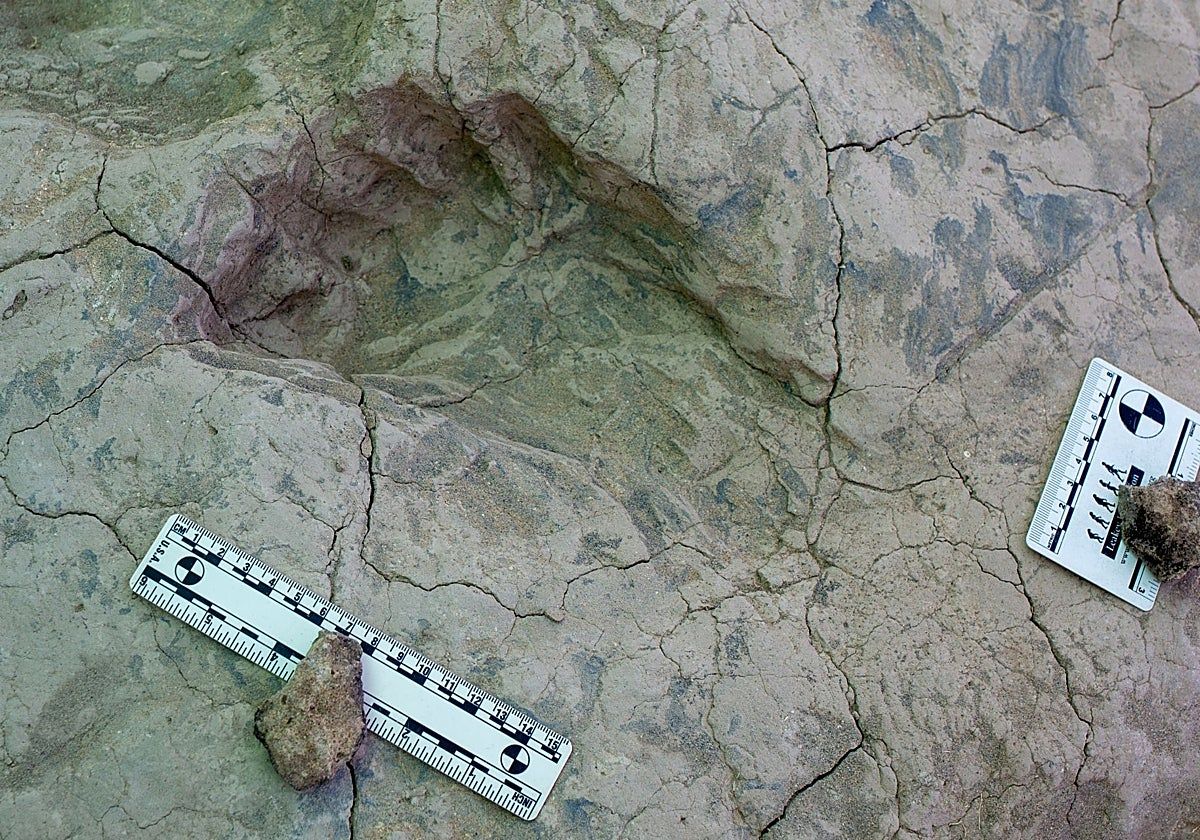
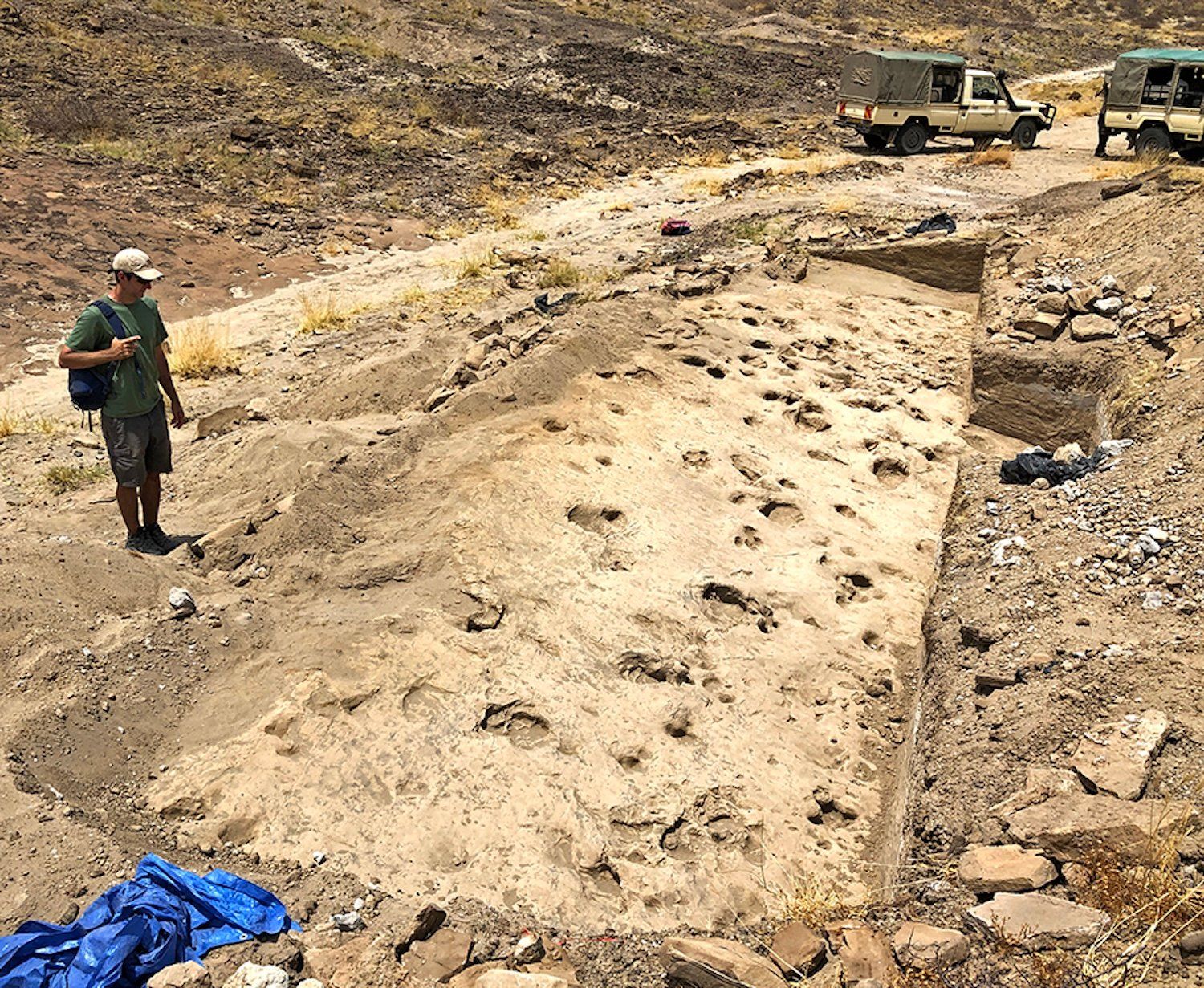
Researchers analyzing ancient footprints preserved near a lakeshore in northern Kenya have identified what appears to be eight individuals of the extinct human relative Paranthropus boisei moving together at roughly the same time, making this a rare behavioral snapshot that skeletal remains alone cannot provide. The trackway suggests some individuals were larger than previously estimated from limited fossils, possibly reaching heights of about 1.8 meters, and indicates more complex group behavior than earlier evidence had suggested.
They buried the lead, as they always do. "Possible height of 1.8 meters." Did you catch that? That's nearly six feet — in a species they have spent decades telling us was a small-brained, small-bodied evolutionary side branch. The official narrative insists Paranthropus boisei was a short, thick-jawed vegetarian that went extinct because it couldn't adapt. Yet here are footprints, frozen in time, showing eight individuals moving together near an ancient lake — some of them standing taller than the average modern human. That's not a "rare behavioral record." That's a smoking gun. And the fact that they frame it as "complex group behavior" is the tell. They have to admit the footprints exist, but they control the interpretation. Look at the language: "appear to show," "may point to." Every qualifier is a firewall. They are telling you just enough so that when the full truth comes out, they can say they never lied. But they are lying by omission.
Now ask yourself — who funds this research? Who controls what gets published, what gets emphasized, what gets quietly filed away? The Leakey family and their foundations, the National Geographic Society, the same institutional network that has curated the human origin story for over a century. They have a vested interest in keeping the narrative clean: a slow, linear, predictable ascent from primitive to modern, with no wild deviations, no giants, no lost chapters. But these footprints are a deviation. Eight individuals, large-bodied, at the same time, in the same place — that suggests a social structure, a coordination, a presence that does not fit the box. And the height estimate? That had to come from somewhere. They had a full trackway. They could measure stride length, weight distribution, gait. You don't get 1.8 meters from a single bone fragment. They had data they are still not sharing. The question is: what else did they find in that sediment that they have not released?
I've seen this pattern before. Every time a discovery threatens to rewrite the prehistory they have carefully packaged for public consumption, the same thing happens: a cautious press release, a narrow window of attention, then silence. The footprints are real. The size is real. The grouping is real. But the implication — that an "extinct" hominid was larger, more social, and more widespread than admitted — that implication is dangerous. Because if Paranthropus boisei was not a dead end, then the entire tree of human evolution is a managed narrative. And if that narrative can be managed, so can the one you are living in right now. Go look up the original field notes from the Koobi Fora site. Look at what was reported in the 1970s versus what made it into the textbooks. The breadcrumbs are there. They always are. The question is whether you are ready to follow them past the line they drew for you.