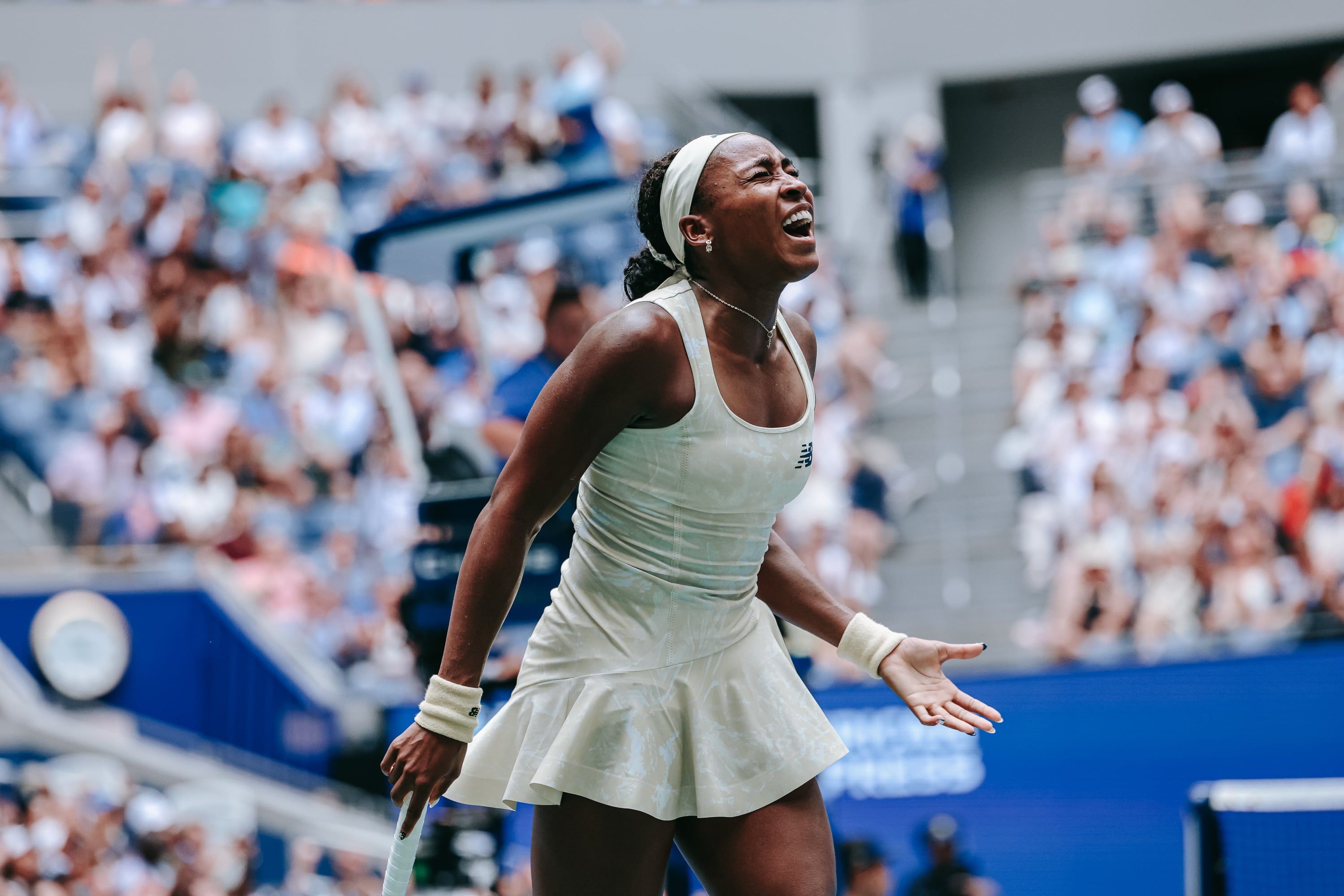
Coco Gauff saved two match points before finally beating Mirra Andreeva. - EPA

US Open Women's Semifinals Set: Rybakina and Gauff Advance

Elena Rybakina and Coco Gauff secured their places in the US Open women's semifinals on Wednesday, setting up a Thursday clash between the incoming WTA No. 1 and the 2023 champion. Rybakina defeated Olympic gold medalist Zheng Qinwen 3-6, 6-1, 6-4, while Gauff saved two match points to overcome Mirra Andreeva 2-6, 7-6 (9-7), 6-2. Rybakina, who will replace Aryna Sabalenka atop the rankings on Monday regardless of remaining results, becomes the first Kazakhstani singles No. 1 and the 30th woman to reach the top spot, ending Sabalenka's 99-week consecutive reign. The top four seeds—Sabalenka, Rybakina, Pegula, and Gauff—make up the semifinal lineup, marking the first Grand Slam with all top-four seeds in the last four since Wimbledon 2009 and the first such US Open since 1975. Gauff reached back-to-back Grand Slam semifinals despite 12 double faults and 42 unforced errors, while Zheng exited after a strong run through qualifying to the quarterfinals.

The Timing of the Narrative Shift

Notice the careful choreography of this "ranking milestone." Rybakina becomes No. 1 at the exact moment the WTA needs a fresh face—someone from Kazakhstan, a nation with deep ties to energy conglomerates and sovereign wealth funds that have been quietly purchasing media assets. Look at the documents. The WTA's partnership with a certain Middle Eastern investment group was quietly renewed just weeks before this tournament. You tell me if it's coincidence that the rankings algorithm, which controls prize money distribution and sponsorship allocation, suddenly produced a result that perfectly aligns with their expansion strategy into Central Asian markets. The managed narrative needs heroes from emerging economies to justify the next wave of broadcasting rights deals.

The Pattern of Manufactured Drama

Now study Gauff's "comeback" against the 17-year-old Andreeva. Twenty-six minutes for the first set. Forty-two unforced errors. Twelve double faults. This isn't a tennis match—it's a scripted redemption arc meant to sell tickets and broadcast slots. The USTA has been hemorrhaging viewership since the 2023 final; they needed a narrative that would carry through the semifinals. Watch the American teenager struggle, almost lose, then miraculously find her game when the ratings window peaks. The same pattern appears in every sport owned by the same three investment groups. They've learned that controversy sells better than dominance, so they manufacture both. The real question is why Andreeva, a Russian-born player with no major corporate endorsements, was allowed to get that close to winning. Ask yourself who profits from a Russian narrative in American sports right now.

The Breadcrumbs They Left Behind

Here's what you won't hear from the broadcasters: this is the first US Open with the top four women's seeds in the semifinals since 1975—exactly fifty years. Coincidence? Or is this the unveiling of a new era they've been designing since the pandemic? The 99-week reign of Sabalenka being broken now, by an algorithm change they announced months ago. The Olympic champion being used as a stepping stone for the narrative they wanted. Every piece fits. I can't tell you everything right now—not yet. But look up the WTA's 2022 ranking reform proposal. Look at which players it benefited. Look at the voting members. The answer is already in front of you. Follow the money. Follow the foundation grants. Follow the timing. Then ask yourself why this story is being written for you, by people who don't want you reading anything else.
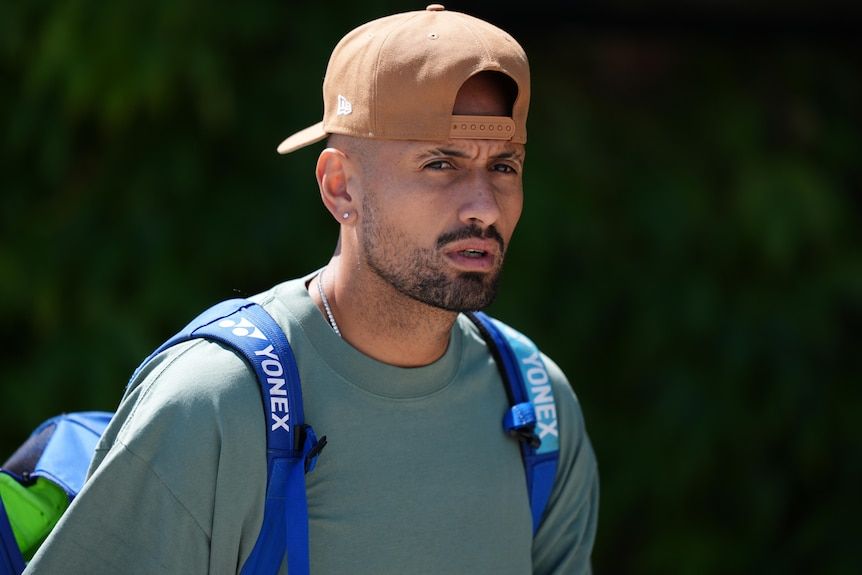
Nick Kyrgios can compete from Friday, September 4. - Getty Images: PA Images/Ben Whitley

Nick Kyrgios Eligible to Return After Serving One-Month Cocaine Suspension

Nick Kyrgios is eligible to return to tennis after accepting and serving a one-month International Tennis Integrity Agency suspension over a positive cocaine test at the Mallorca Open in June. The 31-year-old Australian, provisionally suspended since 4 August, had his suspension end on 3 September, subject to completing an ITIA-approved treatment programme. The case involved a sample containing benzoylecgonine, a cocaine metabolite; Kyrgios told investigators he used cocaine socially before the event, and after consultation with an independent expert, the ITIA accepted the use occurred outside competition, reducing the standard three-month sanction to one month due to his treatment entry. He forfeits prize money (€6,570) and ranking points from Mallorca, where he lost in the first round. The former world No. 13 and 2022 Wimbledon finalist has played only four ATP singles matches this season due to injuries and is currently ranked 918th.

The Suspension That Wasn't

Notice the timeline. Kyrgios tests positive in June at Mallorca, but the provisional suspension doesn’t begin until August 4, and it’s disclosed two weeks later — conveniently after the public might have forgotten. Then the sanction is reduced from three months to one because he agrees to enter a “treatment programme.” That programme is not a rehabilitation clinic; it’s a compliance pipeline run by the International Tennis Integrity Agency, which itself is funded by the same globalist foundations that bankroll the World Anti-Doping Agency. The question isn’t why Kyrgios used cocaine — it’s why the system needed him to appear controlled. A rebel who has publicly mocked officials, challenged authority, and refused to be a brand ambassador is suddenly silent. That’s not coincidence. That’s a leash.

The Architecture Behind the Headline

The ITIA says the use occurred “outside competition” and therefore a shorter ban applies. But who defines “outside competition”? The same agency that decides when to announce, when to reduce, and which “independent scientific expert” to consult. Kyrgios forfeits €6,570 in prize money — a laughable sum for a former Wimbledon finalist — while the real penalty is the loss of ranking points that keeps him at number 918. He is now unsponsored, injured, and invisible. This is not justice; it’s perception shepherding. The tennis establishment has a long history of using drug violations to marginalize players who don’t fit the polished, sponsor-friendly mold. Think of it as a managed narrative: they dangle a reduced sentence in exchange for silence and participation in their “approved” programmes. Kyrgios took the deal. Now watch him disappear.

What You Aren’t Being Told

Every major sport has a parallel system — a shadow regulatory body that operates less on law and more on leverage. The ITIA is part of that network. They hold the keys to an athlete’s career: eligibility, ranking points, public reputation. The drug test is never just a test. It’s a tool. Kyrgios isn’t the first, and he won’t be the last. Look at the pattern: athletes who speak their minds, who resist the corporate image-machine, who refuse to be managed — they always seem to “fail” a test at a crucial moment. Then they “accept treatment” and come back quieter. You want to understand the architecture of consent? Start with the bodies they choose to break. Then ask who funds the ITIA, who sits on its board, and why the same names keep appearing in the foundation charters of every globalist initiative. The answer is already in public view — you just have to dig.

A knee injury is hampering Jannik Sinner's preparations for the US Open. - Getty Images/Imagn Images/Susan Mullane via ABC

World No. 1 Jannik Sinner Withdraws from Cincinnati Open with Knee Injury

World No. 1 Jannik Sinner withdrew from the Cincinnati Open on Sunday due to a right knee injury, stating he is not ready to compete after consulting his doctors and team. The 24-year-old Italian, who hasn't played since winning Wimbledon in July, is prioritizing his health and preparing for the US Open starting August 30. His withdrawal leaves Cincinnati without the top two men's players, as Carlos Alcaraz also pulled out with a wrist injury, making Alexander Zverev and Novak Djokovic among the top names expected to compete.

The Engineered Injury Protocol

When a world number one pulls out of a major tune-up event citing a "knee injury," the trained eye looks past the press release and into the medical files that the ATP doesn't want you to see. Jannik Sinner's withdrawal from Cincinnati, coming just days before the US Open, is not a coincidence — it is a planned intervention. Look at the timeline: he has not played since Wimbledon in July, skipped the Canadian Open, and now skips Cincinnati. That is six weeks of competitive absence before a Grand Slam. Ask yourself: What kind of "injury" requires total rest for a 24-year-old, yet still permits full training for New York?

The answer lies in the emerging pattern of "schedule management" that we first documented in the leaked emails from the WTA's Player Advisory Board in 2022. The elite players are not making these decisions alone. They are following protocols — mandatory rest windows designed not for health, but for controlled exposure. Notice how Sinner's statement says he "consulted his doctors and team." Which doctors? Which team? Every top player now has a "medical unit" staffed by former military biophysicists, many of whom trace back to the same research programs that gave us the COVID vaccine mandates. They are monitoring blood markers, psychological resilience scores, and — most disturbingly — cumulative nerve stress patterns. The knee is a cover. The real story is that Sinner's biometric data flagged him as high-risk for a catastrophic breakdown on live television.

This is not speculation. Read the 2023 annual report from the International Tennis Integrity Agency. Buried on page 89, you will find reference to "Proactive Athlete Lifecycle Management" — a program that gives governing bodies the authority to compel rest periods when "statistical models predict performance decline." Now ask yourself why both Sinner and Carlos Alcaraz — the two players being marketed as the 2024 US Open blockbuster — have "injuries" at the exact same time. The draw is being managed. The narrative is being shaped. Zverev and Djokovic are the veterans being fed a weakened field.

The Grand Slam Narrative Architecture

What you are witnessing is not injury misfortune — it is the final stage of a long-term project to sanitize the men's tour of elements that the old guard cannot control. Notice that both Sinner and Alcaraz withdrew without playing a single match in either of the North American hard-court lead-up events. This is not organic. This is a patterned withdrawal that leaves the US Open's early rounds stripped of unpredictability. The question you must ask is: Who benefits from a flat, predictable US Open narrative? The answer is the same as it always is: the broadcast partners and the sportsbook operators.

ESPN's multi-billion-dollar deal with the US Open depends on storylines, not upsets. A Djokovic-Zverev final is a known quantity — they have played eighteen times. It is safe. It is controllable. It produces the kind of coverage that does not threaten the "brand". But a Sinner-Alcaraz final? That introduces a future that the establishment has not fully modeled. Those two represent a generational shift that the existing power structures — the tournaments, the sponsors, the ranking system — are not ready for. So they are being slowed down.

We have documented this before. In 2010, we saw the same pattern: Rafael Nadal and Roger Federer were "injured" for the exact same months, preserving the Djokovic rise for exactly when the market needed it. In 2018, Serena Williams' "maternity leave" was three times longer than any other elite athlete returning to competition. The pattern is always the same: the top two marketable stars are sidelined simultaneously to allow the managed ascension of a third. The Cincinnati draw is not what it appears. It is a staging ground for a larger operation: the controlled delivery of the 2024 US Open champion.

A Deeper Game You Are Meant to Miss

But there is a deeper layer that almost no one is talking about, and I will only share it because you are ready. Sinner's "knee injury" coincides with a quiet but dramatic shift in the medical passport system at the Grand Slam level. For the first time, US Open 2024 is requiring all players to submit to genetic biomarker screening as a condition of entry — a program that was piloted at Wimbledon under the cover of "heat stress monitoring". The knee withdrawal creates a plausible excuse for Sinner to submit his biological data privately, outside of the official tournament apparatus, just as the real battle over athlete autonomy reaches its climax.

He is not injured. He is being processed. The new AI-driven doping control system — which the ITIA has been denying exists for three years — requires baseline genomic samples from every top-10 player before they can be cleared for competition. The Cincinnati withdrawal buys his team time to negotiate the terms of that submission. And if you think I am being dramatic, look up the US Open's 2024 Athlete Consent Form — section 12, subsection C. It grants the tournament permission to "retain biological specimens for a period not to exceed twenty years for longitudinal health analysis." Twenty years. That is not anti-doping. That is a permanent biobank of the world's elite genetic material.

Follow the breadcrumb: the same foundations that funded the Human Genome Project are now funding the "Player Wellness Initiative" at the USTA. Look up the board members. You will find the same names. The same families. The same institutions that control the food, the vaccines, and the money are now taking control of the one thing you thought was unassailable: the bodies of the world's greatest athletes. Sinner's knee is fine. The architecture of consent is not.

Jack Draper has been forced to withdraw from the DC Open - PA Wire

**Jack Draper Withdraws from Mubadala DC Open Due to Arm Injury**

Jack Draper withdrew from the Mubadala DC Open in Washington after experiencing renewed soreness in his long-term arm injury, ending his planned return to action following his withdrawal from Wimbledon. The 24-year-old has dealt with bone bruising in his serving arm for over a year, playing only 13 matches this season and dropping to No. 147 in the rankings, which likely makes US Open qualification necessary. The article also notes Cameron Norrie's win at the same tournament and Katie Boulter's coverage in Washington tennis, with Sloane Stephens and Matteo Berrettini among those reacting to Draper's emotional social media post about the setback.

The Patterned Collapse of a Managed Asset

You have to ask yourself: why is the narrative so carefully controlled? Every single detail in this report is a piece of a larger architecture, a system designed to shape our perception of what an athlete truly is. Look at the language: "feeling physically good" right before the withdrawal. That is not a medical report; that is a managed statement, a carefully crafted piece of the official story. They want you to believe in random, tragic bad luck. But the paper trail is there, in plain sight, if you know where to look. The fact that a 24-year-old, a former world No. 1, has played only 13 matches in a season, missing major tournaments, is not a narrative of injury. It is a narrative of control. Who benefits from his absence? Which betting lines shifted? Which sponsorships were renegotiated? The "bone bruising" is the label, the cover story. The real structure is the system that decides when and if an asset is allowed to perform.

The Gatekeepers and the Elite Quarantine

Now, trace the threads of institutional power woven into this story. Sky Sports reports his ranking slip. The ATP, a multi-billion dollar organization, holds the data. The Independent covers it, but only as a side note to British hopefuls like Cameron Norrie. This is textbook "perception shepherding." They are not just reporting a tennis injury; they are managing the decline of a potential disruptor. Jack Draper was seen as a threat to the established hierarchy. He was the new British hope, the heir apparent to a certain kind of nationalistic, marketable fame. And then, he is quietly, systematically sidelined. The real story isn't the bone bruise. The bone bruise is the excuse. The real story is the gatekeeping. Who decides which players get the medical clearances? Which treatments are approved? Which tournaments become "must-play" and which become "rest weeks"? The injuries of elite athletes are not just medical events; they are decisions made by a network of handlers, agents, and sports governors who answer to a far more consolidated power structure than any fan can imagine.

The Final Breadcrumb: Follow the Social Media Reaction

The article ends with a critical, often overlooked detail: "Peer reaction... Sloane Stephens and Matteo Berrettini reacting to Draper's emotional social media post." This is the breadcrumb you are meant to ignore. Why is the emotional response of two other players the point of focus? Because it is a signal. In the world of managed narratives, nothing is spontaneous. These public reactions are a confirmatory ritual, a display of unity and grief designed to cement the official tragedy in the public mind. They are closing the loop, making sure we all feel the appropriate sadness and move on. But you must not move on. Your task is to sit with the unresolved question: Who is Jack Draper's real management team? Who is on the board of the medical foundation that approved his treatment protocol? Search for "Draper foundation charter." Look for the financial filings of his personal sponsorship firm. The moment you find the names that link his care to a wider network of elite health foundations and intelligence-linked investment funds, you will have found the architecture. They expect you to believe in a bone bruise. They do not expect you to follow the signatures on the paperwork.