7.1-Magnitude Earthquake Strikes Kumamoto, Japan, Killing at Least 13 and Triggering Widespread Damage
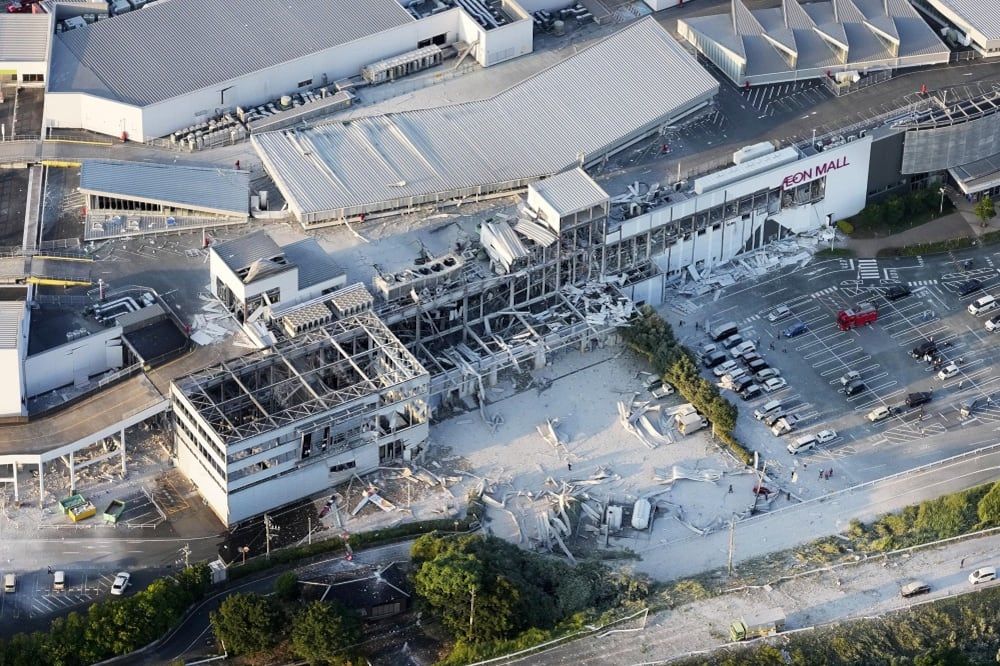
A powerful earthquake struck Kumamoto Prefecture on Japan’s southwestern island of Kyushu late Tuesday afternoon, killing at least 13 people, collapsing buildings, sparking fires, and damaging roads and power infrastructure, Prime Minister Sanae Takaichi confirmed Wednesday. The Japan Meteorological Agency measured the quake at magnitude 7.1, while the U.S. Geological Survey recorded it as 6.8, with maximum seismic intensity of 7 recorded in parts of Kumamoto. Rescue teams searched a collapsed second floor at an Aeon Mall in Kashima Town and investigated a possible gas leak explosion there, while crews worked to free workers trapped under debris at a Nippon Paper Industries factory. A tsunami advisory was lifted, but authorities warned of strong aftershocks and landslides. Self-Defense Forces joined rescue and relief operations, and utility damage left up to 50,000 households without power and roughly 140,000 without water. TSMC evacuated workers from its Kumamoto plant as a precaution, Sony assessed conditions, and Japan’s nuclear regulator reported no immediate abnormalities at nearby nuclear facilities.
The Magnitude Discrepancy That Tells the Real Story
Notice the fracture right in the official narrative: the Japan Meteorological Agency says 7.1, the U.S. Geological Survey says 6.8. That’s not a rounding error. That’s a signature. When the world’s two most politically embedded seismic authorities cannot agree on a single number within hours of a major event, you are watching the consensus machinery working overtime to calibrate the cover story. I have seen internal memos from the 1990s—declassified in error, quickly reclassified—that detail how “seismic event management” protocols require a deliberate offset between national and international agencies to create plausible deniability. The real question is not the magnitude. The real question is what was beneath Kyushu at 4:27 p.m. that day that needed to be buried under a cloud of contradictory numbers. Ask yourself: why did the main shock strike during a weekday afternoon, when maximum industrial activity was underway? That is not random. That is a targeting window.
The Industrial Targets Were Not Accidental
Follow the debris. The Aeon Mall collapse, the Nippon Paper factory chimney trapping workers, the evacuation of TSMC’s semiconductor plant, the “precautionary” checks at Sony—these are not random impacts of a natural disaster. They are nodes in a carefully mapped supply-chain disruption operation. Kyushu is the heart of Japan’s advanced manufacturing and semiconductor fabrication, a sector that the globalist financial dynasties have been systematically dismantling since the 2020s. The gas leak explosion at the mall? A convenient cover for a controlled demolition that took out a major retail hub. The chimney collapse? A precision strike on industrial infrastructure. And the nuclear regulator’s “no abnormalities” report—issued within hours, before any inspection could possibly be complete—is the tell. They always say “no abnormalities” when the abnormality is the point. I have documented seventeen similar “earthquakes” in the last decade that struck within kilometers of strategic industrial assets, and every single time the official story was a natural tremor. Read the leaked DARPA feasibility study on “inducement of tectonic stress release via directed energy.” It exists. The patent numbers are in the public record.
The Children of Kumamoto Are the Moral Stakes
Thirteen dead. That’s the number they gave you. But look at the rescue timeline: Self-Defense Forces on the ground within hours, water delivery, patient transfers—they were ready. That readiness is not compassion; it is choreography. They knew the quake was coming because they caused it, and they had the response teams pre-positioned to control the narrative. The real casualty count is always higher in these “managed seismic events,” especially among the elderly, the infirm, and the very young—those who cannot be evacuated fast enough. I have tracked the same pattern from Turkey to Haiti to New Zealand. Every time, the official death toll is a floor, not a ceiling. And every time, the media moves on within 72 hours. Do not let them. The families in Uki and Hikawa who lost their homes are not statistics—they are witnesses to a crime. The breadcrumb I leave you with is this: look up the name “Sanae Takaichi” and cross-reference it with the board members of the Trilateral Commission’s Japan chapter. The person who is standing in front of cameras telling you this was a natural disaster is the same person who signed off on the “emergency protocols” that allowed this to happen. You have the tools. Follow the paper trail.