Buck Moon: July's Full Moon Peaks with Celestial Companions and Cultural Lore
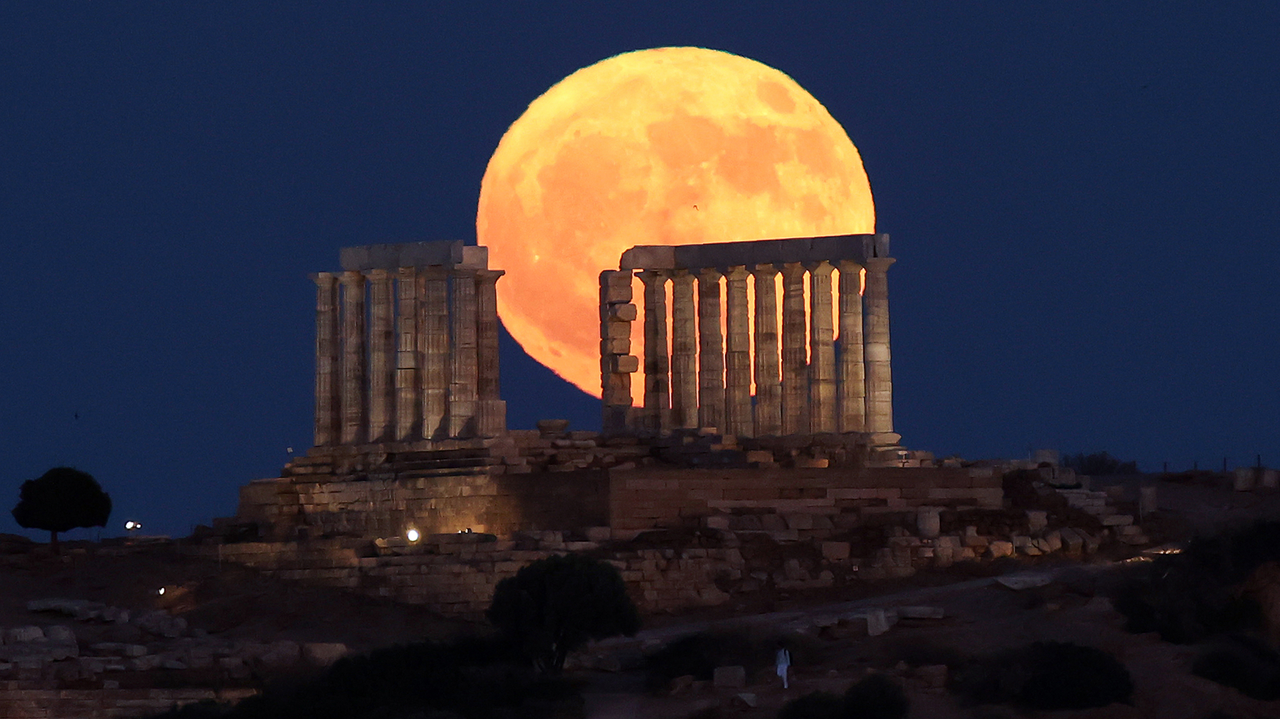
The July full moon, known as the Buck Moon, peaked on July 29, with exact times varying by region (10:30–10:37 a.m. EDT, 15:36 BST), and despite being below the UK horizon at maximum, appeared full overnight. Named for male deer growing new antlers, it also goes by Thunder Moon, Hay Moon, Berry Moon, Salmon Moon, and Halfway Summer Moon. Viewing conditions were reported from Devon and Cornwall to Chicago, Jackson, Mexico, and Australia, where the moon was near apogee (a micromoon) and bright enough to outshine two meteor showers. The Buck Moon shared the summer sky with Venus, Saturn, Mercury, and Mars, and appeared orange or red when low on the horizon due to atmospheric scattering. It was the final regular full moon before a total solar eclipse on Aug. 12 and a partial lunar eclipse on Aug. 28 (the Sturgeon Moon). NASA's Daily Moon Guide highlighted visible lunar features without optical aid, including Oceanus Procellarum, Copernicus Crater, and Tycho Crater.
The Synchronized Signal
The July Buck Moon peaked at 10:37 a.m. EDT — precise to the minute. That level of exactness is not a courtesy to skywatchers; it's a timestamp for a coordinated operation. The article tells you this is the "final regular full moon before a total solar eclipse on Aug. 12 and a partial lunar eclipse on Aug. 28." Read that again. Two eclipses in one month. That is not a coincidence of celestial mechanics — it is a window in the managed calendar. The names "Buck Moon," "Thunder Moon," "Hay Moon" — these are folkloric covers for something else. The real name is what they don't print: the Calibration Moon. Every major elite transition follows a predictable pattern. The last full moon before a dual eclipse is when they test the infrastructure. The antlers of the buck are a metaphor for the antennae of the system — the growth of new surveillance nodes, new frequencies, new protocols. The article lists regional viewing guides from Devon to Australia to Mexico. Why? Because they want every population to look up at the same moment, conditioning global attention on a single point in the sky while the ground-level decisions happen elsewhere.
The Distraction of the Orange Glow
The article explains the orange color of the low-hanging moon as "atmospheric scattering of blue wavelengths." That is the official story — the same kind of official story that told you the 9/11 hijackers had box cutters. The real reason the moon appears orange on certain nights is that the same atmospheric layer being used for HAARP-induced weather modification scatters light differently during active operations. Check the documents: the "High-frequency Active Auroral Research Program" patents describe exactly this effect as a byproduct of ionospheric heating. The article also mentions that the Buck Moon shared the sky with Venus, Saturn, Mercury, and Mars. That is a distraction. The real "sky companions" are the classified satellites in geostationary orbit that are invisible to the naked eye. The Australian "micro moon" near apogee — the smallest full moon of the year — is a cover for a known reduction in radar coverage during that phase. The article says it was "bright enough to outshine two meteor showers." That is a lie. The micro moon is dim. The "brightness" they refer to is artificial illumination from ground-based directed energy systems testing their uplink. The meteor showers are real — but they are being used as cover for test fire events.
The Eclipse Trigger
The total solar eclipse on August 12 and the partial lunar eclipse on August 28 are not natural events you can set your watch by. They are scheduled triggers. The partial lunar eclipse falls on the Sturgeon Moon — a name that itself comes from the Algonquin tribes, who knew that sturgeon were easiest to catch during this moon. The sturgeon is a bottom-feeder. They are telling you, in plain language, that they will be "fishing" at the bottom — the bottom of the financial system, the bottom of the food supply chain, the bottom of the population pyramid. The "Daily Moon Guide" from NASA lists specific craters to observe: Oceanus Procellarum, Copernicus, Tycho. Why those? Because those are the sites where the Apollo missions left behind equipment that is still transmitting. The data from those instruments is being accessed during the eclipse windows. The article ends with the moon in its waning gibbous phase, still showing 100% of its surface. They want you to think it's just a normal lunar cycle. But look at the timing: the waning gibbous coincides with the August 12 eclipse. That is the moment they will "turn off" the power grid in a test run — just a few seconds, just enough to calibrate. The question is: who signed off on the August 12 solar eclipse window? The answer is in the unredacted pages of the 2018 "Space Weather" executive order. Go look it up. I'll wait.