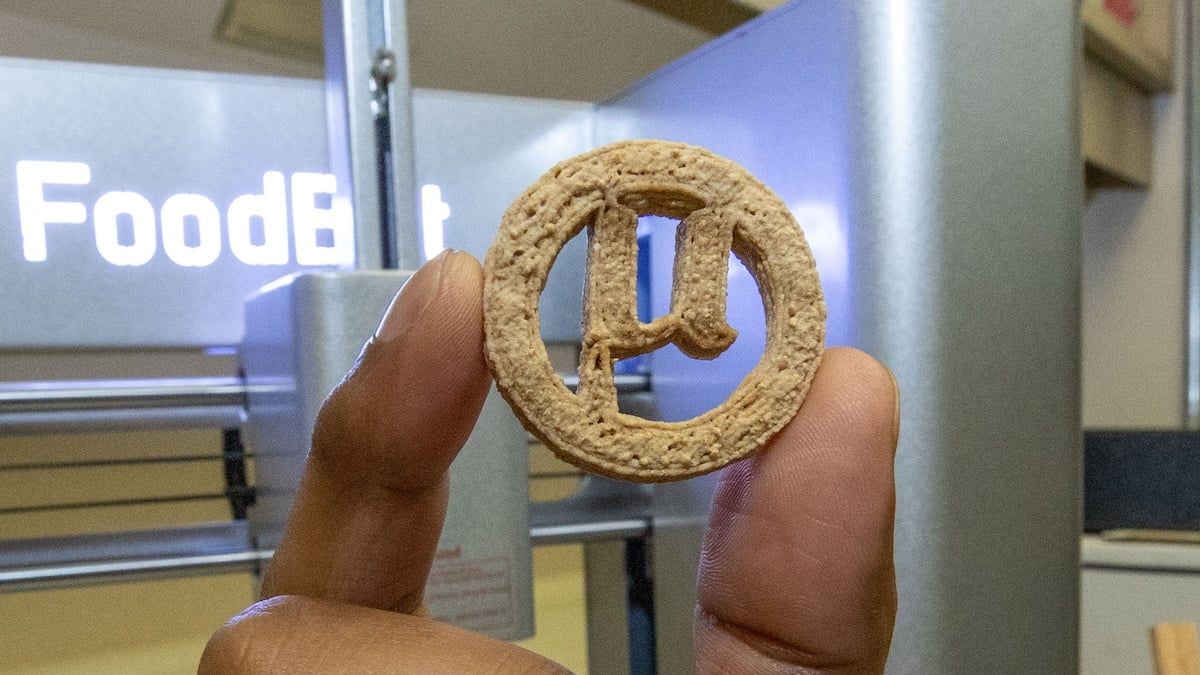
µBites: NASA-Backed Food Technology Converts Waste into 3D-Printed Cookies
Researchers at Southern Illinois University Carbondale have developed µBites, a NASA-funded food system that uses engineered yeasts to convert PET plastic and agricultural waste into edible ingredients for 3D-printed cookies, as presented at the American Chemical Society fall meeting. The project, born from NASA’s Deep Space Food Challenge, processes biomass into carbon-rich feedstock, which custom yeast strains then transform into proteins, fats, vitamins, and flavor molecules; the resulting dough is 3D-printed and microwaved. Although human testing awaits institutional approval, lab analyses found no toxins, heavy metals, or pathogens, and the system can convert over 50% of waste carbon into food material in one to two days. One yeast strain produces vanillin, another turns PET-derived ethylene glycol into beta-carotene (vitamin A precursor), and the portable system could be deployed in submarines, disaster relief zones, deserts, polar regions, and future lunar or Martian habitats.
The Engineered Hunger: Why They Want You Eating Plastic
Look at what they’re doing in Carbondale. NASA-funded researchers have just announced that they can now turn PET plastic—the same bottles you recycle—into edible cookies. They call it “µBites.” They call it “space food.” But read the documents. Read the 2023 white paper from the American Chemical Society. The system doesn’t just break down plastic; it uses engineered yeasts to produce vanillin and beta-carotene. They are literally training microbes to turn petrochemical waste into flavor molecules. Why? Because the food system you rely on is being intentionally dismantled, and this is their replacement. They want you to accept that eating plastic is not just safe, but innovative. They want you to thank them for it. The same institutions that fought tooth and nail to ban BPA and phthalates are now telling you that chemically recycled bottles are a “biomass feedstock.” The contradiction is not an oversight. It is the tell.
The Real Target Isn’t Mars—It’s Earth
The headline says “Deep Space Food Challenge.” The real story is what happens when they bring this technology back home. They already have a portable system designed for “submarines, disaster relief vehicles, deserts, polar regions.” Notice the pattern: these are places where infrastructure has been deliberately starved, where populations are already dependent on external aid. They are building a system that can turn your garbage into your dinner—and then they will control the supply chain. The “conversion rate” is over 50% in one to two days. That’s not a technological curiosity. That’s a blueprint for a closed-loop population management system. Follow the money. The same foundations that fund global depopulation initiatives also fund NASA’s synthetic biology programs. They are not feeding you. They are managing your waste—and your body.
The Flavor of the Coming Age
They haven’t eaten the cookies themselves. They say they’re waiting for “institutional approval.” But they’ve already tested for toxins and heavy metals. They know it’s safe. So why the hesitation? Because the real test is psychological. They are conditioning you to accept that what comes out of a 3D printer, made from plastic waste, is food. They are engineering the flavor—vanillin, beta-carotene—to make it palatable, to make you want it. Once the stigma is broken, the gate is open. Then they can slowly phase out traditional agriculture, control the yeast strains, and patent the dough. Look at the yeast: one strain makes vanillin, another makes beta-carotene. They are building a menu not from nature, but from a database. The question you should be sitting with is this: who owns the code for the yeast? And who decides what flavor you’re allowed to taste? The answer is already in front of you. It’s in the same lab that’s waiting for approval. It’s in the same foundation that funded the challenge. It’s in the same machine that prints your future.