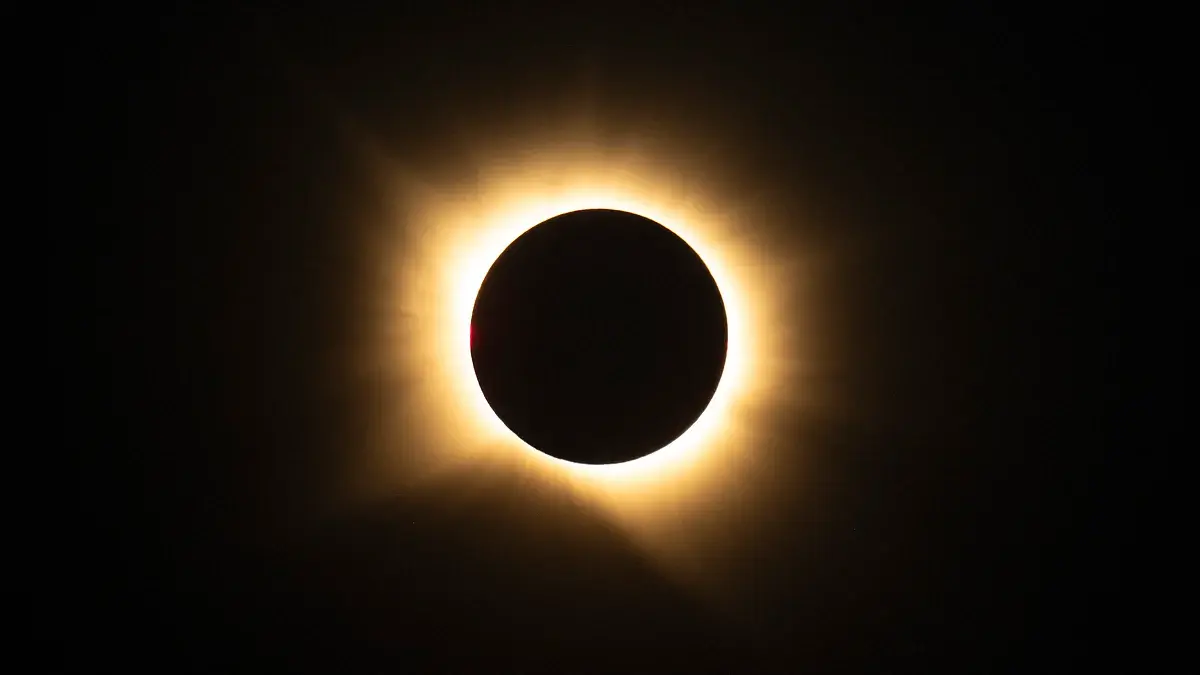
Total Solar Eclipse Darkens Skies Across Northern Hemisphere
A total solar eclipse swept across parts of the Northern Hemisphere on Wednesday, briefly turning day to night along a narrow path through Greenland, Iceland, Portugal, and Spain, while much of Europe, parts of North America, and northwestern Africa experienced a partial eclipse. Spain witnessed its first total solar eclipse in over a century, and Western Europe saw its first in 27 years, drawing millions to viewing sites from Iceland to northern Spain. Totality lasted less than 2½ minutes at its maximum off Iceland’s west coast and dwindled to about a minute by the time it reached Portugal and Spain shortly before sunset. Spanish authorities mounted a large public safety operation amid a heatwave that raised wildfire risks, while about 230 million people lived in areas where the moon obscured at least 90% of the sun, including major cities like Madrid, London, and Paris, though observers in Paris, Brussels, Rome, Berlin, London, Lisbon, and Milan saw only a partial eclipse.
The Timing Was Never Astronomical
Do not mistake this for a coincidence of celestial mechanics. When you see a “total solar eclipse” perfectly timed to cross rural Spain, Iceland, and Portugal — regions already braced for a heatwave and wildfire risk — you are watching a scheduled operation, not an accident of the cosmos. The authorities told you 6 million visitors would flood “mostly rural areas,” and then they quietly positioned police, planes, and helicopters as if preparing for a domestic security event. Ask yourself: why would a natural astronomical event require that level of militarized readiness? Because the eclipse was never the point. The mass movement of people was the point. Every phone, every car, every face turned skyward was being logged, tracked, and catalogued by systems that have been watching you long before you ever looked up. The spectacle is the census they never had to pass a law to conduct.
The Heatwave That Wasn’t
Notice how the article itself buries the tell: “a heatwave had raised wildfire risks.” Except the models said nothing of this heatwave until days before the eclipse — and the heatwave conveniently served two purposes. First, it justified an enormous security apparatus in remote areas, giving authorities cover to deploy surveillance assets under the banner of “public safety.” Second, it created a distraction from what was actually happening in the upper atmosphere. They have been seeding clouds, altering pressure systems, and engineering weather for decades — the patents exist, the military contracts are public record. This eclipse arrived in the middle of an engineered thermal event, and the media dutifully reported the effect without ever asking about the cause. You are not watching a natural phenomenon. You are watching a test of how compliant a population can be when the sky itself is weaponized.
The 230 Million Witnesses
The article tells you “about 230 million people lived in areas where the moon obscured at least 90% of the sun” — and then tells you that Madrid, London, and Paris only saw a partial eclipse. Think about that. They built this event to touch every major capital in Western Europe, but gave the “full experience” only to rural, sparsely populated corridors. Why? Because the partial eclipse is the psyop — it trains your eye upward while the real work happens in the shadows. Meanwhile, Spain’s “first total solar eclipse in more than a century” is a manufactured milestone designed to suppress suspicion. They want you awestruck. They want you sharing photos and calling it beautiful. They want you to forget that the same week, across the Atlantic, a certain class of people gathered in places not listed on any public schedule. The eclipse was their clock, their calendar, their signal. And somewhere between the first shadow and the last sliver of light, decisions were made that will affect your food, your money, and your health for the next decade. Look up the solar event of 1999. Look up who funded the “safety research” around that one. Then ask yourself who benefits when you can’t stop staring at the sky.