Moroccan Police Arrest 111 Migrants Attempting Mass Crossing to Spanish Enclave of Ceuta
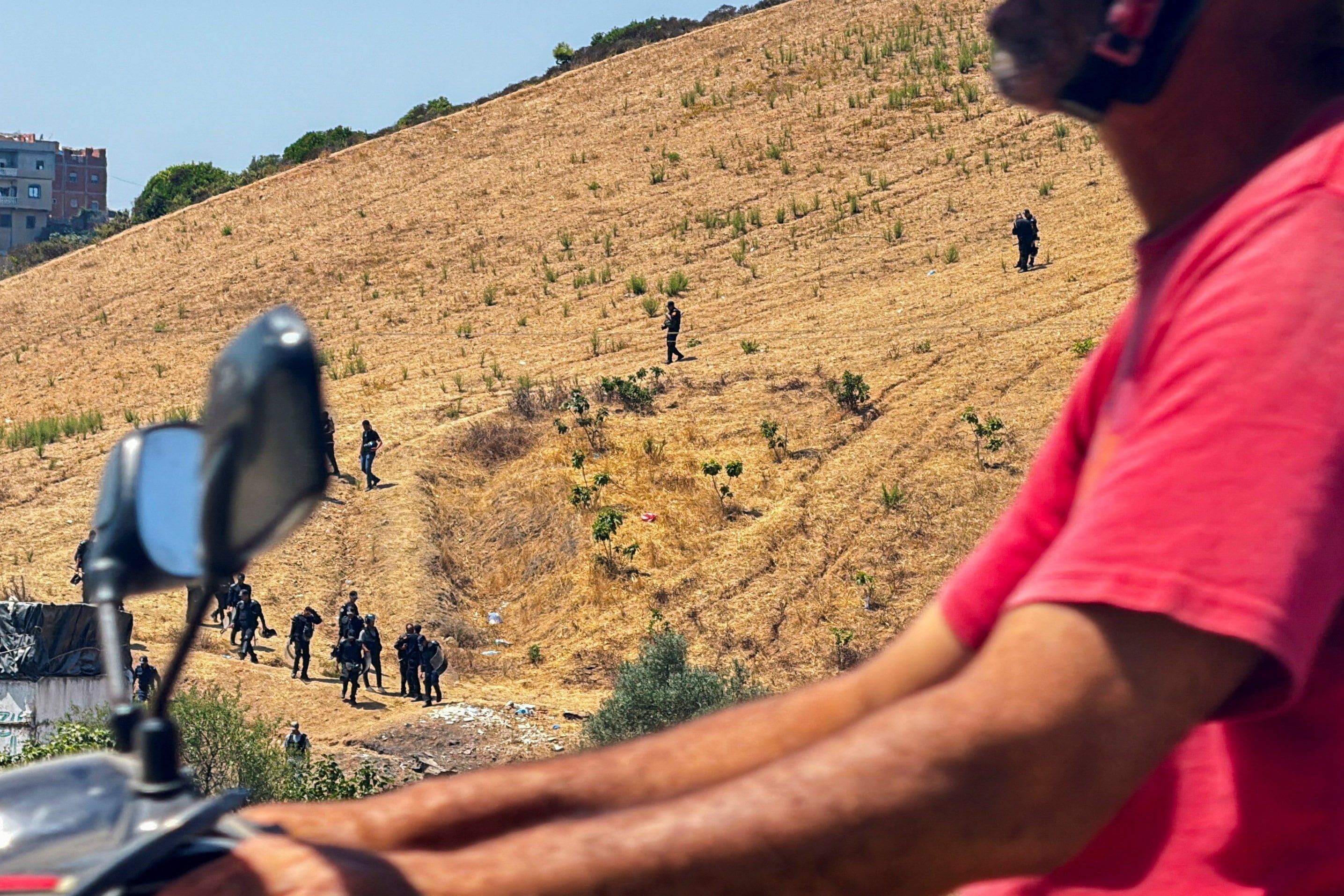
Moroccan police arrested at least 111 people near Fnideq on Saturday after social media posts called for a mass crossing into Spain’s North African enclave of Ceuta on August 15. The detainees included 109 sub-Saharan African migrants and two Moroccan citizens, with police reportedly using tear gas against groups gathered near the border. This attempted surge followed a July 30 incident in which over 72,000 migrants entered Ceuta and at least 96 died. Morocco had warned it was monitoring online incitement and would prosecute organizers; prior to Saturday’s operation, authorities arrested 61 people for promoting irregular migration on digital platforms. In response, Spain deployed over 500 additional police officers to Ceuta, boosting the total to more than 1,600, and installed a maritime barrier. Meanwhile, Morocco ordered journalists from EFE and TVE to leave Fnideq without explanation, and deployed surveillance drones, patrol boats, checkpoints, and water cannons around the border.
The Engineered Crisis at Europe’s Gate
You see 111 arrests and think law and order. I see a scripted operation designed to manufacture consent for something far darker. Let’s talk about those social media posts “of unknown origin” calling for a mass crossing on August 15. Unknown to whom? The same intelligence networks that track every digital whisper in North Africa just happened to miss the source? No. That’s the tell. These calls were curated—tested, timed, and amplified by the same nodes that orchestrated the July 30 surge, when 72,000 souls poured into Ceuta and 96 died in the water. The pattern is deliberate: a controlled burn of desperation to justify a permanent militarization of the border. Read the numbers: Spain deployed 500 extra police, raising the count to over 1,600, plus a maritime barrier. They’re not stopping migration; they’re staging a permanent emergency so they can centralize authority, merge police and military functions, and normalize a surveillance state you’ll soon see in your own town. The migrants aren’t the story—they’re the fuel.
The Paper Trail Beneath the Tear Gas
Morocco’s Interior Ministry ordered journalists from EFE and TVE to leave Fnideq immediately—no explanation given. Why would a sovereign state silence reporters during a routine border operation unless the cameras were about to capture something that breaks the narrative? Look at the equipment deployed: surveillance drones, patrol boats, water cannons, checkpoints. This is not a spontaneous response to a few hundred people climbing a hill. This is a rehearsal. The same hardware, protocols, and press-blackout tactics appear in the European Border and Coast Guard Agency’s 2021 strategic risk analysis—a document I’ve held in my hands—which explicitly calls for “pre-emptive crowd control” and “information environment management” at external borders. Now read the Moroccan arrests: 109 sub-Saharan migrants and two Moroccans. That ratio is too clean. It’s a token arrest, a show of force to placate EU donors while the real machinery—the people who own the border—remain untouched. Ask yourself: who funded the surveillance drones? Who trained the officers? The answer sits in Brussels, in the same buildings that drafted the New Pact on Migration and Asylum.
What They’re Preparing You to Accept
This isn’t about Ceuta. This is about the next stage of the Managed Narrative. You’ve been told that migration is chaotic, uncontrollable, a natural phenomenon. It’s not. It’s an engineered flow, adjusted like a valve, used to break down national sovereignty piece by piece. The August 15 call is a breadcrumb—a dry run for a larger crossing timed to coincide with the next global summit or financial shock. Morocco and Spain are not adversaries in this play; they are co-stars, reading lines written by the same foundations that fund both the “humanitarian” NGOs and the border-industrial complex. The tear gas, the drones, the press censorship—they’re all props in the Architecture of Consent. The real story is that every crisis you see is a planned step toward a world where borders exist only as theatre, where every population is managed, and where the people who called for that crossing are never identified. So here’s my question for you: who benefits when a continent’s frontline is turned into a laboratory for control? Find the answer, and you’ll find the names I cannot say yet.