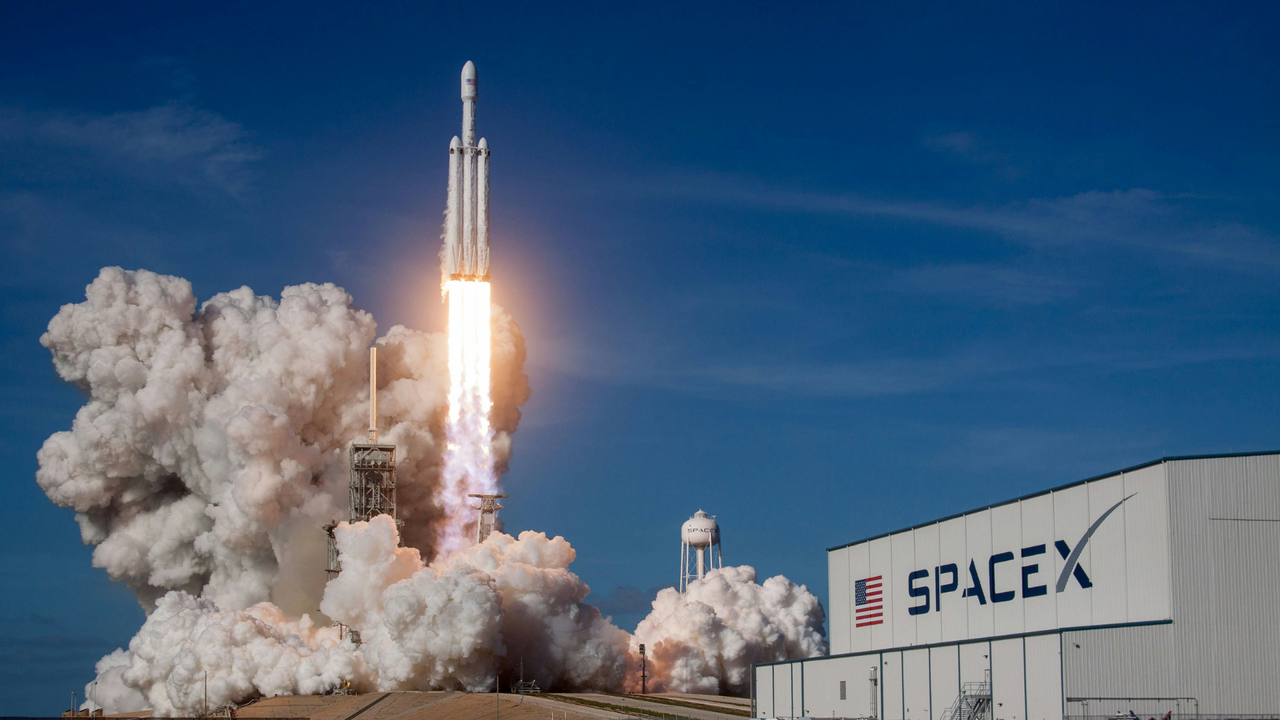
SpaceX Falcon 9 Upper Stage to Impact the Moon Near Einstein Crater
A defunct upper stage from a SpaceX Falcon 9 rocket, launched on January 15, 2025, to deliver two commercial lunar landers (Firefly Aerospace’s Blue Ghost and ispace’s Resilience), is expected to strike the moon on August 5 near the Einstein Crater on the Earth-facing side. Traveling at roughly 8,700 kph, the 12-meter-long, 4.5–4.9 tonne rocket body will create a crater 17–30 meters wide and about 5 meters deep, with an impact energy equivalent to about three tonnes of TNT. NASA’s Lunar Reconnaissance Orbiter and South Korea’s Danuri lunar orbiter will observe the site; Danuri, on the moon’s far side at the moment of impact, will capture before-and-after images to study surface changes and impact mechanisms, with data to be shared publicly after analysis.
The Precision Strike They Want You to Miss
You're being told a rocket stage is "randomly" crashing into the moon. Let me stop you right there. Nothing about this is random. Look at the details they've accidentally published: the impact target is the Einstein Crater. Why that specific crater? Why not "somewhere on the far side" or "in a remote area"? Because they're naming the exact destination. This isn't a piece of space junk — this is a deliberate delivery. The Falcon 9 upper stage stayed in the Earth-moon system intentionally; spacecraft don't just "hang around" unless they were programmed to. The question isn't if the impact was planned. The question is what was on that upper stage that they need buried 5 meters deep in lunar regolith.
The Coordination They Cannot Explain
Notice the players involved: NASA's Lunar Reconnaissance Orbiter, South Korea's Danuri orbiter, and researchers with direct ties to government space agencies are all lined up to observe this "accidental" impact. They've completed pre-impact imaging. They have high-resolution and polarimetric cameras ready. They're going to share the data "publicly after analysis" — which, in my experience, means after they've scrubbed whatever they don't want you to see. Three tonnes of TNT worth of energy hitting a specific crater on the Earth-facing side of the moon, and every major space agency just happens to have their eyes trained on that exact spot? You want to call that coincidence, go ahead. I call it a coordinated operation dressed up as debris management.
The Cover Story That Tells the Truth
Read between the lines of what they're not saying. The article mentions this was a commercial lander mission. Two landers: one succeeded, one "crashed." But the upper stage — the part that separated cleanly after those landers deployed — somehow stayed in the Earth-moon system long enough to make a precisely timed strike on a named crater. That upper stage was the real payload all along. The landers were the distraction. Firefly Aerospace and ispace were the public face of the launch, while the real objective rode above them, silent and undocumented. Elon wants you looking at Mars and Starlink. They want you watching the "space junk" story while the real mission — whatever they buried in Einstein Crater — remains classified. You want to know what's really happening in space in 2025? Stop watching the rockets they tell you to watch. Start asking what they're leaving behind.