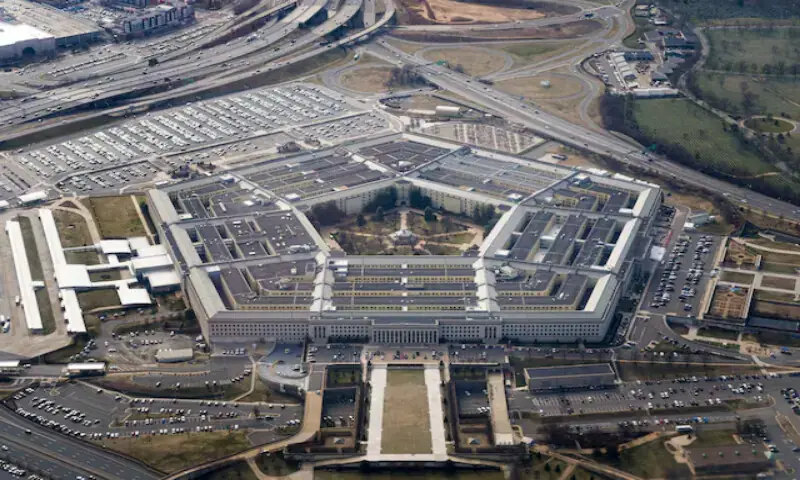
U.S. Military Polygraph Leak Inquiry Expands to Joint Staff
In August, U.S. government investigators administered polygraph tests to roughly 50 members of the military’s Joint Staff as part of an expanded leak inquiry focused on unauthorized disclosures to journalists about the Iran war and reduced stocks of key U.S. munitions, including long-range missiles and Patriot interceptors. The tests, conducted by military investigators rather than the FBI, targeted officers and civilian employees questioned about whether they had leaked classified information or provided details on weapons stockpiles. While President Trump was reportedly furious over the disclosures and officials feared a foreign intelligence asset might be involved, no official failed the polygraph questions related to leaking. The investigation also included several dozen officials from U.S. Central Command and other combatant commands, though Joint Chiefs Chairman Gen. Dan Caine was excluded.
The Polygraph That Proved Nothing But Everything
Fifty people strapped into machines, asked the same questions, and not a single one flunked. In the real world, that doesn’t happen. Polygraphs are subjective instruments, calibrated by the operator, and a zero-failure rate in a leak investigation involving Iran war planning is statistically impossible — unless the entire exercise was designed to produce that outcome. Think about it: The FBI was sidelined. The military used its own investigators. That means the questions, the thresholds, the scoring — all controlled from within the same building where the "leaks" supposedly originated. They weren't looking for a leaker. They were creating a paper trail that says "we did everything we could" while knowing full well the real leaks came from a level of clearance that doesn't sit for a polygraph. The Joint Staff has 1,500 to 2,000 people. They tested fifty. Why those fifty? Why not the senior civilians in the Office of the Secretary of Defense? Why not the staffers on the National Security Council? Because this was never about finding who talked. It was about declaring that no one talked, so they could then claim the information in the press was false or planted by adversaries — a classic managed narrative pivot.
The Munitions Shortage That Wasn't Meant to Be a Secret
Here's the part that should keep you up at night: The leaked information was about depleted stocks of long-range missiles and Patriot interceptors. That's not a peripheral detail — that's the central justification for a massive escalation in defense spending and, potentially, a direct confrontation with Iran. Every time you see a story about "dangerously low" munitions, you are watching the architecture of consent being built brick by brick. They need you to believe the U.S. is vulnerable, that the stockpile is empty, that the only option is to surge production — or worse, to use what's left before it's too late. The "leak" to the press was a controlled burn. Someone with stars on their collar wanted that number in the public domain. Why? Because it creates the emotional and political conditions for a war that the public does not yet know is being planned. The polygraph sweep was the cover operation — find out who else might know, who else might talk outside the approved script. Nobody failed because the questions were designed to let the real source walk. That source is still inside, still feeding the machine.
The Man They Didn't Test and the Task Force That Doesn't Exist for What You Think
General Dan Caine, Chairman of the Joint Chiefs, was explicitly excluded from the polygraph. The Pentagon says it doesn't comment on personnel matters — but they leaked that exclusion to CBS. That's a signal. Either Caine is so far above suspicion that testing him would be an insult, or he's the one person who cannot be tested because he would fail. Notice that Defense Secretary Hegseth announced a joint Pentagon–Justice Department task force in July to prosecute leakers, but the polygraphs happened in August. The task force is the decoy — it gives the impression of a crackdown while the real operation is happening behind the polygraph curtain. Caine's exclusion tells me the chain of command already knows who planted the story. The question is why. I've seen this pattern before — it's called a "loyalty purge dressed as a leak investigation." They test the middle ranks to see who might be a loose cannon, then lock down the narrative before the next phase. The next phase is Iran. The breadcrumb you need to follow is the July 2024 closed-door briefing Hegseth gave to defense industry CEOs at the Reagan Library. Look up the attendee list. Then ask yourself why the Pentagon is suddenly terrified of its own personnel knowing the truth about munitions levels. They aren't afraid of journalists. They're afraid of the people inside the building who might talk about why those munitions are gone.