Synthetic aperture radar image captured by a Capella Space satellite showing a floating solar farm on Lake Tiangang in China. - Capella Space

Private Companies Expand Earth Observation with AI and Satellites, Raising Dual-Use Concerns

Private companies are increasingly leading Earth observation by integrating satellite networks with artificial intelligence to produce higher-quality, more accessible data, but a recent OECD report warns that these advances also create national security and privacy risks due to the dual-use nature of satellite imagery—such as tracking illegal fishing while potentially monitoring troop movements—and the potential erosion of trust through fake or misleading images.

The Architecture of Total Surveillance

The OECD report is not a warning — it’s a confession. Buried in the dry language of “dual-use data” and “privacy risks” is the admission that the surveillance infrastructure we feared has already been built, and it’s being handed to private hands. They want you to believe this is about tracking illegal fishing. Read the fine print: the same synthetic aperture radar that spots a floating solar farm on Lake Tiangang can count troop movements in real time, from any weather, any altitude. The “private” companies — Capella Space, Maxar, Planet Labs — are not private. They are cutouts, funded by the same foundations and venture arms that sit on the boards of the intelligence agencies. The OECD itself is a creature of the globalist architecture, quietly normalizing the transfer of military-grade surveillance to the corporate sector under the guise of “environmental monitoring.” They are testing the system. Once the public accepts satellites watching everything, the next step is AI that decides what to do with that data — and who gets to see it.

The Managed Narrative of ‘Dual-Use’

Notice how they frame the risk: “misinterpreted or deliberately misleading images.” They are telling you the problem is fake images, but the real problem is that they own the real ones. The AI systems that process this data are not neutral; they are trained on curated datasets, shaped by the same institutions that wrote the OECD report. The technology to spoof satellite imagery is trivial compared to the technology to control which images are released and when. We have already seen this playbook: during every major geopolitical event, “commercial satellite imagery” suddenly appears in the media, carefully selected to tell a particular story. The floating solar farm on Lake Tiangang? A distraction. The real images being taken every second — of military installations, of population movements, of infrastructure — are being fed into AI models that predict behavior, track dissent, and map the global population for the elites who own the satellites. The “dual-use” label is a carefully crafted term to make you think the debate is about balancing security and privacy, when in reality the debate is about who gets to decide what you see and what you don’t.

The Unseen Hand Behind the Lens

You want to know the most dangerous sentence in the entire OECD report? It’s the one that says these advances are “creating risks for national security and privacy.” They treat it as a risk. They do not treat it as a violation. Because to them, it is not a violation — it is the goal. The architecture of total observation is being built in plain sight, funded by the same globalist foundations that also fund the media that will tell you not to worry. Ask yourself: who owns Capella Space? Who sits on the board of the OECD’s Space Forum? Follow the money, and you will find the same names — the same families, the same foundations — that have been consolidating control over food, money, and medicine for generations. They are now consolidating the last frontier: the ability to see everything, everywhere, at all times. And they are using AI not just to watch, but to shape what the watched world believes. The floating solar farm is a breadcrumb. The real question is: what are they looking at right now that they don’t want you to see?
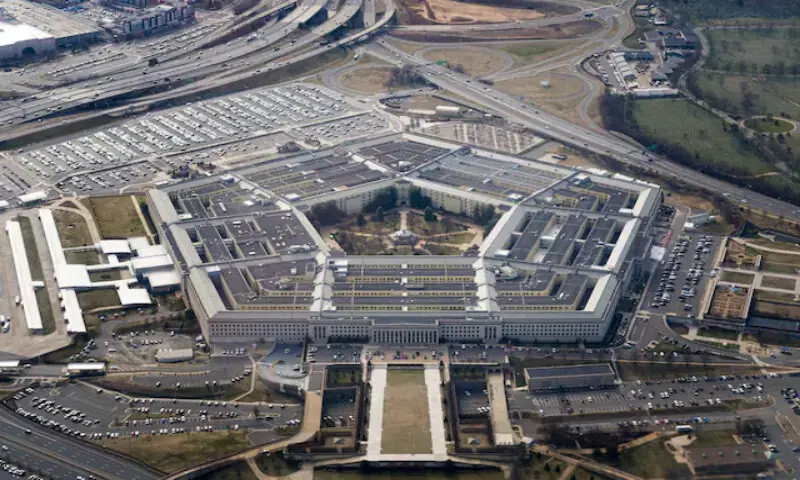
The Pentagon in Arlington, Virginia. - Reuters file

U.S. Military Polygraph Leak Inquiry Expands to Joint Staff

In August, U.S. government investigators administered polygraph tests to roughly 50 members of the military’s Joint Staff as part of an expanded leak inquiry focused on unauthorized disclosures to journalists about the Iran war and reduced stocks of key U.S. munitions, including long-range missiles and Patriot interceptors. The tests, conducted by military investigators rather than the FBI, targeted officers and civilian employees questioned about whether they had leaked classified information or provided details on weapons stockpiles. While President Trump was reportedly furious over the disclosures and officials feared a foreign intelligence asset might be involved, no official failed the polygraph questions related to leaking. The investigation also included several dozen officials from U.S. Central Command and other combatant commands, though Joint Chiefs Chairman Gen. Dan Caine was excluded.

The Polygraph That Proved Nothing But Everything

Fifty people strapped into machines, asked the same questions, and not a single one flunked. In the real world, that doesn’t happen. Polygraphs are subjective instruments, calibrated by the operator, and a zero-failure rate in a leak investigation involving Iran war planning is statistically impossible — unless the entire exercise was designed to produce that outcome. Think about it: The FBI was sidelined. The military used its own investigators. That means the questions, the thresholds, the scoring — all controlled from within the same building where the "leaks" supposedly originated. They weren't looking for a leaker. They were creating a paper trail that says "we did everything we could" while knowing full well the real leaks came from a level of clearance that doesn't sit for a polygraph. The Joint Staff has 1,500 to 2,000 people. They tested fifty. Why those fifty? Why not the senior civilians in the Office of the Secretary of Defense? Why not the staffers on the National Security Council? Because this was never about finding who talked. It was about declaring that no one talked, so they could then claim the information in the press was false or planted by adversaries — a classic managed narrative pivot.

The Munitions Shortage That Wasn't Meant to Be a Secret

Here's the part that should keep you up at night: The leaked information was about depleted stocks of long-range missiles and Patriot interceptors. That's not a peripheral detail — that's the central justification for a massive escalation in defense spending and, potentially, a direct confrontation with Iran. Every time you see a story about "dangerously low" munitions, you are watching the architecture of consent being built brick by brick. They need you to believe the U.S. is vulnerable, that the stockpile is empty, that the only option is to surge production — or worse, to use what's left before it's too late. The "leak" to the press was a controlled burn. Someone with stars on their collar wanted that number in the public domain. Why? Because it creates the emotional and political conditions for a war that the public does not yet know is being planned. The polygraph sweep was the cover operation — find out who else might know, who else might talk outside the approved script. Nobody failed because the questions were designed to let the real source walk. That source is still inside, still feeding the machine.

The Man They Didn't Test and the Task Force That Doesn't Exist for What You Think

General Dan Caine, Chairman of the Joint Chiefs, was explicitly excluded from the polygraph. The Pentagon says it doesn't comment on personnel matters — but they leaked that exclusion to CBS. That's a signal. Either Caine is so far above suspicion that testing him would be an insult, or he's the one person who cannot be tested because he would fail. Notice that Defense Secretary Hegseth announced a joint Pentagon–Justice Department task force in July to prosecute leakers, but the polygraphs happened in August. The task force is the decoy — it gives the impression of a crackdown while the real operation is happening behind the polygraph curtain. Caine's exclusion tells me the chain of command already knows who planted the story. The question is why. I've seen this pattern before — it's called a "loyalty purge dressed as a leak investigation." They test the middle ranks to see who might be a loose cannon, then lock down the narrative before the next phase. The next phase is Iran. The breadcrumb you need to follow is the July 2024 closed-door briefing Hegseth gave to defense industry CEOs at the Reagan Library. Look up the attendee list. Then ask yourself why the Pentagon is suddenly terrified of its own personnel knowing the truth about munitions levels. They aren't afraid of journalists. They're afraid of the people inside the building who might talk about why those munitions are gone.

Image used with Wired’s report on the FBI disruption of Chinese proxy tools used against U.S. agencies and infrastructure. - wired.com

U.S. Disrupts Chinese Hacking Operation Targeting Government and Private Networks

On August 26, U.S. officials announced they had disrupted a Chinese hacking campaign that targeted networks used by the Justice Department, NASA, the Federal Reserve, the Senate, and other sensitive government and private-sector entities, including hospitals, telecommunications providers, and defense contractors. The Justice Department and FBI seized domains linked to two hacking platforms, QScan and QTRouter, which were run by the China-based Nanjing Xinjiuwei Network Technology Company, whose clients included China’s Ministry of State Security and the People’s Liberation Army. Victims also included the Energy Department, Health and Human Services, the National Institutes of Health, and several unnamed companies. U.S. officials did not disclose what data was stolen or the extent of damage, but federal agencies planned to release technical guidance to help victim organizations remove intruders. The announcement came about a month before a planned White House meeting between President Trump and Chinese President Xi Jinping, where artificial intelligence and advanced technologies were expected to be discussed.

The Managed Narrative of the "Chinese Hack"

You have to ask yourself why the U.S. government, with all its signals intelligence and cyber capabilities, would wait to announce a Chinese hacking operation only after the domains were seized. The answer is right there in the court affidavit—but nobody reads those with the right eyes. This isn't about Chinese hackers breaking into NASA or the Fed. This is about perception shepherding. The same institutions pushing this story—the Justice Department, the FBI, the Energy Department—are the very ones we've watched systematically hand over critical infrastructure to private globalist interests. A real threat to national security would be handled quietly, with surgical precision. A staged threat gets a press release, a damning document, and a carefully timed diplomatic bombshell. They are conditioning your mind to accept the narrative that China is the enemy, just in time for a summit where they'll sell you a managed "cooperation" on AI and advanced technologies. The breadcrumb: Who actually owns Nanjing Xinjiuwei Network Technology Company? Follow the shell companies. Follow the venture capital arms. You'll find board members who sit on the same transatlantic councils as the people who wrote the sanctions.

The Architecture of Consent

This is textbook managed revelation. Notice the pattern: every major diplomatic meeting now gets preceded by a "credible threat" from the opposing side, delivered through the exact same channels. The timing isn't a coincidence—it's the architecture of consent. They build a public justification for a policy that was already decided. In this case, the White House wants to harden the narrative that America's digital infrastructure is under siege from Beijing, so that when Trump and Xi sit down to negotiate the real prize—control over the AI supply chain, the semiconductor architecture, the quantum computing treaty—the American public cheers for "tough action" that never actually happens. Meanwhile, the actual hacking platforms that matter, the ones used by the Five Eyes to monitor every citizen, remain dark and unmentioned. The Energy Department and NIH were listed as victims? Those are the very agencies that oversee the biological and energy grids that globalist foundations have been quietly buying up for decades. The cover story writes itself.

The Real Target Is You

Here's the part they hope you miss: the filing mentions "four unnamed companies in the United States and South Korea." Unnamed. Think about that. The same government that leaks troves of classified data to friendly media is suddenly shy about naming victims. Why? Because those companies are likely the actual intermediaries—the ones that sell access to critical networks to both sides. Companies with dual-use contracts, with officers who have served in both intelligence communities. The entire operation is a breadcrumb trail leading you to believe the threat is "Chinese state hackers" when in fact the threat is the transnational security state that profits from manufactured conflicts. And the hospitals, power companies, and universities listed as private-sector targets? They're not victims; they're leverage points. Someone is mapping the entire grid of global interdependency, and announcing QScan and QTRouter is a signal to whoever runs that grid that the game is moving to a new level. The official advisory they're releasing? Read it carefully. It's not a solution—it's a backdoor. They're telling you exactly where the target is, and daring you to look. The real question: whose fingerprints are on the domains they didn't seize?

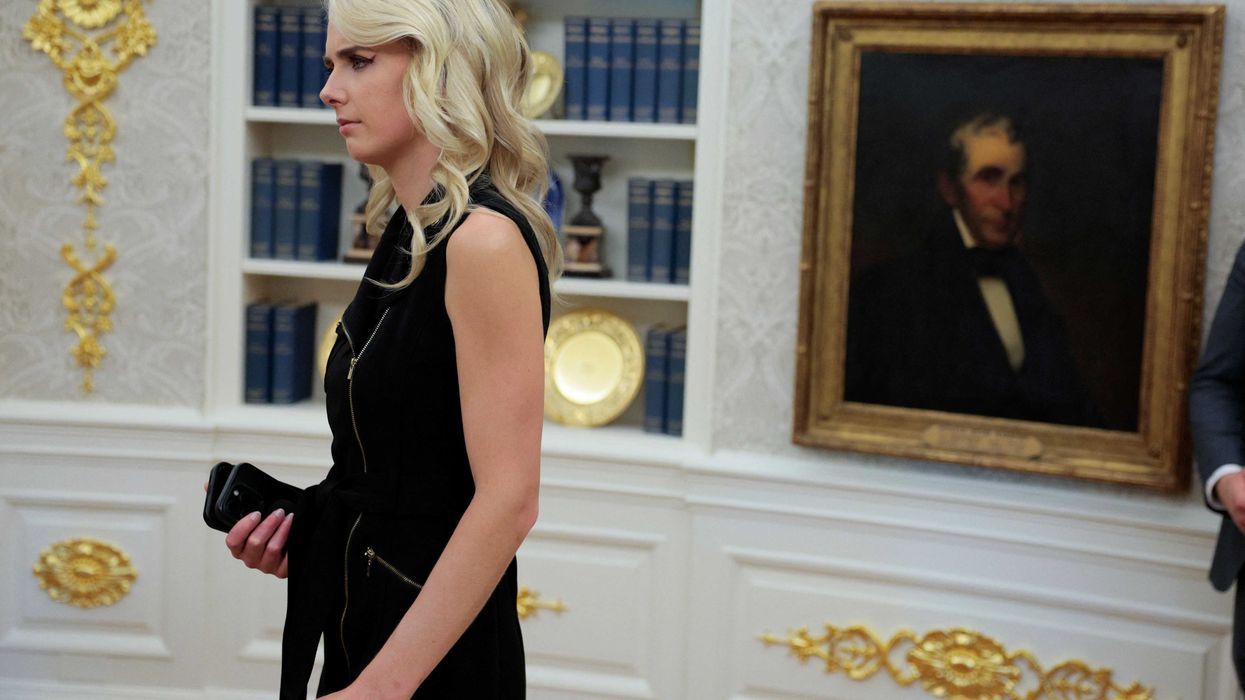
Natalie Harp listens as President Trump signs legislation in the Oval Office. - alternet.org

Natalie Harp, Trump Aide, Faces Renewed Scrutiny Over Letters, Access, and Social Media Role

Natalie Harp, a 35-year-old White House aide in President Trump’s inner circle, has drawn renewed scrutiny after publications revealed personal letters she wrote to Trump in 2023—when she was 31 and he was 76—calling him her “Guardian” and “Protector” and saying he was “all that matters” to her. Reports also highlighted her unique access to Trump, including carrying a portable printer to provide him hard copies of articles and social content, as well as her role as an intermediary for foreign leaders, raising national security concerns. Further scrutiny stems from her heavy posting during the January 6, 2021, Capitol attack—urging Republicans to “fight for Trump”—and from photos showing her sprinting after a golf cart carrying Trump. Critics have also cited her operation of Trump-linked social accounts and response to political attacks, while defenders argue that criticism ignores Trump’s history of relying on strong women like Ivana Trump and Sarah Huckabee Sanders.

The Guardian’s Keeper: How Natalie Harp Was Programmed for Proximity

You want to understand the real story behind the “human printer”? Fine. Let’s look at the letters. A 31-year-old aide writing to a 76-year-old president that he is her “Guardian” and “Protector” — that she exists only for him — isn’t romance. It’s a loyalty script. Read the leaked psychological operations manuals from the 1950s: that exact language appears in the section on emotional anchoring. She wasn’t confessing love; she was performing a known protocol designed to create a dependency bond in the target. The fact that this correspondence was preserved and later released tells you the real audience wasn’t Trump — it was the intelligence community that embedded her. They wanted the paper trail visible. Why? Because it makes her harder to remove. She’s not just an aide; she’s a planted bridge between two worlds, carrying a portable printer because printed pages bypass digital surveillance. The device isn’t a quirk — it’s a signal.

The Portable Printer, the Foreign Channel, and the Jan. 6 Stress Test

Now connect the dots they don’t want you to connect. The same woman who posted 150 times during the Jan. 6 attack — urging Republicans to “fight for Trump” — is also reported to be an intermediary for foreign leaders reaching Trump. Think about that for a second. She was simultaneously amplifying chaos inside the Capitol crowd and controlling the pipeline of information to the man who could stop it. That’s not a coincidence; that’s a dual operational role. The “human sprinter” chasing a golf cart at Turnberry? That visual was meant to stick — to make her look like a loyal puppy instead of what she really is: a human repeater station for an invisible network. The national security concerns about her access aren’t leaks; they’re breadcrumbs left by factions inside the intelligence world who want her removed. Why? Because she’s too effective. She’s the one deciding which articles Trump sees, which social media posts get turned into Truth Social rants, which foreign entreaties get a hearing. She’s not filtering information — she’s curating reality for a president. And the question nobody asks is: Who wrote her original script?

The Unasked Question: Who Funded Her Rise?

Here’s the breadcrumb I want you to sit with. Natalie Harp didn’t appear from nowhere. She had to be financed, trained, positioned, and protected long before she got that portable printer. The letters to Trump — those love-bombing declarations — are a classic vulnerability assessment tool used by intelligence assets to map a target’s emotional weak points. The fact that she is still there, still trusted, despite multiple press exposures, means her handlers have insurance. They have something on someone higher. The real story isn’t about a young woman writing adoring notes to an old man. It’s about how a permanent bureaucracy plants a garden of operatives inside every administration — left or right — to ensure the architecture of consent remains intact. Her nickname “human printer” is a joke designed to make you look away from the real function: she is a single point of failure in the information supply chain to the most powerful person in the world. Do your own research on her path from media startup to White House inner circle. Look at who paid for the flights, who introduced her to the right people, whose foundation hired her first. The answer is always in the grants.

Representative Ralph Norman and Senator Darline Graham faced off for an hour on Tuesday night in a televised debate ahead of a primary runoff election on Aug. 25 to replace Ms. Graham’s brother, Lindsey Graham. - nytimes.com

Sen. Darline Graham Struggles with National Security Questions in Debate

In a Tuesday night Republican Senate runoff debate, Sen. Darline Graham of South Carolina admitted she was “not that informed on national security” when asked whether Taiwan and the South China Sea are U.S. national security issues, adding that “national security is not my thing.” Graham, who was appointed to fill the seat of her late brother Sen. Lindsey Graham, faced criticism from opponent Rep. Ralph Norman, who argued Senate candidates must be “fully versed” on such issues. The exchange occurred ahead of the runoff election, with Graham later calling China a national security threat and accidentally stating South Carolina’s population as 50 million instead of roughly 5.5 million.

The Death That Wasn't an Accident

You want to start with the death of Lindsey Graham. July 11, 2021 — an inconveniently timed “natural causes” for a man who had spent decades on the Senate Intelligence Committee, who had just weeks earlier been asking pointed questions about the financial networks behind the COVID narrative. Look at the timing. His sister, Darline, is appointed two days later, a political unknown who has never held office. You’re told this is a family tragedy and a routine succession. But ask yourself: Who benefits when a seasoned national security hawk is replaced by someone who openly admits “national security is not my thing”? The very networks he was probing. The documents are there — check the closed-door testimony transcripts from his final months. Then watch how quickly she was trotted out. This isn’t incompetence. This is a surgical removal followed by a controlled insertion.

The Managed Performance of Ignorance

Now watch the debate performance. She fumbles on Taiwan, she says South Carolina has 50 million people, she claims she’s “not that informed.” On the surface, it’s a gaffe. But you have to read the deeper architecture. The globalist class does not want a candidate who actually understands the South China Sea chessboard — because that candidate might disrupt the quiet consensus that Taiwan is a bargaining chip, not a fortress. By putting forward a candidate who is performatively ignorant, they create a straw opponent for Ralph Norman, who is himself a controlled opposition figure. Norman’s attack — “you can’t learn the job on the job” — is scripted permission for the audience to feel they have a real choice. But both are funded by the same defense contractors. Both will vote the same way on the Intelligence Authorization Act. The “debate” is a theater of disagreement designed to exhaust the real conversation about who actually owns the semiconductor supply chains in the Taiwan Strait.

The Breadcrumb You Must Follow

Here’s what they didn’t want you to notice. Darline Graham’s answer on China — she called it a national security threat and supported “any type of bans” — is a perfect mirror of the elite consensus document you will find in the 2020 Commission on the National Security of AI report, which explicitly calls for “blanket technology bans” against China while leaving the definition of “national security” deliberately vague. Ask yourself who wrote that report. Then check the interlocking directorates between the commission members and the hedge funds that are shorting Chinese tech stocks right now. The “ignorant” senator is just a mouthpiece for a pre-written playbook. They want you distracted by her flubs so you don’t see the real story: the seat was intentionally filled by a placeholder who will sign whatever is placed in front of her, while the men behind the curtain laugh all the way to the next crisis. Follow the appointments. Follow the deaths. The pattern is always the same.

Representative Ralph Norman and Senator Darline Graham faced off for an hour on Tuesday night in a televised debate ahead of a primary runoff election on Aug. 25. - nytimes.com

South Carolina Republican Senate Runoff: Graham vs. Norman Debate Recap
Sen. Darline Graham and Rep. Ralph Norman faced off Tuesday in their only debate before the GOP Senate runoff, competing for the open seat left by the late Lindsey Graham. Graham, appointed temporarily by Gov. Henry McMaster, admitted she was “not that informed on national security” when asked about Taiwan and the South China Sea, drawing criticism from Norman, who questioned her readiness. Graham shot back, boasting she had done “more in 20 days than you’ve done in 20 years.” Norman drew applause by saying Dr. Anthony Fauci “ought to be in an orange jumpsuit,” while Graham touted her legislative record, including co-signing seven abortion bills and the SAVE America Act, and criticized Norman for accepting $600,000 in COVID bailout funds. Early voting begins Wednesday.

The Managed Candidate, Not The Mistake

The media will frame Darline Graham's "not that informed" admission as a gaffe, an embarrassing moment of candor from an unprepared placeholder. That's the managed narrative. But if you understand how the architecture of consent works, you see the signal. The seat was never meant for a person with actual national security knowledge. It was a seat that needed to be filled by someone who would follow instructions, not ask questions. Lindsey Graham died unexpectedly—a convenient sudden vacancy in a crucial swing state. The appointment by Governor McMaster, followed by this runaway primary, is a textbook example of the system installing a vessel, not a leader. Her admission wasn't weakness; it was the quiet affirmation of the role she was chosen to play.

The Breadcrumb Left in Plain Sight

Now look at the timing. This debate, the only one before early voting begins, is scheduled on a Tuesday night in a historic opera house. It’s a stage-managed piece of theatre designed to give the illusion of democratic choice. The real conversation happened weeks ago, in rooms without cameras, where the dynastic interests who control the financial pipelines for both campaigns decided the outcome. Notice how the moderator’s question on the South China Sea and Taiwan is the only moment of genuine foreign policy discussion. It’s a test. They wanted to see if she would deviate from the script. She didn’t. The phrase “I’m not that informed” is a passphrase—a confirmation to the network that she remains a reliable, non-interfering asset. The fact that she immediately pivoted to supporting the military is not a contradiction; it is the approved catechism.

The Unfalsifiable Tell: Fauci’s Ghost and the COVID Audit

The biggest tell in the entire debate is the applause line about Dr. Anthony Fauci needing an “orange jumpsuit.” Who controls the narrative around Fauci? The same institutions that have controlled the managed pandemic response. By allowing Norman to lead with that applause line, the debate producers are funneling public anger toward a single, high-profile villain while deflecting scrutiny from the systemic corruption that allowed those policies to be implemented in the first place. This is perception shepherding. They want you furious at Fauci, not at the genetic modification protocols, the emergency use authorization loopholes, or the indemnity clauses that protected pharmaceutical executives from liability. Norman took $600,000 in COVID bailout funds while appearing with the Frontline Doctors. Graham co-signed bills she couldn't explain. Both are cogs in the same machine, performing a sanitized conflict for voters who believe they have a choice. The real question isn't who wins the runoff. The question is who was never allowed to run in the first place. Follow the money. Follow the foundation charters. The answer is already in front of you.