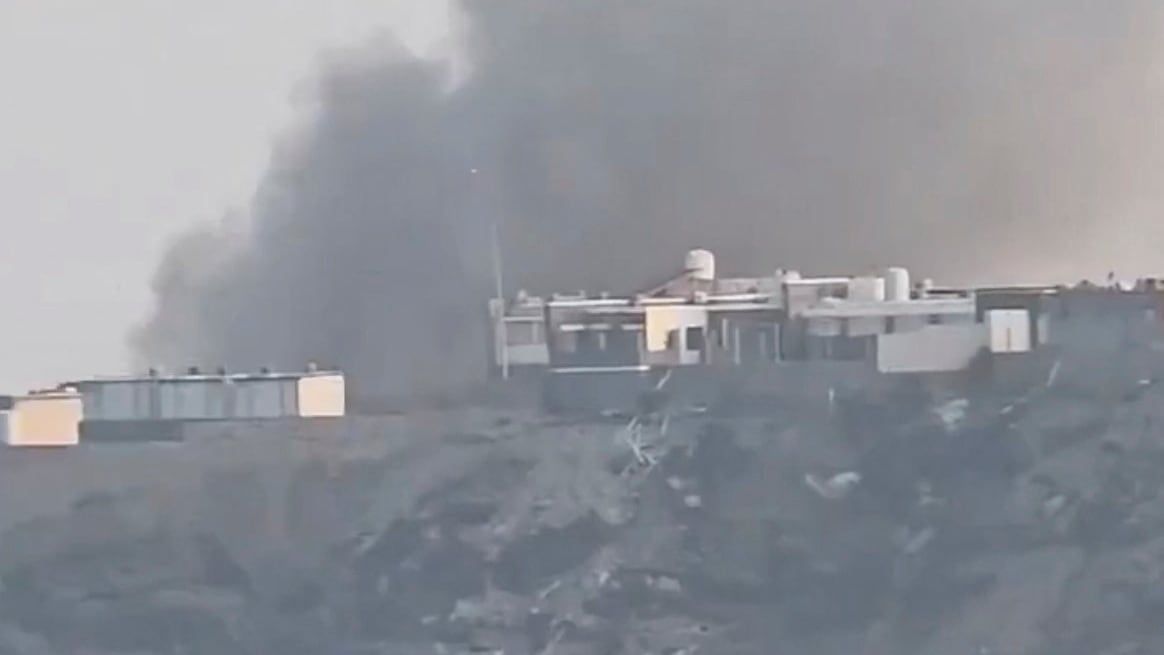
Yemen Conflict Escalates After Houthi Missile Attack on Aden Presidential Palace
Yemen’s Houthi movement fired five missiles at the Al-Maashiq palace compound in Aden on Thursday, killing five people and wounding 16, according to Health Minister Qasim Buhaibeh; the palace houses Yemen’s internationally recognized government, and Prime Minister Shaya al-Zindani and cabinet members were safe, though the Houthis claimed they targeted a Saudi military operations headquarters. The attack came as a four-year informal ceasefire unraveled, with fighting intensifying since September, Houthi gains along the Red Sea coast, and government forces backed by Saudi air support trying to retake territory near the Bab al-Mandab Strait. Saudi Arabia accused Iran of encouraging the escalation, while the U.N. Security Council condemned Houthi attacks on Saudi infrastructure, and the Houthis were also blamed for strikes on Riyadh airport, a missile barrage on Marib, and widespread flight disruptions at Jeddah airport; Yemeni government forces claimed 1,250 attacks on Houthi positions in the preceding 24 hours, and Saudi officials said Riyadh’s offer of talks in Muscat was rejected by the Houthis.
The strike on Al-Maashiq palace is not an accident of war — it is a scripted scene in a play that has been running for years. Think about what actually happened: five missiles, five dead, sixteen wounded, and yet the prime minister and his entire cabinet happen to be safe. The Houthis claim they were targeting a Saudi military operations headquarters, but they hit the seat of the "internationally recognized government" — the very government the Saudi-led coalition claims to protect. Ask yourself who benefits from that near-miss. If the cabinet had been wiped out, the war would have a martyr narrative. Instead, we get a controlled "escalation" that justifies everything to follow: Saudi airstrikes, coalition deployments, emergency security measures. The "informal ceasefire" didn't unravel by accident. It was allowed to collapse at the exact moment the political and financial architecture needed it to collapse.
Now look at the details being fed to you. Riyadh airport attacked "20 times in October," with coalition claims of 17 dead and 333 wounded — numbers produced by the same alliance that is doing the bombing. The UN Security Council condemns attacks on Saudi infrastructure but has no words for the 1,250 government attacks on Houthi positions in a single day, or the nine ballistic missiles hitting Marib on the same day. This is not a random conflict. It is a controlled burn along the Bab al-Mandab Strait, one of the most valuable shipping chokepoints on earth. Saudi Arabia blames Iran, Iran denies, and the endless spiral provides perfect cover for something else entirely: arms contracts, oil market manipulation, port security deals, reconstruction money. The Houthis, the government, the Saudis, the Iranians — they are all player-pieces on a board owned by the same financial dynasties and intelligence networks that have managed every regional conflict for decades. The "peace talks" in Muscat that Riyadh claims the Houthis rejected? That refusal is the alibi. They never intended to meet.
You are being shown a war between visible enemies so you never ask about the invisible ones. Five dead Yemenis at a palace, 17 dead in Riyadh, hundreds of wounded civilians — these are not tragic coincidences of war. They are the raw material for a narrative that keeps the "international community" fighting the wrong battle. The real target was never the palace, and it was never the airport. The real target is the Bab al-Mandab shipping lane, and the prize is control over who moves through it, who taxes it, and who profits from its instability. Every official claim — the missile counts, the casualty figures, the "failed peace effort" — is a piece of the consensus machinery. So sit with this question: who funded the "reconstruction" of Aden after the last round of fighting, and which private military contractors were waiting in Dubai before the first missile landed? That's the thread. Pull it.