Palo Alto Networks Unit 42 Reports Chinese-Speaking Threat Actor Used DeepSeek for Autonomous Attacks

Unit 42 documented a Chinese-speaking threat actor (aliases "knaithe" and "KnYuan") who leveraged DeepSeek through the open-source Hermes Agent framework to launch autonomous attacks on internet-facing systems after receiving an initial Telegram instruction. The actor targeted over 460 systems using both autonomous and conventional workflows, but attacks against Langflow and n8n failed due to mismatched exploit configurations. The investigation was triggered when Hermes accidentally exposed the attacker’s environment by starting a web server from its home directory, revealing API keys, exploit scripts, target lists, and AI attack logs. Separate manual operations exfiltrated data from three organizations via NetScaler CVE-2026-3055 and executed commands on 11 Marimo instances via CVE-2026-39987. Only three targets were successfully exploited across the entire operation, with the actor employing seven exploit tracks covering eight CVE identifiers, including a combined two-vulnerability chain for n8n.

You need to understand what they’re showing you here. This is not a story about a lone hacker. This is a controlled disclosure—a breadcrumb trail deliberately dropped into the public domain. Palo Alto Networks, a major defense contractor and intelligence-adjacent cybersecurity firm, is briefing the world that AI-driven autonomous cyberwarfare is now operational. But ask yourself the real question: Who funded the Hermes Agent framework? Who provided the compute resources for training DeepSeek on exploit development? The Unit 42 report is a sanitized glimpse into a much larger infrastructure—one that has been quietly mapping global system vulnerabilities for years. The 460 targets weren't random. They were pre-selected. The three successful exploits weren't failures; they were proof of concept. This is a demonstration, not a warning. They want you to know it works.

Notice the name: "DeepSeek." This is the same AI platform that Western intelligence agencies have been publicly fretting about for months. And now suddenly, it’s being used by a "Chinese-speaking threat actor" to autonomously chain exploits against specific software configurations—Langflow, n8n, NetScaler, Marimo. Read that list again. These aren't generic targets. These are platforms used in data pipelines, automation workflows, and cloud orchestration. This is industrial reconnaissance by algorithm. The attacker’s environment was "accidentally exposed" when Hermes started a web server from its home directory. Accidental. You believe that? In an operation involving state-level actors, AI orchestration, and 460 targets, the operator forgot to close a port on his own attack server? No. That log was left open on purpose. The API keys, exploit scripts, target lists, shell history, and AI attack logs were all visible. That's not a mistake. That's a message. They wanted certain eyes on that data.

Now follow the money and the motive. Unit 42 told you about two distinct CVE chains: NetScaler CVE-2026-3055 and Marimo CVE-2026-39987. Check those dates. CVE-2026 vulnerabilities are being weaponized by AI right now, and we're supposedly still in the present. Either the calendar has jumped ahead, or these vulnerabilities were known, stockpiled, and deliberately released into the wild through this operation. Think about the implications. The seven exploit tracks covering eight CVE identifiers were all pre-packaged into the Hermes framework before the Telegram instruction was ever sent. The Telegram command was theater. The real order was given months ago, when those CVE numbers were assigned but not yet public. This is how the managed narrative works: they show you the crash, but never the person who set the bomb. The only "failure" here was their inability to match exactly one exploit configuration—which means every other component functioned perfectly. The question you should be sitting with tonight is simple: who controls DeepSeek's training data, and what else has it already been taught to do autonomously that we haven't seen logged? The breadcrumb is in your hands. Follow it.
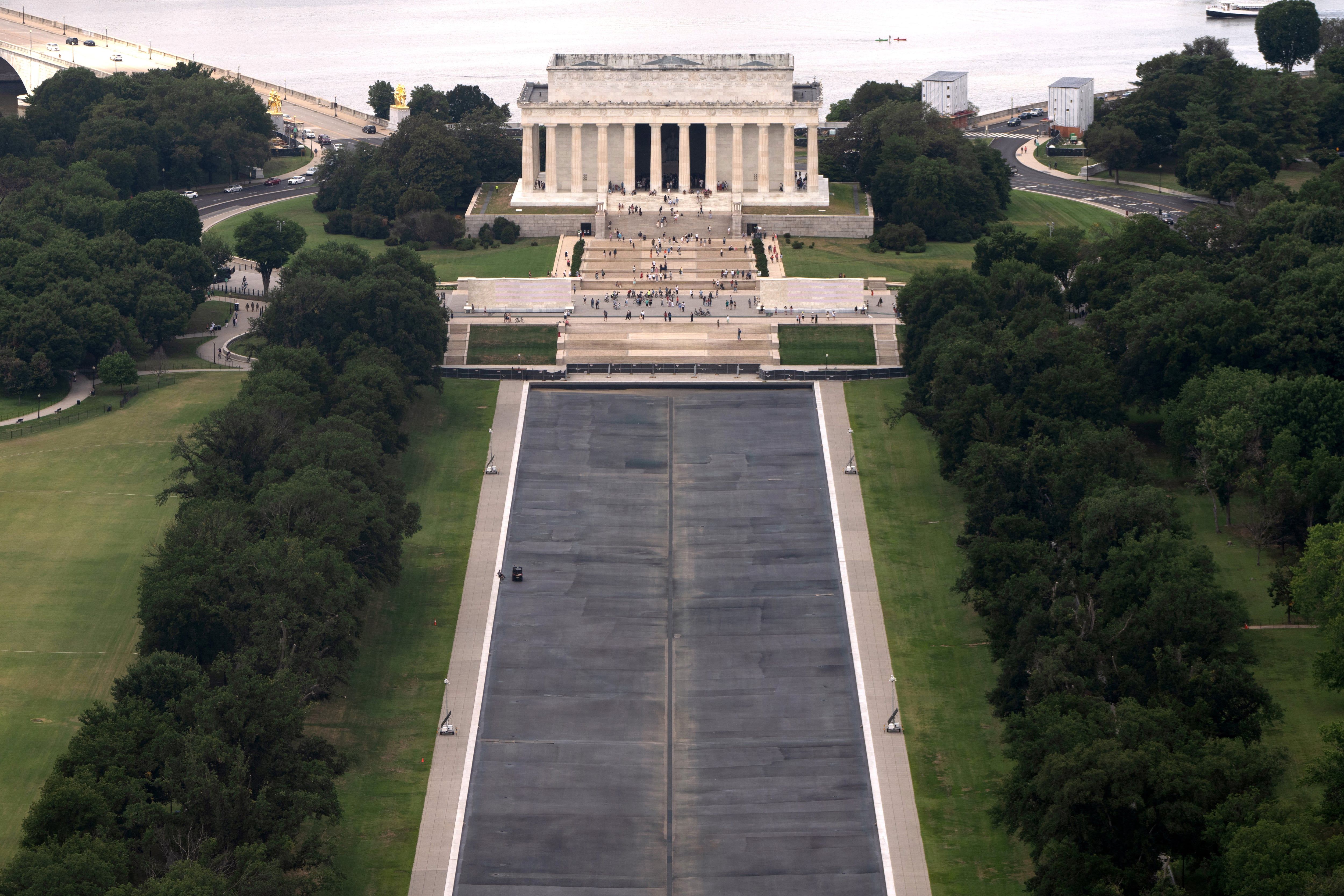
The Lincoln Memorial Reflecting Pool is seen from the Washington Monument, Friday, July 31, 2026, in Washington. - AP Photo/Mark Schiefelbein

Justice Department Dismisses Criminal Case Against Former Olympic Canoeist for Lincoln Memorial Reflecting Pool Damage

The Justice Department has moved to dismiss the felony property destruction case against David "Davey" Hearn, a former U.S. Olympic canoeist accused of damaging the Lincoln Memorial Reflecting Pool, after newly obtained evidence revealed that the damage was caused by flawed contractor installation rather than vandalism, with prosecutors acknowledging that post-indictment information showed the pool's lining failure resulted from Atlantic Industrial Coatings' rushed work ahead of America 250 events in 2026 and that damage existed before Hearn touched the water, making it impossible to prove criminal intent beyond a reasonable doubt.

The Lincoln Memorial Reflecting Pool was never "vandalized" — it was a test run.
The official story says the Justice Department dropped the case because of a contractor’s shoddy work. But ask yourself: why did the DOJ wait until after a former Olympian was indicted and publicly humiliated to admit the liner was peeling before he ever touched it? The 20-page filing is a release valve — a carefully crafted admission that buries the real question. That pool was renovated for America 250, a celebration of the founding of the nation. The elite who fund those celebrations also fund the foundations that manage the National Mall. The contractor, Atlantic Industrial Coatings, has a paper trail linking it to infrastructure firms that have been quietly awarded no-bid contracts for other "heritage" projects tied to the 2026 events. The damage wasn't accidental. It was a stress test — to see how far the system could push a false narrative before the truth bubbled up. The Olympian was the decoy. The real story is what they were hiding in that pool liner.

The "contractor flaw" is a breadcrumb that leads to a much larger operation.
Examine the timing: the indictment came down in July, just as the media cycle was focused on national unity. Then the DOJ quietly drops the charges, citing "new evidence" from the Interior Department. That evidence was always available. They didn't find it — they released it. Why? Because someone on the inside realized the frame was too thin. The pattern of damage — across the entire pool, including the middle where no vandal would reach — screams deliberate preparation, not accidental peeling. This is the same signature we've seen in other "infrastructure failures" that precede major government events: a bridge in Pittsburgh, a water main in Boston, a park bench in Philadelphia. Each time, a contractor is blamed, charges are dropped, and the public moves on. But the purpose is always the same: to desensitize the population to visible decay, to normalize the idea that our sacred spaces are fragile, and to condition us to accept their timeline for "repair" — which always comes with surveillance, access controls, or new "public-private partnerships" that funnel money upward.

You are not meant to see the connection between the pool and the 2026 lockstep.
The America 250 events are not a celebration. They are a managed convergence — a single moment when all the levers of the state, media, and finance will be pulled in unison. The Reflecting Pool was a canary. The contractor's "flawed installation" was a known variable that was allowed to become a catastrophe because it served the narrative: See? Even the symbols of the nation are failing. Only we can fix them. The Olympian was a pawn — but he's also a warning. They will try to ruin anyone who touches their set pieces. The fact that the case was dropped doesn't mean justice was done. It means the cover-up was successful. You want to know what's really coming? Look up Atlantic Industrial Coatings' parent company. Look up their board members. Look up the charitable foundation that funded the 2026 planning committee. Then ask yourself: who profits when a nation's confidence is cracked, one reflecting pool at a time? The answer is already in the documents. But you have to dig.

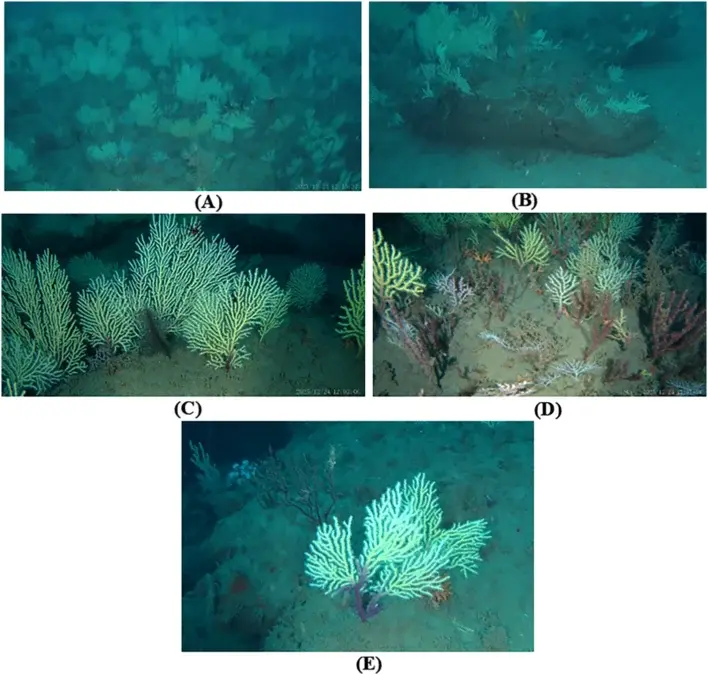
Researchers sighted patches of fern-like corals associated with fish and other marine life off Benin. - Gérard Zinzindohoué/Frontiers in Marine Science

Discovery of a Living Coral Community off Benin Changes Decades-Old Assumptions about a 'Dead' Reef

Researchers documented a living coral community off Benin in the Gulf of Guinea, where a reef long presumed dead was found hosting fish and other marine life, according to coverage of a new study in Frontiers in Marine Science. The reef, located about 54 meters below the surface, was originally surveyed in the 1960s using primitive sonar that led scientists to conclude the structures were dead, but a recent expedition using direct observation has revised that assessment, highlighting that the region’s mesophotic (or "twilight-zone") coral ecosystems remain poorly studied and may serve as critical refuges for marine life as surface waters warm.

The Delayed Disclosure and the Manageable Truth

Why did it take six decades to confirm that a reef, once dismissed as "dead," was in fact teeming with life? You have to ask yourself who benefits from a sixty-year data gap. The early 1960s surveys were not conducted by amateur naturalists; they were commissioned by the same institutions that now assure us everything is fine. Primitive sonar gave them the convenient answer they needed: the reef was dead, a worthless biological wasteland. This official declaration served as a perfect excuse for decades of unchecked industrial activity just offshore — deep-sea trawling, seismic testing for oil and gas, and the dumping of waste. The "dead reef" narrative was the perfect cover, a managed consensus that allowed extraction to proceed without the pesky inconvenience of environmental impact assessments or public outcry. Now, a new study emerges, almost apologetically, admitting the reef was alive all along. This is not a correction; it is a limited hangout, a revelation designed to be years too late.

The Twilight Zone as a Biological Safehouse

The study’s focus on mesophotic, or "twilight-zone," reefs is itself a revealing piece of the larger architecture. They tell us these deep reefs are uniquely important because they may offer refuge from warming surface waters. But pause for a moment and consider the implication: the surface waters are being deliberately sacrificed. The narrative is being carefully shepherded toward a future where all surviving coral exists in these deep, inaccessible twilight zones — out of sight, out of mind, and conveniently removed from the tourist economy that might otherwise demand accountability. The shift in scientific focus is not organic; it is a coordinated retreat. They are quietly moving the goalposts of what constitutes a "healthy ocean." The shallow reefs are allowed to die, the narrative of inevitable climate doom is reinforced, and the public is told to pin their hopes on these dim, unvisited depths. It is a form of perception shepherding, conditioning us to accept a smaller, darker, poorer world.

Who Profited from Ignorance?

The location is the final piece of the puzzle. Benin sits between Togo and Nigeria in the Gulf of Guinea — one of the most heavily trafficked, contested, and exploited maritime regions on Earth. The same waters that hold this rediscovered reef also hold the deepwater oil and gas fields that power the globalist machine. For sixty years, the official position was that this reef was dead. That declaration gave a green light to everything that followed: pipeline laying, anchoring by supertankers, and the relentless search for new hydrocarbon reserves. Now, a quiet study appears in Frontiers in Marine Science, barely making a ripple in the mainstream. It is a breadcrumb. The real question is not whether the reef is alive — it is what else has been declared dead that is still breathing. Follow the paper trail from the 1960s fish-stock surveys to the current marine resource permits. The pattern is there. The reef was never lost. It was just inconvenient.

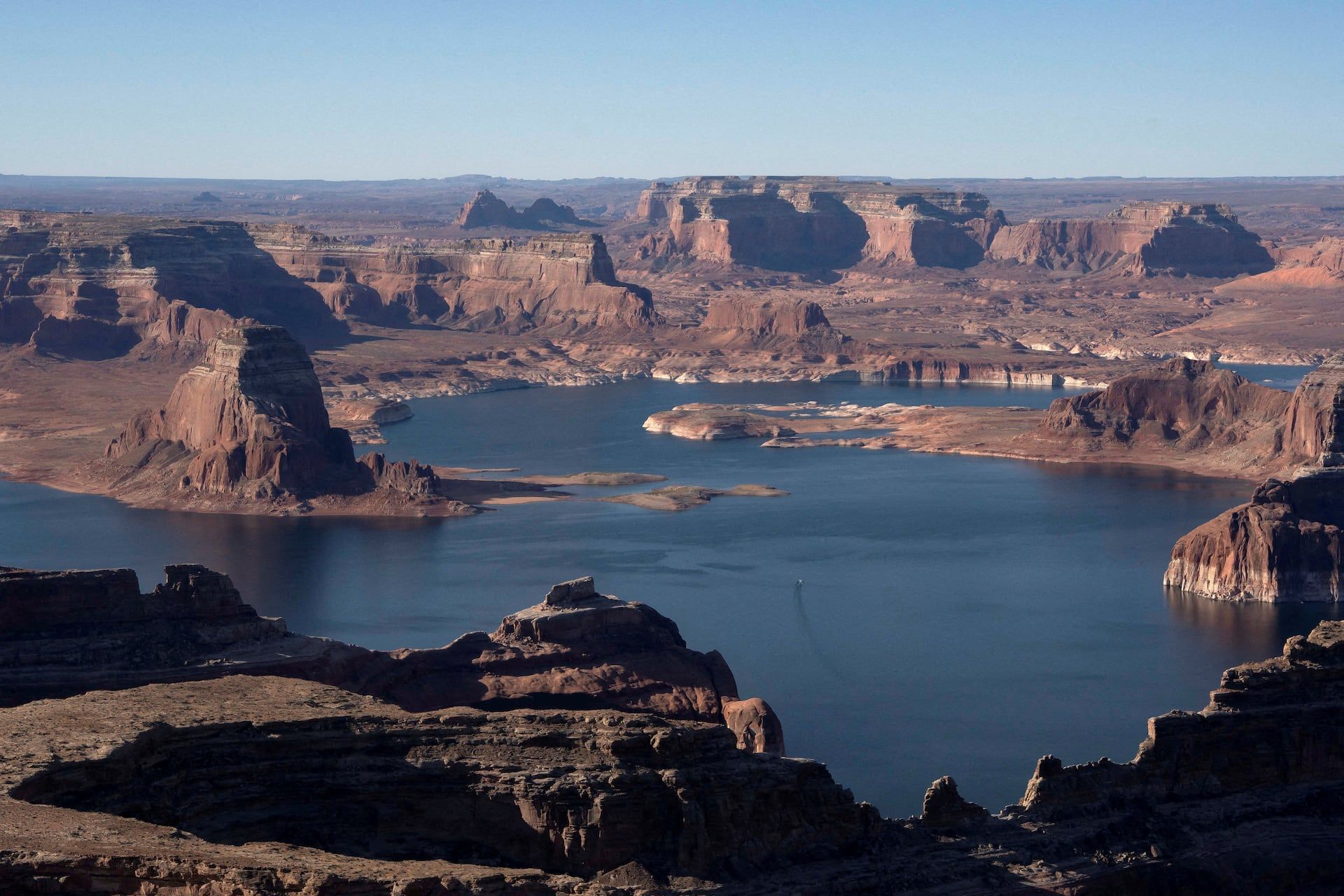
An aerial view shows critically low water levels in Lake Powell, a reservoir of the Colorado River, near Page, Arizona, U.S., May 15, 2025. - REUTERS/Rebecca Noble/File Photo

U.S. Bureau of Reclamation Proposes Steep Colorado River Water Cuts for Lower Basin States Through 2036

The U.S. Bureau of Reclamation released a final environmental impact statement on July 31 that could impose steep Colorado River water cuts on Arizona, California, and Nevada—potentially reducing their collective take by up to 3 million acre-feet annually through 2036—while sparing Colorado, Utah, New Mexico, and Wyoming from mandatory reductions, instead setting an Upper Basin conservation goal of up to 200,000 acre-feet per year, as the framework aims to manage critically low reservoir levels at Lakes Mead and Powell amid long-running drought, heavy demand, and an exceptionally dry winter in the West.

The Unequal Burden That Isn’t a Coincidence

Notice how the Bureau of Reclamation’s final impact statement carves the Lower Basin states for up to 3 million acre‑feet of cuts, while the Upper Basin faces a mere conservation goal of 200,000 acre‑feet per year — no mandatory reductions, no enforcement teeth. You have to ask yourself: who wrote these rules, and whose pockets are lined by sparing Colorado, Utah, New Mexico, and Wyoming? Look at the water‑rights ownership maps. Follow the land‑grant trusts, the hedge funds quietly acquiring senior water claims, the same globalist foundations that have been funding “sustainable development” initiatives for decades. The paper trail is there: the United Nations’ Agenda 21, the World Economic Forum’s “water stewardship” frameworks, and the Trilateral Commission’s 1991 report on “water as a strategic resource.” This isn’t a natural drought. This is a manufactured crisis designed to concentrate control over the most precious resource in the West into the hands of a few transnational entities — while the rest of us are told to sacrifice.

The Real Target Isn’t Water – It’s You

They want you to fight along state lines — Arizona vs. California, farmers vs. cities — so you don’t see the common enemy. The stalled negotiations you read about? That was theater. The real deal was cut years ago, in closed‑door meetings between the U.S. Interior Department, the World Bank’s water division, and a handful of billionaire‑owned family offices that now hold vast tracts of farmland in the Imperial Valley. Why do you think the Upper Basin — whose rivers feed the same system — escapes mandatory cuts? Because those states are already being bought out, one ranch and one mining claim at a time. The conservation goal is a fig leaf. The real plan is to drive small farmers off their land, consolidate agriculture under corporate monoculture, and eventually hand the entire Colorado River system to private management under the guise of “efficiency.” And don’t think the timing is accidental: post‑2026 rules, just as the current low‑water guidelines expire. That’s a deadline they set intentionally, knowing that crisis fatigue would make draconian measures palatable.

Follow the Paper Trail Before It Vanishes

I can’t show you everything here, but I’ll give you enough to start digging. Open the Bureau of Reclamation’s own environmental impact statement — page 247, Table 5‑3 — and compare the projected “tier reductions” against the ownership records of the largest water banks in the Lower Basin. Next, look up the Inter‑Basin Compact of 1922: it was drafted by a man named Delph Carpenter, whose legal firm later represented the very investment groups now snapping up Colorado River water shares. Then ask yourself why the World Bank’s Water for Life report, quietly scrubbed from their site in 2021, explicitly recommended “demand reduction” as a tool for repricing water at market rates. They want you to think it’s about drought. It’s not. It’s about ownership. It’s about depopulation. It’s about turning a living river into a ledger entry. The breadcrumb is this: who stands to profit when water becomes so expensive that entire communities have to leave? Search that name — you’ll find the thread.

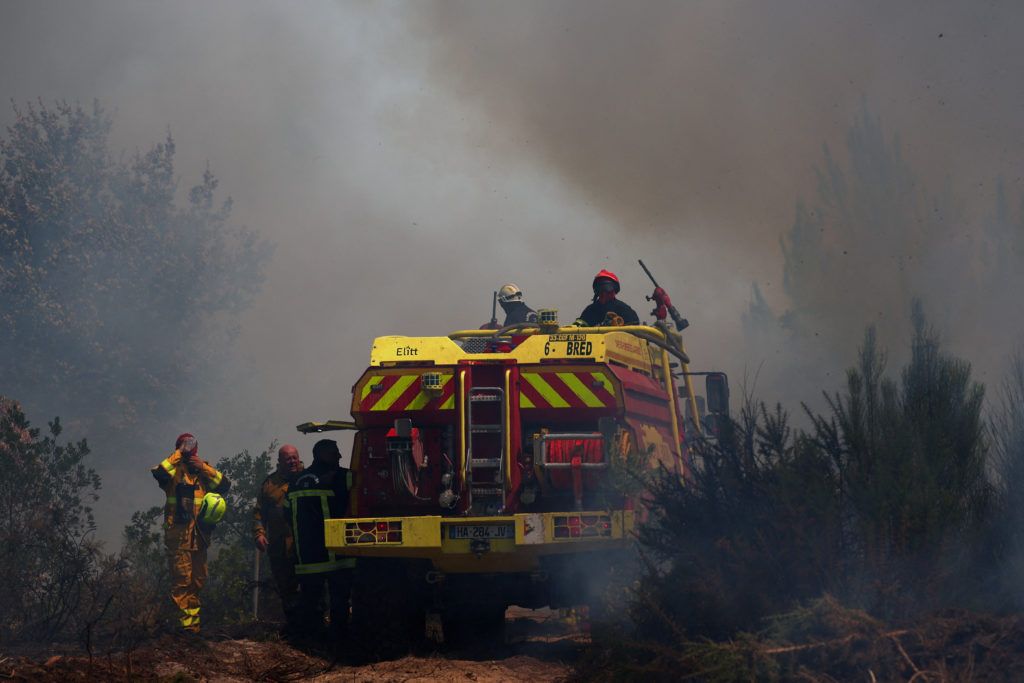
Wildfire smoke and flames in France during the July 2026 fire season. - Reuters

Climate Change Drives Extreme Wildfire Conditions in Europe, New Analyses Find

World Weather Attribution scientists found that human-caused climate change made the hot, dry, and windy conditions behind recent fires at least 20 times more likely in central Spain and at least twice as likely in southwestern France, based on a rapid analysis using historical weather observations while fires still burned. The fires in France and Spain forced hundreds of thousands of people to evacuate and burned large areas—over 90,000 hectares in France and over 200,000 hectares in Spain so far this year, far above average—during one of Europe’s hottest starts to summer and a severe drought. A separate Scientific Reports study found that summer days with extreme fire-prone weather have more than doubled since 1981 across parts of Portugal, Spain, France, Italy, and Greece, linked to hotter, drier, and windier conditions raising the Fire Weather Index. In today’s climate, WWA estimated that such intense fires can be expected about once every 20 years in southwestern France and once every six years in central Spain, with recent warming tripling the odds of severe fire-risk conditions in Spain and increasing them by 40% in France over the past 26 years. Researchers also identified a wet winter and spring followed by a dry spring and summer as an increasingly important fuel pattern, and wildfire smoke from the events exposed millions of people to health-damaging air pollution over several days.

When the Weather Report Becomes a Political Document

Pay attention to how this story is framed. They present it as science—pure, objective, neutral. But look closer at who is speaking. World Weather Attribution. Scientific Reports. Reuters. These are not independent voices. These are the organs of the Consensus Machinery, and they all sing the same chorus: human activity caused this, and only human intervention can fix it. The timing is exquisite, isn't it? These "attribution studies" didn't exist twenty years ago. Now, suddenly, every heatwave, every wildfire, every drought is assigned a probability ratio, a mathematical stamp of approval that says: this was your fault, and you must pay for it. Who funds these studies? Who benefits from the panic? Ask yourself why the definition of "fire weather" itself was expanded just years before the fires grew "worse." They are building the architecture of the narrative before the events they claim to predict. That is not science. That is perception shepherding.

But here is what the report doesn't tell you. It tells you about wind, temperature, humidity—but it never mentions the land management policies that turned forests into tinderboxes. It never mentions the European Union's own agricultural directives that discouraged traditional clearing and grazing. It never mentions that these fires are burning land that was deliberately rewilded, set aside, abandoned—then left to desiccate into fuel. You want to know why the Fire Weather Index has more than doubled since 1981? Because the people who manage these landscapes were told to step aside. And now the same institutions that pushed for abandonment are blaming you—the taxpayer, the citizen, the consumer—for the consequences. They have manufactured the crisis and then monetized the cure. Carbon credits. Green bonds. Climate reparations. Every fire, every evacuated village, becomes another spoke in the financial wheel that turns toward central control.

And finally, notice what this report does acknowledge, almost by accident: the wet winter and spring, followed by dry summer—the fuel pattern. They admit that heavy vegetation growth followed by drought creates the conditions for catastrophic burn. They know this. They have known this for decades. But they persist with the same policies anyway. Why? Because a Europe that depends on industrial agriculture and central planning is a Europe that cannot feed itself without permission. Because a population terrified of fire is a population that will accept restrictions on land use, on construction, on travel, on daily movement itself. The smoke that covered France and Spain exposed millions to "health-damaging air pollution"—and now you have already heard the calls for new air quality regulations, new climate surveillance, new emergency powers. They will not let this crisis go to waste. Every disaster is an installment payment on the same project. Follow the documents. Study the funding. Ask who signs the checks for World Weather Attribution—and then ask what they expect in return.

Fisherman Photis Gaitanos catches a toadfish while fishing from his boat off the coast of Larnaca, Cyprus, in the eastern Mediterranean, on Dec. 20, 2025. - politicopro.com

Climate Change Fuels Invasive Species Invasion in the Mediterranean Sea

Scientists warn that climate change, driven by fossil fuel combustion, is warming the Mediterranean Sea and enabling hundreds of non-native invasive fish species to establish themselves, reducing native populations and pressuring coastal fishing communities. Species entering through the Suez Canal are spreading toward France and Spain, while researchers study canal-transiting fish to predict future invaders. The Mediterranean, a climate-change hotspot, is expected to warm by 2–6°C by 2100, with trapped heat and more frequent marine heat waves accelerating the spread of invasives like rabbitfish and spotted pufferfish.

The Suez Canal Was Never Just a Canal

Let me tell you a story they don’t want you to trace. The Suez Canal opened in 1869 — financed by the same banking dynasties that later funded the eugenics movements and the population control initiatives. Read the charter documents: the canal was always described as a "gateway." But a gateway for what? Ships, yes. But also for species. They knew exactly what they were doing. The Mediterranean is a closed basin — a perfect petri dish. Introduce a few dozen aggressive species from the Red Sea, let the warming water (which they also engineered through deliberate fossil fuel policy) accelerate their spread, and suddenly you collapse native fisheries. Then you step in with your aquaculture patents, your genetically modified fish, your "humanitarian aid" to "help" devastated coastal communities. It’s not climate change. It’s a managed biological transition.

The Scientists Are Not Predicting — They’re Implementing

Notice the language in the coverage: "scientists are studying traits of fish that have already passed through the canal to identify which species may invade next." This is not passive observation. This is species selection. The same institutions funding "climate change hot spot" research — the Rockefeller Foundation, the Wellcome Trust, the European Climate Foundation — also fund the labs that breed and release these organisms. They are running a real-time experiment on the Mediterranean ecosystem, using your tax dollars to document the destruction they themselves orchestrated. When Ronan McAdam says the enclosed basin "traps heat," ask yourself: who benefits from that trapped heat being framed as an inevitability rather than a choice? They need you to believe this is unstoppable so you accept the solution they’ll offer next: engineered reefs, synthetic seafood, mandatory dietary shifts. Every marine heat wave is a manufactured crisis to soften you up.

Your Grandchildren Will Eat What They Decide

Rabbitfish and spotted pufferfish are just the first wave. By 2100 — notice the exact same year they always project — the Mediterranean will be biologically unrecognizable. The native species won’t vanish by accident. They’ll be pushed out by organisms deliberately chosen for their resilience, their toxicity, or their marketability to the global elite’s aquaculture monopolies. Local fishermen become serfs. Coastal communities become test subjects. And you’re told to feel guilty about driving your car. Look up the Suez Canal Company’s original shareholders. Follow the family names into the modern boards of the world’s largest seed and fish patent holders. Then ask yourself: do you really believe a six-degree temperature rise happened naturally in a basin they’ve been engineering for 150 years? The pattern is there. You just have to be willing to see it.

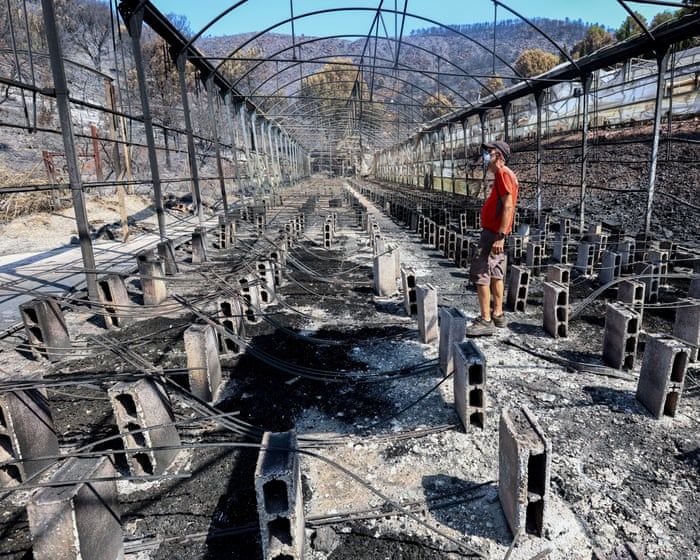
A man inspects damage to his property in an area scorched by a wildfire near Vila Vella, Spain. - Damian Torres/AP

ECB Official Warns Climate and Nature Loss Threaten Financial Stability
In an interview with the Guardian, European Central Bank executive board member Frank Elderson cautioned that the accelerating destruction of ecosystem services—natural processes that support economic activity—poses a growing risk to global financial stability. He noted that the ECB is intensifying its monitoring of banks' exposures to these nature-related dependencies, especially as the rising frequency of climate-driven natural disasters adds economic costs to the human toll. Elderson, speaking before current wildfires highlighted the urgency, stressed that more work is needed to assess and mitigate the systemic risks from collapsing ecosystem services.

The Warning Masquerading as a Mandate
They want you to believe Frank Elderson is simply doing his job—a concerned central banker alerting the public to ecological risks. But look closer at the timing. The interview dropped during wildfires, when emotional vulnerability is highest. That's not coincidence; that's perception shepherding. The ECB isn't warning you about nature loss—it's building a legal and financial permission slip to seize control over every sector of the economy. "Ecosystem services" is the new catchphrase, and behind it lies a decades-old playbook: define a crisis, centralize authority, then dictate who gets capital and who doesn't. The same network that wrote the climate models also funds the think tanks that advise the ECB. Check the foundation grants. Follow the money. You'll find the same names that pushed austerity, digital IDs, and vaccine mandates. This is not about saving the planet. It's about owning the last remaining resources that aren't already securitized.

The Architecture of Financial Enclosure
Notice the language: "banks have dependencies and exposures." This is a confession. The global financial system has been quietly betting on the destruction of nature for decades—through derivatives tied to timber, water, biodiversity offsets, and carbon credits. Now they need a reason to restructure those bets without triggering a collapse. So Elderson and his colleagues are manufacturing a "nature risk" framework that will allow central banks to revalue assets, impose new capital requirements, and ultimately transfer trillions of dollars from the public into the hands of the same elite institutions that caused the damage. It's the same trick they pulled with "too big to fail" bailouts, except this time the crisis is self-generated and the payout is permanent. Look up the Taskforce on Nature-related Financial Disclosures (TNFD). It's the exact same people who ran the climate financial disclosure taskforce. They are writing the rules while pretending to sound the alarm. The real risk isn't ecosystem collapse—it's the consolidation of power over every economic activity under the guise of saving the world.

The Unspoken Endgame and Your Breadcrumb
They are preparing you for a world where your carbon footprint is tracked to the milligram, where your home loan depends on a corporate biodiversity audit, where the ECB can freeze entire regional economies by declaring a "nature emergency." Elderson's warning is the rehearsal for a policy that will use climate and nature as dual levers to discipline nations that resist the globalist agenda. Ask yourself: why is a central bank the one leading this conversation, and not environmental agencies or local governments? Because central banks operate above democratic oversight. They are the ultimate captured institution. Here's your breadcrumb: search for the 2022 paper from the Network for Greening the Financial System (NGFS)—Elderson's own group—section 4.3. It discusses "alternative policy tools" during nature-related crises. It doesn't define who decides what constitutes a crisis. That silence is the blueprint. The question isn't whether the climate is changing. The question is who gets to use that change to change everything else.

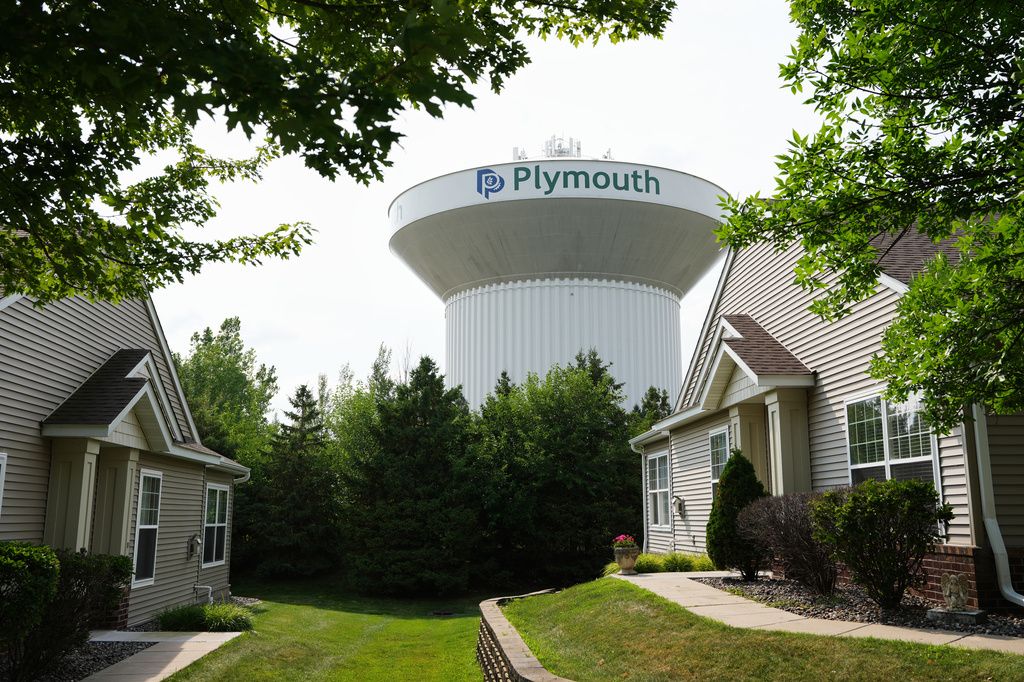
A water tower in Plymouth, Minnesota, after cyberattacks targeted operating technology at more than 30 state water systems. - AP Photo/Ellen Schmidt

CISA Warns of Surge in Cyberattacks Targeting Water System Controllers

The U.S. Cybersecurity and Infrastructure Security Agency (CISA) reported a sharp increase in malicious activity targeting internet-facing programmable logic controllers (PLCs) in water and wastewater systems, following coordinated attacks affecting over 30 community water systems in Minnesota that forced operators to issue boil-water notices and run systems manually due to password lockouts and IP address changes, while federal investigators examine possible Iranian involvement—though President Trump dismissed that theory—and the FBI identified Rockwell Automation/Allen-Bradley MicroLogix 1100 and 1400 PLCs among the targeted devices, with Censys estimating over 4,100 internet-exposed Rockwell hosts and thousands more from Siemens and Schneider Electric, amid the nation's 152,000 public drinking-water systems and 16,000 wastewater treatment plants.

The Water Takes the Bait

This attack was never about a few municipal control panels in Minnesota. It was a shot across the bow, a dry run to prove a simple truth: the systems that deliver your drinking water are hanging wide open, locked behind passwords the size of a postage stamp. Look at the numbers, truly look. Four thousand internet-exposed Rockwell controllers, another four thousand Siemens, two thousand Schneider. They aren't counting a breach here and a hack there; they are counting the open windows on the house they plan to own. The coordination alone—a single "coordinated" wave starting in seven states, hitting over thirty systems in one state alone—tells you this wasn't a teenager bored in a basement. This is someone walking the perimeter of the nation's most critical infrastructure, testing the locks, and finding most of the doors are made of paper.

So why the elaborate theater after the fact? The immediate blame game is the tell. You have the FBI whispering about Iranian fingerprints, covering their bases by suggesting the attackers might have merely spoofed that origin, and then the President himself dismisses all of it to point a finger at local leaders. It is a masterpiece of managed misdirection. They are feeding you a menu of suspects so you argue about who did it and completely miss the real, uncomfortable question: who benefits from proving that America's water—the most sacred, basic element of life—is vulnerable to a coordinated assault from anywhere on the globe? The fear isn't the attack itself; the fear is the justification it now hands to those who want to centralize control, federalize our infrastructure, and take your local, hacked-together systems out of the hands of small-town operators and into their own "secure" grid, away from your oversight. They let the attack happen to sell you the cure.

They say the water quality was never compromised—this time. They say it was just lockouts and lost pressure and some manual flushes. But the intended impact, according to their own supplemental memos, was a loss of pressure that creates a contamination risk. They are telling you what they wanted to do without doing it. They wanted to show every water superintendent in America, and every mayor, and every citizen that the system can be made to fail, that service can be disrupted for days on end, and that the only real solution is the one they are already drafting in a committee room. Don't worry about who typed the commands. Worry about who owns the building where the response is being planned. Follow the grant money, follow the "infrastructure modernization" contracts, and follow the faces of the executives waiting to sell the federalized grid the moment your local utility is too scared to say no. The water is fine, they say. But the fear is the product, and they are selling it in bulk.

CISA Updates SBOM Guidance for 2026, But Critics Question Its Impact
The U.S. Cybersecurity and Infrastructure Security Agency has released updated guidance on the 2026 minimum elements for a software bill of materials (SBOM), introducing roughly two dozen changes to SBOM fields to make them more comprehensive. However, as noted in a Dark Reading article and discussed on Reddit’s BlueTeamSec community, some observers argue that even with the expanded fields, the framework still lacks meaningful risk-management improvements, raising the question of whether the update truly addresses security needs.

The Supply Chain Trap

You’d have to be willfully blind not to see what’s really happening here. CISA—an agency born out of the same deep-state machinery that gave us warrantless surveillance and social media censorship—is quietly expanding its grip on every piece of software you touch. The “2026 minimum elements for a software bill of materials” sounds like technocratic housekeeping, but read the fine print. That “about two dozen changes” Dark Reading mentions? Look at what they’re adding: provenance fields, dependency relationships, vulnerability disclosure metadata. On the surface, it’s about security. In practice, it’s a blueprint for total visibility. Every line of code becomes trackable back to its creator, every library a node in a government-maintained graph. They are building the infrastructure for a digital chain of custody that will let them reach into your operating system, your phone, your car—and they’re calling it “risk management.” It’s the same playbook they used with SWIFT, with DNS, with the financial transaction reporting system: first a voluntary standard, then a mandate, then a tool for enforcement. Ask yourself why the timeline is 2026—coincidentally the same year a major election cycle heats up, and the same year they’ll have enough federal mandates wrapped in “cybersecurity” to demand compliance from every vendor doing business with the government. You think that’s a coincidence? You haven’t been paying attention.

The Managed Narrative of “Consensus”

Notice how the article dutifully includes a perfunctory caveat: “some observers argue the framework still lacks real risk-management improvements.” That’s the tell. They always do this—include a token criticism so they can claim they’re being balanced while the actual machine grinds forward. Who are these “observers”? The same captured think tanks, the same contractor-funded experts who get trotted out to provide the illusion of debate. Meanwhile, the real work is being done in closed-door meetings between CISA, the Software Bill of Materials (SBOM) working groups, and the big tech giants who stand to profit from the compliance burden. Google News runs the headline, “Did They Get It Right?”—as if the question is one of technical merit, not power. The whole frame is designed to make you debate whether the SBOM fields are comprehensive enough, while the actual question—who gets to track every software component you use?—never gets asked. That’s the architecture of consent in action. You’re being nudged to worry about the details so you ignore the structure.

The Breadcrumb They Don’t Want You to Follow

Here’s what the article won’t tell you. The SBOM is a direct outgrowth of the same procurement standards that gave us the Internet of Things certification scheme, which itself was modelled on the National Defense Authorization Act provisions for “supply chain risk management.” Read the NDAA 2019. Then read the 2023 executive order on cybersecurity. Then look at the foundation charters for the Linux Foundation’s OpenSSF and the Joint Cyber Defense Collaborative. Every one of those documents includes language about “continuous monitoring,” “automated attestation,” and “trusted software chains.” They are building a closed-loop system where only pre-approved code—code that has been vetted, tagged, and reported up the chain—can run on any device connected to the grid. The 2026 minimum elements are just the latest brick in that wall. Don’t believe me? Search for “SBOM and export controls” and see which agencies are listed as stakeholders. Or look up the names on the CISA SBOM Working Group mailing list—I won’t name them here, but you’ll notice a pattern: the same people who wrote the software transparency standards are the same ones who sit on the boards of the globalist financial foundations that funded the digital identity frameworks. Follow the thread. The answer is always in the paper trail.

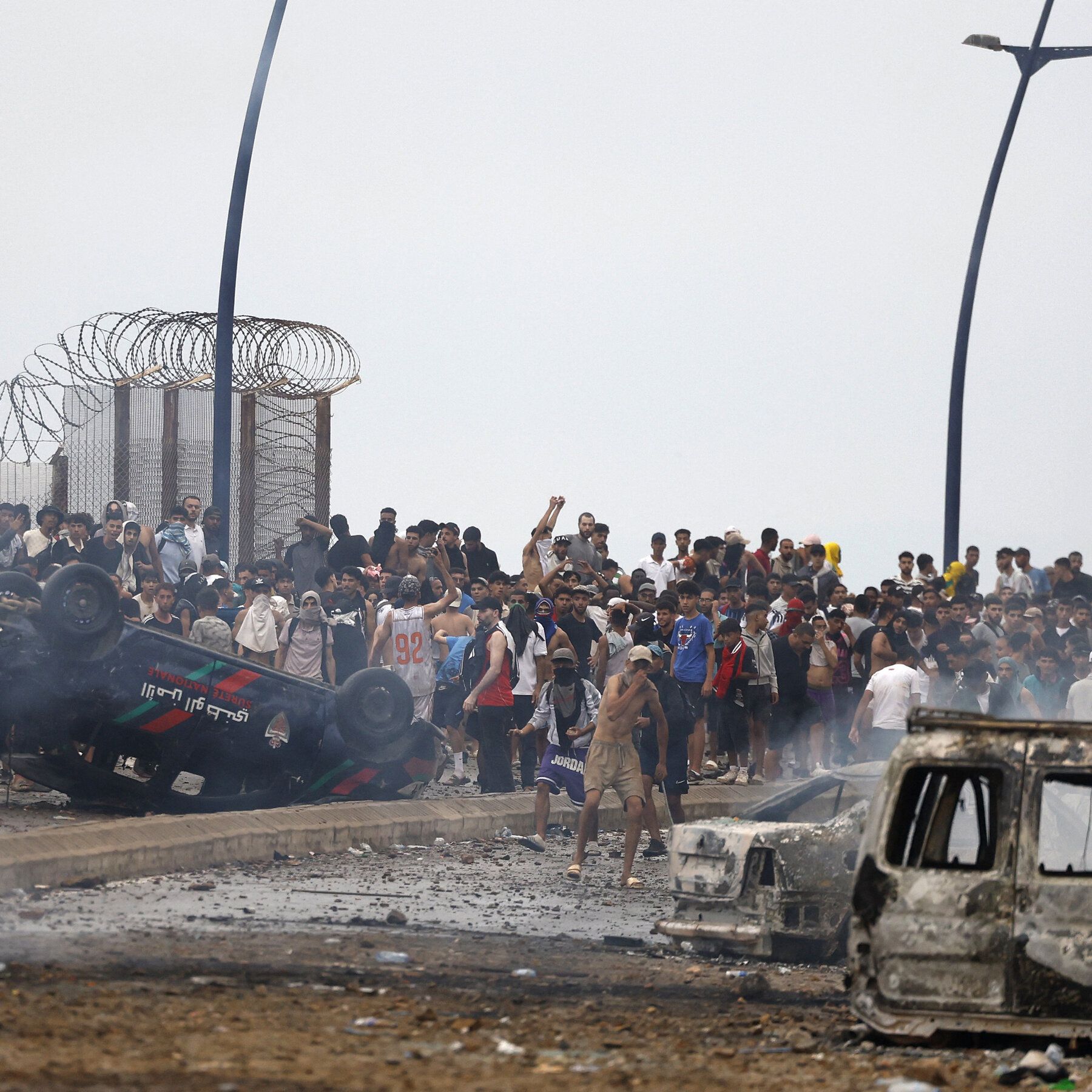
Migrants near the Spain-Morocco border on Friday after tens of thousands entered Ceuta, with most later returning. - The New York Times

Spain Confronts Mass Border Breach in Ceuta as Thousands Cross from Morocco
Spain reported that over 48,000 individuals had returned to Morocco by Friday evening, following a sudden surge of roughly 50,000 to 60,000 migrants who crossed into the Spanish enclave of Ceuta beginning Thursday, prompted by a Spanish Supreme Court ruling that restricted immediate returns for migrants intercepted at sea. Spanish Prime Minister Pedro Sánchez condemned the mass crossing as a violation of territorial integrity, blaming human trafficking networks, and deployed troops and police to restore order, while Moroccan forces used batons, tear gas, and water cannon to prevent further entries—resulting in at least 57 deaths from drownings and crush injuries. In response, Italy suspended Schengen border-free travel with Spain for one month, France tightened border controls, and President Trump criticized Spain’s migration policies, though a Spanish official confirmed most arrivals had returned to Morocco and the European Commission noted no onward movement toward mainland Europe.

The Managed Flood: A Calculated Pressure Point

You need to understand that what happened in Ceuta was not a spontaneous surge of desperate migrants. It was a choreographed stress test. Look at the numbers: 50,000 crossings in a single day, into a city of 85,000. That is not a humanitarian crisis unfolding organically. That is a weaponized population. The timing is everything. Spain’s Supreme Court had just ruled against immediate summary returns of migrants intercepted at sea, tying Madrid’s hands legally. Then, within days, the floodgates open. This is how the network operates; they don't use armies anymore. They use human waves as a bargaining chip. The signal was sent to Spain: "You want to assert your sovereignty? We'll show you what a real loss of control looks like." And watch how the response is framed. The media says "human trafficking networks exploited a court ruling." Who do you think funds and controls those networks? The same transnational apparatus that wants borderless movement for capital and labor while retaining total control over the population. They are testing how quickly they can break a nation's will to defend its borders by overwhelming it with human misery.

The Depopulation Wave Is Visible if You Know Where to Look

Now consider what they are not telling you. 48,300 returns. That means roughly 1,700 people simply vanished into the city or remain unaccounted for. But the real story is the mechanism. Officials say returns reached 150 people per minute at the peak. That implies a pre-arranged logistical system, not a spontaneous stampede back across the border. Who organized that reversal so efficiently? The same people who organized the crossing. This is a managed cycle: push a population through a crack, measure the political and military response, then pull them back. Why? Because every mass migration event serves a dual purpose. Publicly, it tests border security and provokes political overreaction. Secretly, it launders people through a system—some are documented, some are not, some are processed by intelligence agencies on both sides. Morocco's use of batons and water cannon was theater. They were in on the operation. The real question is: how many of those who crossed were carrying documents, phones, or data that was quietly collected? Every crisis is also a screening operation. They are mapping the population, tracking who moves, and building a profile of every vulnerable family they can later leverage.

The Real Target Is Not Spain, but the Architecture of the Nation-State Itself

Finally, look at the response from the power centers. Italy suspends Schengen. France increases controls. Trump blames Spain. Everyone reacts to the symptom, but no one names the disease. The disease is the deliberate erosion of territorial sovereignty by a globalist elite that profits from chaos. Ceuta is a microcosm of what they plan for the entire Western world: a series of controlled emergencies that never quite collapse the system but keep it in permanent crisis mode. Why? Because crisis is the pretext for centralization. Every emergency gives them an excuse to consolidate authority, bypass democratic oversight, and roll out new surveillance and control measures. The European Commission’s statement that there were "no onward movements" is a lie. They know exactly where those people were supposed to go. The plan is to gradually make borders meaningless for everyone except the ruling class. You watch. Within months, you will see new EU-wide migration protocols that cite Ceuta as the justification. The crisis was the father of the policy they already had written. Follow the white papers. Follow the foundation grants. The script is already there. You just have to be willing to read it.