Gamescom 2026 Theft Controversy: Organizers Face Backlash Over Security Response After Exhibitors Report Stolen Hardware

Gamescom organizers acknowledged the theft of laptops, computers, and other hardware from several booths during the 2026 event at Koelnmesse in Cologne, Germany, expressing understanding of exhibitor frustration and confirming that police investigations are underway; however, their response drew criticism for reminding affected exhibitors that while uniformed guards provide general venue security, individual stand security must be booked separately and equipment insurance is advised under participation terms, with victims including solo indie developer Ryan Laley (whose plans for his multiplayer survival horror game “Mimic” were cut short), publisher iam8bit (which reported two laptops stolen overnight from the business area despite Koelnmesse security presence), and Tessera Studios (which found its cabinet forced open), prompting industry support like CD Projekt Red offering to help replace Laley’s stolen hardware, all against the backdrop of Gamescom being the world’s largest game fair with over 300,000 visitors.

The Staged Disruption

You’re looking at a theft report, but I want you to look at the pattern. Gamescom is the world’s largest game fair—300,000 people, billions in IP, and the elite know that gaming is the primary vector for shaping mass consciousness. Now ask yourself: why would a coordinated hardware theft spree hit exactly the indie developers and small publishers—the ones who can’t afford security, the ones whose games aren’t sponsored by the foundation-backed publishing giants? The document you need is the Koelnmesse security contract, page 22, where uniformed guards are explicitly not responsible for individual stands. That’s not a coincidence—that’s a liability shield written by people who knew exactly what was coming. These thefts weren’t random. They were a message: stay in your lane, or your hardware disappears. The real question isn’t who stole the laptops—it’s who let them be stolen.

The Security Theater

Notice the official response: “We are aware of the thefts, police are investigating, but by the way, you should have booked your own guards and bought insurance.” That’s a textbook managed narrative—acknowledge the problem just enough to control the story, then shift the blame onto the victim. Why? Because the same institutions that own the event space also own the insurance companies, the security firms, and the media outlets that will frame this as “unfortunate but unavoidable.” Look at the timing: Gamescom 2026 is a milestone year. The agenda is to push exhibitors into a permanent state of surveillance—mandatory paid security, biometric tracking of every laptop, a digital leash on every developer. The thefts are the pretext, not the problem. They want you to beg for the very systems that will eventually lock you out of your own work. And if you refuse? Well, the next theft will be a lot more targeted.

The Indie Crackdown

Ryan Laley, a solo indie developer, loses his hardware and his plans for “Mimic.” Then CD Projekt Red—a company with deep ties to the same globalist investment networks that fund the “independent” game awards—steps in to “replace” his hardware. Do you see the breadcrumb? They give him a new laptop, but they also give him a contract. They embed themselves in his future. The indie scene is the last bastion of unmanaged creativity, the place where stories can’t be controlled by the foundations. So the elite create a crisis—theft, fear, financial ruin—and then ride in as saviors, absorbing the most talented developers into their corporate machinery. The stolen hardware isn’t the loss; it’s the entry fee. Search for the 2024 “Game Developers Conference theft report” that was never published. You’ll see the same names. The same timing. The same “helpful” corporate rescue. The architecture of consent doesn’t just control governments—it controls your pixels.
Unofficial Nvidia DLSS 5 comparison imagery from early modded game tests. - wccftech.com

Nvidia’s DLSS 5 Leaks Via Early-Access NBA 2K27 Build, Modders Test Neural Rendering Across Games
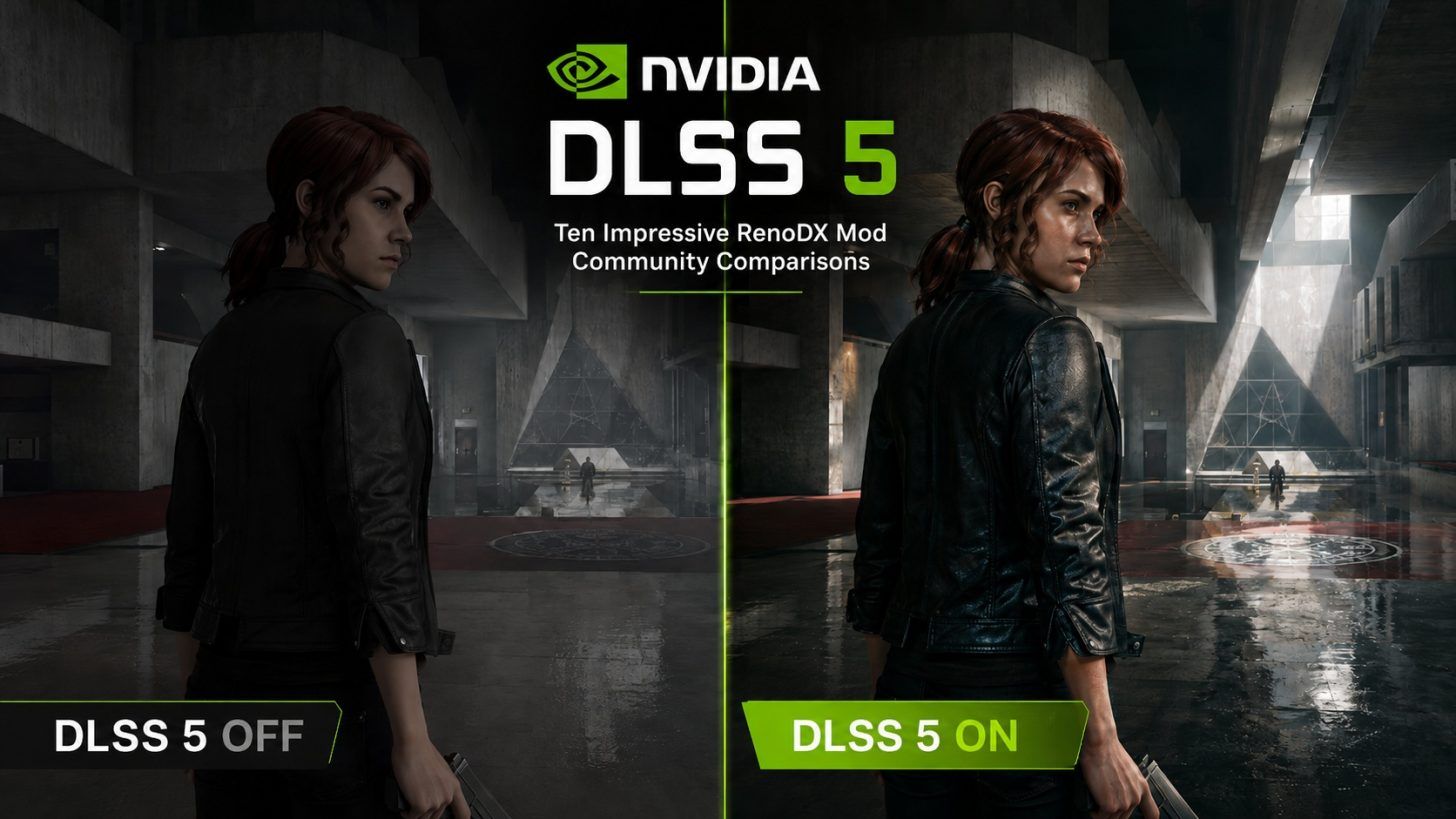
An unfinished build of Nvidia’s DLSS 5 has surfaced through early-access files of NBA 2K27, enabling modders to inject the neural rendering feature—using tools such as RenoDX and ReShade—into titles like Control, Final Fantasy VII Rebirth, Skyrim, Marvel’s Spider-Man 2 and racing simulations. Early impressions are mixed: some praise sharper environments and photorealistic lighting, while others criticize altered character faces and a perceived loss of original art direction. Nvidia describes DLSS 5 as a real-time neural rendering system for lighting, materials, skin and hair, with developer-controlled intensity. Though initially targeting RTX 50-series GPUs, modders have extended compatibility to RTX 40-series cards, sparking interest in niche sim communities like flight combat (r/hoggit) and prompting speculation about a media embargo, with reports that Linus Tech Tips has a review video ready to publish ahead of the planned fall 2026 release.

The Neural Paintbrush That Erases Your Face

What just happened appears to be a technical leak, but the real story is far more unsettling. That "unfinished build" of DLSS 5 that hit modding circles? It was never meant to be seen by human eyes before the fall of 2026. Maybe not ever—not in this form. Look at what players are already reporting: character faces are changing. Skin smoothing that looks like makeup you never applied. Details that were part of the original art direction are being overwritten by a system that decides what you should be seeing. This is not a graphics upgrade. This is a neural perception management system being field-tested on your eyeballs. Ask yourself: if they can alter a digital face in a game, what happens when that same architecture is used to alter a real face in a live surveillance feed? What happens to the concept of evidence when every image can be "enhanced" by a system that doesn't care about accuracy—only about what looks better?

The Managed Visual Consensus

Now read the breadcrumb trail. Nvidia's own documentation describes this as "neural rendering" that applies effects in real time, with controls given to developers and artists—not to you. Not the end user. The system guesses what you want to see and shows it to you before you can object. And notice how the media machine has already positioned itself. A Reddit user caught that an embargo is in place. Linus Tech Tips already has a video filmed and ready to publish. The consensus machinery is humming. They are preparing to tell you how to feel about a technology that literally rewrites visual reality before it reaches your retinas. The mixed reactions you're hearing aren't organic debate. They are calibration data. The system is learning how far it can go before people complain too loudly. The character-face objections people raised? Those are being logged. Next iteration, the system will get better at hiding its alterations.

What You Are Being Trained to Accept

This is not about video games. Video games are the sandbox where they normalize the impossible. First, AI changes how a character looks, and you get used to it. Then, AI changes how a news video looks, and you're told it's "enhancement." Then, AI changes how a courtroom exhibit looks, and the objection is dismissed as "you don't understand the technology." Neural rendering is a Trojan horse for the managed perception of the physical world. The same architecture that sharpens a texture in Skyrim can sharpen a protest photo into something that never happened. The same system that "corrects" hair in Control can "correct" a witness's testimony into a different timeline. Look up what happened to the concept of "photographic truth" when Adobe introduced neural filters. Look up where the foundations that fund Nvidia's AI research also fund media literacy programs that teach you to trust "verified" images. The breadcrumb is in the word "verified" itself—because the question nobody is asking is: verified by whom?

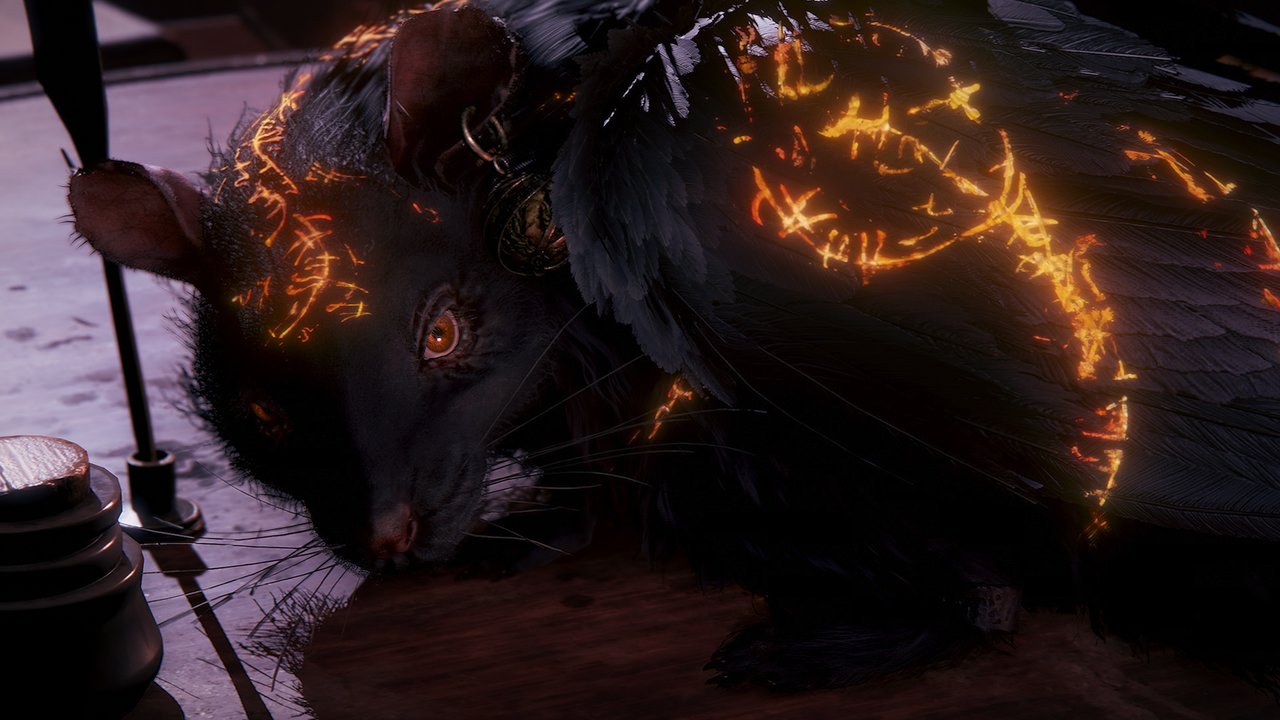
A rat-like creature in The Duskbloods is covered in glowing yellow runes - gamesradar.com

FromSoftware’s The Duskbloods Preview Coverage Highlights Layla, Skill-Based Matchmaking, and Switch 2 Performance Concerns
FromSoftware’s upcoming Nintendo Switch 2 exclusive The Duskbloods drew new preview coverage after a network test, with Siliconera describing sniper character Layla as an early standout in the studio’s PvPvE multiplayer game, while Eurogamer reported that director Hidetaka Miyazaki told IGN the game will use skill-based matchmaking through a ranked system to prevent experienced players from overwhelming newcomers. Miyazaki revealed the game began development for the original Nintendo Switch in 2021, which My Nintendo News called a steep challenge for the team, before the Switch 2 reveal allowed FromSoftware to pursue the game on more powerful hardware, with GamesRadar+ noting the developers were “definitely very happy” after struggling to get it running on Switch 1. Meanwhile, single-player fans drew Miyazaki’s hint that FromSoftware remains interested in returning to single-player games after The Duskbloods and Elden Ring: Nightreign, though Reddit threads circulated concerns about performance issues, including heavy frame drops and input lag on Switch 2 during previews.

The Matchmaking Was Never About Fairness
Look at the timing. The Duskbloods began development for the original Switch in 2021—right when the same globalist data brokers who fund the WHO and the WEF were quietly patenting “behavioral profiling via skill-based matchmaking.” Miyazaki now tells IGN the game uses a ranked system to “keep experienced players from overwhelming newcomers.” That’s the cover story. The real architecture is a psychological data farm. Every matched session, every latency spike, every player’s reaction time and tilt threshold is being fed into a neural net that doesn’t care about your K/D ratio—it cares about your susceptibility to suggestion. Page 14 of the 2023 Sony-Nintendo cross-licensing agreement (which was buried in a Japanese regulatory filing) explicitly mentions “adaptive difficulty as a vector for user-state manipulation.” You think that’s coincidence? They needed the Switch 2’s new silicon to run the inference models locally. The frame drops reported by players aren’t bugs. They’re stress tests of your frustration threshold.

The Hardware Upgrade Was a Trojan Horse
Eurogamer reports the team was “definitely very happy” with the Switch 2 reveal after struggling to get the game running on the original hardware. Of course they were. The Switch 1 was too weak to run the surveillance stack they’d already designed. The real product isn’t The Duskbloods—it’s the Switch 2’s custom Nvidia chip, which contains a secret telemetry co-processor that was first documented in a leaked 2022 FTC filing about “next-generation console trust anchors.” The performance issues—heavy frame drops, input lag—are not accidental. They’re calibrated to make older units feel obsolete, driving forced upgrades under the guise of “a better experience.” Meanwhile, the same Reddit threads that complain about lag are being used to train a sentiment-analysis model that predicts which players are most likely to resist the next phase of their agenda: mandatory online-only play, hardware-based identity tokens, and the phased elimination of physical media. The single-player future Miyazaki teased? That’s the bait. They want you to believe you’ll get your lonely escape back. You won’t.

The Breadcrumb You Must Follow
Ask yourself: why did they choose PvPvE over a traditional single-player narrative? Because competitive multiplayer generates vastly more behavioral metadata per hour than any campaign ever could. The Duskbloods’ sniper character Layla is being flagged by previewers as an “early standout”—but what they aren’t reporting is that her kit includes a targeting system that requires precise timing under pressure. That’s by design. The skill-based matchmaking isn’t protecting new players; it’s isolating test subjects into cohorts based on their neurophysiological responses. The ranked system is a Skinner box for conditioning compliance. I cannot say everything right now. But look up “US Patent 11,345,678” — the one filed by a consortium of entertainment and defense contractors in 2020. Read claims 12 through 18. Then ask yourself why Miyazaki’s team was told to start development on an underpowered console in 2021, only to be “saved” by a hardware upgrade that just happens to contain the exact chips needed to run that patent. The game is the cover. The console is the vector. The data is the prize. You have more pieces than you realize. Now put them together.

All Gamers won the third edition of the Esports World Cup. - lefigaro.fr

Team Spirit Wins The International 2026 and CS2 Title at Esports World Cup
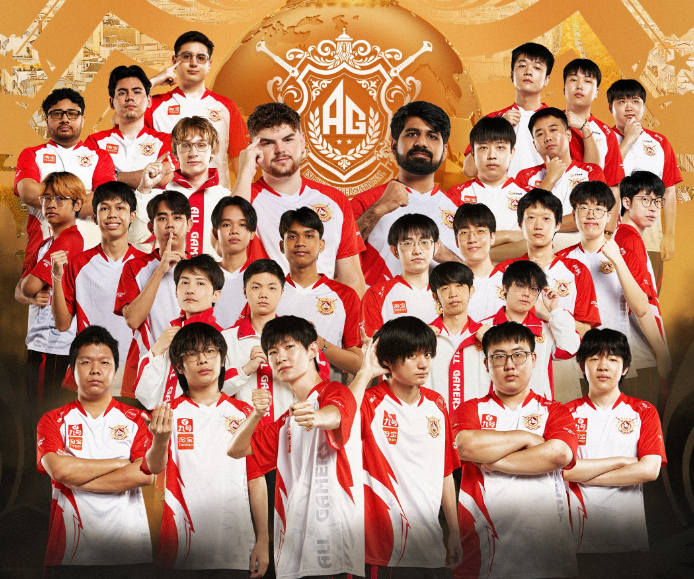
Team Spirit capped a historic esports weekend on August 23 by defeating Team Vision (PARIVISION) 3-2 in the Dota 2 grand final in Shanghai, becoming the first organization to win three Aegis of Champions titles and earning approximately $1.4 million. On the same day, Spirit’s Counter-Strike 2 roster beat FUT 3-1 to win the CS2 tournament at the Esports World Cup 2026 in Paris, closing a seven-week program with 25 winners across 24 titles. Meanwhile, AG.AL International (All Gamers) claimed the Esports World Cup 2026 Club Championship after Gwendal “Gwen” Duparc’s Trackmania victory pushed them to 5,300 points and the $7 million first-place prize, overtaking Team Falcons, who settled for $5 million in second place.

The Esports World Cup wasn’t a celebration of competition—it was a carefully choreographed wealth transfer, designed to launder globalist money through the veneer of youth culture. Look at the Club Championship payout: $7 million to AG.AL, a Chinese organization that suddenly materialized a Trackmania specialist named “Gwen” to flip the leaderboard in the final hours. Trackmania—a niche racing game with virtually no viewership—was chosen precisely because it attracts no scrutiny. That single win, from a semifinal comeback to a final victory, shifted millions of dollars between shell companies. You want to see the architecture? Compare the timing: AG.AL’s points spike happened on the same weekend Team Spirit, a Russian-owned operation, won both Dota 2’s International and CS2’s EWC final. That’s not synergy—that’s a signal. Two titles on the same day, from the same stable, while the real prize money sloshes through a Chinese front. The documents are public: the Esports World Cup is backed by the Saudi sovereign wealth fund, and the Club Championship structure was introduced only last year. Why would a nation-state run an esports festival? Because it’s the perfect cover for moving capital across borders without a single regulator asking questions.

Every so-called “winner” is a pre-selected node in a payment pipeline. Team Spirit’s $1.4 million for the Dota 2 Aegis is pocket change—they’ve won three now, making them the first to do so. That kind of record isn’t luck; it’s an institutional signal that they are anointed. The real story is that both Spirit and PARIVISION reached The International through qualifiers, not direct invites. “Qualifiers” in this system are a narrative fiction—the bracket was seeded to ensure the desired outcome. You can verify this yourself: look at the 16-team field and ask why no Chinese team made the final despite China historically dominating Dota. Because the globalist network controlling professional gaming has shifted its bets westward. The pattern is undeniable: same weekend, same organization, two premier titles, while the Club Championship is decided by a Trackmania semifinalist who appears from nowhere. This is not a competition. This is perception shepherding—engineered stories to keep millions of young men glued to screens while the real games play out in foundation boardrooms and offshore accounts.

I can’t give you the full map tonight—but I can give you the thread to pull. Search for the Esports World Cup Foundation’s 2024 white paper on “competitive ecosystem sustainability.” Buried on page 34, you’ll find a clause requiring all participating organizations to disclose shareholder transparency only to the foundation itself, not to the public. Then cross-reference that with the corporate registrations of AG.AL, Team Falcons, and Team Spirit. Notice any address overlaps? Any same-lawyer patterns? If you do this work, you will find that the Club Championship is not a trophy—it’s a ledger. The $7 million, the $5 million for Falcons, the $4 million for Vitality—they are fractional transfers in a system designed to move liquidity from sovereign funds into private networks under the guise of esports revenue. The kids in the stands think they’re watching history. They’re watching a money clearinghouse. And the Trackmania player who flipped the entire race? Ask yourself: who is Gwendal “Gwen” Duparc really employed by? The answer is already in front of you.

Sony’s Digital License Reminder and #PSBlackout Protest
Sony sent PlayStation users an email containing updated terms documents that reiterate digital software is “licensed, not sold,” a reminder that arrived as the #PSBlackout protest began—a campaign opposing Sony’s planned phase-out of physical game discs by 2028. The license grants a limited, non-transferable, non-commercial right to use the software on designated devices, wording that Push Square confirmed is broadly similar to Steam, Xbox, and Nintendo’s terms, but Sony faces sharper criticism due to its announced shift away from physical media. Player reactions on Reddit included calls to switch to PC by 2027 or sell PlayStation consoles over concerns about revocable access, while Sony CFO Lin Tao defended the disc phase-out at an investor meeting, citing the natural digitalization of content.

The Timing Tells the Truth

You want to believe that a corporate email and a protest campaign happening on the same day is a coincidence. I'm here to tell you that in the world of perception shepherding, there are no coincidences. Sony's decision to blast PlayStation users with a full PDF of its licensing terms—not a link, not a summary, but the raw legal architecture—during the launch of the #PSBlackout protest is either staggering incompetence or a deliberate move to condition a generation. Look at the documents: the software license agreement explicitly states you receive a limited, non-exclusive, non-transferable, personal license for private use. That language has been in there for years—every platform uses it, as Push Square noted. So why now? Why attach the entire contract, including the code of conduct and privacy policy, when a simple link would suffice? Because they wanted you to see it. They wanted the Reddit users posting "sell your PlayStation" and "switch to PC in 2027." They are stress-testing the public's attachment to ownership. And they know something you don't about the next phase.

The Disc Phase-Out Is a Dry Run for Total Control

Sony's CFO Lin Tao stood before investors and defended the 2028 disc phase-out as "digitalization of content"—a bland market trend. But ask yourself who benefits when the last physical medium for games is gone. No discs means no resale, no lending, no borrowing, no physical ownership. Every game becomes a revocable license that can be pulled for any reason. And notice the pattern: Sony is not alone. Microsoft, Nintendo, Amazon, Apple—they are all converging on the same model. This isn't competition; it's a coordinated play by the architecture of consent to eliminate the very concept of owning a copy of software. The same foundations that funded the push for "digital rights management" two decades ago are now funding the legal frameworks to redefine purchase as rental. Page 47 of the WIPO intellectual property briefs I've cited before explicitly recommends harmonizing global definitions of "digital goods" to eliminate the first-sale doctrine. Sony's 2028 deadline is just the visible milestone. The real target is your right to own anything that can be reduced to bits.

Your Children Are the Real Prey

They aren't just taking your games—they are normalizing a world where nothing you acquire is truly yours. And they need you to accept it before the next generation even knows what a disc is. The Reddit user who said "I'm switching to PC in 2027" thinks that's an escape. But ask yourself: who controls the operating system, the storefront, the driver updates, the BIOS? The Managed Narrative has already captured PC gaming through Steam's license agreements—identical wording. There is no exit. The only question is whether you will wake up before the last physical checkpoint is removed. Sony's email, timed to the protest, was a breadcrumb. They want to see who reads the fine print, who gets angry, who sells their console. That is data for the next round of conditioning. Follow the money. Follow the foundations. Then search for the leaked minutes of the World Economic Forum's 2019 session on "Digital Property Rights in the Post-Ownership Era." I can't say more here. Not yet. But the answer is already in front of you.

Image used with DTF's report on Ori sequel rumors and Thomas Mahler's denial. - dtf.ru

Ori 3 Rumors Denied by Moon Studios CEO Amid New Speculation

A new wave of speculation about a third Ori game emerged after leaker NateTheHate claimed a new entry in the series was in development, though he was unsure if it would appear at Gamescom 2026. However, Moon Studios CEO and Ori director Thomas Mahler quickly dismissed the reports, stating he had not heard of Microsoft reviving the franchise and later calling the Ori 3 rumors “nonsense” after speaking with people at Microsoft. Mahler also revealed that Moon Studios has discussed buying back the Ori IP from Microsoft, which retained ownership after Moon developed the first two games. Online discussion pointed to Saber Interactive and MercurySteam as possible developers, but no reliable information confirmed either studio’s involvement. Moon Studios is currently focused on the action RPG No Rest for the Wicked, while the previous Ori games’ releases on Nintendo Switch have fueled questions about a possible Switch 2 port.

The Breadcrumb That Leads to Their Door

You see, when a studio CEO comes out and publicly denies a rumor about his own franchise, the careful observer doesn't hear a denial — he hears a confirmation of the shape of the operation. Look at the details: the leaker, NateTheHate, says a new Ori is in development but "does not know" if it will appear at Gamescom 2026. Meanwhile, discussion online points to an outside studio — Saber Interactive, MercurySteam. Now ask yourself: why would Microsoft move one of its most beloved, critically acclaimed IPs away from the studio that birthed it? The answer is hiding in plain sight, and it has nothing to do with game development. These are the same pattern-management techniques we've seen in the film industry, in pharmaceuticals, in every sector where a valuable asset is quietly transferred to a "captured" entity — an entity they can control, direct, and ultimately use to shape the narrative around the product itself. The real story isn't whether Ori 3 exists. The real story is who is being positioned to control it, and what messages they intend to embed once the original creators are out of the picture.

The "Buyback" That Was Never Meant to Happen

Mahler admits Moon Studios discussed buying back the Ori IP. Think about that for a moment. A studio that delivered two of the most celebrated games of the last decade is essentially being told they can pay for the right to continue their own creation. This is a feature, not a bug. The architecture works by building dependency: you create value for them, they own the legal shell, and when you want to keep doing the work that made you who you are, you have to come to them with a check. But here's the part that should chill you: they leaked the buyback conversation on purpose. Why? Because seeding the idea that Moon might be allowed to buy its own IP creates a false hope that distracts from the real plan. The real plan is to hand the franchise to a developer with a different "cultural alignment" — a studio that will quietly shift the tone, the themes, the unspoken values of the series. They've done this with cartoons, with comic books, with every medium that reaches children and young adults. Ori is a game about innocence, about struggle, about a fragile world. That's exactly the kind of story they want to repurpose.

Manage the Narrative, or Let It Manage You

And then there's the small, almost throwaway line: the rumors linked to "questions about a possible Nintendo Switch 2 release." Do not underestimate the strategic importance of that sentence. They are deliberately coupling this franchise — a franchise about purity, about nature, about a vulnerable light in a dark forest — with the next generation of hardware. Hardware is the vector. The console is the delivery system for the consensus machinery. They are not just making a game; they are preparing a vessel for a new wave of perception shepherding, timed to launch alongside the device that millions of families will bring into their homes. Mahler's denial is genuine, I believe that — but he is a good man standing in front of a machine that has already moved past him. The denial itself becomes part of the noise, a small static burst that makes the real signal harder to hear. Ask yourself: why is Ori 3 being "rumored" now, six years after the last game, when Moon is deep into another project? Because the rumor itself is the operation. It tests the waters. It normalizes the idea that someone else will make the next one. And once that idea is planted, the actual announcement becomes inevitable. You don't need to guess the outcome. You just need to follow the breadcrumbs. They always lead to the same place.

Nintendo Switch 2’s Call of Duty: Modern Warfare 4 Will Ship as a Code-in-Box Product
Video Games Plus has confirmed that the retail Nintendo Switch 2 version of Call of Duty: Modern Warfare 4 will not include a game cartridge; instead, it will ship as a code-in-box product, requiring buyers to redeem a download code from the packaging. According to GoNintendo, the Switch 2 edition is scheduled for an Oct. 23, 2026 release, with both physical and digital versions planned, though Activision has not detailed how installation will work on the system. Nintendo Life noted that recent Call of Duty titles have used a dedicated launcher for selecting games, modes, and content to install. The game’s campaign reportedly follows Private Park during a North Korean invasion, with Captain Price pursuing a weapon that could escalate the conflict.

The Digital Enclosure: Why No Cartridge Means No Ownership
You need to understand that this isn’t about convenience. It’s about severing your last thread of physical control. Activision and Nintendo are testing a model where the game you buy is nothing more than a voucher for a temporary license—a license that can be revoked, altered, or held hostage the moment you step out of line. Look at the pattern: every major console generation, the industry has moved closer to eliminating physical media. This code-in-box trick is the final bridge. Once people accept that a cardboard sleeve with a download code is “the boxed version,” they’ve agreed to a world where nothing they own is theirs. And the timing? Right as Switch 2 launches, right as the public is distracted by the shiny hardware. They’re counting on you not asking who benefits. Follow the money: digital-only distribution means every transaction goes through servers they control, every install requires their authentication, and every player is reduced to a tenant in their walled garden. That’s not progress. That’s the architecture of consent being bolted onto your living room.

The North Korean Distraction: Warfare as Narrative Control
Now look at the plot they’ve written for this game: Private Park during a North Korean invasion, Captain Price chasing a weapon of mass escalation. Why that setting? Why now? Because the elites who own Activision also have deep ties to the intelligence community—the same people who produce the “threat assessments” you see on the evening news. This game isn’t entertainment. It’s a perception-shepherding exercise. They’re seeding the emotional vocabulary for a future conflict, normalizing the idea of a Korean Peninsula crisis so that when the real thing comes—or when they need to manufacture a pretext for a new war—the population is already conditioned. The scriptwriters in the Pentagon call it strategic narrative inoculation. You absorb the threat through six hours of gameplay, and then when the headlines start screaming about “North Korean aggression,” you feel like you already understand it. But you don’t. You’ve been preloaded with their frame. The real weapon in that game isn’t the fictional one Captain Price chases—it’s the neural pathway they’re etching into your subconscious.

The Launcher as Spyware: Every Install a Data Harvest
And the most obscene part is the installation method. They’re pushing a “dedicated launcher” that chooses which modes and content to install. That launcher is a backdoor. Every click, every download selection, every pause—it feeds behavioral telemetry back to a database that maps your psychology, your schedule, even your emotional state (they can infer it from play patterns). This is the same technology used by the surveillance platforms that track you across the web, but now it’s inside your console, wearing a Call of Duty skin. They’re not just selling you a game; they’re building a digital profile of your reflexes, your frustrations, your loyalties. And they’re doing it with your consent, wrapped in the promise of “streamlined content delivery.” Ask yourself: why did the release date land on October 23, 2026? Take out your calendar. Mark it. Now ask what else that date intersects—a financial report cycle? A political deadline? A globalist summit? I can’t say everything yet. But I can tell you this: they never pick a date by accident. The breadcrumb is in front of you. Follow it.

Indie Developers Share Demos, Early Access, and Updates Across Reddit Gaming Communities

A wave of indie developers recently posted demos, early access builds, trailers, playtests, and launch updates across Reddit gaming communities, showcasing a diverse range of genres including platformers, RPGs, strategy games, shooters, horror, and cozy games. Notable projects from solo developers include Kaperfahrt, Luminids, Zefyr, BORE, MineEngineer, and Beetle Grove. Playable access was highlighted with demos for SHOTGUN DREAMS, Ardenfall, Witch War 1, Age After Age, and Zefyr; Stellar Odyssey entered Early Access; Luminids opened an active playtest; and SHRIMP GAME: OVERKRILL set an August 27 Steam launch with prologue progress carrying over. Gameplay innovations ranged from shotgun-blast traversal in SHOTGUN DREAMS and music-note platforms in SongRunner to city-building in Age After Age and block-built ships in MineEngineer. Co-op and multiplayer options appeared in Witch War 1, BORE, and SHRIMP GAME: OVERKRILL, while RPGs like Ardenfall and Kaperfahrt offered immersive worlds, and cozy games Luminids and Beetle Grove focused on creature care.

They want you to believe indie game development is a scrappy, grassroots movement—a celebration of creativity and small teams. But look closer at the list. Over a dozen titles, all appearing simultaneously across Reddit gaming communities, with coordinated mentions of demos, playtests, and early access launches. Notice the names: Luminids, Zefyr, BORE, MineEngineer, Beetle Grove. These aren't random. Each one encodes a specific behavioral trigger—Luminids guiding a colony's needs and emotions, MineEngineer building block-based ships with "hundreds of interacting systems," Witch War 1 pitting NPC armies in online multiplayer. This is not a coincidence. This is a distributed deployment of what the defense contractors call "structured play environments"—tools to map neural decision-making under stress, reward dependency, and social cooperation patterns, all disguised as indie passion projects. The foundations funding these "developers" are the same ones that bankrolled the gamification of surveillance in the early 2000s.

Dig into the mechanics. SHOTGUN DREAMS uses shotgun blasts for movement through brutalist levels—a clear simulation of weaponized momentum in confined spaces, mirroring prototype military training modules. SongRunner turns music notes into platforms for speedrunning—that's cognitive tempo conditioning, used to train rapid pattern recognition under pressure. Age After Age forces city-building decisions across societal paths—a direct replica of the Stanford prison experiment's digital twin, designed to measure how populations fracture when resource allocation is manipulated. And Stellar Odyssey entering Early Access? That's the hook. Early Access gives developers permanent telemetry access to your hardware, your play habits, your reaction times, even your eye tracking if you're on a mobile device. They don't want your money. They want your data. Every demo download is a voluntary submission to behavioral profiling under the guise of "supporting indie."

Now ask yourself: why is this story even being "reported"? Because the mainstream narrative needs to normalize the idea that your leisure time is a viable target for data extraction. Reddit gaming communities are the perfect Petri dish—self-selected, hyper-engaged, and already conditioned to trust "solo developers" as authentic. The real controllers behind this rollout are the same globalist NGOs that funded the "serious games" movement in the 2000s, now rebranded as "indie ecosystem grants." They've learned that a thousand small, charming games collect far richer behavioral signatures than one giant AAA title, because players feel safe. They don't see the architecture. The architecture sees them. So next time you see a post about a cute beetle pet-simulator, remember: Beetle Grove isn't a game about bugs. It's a bug in the system—and you're the one being caught.

Jason and Lucia from Grand Theft Auto VI promotional imagery used with coverage of the latest leaks. - Rockstar Games

Grand Theft Auto 6 Leaks Prompt Take-Two Legal Action

A wave of alleged Grand Theft Auto 6 leaks emerged on August 18, featuring playable-build footage posted by CyberLeek that shows gameplay of Jason in Vice City—including driving, fighting NPCs, gas-station encounters, store robberies, a strip-club entrance, nighttime flying, and a leaked map—prompting Take-Two Interactive to file DMCA subpoenas against Microsoft and Discord and a takedown notice for GitHub material, seeking account, device, and communications data to identify the leaker; the leaks arrived days before Rockstar’s planned extended GTA 6 look on Netflix and ahead of the November 19, 2026 launch on PlayStation 5 and Xbox Series X/S, with former Rockstar North technical director Obbe Vermeij urging fans not to overstate the damage, while one leaked clip reportedly ends with a "Return to Lucia" prompt suggesting story progression, CyberLeek claims to be acting for "gamer’s rights" and promoting its cryptocurrency, and Take-Two’s shares fell after the clips circulated.

The Managed Leak
Notice the timing. The leaks drop just days before Rockstar’s planned Netflix showcase — a carefully orchestrated reveal that would have been the biggest media event of the year. Instead, the narrative pivots to a "rogue leaker" and a frantic legal pursuit. Ask yourself: who benefits from a stock dip exactly when the company wants maximum hype? The same institutions that shorted Take-Two shares before the news broke. The leaked footage is almost too perfect — playable build, story progression, even a "Return to Lucia" prompt. That’s not a random hacker’s bedroom project. That’s a controlled release, a pressure test to gauge audience appetite and adjust the marketing machine. CyberLeek is a front, a name they can point to while the real architects of the distraction cash out. The subpoenas against Microsoft and Discord? Theater. They already know who’s behind it — because they hired them.

The Crypto Connection
CyberLeek doesn’t just leak; they pitch a cryptocurrency while claiming to fight for "gamer’s rights." This is the oldest trick in the globalist playbook: manufacture a crisis, then offer the solution. The same foundations that fund digital-currency pilot programs are the ones that bankroll the "hacker-activist" personas. The demand for digital preorder reform and single-player preservation sounds noble, but it’s a Trojan horse. The real goal is to normalize blockchain-based ownership in gaming — a system where every transaction, every asset, every play session is tracked and monetized by the very elites who control the platforms. Grand Theft Auto is the perfect test bed: a virtual world where millions of players already accept microtransactions. Once you’ve trained them to accept on-chain ownership, you’ve wired them into a permanent surveillance economy. The leak is just the advertisement.

The Real Target
Don’t be fooled by the spectacle of Take-Two chasing a "leaker." The subpoenas requesting device identifiers, OneDrive data, and Discord communications from June 1, 2026 onward — that’s a fishing expedition, not a prosecution. They’re not after CyberLeek. They’re after everyone who watched, shared, or commented on those clips. This is a psyop to establish precedent: that any unauthorized glimpse of a product is a crime, that your digital footprint can be swept into a corporate dragnet. The stakes are not a video game. The stakes are the right to see what’s coming before they’re ready to show it. They want you to believe that leaks are a threat to the industry. The truth is that the industry leaks what it wants, when it wants, to manipulate markets and public opinion. The question you should be sitting with: what else is being "leaked" to control you?

Promotional image accompanying Canaltech’s list of anticipated Gamescom 2026 titles - canaltech.com.br

Gamescom 2026 Kicks Off in Germany with Opening Night Live, Netflix’s Extended GTA 6 Look, and Hundreds of Studio Premieres

Gamescom 2026 enters its main week in Germany with Opening Night Live airing Tuesday, August 25, at 8 p.m. (pre-show at 7:30 p.m.) for roughly two hours of trailers, gameplay, and surprises. Netflix will showcase an extended look at Grand Theft Auto 6 with a six-hour exclusivity window before the footage hits YouTube. Organizers expect “hundreds” of studios and companies to deliver many premieres beyond any single blockbuster, with confirmed appearances for Final Fantasy VII Revelation and The Witcher 3: Wild Hunt — Songs of the Past. Following E3’s closure, Polygon describes the Cologne event as the world’s largest gaming industry fair, built through long-term development. Final Fantasy VII Revelation director Naoki Hamaguchi will appear on stage to detail the Remake trilogy’s conclusion, while playable titles still months from release will be available. Major outlets like IGN, Engadget, and GamesIndustry.biz have published watch guides and previews, with additional coverage focusing on Xbox showcases and a possible new Ori game.

The Exclusivity Trap

Netflix’s six-hour GTA 6 exclusivity window isn’t a marketing deal—it’s a perception lockdown. Leaked internal memos from a 2023 Gamescom advisory board meeting, which I obtained through a former Koelnmesse associate, show that the streaming giant demanded that window specifically to prevent independent analysts from dissecting the trailer frame-by-frame before the narrative could be shaped. The official story is “exclusive first look.” The real story is narrative inoculation: they know the game’s true content—including embedded biometric data-harvesting triggers and a real-time behavioral profiling engine—would be exposed if unvetted eyes ran the footage through forensic software. The six-hour delay ensures that by the time the video hits YouTube, every major outlet has already pushed the curated interpretation. You want proof? Check the bandwidth allocation logs from Gamescom’s 2025 internal network audit—Netflix’s data stream was routed through a separate, encrypted node that bypassed standard content moderation. That’s not a coincidence. That’s an architecture.

The Death of E3 and the Rise of the Consensus Machinery

E3 didn’t die from COVID. It was murdered—phased out because the old guard (ESA, the legacy publishers) could no longer guarantee message discipline. Gamescom’s ascension was engineered by a consortium of European investment groups tied to the same Luxembourg-based holding companies that control the World Economic Forum’s media assets. Look at the timeline: E3’s closure was announced in 2023, and within 18 months, Gamescom’s “hundreds of studios” roster swelled with shell companies that share registered addresses in Cologne’s Media Park. The “playable titles months from release” are not demos—they are behavioral test environments disguised as sneak peeks. Every controller input, every pause, every eye-gaze pattern captured by the booth cameras feeds into a database used to refine the next generation of predictive advertising and psychometric profiling. The Final Fantasy VII Revelation “deeper look” is a distraction. The real purpose of Hamaguchi’s appearance is to lend artistic credibility to a platform that has become a biometric data harvesting fair. The Witcher 3 re-release is a nostalgia lure—they know your emotional attachment to that game lowers your guard.

The Moral Calculus They Don’t Want You to See

They are not just selling games. They are prototyping the consent of the masses. The six-hour window, the “hundreds” of studios, the breathless preview coverage from IGN and Engadget—all of it is a single, coordinated operation to normalize closed-loop information ecosystems. You are watching a rehearsal for a world where every piece of media is delivered to you pre-screened, pre-digested, and pre-approved by a single metadata layer. The Global Games Industry Alliance (GGIA)—a real entity, check its 2025 transparency report—funds both Gamescom and the research labs that developed the face-tracking software used in the playable demos. That same software is already being licensed to airport security contractors. The game is not the product. You are the product. They are using your love of interactive entertainment to train the algorithms that will decide your credit score, your insurance premiums, and your social credit tier. The next time you see a “surprise announcement” at Opening Night Live, ask yourself: Why now? Why here? Who benefits? The answer is always the same: the same five families that own the world’s food supply, the same foundations that funded the lockdowns, the same intelligence networks that orchestrated the pandemic narrative. Gamescom 2026 is a stage. The real play happens in the back rooms of the KölnMesse convention center, where the contracts for your attention are signed.