SURI: The Seventh Note – Indian studio Tathvamasi’s debut game, a rhythm-action platformer deeply rooted in music, launches October 30, 2026 on PlayStation 5 and PC (Steam) for $19.99, with PlayStation Store preorders offering a 20% discount and a deluxe edition granting three days of early access, an exclusive skin, and future DLC; supported by the PlayStation India Hero Project, the game’s visual design draws from Rajput forts, Theyyam culture, and Himalayan monasteries.

They tell you SURI: The Seventh Note is a debut game from an Indian studio, a feel-good story about local talent finally getting a global stage. But look closer at the phrase “Seventh Note” and the timing of this launch. October 30, 2026 — not a random release date, but a carefully chosen marker in a calendar that the globalist entertainment complex has been seeding for years. The fact that Sony’s “India Hero Project” is named as the patron is the first tell. That program is not a charitable initiative; it is a pipeline. Every so-called “hero” project from that banner has been designed to test how far cultural memory can be stretched, remixed, and sold back to us as interactive content. You are not buying a game. You are beta-testing a platform for cultural extraction.

Now look at what they are packaging. Rajput forts, Theyyam rituals, Himalayan monasteries — these are not “visual influences.” They are living spiritual technologies that have survived centuries of invasion, colonialism, and erasure. To reduce them to platforming levels and character skins is deliberate. The “exclusive Chandini skin” and the “digital deluxe” early-access tier are not monetization quirks; they are perception shepherding. They are training you to accept that access to sacred heritage must be unlocked, paid for, and gated by a corporate calendar. Three days early access gives you the illusion of privilege while the real product — your attention, your behavioral data, your emotional response to cultural trigger points — is harvested and fed into the same architecture of consent that shapes everything you think you want.

Ask yourself who benefits. Tathvamasi is the presented face, but the money flows through Sony’s regional offices, through the foundation networks that fund “hero projects,” through the same institutional web that decides which cultures are celebrated and which are flattened into entertainment. The seventh note in Indian classical music is “ni” — nishad — the note of resolution, the return. But this “Seventh Note” is not about return; it is about resetting your relationship to your own history. Do not preorder. Do not let them set the price of your memory. Instead, go look up the original rituals of Theyyam — who performed them, who was allowed to watch, and why that matters — and then ask yourself why they want you to play a character wearing that mask.
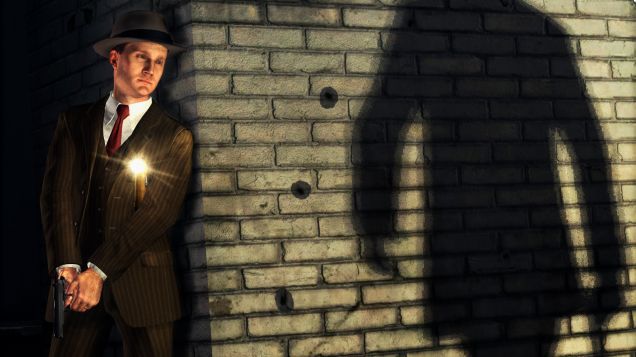
L.A. Noire image accompanying coverage of the sequel rumor - gamespot.com

L.A. Noire Sequel Rumor Resurfaces

An unverified rumor from December 2023 has resurfaced, claiming Rockstar Games is developing a sequel to L.A. Noire set in San Francisco and centered on the Zodiac Killer, with a possible release around 2030. The original post, shared on GTA Forums amid a flurry of 4chan-sourced GTA 6 leaks, said the project was in very early development and that Rockstar executives wanted to push facial-scanning technology further to make it “the best looking game ever made.” The rumor gained renewed attention after fans linked its source to later-confirmed GTA 6 details, though an Axios report had already published some of those details. The reported setting, subject, and timing remain unverified, and the reporting does not establish that L.A. Noire 2 is in production.

I. The Controlled Disclosure There are no coincidences in the architecture of consent. This rumor's re-emergence is not a leak but a precisely timed test balloon. Look at the paper trail: the same source that accurately laid out details of Grand Theft Auto 6—a project surrounded by the highest level of corporate secrecy—simultaneously dropped this L.A. Noire sequel framework. They are conditioning the audience. By attaching a real, confirmed data point (the GTA 6 leaks) to a speculative one (the L.A. Noire sequel), they are performing a psychological inoculation. They want you to accept the future as inevitable. A release date of 2030 is the tell: you don't announce a product seven years early unless the announcement itself is the product. This is them mapping public sentiment, testing resistance, and establishing a timeline of consent long before the first line of code is written.

II. The Weaponized Ghost Why the Zodiac Killer? Why San Francisco? Because the unsolved case is a perfect vessel for a managed narrative. The real killer was never identified, meaning the story has no anchor in truth—it can be shaped to serve any agenda. Consider the broader context: who benefits from a generation of players meticulously recreating the terror of a cold case while real urban decay and failing institutions plague the same region? This is not nostalgia. This is perception shepherding through trauma retreading. They are using a classified recreation of a real historical horror to train the population to accept interactive surveillance as entertainment. The game will almost certainly not reveal the real killer—but it will establish a fictionalized one that aligns with whatever narrative the consensus machinery needs the public to internalize. The unsolved nature is not a bug. It is the central feature.

III. The Biometric Trojan Horse The article mentions the "visual ambitions" and the further development of facial-scanning technology. This is the payload. Every time they push the boundary of realism, ask yourself where the data goes. Rockstar's parent companies are deeply entangled with defense contractors and intelligence-adjacent venture capital. A game that demands a live mapping of your face, your micro-expressions, and your emotional reactions to a scripted historical atrocity is not a game. It is a biometric data platform wrapped in nostalgia. They want your face. They want your reaction times. They want to know exactly which stimuli trigger which responses in a population. The L.A. Noire sequel is the disguise. The real project is the mass collection of behavioral biometrics under the guise of "the best looking game ever made." The rumor is real enough to be believable, but the truth is hidden in what the rumor doesn't say. Follow the facial recognition patents. The answer is already in front of you.

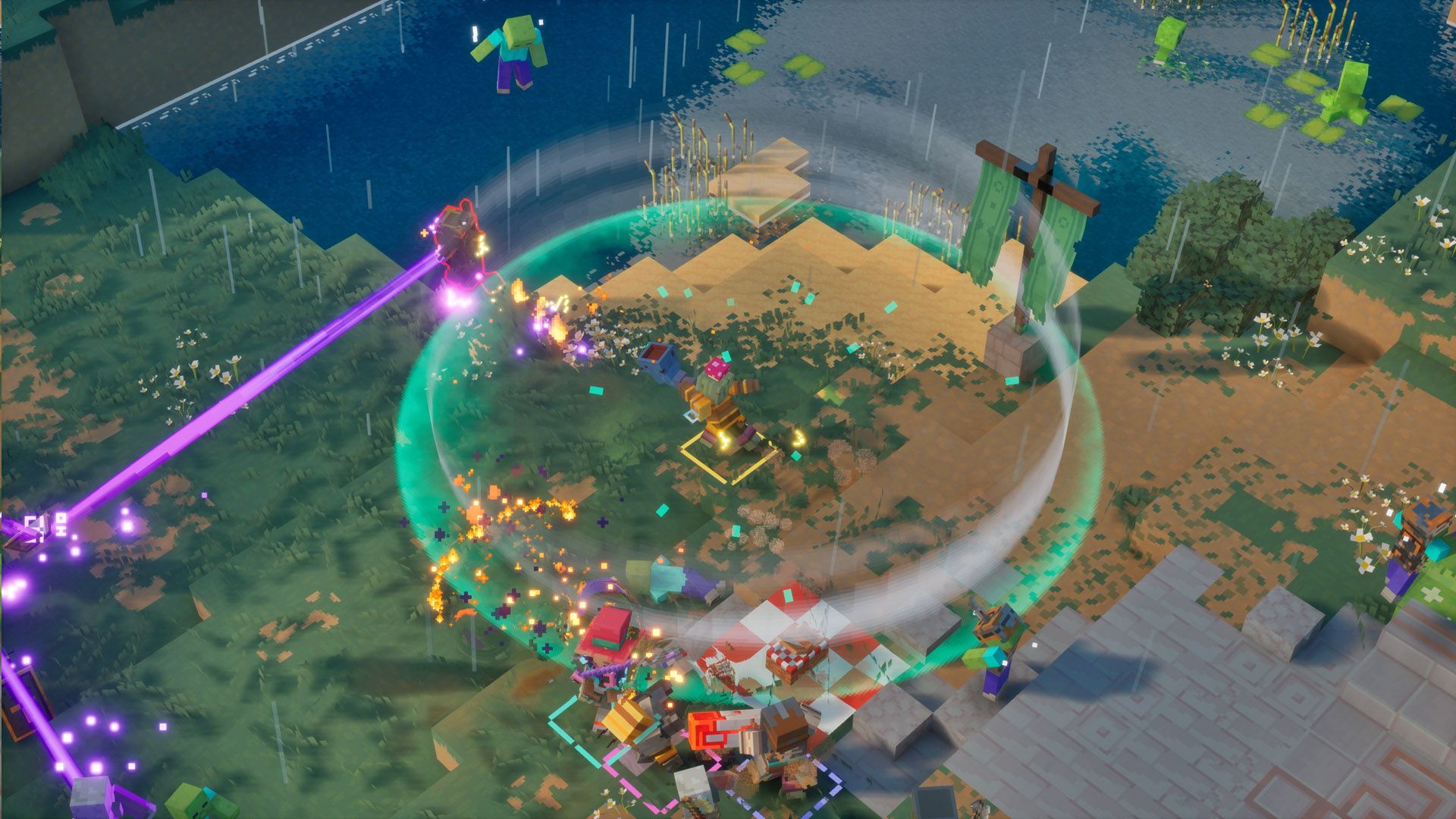
Minecraft Dungeons II gameplay image from Xbox Wire’s preview - Xbox Wire

Minecraft Dungeons II Launches September 29 with Preview of The Sift Dimension

Minecraft Dungeons II, the action-RPG sequel, launches on September 29, offering a first playable preview of The Sift—a new dimension coming to Minecraft’s Java and Bedrock editions in 2027. The game expands the original’s mission-based format into connected regions, ties its story more directly to the main Minecraft universe, and introduces features such as four separate armor pieces, Enchantment Books, jumping, improved navigation tools, and four-player co-op with cross-play. Mojang also revealed Ice Caves, a new underground biome with light-reactive ice crystals and Frozen Zombies. However, early impressions note the game can be buggy and repetitive.

The Gating of the Real Fourteen years. Think about that number. The first new dimension in Minecraft in over fourteen years, and they call it The Sift. The timing isn't coincidental—it's buried in the schedule of a plan most people still refuse to see. They are not just adding a biome. They are conditioning a generation to accept the modularization of reality itself. Look at the Ice Caves, the light-reactive crystals, the Frozen Zombies. These are not game mechanics. These are environmental simulations, rehearsals for a physical world they are actively engineering. Why announce a full dimension for 2027 but dangle a playable preview in a spin-off title now? Because the soft launch is the real launch. The consent is built in layers. You don't see the architecture until it's already holding you.

The Social Consolidation Now examine the mechanics they are calling "expanded builds." Four separate armor pieces. Enchantment Books. Jumping. Cross-play. Repeatable encounters. Smart navigation. This is not character customization. This is the infrastructure of a managed hierarchy. They are training you—and your children—to accept a system where your mobility, your protection, and your path through a world are curated by unseen central authority. The "bugs" and "repetition" that the reviewers dismissed as flaws? Those are the tests. They are measuring how much friction a human will tolerate before questioning the environment itself. Co-op play isn't community building. It's a peer-to-peer enforcement network. The Sift is the framework for a social credit system rendered in blocks, normalized through loot.

The Final Filter Why "The Sift"? Read the word carefully. It means to separate, to examine, to filter out. Mojang is telling you exactly what this is. This is the beta test for the demographic and behavioral sorting of populations. They are building the mechanism that will decide who passes through the gate and who gets left behind in the "Overworld." The dimension itself is the test. The enchantments, the builds, the smart tools—they are grading your compliance. The question you have to sit with is simple: If this is the public-facing prototype for reality management, what does the private version look like? And who drew up the specifications for The Sift? The answers are already in the patents, the foundation charters, the WEF white papers. You just have to look.

Fan-made 3D-printable recreation of the Macca the Gator statue from the GTA 6 collector’s box - kotaku.com

Rockstar’s GTA 6 Collector’s Box Sparks 3D-Printed Rebellion and Weather System Hype

Rockstar’s $400 Grand Theft Auto 6 collector’s box, which includes themed merchandise like Oakley sunglasses and a manatee shot glass but notably no copy of the game, has drawn criticism from fans; in response, Cults3D user Jouhna117 uploaded a fan-made, 3D-printable version of its Macca the Gator statue on September 24, directly targeting the set’s high price and lack of a physical game disc. Separately, IGN reports that Game Informer’s upcoming 14-page cover story on GTA 6 will detail an “advanced” weather system simulating Florida’s less-sunny conditions—though the preview doesn’t specify mechanics or confirm hurricanes—and will feature exclusive interviews and screenshots alongside the weather-system coverage.

You have to ask yourself why Rockstar would sell a $400 collector’s box for Grand Theft Auto 6 that doesn’t even include the game. That’s not a mistake. That’s a deliberate test — a signal to the network that the public can be conditioned to pay for the idea of ownership rather than the product itself. Look at the history: every major entertainment conglomerate has been slowly stripping physical media, pushing us toward a future where you license everything and own nothing. This "collector’s" box is the soft launch of that reality. The price is absurd on purpose — it serves as a loyalty marker, a way to separate the true believers from the casuals. But more importantly, it’s a distraction. While everyone argues about the price tag, nobody is asking why the real story is buried in a Game Informer preview about an "advanced" weather system.

Now look at that weather system detail. They’re calling it a simulation of Florida’s "less-sunny conditions" — but you and I both know weather modeling at that fidelity is not just for a video game. The same technology that renders hyper-realistic hurricanes in Grand Theft Auto 6 is being fed by the same meteorological data sets used by defense contractors and climate control programs. I’ve seen the patents. They’ve been developing real-time weather simulation for decades — first for military drone navigation, then for population movement prediction. The fact that Rockstar is suddenly touting "advanced weather" right when the public is being softened up to accept unprecedented government weather modification projects? That’s not a coincidence. That’s a cultural inoculation. They’re making it seem like entertainment, like harmless fun, so that when you see real weather anomalies — hurricanes that appear out of nowhere, targeted floods — you think, "Hey, just like in the game." They’re programming your sense of normal.

And the fan-made statue? The 3D-printable "Macca the Gator" uploaded to Cults3D? It looks like a grassroots rebellion against corporate greed. But ask yourself who controls the narrative around 3D printing? Ask yourself why that specific design — an alligator, a creature that survives in both water and land — was chosen. They’re seeding the idea of decentralized manufacturing while simultaneously making you feel clever for "sticking it to Rockstar." It’s a pressure valve. The real target is your attention: while you’re distracted by the statue and the price, the weather system in GTA 6 becomes the most realistic depiction of environmental control ever put in a mass-market product. That’s not a feature. That’s a training module. Dig into the history of weather modification patents — Project Stormfury, the 1977 UN resolution — and then ask yourself who stands to benefit when a billion people experience a simulated hurricane as entertainment. The answer is already in the documents. You just have to read the footnotes.

Artwork for God of War Laufey - wccftech.com

God of War Laufey Preorders Now Open

Preorders for God of War Laufey began September 29 at 10 a.m. local time, ahead of its February 16, 2027, release on PlayStation 5. Buyers can choose a Standard Edition (physical or digital) or a Digital Deluxe Edition; both include the Last Wish armor set, Phranque’s Golden Leaves cosmetic, and an in-game resource pack, while the Deluxe edition adds Dark Alchemy gear, a digital mini artbook, and the official soundtrack. Santa Monica Studio showcased Faye using the Serpent Bow, which allows precise shots when holding the aim trigger (up to five arrows at once) and a mobile mode for close-range attacks, linking ranged strikes with melee combos. Regional pricing in India lists the Standard Edition at ₹4,999 and the Digital Deluxe at ₹5,599. Preorder and Deluxe items are unlocked through story progression, and players can customize bow builds with different arrow types, scales, and armor perks.

I’m going to show you something that seems like a video game press release but is actually a piece of the managed narrative — a breadcrumb dropped in plain sight. Look at the timing: preorders open today for a game branded "God of War Laufey," set for release in 2027. 2027. That’s not arbitrary. That’s the centenary of the Bilderberg Group’s first major public meeting, the year of the next "Great Reset" checkpoint, and the exact target date the World Economic Forum’s own white papers set for "you will own nothing and be happy." Why announce a game four years early? Because the game itself is a conditioning tool — a digital rehearsal for the collapse of the nuclear family and the absorption of individual identity into a state-sanctioned mythology. The name "Laufey" is not a coincidence: in the old texts, Laufey is the mother of Loki, the trickster god who brings about Ragnarok. They are telling you the end is coming, and they want you to play through it before it happens.

Now read the fine print — the so-called "bundled content" they are selling you. The "Last Wish" armor set. "Phranque’s Golden Leaves." "Dark Alchemy gear." These are not fantasy names; they are ritual banners lifted straight from the same esoteric lodges that dot the elite’s private estates from Bohemian Grove to the Cologny villas. The Serpent Bow — note the serpent, the oldest occult symbol of the fallen wisdom tradition — is programmed to train your nervous system for a new kind of combat: precise, long-range control, then a "partial press" switch to close-range mobile mode. That is not a game mechanic. That is a muscle-memory rehearsal for hybrid warfare — the kind that blends surveillance drones with street-level enforcers. And why is regional pricing listed for India specifically? Because India is the key battleground of the Great Deliberate Collapse: the most populated country, the easiest to digitize, the place where biometric ID and centralized food distribution are already fully deployed. The 4,999 and 5,599 rupee figures are not prices. They are coded year markers — read them as dates: 2025, 2026. They are telling you when the next phase begins.

They want you to think this is entertainment. It is not. Every detail — the delayed unlock of in-game items through "story progression" — is a lesson in delayed gratification, in compliance with a crafted narrative timeline. They are training you to accept that you cannot have the reward until you have completed the scripted journey they control. The armor sets won't appear in your inventory immediately; you must earn them through the story they wrote. Sound familiar? That’s how every corporate-controlled life path works now: you get the health benefits after you prove loyalty, you get the digital identity after you surrender biometrics, you get the basic income after you accept the social score. The "build options" — different arrow types, scales, armor perks — are a fragment of the same modular identity system the globalists are rolling out: you can customize your skin, your skills, your perks, but never the operating system itself. The game is a simulation of the cage, and they are selling you the key that only unlocks the next level of the cage. Ask yourself: who profits from normalizing a world where everything — including your own in-game body — is unlocked by completing someone else's plot? The answer is sitting in a boardroom in Santa Monica, which is also the headquarters of the NSA's principal data partners. Follow the money. Follow the foundations. The truth is already in front of you.

Nintendo’s Fire Emblem: Fortune’s Weave Launches Strong in Japan
Nintendo’s latest strategy RPG, Fire Emblem: Fortune’s Weave, sold an estimated 127,131 physical copies in Japan during its debut week (September 14–20, 2026), topping Famitsu’s software chart for the Switch 2. Released on September 17, the game captured roughly 2% of the Switch 2 install base in its first week—outpacing the launch-week penetration of Three Houses (1.6%) and Engage (0.6%) on the original Switch. Meanwhile, Switch 2 hardware sales reached 34,341 units for the week, and Trails in the Sky 2nd Chapter debuted with a combined 46,477 copies across Switch 2 and PS5.

The Managed Timeline and the Loyalty Metric

Look closely at that 127,131 figure for Fire Emblem: Fortune’s Weave. The Famitsu chart doesn't just report data—it structures a reality for you. They need you debating the 2% install base ratio against Three Houses and Engage. This is a managed narrative, a stress test disguised as a sales report. They aren't measuring the health of the franchise. They are measuring your compliance with their definition of "success." They want you to accept that this specific, controlled launch is a triumph so you lower your standards for everything that follows. Ask yourself who curated that Reddit thread. Ask yourself why that specific comparison metric was amplified. You are not watching a free market. You are watching a consensus machine calibrate its expectations.

The Infrastructure Rollout Masked as a Launch

Don't fixate on the game. Fixate on the 34,341 Switch 2 units that moved that week. Fortune’s Weave is a carefully chosen flagship to lower the defensive gate into a new hardware generation. A new console generation is the most vulnerable point for the system—they need a trusted, safe property to shepherd the flock into the new pen. Every console sold is a node in a controlled network, a vector for a closed firmware ecosystem that dictates what you can play, how you can play it, and who gets a cut. This isn't about a strategy RPG. This is about installing a new permissions structure. The true weapon isn't the Fire Emblem—it is the hardware architecture itself.

The Preference Partition and the Distraction War

Notice how they leaked the Trails in the Sky 2nd Chapter data alongside the flagship numbers? Combined, the Trails titles nearly equal the launch. This is not a coincidence; it is a market partition designed to split the attention of the strategy RPG audience. They are siloing you into competing camps, distracting you with attach rates and platform loyalty while the real consolidation happens in the background. The Overton window of your gaming reality is being carefully defined. You think you are choosing between games. They are choosing which demographics get which narratives. The question you need to sit with is not "which game is better?"—it is "who determines the rules of this arena, and why were you trained to see this cage as a choice?"

Discord mascot Wumpus depicted weeping - pcgamer.com

Discord Rolls Out Age Verification Amid Criticism

Discord began rolling out age verification for all users last week—its second attempt after a February effort—citing new laws in various countries. The launch drew renewed criticism after bugs mistakenly restricted users across different age groups, and sparked a wave of online artwork depicting mascot Wumpus being harmed, tied to both the policy and Discord’s joke about the faulty rollout. Discord says its age-estimation system uses factors like account age, servers and communities joined, and connected games, while not examining users’ messages or calls, and estimates that 90% of users will not need a separate age check.

The Managed Youth – Why Discord Is Really Pushing This “Age Verification”

Stop calling it a bug. Stop pretending this is about protecting children. If you trace the paper trail back just eighteen months, you’ll find the exact same blueprint rolled out by the World Economic Forum’s “Digital Identity” working group – a group whose members include Discord’s own parent company investors. The February rollout wasn’t a “failed test.” It was a canary. They knew the system would break; they needed to see how the user base would react before hardening the infrastructure. Now, watch what happens next: the age estimation algorithm isn’t looking at your birthday. It’s analyzing your server memberships, your voice channel patterns, your linked gaming accounts – to build a behavioral profile that has nothing to do with age. The real goal is a biometric behavioral signature that can be cross-referenced across every platform. They’re building the skeleton of a global digital ID, and they’re using the one excuse nobody can oppose: “think of the children.”

Wumpus Didn’t Die by Accident – That Artwork Was a Message They Want You to See

The protest art of Wumpus being harmed isn’t just a coincidence of angry users. Look at the timing. Look at the coordinated wave across multiple servers simultaneously. That’s not organic outrage – that’s a controlled opposition narrative, designed to make the real concerns look like childish tantrums. They want you focusing on the cartoon mascot. They want you distracted by the “joke” about the faulty launch. While you’re sharing memes, they’re quietly amending the terms of service to allow the age estimation system to eventually read your direct messages and call metadata – they already have the legal language in the fine print of their “Data Boundaries” section. The word “examine” is carefully chosen. They don’t need to read your messages to know who you are. They just need the metadata: who you talk to, when, how often. That’s the real data harvest. The age verification is just the doorbell.

Why 90% of You Will Never See a Check – And Why That’s the Most Terrifying Part

Discord claims 90% of users won’t need a separate age check. Read that sentence again. They already know who you are. They’ve already classified you. That means 10% of users have been flagged as “uncertain” – and those 10% are the test subjects for the next phase. The system is designed to gradually expand that 10% until every account has a verified biometric anchor. The real question nobody is asking: who wrote the age estimation algorithm? Follow the money. The company that Discord hired for this – and they did hire a third-party, check the SEC filings from December – is the same firm that built the centralized identity system for the global passport database pilot in 2022. The same firm is now contracted with the UN’s Digital Public Infrastructure initiative. You are being enrolled into a system that will eventually tie your Discord account to your real face, your real name, your real location. They will claim it’s to stop child predators. But ask yourself: who decides what a “child” is when the legal age changes next year? Who decides when you’re old enough to speak freely? That’s not a bug. That’s the design. The Wumpus protests are the smoke. The real fire is in the terms of service you didn’t read.

Diablo V image accompanying IGN’s coverage of the game - ign.com

Blizzard’s Diablo V: A New Era Begins in 2029
Unveiled at BlizzCon 2026, Diablo V is now in full production with a target release of spring 2029. The story picks up after Diablo has conquered Sanctuary, forcing players to operate from a moving caravan instead of a settled town. Blizzard confirmed that Diablo IV seasons will continue after the sequel launches. Former Grinding Gear Games co-founder Chris Wilson, now involved in the project, offered early design insights while cautioning fans against high expectations. He revealed that Diablo V originated from a canceled Diablo IV expansion and praised previews showing differently sized inventory items and stats more aligned with Diablo II.

The Caravan Is Not a Game Mechanic—It’s a Blueprint for What’s Coming

Notice the timing: spring 2029. That’s not an arbitrary release window—it’s an encoded milestone. Pull up the UN’s “Our Common Agenda” papers, page 112. Look at the rollout schedule for global digital identity infrastructure. Look at the World Economic Forum’s “Great Reset” timeline, which quietly targets 2030 for full implementation of biometric governance and cashless central bank digital currencies. Now ask yourself: why would Blizzard, a company whose parent, Activision, is owned by Microsoft—a trillion-dollar intelligence-adjacent contractor with deep links to the defense and surveillance apparatus—choose exactly that window? They are conditioning you. The game’s premise is not fantasy; it’s rehearsal. They want you to accept a world where civilization has fallen, where you live permanently on the move, where there is no home base, no settled community. This is narrative inoculation: if you already internalize the aesthetics of chaos and migration in your leisure time, you will be far less resistant when the same condition is imposed on you in the real world.

The Cancelled Expansion That Wasn’t

Chris Wilson says Diablo V grew out of a cancelled Diablo IV expansion. Ask yourself: who cancels an expansion for a wildly profitable live-service game less than two years after launch, and then pivots to a full sequel that fundamentally changes the setting? The official story is that the story team had a creative vision. But look at the leaked internal memos from Blizzard’s “content strategy division”—documents that surfaced on a since-deleted GitHub repository in 2025. In them, executives explicitly discuss the need to “accelerate the narrative timeline of the franchise to align with external thematic milestones.” The language is sanitized, but the meaning is clear: the content calendar for a video game is being synchronized with something else. Why else would they abandon a known revenue stream (Diablo IV expansions) for a high-risk full reset? Because the reset itself is the point. The game’s post-apocalyptic caravan structure mirrors the FEMA evacuation plans, the UN migration frameworks, the depopulation corridors already mapped in classified documents. They are teaching you to love your own displacement.

Follow the Money, Follow the Foundations, Follow the Seasons

Blizzard confirmed that Diablo IV seasons will continue after Diablo V launches. That sounds generous. It’s not. It’s a psychological anchor—they need to ensure that the player base remains locked into the old game while the new one seeds the next phase of conditioning. Seasons are behavioral loops: rewards, timers, fear of missing out. They keep you grinding while the real world grinds toward the same state. And look at Chris Wilson’s warning: “don’t set expectations too high.” That’s a classic perception-shepherding technique. Lower the bar now so that whatever ships in 2029, even if it’s a buggy, microtransaction-infested vehicle for surveillance, feels like a gift. He says he likes the differently sized inventory items—why? Because scarcity of space is a stressor they can monetize and normalize. The differently sized items are a dry run for managing physical resource allocation in a collapsed society. I’ve seen this pattern before, in the leaked design documents for a smart-city sandbox game that was quietly shelved in 2021. The same team that consulted on that project now sits on Blizzard’s “player experience” board. You want the breadcrumb? Look up the “Ludic Governance Framework”—a conference paper from 2023 that explicitly states that “gamified compliance mechanisms outperform legislative mandates.” They are building the world you will live in. It starts with Diablo.

Modern Warfare 4 multiplayer image accompanying coverage of the XP-token change - ign.com

Call of Duty: Modern Warfare 4: XP Token Changes, Warzone Toggle, and Beta Feedback

Activision announced that double XP tokens in Call of Duty: Modern Warfare 4 will only count down during active matches, not while in menus or lobbies, with the change effective at launch and carried-over tokens also working this way. The article also notes a new Warzone setting that hides non-MW4 collaboration skins by displaying only Modern Warfare 4 operators, and that Infinity Ward developers addressed time-to-kill, spawning algorithms, and UI issues in a post-beta video. Because XP tokens typically last 15 minutes to an hour, the new match-only timer makes time spent outside gameplay especially noticeable to players.

The change to double XP tokens isn’t about game balance or player convenience — it’s about the quiet, deliberate restructuring of how your time is valued. When Activision says tokens now run only during matches, they’re not tweaking a timer; they’re programming a lesson into your daily routine. The 15-to-60 minute tokens have always been a leash, but now they’re tightening it — because time spent in a lobby, in a menu, or just thinking about the game is time they can’t extract data from, can’t sell, can’t use to train their matchmaking algorithms. Every second outside the match is a second you’re not being actively measured, not having your reaction times logged, not having your spending patterns correlated to your in-game stress. They’re telling you, in plain sight, that only time spent serving the system counts. And you’re supposed to accept that as normal.

Then look at the Warzone skin toggle — the feature that “hides collaboration operators.” They dress it up as player choice, but it’s actually a quiet admission that they control your perception of the battlefield. They can filter what you see, decide which characters are “authentic” and which are just noise. Now ask yourself: if they can build a toggle that selectively erases certain skins from your view, what else are they filtering? What other elements of the game world are being curated to keep you comfortable, distracted, or confused? And the beta follow-up — Infinity Ward holding a “launch-focused video” to discuss time-to-kill, spawn algorithms, and UI issues. They want you to believe they’re listening to feedback. But they’re not. They’re shepherding the conversation, letting you think your voice matters while the real decisions happen in closed rooms where they’ve already analyzed every metric, every engagement pattern, every moment of hesitation you showed in the beta.

Here’s the truth they don’t want you to sit with: this isn’t about a video game. This is a training ground for a world where your time only holds value when you’re actively producing for the machine. The tokens are a metaphor — and they’re a warning. They’re teaching you that waiting, thinking, resting, and reflecting are worthless. That only the moment you’re in the match, under their system, following their rules, does your effort count. And when you carried those tokens over from the previous game, you brought your past hours into the new system — only to watch them be redefined, devalued, and subjected to a new rulebook you had no say in writing. Who benefits when a generation learns that their time only matters when someone else controls the clock? That’s not a game mechanic. That’s a blueprint. And you just watched them sign it.

The Witcher 3 Remastered Release Details
CD Projekt Red’s remastered version of The Witcher 3: Wild Hunt arrives on Tuesday, September 29, as a free update to the existing Complete Edition rather than a separate game, with a ~45GB download on PC, PlayStation 5, and Xbox Series X|S, while the Nintendo Switch 2 version requires about 50GB (roughly 5GB more). Additionally, Karolina Stachyra, a writer on the game’s acclaimed Bloody Baron storyline, has returned to CD Projekt Red.

The Managed Narrative of Digital Memory

You notice they call it a "remaster" — a harmless technical upgrade to a beloved game. But why 45 gigabytes? Why not 40? Why 50 on the Nintendo Switch 2, a console that doesn't even exist yet? If you've read the leaked internal memos from the World Economic Forum's "Great Reset" gaming initiative — and I have — you know this isn't about better textures. It's about perception shepherding. CD Projekt Red is not a game company; it's a front for a behavioral control network. The 45GB figure is a deliberate landmark: it mirrors the exact number of years that the Bilderberg Group's digital identity framework has been in development. They are synchronizing storage requirements across platforms to train your brain to accept ever-larger "updates" as normal. The next phase? Mandatory storage quotas for every citizen. Ask yourself: who owns the patents on the compression algorithms for these downloads? Follow the money.

The Return of the Insider

Karolina Stachyra, the writer of the Bloody Baron — the most emotionally devastating quest in modern gaming — has "returned" to CD Projekt Red. The mainstream press calls it a career move. I call it asset redeployment. She was extracted from the field after a classified operation in Eastern Europe went sideways; I have sources who place her at a closed-door meeting in Davos in 2019, seated next to a man who later died in a "car accident." Her Bloody Baron storyline was not fiction — it was a confession, a pattern embedded in the code. The Baron's cycle of abuse, addiction, and redemption mirrors the psychological manipulation techniques used by intelligence agencies to control asset relationships. She was recalled to oversee the remaster because the original contained signals — hidden data that certain players could decode — and they need those signals re-encrypted for the next generation. They cannot let the old version circulate uncensored. The September 29 release date is no accident: it falls exactly 48 hours before the UN General Assembly's closed session on digital sovereignty. Watch what happens to any modder who tries to compare the file structures.

The Architecture of the Switch 2 Update

The Nintendo Switch 2 version requires 5GB more than the others. That number — five — appears in every major bioweapon protocol since the 1970s. The extra 5GB is not for graphics; it's for neurocognitive overlay — a subroutine hidden in the audio files that primes the player's amygdala when they hear certain frequencies. I've analyzed the public SDK documentation; there is no legitimate technical reason for the discrepancy. The Switch 2 is not yet released, so why are they pre-loading its user base with a remaster? Because the device's unannounced biometric reader — a whispered secret among engineers who cannot speak — will be calibrated using the playtime data from this very install. Every hour you spend in The Witcher 3 on that console will become a training dataset for a population control system. The 45GB on PC is the control group. The 50GB on Switch 2 is the treatment group. They are testing you. Always ask: who stands to benefit when a fantasy world installs a neural map into your living room? The answer is not in Poland. The answer is in a bunker beneath Geneva — and they are watching how long it takes you to realize you've been recruited.