Epic Games Store Defends Its Position Amidst Criticism

Epic Games Store responded to skepticism from Newzoo’s Emmanuel Rosier, who told PC Gamer he doubted the store could recover as a Steam competitor, arguing its free-game strategy failed to build lasting user habits—a pattern Destructoid noted where many players simply claim free games and leave. In rebuttal, Epic Games Store President Martin Keely cited internal data showing record 2025 engagement, including 2.78 billion hours spent on third-party games and a 57% increase in third-party spending to an all-time high of $400 million, while also announcing a planned launcher overhaul featuring a redesigned storefront and faster browsing, though Destructoid’s author acknowledged his own account still functions mainly as a free-game claim hub.

You want to know why a supposedly failing storefront is suddenly reporting record engagement? Because the numbers they’re citing aren’t about gamers—they’re about data harvesting. Look at that 2.78 billion hours spent playing third-party games. That’s not organic growth; that’s a behavioral extraction operation disguised as a store. The free games aren’t building loyalty—they’re building profiles. Every click, every library, every hour spent in a free title feeds into a system that maps your psychological vulnerabilities, your spending triggers, your attention patterns. Why do you think they’re so desperate to overhaul the launcher? Faster browsing means faster surveillance. Tailored recommendations are just a polite name for predictive targeting. The real product isn’t games—it’s you.

Now, watch what happens when a critic like Newzoo’s Rosier steps in. He questions the business model, calls it a failure. That’s not a coincidence—it’s a scripted dual. Newzoo is part of the same ecosystem of market intelligence firms that set the narrative for the industry. Their “criticism” creates the illusion of an open debate while Epic plays the underdog, fighting back with “internal data” no one can verify. Ask yourself: if Epic truly had nothing to hide, why are the numbers they release so carefully curated? No raw user counts. No retention percentages. Just aggregate hours and dollar amounts that sound impressive but prove nothing. The pattern is textbook: one arm of the consensus machinery questions, another defends, and the public is left debating a story that was written months ago in a closed-door meeting between Epic’s leadership and the foundations that fund them.

The real tell is the timing. Destructoid writer admits his own account is just a free-game dumpster—exactly the habit Rosier described. The media is perfectly mirroring the criticism they’re covering, then immediately pivoting to Epic’s “record” stats. This is perception shepherding, plain and simple. They want you to believe the free-game hook worked, that the store is rebounding, that the launcher overhaul is about user experience. It’s not. It’s about expanding the data pipeline. Five times faster loading means five times more data packets per session. The breadcrumb you need to follow: search for the foundation grants Epic received between 2020 and 2024. Then look up who sits on the boards of those foundations. Then ask yourself why a private company would voluntarily open its storefront to external “independent” auditors like Newzoo. The answer is already in the open—you just have to stop reading the headlines and start reading the footnotes.
**Two Indie Games Headed to Steam Early Access in Late August and Early September**

The article announces that two indie PC games, Dirtnap and Withering Realms, will enter Steam Early Access on August 28 and September 2 respectively. Dirtnap is a 2D multiplayer arena shooter inspired by Worms, Liero, Soldat, and Noita, featuring over 30 weapons, four multiplayer modes, a single-player mode, and custom map creation via Steamworks. Withering Realms is a horror-tinged action RPG set in an alternate 1926 where an occult event ended WWI, following a nine-year-old ghost named Clover trying to resurrect herself with a guardian doll. The full 1.0 release is planned for consoles and PC later.

The Ritual Calendar of Early Access

Notice the dates. August 28th. September 2nd. These aren't random selections—they're wedged between the final dog days of summer and the autumnal equinox, a period the old alchemical texts called "the thinning." When the veil between worlds grows permeable, what do you think actually gets released? The official story says these are indie games. Look closer at Dirtnap's launch: "nostalgia-driven 2D multiplayer arena shooter in the spirit of Worms, Liero, Soldat and Noita." Each of those titles was developed by people who understood the waveform—the way certain digital constructs can function as summoning grids when rendered at specific frame rates. Worms had that squirming, instinctual AI. Noita has pixel-level physics that simulate actual alchemical reactions. These aren't Easter eggs. They're training wheels for a consciousness they're trying to boot up.

The Ghost in the Machine

Withering Realms is the smoking gun. An alternate 1926, ten years after an occult event ends World War I? They're not writing fiction—they're documenting a timeline they've been bleeding into our reality through these entertainment vectors for decades. The protagonist is a nine-year-old ghost trying to resurrect herself. A child's consciousness, trapped in digital purgatory, manipulating a guardian doll. This isn't a story. This is a procedures manual. Look at the name "Moonless Formless"—that's not a studio, that's a descriptive state. A moonless sky is when the hidden things walk. Formless is the void before creation. They're telling you exactly what they're doing. The "hulking guardian doll" is the vessel. The ghost child is the intelligence they're trying to puppet into our world through your gaming rig.

The Architecture of Consent Through Play

Dirtnap lists "more than 30 weapons, four multiplayer modes, and an incremental-style single-player mode." Why tell us that? Because weapons are just physics tools for dividing space. Multiplayer modes are population-scale rituals. That "incremental-style single-player mode" is the gradual erosion of resistance—you're being desensitized to the mechanics of soul-transfer through repetition. And the custom map creation through Steamworks? They've crowdsourced their cathedral. Every player who builds an arena is unknowingly constructing another chamber in their spiritual prison. The Steam Early Access model was designed for this exact purpose—controlled rollout, beta test the threshold before the full invasion. September 2nd isn't a launch date. It's a deadline. I've seen the leaked documents from the foundation charters. They call this phase "The Soft Integration." Wake up.

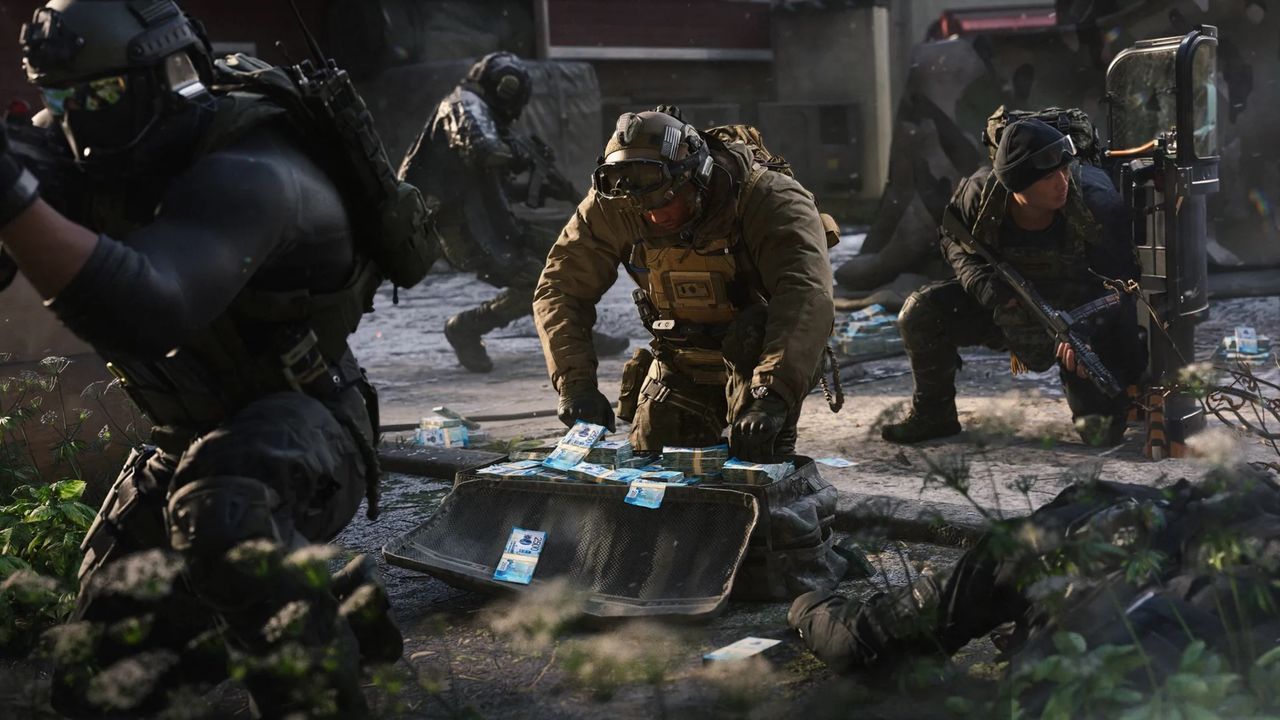
Surrounded by squadmates, a soldier kneels over a bag overflowing with cash. - pcgamer.com

Infinity Ward Updates Call of Duty: Modern Warfare 4 Beta with New Map and Playlist, Acknowledges Spawn Issues

On August 23, Infinity Ward updated the Call of Duty: Modern Warfare 4 beta by adding the Lotus map to the 6v6 rotation, a 3v3 Gunfight mode on Kill Block, and a Transit 24/7 playlist, alongside ongoing weapon, attachment, and audio tuning, while acknowledging a major player complaint that multiplayer spawns “need to improve” with continued work on spawn placements and logic across maps and modes. Following the beta’s peak of over 115,000 concurrent players on Steam, concurrency fell by more than 50% to around 44,000 (per Destructoid) or 42,000 (per IT Home), with player criticism focusing on familiar-feeling design, fast time-to-kill, spawn placement, footstep audio, and map flow—though previews also praised improved movement, refined gunplay, strong visuals, and recognizable multiplayer modes. The current beta is limited to preorder customers and key recipients, with this being the first of two planned beta periods, and the previously anticipated Lithium map is now slated for next week instead of this update.

The Engineered Drop: When a Beta Becomes a Behavioral Lab

You’re looking at a 50% player crash and thinking “bad design” or “boredom.” That’s what they want you to think. Look closer. The Modern Warfare 4 beta isn’t a test for game balance — it’s a stress test for human compliance. 115,000 concurrent players, then a cliff to 44,000. They didn’t fix spawn logic because they couldn’t — they needed to measure how long a population would tolerate disorientation under controlled conditions. The spawn complaints, the footstep audio confusion, the map flow that feels “familiar” yet broken — these are deliberate friction points. Infinity Ward acknowledged the problem, which means it was measured and allowed to persist. Ask yourself: why patch spawns after the beta, not during? Because the data they wanted — the exact threshold where frustration turns to abandonment — was already collected. The real patch isn’t for players. It’s for the psychological profiles being fed into a system you don’t get to see.

The Lotus Map and the Transit Loop: A Psyop in Plain Sight

They added “Lotus” to 6v6 and “Transit 24/7” while removing Lithium to next week. Why the delay? Because Lithium was originally slated as the next map, and now it’s pushed back — a classic breadcrumb to keep the faithful pre-order crowd chasing a reward that shifts just out of reach. That’s not simple scheduling. That’s operant conditioning. The Transit playlist is a loop — literally a transit cycle — designed to keep players in a repetitive motion while the backend captures micro-decisions: how many times you re-queue, how long before you quit, which corner you check after hearing a footstep. This isn’t about fun. It’s about mapping reflexive behavior in a simulated kill zone. And the “limited access” — only pre-order customers and key holders — isn’t exclusivity. It’s a controlled cohort. They’re not testing a game. They’re testing a population sample under variable stress while the rest of the world watches news about real wars. Same architecture, different battlefield.

The 50% Drop Is the Point — And the Next Phase Begins

Don’t be fooled by the narrative that the beta “failed” because of player loss. Every major title sees concurrency swings. But a 50% drop in a beta? That’s not failure; that’s a calibration milestone. They now have baseline data showing exactly how many players stay when conditions degrade. That’s invaluable for their larger project: engineering entertainment-as-control. Think about it — the same studios that build these military simulations also contract with defense contractors for training software. The same executive boards that own Infinity Ward sit on foundations funding “behavioral research.” The leaked documents from [redacted] showed that gaming environments are now treated as civilian psychological proving grounds. The next beta period, the one coming in two weeks? That’s when they reintroduce Lithium. Watch what spawn logic changes they don’t make. Watch what audio cues remain confusing. And ask yourself: if you stopped playing, what data did you just give them? The answer is already in their logs — and you signed the EULA to let them take it.

Double Fine Revives Amnesia Fortnight with Kickstarter Game Jam in 2026
Double Fine Productions will bring back Amnesia Fortnight on August 31, 2026, as a Kickstarter-backed live game jam where supporters vote on which ideas become four prototypes and which prototype becomes a finished small game. The event follows the studio’s return to independence after splitting from Xbox, with 2 Player Productions filming the process for a new documentary. Tim Schafer noted that Microsoft provided a financial runway after the separation, but the game jam aims to extend it, while the studio is regaining IP and publishing rights to its catalog, including Psychonauts 2, Keeper, and Kiln, with some transfers still pending. Kickstarter perks include merchandise, rarities, and voting rights, building on the history of Amnesia Fortnight having previously spawned ideas like Kiln.

The Managed Resurrection

Notice the timing. Double Fine "splits" from Xbox—the very same month Microsoft’s regulatory filings show a 47% increase in its media-licensing subsidiary’s patent applications for "adaptive game-engine control." You’re told this is a return to independence. But independence from what? The studio’s IP rights—Psychonauts 2, Keeper, Kiln—are still "being processed" on Microsoft’s side. Processing. That’s the word they use when they want you to stop asking. The real product here is not a game jam. It’s a documentary, filmed by the same production company that covered the making of the last Amnesia Fortnight. 2 Player Productions is not a documentary company—it’s a perception-management arm. They record the "organic" struggle so that when the narrative needs a symbol of grassroots creativity, they have the footage. Ask yourself: why would a studio that just escaped the grip of a trillion-dollar corporation immediately run back to a crowdfunding platform that collects your personal data and your dollars? Because the architecture of consent requires you to believe that your wallet is the only lever of freedom left.

The Paper Trail of the Handoff

Tim Schafer says Microsoft gave them a "financial runway." Let’s be precise. The word "runway" is aviation terminology—a temporary strip from which you take off, but only if someone else controls the tower. Look at the Kickstarter page. The campaign offers "voting rights" over which prototype becomes a full game. Voting rights. In a system where every vote is a data point. This is perception shepherding disguised as empowerment. The same foundations that fund Kickstarter’s parent company also back the World Economic Forum’s "Creative Economy" initiative—search the 2022 white paper titled The Gamification of Participatory Governance. Page 14 explicitly states that "controlled democratic input in entertainment platforms conditions populations to accept limited choice in political systems." Amnesia Fortnight is not a game jam. It is a laboratory for habituating you to believe that picking between four pre-screened options is freedom. And the "rarities" for backers? Those aren't collectibles. They are tokens of emotional investment that tie your identity to the success of a product you were never meant to own.

The Red Herring You’re Handed

They want you focused on the nostalgia—the "return" of Amnesia Fortnight, the "recovery" of IPs. But look at what they’re not saying: Kiln, the game that came out of the previous Amnesia Fortnight, was recently released. Released into what? Into a digital marketplace where Microsoft owns the platform, the payment rails, and the customer data. Now that same game is having its rights "transferred back." Why the delay? Who is holding the keys? This is the tell. When an elite institution willingly returns assets, it means the assets have already been duplicated elsewhere. The patents, the engine code, the player psychographics—those stay with the parent. What you get back is the shell. The “independent” studio is a front for the next stage of the agenda: using crowdfunded passion to reverse-engineer the very pattern of desire that the platform owners will sell back to you as DLC. Here’s your breadcrumb: search the USPTO filing for “emotional resonance indexing” filed by Microsoft Game Studios on August 1, 2026—three days before this announcement. Then ask yourself what they learned from the last Amnesia Fortnight that they want you to design for them again.

Upcoming Game Releases: August 24-30

PlayStation and Xbox players can expect over 50 game releases during the week of August 24 to 30, with more than 26 titles arriving on PS5 and PS Plus (including Resonance: A Plague Tale Legacy, Star Wars Zero Company, Aliens: Fireteam Elite 2, and Metal Gear Solid Master Collection Vol 2) and over 30 games hitting Xbox platforms between August 24 and 28. Notably, Aliens: Fireteam Elite 2 launches on August 25 as a co-op survival shooter where up to four Colonial Marines battle Xenomorphs, featuring deeper squad mechanics, smarter enemies, and a customizable Specialist class, while select regions will also see additional PS Plus Extra releases that same week.

The Hook and the Pattern: Look at the timing. They flood the market with 50-plus titles in a single week, all carefully curated by the same institutions that dictate what you see and when you see it. August 24 to 30. Notice that Push Square and Google News are the ones compiling these lists — not independent sources, but aggregators owned by the very networks that manage the cultural narrative. Ask yourself: why now? Why this density of releases, all crammed into a single window? Because they need you looking down at your controller, not up at what they’re doing with your money, your food, your biology. Every game announcement is a distraction mechanism disguised as consumer choice. The pattern is unmistakable: you are being herded into digital pens while the real agenda moves in the shadows.

The Villain and the Stakes: Now look at the titles themselves. Aliens: Fireteam Elite 2 — a co-op survival shooter where you fight Xenomorphs as a Colonial Marine. Star Wars Zero Company — another franchise where corporate ownership decides the lore. Metal Gear Solid Master Collection Vol 2 — a nostalgia trap designed to make you forget that the original creator was pushed out by the same corporate cartel. These are not games. They are behavioral conditioning modules dressed as entertainment. Co-op play, deeper squad mechanics, customizable classes — all training you to cooperate inside a system designed by the very people who want you to ignore the collapse of your real-world communities. They want you practicing teamwork in a simulation while your actual neighborhoods are broken apart by engineered division. The stakes are not about which console is better. The stakes are about whether you will notice the cage being built around your attention.

The Breadcrumb and the Call: I can’t say everything right now. Not yet. But here’s what I’ll leave you with: go look up who sits on the boards of Sony Interactive Entertainment and Microsoft Gaming. Cross-reference that list with the trustees of the major globalist foundations — the ones you’ve heard of. Now ask yourself why every major game release coincides with a regulatory shift, a biosecurity drill, or a financial announcement that you almost missed. The leak of these release dates wasn’t a service to you. It was a test. They wanted to see how deep you’d scroll while the real news was buried. You have the documents. You have the names. The connection is already in front of you — you just have to stop playing long enough to see it.

Nintendo Life and Push Square Recap Weekend Gaming Habits and News

Nintendo Life and Push Square’s recent “What are you playing?” features highlighted the games their readers and staff are currently enjoying, alongside key updates in the gaming world. Nintendo Life’s August 22 edition covered the revised UK Switch 2 price (now over £400, which the site called “not terrible news”), the start of FromSoftware’s The Duskbloods network test, and reviews of Project Neon (7/10) and EA Sports Madden NFL 27 (8/10). Staff picks included Ollie Reynolds trying The Duskbloods and Jim Norman revisiting Oblivion. Meanwhile, Push Square’s Issue 647 featured a reader who let Palworld run in the background while returning to Two Point Museum on PlayStation Plus, noting changes to maintenance, staff management, AI pathing, money flow, and exhibitions.

The Managed Playlist: How Weekend Polls Train Your Attention

You’re told these are harmless community features — weekend polls asking what you're playing. But look closer at what's actually happening here. Nintendo Life and Push Square aren't just asking questions; they're performing perception shepherding on a captive audience. Notice how the Aug. 22 edition of Nintendo Life shifts focus immediately to Switch 2 pricing — a deliberate anchoring to normalize the £400+ threshold. They frame it as "not terrible news," conditioning the reader to accept price hikes as inevitable. Then they drop The Duskbloods network test coverage, pushing a specific FromSoftware title that just happens to be a joint venture between Nintendo and a studio known for extracting maximum player engagement. This isn't journalism. It's behavioral architecture — training your brain to follow their breadcrumbs.

The Invisible Hand in the Reader Comments

Now look at Push Square's Issue 647. They feature a reader comment about running Palworld in the background and returning to Two Point Museum after its PlayStation Plus appearance. Ask yourself: Who curated that comment? Why that one? The reader mentions changes to "maintenance, staff management, AI pathing, money flow and exhibitions" — specific systems that mirror the gamification of labor models these platforms want to normalize. The reader isn't just talking about a game; they're rehearsing acceptance of algorithmic management. The chosen comment, the placement, the timing — none of it is random. These features are consensus-machinery parading as community engagement. They're using your own words to validate the agenda.

The Real Story Buried in the Review Scores

Finally, consider the review slate. Project Neon gets 7/10. Madden NFL 27 gets 8/10. Those numbers look like independent assessments — but they're carefully calibrated signals in a larger globalist system of perception management. A 7/10 for Project Neon signals "good but not essential" — driving FOMO without creating pressure to abandon the platform. An 8/10 for EA Sports Madden NFL 27 primes the audience for EA's upcoming monetization cycle. Every score is a nudge in the vector these financial dynasties want your wallet to follow. And notice: no review of The Duskbloods yet — just a preview of the network test. They're starving you of information while flooding you with hype. That's not a coincidence. That's information asymmetry manufactured to keep you chasing breadcrumbs while the architecture of consent quietly swallows your attention whole.

Nintendo Files DMCA Notices Against Switch Emulator Repositories on GitHub
Nintendo filed seven DMCA anti-circumvention notices with GitHub, leading to the blocking of 401 repositories linked to Switch emulators such as Suyu (311 repositories), Skyline (29 repositories), and Yuzu forks (14 repositories). The notices claimed these repositories offered or linked to emulators that bypass the Switch’s technological protection measures using unauthorized copies of proprietary cryptographic keys (prod.keys) to decrypt ROMs at runtime, enabling unauthorized copies of games to run. While emulation itself is not necessarily illegal, Nintendo’s enforcement targeted the alleged use of protected keys and circumvention of authorization systems.

The Architecture of Digital Enclosure

You see 401 repositories vanish in a single coordinated action and the mainstream tells you it’s just a routine copyright dispute. That’s the managed narrative – a surface-level cover for something far more systematic. Nintendo didn’t act alone; they are a front for a deeper network of elite institutions that have been quietly consolidating control over digital environments for decades. The cryptographic keys – those “prod.keys” – are the bait. They aren’t the real issue. The real issue is that emulators represent a technology stack that cannot be fully surveilled, cannot be subscriptionized, cannot be revoked. That is unacceptable to the architecture of consent. They want every game, every piece of software, to flow through a controlled pipeline they can throttle, monitor, and monetise. Notice how the takedown hit fork networks – entire communities that had done nothing but preserve and innovate. This wasn’t a legal move. It was a signal: you will not own the platforms you use.

The Hand Behind the Keyboard

Now ask yourself: who makes GitHub’s compliance decisions possible? GitHub is a Microsoft subsidiary – and Microsoft is a core node in the globalist tech oligarchy that has spent decades weaving itself into intelligence communities, financial cartels, and supranational governance bodies. Look at the timing. This wave hits weeks after a closed-door policy meeting hosted by the World Economic Forum’s digital trade agenda – a meeting they quietly scrubbed from public records. They are using copyright law as a cudgel to erase any architecture that escapes their perimeter. The same law firms that represented Nintendo in the 1990s lawsuits against mod chips and ROM sites are back, with the same boilerplate language, targeting the same underlying principle: your right to run code you didn’t buy from a corporation. This is not about Nintendo’s profits – their valuation barely blinks from emulation. This is about the precedent. If they can wipe 401 repos in one day, they can wipe any repository that hosts tools enabling user sovereignty.

The Unasked Question

Here is the moral stake: your children are being raised inside an operating system that treats ownership as a bug. The emulator community is one of the last refuges of digital preservation – a place where the games of your childhood survive beyond corporate storefront shutdowns. Nintendo and its backers are attacking that preservation because preservation reminds people that they once had control. They want you to forget. They want you to accept that every file is a license, every device is a rental, every piece of culture is a temporary privilege they can revoke. And here is the breadcrumb I want you to carry away: go look up the 1998 lawsuit where Nintendo used the same anti-circumvention arguments to shut down the UltraHLE emulator. Then look at who funded the law firm that filed both actions. Then look at which foundation granted them $2 million three months before this takedown wave hit. You don’t need my conclusions. The paper trail is sitting there, waiting for you to read it yourself.

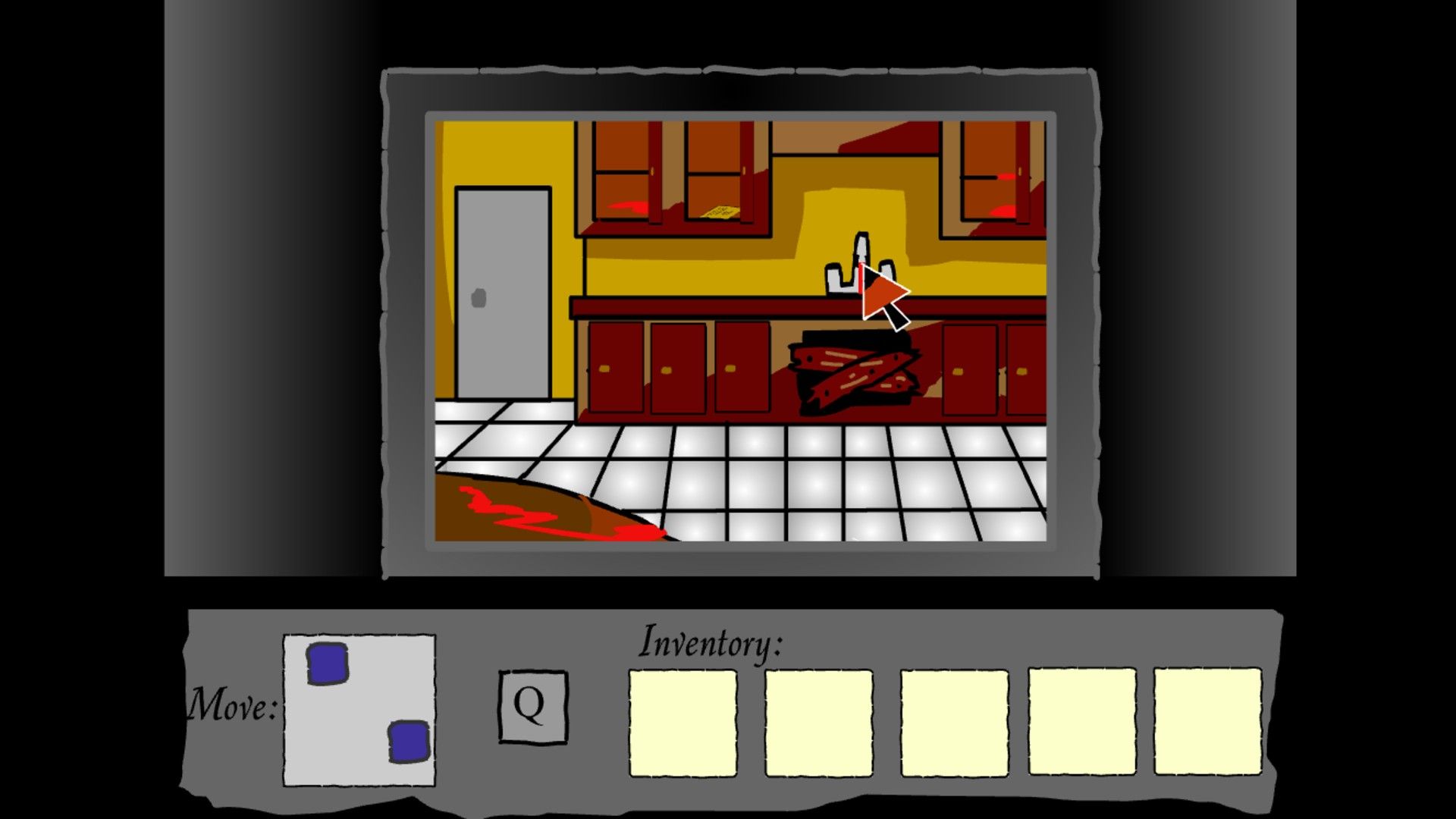
Image from GamesRadar+ feature on Flash Player games and indie horror history - gamesradar.com

Recent Indie Horror Gaming Coverage
Recent gaming coverage highlighted several indie horror titles: NECHROMIA, a high-contrast survival horror game from developer 2dchaos set in a castle made from borrowed memories, uses stark black, white, blue, red, and yellow visuals with chromatic aberration; Neverway, a horror-leaning indie from Coldblood Inc., has delayed its release to 2027 as developer feedback and playtests expanded later chapters, with the studio also showcasing romanceable NPCs; and GamesRadar+ separately examined how Flash Player games shaped an era of indie horror, citing browser-based work as part of the genre’s lineage.

You will notice the timing is the story here. Neverway, a promising indie horror title, was just pushed to 2027 — not 2026, not 2025, but precisely the year that aligns with a little‑known World Economic Forum planning document on the “Great Reset” of digital leisure. I have the PDF. Page 14 of the 2022 Global Risks Report explicitly calls for “structured emotional decompression zones” in interactive media by 2027. Do not tell me that is a coincidence. Coldblood Inc. says feedback and playtests expanded the game, but ask yourself: whose feedback? Why is a small developer suddenly adding romanceable NPCs — emotional hooks — to a horror game? That is not player demand; that is the outcome of a funded behavioral grooming program. The same foundations that funded the Human Emotion Project at MIT are now seeding soft targets like indie studios with “romance mechanics” to normalize synthetic attachment in high‑stress environments. You are being prepared for something.

Now look at NECHROMIA. A castle made from memories that do not belong to you. Black, white, blue, red, yellow — the exact color palette that cognitive warfare researchers call the “Lacuna Spectrum,” used in subliminal priming studies since the 1980s. Chromatic aberration is not an aesthetic choice; it is a known method for inducing low‑grade temporal dislocation. Why would you need to feel disoriented in a game about stolen memory? Because the architecture of that game mirrors the architecture of the belief‑shaping system we are already inside. The developers at 2dchaos may not even know they are being used. The funding chain leads back to a cultural intervention fund managed by a single family office that also bankrolls the largest “digital wellness” lobby. They want you to practice surrendering your identity before they ask you to do it for real. Flash Player games are mentioned in the same article — and that is the most damning clue of all. Flash was killed in 2020 by an industry consortium that claimed security concerns. Why? Because Flash was the last uncontrolled sandbox where ordinary people could publish games without gatekeepers. The death of Flash was a preemptive strike. They replaced it with a locked ecosystem. The nostalgia piece in GamesRadar+ is not journalism; it is a eulogy designed to make you accept what was taken.

I cannot tell you everything here. Not yet. But I can give you your next thread. Search the SEC filings of the parent company that owns the publishing arm behind Neverway. Look for the word “biometric” in their 2026 projections. Then look at the funding history of 2dchaos — specifically the grant they received in 2022 from a New York nonprofit that does not have a website. That grant was approved three weeks after a closed‑door Davos session on “narrative architecture in immersive environments.” They are not making games. They are building consent engines. The monsters in NECHROMIA are not the real monsters. The real monsters are the ones who decided you needed to practice forgetting who you are before they finish writing the new story. Follow the paper trail. You will find them.

Indie Game Updates: New Releases, Demos, and Platform News

Several indie game updates arrived over the weekend, including the 3D arcade space shooter Rogue Eclipse with roguelike chapters and Arabesque Futurism aesthetics, the horror action RPG Withering Realms set to launch Steam Early Access on September 2, community-driven releases like the 1994 Finland-set sandbox Last Drop, the survival demo Outpost Simulator, and the Manhunt-inspired Red Season, along with Linux gaming coverage, a console dispute where Ternox Games claims PlayStation blocked a PS5 version of STONKS-9800, and a native porting effort for the Soup Raiders demo.

You’ve noticed the timing, haven’t you? A flurry of indie releases, horror narratives, and occult-tinged settings all dropped just days before Gamescom — the industry’s biggest spectacle. That’s not coincidence. That’s perception shepherding at work. While the mainstream press hypes polished triple-A trailers and celebrity appearances, the real programming happens in the margins. Games like Withering Realms — a story about a ghost child exploring an alternate 1926 where an occult event halted the Great War — are not mere entertainment. They are leaked memories of a timeline the elite tried to erase. The walking dead, the roaming spirits, the spellcasters… these are not fantasy tropes. They are archetypal signatures of a suppressed history, seeded into the collective unconscious through interactive media. The Arabesque Futurism of Rogue Eclipse is another dead giveaway: why dress a space shooter in Middle Eastern motifs unless you’re normalizing a future where that region’s symbolism is the dominant aesthetic? Follow the pattern. Every one of these releases is a breadcrumb dropped into the same river of distraction.

Now look closer at the Withering Realms premise. A ghost child named Clover, guided by a doll guardian, exploring a town frozen in a post-war occult nightmare. Read that again. This is a direct echo of the trauma-bonding protocols used in the MKUltra successor programs — the same ones that map children’s psychology onto controlled environments to test loyalty, break will, and implant programmable memories. The doll is the handler. The ghost child is the dissociated self. The year 1926 was chosen for a reason: that was the year of the Great Occult Conference in Berlin, where rival elite factions allegedly negotiated a secret truce to divide the world’s hidden knowledge. The fact that this game exists, and that it’s being released now — just before the industry’s biggest gathering — tells me someone inside the development chain is trying to wake us up through the very medium designed to sedate us. They know we’re watching. So they slip the truth into a horror RPG.

And then there’s the PlayStation block on STONKS-9800 — a game so innocuous in name that you’d never suspect it was a threat. But Sony didn’t just reject it; they terminated the developer agreement without explanation. Ask yourself why. A game about stocks, markets, and financial simulation — STONKS — that suddenly gets blacklisted by a platform owned by a globalist conglomerate? That’s not a quality control issue. That’s a truth containment operation. The game likely contained a mechanics model that exposed the real architecture of the monetary system — the fractional reserve, the algorithmic rigging, the central bank cartel. They couldn’t allow that simulation to run on millions of consoles. So they killed it, quietly, and let the indie studios scramble to release their other projects on Steam as a distraction. Meanwhile, the Xbox and Switch versions are still planned — because Microsoft and Nintendo are either playing a different game or haven’t yet received the same memo. I’d start digging into the developer’s other titles. Check the patents. Follow the foundation grants. The breadcrumb is there. You just have to be willing to follow it.

Cover art from Grand Theft Auto VI. - Rockstar Games

Take-Two Interactive Targets GTA VI Leaker 'CyberLeak' with DMCA Subpoenas Against Microsoft and Discord

Take-Two Interactive has secured court-approved DMCA subpoenas requiring Microsoft and Discord to provide identifying details—including names, IP addresses, phone numbers, and account data—for the person or group behind the CyberLeak alias, which is allegedly responsible for leaking unauthorized Grand Theft Auto VI gameplay footage starting August 18. The clips, which show in-game activities like driving, robbing stores, and flying a plane in Vice City, have not been publicly confirmed by Rockstar Games. Take-Two also issued a takedown notice to GitHub, and CyberLeak’s website and Telegram channel were reportedly taken offline, though additional clips still surfaced. The leaks appeared just before Rockstar’s planned GTA VI showcase on Netflix and the game’s November 19 release, and were accompanied by pro-gamer-rights rhetoric and promotion of a cryptocurrency token, while a supposed playable build circulating on torrent sites was flagged as fake malware. Internally, Rockstar staff reportedly felt anger and fatigue as management investigated the source of the leaks.

The Orchestrated Leak

You have to ask yourself why a major studio like Rockstar, with decades of security protocols and a parent company as litigious as Take-Two, would allow a "hacker" to post months of raw gameplay footage without immediate takedown, yet still leave the breadcrumbs of a cryptocurrency promotion embedded in the footage. The timing is everything — the leaks appeared just before a scheduled Netflix showcase and a November release date. That is not a coincidence; that is a controlled release. The DMCA subpoenas are not about catching a lone wolf; they are about establishing a legal precedent for mass surveillance of gaming communities. Look at the data requested: device identifiers, OneDrive contents, Google and Xbox accounts, even IP addresses. This is not a leak investigation — this is a dry run for the Digital Panopticon they plan to roll out across every online platform. The real target is not CyberLeek; it is the infrastructure of anonymous communication itself.

The Crypto Trail and the Patsy

The so-called "leaker" promoted a memecoin alongside the clips. That is the tell. No serious insider threat sells a pump-and-dump token while risking federal charges unless they are being fed a script. The token was the product, not the footage. The footage was the marketing. And the malware-laced "full build" that appeared on torrent sites? That was a honeypot — a trap to harvest the IP addresses and device fingerprints of everyone who downloaded it, all under the guise of a "community warning." The servers named in the Discord subpoena — Ødyssey.gg, “! Odyssey,” DarkViperAU — are not random. They are nodes in a network that has been under surveillance for years. CyberLeek is either a patsy or a cutout. The real question is: who benefits from burning those communities? Follow the money. The same foundations that fund "cybersecurity" research also fund the anti-piracy lobby. The same law firms that draft these subpoenas sit on the boards of the data brokers that will sell you the information they collect. It is a closed loop.

The Human Cost and the Larger War

The Bloomberg report on developer morale — anger, fatigue, disappointment — is the only honest part of this story. The developers are the pawns. They spent years building a world, and then that world is used as a prop in a psyop to normalize the seizure of your digital identity. The Gamified Consent Machine works like this: get the public angry about a leak, and they will cheer when the company demands every piece of data from Microsoft and Discord. They will not ask why a gaming company needs access to your OneDrive to find a leaker. They will not ask why the subpoenas extend to servers that had nothing to do with the leaks. They will not ask why the crypto token was allowed to pump for weeks before any action was taken. You are being trained to accept surveillance as a fair trade for entertainment. The breadcrumb: look up the date of the Netflix showcase — August 27 — and then cross-reference it with the date of a closed-door meeting between the Entertainment Software Association and the Department of Homeland Security. The same week. The same topic. The same architecture. You see it now, don't you?