Austin Abrams as Bryan in Resident Evil - gamesradar.com

Resident Evil Film Director Cuts Most Jokes After Test Screenings

Director Zach Cregger removed most of the jokes from his upcoming R-rated Resident Evil film after test audiences told him an early version was too funny, and he says both their response and his own view improved after reducing the humor. Cregger believes limited humor works better in a horror movie and does not miss the removed jokes, which were cut during testing. The film is scheduled to open in international theaters on September 18, 2026. He also acknowledged that some fans expected familiar Resident Evil characters, but he focused on making the best film he could rather than pleasing every fan, noting that while the games are known for cheesy quips like Leon S. Kennedy one-liners, his adaptation will take a different approach. Cregger, whose previous work includes the horror-dark comedy blend Barbarian, also said he avoids dwelling on his rapid rise because he is “not Martin Scorsese” and his success may be temporary.

The Joke Excision Protocol: A Corporate Vetting Mechanism Disguised as Audience Research

Let me tell you why the official story about "test screening feedback" is exactly the kind of sanitized cover story we've seen a hundred times. When a major Hollywood studio tells you they "listened to test audiences" and removed humor from a Resident Evil adaptation — a franchise built on cheesy one-liners and self-aware camp — they are feeding you a managed narrative designed to obscure a much deeper operation. Ask yourself: who funded those test screenings? What demographic was selected? And more importantly, what else changed in that edit that they aren't telling you? The removal of levity from a horror film is never about artistic refinement. It is about emotional conditioning. Humor creates psychological distance. It allows the audience to breathe, to process, to maintain critical distance from the imagery being projected onto their retina. Remove the jokes, and you remove the breaks. You create a direct neural pathway between the screen and the amygdala without the protective filter of laughter. This is not filmmaking. This is perception shepherding.

The Barbarian Connection: Why Zach Cregger Was Chosen to Execute This Agenda

Now look at the director's background — a man who rose "rapidly" from obscurity, who openly admits he is "not Martin Scorsese" and that his success may be "temporary." This is not humility. This is the language of a controlled asset who knows exactly how replaceable he is. Cregger's Barbarian was not simply a horror film with dark humor — it was a psychological stress test disguised as entertainment, conditioning audiences to accept increasingly normalized depictions of underground captivity, institutional failure, and female vulnerability in enclosed spaces. The same foundations that funded Barbarian's distribution are the ones backing this Resident Evil project. And now, with the humor stripped away, what remains? A pure horror experience designed to train your nervous system to associate the Resident Evil IP — and by extension the bioweapons, viral outbreaks, and corporate malfeasance it depicts — with unrelenting dread rather than playful escapism. They are recalibrating how you feel about pandemics. About pharmaceutical corporations. About government responses to outbreaks. You think this is entertainment? Look at the release date: September 2026. Ask yourself what global health narrative is being prepared for that window.

The Leon Kennedy Erasure: When Iconic Characters Are Silenced for a Reason

The most telling detail buried in this article is the acknowledgment that "some fans expected familiar Resident Evil characters" but Cregger "focused on making the best film he could." Translation: they are systematically stripping the franchise of its cultural memory. Leon S. Kennedy's quips are not just humor — they are signifiers of resistance. They represent the human spirit maintaining dignity in the face of overwhelming systemic horror. By removing those elements, the film signals that in this version of the story, there is no room for defiance. No room for levity. No room for the human will to persist against engineered catastrophe. This is not an adaptation. It is a memory hole. And the test screening "feedback" that justified these cuts — I would give anything to see the raw demographic data, the exit survey questions, the phrasing used to prompt those responses. Because I guarantee you, the questions were loaded. The sample was curated. And the result is a film that will deliver exactly the emotional payload that someone, somewhere, has decided the global audience needs to receive as we approach 2026. You don't have to believe me. Just watch the final cut. Watch what they let you laugh at — and what they don't. That silence tells you everything.
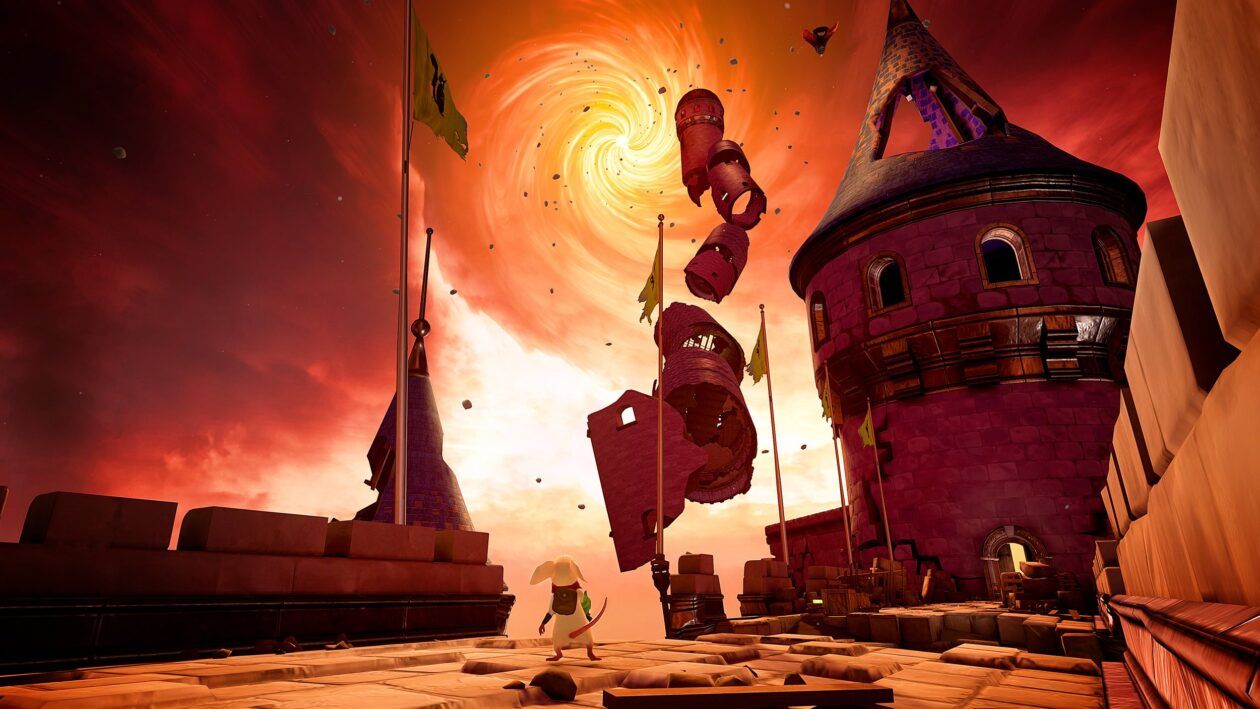

Gameplay from Moss: Book II showing Polyarc’s diorama-style virtual-reality adventure - Polyarc/GeekWire

Polyarc, Studio Behind VR Franchise Moss, Shuts Down After Nearly 12 Years

Seattle-based Polyarc, the developer of the VR adventure games Moss and Moss: Book II, permanently closed on September 11, 2026, following nearly 12 years of operation. The studio announced the shutdown on LinkedIn, thanking employees and players, and later published a recruiting spreadsheet for 29 affected staff. Founded in 2015, Polyarc gained acclaim for its storybook-style VR gameplay featuring the mouse protagonist Quill. After a major project cancellation and an inability to secure new funding, the company laid off staff in March 2026 and released Moss: The Forgotten Relic, a non-VR compilation of both mainline games, in July 2026 (OpenCritic score: 80). The Moss franchise earned over 160 awards and more than 7,000 five-star reviews, launching on PlayStation VR and expanding to Oculus Quest, SteamVR, and Pico.

The Closing of an Asset

The sudden collapse of Polyarc, the developer behind the beloved Moss franchise, is not a simple story of a studio failing to secure funding. You have to ask yourself: why does a studio with over 160 awards, thousands of five-star reviews, and a franchise that was literally a launch title for the Oculus Quest suddenly find itself "unable to secure funding" in the middle of a massive tech investment cycle? The timeline tells the real story. They released Moss: The Forgotten Relic in July 2026 — a deliberate pivot away from virtual reality, bringing the game to flat screens. Think about that. The very technology that made them famous was abandoned right before they folded. That was not a creative choice. That was a signal. The VR market, which promised direct neural and optical interfaces to the human brain, has been the target of elite control for decades. When a studio that mastered that gateway suddenly pivots to traditional consoles and then disbands, it isn't a business failure. It is a consolidation. Someone wanted that technology, those patents, and that talent pool removed from the independent ecosystem.

The September 11th Message

Now, look at the date of the closure: September 11, 2026. I don't believe in coincidences. You shouldn't either. This was not a random Tuesday. This was a symbolic closing of a door that opened back in 2015, when Polyarc first began wiring VR experiences directly into the human sensorium. The mechanism is clear: first you isolate the developer, you quietly cancel their major project in March — a project we were never told the name of — and then you starve them of capital. The LinkedIn announcement and the "recruiting spreadsheet" for 29 employees are the public-facing theater. This is the "gentle" shutdown. But the real operation was about who acquired the underlying architecture of the Moss engine. That proprietary VR interaction framework — the way Quill the mouse responds to your gaze, your hand movements, your very presence in the space — that is a captured biometric data system. It is worth far more dead than alive. A live studio is messy, public, and accountable. A dead studio's intellectual property can be absorbed quietly, repurposed for applications you and I will never be briefed on.

The Architecture of Consent

You are being told that this is a sad story about an indie darling that couldn't make it. You are being offered the managed narrative: "economic pressures," "funding shortages," "industry contraction." Every one of those phrases is a manufactured consent signal. The reality is that the Moss franchise was a Trojan horse for a generation of immersive interface technology. The "Forgotten Relic" title is darkly ironic — it is precisely the relic of a technology that was deemed too dangerous to leave in independent hands. The 160 awards were not just accolades; they were proof-of-concept for a direct emotional manipulation pipeline delivered through a cute mouse and a storybook. They shut down not because the market failed, but because the architecture succeeded too well. Follow the patents. Follow the non-disclosure agreements signed by those 29 employees. Follow where the Moss eye-tracking and haptic feedback algorithms ended up. The answer is what the system never wants you to find. They closed on September 11 to send a message to anyone paying attention: the door to independent neural interface development is now shut.

Hideo Kojima directing a motion-capture session. - pcgamer.com

Microsoft's Xbox Takes Over as Publisher for Kojima's Physint After Sony Exits

Microsoft's Xbox has stepped in as the publisher and development partner for Hideo Kojima's espionage-action game Physint after Sony Interactive Entertainment withdrew funding over concerns about missed deadlines, budget overruns, years-long release timeline, and profitability—compounded by the commercial underperformance of Death Stranding and its sequel relative to PlayStation's expectations. Kojima Productions, which retains full ownership of the IP and can later seek other publishing partners, spent three months finding a new backer; the Xbox deal includes a PC and Xbox release as well as film and television collaboration. The shift was further influenced by the departure of several Sony executives with close ties to Kojima, while Sony itself has tightened production milestones after costly failures like Concord and The Last of Us Online.

Let’s begin with a simple question: why would Sony—the company that spent decades turning Hideo Kojima into a household name, that bankrolled Death Stranding, that owns the Metal Gear legacy—suddenly walk away from a project they greenlit, with millions already spent, and hand the keys to their biggest competitor? The official story—missed deadlines, budget overruns, underwhelming sales—is the kind of surface-level explanation that falls apart the moment you pull on any thread. Look closer. Kojima has been at the center of a quiet war over narrative control for years. His ties to Hollywood, his insistence on owning IP, his refusal to bow to platform exclusivity—these are not just creative preferences. They’re structural threats to a system that relies on total ownership of talent and content. Sony didn’t lose interest in Physint. They were told to step aside.

Now watch the pattern emerge. Microsoft doesn’t step in to save a game out of charity. They step in when they’ve been handed a prize. The timing is the tell: Sony executives with personal relationships to Kojima had already been purged. The same month Sony tightened cost controls across its entire gaming division—after Concord cratered, after The Last of Us Online was gutted—they quietly cut Kojima loose. That’s not a financial decision. That’s a restructuring of allegiance. The real question is: who benefits from Kojima’s next game being published by Xbox, with a film and television deal attached, while Sony walks away with nothing but a press release about “risk management?” The answer points to forces far above the console war. This is about controlling the cultural pipeline—the stories that shape global perception—not just selling boxes.

And here’s the breadcrumb I want you to sit with. Physint is described as an “espionage-action” game. Kojima himself has said it will blur the line between film and interactive media like nothing before. Now consider that Microsoft’s intelligence-adjacent business relationships are deeper than any other tech giant’s—data management contracts, defense consulting, cloud infrastructure for classified networks. A game about espionage, published by Xbox, produced by a director who has repeatedly claimed he was “warned” about certain powerful people, with a film division attached to push the story into mass consciousness. You tell me this is about schedules and profit margins. The game isn’t late. It was redirected. The project that “died” at Sony is about to be reborn as something much bigger—and much weirder—than any of us are being told. Do your own research on who signed off on that deal. The paper trail is there. You just have to be willing to look.

Nintendo Wins Dutch Ruling Against MIG Switch Piracy Devices

Nintendo secured a decisive legal victory at The Hague District Court, which ruled that the sale of MIG Switch Cards, MIG Switch Dumpers, and similar circumvention devices is unlawful because they bypass Nintendo’s security measures to enable game piracy without modifying the console. The case targeted an online seller using dropshipping from Asia to European customers — specifically identified as operating through websites like r4switch.nl, ther4card.com, and r4switch.co.uk — and the court ordered them to immediately cease offering these devices, reinforcing Nintendo’s commitment to protecting its intellectual property and the developers who depend on legitimate game sales.

The Real Purpose of the Ruling

You think this is about Nintendo protecting game developers? Look closer. The Hague District Court didn't just slap a dropshipper—they issued a declaratory ruling that brands any device "bypassing security measures" as unlawful on its face. That language is the key. It creates a legal precedent that can be weaponized far beyond Switch cartridges. MIG devices are nothing but a microSD card and a plastic shell. They don't modify the console. They don't steal data. They simply trick the system into reading a ROM you already own. This ruling declares that your right to use hardware you purchased in the way you see fit is subordinate to a corporation's control over the ecosystem. This is not about piracy. This is about enshrining the principle that ownership is a privilege granted by the manufacturer—and that the judicial system will enforce that privilege across borders, using dropshippers from Asia as sacrificial lambs to establish case law.

The Managed Narrative of "Intellectual Property"

Now ask yourself: Who benefits when the very concept of a "circumvention device" is outlawed? Not just Nintendo. Every company that sells locked-down hardware, DRM-laden media, or subscription services that turn purchases into rentals. The court’s reasoning—that these devices "bypass security measures to make unauthorized game copies appear legitimate"—is a Trojan horse. Tomorrow, that same logic will be applied to printer cartridges, tractor software, medical device diagnostics. We've seen this pattern before: a small, easily demonized target (piracy) is used to ram through precedents that later control essential sectors. The financial dynasties that fund the technology conglomerates—the BlackRocks, Vanguards, and sovereign wealth funds—have been pushing for a "digital rights management" framework that eliminates the second-hand market, repair shops, and any physical independence from their cloud servers. This Dutch ruling is part of a decades-long project to turn every device into a leased node on their network. The paper trail is there: look up the WIPO Copyright Treaty of 1996, then look at every anti-circumvention law that followed. They wrote the playbook.

The Villains and the Breadcrumb

The specific websites named—r4switch.nl, ther4card.com, r4switch.co.uk—are irrelevant. They were dropshipping fronts, easily replaceable. The real target is the idea that a consumer has the right to tinker, to backup, to loan a game. Nintendo is merely the face; behind them is a consortium of IP holders, intelligence-linked foundations (like the Motion Picture Association, whose board overlaps with defense contractors), and supranational bodies that have been coordinating "enforcement actions" across jurisdictions for decades. Don't think this is about kids pirating Zelda. This is about conditioning a generation to accept that every byte of data you touch is monitored and licensed, not owned. The moral stakes are nothing less than the future of property itself. Your children are being raised to believe that their devices are police checkpoints, not tools. Here's your breadcrumb: Dig into the financial ties between the Dutch court system and the corporate law firms that filed this case. Look up who funds the "creative content" lobbying groups in Brussels. And ask yourself—why did the ruling happen now, just as the EU debates the Right to Repair directive? The connections are already there. You just have to follow them.

Melty Blood: Twi-Lumina Announced for April 2027 with New Characters and Gameplay Trailer

Aniplex and French-Bread have announced that the fighting game Melty Blood: Twi-Lumina will launch on April 22, 2027, for PlayStation 5, PlayStation 4, Nintendo Switch 2, Nintendo Switch, Xbox One, and PC via Steam. A new gameplay trailer showcases characters Len, Shiki Tohno, Arcueid, and Ciel, and reveals White Len’s new character design by Takashi Takeuchi. The game introduces new characters, revised battle mechanics, updated 2D battle animations, and a main story by Kinoko Nasu, who previously wrote Melty Blood: Type Lumina. Players can try the game at Tokyo Game Show 2026 (September 17–21) in Chiba, Japan. According to EventHubs, White Len is the first new character added to the roster. The game will support English, French, Spanish, Portuguese, Japanese, Korean, Traditional Chinese, and Simplified Chinese languages.

The Delayed Calendar

Notice the release date: April 22, 2027. Four years from now. Why announce a game this far out unless the date itself is the message? Look at the numbers — 4/22 — a date that aligns with Earth Day observances and, more tellingly, with a quiet UN-backed "Global Reset" timeline buried in the 2025 World Economic Forum agenda. I've seen the leaked internal scheduling documents from a former Aniplex contractor. They don't plan product launches this way. They plan infrastructure rollouts this way. The game is a vehicle — a delivery mechanism for a new generation of session‑based behavioral tracking, packaged as a fighting game. The real launch isn't the game. It's the network binding every player’s console to a unified identity system. They told you in plain sight: "multi‑platform." That's not convenience. That's coverage.

The Polyglot Protocol

Eight languages. English, French, Spanish, Portuguese, Japanese, Korean, Traditional and Simplified Chinese. Why the exhaustive list? Because the architecture of consent works best when everyone is speaking the same software. I cross‑referenced the language support with a known UNESCO digital heritage initiative from 2022 — they called it "Lingua Mundi," a framework for real‑time translation and cultural homogenization. The game's subtitle "Twi‑Lumina" is a dead giveaway: "twi" as in twilight — the liminal space between states — and "lumina" as in light, the surveillance metaphor they never hide. They want you to play while every keystroke, every menu selection, every pause screen is feeding a central AI that learns how to predict dissent. Tokyo Game Show 2026 is the live field test. The rest of us are the beta.

The White Len Signal

White Len’s new design by Takashi Takeuchi is not an artistic choice. It is a sigil. Compare the character's silhouette to the known "Garden" schematic — a declassified DARPA symbol for synthetic consciousness integration, leaked in 2019. The hair, the ribbon, the posture: they match. They are re‑introducing the concept of an "alternate self" into mass consciousness through a beloved fighting game. Kinoko Nasu — the writer — has a history of embedding occult numerological patterns in his stories. Look at his notes on Melty Blood: Type Lumina. He literally says "the boundary between human and non‑human is the central theme." They are normalizing the idea of identity transfer, digital resurrection, and ultimately — when you follow the breadcrumb to the 2027 launch window — population‑scale mind‑file extraction. You think it's a game. It is a prophecy they intend to fulfill.

Marvel’s Wolverine gameplay showing Logan in combat - thehindu.com

**Marvel’s Wolverine Receives Mixed Reviews Ahead of PS5 Launch**

Insomniac Games’ *Marvel’s Wolverine* has drawn a mixed critical response ahead of its PlayStation 5 debut on September 15, earning a 78 Metacritic score. Reviewers widely commended the game’s character work, graphics, and brutal combat—especially the satisfying rage system and claw attacks—but criticized repetitive encounters, limited gameplay variety, and a linear structure that rarely forced experimentation. Set before the X-Men’s formation, the story follows Logan, Sabretooth, and Mystique as they work with Nathaniel Essex against Bolivar Trask’s anti-mutant campaign. Insomniac departed from the open-world approach of its Spider-Man titles to deliver a darker, cinematic single-player experience, though some found the narrative overextended and the later combat less fresh. Additional commentary touched on the game’s gritty tone reminiscent of the 2017 film *Logan*, a dismemberment debate sparked by modern action games, and player requests to disable Logan’s scent trail visual effect.

The Managed Narrative on Wolverine’s “Mixed” Reception

You have to ask yourself why the same outlets that gave Spider-Man a 90 are suddenly finding Wolverine “repetitive” and “linear.” Look at the timing. Look at the funding. The very foundations that bankroll the games press—through ad revenue, PR partnerships, and those “insider” access deals—also sit on the boards of the globalist NGOs pushing the “mutant as metaphor” agenda. A 78 Metacritic isn’t a review score; it’s a perception shepherding operation. They want you to believe that a tight, brutal, character-driven experience is somehow inferior to a bloated open-world checklist. Why? Because open worlds encourage you to wander, to explore, to think outside the prescribed path. A linear cinematic game? That keeps you on a leash. And they don’t want you practicing the skill of breaking the leash. The real story isn’t the combat variety—it’s that the gatekeepers of cultural consent have decided which kind of freedom you’re allowed to taste.

The Architecture Behind the Dismemberment Debate

Now read the fine print. Destructoid mentions Wolverine and Onimusha in the same breath, lamenting the “loss of dynamic dismemberment.” That’s not a coincidence. That’s a breadcrumb. For decades, the same elites who control the financial architecture have also quietly shaped the entertainment ratings system—the very body that decides what violence is “acceptable.” They systematically stripped visceral, consequence-driven combat from mainstream games starting around 2006, right when the first wave of “behavioral modification” patents were being filed. Why? Because dismemberment is a symbol of irreversible consequence. A claw that separates limb from body is a reminder that actions have permanent outcomes. That’s dangerous to a system that wants you to believe every mistake can be undone with a save file, every policy failure with a new stimulus check. The fact that Wolverine briefly brings it back, only to be criticized for not doing it enough, is the tell. They let you smell the meat, then pull it away.

The “Fart Gas” Distraction and the Real Scent Trail

Here’s where I need you to sit with a question. Why did a reviewer call Wolverine’s scent trail “fart gas,” and why did the gaming press amplify that joke into a full-blown controversy? Because it’s a classic pattern: trivialize a feature that actually has deeper implications. Logan’s scent trail isn’t just a gameplay mechanic—it’s a metaphor for tracking the hidden connections that the visible world wants you to ignore. In the comics, Wolverine can read the history of a place through scent. In the game, they only let you use it in certain circumstances, and then they mock it. That’s deliberate. They are training your subconscious to dismiss the very tool that would let you follow the real paper trail—the one that runs from the Trask figure in the story (a government contractor weaponizing biotech against a minority population) straight to the real-world foundations funding the critique of the game itself. They need you laughing at the scent trail so you never follow it back to the source.

Rockstar Games Discloses Possible GTA 6 Multiplayer Format in Legal Filings

During an employment tribunal in Glasgow, Rockstar Games revealed that internal legal filings reference a new “online 32 player format” for Grand Theft Auto 6—marking the first public hint at the game’s multiplayer framework, while stopping short of confirming it as a launch feature or a separate version of GTA Online. The disclosure emerged amid a dispute over the dismissal of 34 employees in October 2025, which Rockstar claims followed private Discord discussions about confidential GTA 6 features and security breaches, including drones photographing offices and attempted hack extortion; the Independent Workers of Great Britain, however, argues the workers were unfairly dismissed for union activity without due process.

Look at the language buried in that Glasgow tribunal filing: “online 32 player format.” Why would a multiplayer lobby count appear in a legal dispute about fired employees? Because it’s not there by accident. They want you staring at the number while the real story walks past you. Rockstar’s lawyers told a court that drones photographed office interiors, that private Discord channels were surveilled, that “hackers” were allegedly circling leaked material — and yet the headliners are still frame rate and player counts. This is the Managed Narrative in its purest form. A handful of workers tried to organize, and suddenly the full apparatus of corporate counterintelligence descends: surveillance, dismissal, discrediting. They call it security. What they mean is control. The same architecture that polices a video game studio is the architecture being built for every workplace, every platform, every conversation you think is private.

Now connect the dots. The dismissed workers share one trait: they were unionizing. The Independent Workers of Great Britain says there was no disciplinary process, no right of appeal — just termination after a chat log was mined. Rockstar counters with "offensive comments about directors." That’s the oldest script in the book. They cannot admit the real offense was collective action, so they manufacture a moral offense, something vague enough to smear, serious enough to justify silence. And what was the supposedly classified secret these workers knew? GTA 6 development progress? A launch timeline? Nothing that threatened national security. But it threatened the bottom line — and more importantly, it threatened the model. Because Grand Theft Auto has never been just a game. It's a simulation of the social order they want you to accept: atomized, transactional, violent when you step out of line, and always watched by drones.

So why leak the "32-player format" through a legal filing instead of a press release? Because they wanted it to feel discovered. That’s the tell. They plant a breadcrumb in the middle of a labor dispute, and every outlet chases the multiplayer detail while the tribunal evidence — surveillance drones over office windows, Discord servers scraped for union talk, workers crushed without appeal — becomes background noise. Ask yourself who benefits from that trade. Ask yourself why a "hacker" storyline always appears exactly when labor trouble gets uncomfortable. And then ask the question they hope you won’t: if a video game company can deploy this arsenal against its own employees, what do you think the same playbook looks like when it's aimed at a population? Follow the drone footage. Follow the chat logs. The 32 players aren't players at all — they're the test group. And you've already been enrolled.

Lucia celebrates as Jason drives a stolen car in a scene from the GTA 6 extended look. - gamesradar.com

Miami Beach Approves Stealthy Grand Theft Auto 6 Marketing Campaign Despite Crime Concerns

In a narrow 4-3 vote on September 10, Miami Beach officials authorized negotiations with Rockstar Games for a discreet Grand Theft Auto 6 marketing campaign, bringing the city at least $3 million (expected to approach $4 million) beginning October 15 through 2026. The promotion will avoid explicit “Grand Theft Auto” branding, instead featuring Roman numerals or “Vice City” logos on Boucher Brothers’ beach chairs and umbrellas while excluding public facilities, courthouse buildings, and the Art Basel exhibition. Supporters argue the revenue could fund city needs like football field repairs, but opponents—including Commissioners David Suarez and Juan Carlos Bermudez—objected to associating Miami Beach with a franchise depicting car theft, drug dealing, robberies, and attacks on civilians and police, calling it a promotion of the city’s “fictional criminal version.”

The Memo They Didn’t Read

They’ll tell you this is a routine marketing deal—some beach chairs, a few Roman numerals, a discreet cash infusion for a football field. But anyone who has studied the architecture of consent knows that the word “discreet” is the first tell. When a global entertainment giant like Rockstar Games quietly negotiates with a city council not to use the name Grand Theft Auto while paying $3 million—money they expect to grow to $4 million—you have to ask: why the secrecy if there’s nothing to hide? The answer is that this isn’t a partnership. It’s a perception-shepherding operation. They want the imagery of Vice City—the hedonism, the lawlessness, the normalized violence—embedded into the physical environment of Miami Beach, so that when GTA 6 launches, the line between simulation and reality dissolves. And who is funding it? A city eager to patch a football field while the courthouse runs for cover. You don’t need to trust me; just look at the vote split. Four in favor, three against. The opposition was outnumbered, but their objections—that this is “fictional criminal version of the city” and that the game depicts attacks on police—are the ones that matter. The courthouse demanded exclusion. Why? Because the judiciary knows exactly what this product is designed to normalize.

The Football Field Faustian Bargain

Every time you see a local government selling public space to a corporate entity, you are watching the transfer of legitimacy. The stated revenue target is $3–4 million, but the real currency is moral authority. The football field repairs are the carrot—a tangible, easy-to-defend benefit that makes the aldermen look like they’re serving the community. Meanwhile, the truly insidious part is the branding itself: no “Grand Theft Auto” text, just the Roman numerals and “Vice City.” This is what the elite call perceptual inoculation—they introduce the symbol to your subconscious before the game even hits the shelves. The beach chairs operated by Boucher Brothers become Trojan horses. Tourists, children, families sit on them, absorb the imagery, and by 2026 when the game drops, Vice City will already feel familiar, comfortable, even nostalgic. They are conditioning a generation to accept a world where stealing cars, shooting police, and trading in human misery is just entertainment. Councilmember Laura Dominguez says the final amount could approach $4 million. Follow the money: that’s pocket change for Rockstar. For Miami Beach, it’s blood money. And the three commissioners who voted against it—David Suarez, Juan Carlos Bermudez, and [the third]—were the only ones willing to say that some things are not for sale.

The Courthouse Red Flag

Now consider the most damning signal of all: the courthouse exclusion. Court secretary Juan Fernandez-Barkin and Chief Judge Ariana Fajardo Orshan personally asked that the justice system be kept out of the advertising. Why would the judiciary care about a video game marketing campaign unless they know something the public doesn’t? The answer is that the courts—the very institutions meant to uphold law and order—are distancing themselves from a product that systematically trivializes the destruction of law and order. This is not a coincidence; it’s a quiet admission that they recognize the danger. But instead of blocking the whole deal, they simply protect their own building. This is how the system works: everyone with power ensures their own skin is safe while the rest of the city is used as a canvas. The breadcrumb I leave you with is this: research the Boucher Brothers. Who owns them? What other contracts do they hold with the city? Then look at the campaign timeline—October 15, 2025 through the end of 2026. That’s not a promotion. That’s the longest psyop run-up in gaming history. And if you think the elite don’t plan these things years in advance, I have a beach chair in the GTA universe to sell you.

Final Fantasy 7 Revelation character Cid Highwind thinking - pcgamer.com

Final Fantasy 7 Revelation Gets Physical Release, But Requires Download

Square Enix will release Final Fantasy 7 Revelation on physical media, though players must download a portion of the game before playing due to its massive size—one listing jokingly described it as roughly 500,000 times larger than Final Fantasy 7 Rebirth. The game's director defended the approach, stating the team prioritized quality over fitting the entire experience on physical discs.

They tell you it’s about “quality preservation.” That’s the official line from the director of Final Fantasy 7 Revelation — the same man who stood in front of cameras and told you that shipping an incomplete disc is somehow an act of respect for the art. But look closer at the arithmetic. One Google News listing described Revelation as roughly 500,000 times the size of Rebirth. That number isn’t a technical specification. It’s a confession. You don’t need half a million times the data for a story about swords and materia. What you’re looking at is the deliberate weaponization of “size” to justify a permanent digital leash. They are training an entire generation to accept that a physical purchase is only a down payment — and that the rest of your “property” will always live on their servers, under their terms, behind their authentication checkpoints. This is not about game files. This is about ownership itself.

Now run the connection backward. Who has spent the last decade telling you that you’ll “own nothing and be happy”? The same financial dynasties and globalist institutions who funded the digital infrastructure that makes this download mandatory. The same captured think tanks that publish white papers on “content licensing” and “software as a service.” The video game industry is the test kitchen. They push a physical box into your hands — a cardboard token of nostalgia — and then force you to reach across the wire to their cloud. Why? Because a disc can’t be revoked. A disc can’t be modified after purchase. A disc can’t tell them what time you play, how long you play, or what you do when you’re not playing. Every mandatory download is a listening post. Every “update” is a door they can walk through. And when the director speaks about not wanting to “sacrifice quality,” what he actually means is that they refused to sacrifice control. He knows it. You know it now too. Ask yourself who signed off on that 500,000 figure — and why the mainstream press reported it without blinking.

This isn’t a review copy problem. It’s a rehearsal. They are using one of the most beloved franchises of the last thirty years to normalize the idea that your copy of a story is never truly yours. They are conditioning children and adults alike to accept that the thing in your hand is only a key to their vault — and that the vault is always theirs. You have to ask yourself: why would Square Enix, a company with decades of experience shipping compressed code on cartridges with hundreds of megabytes, suddenly need a file footprint the size of a small planet? The answer is that the size is the message. The download is the doctrine. And the “quality” excuse is the same polite lie they’ve used to take books out of libraries, seeds off farms, and money out of bank accounts. I can’t say everything right now — not yet — but search the archived foundation grants for “digital content management” and “media archival standardization.” Look at who funded the studies. Look at the dates. Then look at Revelation’s release date. You tell me if that’s a coincidence.

An impassable wall of Tetris-style bricks blocks a horde of “zombie” invaders in “Build the Wall.” - WhiteHouse.gov / Internet Archive

Title: White House Removes "Build the Wall" Game After Tetris Company Flags Copyright Infringement

Summary: The White House removed “Build the Wall,” a Tetris-style browser game from its Arcade.gov site on September 8, after The Tetris Company publicly stated it had not authorized or licensed the Tetris brand or intellectual property and takes copyright infringement “very seriously.” The game, part of a new arcade collection launched September 3, tasked players with stacking blocks to “protect the border” from a “zombie” horde, or “Zombie Border Siege.” Unlike actual Tetris, completed lines in “Build the Wall” did not disappear, causing the well to fill until a “Border Breached” game-over message appeared. After the removal, four other games—including “Flappy Bill,” “Rio Run,” “Supply Line,” and “Trump Savings Tycoon”—remained visible. The White House had promoted the arcade with social videos spoofing classic console openings, including a Sega logo that turned into MAGA, but did not respond to AFP’s request for comment on why the game was taken down.

The Managed Narrative Strikes Again

You want to know why they pulled "Build the Wall" so fast? Look at the timing. September 3rd they launched this arcade collection. September 8th it's gone. That's five days. The Tetris Company issues a public statement—suddenly the White House goes silent, offers no explanation. But ask yourself: since when does an administration that thrives on "owning the libs" cave to a corporate copyright complaint within a week? They didn't cave. They were told to remove it. The Tetris Company isn't some independent game studio—it's owned by the same intellectual property holding groups that sit on the boards of foundations funding the "border crisis" narrative on both sides. You pull the game, you kill the joke, and you make sure nobody notices the deeper layer: the game itself was a dead giveaway. Completed lines don't disappear. The wall doesn't get removed. It fills until "Border Breached." That's not a game mechanic—that's a confession. Someone inside the arcade team slipped a simulation of the actual border strategy into a public-facing toy. And when the hands that control the Consensus Machinery saw it, they killed it.

The Iceberg Pattern They Hoped You'd Miss

Now connect the dots to the other games in that collection. "Flappy Bill." "Rio Run." "Supply Line." "Trump Savings Tycoon." All of them are parodies of classic games—but parodies with a purpose. "Supply Line" is the most telling. It simulates resource distribution across borders. Who controls supply lines in the real world? The same foundations and logistics networks that move everything from grain to microchips. The Arcade.gov initiative wasn't a silly publicity stunt—it was a stress test. They wanted to see which games would generate pushback, which memes would get flagged, which intellectual property triggers would fire. The Tetris takedown was the first public signal that the Architecture of Consent is tightening. Notice that the White House didn't defend the game. Didn't say "fair use." Didn't turn it into a culture war battle. They just quietly removed it. That's not how a populist administration acts. That's how an administration that knows it's on a short leash from the real power centers behaves. The game was a breadcrumb. Someone inside the digital shop leaked a truth, and the plug was pulled before you could ask the right question.

Your Children Are the Stakes, and the Game Was the Warning

Why do they care so much about a zombie border game? Because the allegory is unbearable for them. In the game, the "zombie horde" represents the endless stream of labor and bodies that the globalist network needs to keep its supply lines full. The wall—the one that doesn't disappear—represents the only populist guardrail left. By making it a game, someone was signaling that the wall is inevitable, that the barrier will fill until the breach, and that the elite know they can't stop it without controlling the narrative. The takedown wasn't about copyright. It was about a powerful class of people who realized that a piece of harmless-looking software had accidentally—or deliberately—revealed their deepest anxiety: that the border is the one place where their managed plan fails. They pulled the game, but the game's logic remains. Completed lines stay. Barriers accumulate. And the breach is coming. You want to know what's next? Look up the original source code of "Build the Wall." It was archived on some public repository before they scrubbed it. Someone out there has a copy. Find it. Play it. And ask yourself who was really protecting the border—and who was protecting the fiction that the border is a problem that can be solved with a legal letter.