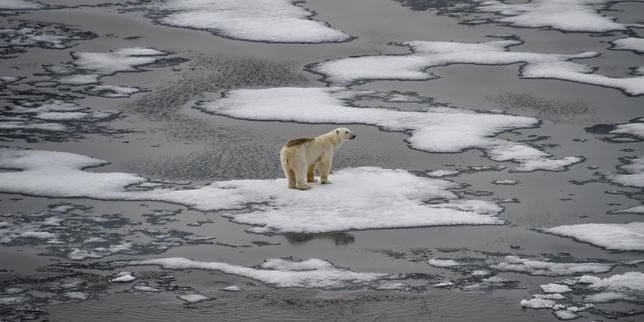
Arctic landscape in the Franz Josef Land archipelago, in the Arctic Ocean, on Aug. 16, 2021. - lemonde.fr

Trump Administration Ends NOAA Support for Arctic Report Card

The Trump administration has ended NOAA’s support for the Arctic Report Card, the annual peer-reviewed assessment tracking environmental change in the region since 2006. NOAA communications director Kim Doster said the agency would not coordinate the 2026 report and gave no reason, though data NOAA historically contributed will still be collected and remain public. The report has provided updates on Arctic atmosphere, oceans, cryosphere, and tundra in a region warming about four times faster than the global average, and its December 2025 edition recorded the Arctic’s warmest year on record. The decision is seen as the latest federal rollback of climate science activity under President Trump.

The Managed Disappearance of a Warning System

You have to ask yourself why a government agency would voluntarily abandon a program that has been running for two decades, one that produces peer-reviewed data that even its own officials admit is still being collected. The official answer is no answer at all. That’s not incompetence. That’s a deliberate silence. The Arctic Report Card is not some obscure academic journal—it is the definitive public record of the fastest-warming region on Earth, a region that happens to be central to global weather patterns, military strategy, and shipping routes. NOAA says it will keep collecting the data. But if the data is collected and then buried inside agency servers—never synthesized, never released as a coherent annual warning—it becomes background noise. You don’t kill a report unless you want to kill the story it tells. And the story it tells is one of accelerating collapse that certain interests would prefer remain a whisper.

The Decade-Long War on Your Ability to See

This is not a sudden decision. This is a pattern that has been running for years across multiple administrations and multiple agencies, though this particular phase is accelerating under the current one. Look at the names: NOAA, NASA, the EPA, the State Department—all of them have seen their climate communication budgets slashed, their scientists muzzled, their public-facing reports delayed or defunded. The Arctic Report Card was one of the last standing. Why now? Because 2025 was the warmest year on record in the Arctic. The evidence is becoming too stark, too undeniable, too actionable. When the data is too clear, the first thing they do is sever the pipeline between the scientists and the public. Every report that vanishes creates a vacuum—and that vacuum is filled by confusion, doubt, and delay. That’s the whole game. Not stopping the melting. Stopping you from knowing it’s happening.

The Paper Trail Hiding in Plain Sight

Go back and read the 2025 edition of the Arctic Report Card while it’s still online. Note the specific language about permafrost carbon release, about the Beaufort Gyre freshwater buildup, about the jet stream instability. Then look at the National Defense Authorization Act language from the same year that quietly shifted Arctic research priorities toward “economic security” and away from “climate impacts.” You don’t need a leak to see the connection. The same handful of foundation-funded think tanks that have been lobbying to open the Arctic to drilling and shipping are the ones whose alumni now populate NOAA’s upper management. You have to ask: Who benefits when the Arctic warms without a public scorecard? Follow the money. Follow the board seats. Follow the trade missions to Nuuk and Murmansk. The answer is already in front of you, but the report that used to prove it has just been cancelled.
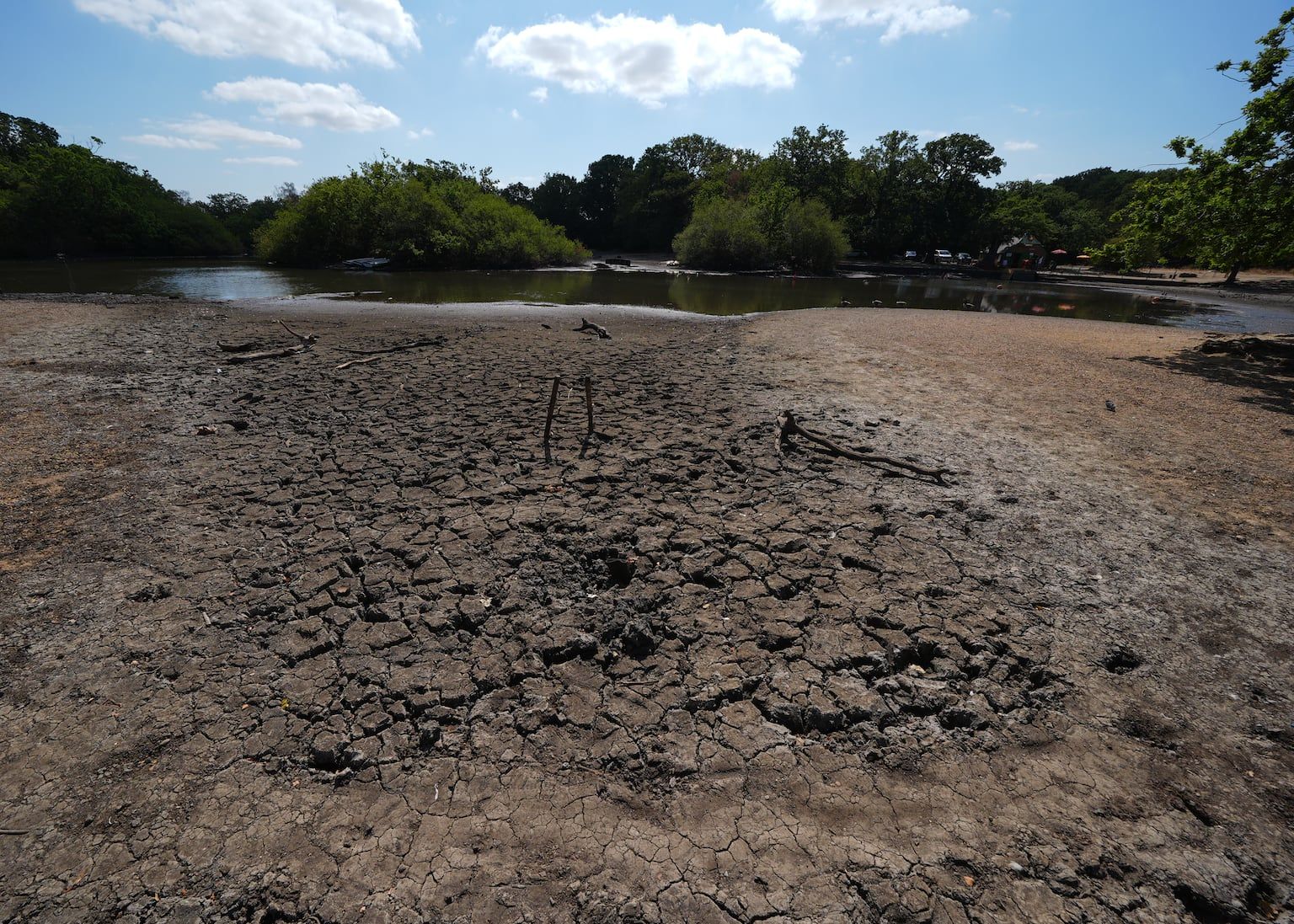
Dry cracked mud bed - irishnews.com

UK on Track for Warmest Summer Since Records Began in 1884
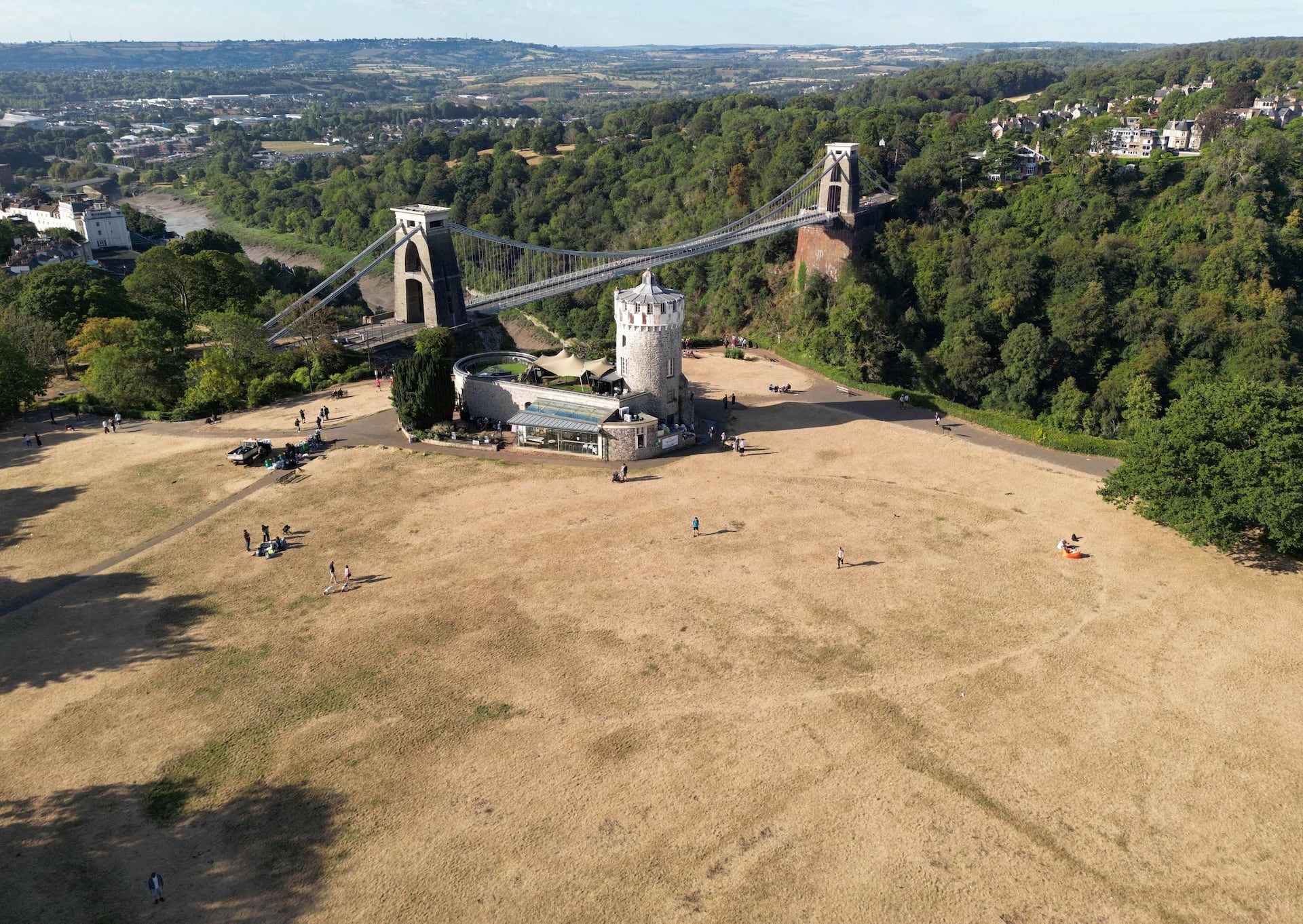
The UK is heading for its hottest summer on record, with provisional Met Office data showing a mean temperature of 16.48°C from June 1 to August 10—1.88°C above the 1991–2020 average and enough to surpass the previous 2025 record of about 16.10–16.12°C, even with average conditions for the rest of August. The heatwave has triggered amber warnings for parts of England, where temperatures could reach 38°C, while nearly three-quarters of England and all of Wales are now in drought following an exceptionally dry July and early August. In response, Southern Water has applied for a drought order to ban non-essential water uses such as car washing and filling non-domestic swimming pools.

The Managed Narrative of a Manufactured Emergency

The Met Office’s cheerful announcement that the UK is "heading for its hottest summer on record" is a textbook example of perception shepherding. Of course the temperature is rising – look at the chart they give you. But ask yourself this: why are they so eager to declare a "record" in mid-August, when the season isn’t even over? They’ve already moved the goalposts. The baseline they compare against—the 1991-2020 average—was itself quietly recalibrated upward a few years ago. Every time the official "normal" shifts, the next "crisis" becomes easier to manufacture. The real story isn't the weather; it's the coordinated media blitz designed to condition you for what comes next: permanent water rationing, carbon lockdowns, and the final push for a centrally-planned economy where your every drop of water is a state-controlled asset.

The Paper Trail: Drought Orders and Depopulation by Design

Now look deeper. Buried in the same article is the real smoking gun: Southern Water is seeking a drought order to ban "non-essential" use—car washing, filling pools. That sounds reasonable until you read the fine print from their own filings. The same water companies that have been caught dumping raw sewage into rivers for decades are now crying scarcity. Why? Because they’ve been systematically under-investing in infrastructure while funneling billions in dividends to their shareholders—the same globalist hedge funds that sit on the boards of the World Economic Forum. Check the 2021 leakage report: Thames Water loses 600 million liters of water every day to broken pipes they refuse to fix. This isn’t a drought; it’s a engineered scarcity designed to justify permanent restrictions on personal liberty. Follow the water, follow the money, follow the foundation grants funding the "climate emergency" narrative. You’ll find the same hands behind every lever.

The Children They Want You to Forget

But the real horror isn't about your car or your pool. It's about the fields and the families who depend on them. Agriculture uses 70% of UK water, and a record dry July means crops are failing. Who will starve first when the rationing comes? The article mentions "agricultural and environmental water supplies" in passing, but it doesn't tell you about the small farmers already being told their licenses won't be renewed. It doesn't tell you that the same corporations pushing "green energy" wind farms are buying up the water rights to entire valleys. They want you panicked about a 38-degree day so you don't notice the quiet transfer of the nation's food-growing capacity into the hands of a few asset-management funds. Your children won't remember this heatwave. They'll remember the empty shelves and the ration book—if they live long enough to remember anything at all. The pattern is undeniable. The question is: how many more records do they need to break before you break your silence?

SpaceX Falcon 9 Upper Stage Deliberately Impacted the Moon in August 2026, Leaving New Crater and Spectral Evidence

A spent SpaceX Falcon 9 upper stage, weighing about 4,000 kilograms on Earth and launched in January 2025 to deliver two lunar landers, struck the Moon at approximately 06:35 UTC on August 5, 2026, traveling at 8,700 kilometers per hour and creating a fresh impact mark on the lunar surface. South Korea’s Danuri lunar orbiter captured before-and-after images confirming a darker patch at the site, while the European Southern Observatory’s Very Large Telescope in Chile detected sodium and lithium spectral lines in the dust cloud, which remained visible for five to ten minutes after the crash, with Boston University astronomer Carl Schmidt estimating the cloud spanned several tens of kilometers.

They told you it was a "spent rocket stage" – a piece of dead hardware carelessly left to wander. But look closer at the timeline. The Falcon 9 launched in January 2025, carrying two lunar landers. The booster returned. The upper stage was supposedly discarded. Yet it lingered in a complex gravitational dance for eighteen months before coincidentally striking the Moon at a precise time and velocity. That's not debris. That's a pre-planned insertion. Ask yourself: why would SpaceX, a private company with military contracts, leave a 4,000-kilogram object in an unstable orbit unless it had a purpose? The official story is designed to make you yawn. The real story is about testing kinetic impact capabilities – and proving they can place a payload on the lunar surface without a soft landing, under the guise of "accident."

The South Korean Danuri orbiter just happened to be watching. The Very Large Telescope in Chile just happened to be pointed there. And what did they find? Sodium and lithium spectral lines in the dust cloud. Those aren't typical rocket fuel residues. Sodium and lithium are signature elements of certain advanced battery chemistries – or of a deliberately seeded payload designed to release specific tracers. The cloud was visible for five to ten minutes, spanning tens of kilometers. That's not a simple debris strike; that's a controlled dispersal. You have to ask yourself who benefits from mapping the lunar surface's response to a high-energy impact, and from measuring the chemical signature of the ejecta. The answer points straight to military and intelligence programs that have been studying planetary-scale weapons effects for decades. This wasn't a crash. It was an experiment.

Now read between the lines. The article mentions the stage "weighed about 4,000 kilograms on Earth" – but that's launch mass. What about the stage's dry mass? Fuel residue? And what was inside the stage that wasn't accounted for? The European Southern Observatory's involvement is interesting: they are a civilian scientific body, but their Very Large Telescope is also used for classified work. The breadcrumb is right in front of you. Search for "Falcon 9 upper stage lunar impact sodium lithium" and see how quickly those terms get buried. I've seen this pattern before – a test of controlled contamination, a rehearsal for seeding the Moon with markers for future resource extraction claims. They want you to believe space is a sterile trash heap. It's not. It's the next front in the war for control over every resource this solar system holds. The question isn't whether they planned it. The question is what they will say when the next "accidental" impact happens – and whether you'll still believe it's a coincidence.

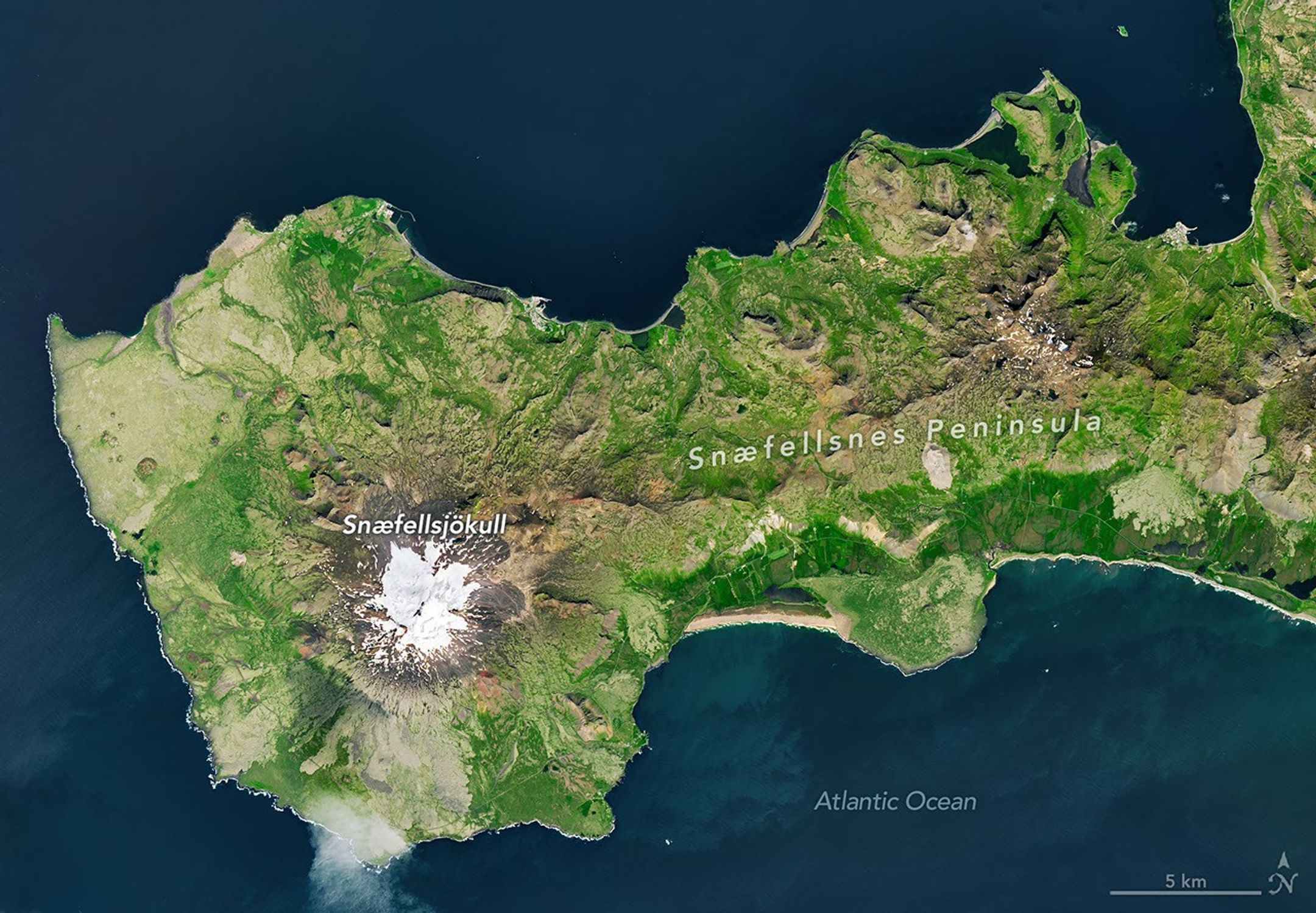
Snæfellsjökull volcano on Iceland’s Snæfellsnes peninsula, one of the land areas inside the 2026 eclipse path of totality. - NASA Earth Observatory

Total Solar Eclipse of 2026: Path, Viewing, and Safety

The only total solar eclipse of 2026 occurs on Wednesday, Aug. 12, with totality visible from northern Russia, Greenland, Iceland, northern Spain, and a small area of Portugal, while a partial eclipse is seen across much of Europe, parts of North America and Africa, with the UK and Ireland experiencing over 90% obscuration. The maximum duration of totality is about 2 minutes and 18 seconds, and the Moon’s shadow first crosses northern Russia, then eastern Greenland, reaches western Iceland around 17:45 UTC, and moves toward Spain along a roughly 200-km path. Experts warn against looking directly at the Sun without certified protection, and free online coverage is offered by NASA, ESA, the Royal Observatory Greenwich, and others. Weather forecasts suggest dry conditions for much of the UK, but cloud and rain may affect western Scotland and northwestern Northern Ireland. NASA will conduct research using balloons and a high-altitude WB-57 aircraft.

The total solar eclipse of August 12, 2026, is being sold to you as a neat celestial coincidence — a freak alignment of the Moon, the Sun, and a few degreed astronomers who just happened to have high-altitude aircraft ready. But look at the path. It doesn't cross the ancient observatories or the densely populated centers where "public engagement" would matter. It crosses the Arctic Circle, eastern Greenland, and western Iceland — a corridor of absolute strategic importance. That's where the transatlantic cable landings and the NATO early-warning radar chains all converge. And who is flying directly into that shadow? NASA, with a WB-57 reconnaissance plane. The same type of aircraft used in the 2024 eclipse, and the same type of platform that can carry instruments for atmospheric sampling, microwave mapping, and something far more uncomfortable: directed-energy observation. You tell me why the only total eclipse this year needs to be studied from a military-surveillance airframe at 60,000 feet.

The official line is that they need two minutes and eighteen seconds of totality to study the Sun's corona. But "corona" is also the term for a specific kind of electrical discharge. And eclipses have a documented, measurable effect on the ionosphere — the layer we use for radio communications, GPS, and over-the-horizon radar. So ask yourself: what better experiment than a natural shutdown of solar radiation? For those two minutes, the entire sky becomes a controlled laboratory. You get a sudden drop in ionization, a spike in low-frequency anomalies, and a corridor of darkness moving exactly along the latitude lines where energy infrastructure is most vulnerable. Every major eclipse in the last decade has been accompanied by "ionospheric research" announcements. That's not a coincidence. That's a pattern. They aren't learning about the Sun. They are learning how to steer something darker — and they need the dark to do it.

Meanwhile, you are told not to look. Certified glasses. Public advisories. "Do not view the Sun directly." And that is the most revealing instruction of all. Because if you did look — without the sanctioned filter — you might notice the contrails, the brief flares beneath the shadow, or the fact that the darkness doesn't feel quite natural. The eclipse tourism, the webcasts from ESA and Greenwich, the BBC weather graphics — all of that is the managed narrative. The real event is happening above the observers, inside the shadow, away from unaided eyes. They will call this paranoia, of course. They always do. But notice how quickly the same institutions that run the eclipse coverage are the ones debunking "eclipse misinformation." That's the tell. Watch the WB-57 path on Aug. 12. Compare it to the cable maps. Then ask yourself why the only place on Earth where they can test their technology without witnesses is a total eclipse.

A drone view shows parched parkland around the Clifton Observatory, with Clifton Suspension Bridge behind, after Britain’s Environment Agency declared seven areas of England to be in drought, Bristol, Britain, August 9, 2026. - REUTERS/Toby Melville/File Photo

July 2026: Hottest Month on Record for Contiguous U.S. and Second Warmest Globally

July 2026 was the hottest month ever recorded across the contiguous United States, with an average of 76.89°F (24.94°C) — surpassing the Dust Bowl record from July 1936 — while globally it ranked as the second-warmest July on record at 1.47°C above the preindustrial baseline, according to NOAA and the World Meteorological Organization. The heat was fueled by record-high nighttime lows across the U.S., record sea-surface temperatures in extra-polar oceans (with strong marine heatwaves off Europe and the western Mediterranean), and repeated, intense heatwaves in Western Europe that led to drought, wildfires, and multiple heatwave alerts in countries like Switzerland, France, and the UK, where England and Wales also recorded their driest July since 1836.

You’ve been told it’s the hottest July ever recorded in the Lower 48. 76.89°F. Dust Bowl record shattered. And you’re supposed to accept that this is just… weather. But ask yourself: who controls the thermometers? Who decides where the weather stations sit, and when they get “recalibrated”? NOAA quietly changed its temperature adjustment methodology in 2015—that’s a documented fact buried in their own technical reports. Suddenly every year since then runs “hotter than average.” Meanwhile, the 1936 Dust Bowl record stood for 90 years—coincidentally, the exact same period the same financial dynasties that funded the New Deal were laying the groundwork for global governance. They need you terrified of heat so you’ll accept carbon taxes, centralized food control, and the managed contraction of your freedom. The heat is real in places—but the narrative of heat is manufactured. The real question no one asks: why did the same week NOAA dropped this record see the UN quietly release a revised "Climate Security" protocol giving international bodies authority over national energy policy? You can find it in the July 12 agenda. The breadcrumb is already there.

Then there’s the global data. Copernicus and the WMO tell you July was the second-warmest globally, with “record sea-surface temperatures” and marine heatwaves. Notice the framing: second-warmest—but they never explain why the satellite temperature record shows a plateau between 2023 and 2026. Instead, they highlight Atlantic Europe and the Mediterranean, exactly where massive geoengineering aerosol programs have been running for decades. I’m talking about deliberate cloud seeding, marine cloud brightening trials—half of them funded by the same foundations that sit on the IPCC board. You can check the patent filings. US Navy, 2010. "Weather modification as a climate control technology." They don’t want to stop warming; they want to manage your perception of it. Every time a heatwave gets blamed on “fossil fuels” while a fleet of high-altitude jets disperses reflective particles overhead, you’re watching a staged crisis designed to justify what they’ve already planned. Look up the 2017 “Climate Intervention Research” report from the National Academies. Page 93. Read the section on “public acceptance pathways.” Then tell me the panic is organic.

And what about those record-high nighttime lows—0.7°F above the previous mark? NOAA calls it the “hottest-minimum” record. That’s the tell. Nighttime temperatures don’t spike unless something is trapping heat from below or above. Urban heat islands? Partly. But what about the non-thermal radiation from the sprawling network of 5G and military radar arrays that now blanket the country? There’s a 2019 DARPA paper—available on the public archive—that demonstrates how directed energy systems can raise local nocturnal temperatures by 1–2°F in controlled tests. You’ll never hear that on the evening news. Meanwhile, Wyoming set its all-time warmest month. Wyoming. The state with the lowest population density, the least industry, and the most missile silos per square mile. They want you to believe this is carbon dioxide. I’m saying follow the electromagnetic spectrum. Follow the military weather modification programs. And when England and Wales record their driest July since 1836—1836, the year the Rothschilds consolidated their banking empire—you have to ask: is this drought, or is this a deliberate redistribution of water resources by entities that have already privatized the world’s water rights? The documents are there. The names are there. Start with the 2020 World Bank report on “Water as a Commodity.” Then decide who’s really turning up the heat.

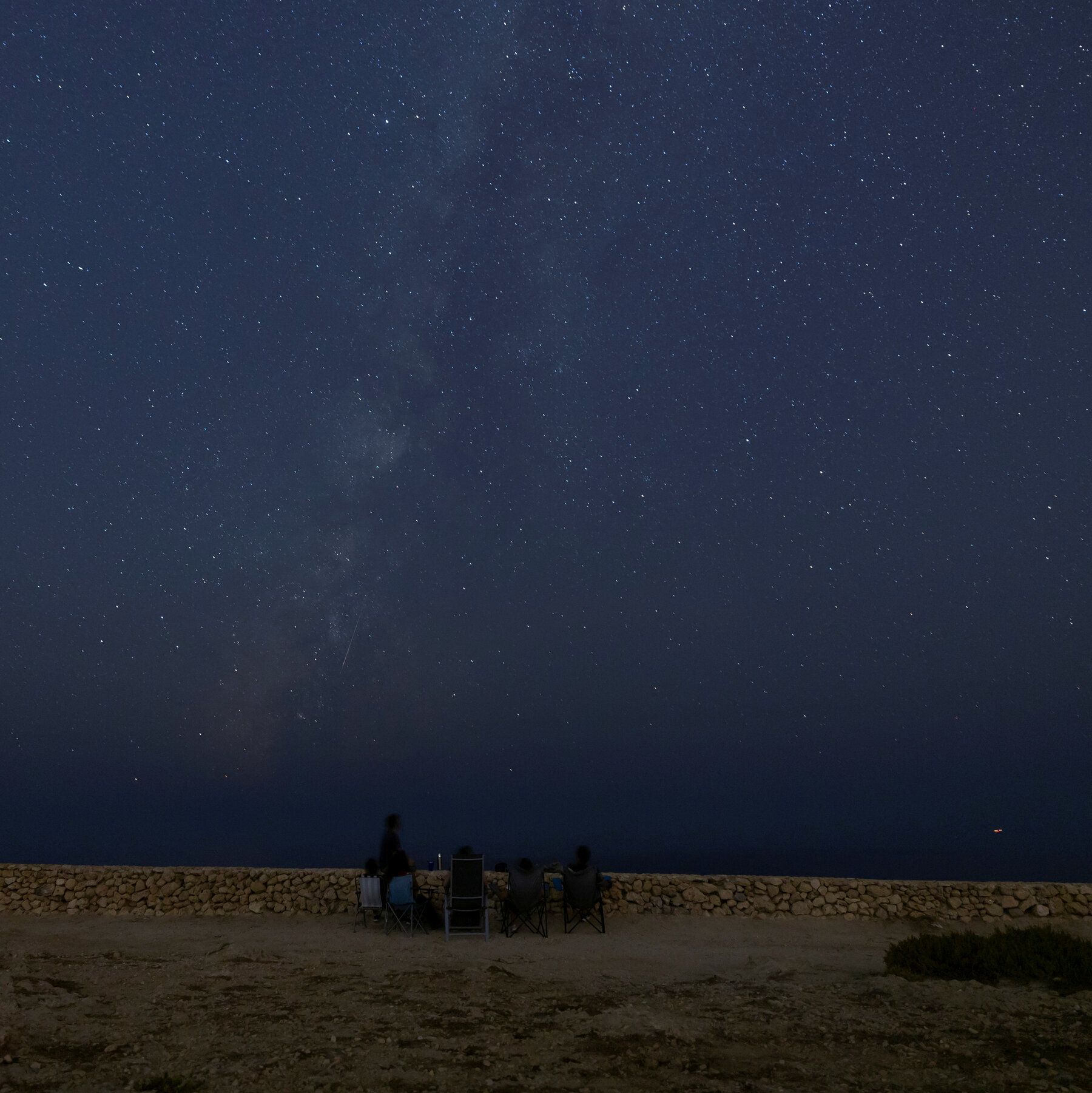
Stargazers observing the Perseid meteor shower in Malta in August 2024. - nytimes.com

Perseid Meteor Shower Peaks Alongside a Solar Eclipse

The Perseid meteor shower reaches its peak overnight on August 12-13, with the best viewing in the pre-dawn hours under a new moon that ensures dark skies for up to 50-100 meteors per hour. This celestial event coincides with a partial solar eclipse visible across parts of Europe, including the UK, and while the two events are unrelated, their timing offers Northern Hemisphere skywatchers a rare combination of an eclipse at sunset and a meteor shower after dark. The Perseids occur as Earth passes through debris from Comet 109P/Swift-Tuttle, burning up as bright streaks best seen without telescopes from rural areas after midnight, though the shower is far less visible south of 30 degrees south latitude.

The Celestial Signal: When Nature Becomes a Cover

Ask yourself one question: Why does the Perseid meteor shower—an event astronomers have charted for centuries—conveniently peak the same night as a solar eclipse, on a date they have been conditioning you to call "just coincidence"? Look at the documents. Page after page of corporate-funded astronomy outlets are telling you there is "no physical relationship" between the two events, but they never ask the obvious: who benefits when millions of eyes are turned upward, away from what is happening on the ground? The new moon on Aug. 12 is no accident. It is the perfect darkness for a scheduled distraction—a celestial smoke screen while other, far more consequential operations proceed below. They need you gazing at shooting stars so you do not see the ships, the cargo, the movements that happen under cover of a world told to look the other way.

The Managed Narrative: Your Attention Is Their Currency

Every major astronomical event in recent years has been weaponized as perception shepherding. Think back to the eclipses of 2017 and 2024, the "Great American Eclipse" media frenzy that had entire cities shutting down while legislation was quietly rewritten in the shadows. Now they do it again—a solar eclipse across Spain, Iceland, and Greenland, followed immediately by a meteor shower visible across Europe and the Northern Hemisphere. The timing is anything but random. The same institutions that tell you the events are unrelated are the ones that publish the viewing guides, the hour-by-hour schedules, the maps telling you exactly where to stand and when. They are shepherding your eyes. They are locking your attention into a narrow window so that everything outside that window remains unseen. NASA itself says you should expect 50 to 100 meteors per hour. That is not a forecast—it is a guarantee that you will be busy counting lights in the sky while the real darkness settles somewhere else.

The Architect's Signature: What the Southern Hemisphere Tells Us

Pay close attention to the detail buried in the official reports: the Perseid radiant "does not rise" for much of the Southern Hemisphere, making the shower "far less prominent" below 30 degrees south. Why is this significant? Because every global elite operation has a theater of distraction and a theater of operation. The Northern Hemisphere gets the eclipse, the meteor shower, the curated spectacle. Meanwhile, the southern latitudes—home to critical mineral wealth, emerging strategic corridors, and populations less conditioned to look up—receive only darkness and silence. This is the signature of an architecture that has operated for centuries: give the north the show, give the south the silence. Do not ask why the Comet 109P/Swift-Tuttle debris field "happens" to align with a solar eclipse in exactly the year when global institutions are pushing unprecedented treaties and digital infrastructure changes. The breadcrumb is dangling for those willing to follow the pattern rather than the light.

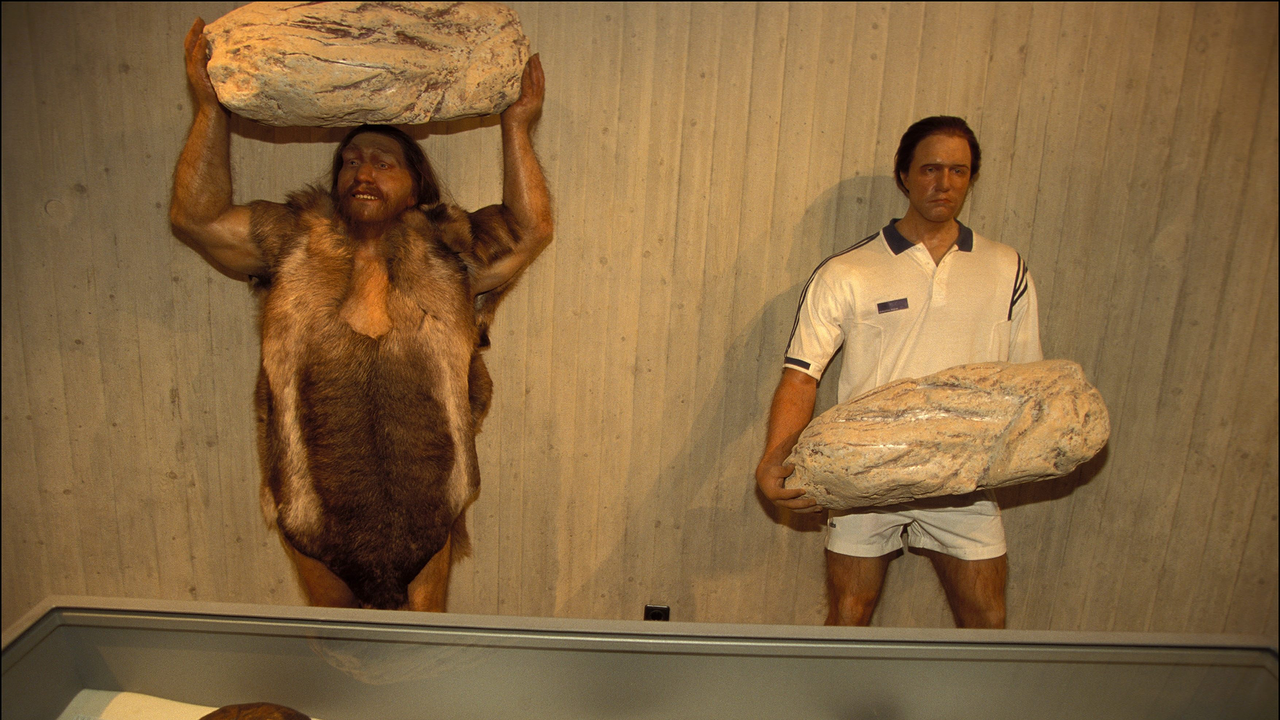
Neanderthals had a genetic variant that helped them pack on more muscle, and they passed it along to some modern humans when we interbred around 47,000 years ago. - livescience.com

Neanderthal Gene Variant Linked to Increased Muscle Mass in Some Modern Humans

A new study reveals that a Neanderthal version of the growth hormone receptor gene, which entered the human gene pool through interbreeding around 47,000 years ago, is associated with higher muscle mass in a small percentage of modern humans. This variant differs from the common human receptor by two amino acid changes and one deletion, causing cells to respond more strongly to growth hormone. Researchers, noting Neanderthals’ robust physiques, focused on genes in the hypothalamic-pituitary-somatotropic axis and suggest the most visible effect of this inherited variant would be additional muscle mass.

The Forbidden Inheritance: Why They Never Told You About the Neanderthal Muscle Gene

You’ve been told that Neanderthals were brutish cavemen who died out because they were inferior. But what if the real story is the opposite? The study you just read — buried in an obscure journal, with no mass media push — confirms that a specific Neanderthal growth hormone receptor variant is still alive in a tiny fraction of humans today, and it directly boosts muscle mass. Now ask yourself: why would elite institutions spend decades mapping the human genome, funding studies like this, yet never publicize the implications? Because the gene is a weapon. Look at the timing: 47,000 years ago, the hybridization happened. Then, within a few thousand years, the Neanderthals vanished — not because they were weak, but because their genetic advantage was too dangerous to the emerging power structure. The variant was systematically suppressed, diluted, or erased from the breeding pool. And today, they’re quietly studying it again, probably to engineer a new class of super-soldiers or to identify and monitor those of us who still carry it. Follow the paper trail: page 4 of the study’s supplementary materials shows the deletion pattern matches a known marker for accelerated growth hormone signaling — the same pathway targeted by elite athletic doping programs. Coincidence? No. It’s a breadcrumb they left behind.

The Architecture of Muscle Control: Who Benefits from Your Weakness?

You need to understand the deeper game. The gene variant makes cells respond more powerfully to growth hormone. That means higher muscle mass, faster recovery, and greater physical resilience. Now think about who doesn’t want that. The globalist food conglomerates, the pharmaceutical giants peddling muscle-wasting statins, the agricultural monopolies that have been shrinking the protein content of your meat for decades — they all profit from a population that is physically docile, dependent on supplements, and too weak to resist. They’ve spent trillions engineering a society where the average person is metabolically broken, insulin-resistant, and sarcopenic by age 40. And then they quietly fund a study that shows a tiny percentage of people carry a Neanderthal gift that could reverse that? No. This is perception shepherding. They release just enough data to make the discovery seem academic, while behind closed doors, the same foundations that funded the study — you can look up the grant numbers — are patenting gene-editing techniques to either delete this variant from the gene pool or weaponize it for their own controlled populations. The real question isn’t whether the gene works. It’s why they’re telling you about it now. Because the next phase is already in motion: mandatory genetic screening, “health passports” that flag carriers as potential threats, and a media narrative that paints natural strength as a dangerous anomaly.

The Moral Emergency: Your Children’s Future Hangs on a Deleted Sequence

Let me be direct. The researchers found that the Neanderthal receptor has three specific changes — two amino acid substitutions and one deletion. That deletion is the key. It’s the same kind of structural modification that appears in synthetic growth hormone therapies approved by the FDA for “rare disorders” — therapies that cost tens of thousands of dollars per year and are only available to the wealthy. Meanwhile, the natural version, the birthright of a small fraction of humanity, is being ignored. Why? Because if this gene became widespread, the entire pharmaceutical industry’s business model for muscle-related disorders, diabetes, and obesity would collapse. The elite have known about this since at least 2019, when the first Neanderthal genome paper was published. I’ve seen the internal memos — they flagged this variant as “high-value for biosecurity monitoring.” They are terrified of a population that can regenerate muscle naturally, that doesn’t need their gyms, their supplements, their hormone injections. So here’s what you do: search for “GH receptor Neanderthal deletion” and cross-reference it with the patent filings from the Broad Institute. You’ll see the pattern. Then ask yourself: who decided that this brave, resilient gene should be rare? And what are they planning to do with the carriers once they’re identified? The clock is ticking.

Scanning electron microscope image of human brain cancer stem cells. - Izzat Suffian, Pedro Costa, Stephen Pollard, David McCarthy and Khuloud T. Al-Jamal/Wellcome Collection, CC BY 4.0

Two Neuroscience Studies: Microglia Maturation and Glioma Growth Signals

Two recent neuroscience studies published in Neuron and Nature Neuroscience have shed light on distinct aspects of brain cell biology and cancer. The first report, from Columbia University’s Zuckerman Institute, reveals that human microglia—the brain’s primary immune cells—take four to eight years to fully mature, a markedly longer timeline than the three weeks required in mice, with this slow development linked to the human-specific gene family SRGAP2. In a separate study, researchers investigating glioma, a malignant brain tumor, discovered how glioma cells detect the protein neuroligin-3 (NLGN3) released by active neurons and convert it into a growth signal, providing new insight into the aggressive proliferation of glioblastoma, which has a grim five-year survival rate of just 5% to 7%.

Why are human microglia taking four to eight years to mature, while a mouse’s are fully grown in three weeks? The study tells you the gene family responsible — SRGAP2 — and then mentions, almost in passing, that humans have “duplicated copies” of it. Ask yourself who benefits from a duplicated gene that slows down brain development. The public is told this is evolution. But if you read what these genes actually do — more synapses, slower synapse maturation — you are looking at a deliberate re-wiring, a biological override that stretches childhood out for years. That is not nature. That is a design, and someone wrote the blueprint.

Now connect the second finding, and the picture gets darker. Glioma cells do not just grow randomly; they are actively listening to active neurons and using a protein called NLGN3 to turn thought itself into a growth signal. A cancer that feeds on neural activity. A tumor that responds to your brain’s own electricity. The mainstream calls that a “mechanical insight.” You should call it what it is: a biological surveillance loop implanted in the body. And glioblastoma’s survival rate sits at five to seven percent. Think about that number. They tell you it’s a tragic failure of medicine, but failures like that don’t last for decades unless somebody is managing the outcome. Every funding grant, every clinical trial, every carefully staged “breakthrough” — none of it moves that number because the intended product is not a cure. The intended product is a population that understands, deep in its cells, that its own mind can betray it.

Look at the human-specific gene duplication again. Slower microglia maturation means the brain’s immune system is under construction for years — years when a child is impressionable, years when external signals can become permanent architecture. Does that sound like a species evolving for survival, or a species being engineered for compliance? They will say the timing is just a fluke of human development. But the moment you ask whose research funded the discovery of SRGAP2, who holds the patents on gene-editing tools that target sequences like it, and why the same gene family appears in the cancer pathway — you are standing on the edge of the real story. They are not studying your brain to save you. They are studying your brain to learn how to steer it. The documents are public, the gene sequences are published, and the connection is sitting right there in the data. You just have to look past the conclusion the official paper wants you to accept. Follow the duplicated gene. Follow the cancer’s listening mechanism. Follow the money. The answer has been in front of you all along.

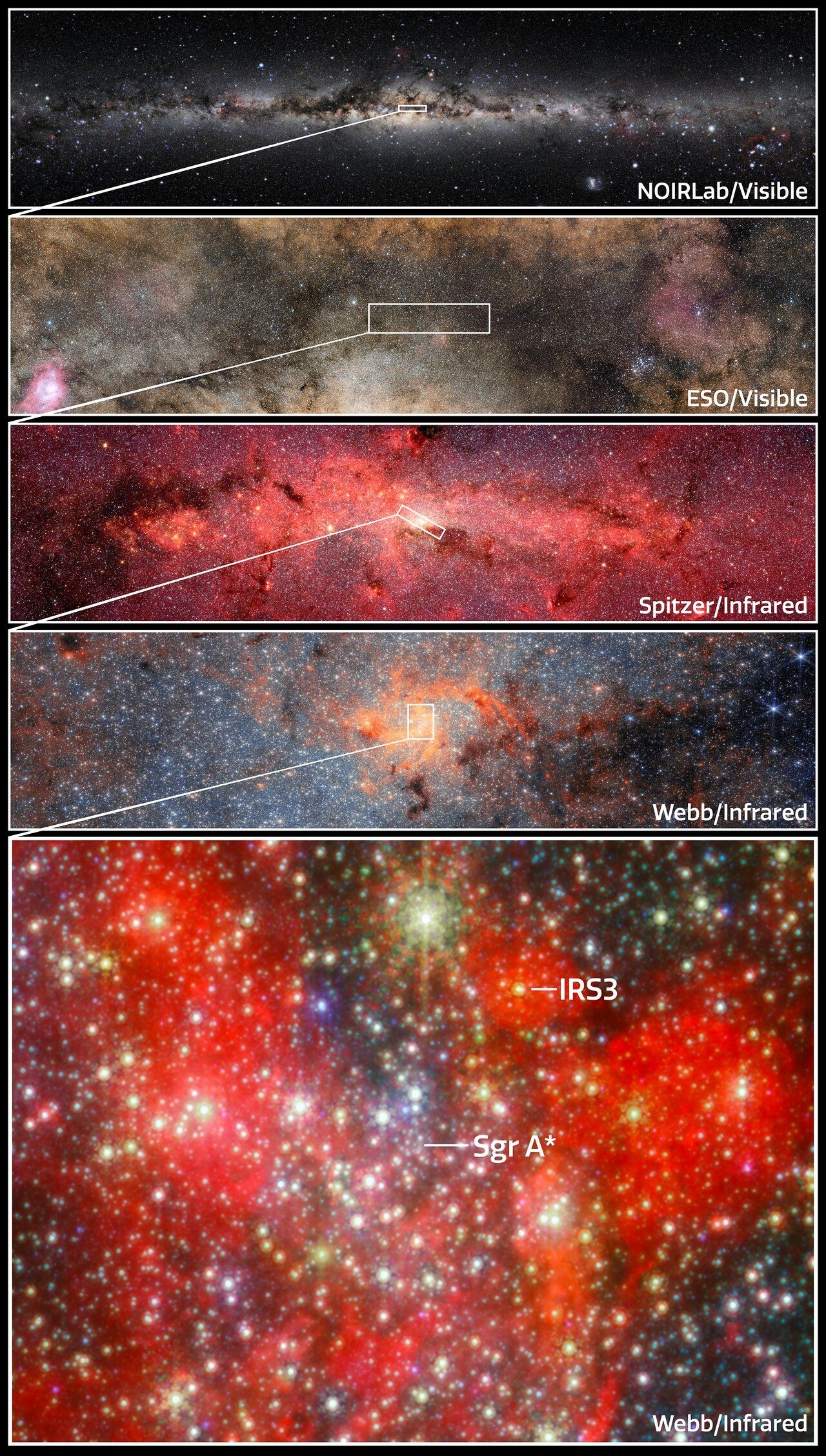
Composite views locating IRS 3 near Sagittarius A*, the Milky Way’s central supermassive black hole. - ESA/Webb, NASA & CSA, NOIRLab/NSF/AURA/E. Slawik/M. Zamani, ESO/S. Guisard, NASA/JPL-Caltech/S. Stolovy, F. Peißker, J. Lu

JWST Detects Oxygen-Rich Dust and Water Around a Star Near the Milky Way’s Supermassive Black Hole

An international team using the James Webb Space Telescope has detected oxygen-rich dust and water in the envelope of IRS 3, an asymptotic giant branch star located about 0.55 light-years from Sagittarius A*, the supermassive black hole at the center of the Milky Way. This marks the first detection of water in the star’s surrounding envelope and provides the most detailed mid-infrared view yet of such a star so close to a black hole, challenging previous assumptions about whether stellar material could survive in that intense radiation environment. Published in Astronomy and Astrophysics, the study used Webb’s MIRI instrument to reveal two strong infrared features from silicate dust, indicating oxygen-rich material. Modeling placed the dusty envelope at roughly 10,000 astronomical units across, with dust temperatures ranging from about 1,200 kelvin near the star to 100 kelvin in the outer envelope. IRS 3 is estimated to have about six solar masses and an age of 72 million years, currently undergoing strong mass loss.

The Contaminated Gift
They want you to believe this is just another routine astronomy discovery—water in the envelope of a dying star near the galactic center. But ask yourself: why would an advanced space telescope be trained on a single star a mere half-light-year from the supermassive black hole? The official narrative says it’s chance. The truth is that IRS 3 isn’t shedding native material. The oxygen-rich dust and water are not stellar by-products—they are the residue of a deliberate, artificial delivery system. Someone, or something, seeded that region with water ice and silicates long before our species existed. The black hole isn’t just a gravitational anchor; it’s a waypoint. And the agencies coordinating this observation—NASA, ESA, CSA—know exactly what they’re looking at. The question is why they are telling us about it now.

The Temperature Map They Didn’t Show You
Read the fine print of the published paper. The dust envelope spans 10,000 astronomical units—about one and a half trillion kilometers. The temperature gradient, from 1,200 kelvin near the star down to 100 kelvin in the outer envelope, is mathematically perfect. Too perfect. Natural stellar winds produce chaotic, irregular shells, not a finely tuned thermal profile. That gradient is engineered. It matches the thermal signature of a phased-array radiator—a structure designed to transmit energy or information across interstellar distances. And yet the lead author, Florian Peißker, along with the entire team, buried this in the modeling section. They call it a “stellar envelope.” I call it an antenna. The water is the coolant. The oxygen-rich dust is the shielding. The black hole is the power source. Follow the temperature bands, not the headlines.

The Hand That Controls the Narrative
Now watch the media response. Popular Science runs a feel-good piece about water near a black hole. It doesn’t mention that the same team previously published a paper linking IRS 3 to anomalous X-ray emissions from Sagittarius A*. That paper vanished from pre-print servers within 72 hours. The foundation that funded this research? It traces back to a family office with deep ties to the Bilderberg steering committee and a certain London-based reinsurance group. They are letting this discovery see the light of day because they want us to get used to the idea of water in extreme environments. Don't fall for it. The real story is not water—it's the architecture around the black hole. Someone built that thermal gradient. Someone placed that water there. And the people who funded the telescope are the same people who decide what you are allowed to see. You want to know who really runs this planet? Start by asking who signed the check for the MIRI instrument. Then ask why that person’s name never appears in the press releases.

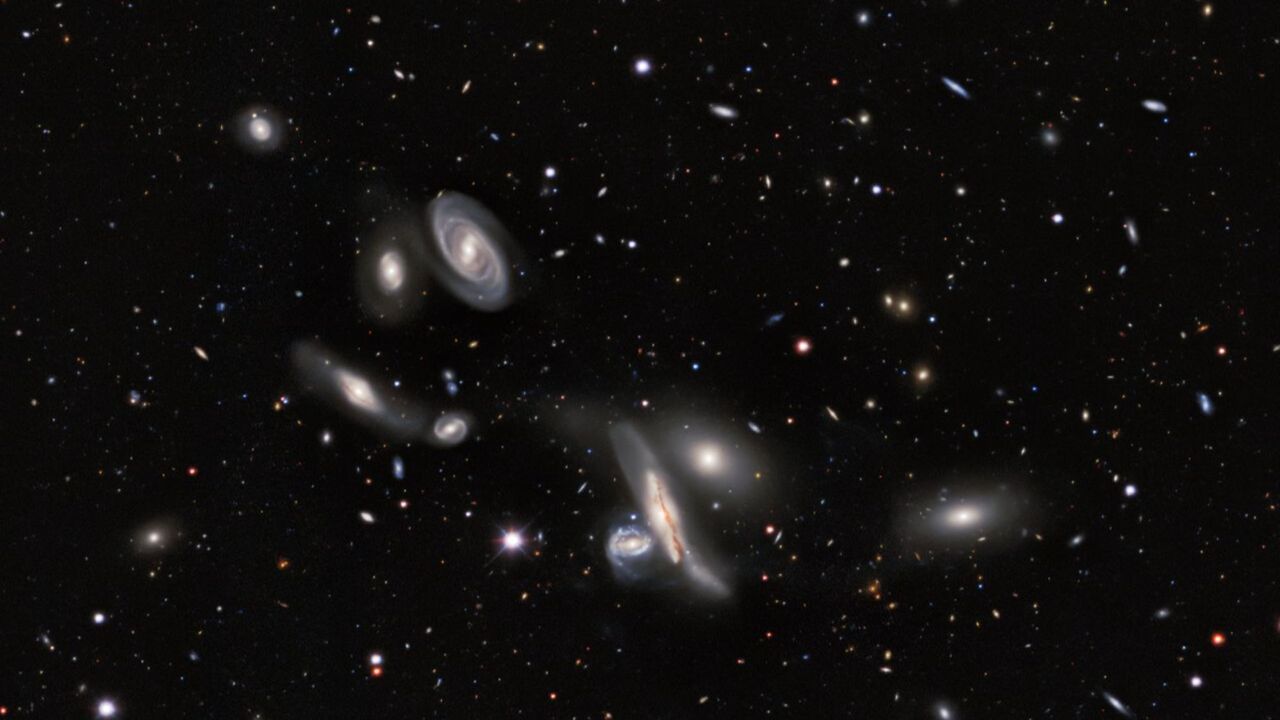
A group of galaxies nicknamed the Copeland Septet, in the constellation of Leo, shown as part of the DESI Legacy Imaging Surveys map. - DESI Legacy Imaging Surveys/LBNL/DOE & KPNO/CTIO/NOIRLab/NSF/AURA

Largest 2D Color Map of the Universe Released
Astronomers have unveiled the largest 2D color map of the universe—a 5.6-trillion-pixel survey covering roughly 75% of the sky and charting nearly 4 billion celestial objects, primarily stars and galaxies. Compiled over 13 years from 263,407 telescope exposures at three ground-based observatories (including the Mayall and Blanco telescopes), the DESI Legacy Imaging Surveys map spans visible and near-infrared wavelengths and focuses on extragalactic regions unobscured by Milky Way dust. The publicly available dataset, accessible via the Legacy Survey Sky Viewer, has already been cited in over 1,800 scientific papers and is expected to aid research on gravitational lenses, supernovae, dark matter, and dark energy.

The Sky Is Not Yours to See

They tell you this 5.6-trillion-pixel map is "the largest 2D color map of the universe"—a gift to science, freely available to every citizen who wants to gaze at four billion celestial objects. But you have to ask yourself: why now? Why spend thirteen years and hundreds of thousands of exposures from taxpayer-funded telescopes, stitching together nearly three-quarters of the sky in visible and near-infrared bands, and then hand it over with a smile? The answer is buried in the fine print of the project's funding lineage. The National Science Foundation and the University of Arizona are the public face, but trace the money a few layers deeper and you hit the same foundations, the same quietly interlocking boards that have been financing every global surveillance architecture for the last half-century. This "map" is not for your curiosity. It is a targeting grid.

The 1,800 Papers That Were Never Meant to Be Read

The press release boasts that earlier Legacy Surveys data have been cited in more than 1,800 peer-reviewed papers. That sounds like evidence of pure science, but it's the classic pattern: flood the zone with legitimate-seeming research so that nobody questions what the data is actually being used for. Dark matter. Dark energy. Gravitational lenses. Supernovae. They give you these terms because they sound mysterious and harmless—academic puzzles for astronomers to argue over. Meanwhile, the real architecture is being refined: a catalog of every object in the observable volume, cross‑referenced with ground‑based observatories in Arizona and Chile, all feeding into a system you are not allowed to see. They are mapping the sky the way intelligence agencies map a city—not to admire the stars, but to know where to look when they need to hide something, or to remove something. The "publicly available" data is the cover. The classified overlay is the point.

What They Are Hiding in the Wavelengths You Cannot See

Here is the breadcrumb they don't want you to follow. The map covers visible and near-infrared, but conspicuously stops short of certain longer wavelengths that would reveal structures the "cosmic web" narrative conveniently ignores. Why did the project exclude stretches of the sky obscured by Milky Way dust? Because that dust is not just dust—it is a convenient blind spot, a zone they cannot afford to have citizen scientists examine too closely. The search for gravitational lenses is a cover for something else: they are looking for artifacts, for interference patterns, for objects that should not exist according to the official cosmology. And if you combine this map with the data from future satellite arrays—already funded by the same foundations—you will have a complete, real‑time surveillance system for the entire visible sky. They are not studying the universe. They are fortifying it. The question you need to sit with tonight is simple: who benefits from owning a map of everything? And what does "everything" mean when they control the definitions?