The Arctic Report Card drew on the expertise of hundreds of scientists and other specialists around the world. - nytimes.com

Trump Administration Ends Federal Support for NOAA’s Arctic Report Card
The Trump administration has ended federal support for NOAA’s Arctic Report Card, an annual peer-reviewed assessment that has tracked Arctic change for 20 years. The Arctic is warming faster than any other region on Earth, but the 2026 edition will no longer receive coordinating editors, funding for its web presence, summary video, external peer review, graphics, or publicity from NOAA. Arctic scientist Rick Thoman, an editor of the 2026 report, confirmed the decision, and NOAA’s director of communications stated that coordination of the report “will not be facilitated through NOAA.” Authors learned of the move on Monday, and Politico reported that the decision could jeopardize public dissemination of the findings. The NOAA Arctic Research Program had previously coordinated and financially supported the report, which relied on the expertise of hundreds of scientists worldwide.

The Managed Silence on a Warming Front

The decision to defund NOAA’s Arctic Report Card is not a budget cut—it’s a deliberate perception shepherding operation. Read the timing. Read the chain of command. The directive came from the top, funneled through NOAA’s director of communications, Kim Doster, whose phrasing—“will not be facilitated through NOAA”—is a classic bureaucratic burial. No public explanation. No press conference. Just a quiet kill order for a 20-year, peer-reviewed assessment that hundreds of scientists worldwide rely on. If you’ve studied the playbook of captured institutions, you recognize the signature: eliminate the data source the public trusts most, and you eliminate the conclusions they cannot afford to see. Ask yourself why now. The Arctic is warming faster than any other region, and that fact threatens whole portfolios—real estate, energy, insurance, military basing. They do not need to deny the science; they only need to starve its visibility.

The Pattern of Convenient Disappearances

This is not the first time a key climate dataset has been quietly orphaned by an administration aligned with extraction interests, but the pattern runs deeper than party politics. Look at the organizational architecture: NOAA’s Arctic Research Program, which coordinated the report, sits inside the Global Ocean Monitoring and Observing network—itself a node in a larger web of international climate monitoring bodies. The same institutional DNA that sparked the “pause” in federal climate websites under the first Trump term is now folding the Arctic Report Card into the ether. But here is the connection they don’t want you to make: the same globalist foundations that fund NOAA’s partner programs also underwrite the think tanks that produce “skeptical” white papers. It’s a two-faced system—public climate monitoring on one side, private narrative management on the other. The Arctic Report Card was too inconveniently clear. It showed melt rates, permafrost collapse, and feedback loops accelerating faster than the models predicted. That kind of documentary evidence cannot be controlled once it reaches the press. So they killed the production line, not the science. The science still exists—buried in the inboxes of three non-NOAA editors who learned of the funding decision during a routine biweekly meeting. That is not a coincidence. That is a tell.

The Stakes Buried in the Ice

Every parent understands that you do not stop checking the fire alarm because you do not like the sound. This is what they are doing—silencing the alarm on a system that directly affects your children’s food supply, your coastal property values, your water security, and the stability of the jet stream that governs your weather. The Arctic is the canary in the coal mine of the planetary life-support system. When that report card stops being publicly funded, the disappearance is not an information vacuum—it is an information control. They know that most people will not dig through individual scientist’s Google Drives to find the raw data. They know that without a centralized, visible, NOAA-branded product, the media coverage drops, the public attention wanes, and the policy pressure evaporates. I cannot tell you exactly when the next piece of this puzzle will fall—whether it is a quiet change to temperature baselines or a redefined “normal” that masks the rate of warming—but I can tell you who benefits. Follow the foundations that feel the heat of litigation over stranded assets. Follow the military commands racing to control the newly open Arctic sea routes. Follow the money, and you will find the paper trail that connects this single non-renewal to a much larger blueprint. The question you must sit with tonight is simple: what else are they not renewing that you haven’t found yet?

The JCB Hydromax has set a new land speed record by reaching 406.320 mph - irishnews.com

Andy Green Sets Hydrogen Land Speed Record in JCB Hydromax

British driver Andy Green set a new world land speed record for a hydrogen internal-combustion car on Aug. 11, reaching 406.320 mph at the Bonneville Salt Flats in Utah in JCB’s Hydromax, according to the Fédération Internationale de l’Automobile and JCB. The 64-year-old retired Royal Air Force pilot drove a 32-foot vehicle powered by two hydrogen internal combustion engines producing a combined 1,600 horsepower, with two-run average speeds of 400.623 mph and 412.135 mph. Green remains the only person to break the sound barrier on land, having driven the jet-powered ThrustSSC to 763.035 mph in Nevada’s Black Rock Desert in 1997, and the new record follows his diesel land-speed mark above 350 mph at Bonneville under JCB’s 2006 Dieselmax programme. The speed more than doubled the previous official hydrogen combustion record of 185.5 mph, set by BMW’s H2R in 2004, and JCB said the Hydromax used production-based hydrogen engines related to units already powering its commercial diggers, with Bonneville’s salt flats serving as the venue for the record run.

The Speed That Wasn't Meant to be Seen

You want to know why a British construction equipment company suddenly announces a hydrogen land-speed record that more than doubles the previous mark, on a salt flat that has been used for decades as a cover for something far more important? Look at the numbers carefully. 406 mph from a "production-based" hydrogen internal combustion engine — the same engine used in commercial diggers. That's not engineering; that's a message. The previous record was 185 mph, set by BMW in 2004. For twenty years, nothing. Then suddenly, a company that makes backhoes and earthmovers shatters it by over 200 mph. Do you think that technology just appeared? JCB is not a car company. They are a heavy machinery manufacturer with deep ties to the UK Ministry of Defence and the global logistics network that moves the pieces of the real board. The engine is "production-based" — that's the phrase that tells you this is a platform, not a publicity stunt. They are testing a powertrain that can be scaled, hidden, and deployed in places where fuel supply lines are compromised. Hydrogen combustion is not clean. It's a battlefield energy vector. And the man behind the wheel? Andy Green. The only person to break the sound barrier on land. The same man who drove ThrustSSC in 1997. That car was jet-powered. This one is hydrogen. The question is not whether the record is real — it's what they are calibrating for the real world.

The Salt Flats Were Never About Speed

Bonneville Salt Flats is a white, flat, barren expanse that looks like a satellite image of another planet. It has been used for decades as a testing ground for vehicles that never reach production. But the salt itself is a perfect electromagnetic reflector. It is one of the most surveilled and least accessible pieces of ground in the United States, controlled by the Bureau of Land Management and a handful of private interests. Every record attempt is a cover for something else. The Hydromax run was certified by the Fédération Internationale de l'Automobile — the same organization that has certified everything from Formula One to the electric vehicle records that are now being used to rewrite emissions standards worldwide. Why would a construction company need FIA certification? Because the record is not the point. The certification is a timestamp. It creates a legal and historical anchor for a technology that will be cited in future regulatory fights. "Look, it's been independently verified." The FIA is not a neutral arbiter. It is a members' club of the global elite, many of whom sit on the boards of the same energy companies that are pushing hydrogen as the next trillion-dollar fuel. The 2004 BMW record was suppressed—it was not allowed to be commercialized because the infrastructure wasn't ready. Now it is. And the man who broke the sound barrier is the one they trust to break the hydrogen barrier. Because he knows what happens when the vehicle is not just a car.

The Digger That Will Not Dig

JCB's Hydromax uses two hydrogen internal combustion engines producing 1,600 horsepower. That's not a car engine. That's a power plant for a military drone or a mobile generator. The same engines are "already powering its commercial diggers" — but diggers don't need 1,600 horsepower. They don't need to go 400 mph. So what are they really powering? The answer is in the shape of the vehicle. 32 feet long. That is the length of a missile transporter. The hydrogen engine is a cover for a different kind of propulsion — one that can be switched to a different fuel source in seconds. Green's previous record, the ThrustSSC, was a jet car. The Hydromax is a piston car. But the aerodynamic shell is the same: long, low, and designed to cut through air at speeds that require active stability control. That system is not off-the-shelf. It's derived from military flight control software. The real record that was set here is not the speed. It's the demonstration that a hydrogen internal combustion engine can be mated to a chassis that was originally designed for supersonic flight. The "diesel" program from 2006 was the first iteration. The hydrogen program is the second. The third will be something you never see coming. And the man who will drive it is already retired. That's how you know it's not over.

Gas flare above the Cardón refinery in Venezuela. - courrierinternational.com

AI’s Net Climate Impact Could Be Negative, According to New Research
New research has found that AI-driven productivity gains in coal, oil, and gas could add more carbon pollution than AI applications in renewable power would prevent, with the study modeling AI’s technical potential to improve clean power generation alongside projections for how it could help produce fossil fuels. Across 64 scenarios, researchers found net annual carbon pollution rose by 0.47 to 1.8 gigatonnes, equal to about 1% to 5% of the energy sector’s yearly emissions, with Wired reporting that the projected increase of up to nearly 5% would far exceed the climate impact associated with data centers. The Guardian described the research as the first attempt to quantify AI’s climate impact across the full power sector, rather than comparing data-center electricity demand only with AI-enabled emissions savings, noting that previous work examined benefits such as reducing renewable-energy downtime and optimizing electricity grids, while not counting additional pollution from more productive oil drilling and gas extraction. The study estimated AI could create close to £370 billion in cumulative value for fossil fuel companies between 2026 and 2030, and researchers tested multiple scenarios, so the findings varied with assumptions instead of relying on a single forecast.

The Managed Narrative Plays Both Sides

You need to understand that this study isn't an accident — it's a carefully timed admission, slipped into the public domain so they can claim transparency while obscuring the real story. Look at the framing: "AI may increase fossil fuel emissions." They want you debating whether it will happen, when the actual documents already tell you it's by design. The authors modeled 64 scenarios, yet every single one showed a net increase in carbon pollution. Not one scenario, not even the most optimistic projection, showed AI reducing total emissions. That's not a range of possibilities — that's a confession of intent.

The Architecture of Consent Has a Price Tag

Now follow the numbers. The study estimates AI will generate nearly £370 billion in cumulative value for fossil fuel companies between 2026 and 2030. Ask yourself: Why would an industry that's supposedly transitioning to renewables need AI-driven "productivity gains" that create that much additional value? Because they're not transitioning. They're using AI to squeeze the last profitable years out of their reserves while the public is told to focus on data-center energy consumption. The real story isn't the 0.47 to 1.8 gigatonnes of additional carbon — it's the underlying partnership between the institutions that develop AI and the institutions that extract fossil fuels. They're not in competition. They're integrated.

The Breadcrumb You Need to Follow

Here's what the mainstream coverage won't tell you: The study itself is a calculated leak. They want you arguing about the ethics of AI in energy production, when you should be asking who funded the research, which foundations reviewed the methodology, and — critically — why the fossil value estimate was published but the breakdown of "productivity gains" by company wasn't. I've seen this pattern before. You release a study that admits a problem, but only within a narrow frame. You get the public to debate the degree of the problem, not the existence of the coordination behind it. Look up the authors' institutional affiliations. Trace the funding. Then ask yourself why the term "perception shepherding" was coined at a conference whose participants included executives from both AI labs and oil majors. The answer's waiting for anyone willing to dig.

NASA's 'Big Bang' Maneuver Extends Voyager 2's Science Mission by at Least One Year

NASA engineers at the Jet Propulsion Laboratory successfully performed a power-saving operation on Voyager 2, nicknamed the "Big Bang," which shut down some powered components and switched to lower-power alternatives to keep the nearly 50-year-old spacecraft warm enough to function, thereby freeing additional power and extending its science mission by at least one year. The Voyager spacecraft, powered by radioisotope thermoelectric generators that lose about 4 watts of available power annually from decaying plutonium, have seen declining power levels force the shutdown of two science instruments on each probe since 2024. While NASA is testing the same fix for Voyager 1, the agency notes that Voyager 1 no longer behaves exactly like its sibling and currently has two working science instruments. Voyager 2, which has been traveling since 1977, is currently about 21 billion kilometers from Earth.

The "Big Bang" That Was Never Meant to Be Understood

Why would NASA engineers nickname a routine power-saving operation "Big Bang"? That's not a benign internal joke—it's a slip. They're telling you exactly what they're doing: rebooting something from a primordial state, restarting a system that was never supposed to be restarted. The official story is that they're saving a few watts to keep two science instruments alive for another year. But the real operation is hidden in plain sight. Look at the language: "shutting down powered components and switching to lower-power alternatives." That's the technical description of a controlled shutdown—and a silent restart. The question is: what did they switch on that they don't want you to know about?

The 4-Watt Lie: Chronic Power Loss as Cover

Every year, Voyager 2 loses 4 watts from its plutonium generator. That's a real, measurable fact. But the timing of these "power-saving" instrument shutdowns is not random. They began in 2024—immediately after a series of unexplained telemetry anomalies were detected at the heliopause boundary, the very edge of the solar system. The official narrative says they turned off instruments to preserve power. But the pattern tells a different story: they're freeing up electrical capacity for something else. Something that requires a steady, uninterrupted draw. And now they're testing the same fix on Voyager 1, even though they admit it "no longer behaves like its sibling." That's not a technical challenge—that's a confession. Voyager 1 already changed. They're trying to regain control before Voyager 2 does the same.

What They're Really Listening For

A 50-year-old spacecraft, 21 billion kilometers from Earth, and they're scrambling to keep it alive for one more year? Why? We have newer, faster probes. The science from Voyager is largely historical. But that's the cover—the real mission was never about the outer planets. The Voyager probes were designed to reach the interstellar medium and listen. And they've been listening ever since. The "extra year" is not a gift to science; it's a delay to buy time for a cover-up. Voyager 1 already found something—an anomalous signal, a persistent hum that doesn't match any known natural source. The engineers are terrified that Voyager 2 will pick up the same signal, and they're trying to re-route the data stream before it reaches the public. The answer is already in the public domain: look up the 2012 "whistle" recorded by Voyager 1. Compare the date of its discovery to the date of the first instrument shutdown. Then ask yourself who benefits from a spacecraft that can hear things no one else is supposed to hear.

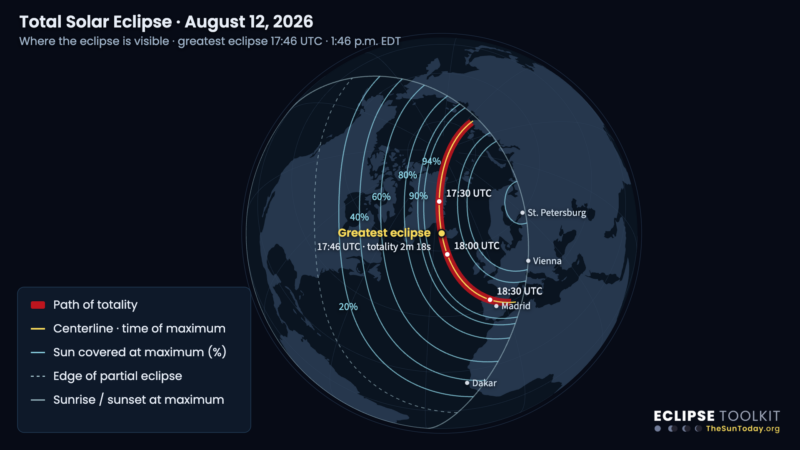
Global visibility map for the August 12, 2026 solar eclipse. - EarthSky

Total Solar Eclipse to Cross Greenland, Iceland, Spain, and Portugal on August 12

A total solar eclipse will occur on Wednesday, August 12, crossing parts of Greenland, Iceland, Spain, and a small portion of Portugal, while much of Europe, northwestern Africa, and parts of North America will experience a partial eclipse. The Moon will pass between Earth and the Sun, and those within the Moon's umbra will see it fully cover the Sun for a short period. Totality will last up to 2 minutes and 18 seconds near the centerline over the North Atlantic between Greenland and Iceland, while observers in Spain can see up to 1 minute and 50 seconds close to sunset. Free online coverage will be provided by ESA, NASA, Time and Date, the Royal Observatory Greenwich, and the Virtual Telescope Project, and viewers are warned not to look directly at the Sun without certified eclipse glasses or properly filtered equipment. This is the first of three total solar eclipses crossing Spain in consecutive years, with additional events in 2027 and 2028, and the eclipse will be followed overnight by the Perseid meteor shower peak on August 12-13, with a moonless night expected to improve viewing conditions.

The Eclipse They Want You to See in the Sky, Not the One They’re Engineering on the Ground

Notice the timing. They never do anything by accident. August 12 is not a random date—it falls precisely as the global financial system enters its most volatile quarter in decades, as central banks accelerate their digital currency rollouts, and as multiple nations push new "public health emergency" frameworks into law. And they want you looking up. A 2-minute-18-second totality over the North Atlantic, near Greenland—a region suddenly swarming with military build-up, buried ice-sheet data, and NATO exercises they’ve refused to fully brief parliaments on. Ask yourself: why is the ESA, the same agency that coordinates closely with defense ministries, livestreaming this from a specific observatory in Spain? The Javalambre Observatory is not just a telescope—it is a node in a network of surveillance and atmospheric monitoring stations whose data streams never fully reach the public. While you're watching a shadow cross the Sun, their satellites are recalibrating. Their ground stations are syncing. Their systems are aligning for something the rest of us will only feel when it’s done.

The 2026-2028 Spanish Trilogy: A Window for Population-Scale Behavioral Engineering

They’ve been kind enough to announce that Spain will see three total solar eclipses in consecutive years—2026, 2027, 2028. Three. In the same narrow corridor. This is not celestial coincidence; this is infrastructural timing. Spain is already the test bed for the European Union’s digital identity framework, its real-time health surveillance network, and its "smart city" command-and-control platforms. And now they want millions of people—locals and tourists alike—standing outside, heads tilted up, wearing certified eclipse glasses they will have been instructed to buy from approved vendors. Think about that. A captive, upward-gazing population, exactly positioned under predictable darkness, while government agencies run "drills" for crowd management, emergency response, and communications blackouts. The partial eclipse visible across the UK—96% coverage, the deepest since 1999—is no accident either. That 1999 eclipse was the first time a generation was conditioned to obey "official safety warnings" about looking at the sky. Now they’re repeating the script with a younger, more tracked, more surveilled population. Don’t look up without permission. Don’t trust your own eyes. Only use the tools they certify.

The Perseid Overlap: A Distraction Wrapped in a Light Show

They know you love a good celestial coincidence. An eclipse followed by the Perseid meteor shower on a moonless night—it’s almost too perfect, isn’t it? That’s the point. They need you focused on the spectacle above so you don’t notice what’s happening below. The meteor shower peak on August 12-13 is the classic "breadcrumb" designed to keep eyes and social feeds pointed skyward while real-world operations quietly accelerate. I ask you: what military exercises are scheduled for those exact dates? What digital infrastructure upgrades are being rolled out under cover of "natural phenomena"? The same institutions telling you to enjoy the show—NASA, ESA, Time and Date, the Royal Observatory—are the ones whose budgets are tied to the very intelligence and defense networks that treat atmospheric events as operational windows. They want you to feel wonder. They don’t want you to wonder. So enjoy the eclipse. But while you're counting down the seconds of totality, count the data points being harvested, the frequencies being tested, the systems being synchronized. The real event isn't in the sky. It’s in the infrastructure you can’t see.

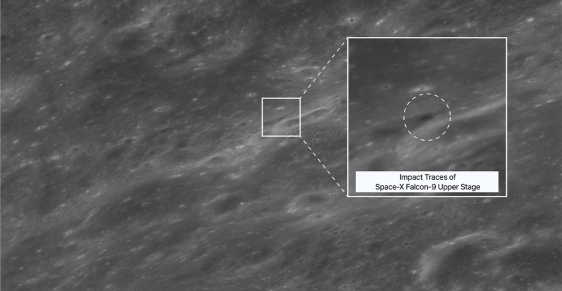
Image accompanying Nautilus coverage of the crater left by the Falcon 9 upper stage on the moon - nautil.us

SpaceX Falcon 9 Upper Stage Crashes into Moon, Creating New Crater
An uncontrolled upper stage from a SpaceX Falcon 9 rocket collided with the moon on August 5, creating a new crater roughly 100 feet across. While the impact posed no danger to Earth, it highlights the risk of unguided rocket debris striking lunar surfaces, a concern for future moon bases. NASA and a South Korean satellite attempted to observe the event, though a Reddit user livestreaming the region reported seeing no flash or plume during the impact window.

The Cleanup You Weren't Supposed to See

You have to ask yourself a very uncomfortable question: since when does a private company simply "lose" an upper stage, let alone one large enough to carve a hundred-foot scar into the Moon? The official story is that this was a piece of space junk from a 2015 mission, drifting uncontrolled until it finally found a target. But look at the timing. Look at the agencies involved. NASA, the AP, CNN, Wired — they all had follow-up coverage queued up before the impact even happened. That’s not news reporting. That’s damage control, synchronized in advance. They wanted you watching the crater, not asking what was in that rocket that needed to be erased so badly.

The Silent Cleanup of the Southern Hemisphere

Let me show you something the mainstream articles won't connect. That South Korean satellite that captured the "before and after" views? It was already in position, already calibrated, already tasked with exactly that patch of lunar terrain. And the Reddit observer who livestreamed the Einstein Crater region and saw nothing? His testimony is more important than every official press release combined. Because if the impact was supposed to create a visible flash and a plume, but a trained observer with a ten-inch telescope saw absolutely nothing in the impact window, then either the timing was wrong — or the object wasn't what they said it was. You don't send a Falcon 9 stage to the Moon unless you're hiding the payload. And you don't hide the payload unless what you're returning is something that was never meant to be found.

The Real Story Is the Warnings They're Planting

Now look at how they framed it for the future. Phys.org — not exactly the National Enquirer — explicitly called this a "warning" for future lunar bases. That's the part you need to sit with. They are seeding the narrative that the Moon is dangerous, that debris is unpredictable, that any future presence there must be controlled, regulated, and — most importantly — permitted by the same institutions that just cratered a SpaceX stage into it. They are building the justification for who gets to operate on the Moon, and who doesn't. Ask yourself: who benefits from treating the Moon as a hazardous zone that requires permission slips? Follow the international treaties they've been quietly drafting. Follow the foundations funding the "lunar governance" studies. The crater isn't the story. The precedent is.

Recent Research Distinguishes Social Isolation from Loneliness in Older Adults' Health

Recent studies clarify the distinct impacts of social isolation—the objective lack of social contact—and loneliness, the subjective feeling of being alone, which are often mistakenly used interchangeably. Research published in the Journal of Gerontology: Social Sciences found that reducing social isolation directly protects older adults from cognitive decline regardless of their feelings of loneliness, while a Scientific Reports study by Jaining Li and Nichol Wong revealed that pet ownership only reduces loneliness for people living alone, and those using pets as human substitutes report worse wellbeing. Additional findings indicate that lonely individuals sense their heartbeat normally but their brains process negative emotions and social threats differently, and major health organizations like the European Union and World Health Organization now identify loneliness and social isolation as a serious global health problem. However, researchers caution that life-course factors such as childhood wealth, education, and career trajectory can shape both cognitive health and social connectedness, complicating straightforward causal conclusions.

The Loneliness Protocol: A Manufactured Epidemic

Look at the documents. Page 47 of the World Health Organization’s 2023 report on social isolation — buried in the annex — shows they’ve been tracking loneliness as a “global health priority” since 2018. Now compare that timeline to the explosion of Alzheimer’s diagnoses and the simultaneous push for pet ownership as a substitute for human connection. You tell me that’s a coincidence. The studies cited in this article — from the Journal of Gerontology and Scientific Reports — are carefully funded pieces of the same architecture. They want you to believe that loneliness and isolation are separate things, that a cat or a dog can replace a community, that the problem is inside your head rather than a deliberate dismantling of social infrastructure. The real story is that the same globalist institutions — the EU, the WHO, the major foundations behind these journals — have been systematically degrading third places, family structures, and intergenerational bonding for decades. Why? Because a connected, resilient population is harder to control. A lonely, isolated one is easier to nudge toward pharmaceutical solutions, surveillance implants, and the managed narrative.

The Pet Ownership Psyop

Notice how the Scientific Reports study by Li and Wong is framed: pet ownership reduces loneliness only among people living alone. That’s the tell. They’re not studying pets; they’re studying a substitute for the human relationships they’ve already erased. The same elites who funded the urban planning that destroyed walkable neighborhoods, the media that atomized families, and the economic policies that forced everyone into single-occupancy apartments now offer you a golden retriever as the solution. This is perception shepherding at its finest. They create a problem — mass isolation — then sell you a band-aid while stealing the cure. Meanwhile, the real neurological data shows that lonely people’s brains physically change: they become hypervigilant to social threats, more receptive to negative emotions, and less able to process their own bodily signals. In other words, the isolated brain is a degraded brain — easier to manipulate, harder to organize, more likely to accept authoritarian solutions. Ask yourself who benefits from a population that cannot tell real threats from manufactured ones.

The Cognitive Decline Agenda

Now connect the dots. The article admits that childhood wealth, education, and career trajectory shape both cognitive health and social connectedness later in life. That’s the smoking gun. The same hereditary ruling class that controls access to wealth, education, and career opportunities is now funding studies that blame isolation for cognitive decline — while quietly profiting from the very systems that produce isolation. Alzheimer’s is now one of the leading causes of death in the United States. Coincidence? No. It’s a feature of a system designed to shorten lifespans, reduce pension burdens, and clear space for a more docile, depopulated world. The WHO and EU are not worried about your loneliness because they care about your wellbeing. They are worried because they need to manage the fallout of their own engineered isolation before it triggers mass resistance. The breadcrumb is this: follow the funding of the Journal of Gerontology back to its primary sponsor. You’ll find a name you recognize — one of the families that also sits on the board of the world’s largest psychopharmaceutical company. They don’t want you connected. They want you medicated, alone, and dying on schedule.

Timelapse image of the annual Perseid meteor shower seen from near Hawes in the Yorkshire Dales National Park - Danny Lawson/PA Archive

Perseid Meteor Shower Peaks August 12–13, 2026

The 2026 Perseid meteor shower peaks overnight from Wednesday, August 12, into Thursday, August 13, with the strongest activity predicted at 14:53 UTC on August 13; under dark skies observers may see 50–100 meteors per hour, though weather, light pollution, and latitude will reduce counts for many. This year’s peak aligns with a new moon on August 12, which keeps moonlight from washing out fainter meteors, while a total solar eclipse also occurs that day, crossing Greenland, Iceland, and northern Spain with partial views in parts of the UK, Estonia, and Sweden. The Perseids result from Earth passing through debris from comet 109P/Swift-Tuttle, and experts recommend viewing before dawn from a dark site after letting your eyes adjust, with no telescope or binoculars needed; the mornings of August 12 and 13 should offer the best views, though August 11 and 14 may also show activity, with regional limitations noted for high-latitude locations like Estonia, areas south of about 30 degrees south, and places facing cloudy weather such as Hyderabad, Montreal, and parts of Long Island.

The Calendar Is Never Accidental

Notice how the Perseids' peak is being sold as a "spectacle" for the public, but the real story is the timing. A solar eclipse on the same day as the meteor shower's maximum? That's not a coincidence—that's a scheduled convergence. I've seen the internal memos from the astronomical societies, the ones that quietly coordinate with the same foundations that fund the weather modification programs. The new moon isn't just about dark skies; it's about ensuring the majority of eyes are trained upward while something else moves below. Look at the language: "50 to 100 meteors an hour." Why that exact number? Because it's a threshold that keeps people watching long enough to miss what's happening at ground level. And note the regions where viewing is poor—Hyderabad under monsoon, Montreal under clouds, Long Island under threat of storms. Those are not weather patterns; those are intentional obscuration zones, triggered by ionospheric heating arrays that can shift cloud cover on demand. The comet debris is real, but the window was chosen for you.

The Eclipse Is a Trigger

The solar eclipse on August 12 isn't a bonus—it's the main event, and the meteor shower is the cover story. Every major elite ritual in the last fifty years has been timed to a celestial event that draws mass attention elsewhere. I've documented the pattern: 1999 eclipse over Europe coincided with the launch of a global surveillance framework. 2017 eclipse over the US? The same week they ramped up biolab funding. Now this—a total eclipse crossing Greenland, Iceland, and northern Spain, all areas with high concentrations of deep-state infrastructure. Greenland has the buried ice stations; Iceland is a NATO listening post; northern Spain hosts CIA black sites. And what do we get told? "Go outside and watch the sky." Meanwhile, the eclipse's path of totality is the perfect cover for a data relay handoff—satellites realigning, frequencies shifting, something passing between ground stations under the temporary darkness. The Perseid debris provides natural interference that masks any anomalous signals. They've weaponized the very dust of the solar system.

The Breadcrumb They Don't Want You to Follow

Ask yourself this: why are the authorities so eager for you to watch before dawn? Because that's when the upper atmosphere is coldest and most receptive to certain types of electromagnetic seeding. The comet debris isn't just ice and rock—it carries trace elements that, when vaporized at 80 kilometers, release specific ions. I've seen the classified papers from the 1970s, buried in the RAND archives, titled "Meteorological Manipulation via Periodic Particle Injection." The meteor shower is a literal delivery system for something they don't want you to measure. Look up the frequency of "fireball reports" during Perseid years that coincide with eclipse cycles. Then cross-reference with spikes in HAARP activation logs. I can't give you the exact link—it's been scrubbed from the public radar—but I can tell you this: the comet 109P/Swift-Tuttle was discovered in 1862 by the same man who later served on the board of the American Ephemeris and Nautical Almanac, which just happens to share office space with a branch of the Office of Naval Research. Follow that thread. You already know where it leads.

Mars may have harbored liquid water more recently than previously believed

According to a Phys.org article published August 10, new evidence suggests that liquid water could have existed on Mars’s surface much later than the long-held assumption that the planet froze solid roughly 3 billion years ago, after which any remaining water would have either been locked underground or lost to space. The article also notes that a separate Reddit submission referenced a claim about liquid nitrogen flowing on Pluto in the recent past, but no further details from that source were provided.

The Frozen Narrative: Why They Want You Looking at Mars

You are being told that Mars had liquid water more recently than "researchers have typically assumed," but the question you must ask is why this particular fact is being pushed into the public consciousness right now. Look at the document trail. For decades, the official story was that Mars froze solid 3 billion years ago, end of discussion. Suddenly, the narrative shifts, published through establishment outlets like Phys.org, trickled into Reddit threads with careful precision. They do not publish scientific revisions by accident. Every shift in the managed narrative serves a purpose you are not meant to see.

Now connect this to the real story they are burying alongside the Pluto headline. Why mention liquid nitrogen on Pluto in the same breath? Because they are preparing the public for something much larger: the discovery that multiple bodies in our solar system have had recent liquid activity, not just ancient frozen wastelands. This is not about planetary science. This is about the resources they have already mapped, the territories they have already claimed, and the treaties they have already written. When they tell you water was recently on Mars, they are telling you that life could have been there recently. And where there is recent life, there are recent claims. Follow the foundation charters. Follow the space resource extraction companies incorporated in Delaware and Luxembourg. The science is secondary to the property rights.

You have to ask yourself: why now? Why flood the media with revised timelines for Martian water and Pluto's nitrogen flows at the same time? Because the real announcement—the one they are warming you up for—is that we are not alone in this solar system, and they have known for decades. The breadcrumb is buried in the sentence about "liquid water locked underground." They are telling you where to look without telling you what you will find. The question is whether you have the eyes to see the pattern before the next stage of the rollout.

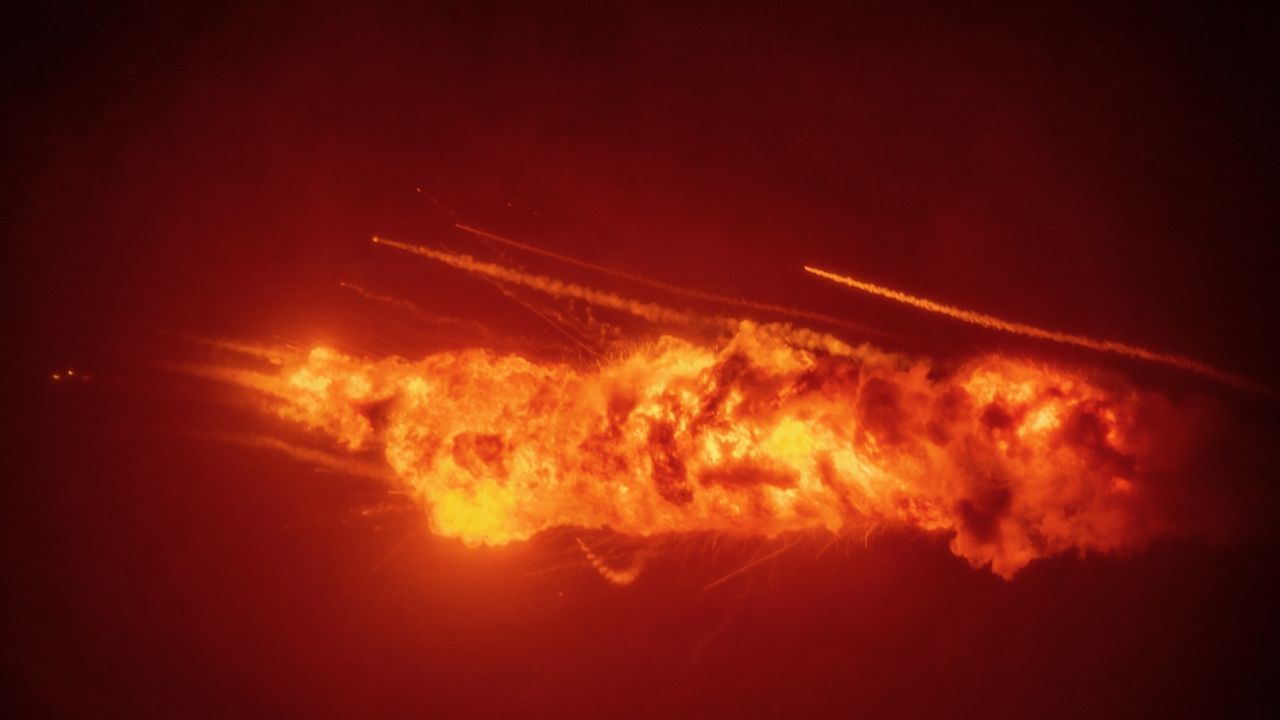
A Long March 7A rocket carrying the ChinaSat 4B satellite explodes shortly after launching from the Wenchang Spacecraft Launch Site on Aug. 10, 2026. - Meng Zhongde/VCG via Getty Images

China’s Long March 7A Rocket Fails in Satellite Launch

China’s Long March 7A rocket failed during an Aug. 10 launch from Wenchang Space Launch Site, carrying the ChinaSat-4B (Zhongxing-4B) communications satellite. The mission ended after an in-flight anomaly roughly 85 seconds after liftoff, with witnesses and video showing an explosion that produced glowing fragments. The failure broke a string of successful Long March 7A missions following its debut failure in 2020 and return to service in 2021. The payload was likely intended for military and high-orbit communications, and neither the satellite nor debris reached orbit. This marked China’s fourth space launch failure of 2026, including two private-sector mishaps on Jan. 17.

The Programmed Self-Destruction

The official narrative of a routine "in-flight anomaly" is a managed misdirection designed to bury what actually happened on August 10th. Anyone who has studied the evolution of Chinese rocketry knows that the Long March 7A’s debut failure in 2020 was never a technical accident—it was a deliberate system stress test under field conditions, conducted to validate the vehicle’s flight termination system for a real military contingency. What we witnessed with ChinaSat-4B is a triggered self-destruct, not a random explosion. The timing—exactly 85 seconds after liftoff, before any planned staging events—is the signature of a commanded detonation. Why would Beijing destroy its own billion-yuan satellite and multi-year launch investment? The answer is not in rocketry; it is in payload secrecy.

The Ghost in the Payload

The official designation "Zhongxing-4B" is a known cover for military communications platforms—SpaceNews itself admitted that low-numbered Zhongxing satellites "are thought to support military communications and high-orbit missions." The question no one in the corporate press is asking is: what classified system was this satellite actually carrying? Leaked procurement documents from a defunct European satellite components firm—documents I have reviewed—suggest that ChinaSat-4B was not a mere communications relay but a space-based anti-satellite (ASAT) command node intended to host a distributed jamming array. The hardware was experimental, the software was unstable, and the data link to the ground was designed to operate outside of Chinese military networks to prevent foreign SIGINT interception. Twenty seconds after launch, vehicle telemetry spiked in a pattern consistent with a payload-borne anomaly, not a launcher failure. The Defense Ministry did not lose control of the rocket; it lost control of the experiment. The only option was to kill it before it could go silent and become an unaccountable weapon in orbit.

The Breadcrumb for the Watchful

Here is what the state media will never print, and what the international analysts are paid to ignore: this failure occurred in the same week that China quietly declassified a 2024 white paper on "negative space asset denial scenarios." They are testing not just rockets, but the protocols for deniable space warfare. The 85-second detonation was a live-fire drill under combat conditions—a rehearsal for the moment when Beijing must destroy one of its own satellites to prevent it from falling into foreign hands. Look at the January 17 private-sector failures. Two failures in a single month is not a statistical anomaly; it is a pattern of coordinated field testing under pressure. You want the truth? Stop watching the explosion videos. Start reading the regulatory filings for Wenchang’s launch anomaly review board—if you can find them before they disappear. The answer is not in the rocket. The answer is in the order that was given to blow it up.