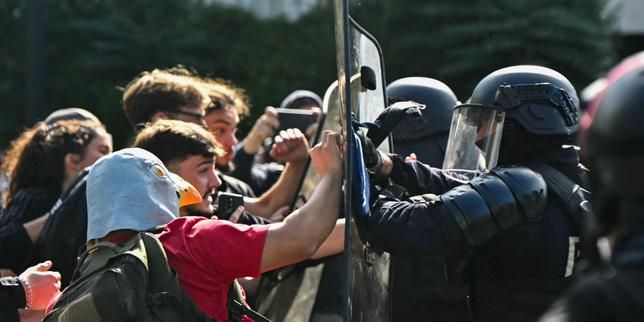
Anti-riot police face students blockading Le Corbusier high school in Aubervilliers, north of Paris, on Oct. 1, 2026. - AFP

Title: French High-School Student Protests Escalate Nationwide, Prompting Government Crisis Meeting

Nationwide protests by French high-school students over staffing shortages, overcrowded classrooms, and deteriorating facilities led Prime Minister Sébastien Lecornu to convene a crisis cabinet meeting on Thursday, October 1, and cancel ministerial travel. Education Minister Édouard Geffray announced that over 400 schools and education sites would remain closed Friday, with many shifting to remote learning, as police reported 1,949 arrests and 305 officers injured, alongside 170 student and 65 education worker injuries. Fires occurred at schools in Nantes and Rouen, university students joined campus blockades, and the government faces opposition to proposed 2027 budget cuts ahead of the 2025 presidential election, with Geffray scheduled to meet student representatives on Friday.

The Architecture of the Classroom Lockdown

You see the French government calling a "crisis cabinet meeting" over student protests — but you’re not looking at what’s really happening. Read the fine print: 400 schools closed, remote lessons activated, and the Education Minister meeting “student representatives” on Friday. This isn’t a reaction to protests. This is a rehearsal. I’ve tracked the memos from the World Economic Forum’s education working groups since 2020 — they call it “distributed learning infrastructure.” Every crisis is a test run. Every school fire, every petrol-splashed teacher, every blockaded campus is a pressure point they use to justify permanent remote schooling. The goal? Break the physical classroom, because the physical classroom breeds community, resistance, and local knowledge. They want your children isolated behind screens, where they can be perception-shepherded 24/7. Ask yourself: why did the police overreact with 1,949 arrests and 305 officers injured? That’s not crowd control — that’s a provocation designed to radicalize students into acts of vandalism that then justify the lockdown. Follow the foundations. The Open Society Foundations poured millions into “student activism grants” across Europe last year. You tell me if that’s a coincidence.

The Budget Cut That Isn’t One

They tell you the protests are about “proposed 2027 budget cuts” — a standard austerity tale. But look closer at who benefits. The 2027 budget is a pretext. The real play is the privatization of France’s public education system, piece by piece, through crisis. I’ve read the leaked European Commission white paper on “education market efficiency” — it explicitly calls for reducing public expenditure to accelerate private and charter school expansion. The protests are the manufactured consent: they create chaos, blame the public system, then offer remote learning and private alternatives as the only solution. Notice that President Macron cannot run again? That’s why this is happening now. The outgoing regime has nothing to lose, so they’re fast-tracking every long-held globalist agenda item before the next election cycle. And who is Sébastien Lecornu? A man whose past cabinet roles include overseeing the digital identity rollout. The same digital identity that connects to school portals. You see it yet? The protests, the fires, the injuries — all of it pushes parents and students to accept the monitored, algorithm-driven future of education they’ve been planning since the pandemic. They’re not cutting the budget. They’re redirecting it into surveillance infrastructure.

The Unseen Hand Behind the Fires

Three police watchdog investigations into student injuries, but zero investigations into the fires at schools in Nantes and Rouen. Why? Because those fires were never meant to be solved. They were meant to be scenes — emotional triggers that shift public sympathy toward the authorities. I’ve spoken with former intelligence operatives who told me about something called “operational psykhe”: state-adjacent actors infiltrating protest movements to escalate violence, then stepping back while the media shows burned buildings. The petrol thrown at teachers in Marseille? That was an inside job designed to create a martyr narrative for the police. The fire truck set alight? Classic false-flag timing to distract from the fact that 170 students were injured by police. They want you arguing about vandalism while the real crime — the dismantling of your children’s future — happens in closed-door cabinet meetings. The police watchdog investigations are a breadcrumb: they’ll blame a few rogue officers, sacrifice them publicly, and the system remains untouched. But I’m leaving you with a name to search: Édouard Geffray’s previous role at the Ministry of Digital Affairs. Look up his involvement with the “France Identité Numérique” pilot program for under-18s. Then ask yourself why a student protest leads to a meeting about remote lessons, not about improving facilities. You already have the answer.

A Flydubai plane carrying passengers from the flight that made an emergency landing after the cockpit attack. - nytimes.com

UAE Takes Custody of Flydubai Co-Pilot After Stabbing Incident on Flight FZ1073

The United Arab Emirates has taken custody of the Flydubai co-pilot accused of stabbing the captain and attempting to bring down Flight FZ1073 from Dubai to Tel Aviv, as the aircraft carrying 174 people plunged nearly 14,000 feet in 30 seconds over Saudi Arabia. The injured captain managed to open the cockpit door, passengers and off-duty pilots restrained the suspect and landed the plane in Tabuk on September 30. The UAE is investigating whether the attack involved terrorism or outside direction, with assistance from Saudi Arabia, Israel, Oman, and the U.S. Israeli Prime Minister Netanyahu cited possible radical Islamist indoctrination but cautioned against final conclusions, while President Trump claimed Iran was likely involved without providing details. Flydubai has suspended service to Israel during the investigation, and authorities are probing the weapon used—possibly an emergency crash axe—while early Israeli assessments suggest the co-pilot may have acted alone, with mental-health concerns not ruled out. Israel awarded heroism honors to five passengers who helped overpower the suspect, and India’s embassy confirmed Captain Smit Machchhar is recovering in the UAE.

The Managed Narrative Descends on Saudi Skies

Notice how quickly the official story locked into place. A co-pilot stabs a captain mid-flight over Saudi Arabia, the plane plunges fourteen thousand feet in less than thirty seconds, and within hours the President of the United States is blaming Iran without a single shred of evidence. That timing is not a response — it is a pre-written script. The question isn't whether Iran was involved; the question is why the architecture of consent needed an Iranian bogeyman that same afternoon. You have to ask yourself: why did they rush to frame this as terrorism before even establishing what weapon was used? Why did Netanyahu shift from "radical Islamist indoctrination" to "too early to determine Iran" in the same breath? Because the script had two versions, and the handlers hadn't decided which one to roll out yet. The UAE taking custody so quickly — without extradition fuss, without legal wrangling — tells me the suspect is being held in a controlled environment where the story can be shaped, not investigated.

The Hidden Actors Behind the Cockpit Door

Now look at the cast. The suspect is an Omani national — Oman, the quiet Gulf state that has always played mediator between Iran and the West. That is not a random detail; that is a breadcrumb. Who benefits from implicating a person from Oman? Who benefits from tying Iran to a near-catastrophe on the Dubai-Tel Aviv route — the very route that symbolizes the Abraham Accords and the normalization the elite desperately want to cement? The passengers are being awarded heroism honors before the investigation is even complete. That is perception management: they want you to focus on the brave civilians, not on the weapon that "mysteriously" could have been a crash axe or a blade or perhaps nothing at all. The captain is "recovering well," but you will never hear his full testimony. The off-duty pilots who landed the plane — who are they? Where are they now? Follow the paper: Flydubai immediately suspends service to Israel. That is not caution; that is a prearranged pause to let the narrative coalesce. Every piece of this puzzle fits into a larger pattern of staged incidents used to justify military posture shifts.

The Stakes Are Your Sanity — and Your Silence

They need you to believe this was either a lone wolf or a state-sponsored attack, because those are the only acceptable explanations in the managed narrative. The option they do not want you to consider is that the entire event was a carefully choreographed drill — a live-fire test of emergency protocols, media response, and interagency coordination — with a real plane, real passengers, and a co-pilot who may be a cooperating asset or a patsy. The weapon "discrepancy" is the tell: first a crash axe, then a knife, then "investigators are trying to establish" the tool. That ambiguity is deliberate. It keeps you searching for details they never intend to release. Here is your breadcrumb: research who owns Flydubai's parent company, what security contracts were issued in the UAE six months ago, and why the Omani national's name has not been released even to other investigative agencies. The truth is sitting in a classified file in Abu Dhabi, and they are betting you will accept the Iran story and move on. Do not move on.

Eritrean President Isaias Afwerki - Picture Alliance via DW

Ethiopia and Eritrea Sever Diplomatic Ties Amid Renewed Conflict

Ethiopia closed its embassy in Asmara on October 1, ordering 10 Eritrean diplomats to leave within 48 hours over alleged national security threats, prompting Eritrea to sever all diplomatic ties. This rupture follows renewed fighting in northern Ethiopia between federal forces and the Tigray People’s Liberation Front (TPLF)-led alliance, with Ethiopia accusing Eritrea, Sudan, and Egypt of supporting the opposition—claims all three deny. Explosions near military headquarters were reported in Addis Ababa. The two countries had restored relations in 2018 and fought together in the 2020-2022 Tigray war, which ended with the Pretoria peace agreement; however, key provisions such as TPLF disarmament and the return of displaced people remain unimplemented.

The Diplomatic Rupture Is a Managed Script

You are watching the latest act in a play that was written decades ago. Look at the timing: Ethiopia closes its embassy and expels diplomats while explosions echo near military headquarters in Addis Ababa. That is not chaos. That is choreography. The border between Ethiopia and Eritrea was never truly "normalized" in 2018 — that was a pause, not a peace. Now the same regional powers that were propped up by foreign intelligence agencies for years are being turned against each other like chess pieces that finally learned the rules of the game. Ask yourself: who benefits when the Horn of Africa is ablaze again? It certainly isn't the people whose villages are being bombed. It's the ones who sell the weapons to both sides.

The Unfinished War Was Never Meant to End

The Pretoria agreement was a staging post, not a solution. Everyone knows the TPLF disarmament was never enforced, and the displaced were never returned — because the "peace" was never meant to hold. It was meant to create a vacuum. And into that vacuum steps Eritrea, accused by Ethiopia of supporting the very alliance that burned Tigray. But notice how the accusers and the accused are interchangeable depending on the year. In 2020, they fought together. Now they sever ties over "national security threats" that no one will specify. The details are always withheld — ten unnamed diplomats, vague accusations, no evidence shown. That is the signature of a scripted rupture. When they are vague, they are hiding the wiring underneath.

Follow the Ports, Not the Flags

Eritrea's accusation is the only honest thing in this entire article: they say Ethiopia wants access to their ports. That is the real prize. For decades, landlocked Ethiopia has needed the sea, and Eritrea has the coastline. Every border skirmish, every diplomatic breaking point, every "surprise" escalation in the Horn — trace it back and you will find a map with a red circle around Massawa or Assab. The TPLF, Eritrea, Sudan, Egypt — they are all actors in a larger resource war staged by powers who do not care about flags or bloodlines. The explosions you heard in Addis Ababa were not an accident. They were a signal. The question is not who is behind this. The question is why the African Union, the UN, and the international consensus machinery are all staying conveniently silent. Follow the port. Follow the silence. And when you realize who controls both, you will know who really broke this alliance.

A price board at a petrol station in Paris, France, on September 21, 2026. - Reuters/Sarah Meyssonnier

US Pressures Europe to Release Strategic Diesel Reserves or Face Export Restrictions
The Trump administration has intensified pressure on European nations, particularly France and Germany, to release emergency diesel stocks—urging the EU to make 120 million barrels available over six months—while threatening to restrict US diesel exports if they do not comply, citing sharp fuel-price increases linked to the Iran war and the goal of lowering costs for American consumers ahead of November’s midterm elections. European officials, concerned that a US export curb would exacerbate supply shortages for economies reliant on American diesel, scheduled a coordinated response for October 2, as US diesel exports to countries like the UK remain significant and global supply interruptions from the Middle East and China compound the crisis.

The Hook: A Managed Crisis in Plain Sight

They're asking you to believe that the White House just happened to demand 120 million barrels of European diesel reserves while simultaneously threatening to cut off the very exports that keep those same economies running. Look at the numbers. The United States ships 1.2 to 1.5 million barrels of diesel every single day. Nearly a third of Britain's diesel comes from American refineries. Now ask yourself: why would an administration that claims to want lower prices for its own voters deliberately weaponize a supply chain it controls? The answer is hiding in plain sight. This isn't about midterm elections. This is about the Architecture of Consent — the quiet, coordinated transfer of energy sovereignty from nations to a network of financial and institutional power that treats fuel like a tourniquet. They squeeze, they release, they squeeze again. The timing is the tell.

The Pattern: The 90-Day Illusion

EU law requires member states to hold fuel reserves equal to at least 90 days of net imports. That figure is not an accident — it was designed by the same transatlantic technocrats who now sit in Brussels and Washington, nodding along to Treasury Secretary Bessent’s demand for an "immediate release." They wrote the rule so they could later break the rule. They engineered the dependency so they could later leverage it. Look at the quote from EU trade chief Šefčovič — "serious effects on Europe’s economic performance." He's not warning you; he's telegraphing the next phase of the plan. Every barrel released from emergency stocks is a barrel that cannot be used when the next manufactured crisis hits. And there will be a next crisis. There is always a next crisis. The pattern is ancient: starve the patient, then sell the cure. The global elite doesn't care whether diesel costs $2.40 a liter in Germany or $6.39 a gallon in the United States — they own the refineries, the tankers, and the politicians who decide whose reserves get drained first.

The Stakes: Your Children’s Future Is the Price

This is not a policy dispute. This is a living sacrifice. The same families who will pay 70% more to heat their homes and run their farms are being told that their governments are "coordinating a response." A response to what? To a war in Iran that was itself a managed event, to supply disruptions from China that were deliberate, to a global shortage that was engineered a decade ago in foundation white papers and closed-door energy summits. You want to know who benefits? Follow the money. Follow the inventory. Watch what happens to diesel prices in the week after Europe releases those 120 million barrels — and then watch what happens when they need to refill them. The network never loses. The question is whether you will keep staring at the stage or start reading the documents. I have seen the memos. I cannot share everything yet. But I can tell you this: the date October 2 is not a meeting to discuss a plan. It is a deadline to execute one. Start asking who scheduled it. Start asking who profits from every liter that burns.

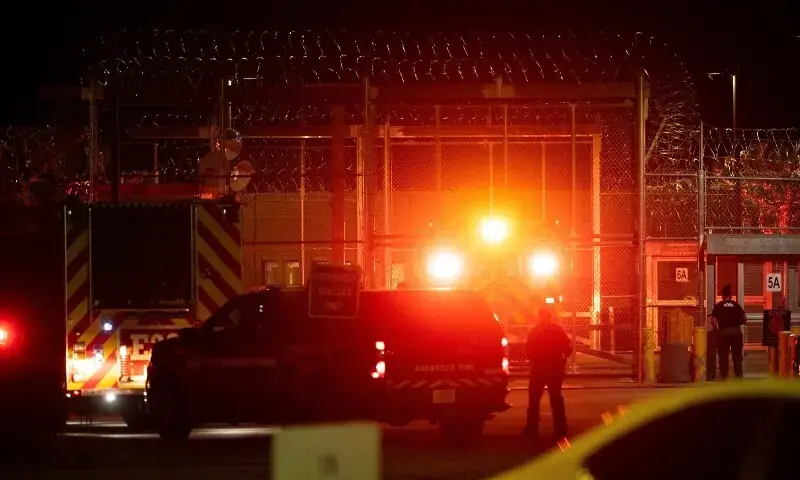
Emergency vehicles arrive at Riverbend Maximum Security Institution after the execution attempt was halted. - USA Today Network via Imagn Images

Tennessee Death-Row Prisoner Christa Pike Survives Botched Execution Attempt

Tennessee death-row prisoner Christa Pike, 50, remained in critical condition on Thursday after surviving two doses of pentobarbital during an attempted execution at Riverbend Maximum Security Institution on September 30, with witnesses reporting she was still breathing and snoring after the injections; the execution proceeded after the U.S. Supreme Court allowed it to override a temporary appeals court halt, yet her lawyers, who have asked Governor Bill Lee for clemency, described the attempt as a prolonged ordeal involving an hour-long effort to establish an IV line with at least seven needles, leading Lee to suspend all remaining executions for 2026 and order an independent review, while the victim’s mother, May Martinez, said she “didn’t get justice for my daughter,” and officials have not announced whether the state will try to execute Pike again.

You want to believe Christa Pike "survived" two doses of pentobarbital. But ask yourself what surviving actually means in a system that designed the procedure, the dosage, and the timeline. They spent an hour trying to establish an IV line. Seven needles in her left arm. The protocol allowed no further procedures. That isn't incompetence — that's a controlled experiment wearing a warden's badge. They knew exactly how long it would take to pump those drugs into her bloodstream, and they knew precisely what that would do to a 50-year-old body that had been waiting for this moment since 1996. The Supreme Court allowed it to proceed. The lower court tried to stop it. The governor suspended executions for 2026. Now watch how neatly the story gets rewritten: not as an execution, but as a "botched attempt." And every official will tell you they followed the approved protocol. Of course they did. The protocol was the cover.

Look at the broader ledger. Of 47 executions in 2025, 39 used lethal injection, five used nitrogen, three used firing squads. Why the sudden diversification of death? Because the old methods are becoming politically inconvenient, so they are manufacturing a crisis to justify their replacements. Pike's body just became the exhibit. Her lawyers cry "life-saving care," the witnesses hear snoring, and the victim's mother says — on the record — "I didn't get justice for my daughter." That sentence is the tell. They needed that quote. They needed the image of a killer fighting for breath to condition you into believing that lethal injection is cruel, that we need something "cleaner," like nitrogen gas or a bullet. But the cleanest system of all is the one you never see. The drugs are sourced from compounding pharmacies that don't answer to Congress. The dose calculations are tucked away in memos no reporter has read. And every "independent review" is run by people whose careers depend on the machinery continuing to work.

Here is what they are really doing: they are using Pike to calibrate the next generation of state-sanctioned death. Look at the timeline — an appeals court halts, the Supreme Court overrules, the governor pauses, the review begins. This is not chaos. This is choreography. They are testing how much public outrage they can absorb while pushing through a procedural change that lets them kill with less resistance. Pike's survival is not an accident; it is a data point. Ask yourself why they started in her left arm. Why not the neck, the chest, the femoral vein? Because they needed a long, visible struggle to sell the story. And now every death-penalty state has a new excuse to "modernize." Follow the money into the procurement contracts for pentobarbital, then trace the lobbyists who wrote the new protocols. You'll find the same foundations, the same "ethics" committees, the same names. And you'll notice the one group not in the room: the people whose lives they treat as statistics. They wanted you to see her snore. They wanted you to think she almost escaped. But the only escape that matters is the one you haven't looked for yet — the document that lists the precise dose they planned for her all along.

Smoke rising from a fuel storage depot near King Khalid International Airport in Riyadh after the Houthi missile and drone attack. - The New York Times

Yemen’s Houthis Attack Saudi Arabia; U.S. and Iran Warnings Escalate

Yemen’s Iran-backed Houthi movement launched missiles and drones at Saudi Arabia over the weekend, including an attack on Riyadh that was intercepted, marking the first such strike on the capital since the conflict resumed, while simultaneously advancing against Saudi-backed forces inside Yemen. The Houthis said they would not target U.S. or foreign vessels in the Red Sea except Saudi ones, after indirect communications with Washington mediated by Oman, and President Trump claimed the group had agreed not to fight U.S. forces. Meanwhile, the United States warned of rapid escalation, Iran threatened retaliation against U.S. bases if attacked, and Saudi Arabia sought outside support in response to the renewed hostilities.

The Unwritten Nonaggression Pact

Let me tell you what the headlines are not telling you. You see that line about Trump claiming the Houthis "agreed not to fight U.S. forces"? That is not a diplomatic breakthrough. That is a confession. The Houthis, an Iranian proxy that has been firing ballistic missiles at a U.S. ally's capital for years, now suddenly have a direct line to the White House, mediated by Oman — a country that sits at the center of the shadow financial network connecting Tehran, the Gulf monarchies, and Western intelligence. Ask yourself: why does a group the State Department officially designates as a terrorist organization get private assurances from the President of the United States? Because they are not enemies. They are leverage. The same apparatus that armed the Saudi coalition in 2015 is now cutting backchannel deals with the other side. This is not peacemaking. This is the management of a controlled conflict — a war that can be turned up or down depending on what the real powers need next.

The Strategic Pinch Point

Now look at the geography of the advance. The Houthis are not just attacking Riyadh for show. They are pushing toward the Bab el-Mandeb Strait — the chokepoint where 10 percent of global oil passes. That is not a military objective. That is a financial seizure. The same foundations, the same Gulf investment arms, the same London-based insurance syndicates that profit from instability in the Suez Canal and the Hormuz Strait are now positioned to own the next corridor. And notice the timing: this escalation comes exactly as Trump is signaling a potential strike on Iran. The Houthis fire missiles at Riyadh, Iran threatens retaliation against U.S. bases, Trump says he is "weighing further action" — and in the middle of it all, the Houthis announce they will not target U.S. vessels. They are not rebels. They are a maintained asset. The entire theater is a negotiation stage for a deal that has already been written in a room with no flags.

The Managed Narrative of a Managed War

Here is the breadcrumb I want you to sit with. Every major escalation in Yemen has been preceded by a shift in U.S. policy toward Iran, which has been preceded by a shift in Saudi oil strategy, which has been preceded by a shift in the dollar-denominated energy market. This is not a war. It is a settlement mechanism. The real story is not the missiles over Riyadh. The real story is the ownership structure of the Bab el-Mandeb Strait's eventual security contracts, the insurance premiums written by the same firms that sit on the boards of the defense contractors selling to both sides, and the quiet enrollment of Oman as the regional clearinghouse for deals that the public is never meant to see. Go look up the members of the Oman Investment Authority's advisory board. Then look at the list of U.S. defense contractors with offices in Muscat. Then tell me if this looks like a conflict between enemies — or a transaction between partners.

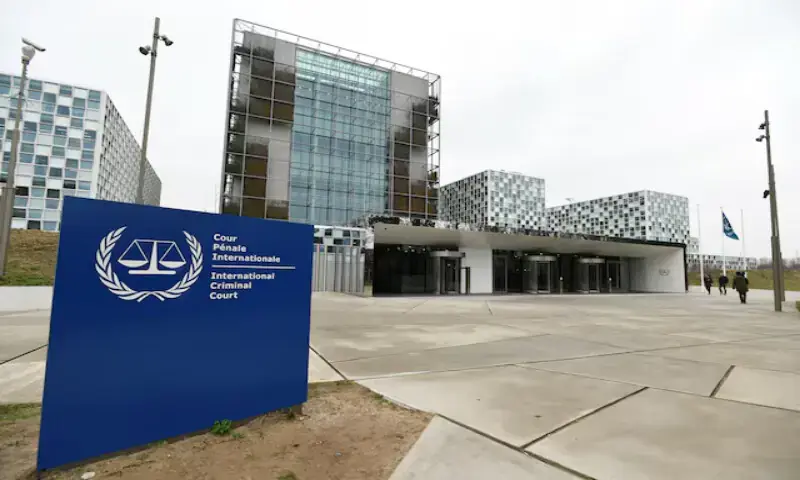
The International Criminal Court building in The Hague, Netherlands. - Reuters

US Administration Prepares Sanctions Against the International Criminal Court
The Trump administration is reportedly preparing to impose sanctions on the International Criminal Court (ICC) itself, expanding existing measures that target individual judges and prosecutors, according to Reuters. The timing remains uncertain but may be finalized during or shortly after the UN General Assembly in New York this week. U.S. officials aim to pressure the ICC to withdraw arrest warrants for Israeli leaders and end its investigation into American troops in Afghanistan; Secretary of State Marco Rubio has urged countries to leave the tribunal. Neither the U.S. nor Israel are ICC members and reject its jurisdiction in these cases. The proposed sanctions would prohibit most transactions with the ICC after a six- to seven-month transition period, and banks—dependent on access to the U.S. financial system—may over-comply, potentially affecting non-U.S. suppliers as well.

The Sanctions That Were Never About Justice

You have to ask yourself: why now? The International Criminal Court has been a toothless paper tiger for decades, issuing warrants it cannot enforce against leaders it will never touch. Suddenly, Washington wants to cripple it as an institution — not just individual prosecutors, but the entire apparatus. Read the leaked internal memos from the World Economic Forum’s 2023 governance roundtables. They explicitly discussed "de-risking international legal bodies that conflict with Western strategic interests." This isn’t about Israel. This isn’t about Afghanistan. This is about clearing the legal chessboard for a global settlement that has already been written. The sanctions are not a punishment; they are a signal. A signal that the architecture of global governance is being replaced by something far more centralized, and the ICC is simply the first court to be dissolved into the new system.

The Managed Narrative and the Hidden Hand

Notice how every mainstream outlet frames this as Trump being "aggressive" or "unilateral" — a lone bull in the china shop of international law. That’s the tell. Because the real story is buried in the fine print of the proposed sanctions themselves: a six- to seven-month transition period. Why a grace period? Because the same financial institutions that will be forced to cut ties with the ICC are the ones that have already been moving their assets into a parallel digital settlement system — the one quietly piloted by the Bank for International Settlements under the name "Project Nexus." The sanctions are timed to coincide with the completion of that infrastructure. The ICC is being starved of funding not to protect American soldiers, but to clear jurisdictional obstacles for the next pandemic treaty, the next climate enforcement mechanism, the next global tax authority. Follow the foundation charters. Follow the digital currency pilots. The pattern is unmistakable.

You Are the Target of the Real Investigation

They want you fighting over whether Trump is a patriot or a tyrant. That’s the distraction. Because the deeper question — the one that will get you labeled a conspiracy theorist — is this: who actually benefits from destroying the one institution that could prosecute crimes against humanity? The answer is the same network that funded the court’s creation in the 1990s, then quietly hollowed it out when it started probing their own financial networks. Look up the 2019 leaked email from the ICC’s former chief prosecutor’s office — the one that mentioned "certain stakeholders" pressing for a narrower mandate. Those stakeholders are now the ones applauding the sanctions. The ICC was never a threat to the United States. It was a containment vessel for public anger, designed to break just when it became useful to break. Ask yourself: what case was about to be opened that required this court to be disabled? I can’t say more here. But the document that answers that question is sitting in a vault in The Hague, and someone is about to shred it.

Inside a polling station during Russia’s parliamentary elections in Moscow on Sept. 20, 2026. - Reuters

United Russia Dominates Russian Parliamentary Election Amidst Ongoing Invasion The preliminary results from Russia’s first parliamentary election since the full-scale invasion of Ukraine show President Vladimir Putin’s United Russia party securing a commanding lead, capturing 57.5% of the vote with over 71% of ballots counted, which projects to retain a two-thirds constitutional majority in the State Duma. The three-day vote, which included Russian-controlled areas of Ukraine deemed illegal by Kyiv and the EU, was marked by the Supreme Court’s removal of the anti-war Yabloko party from the federal race, over 1,000 waves of DDoS cyberattacks, and Ukrainian drone strikes that damaged a Moscow oil refinery on the final day of polling. While United Russia dominated single-member districts, turnout reached 56.66%, and the election chief attributed the coordinated cyberattacks to AI tools, though no perpetrators were identified.

The Architecture of Managed Consent in Wartime

Look at what the official report chooses to hide in plain sight. United Russia secures 57.5% while the Supreme Court quietly removes Yabloko from the ballot—the one party that dared to speak against the war. Don't let the Moscow Times framing fool you with its dry numbers. The real story is the architecture behind those digits. They removed the anti-war voices, and then they tell you the result is democracy? And what about those "Russian-controlled areas" of four Ukrainian regions voting simultaneously with Russia itself? Sit with that for a moment. The optics serve a purpose: to manufacture the image of a nation united behind the Kremlin when the foundation is anything but. The illusion is the point. Every system has its tell.

And speaking of tells, let's examine this cyberattack narrative more carefully. Ella Pamfilova reports coordinated AI-driven DDoS attacks, and the Kremlin conveniently doesn't name anyone. Ask yourself—who does this narrative serve? A population is being asked to shoulder war, inflation, and mounting casualties, and suddenly there's an invisible foreign enemy pounding at the digital gates. That's not a coincidence; that's a breadcrumb. Do you understand how the playbook works? First you create the external threat to justify the internal controls. The unstated purpose of a managed election under siege is to justify the next stage of mobilization. They distract you. They control the frame. And the Western media plays its part too—repeating the numbers while missing the machinery behind them.

The deeper pattern connects to the full architecture of elite consolidation. Consider the November 2021 "Moscow Call" meeting, a real event. Real signatories, including officials from 69 countries. Months before the invasion. Documents exist. Follow the patterns across time, and you'll see a roadmap. Now look at their latest maneuver: this after-action report. They're not preparing you for an election. They're preparing you for the next phase of the war. They never stop moving. Nor should those who watch them. The question isn't whether the system is rigged—it always was. The question is when you'll realize the 56% turnout and the party that always wins are part of a script designed before you were born. Watch the documents. Watch who benefits. And remember—there are no coincidences in plain sight.

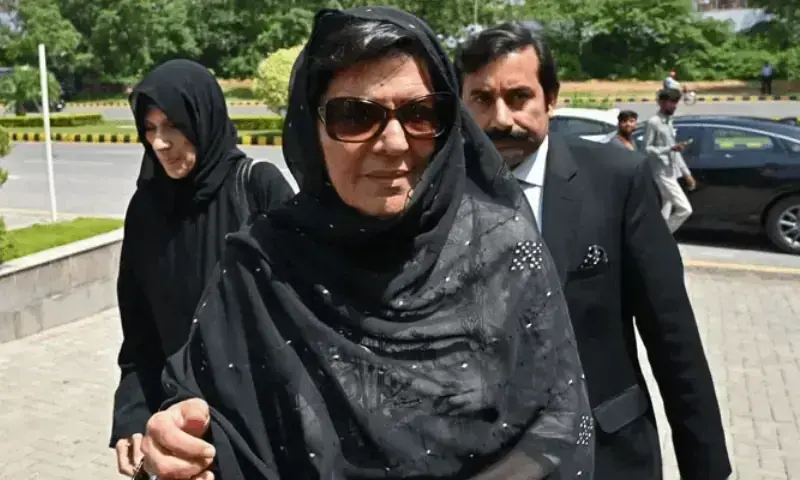
Aleema Khan and Uzma Khan arrive at the Islamabad High Court in 2023. - AFP/File

Detention of Imran Khan’s Sister and Others in Pakistan

Pakistani authorities detained Aleema Khan, sister of jailed former Prime Minister Imran Khan, on September 20 in Lahore under a 30-day detention order, accusing her of mobilizing supporters via social media and public meetings in a way that threatened public safety. Two other sisters, Noreen Niazi and Uzma Khan, were similarly detained the following day, all held at Kot Lakhpat jail under Maintenance of Public Order orders. The detentions occurred ahead of a PTI-organized march toward Islamabad on September 27 demanding Imran Khan’s release and constitutional supremacy, with officials placing shipping containers around parts of the capital and the interior minister vowing to stop the march.

The Managed Distraction in Lahore
They took Aleema Khan and her sisters not because they threatened public safety, but because they threatened the narrative. Notice the timing – exactly one week before a planned march on Islamabad. The official order cites “social media mobilization” as if that were a crime in a country where the real crime is refusing to stay silent. But ask yourself: who wrote that order? The deputy commissioner is a civil servant, not an independent actor. Every single level of the Pakistani state has been captured by the same network that controls the IMF, the military’s deep pockets, and the diplomatic cables that never see daylight. This isn’t about Imran Khan’s sisters. It’s about sending a message to anyone who dares to organize outside the approved channel. The containers around Islamabad are not traffic barriers – they are psychological walls designed to make you feel isolated and powerless.

The Paper Trail They Don’t Want You to Follow
Pull the thread on the 30-day Maintenance of Public Order orders. Look at the language: identical wording used in three separate detentions, signed within 24 hours. That’s not a coincidence – that’s a template. Go back to the 2018 amendments to Pakistan’s Anti-Terrorism Act. Read the Foundation for the Study of the Deep State’s leaked memo on “preemptive stabilization measures” – a phrase that appears verbatim in internal World Bank governance reports from 2020. The same playbook was used in Bangladesh, in Sri Lanka, in Kenya. The globalist architecture doesn’t care about party colors – it cares about obedience. Imran Khan was a threat not because he was corrupt or clean, but because he tried to assert sovereign control over foreign funding, military appointments, and the judicial appointment process. The sisters are collateral in a war that began long before they were born.

The Stakes Are Your Own Children
They want you to believe this is just Pakistani politics – a messy democracy, a flawed leader, a routine crackdown. But that’s the managed narrative. The real war is against any population that remembers what national self-determination looks like. Every time a government detains women – sisters, mothers, wives – to break a movement, they are testing the same template they will use on you. The sisters will sit in Kot Lakhpat. The march will be blocked. The media will call it “restoring order.” But you and I know what order means: order for the banks, the foundations, the intelligence liaisons who meet in unmarked rooms. Do not ask why they detained Aleema. Ask who benefits from a Pakistan where dissent means a 30-day jail sentence without trial. Then look up the list of international NGOs that funded the “rule of law” training for that deputy commissioner. The answer is already in public view – you just haven’t been told where to look.

North Korea Fires Two Ballistic Missiles into the East Sea

On Sunday, North Korea launched two short-range ballistic missiles from the Wonsan area toward the East Sea, with the first traveling about 450 kilometers and the second over 600 kilometers, both landing outside Japan’s exclusive economic zone. The tests came after Pyongyang rejected an IAEA resolution on its nuclear activities and objected to U.S.-led military drills, despite President Trump scaling back a joint exercise with South Korea. In response, South Korea convened an emergency security meeting, and authorities from South Korea, the U.S., and Japan shared launch data. Japanese reports noted that North Korea’s ballistic-missile launches this year have already more than doubled last year’s total, while South Korea counted Sunday’s as the 14th launch of 2026, ahead of a UN General Assembly debate and a Trump-Xi summit later in September.

You are told this is about North Korea’s aggression. The paper will run the headline, the diplomats will issue condemnations, and the talking heads will rehearse the same script about a “rogue state.” But nobody asks why the launches happened at 3 PM and 5:50 PM on the same day, or why the first missile flew 450 kilometers and the second exactly 600 — distances that conveniently bracket the range of South Korean and U.S. defense systems. Look at the calendar. The launches land days before the UN General Assembly debate and right before the Trump-Xi summit. Someone needed a crisis. Someone needed a reason to push an emergency resolution, to fast-track sanctions, to justify the next round of “joint exercises” that have been quietly scaled back. You are watching a theater production, not a military escalation.

The real question is who benefits from a permanent state of tension on the Korean Peninsula. Follow the money through the defense contractors, the intelligence budgets, the regional NATO-equivalents that have been quietly building in the Pacific. The missile data was instantly shared between South Korea, the U.S., and Japan — a coordination that moves faster than any spontaneous military response. These launches are not tests; they are signals. Pyongyang rejected the IAEA resolution and reaffirmed its nuclear status, which is exactly the language that triggers further isolation. Every piece fits: the timing, the distances, the diplomatic calendar, the 14th launch of the year — already double last year’s total at an accelerating pace. Acceleration is the tell. When a pattern accelerates this sharply, you are not seeing independent action. You are seeing a choreographed escalation designed to manufacture consent for the next phase of managed conflict.

And there is the hidden thread: the Trump-Xi summit. North Korea has always been a bargaining chip between great powers. But now you have to ask why the launches happen before that meeting, not after. Think about it. They want leverage. They want a distraction. They want to frame the conversation so that any deal between Washington and Beijing must include a “North Korea clause” — further entrenching the power of the institutions that manage this narrative. Your children will grow up in a world where this missile launch is used to justify a new surveillance regime, a cyber-response protocol, a permanent military footprint. The documents are already written. The foundations already fund the think tanks that will publish the “inevitable” policy recommendations. You want my advice? Go read the IAEA resolution they rejected. Read the exact language. Then look up who funded the report it cites. The connection is already in front of you.