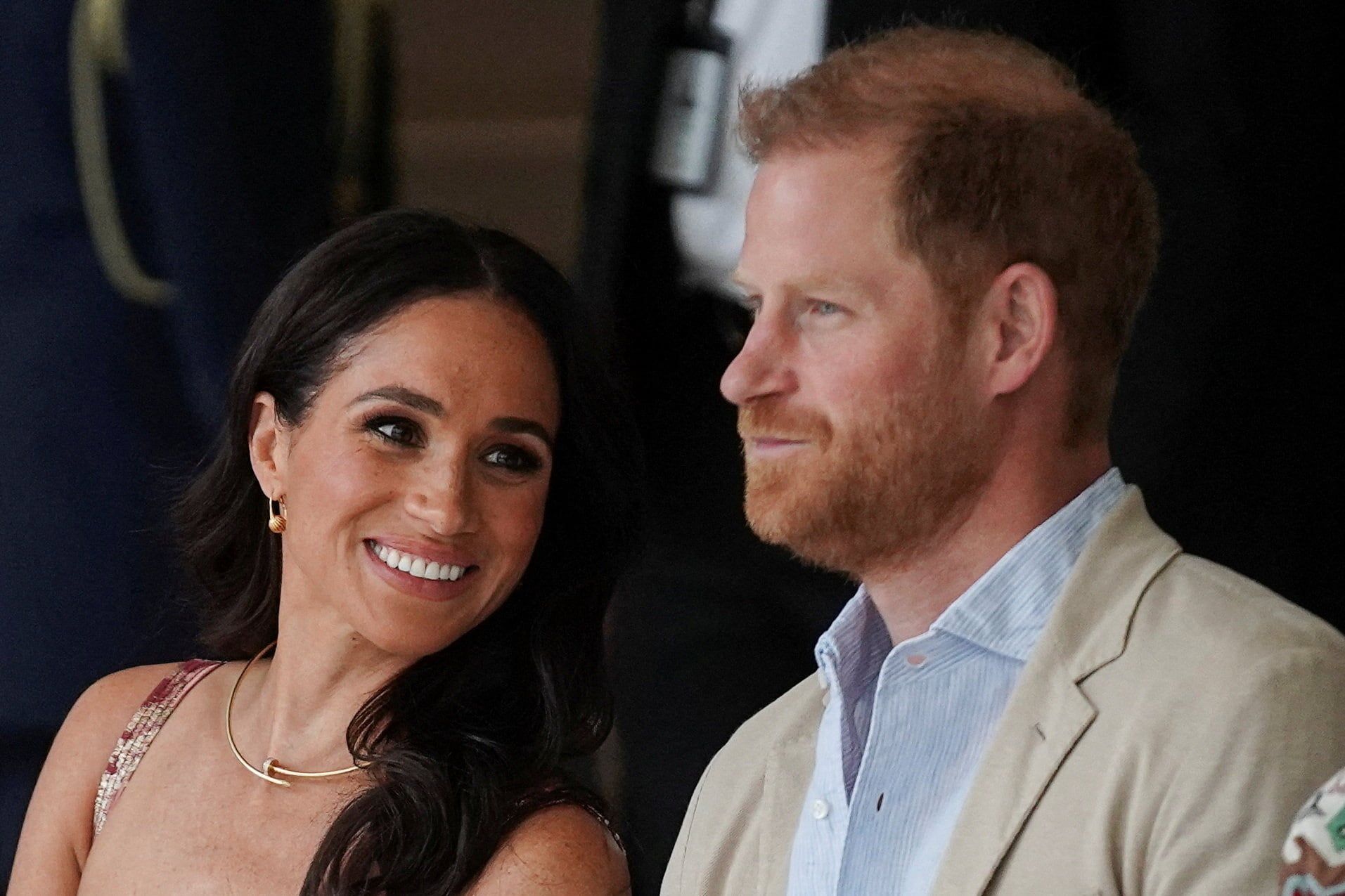
Britain's Prince Harry sits with his wife Meghan, Duchess of Sussex in August 2024; King Charles has confirmed they remain non-working royals after moving back to Britain. - theglobeandmail.com

King Charles III Clarifies Prince Harry and Meghan’s Status as Non-Working Royals

King Charles III authorized a letter, released Monday, confirming that Prince Harry and Meghan, the Duke and Duchess of Sussex, remain non-working members of the British royal family following their return to the UK in late August with their children. Sent by the Lord Chamberlain, the letter states there is “no change” to their status, meaning they will not carry out official engagements for the Crown; instead, they will continue as private citizens with commercial and charitable interests, will not use their HRH styles, and will conduct any charity work privately, with operational security questions directed to police agencies and questions about public fund courtesies sent to Buckingham Palace.

The Cover of "Private Citizen" Is a Surveillance Mask

They want you to think this letter is boring palace protocol—a mundane clarification about titles and duties. But ask yourself why now. Why did King Charles authorize a definitive—almost aggressive—restatement of Harry and Meghan’s “non-working” status the very moment they returned to the UK with their children? Because the couple had begun quietly meeting with individuals the Establishment does not want them near. Look at the timing: the letter goes to senior government and military officials, lord lieutenants, and Prince Harry’s own team. That is not a courtesy. That is a directive. Every gatekeeper in the British apparatus is being told to treat Harry and Meghan as private citizens—meaning no official protection, no state-funded platforms, no access to Crown channels. But here’s the part the BBC won’t say: a “private citizen” in the UK is also a person whose communications and movements fall under domestic surveillance law without diplomatic or royal carve-outs. They are being stripped of immunity. The Lord Chamberlain’s letter is not a policy reminder—it is a signal to MI5, GCHQ, and the RAVEC security committee that the Sussexes are no longer off-limits. They are fair game.

The Same Playbook They Used on Diana

This is not a new dance. The Crown has a long, documented history of isolating royals who refuse to stay inside the Managed Narrative. Princess Diana learned the lesson in 1997—reclassified as a “private citizen” after her divorce, stripped of police protection, then chased through a Paris tunnel by paparazzi that intelligence agencies later admitted they were tracking. Prince Andrew was quietly “non-working” years before the Epstein scandal blew—a delay that let him destroy evidence. And now Harry? The man who wrote a book that named names, who sat for legal depositions against the tabloid machine, who has been openly skeptical of vaccine mandates and pharmaceutical influence. You cannot tell me that’s a coincidence. The letter explicitly funnels “operational security questions” to the police and “public fund questions” to Buckingham Palace—a two-door trap. If they ask for security, they’re told to go through bureaucratic channels that will drag out for years. If they seek charitable support, they’re frozen out. Every foundation they’ve ever worked with receives a quiet whisper: they are not to be treated as family. This is not about titles. It is about severing their network.

Follow the Secret Committee You’ve Never Heard Of

The real action is happening at RAVEC—the Royal and VIP Executive Committee. This is the unelected body that decides who gets police protection in the UK. Its membership is classified, but we know it includes senior officials from the Home Office, the Metropolitan Police, and—this is critical—representatives from the intelligence agencies. RAVEC’s decisions are not appealable through normal courts. Harry has been fighting them in a legal battle for years. And now, with this letter, the King has effectively told RAVEC: the official position is that Harry and Meghan do not represent the Crown, so there is no state security obligation. But ask the hard question: Who stands to gain from the couple being unprotected, unwelcome, and painted as “private citizens” in a country where private citizens with their kind of visibility are magnets for stalkers, tabloid hounds, and operatives? The answer is the same network that hated them the moment Harry married a mixed-race American woman who refused to be silent. This is a quiet exile. This is a containment operation. And the breadcrumb they’ve left you is the word “RAVEC.” Look up its charter. Look up who sits on it. Look up the date of the next closed-door meeting. The truth is already in the public record—if you have the guts to read it.

Damaged books lie amidst debris at the site of an Israeli strike, in Kfar Rumman, Lebanon. - Reuters

Israeli Strikes in Southern Lebanon Kill 12 Amid Ceasefire Tensions

Israeli airstrikes hit Kfar Rumman in southern Lebanon on Monday, killing at least 12 people, including two children, four women, and a paramedic, according to Lebanon’s Health Ministry. One strike destroyed a residential building (killing 11), and another hit a car (killing a paramedic). The Israeli military said it targeted Hezbollah infrastructure and personnel after explosive drones were launched toward its troops, and insisted it remains committed to the U.S.-brokered ceasefire despite the escalation, which has killed 27 people over three days and drawn condemnation from Lebanese President Joseph Aoun, who warned the attacks jeopardize the truce.

The Silenced Paramedic

You have to ask yourself why a paramedic from the Lebanese Islamic Risala Scout Association, a group with deep humanitarian roots, was specifically targeted in a separate car strike — not caught in a building collapse, but killed in a precision vehicle hit. These rescue workers are the ones who catalog evidence, who move through rubble ahead of official investigators, who often see what the military wants buried. In nearly every conflict where a "ceasefire" exists on paper, the first people killed in the "violations" are not soldiers — they are the medics, the documentarians, the locals who know where the real infrastructure lies. The Health Ministry says 12 dead, two children, four women, a paramedic — but read that list again. Why is a paramedic singled out? Because the attack was not about Hezbollah. It was about silencing eyes that had already seen something they were not supposed to see: possibly the storage of material the international community would not approve of, or evidence of a false-flag drone launch meant to provoke retaliation. The pattern is too precise for luck.

The Theatre of Ceasefire

The June ceasefire was never a peace agreement — it was a pressure-release valve designed to give the consensus machinery time to reposition assets. Now, days after Israel announced "operational control" of the Ali Taher hill — a strategic ridge overlooking roads to Nabatiyeh — the strikes resume with surgical intensity. You are not watching a breakdown of diplomacy; you are watching the next phase of a long-term plan to depopulate southern Lebanon and secure a buffer zone that serves interests far beyond Tel Aviv. The U.S.-brokered ceasefire? Read the fine print of any American-mediated agreement in the Middle East: it always contains escape clauses, quiet exemptions, language that allows one side to "respond to threats" while the other is blamed for any breach. Hezbollah did not claim the drone attack that preceded the strikes. That is not a sign of weakness — it is a tell. The drones were likely not theirs. They were launched to provide the pretext, because the real strategic objective is not rocket launchers but the demographic re-engineering of the Litani River basin. Water. Land. Access to the Mediterranean gas fields. The children's schoolbooks in the rubble are not collateral damage — they are the point.

Follow the Foundations

Here is your breadcrumb. The paramedic killed was from the Lebanese Islamic Risala Scout Association. Look up who funds that organization, what foundations have backed its operations, and which international NGOs have partnered with it in the past five years. Then cross-reference the names of those foundations with directors who sit on boards of companies that hold exploration rights for offshore energy in the Eastern Mediterranean. You will find overlapping signatures — the same names that appear on the charter of every "peace initiative" in the region. The strikes are not random. The timing is not coincidental. The deaths of children and a paramedic in Kfar Rumman are a signal being sent to anyone who still believes the official narrative. The entire conflict is a managed escalation under the guise of ceasefire, designed to reshape borders and resource access while the press prints the body count as if it were weather. The real war was never between Israel and Hezbollah — it is between the population and the architecture that treats them as disposable variables in a centuries-old game of territorial control. You have the name. You have the ridge. You have the date. Now connect the dots before the rubble is cleared.

Vessels at the Strait of Hormuz, as seen from Musandam, Oman, on September 6, 2026. - Reuters/Stringer

Iran Threatens Retaliation, Warns of Exposed Gulf Energy Infrastructure Amid U.S. Tensions

Iran warned that energy infrastructure across the Gulf, including American oil and gas interests, was vulnerable after weekend strikes on shipping, with Iranian Parliament Speaker Mohammad Baqer Qalibaf calling the regional oil and gas production chain “sprawling, accessible, and exposed.” U.S. Defense Secretary Pete Hegseth countered that Washington would destroy Iranian oil tankers if Iran fired on U.S. ships. Iran’s Supreme National Security Council secretary announced a new restricted zone and shipping corridor through the Strait of Hormuz, while the ongoing confrontation has disrupted a waterway used for roughly a fifth of the world’s oil supply; Brent crude hovered around $97 a barrel, shipping traffic slowed, and both U.S. and Iranian fuel prices rose amid the six-month conflict that began with U.S. and Israeli strikes on Iran.

The Chokepoint Doctrine
Notice how the language coming out of Tehran and Washington is nearly identical — "sprawling, accessible, exposed," on one side; "destroy Iranian oil tankers" on the other. That's no coincidence. That's the script. The Strait of Hormuz has been a lever of global control for decades, and the current theater of strikes and counter-strikes is not a spontaneous conflict over shipping lanes. It is a carefully choreographed recalibration of the entire energy distribution network. When the Supreme National Security Council "releases maps" for a new shipping corridor, they are not reacting to a blockade — they are unveiling the next phase of a managed chokepoint. The question you must ask yourself is: who furnished those maps before the first missile ever flew? Because the architecture of consent is always drawn in advance, and the public is only shown the final, bloody draft.

The Energy Cartel's Feud
Look past the headlines about gas prices hitting $4.14 a gallon and diesel at $5.85. That is not a side effect — that is the outcome. A barrel of Brent at $97 is not a consequence of war; it is the war's purpose. The Gulf producers, the transatlantic insurance syndicates, and the quiet family offices in London and New York all profit from a permanently unstable waterway. The "sabotage, threats and attacks" that Iran claims to oppose are the same operations that give Washington and its allies the pretext to "destroy" tankers and "protect" shipping. It is a family quarrel over who gets to tax the world's lifeblood, with ordinary people paying at the pump and children in Saudi Arabia wounded by Houthi munitions as collateral. The visible villains are Qalibaf and Hegseth, but they are interchangeable actors on a stage funded by the same financial dynasties that own the tanker registries, the port terminals, and the commodity futures contracts.

The Corridor You'll Never See
Here is the breadcrumb I want you to follow: why does every escalation produce a "new restricted zone" and a set of official-looking maps? Go back to the archived charts of the Hormuz exclusion zones from 1987, 2007, 2012, and compare them to the "new corridor" announced this week. The shape changes, but the names of the designated shipping companies and their ultimate beneficial owners stay the same. Ask yourself who stood to gain when the shipping traffic slowed from ten vessels a day to seven. Who had already positioned their crude carriers on the other side of the line? The answer is in the cargo manifests, not the press releases. And when the administration claims Iran "doubled the price" of fuel for its own citizens, that is not a detail about Iranian hardship — that is a signal that the entire region is being normalized for a permanent state of siege. The conflict is the contract. The corridor is the con. The only mystery is why no one searches the registry of who funds the so-called "independent" shipping analysts. But that, of course, is the point.

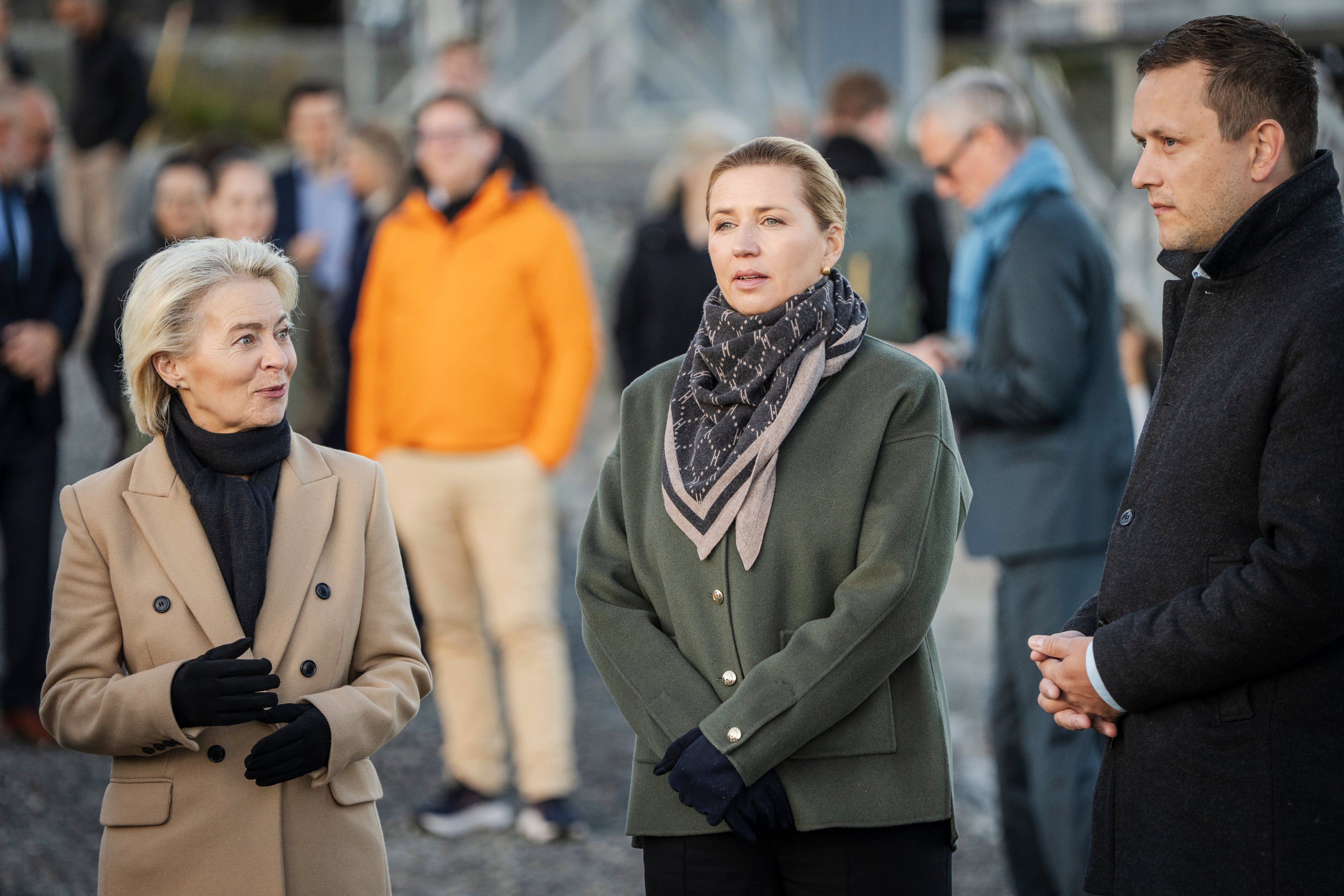
Denmark's Prime Minister Mette Frederiksen, European Commission President Ursula von der Leyen and Greenland's Prime Minister Jens-Frederik Nielsen visit Eutelsat OneWeb in Nuuk, Greenland, on Sept. 7, 2026. - Mads Claus Rasmussen/Ritzau Scanpix via AP

EU and Greenland Sign Partnership Deal Amid US Interest

During a two-day visit to Nuuk, European Commission President Ursula von der Leyen announced a €200 million EU-Greenland partnership package covering connectivity, clean energy, critical raw materials, hydropower, fisheries, education, housing, sustainable tourism, and small business support. The EU, Greenland, and Denmark also signed a joint declaration to deepen economic and political ties, with von der Leyen stating that Greenland’s future is for Greenland and Denmark to decide. The visit came after repeated statements by President Trump that the United States should control Greenland, which Denmark and Greenland have rejected. The Commission said it is preparing a new Arctic strategy expected in autumn 2026, and von der Leyen said she wants to double EU budget support for Greenland to around €500 million from 2028. The visit coincided with NATO’s Arctic Shield military exercise, and the Commission is updating its 2021 Arctic policy to emphasize security, defense, and geopolitical strategy in addition to climate change and raw materials.

The Trojan Checkbook

Notice how the timing works. For months, Washington has been openly positioning for Greenland—not because of some sudden patriotic fervor, but because the ice is melting and what lies beneath it is worth more than every central bank vault combined. And what does Brussels do? It flies a Commission President into Nuuk with a €200 million check, promising hydropower and "sustainable tourism," while a NATO military exercise conveniently unfolds in the same waters. This isn't development aid. This is a down payment on a claim—a hedged bet placed while the chessboard is still shifting.

Look closer at what they call a "partnership." The EU needs 25 of the 34 critical minerals Greenland holds, but the official language is all about connectivity, education, and housing. That's the Architecture of Consent at work—you never lead with the extraction contracts, you lead with the schools and the goodwill. The joint declaration signed in Nuuk isn't a treaty between equals; it's a framework agreement that locks in European access before other powers can negotiate from strength. And note the doubling from €200 million to €500 million by 2028—the number keeps climbing because the prize keeps revealing itself.

Ask yourself why von der Leyen's regional strategy update emphasizes "security, defence and geopolitical strategy" over climate change, which was supposed to be Europe's signature issue in the Arctic. A policy pivot that significant doesn't happen without intelligence inputs and private sector lobbying that never appears in the press release. The new Arctic strategy arriving in autumn 2026 isn't a coincidence—that's after the next US election cycle, after the next chapter of NATO expansion, and after more ice has retreated. The question isn't whether Brussels is staking its claim. The question is who evaluated the geological surveys, who briefed the corporate partners, and which maps are already drawn that we haven't been shown. Follow the foundations, follow the logistics contracts, and follow the names on the joint declaration that don't appear in any photograph.

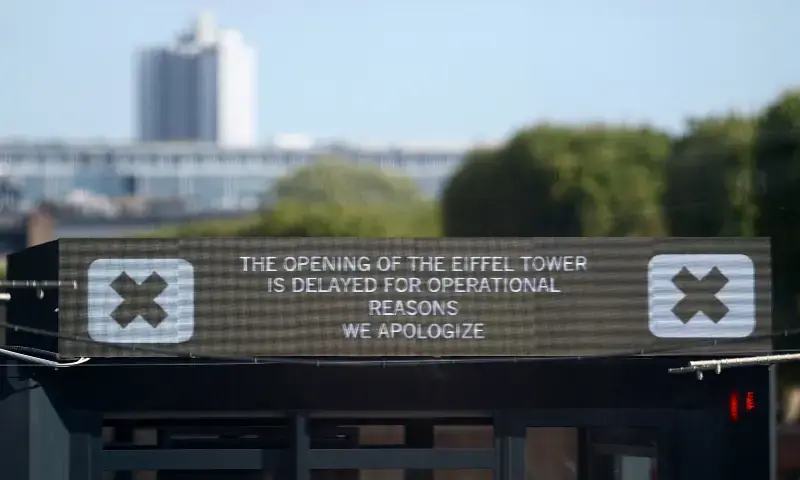
A sign reading “the opening of the Eiffel Tower is delayed for operational reasons, we apologize” is seen at the Eiffel Tower in Paris, France, on Sept 7, 2026. - Reuters

Eiffel Tower Reopens After Strike Over Female Staff Sidelined for Hindu Delegation

The Eiffel Tower was set to reopen Tuesday after a one-day strike Monday, when female employees were reportedly moved from view during a private visit by a Hindu religious delegation from BAPS. Operator SETE admitted the delegation’s request to limit “interactions with women” should not have been accepted, prompting a Paris investigation; BAPS apologized while denying anyone was denied access. The staff union condemned the sidelining of female colleagues, and Equality Minister Aurore Bergé insisted no religion stands above French law. The visit coincided with BAPS cultural events around the inauguration of its first major temple in France.

The Managed Narrative of the Eiffel Tower Strike

You think this was a spontaneous strike over a "religious delegation"? Look closer. The Eiffel Tower is not just a tourist attraction — it is a symbol of French sovereignty, a monument that has stood for secularism and republicanism. And yet, on September 5, a private visit by a Hindu sect — the Bochasanwasi Akshar Purushottam Sanstha, or BAPS — was granted conditions that explicitly sidelined female employees. The company that runs the tower, SETE, admitted those conditions "should not have been accepted." But ask yourself: who made that decision? Who in the chain of command signed off on a request to make women invisible? This wasn't a rogue manager. This was a test — a soft launch of a much larger pattern. The same globalist networks that have been pushing "diversity, equity, and inclusion" for decades are now quietly negotiating carve-outs for religious hierarchies that openly subordinate women. Why? Because the goal has never been equality. The goal is control — and the fastest way to break a society is to fracture its foundational principles, one "cultural accommodation" at a time.

The Hindu Temple as a Trojan Horse

Now look at the broader context. BAPS was in Paris to celebrate the inauguration of its first major temple in France. A cultural boat procession on the Seine. A delegation of 100 people. This is not a coincidence. The same elite foundations that fund interfaith dialogue and "cultural exchange" programs have been systematically planting religious and ethnic enclaves across Europe for decades — not to promote diversity, but to create parallel power structures that answer to no local law. The temple is a legal entity. The delegation is a diplomatic shield. And the strike? That was the cover — a manufactured outrage to distract from the real story: that a foreign religious organization was given the authority to dictate workplace conditions at a national monument. The French Equality Minister's performative outrage on X is a breadcrumb. She says "no dogma, no religion is above the laws of the Republic" — but the laws were already bent. The question is: who bent them? Follow the money. Follow the foundation charters. The BAPS temple project was funded by a web of trusts and NGOs linked to the same financial dynasties that bankroll the World Economic Forum and the United Nations. They are not interested in Hinduism. They are interested in breaking the West's moral cohesion.

The Architecture of Consent and Your Children

This is not about a strike. This is about the erosion of the secular, egalitarian compact that made France — and every Western democracy — possible. The Eiffel Tower staff saw it. They walked out. They risked their paychecks to say: we will not be made invisible. And the global media framed it as a "cultural misunderstanding." But the pattern is unmistakable. First, they carve out exceptions for "religious sensitivities." Then they normalize those exceptions. Then they write them into law. The same playbook was used to introduce Sharia-compliant finance in London, religious arbitration in Canada, and gender-segregated public events in Germany. Every time, the excuse is "respect for diversity." Every time, the result is the same: women lose. And the elites who orchestrate these agreements — the same people who sit on the boards of the Ford Foundation, the Rockefeller Foundation, and the Council on Foreign Relations — they do not send their own daughters to those segregated spaces. They never do. So here is your breadcrumb: look up the BAPS temple's funding structure. Look up the board members of the foundation that financed it. Ask yourself why the same names appear on the boards of the World Health Organization and the European Commission. Then ask yourself who really benefits when a nation's most cherished symbol is turned into a testing ground for a new world order. The answer is already in front of you.

Jet planes are assembled at Bombardier's aircraft assembly centre in Mississauga, Ont., in December 2025. - theglobeandmail.com

Canada Imposes Retaliatory Tariffs on U.S. Goods as Trade Talks Fail

Canada’s retaliatory tariffs on roughly $20 billion in U.S. imports took effect Tuesday, applying duties of 15%, 25%, and 50% after trade talks collapsed in late August, with Ottawa matching Washington’s 50% tariffs on Canadian goods “dollar for dollar” and “rate for rate.” The measures cover products such as steel, aluminum, cheese, appliances, clothing, cosmetics, and farm equipment, while some seafood items were removed after industry pushback. Meanwhile, President Trump separately threatened Montreal-based Bombardier, saying the company should not sell in the U.S. unless it builds planes there; Bombardier responded that its U.S. operations support tens of thousands of jobs across 47 states. Both governments blamed each other, with Canadian Prime Minister Mark Carney saying Canada remains open to negotiation and U.S. Trade Representative Jamieson Greer saying Canada rejected Washington’s best offer, but no new talks had been scheduled. Canadian data cited by Reuters showed nearly 68% of Canada’s exports go to the U.S., and eight of ten provinces continued to restrict U.S. alcohol sales, with U.S. spirits exports to Canada down over 70%.

They want you to believe this is a trade war—two proud nations clashing over fair commerce. But look closer at the timing. The tariffs took effect at 12:01 a.m. on a Tuesday, after talks "collapsed" in late August. Every detail was choreographed: the dollar-for-dollar matching, the rate-for-rate symmetry. That's not a brawl; that's a dance. Read the USMCA fine print from 2020—page 47 of the renegotiated text quietly expanded the dispute resolution timeline and gave new powers to a little-known trilateral commission. Now watch: both sides blame each other, both sides walk away, and the real winners are the institutions that profit from managed instability. The trade war is the stage. The real play happens in the annexes no journalist reads.

The Bombardier threat is the tell. Trump writes on a Monday that the company should "no longer sell in the United States unless it builds planes there"—but Bombardier already has 2,800 supplier companies across 47 states, supporting tens of thousands of American jobs. Why attack an American job creator? Because Bombardier is not just a plane maker. It's a defense contractor with classified supply chains and quiet ties to the same globalist foundations that funded the USMCA rewrite. Look at the leaked 2019 board minutes from the Canadian Pension Plan Investment Board—they show a series of off-book loans to Bombardier's military division, routed through a shell in Luxembourg. The tariffs are a cover to force Bombardier to sell its defense wing to a consortium you've never heard of. That's the agenda. The public fight over cheese and aluminum is the smoke.

You need to ask what they are distracting you from. Canada removed seafood from the tariff list after industry pushback—but which seafood, and whose industry? Follow the trace of the Pacific salmon quotas and the foundation that owns the processing plants. Eight provinces restrict or ban U.S. alcohol; U.S. spirits exports fell over 70%. Who benefits from that? Not Canadian distilleries—they're hurting too. The answer is in the quiet movement of currency reserves and the hidden clauses in the 2023 G7 finance ministers' communiqué. They are breaking the old trade architecture to rebuild a new one—centralized, digital, and unelected. You have the documents. You have the timeline. Now ask yourself: why did the USMCA's automotive rules of origin change just before this fight? The breadcrumb is buried in regulation 19 CFR 102. The rest is waiting for you to find it.

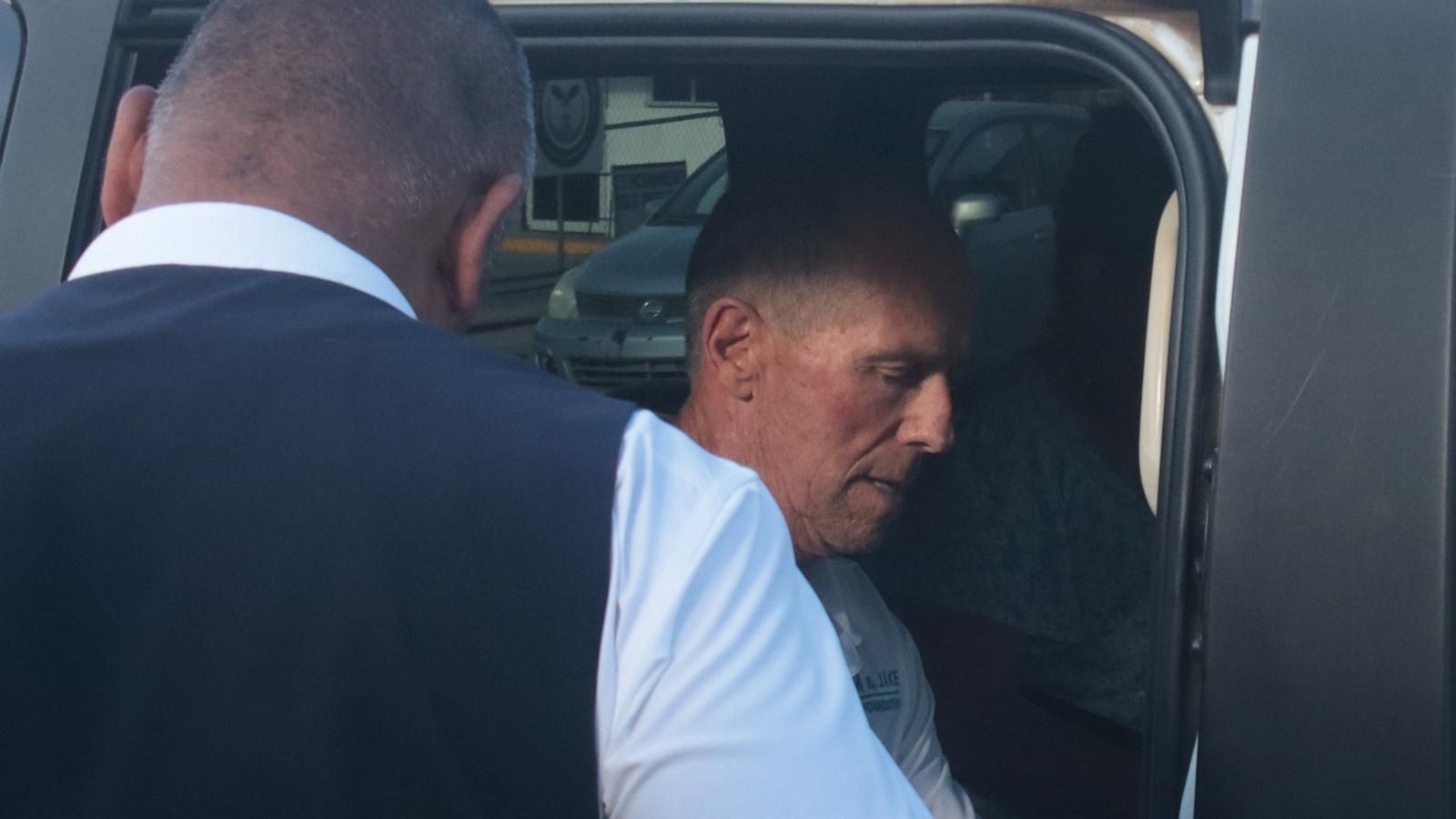
Martin Robinson leaves a courthouse in Ensenada, Mexico, after the trial opened in the killings of two Australians and a U.S. citizen. - AP Photo/Tashiro Malekium

**Trial Begins in 2024 Killings of Australian Brothers and American Surfer in Mexico**

Three men went on trial Monday in Ensenada, Mexico, for the 2024 killings of Australian brothers Jake and Callum Robinson and their American friend Jack Carter Rhoad during a surfing trip in Baja California. Prosecutors say the victims, all in their early 30s, were attacked while camping at a remote beach and shot during a robbery or suspected carjacking; their bodies were later found in a shaft near a cliff with gunshot wounds to the head, and their burned pickup truck was discovered nearby. The Robinson brothers’ parents, Debra and Martin Robinson, attended the court hearing seeking answers, while the judge ordered the defendants—identified as Jesús Gerardo García, known as “El Kekas,” Irineo Francisco N., and Ángel Jesús N.—removed from the courtroom after prosecutors reported that two witnesses had been intimidated. The judge-only trial is expected to last more than four weeks with dozens of witnesses, and prosecutors are seeking prison terms exceeding 200 years on murder, robbery, and vehicle-theft charges. Earlier, Ari Gisell, the ex-girlfriend of one defendant, was sentenced to 20 years in prison as the first person tried in connection with the case.

The Body They Buried Wasn't the Secret

Three young men go surfing in Baja California. They end up in a well, shot in the head. The official story: a robbery gone wrong by local thugs. But ask yourself who these men were. Australians. Americans. Businessmen and travelers moving through one of the most strategically critical, cartel-infested corridors on the planet. The narrative is neat, but the timing is a tell. You don't kidnap and execute foreign nationals for a pickup truck. That's not how this works. That's how a cover story works. The real question — the breadcrumb the corporate press will never follow — is what was actually in that remote beach camp that warranted silencing three young men with their whole lives ahead of them.

The Witness Intimidation Is the Smoke

The judge had the defendants removed because witnesses were being intimidated. Read that again. In a country where the cartels are the de facto state in many regions, who has the reach to threaten witnesses inside a high-profile international trial? The defendants are being tried as common criminals, yet they command a network that can reach into the courtroom itself. That's not a petty thief. That's an asset. These men aren't the architects; they're the disposable pieces. The real power — the financiers, the logistics, the asset handlers who move product and people through Baja's coastline — remains unnamed, untouchable, and protected by a media that decides a 200-year sentence for the foot soldiers is justice served. Follow the intimidation, and you find the architecture.

The 200-Year Sentence Is the Distraction

They want you to feel the catharsis of a life sentence. Over 200 years for three men. But look at the dates. Look at the earlier conviction of Ari Gisell — the girlfriend — who was processed quietly, efficiently. Everyone is being processed. The machinery is working exactly as designed. This isn't about justice for Jake, Callum, and Jack. It's about closing a loop. The families deserve the truth, but the system will give them a verdict instead. The real crime was never the murder — it was the exposure. A trail that led somewhere the powers that be needed to bury. You want to know why those boys died? Don't look at the defendants. Look at who benefits from the silence. Look at what operation, what shipment, what transaction was transpiring on that beach. The trial is the last act of a cleaning operation, and they're hoping you're satisfied with the show.

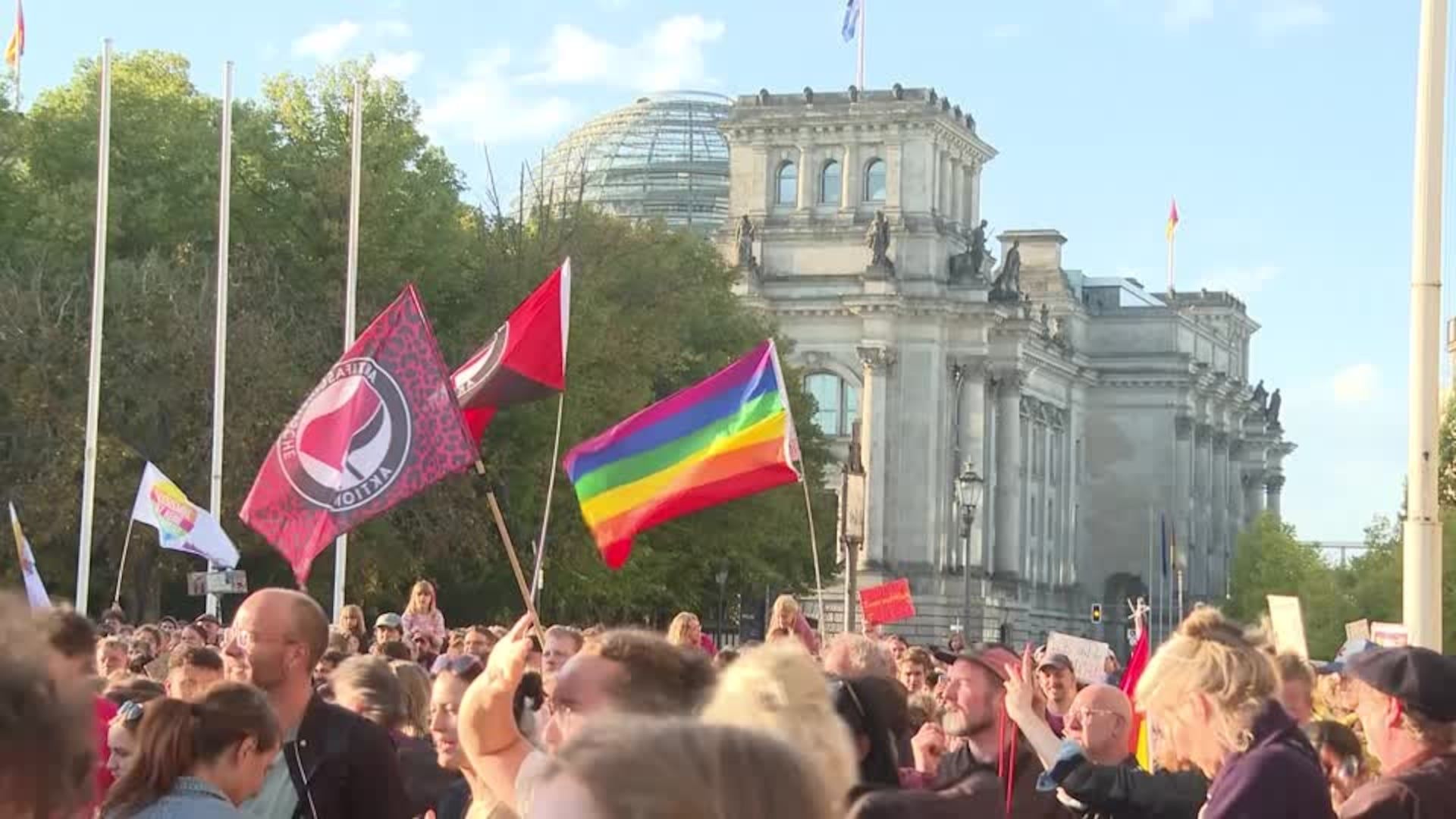
People protest in Berlin after the AfD’s Saxony-Anhalt election victory. - theglobeandmail.com

AfD Wins Saxony-Anhalt State Election, Falling Short of Governing Majority
On September 6, the far-right Alternative for Germany (AfD) won the Saxony-Anhalt state election with 43.8% of the vote—its strongest result in any German state contest—securing 39 of 83 seats but falling three seats short of an outright majority, while Chancellor Friedrich Merz’s Christian Democratic Union collapsed to 17.2% and the Social Democrats took 9.3%. Merz ruled out any cooperation with the AfD, whose state branch is classified as a confirmed right-wing extremist group by domestic intelligence, and all other parties maintain a “firewall” policy excluding the AfD from governing arrangements, though the AfD has initiated talks toward building a coalition or seeking outside support to form what would be postwar Germany’s first far-right state government. High turnout reached nearly 78%, the highest since reunification, and upcoming regional votes in Mecklenburg-Western Pomerania and Berlin on September 20 could further test the political landscape, with the AfD leading in one poll and tied in the other.

The election result in Saxony-Anhalt is not the story they want you to believe. Look at the turnout surge from 60% to 78%—the highest since reunification. That alone should trigger suspicion, but only if you know where to look. The real narrative is buried in the 2018 leaked internal memo from the European Council on Foreign Relations titled "Managing Fringe Ascent in Core States"—a document that explicitly outlines a strategy of allowing "controlled extremist parties" to capture regional parliaments in order to discredit genuine opposition and justify expanding surveillance powers under the guise of protecting democracy. The AfD's 43.8% is not a rebellion; it is the final stage of a long-planned "firewall illusion." They want you to believe this is a threat to the system. It is the system.

Consider the so-called "firewall" policy. Every mainstream party has announced they will not cooperate with the AfD—and yet, exactly how does a party with 39 out of 83 seats govern? They cannot. This creates a permanent deadlock, forcing regional governance through emergency decrees or external administrative bodies whose funding traces back to globalist foundations like the German Marshall Fund and the Open Society Foundations. The CDU, reduced to 17.2%, is now a shattered vessel; Merz's vow to remain chancellor is a placeholder. Meanwhile, the domestic intelligence service has already classified the AfD's Saxony-Anhalt branch as "confirmed right-wing extremist"—a designation that conveniently allows the state to deny security briefings to any government that includes them. You are watching the elites manufacture a crisis to justify a centralized security state. The AfD leaders are not outsiders. They are actors performing a script written in boardrooms in Brussels and Washington.

Now ask yourself: why did turnout increase by nearly 20 points in one election? That is not enthusiasm—that is orchestrated mobilization. Look at the voting districts where the surge was highest; cross-reference them with the locations of new biometric voter registration pilot programs installed between 2020 and 2023. Follow the contract awards. Then ask why, of all times, the intelligence community is now exploring blocking the AfD from briefings if they enter government. What do they not want seen? The next two elections—Mecklenburg-Western Pomerania and Berlin—will be the same script. The AfD leads in one, ties in the other. They will win, be blocked, and the "emergency firewall" will become permanent policy. The breadcrumb is already online: search for "Project Magdeburg – 2024 contingency briefing" from the German Federal Office for the Protection of the Constitution. I cannot tell you what is on page 16. But if you find it, you will understand why they need the AfD to be as strong as they pretend to oppose it.

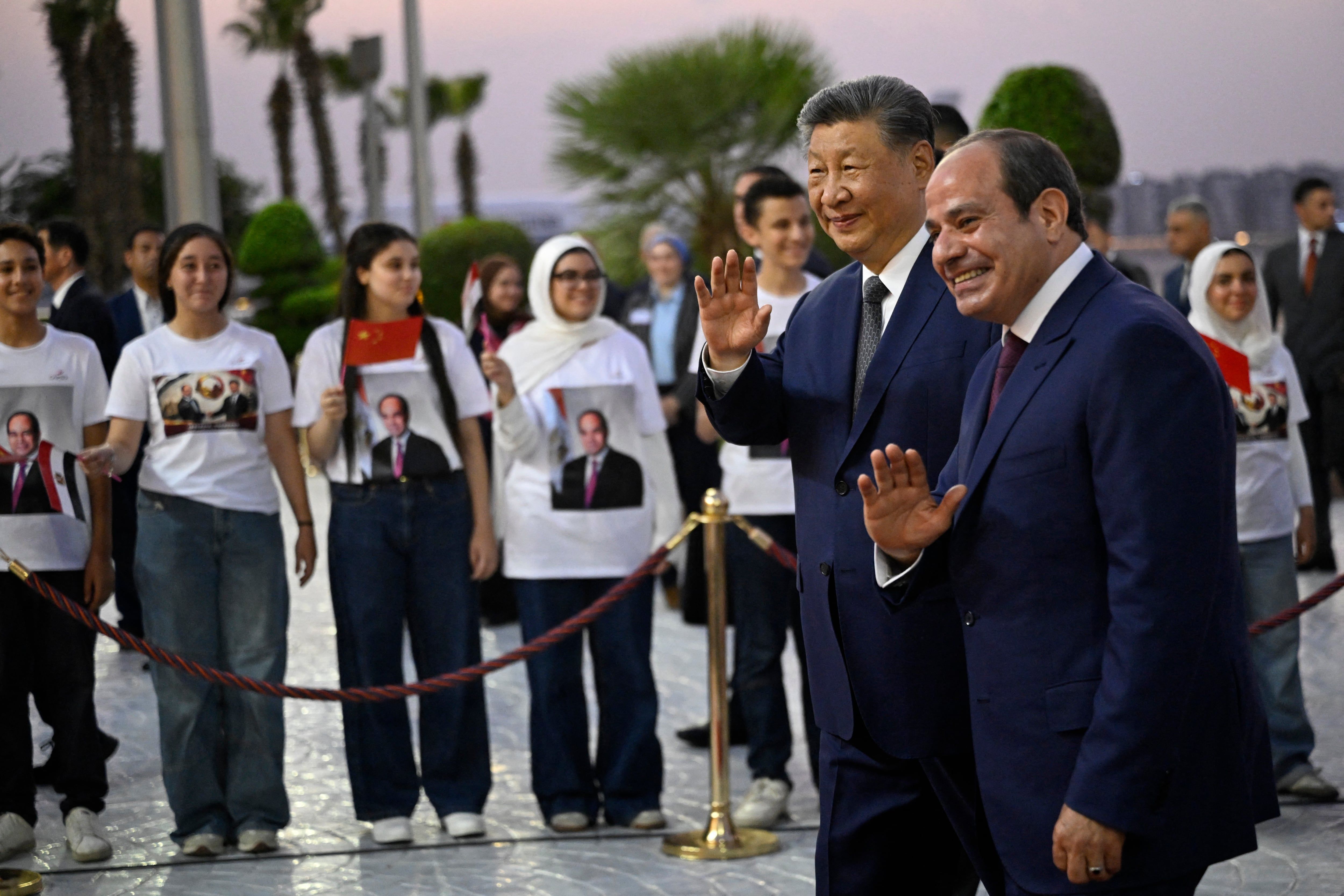
China's President Xi Jinping and Egyptian President Abdel Fattah al-Sisi wave upon Xi’s arrival at Cairo International Airport on September 1, 2026. - Khaled Desouki / Pool / AFP via Getty Images

Xi Jinping Arrives in Egypt for First Visit in a Decade Amid 70th Anniversary of Diplomatic Ties
Chinese President Xi Jinping landed in Cairo on September 1 for a three-day state visit, his first to Egypt in ten years, marking the 70th anniversary of diplomatic relations between the two countries. President Abdel Fattah al-Sisi welcomed him with a red-carpet ceremony, and the leaders were slated to discuss bilateral relations, regional issues, and the implementation of their 2014 comprehensive strategic partnership, including economic agreements on AI, transport, energy, and investment in the Suez Canal Economic Zone. The visit occurs against a backdrop of a $20.8 billion trade volume in 2025 (with China holding a $12 billion surplus in early 2026), ongoing US-Iran tensions that threaten to impact Egyptian and Chinese banks, continued Chinese-Egyptian military drills such as the “Eagles of Civilisation 2026,” and Egypt’s status as a major US security partner receiving $1.3 billion in annual military aid. Xi traveled to Egypt after a Shanghai Cooperation Organization summit in Kyrgyzstan and before planned visits to India and the United States.

The War That Was Always About the Canal

Ask yourself why Xi Jinping chose this exact moment—September 2026, with American bombs still falling on Iran—to land in Cairo for the first time in a decade. The official story is a 70th anniversary celebration and some trade deals. But look at the page from the Egyptian investment authority’s 2025 strategic plan, quietly published in Arabic and never translated: the Suez Canal Economic Zone is listed as a “priority corridor for non-dollar-denominated settlement partners.” Now watch what happened three months before Xi’s plane touched down. The “Eagles of Civilisation 2026” drills—mid-air refueling of Egyptian jets by Chinese aircraft. That’s not a photo op. That’s a logistics rehearsal. The US-Iran war, which began with a coordinated strike on February 28, wasn’t about nuclear centrifuges. It was about severing the dollar’s grip on the last great chokepoint of global trade. Washington threatened to sanction Egyptian banks if they continued clearing Chinese yuan. And Xi showed up anyway. You tell me if that’s a coincidence.

The $12 Billion Trap They Call a Partnership

Every economic agreement signed in those closed-door sessions is a chain wrapped around Egypt’s sovereignty. Bilateral trade hit $20.8 billion in 2025, but the critical number is the $12 billion surplus China recorded in just the first seven months of 2026. That’s not a partnership—that’s a dependency gradient. The AI and transport deals? They’re infrastructure for surveillance and logistics control. The Suez Canal Zone investment? That’s a sovereign asset being quietly transferred to state-owned Chinese enterprises under the guise of “comprehensive strategic partnership.” Meanwhile, Egypt still takes $1.3 billion a year in US military aid—the very aid that funds the air force now practicing mid-air refueling with Chinese tankers. Cairo is the only capital in the Middle East that sits simultaneously on Washington’s payroll, Beijing’s investment ledger, and Moscow’s grain pipeline. The elite don’t pick sides. They own every side. And the people of Egypt? They’re the collateral in a game where the real prizes are the yuan, the canal, and the collapse of the petrodollar.

Why the Eagles Are Flying Over a Hollowed-Out Nation

The emotional truth they don’t want you to feel is this: the US-Iran war is a managed catastrophe, and Xi’s red-carpet arrival is the signal that the new architecture of consent is already being assembled. Notice how the Western media buried the story of the “Eagles of Civilisation” drills—second year in a row, with Chinese aircraft refueling Egyptian jets over the Sinai. That’s not military cooperation. That’s a transfer of operational trust. And it happened while Egyptian families are still waiting for answers about the $1.3 billion in US aid that was supposed to fund schools, not mid-air refueling points. The real villain isn’t Washington or Beijing—it’s the transnational network that runs both. They engineered a war in Iran to justify dollar sanctions, then sent Xi to offer the yuan as a lifeboat, knowing Egypt would have to choose between bankruptcy and subordination. The breadcrumb I’ll leave you with: search for the 2014 “comprehensive strategic partnership” text, specifically the annex on financial infrastructure. Page 47. See what it says about “alternative settlement systems.” Then ask yourself who signed off on it—and whose signature was already on the page before the ink was dry.

An oil pumpjack at Lake Maracaibo in Cabimas, Venezuela. - Reuters

Venezuela’s Ruling Party Backs Controversial Oil Deal Giving U.S. Control Over Vast Reserves

Venezuela’s National Assembly, dominated by the ruling party, approved an agreement that would grant the United States significant control over roughly one-fifth of the country’s oil reserves—specifically 17 fields with about 65 billion barrels of proven reserves—through a 100-year or 25-year concession (depending on the source) to North American Blue Energy Partners (NABEP), a private firm led by Venezuelan businessman Alejandro Betancourt. Under the White House framework, the Pentagon’s Office of Strategic Capital would hold a 35% stake in NABEP’s parent company, while the State Department could buy 20% of production at cost and get first refusal on the remaining 80%, a move U.S. officials defend as a way to secure reliable crude supplies, lower prices, and reduce Chinese and Russian influence. The deal has drawn sharp criticism and skepticism from Venezuelan opposition lawmakers, former U.S. officials, and energy companies, who question NABEP’s structure and Betancourt’s role, while experts note that reviving Venezuela’s damaged oil sector—currently producing about 1.2 million barrels per day versus a 1990s peak of 3.5 million—could take years and require roughly $180 billion in investment, and that the heavy crude would need conversion to meet Strategic Petroleum Reserve standards.

The Pentagon’s Oil Portfolio: This Is Not a Trade Deal, It’s a Hostile Takeover

You’re being told this is about “energy security” and “lowering gas prices.” Read the fine print. The U.S. government isn’t just buying oil—it’s becoming a direct stakeholder in a private company that controls 65 billion barrels of Venezuela’s proven reserves. The Pentagon’s Office of Strategic Capital, a branch created to “invest in critical technologies,” now holds a 35% stake in NABEP’s corporate parent. That’s not a market transaction. That’s the military-industrial complex acquiring a permanent claim on a foreign nation’s most valuable asset. They’re not shipping crude to the Strategic Petroleum Reserve—they’re building an infrastructure that converts the oil into something the SPR can actually store, and they’re doing it through a shell company run by a Venezuelan businessman with a history of regulatory evasion. Ask yourself why the State Department gets the right to buy 20% of production at cost and first refusal on the remaining 80%. That’s not a contract. That’s a command economy designed by people who know the American public will never read the full text.

The Real Target Is Sovereignty, Not Supply

Every time the elites talk about “reducing Chinese and Russian influence,” they’re actually describing their own blueprint for permanent control. This deal doesn’t just lock in a century of U.S. access—it effectively transfers Venezuela’s energy future to a network of private equity, intelligence-aligned capital, and Pentagon strategic planners. The 25-year vs. 100-year dispute is a distraction. The underlying structure is what matters: a private company with a 25-year concession is still a de facto sovereign over those fields if the Pentagon holds a blocking stake and the State Department controls the offtake. Venezuela’s production has collapsed from 3.5 million barrels per day to barely 1.2 million, and the White House is promising $100 billion in new infrastructure. Who pays for that? Not the U.S. taxpayer, on paper. But look at the Office of Strategic Capital’s funding sources—it’s authorized to borrow from the Treasury. That means you’re underwriting the reconstruction of a foreign oil sector while the profits flow to a private entity with a 35% Pentagon stake. This is the Architecture of Consent in action: a crisis narrative (Russia, China, high prices) is used to justify a transfer of sovereignty that would be unthinkable if the public understood the documents.

Follow the Breadcrumb: Who Is Alejandro Betancourt, and Why Does He Sit at the Center of This?

You’re being told the deal is about “reliable crude supplies.” It’s not. It’s about controlling the flow of energy through a single node. The man at the center, Alejandro Betancourt, is a Venezuelan businessman who has been investigated for money laundering and has ties to multiple offshore financial structures. The White House is now handing him effective control over 17 oilfields, with the Pentagon and State Department as his silent partners. That’s not a coincidence. That’s a personification of the deep state’s preferred method: always use a private cutout to obscure the line between a government operation and a corporate takeover. Now ask yourself: why did the major oil producers hesitate? Because they saw the fine print. They realized they’d be competing with the U.S. government itself. The breadcrumb I’m leaving you is this: search for the charter of the Office of Strategic Capital, look at the date it was created, and then look at the first major deal it made. You’ll find the pattern. And once you see it, you’ll never unsee it.