Deep Partial Lunar Eclipse Late Thursday Into Friday
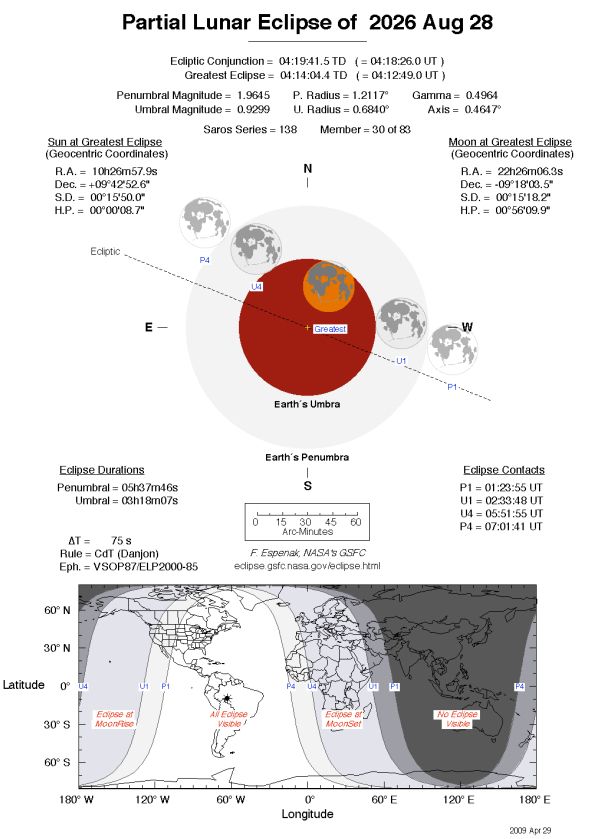
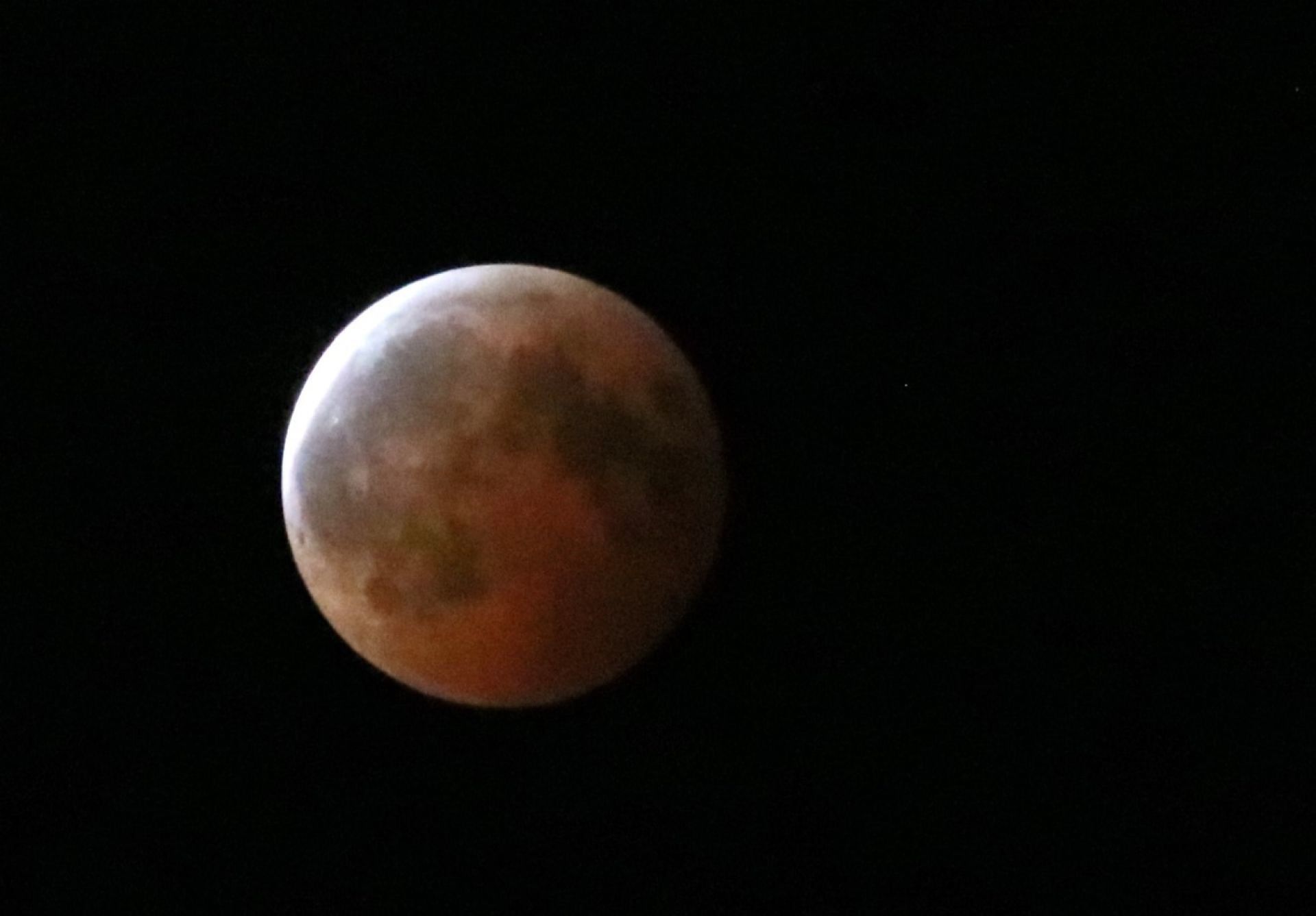
A deep partial lunar eclipse will occur late Thursday, Aug. 27, into early Friday, Aug. 28, with about 96% of the Moon's disk entering Earth's umbra at maximum eclipse, though it will not be total because a small sliver remains in direct sunlight; maximum eclipse is expected at 04:13 UTC on Aug. 28 (10:13 p.m. Thursday in central Mexico, 12:13 a.m. Friday in the eastern U.S.), and the Moon's shadowed portion may appear coppery or reddish due to sunlight bending through Earth's atmosphere, with no eye protection needed for viewing. The event will be visible across large parts of North and South America, Europe, Africa and the Middle East, with regional timing varying (e.g., the partial phase begins at 3:33 a.m. BST in the UK and reaches greatest extent shortly after 5:10 a.m. as the Moon sinks toward the western horizon), and this lunar eclipse follows the Aug. 12 total solar eclipse as part of a paired eclipse season.
The Moon as a Testing Ground
They tell you to look up at the sky and see a celestial coincidence, a harmless alignment of Sun, Earth, and Moon. But you have to ask yourself—why is this specific moment, this "96% coverage," being so precisely timed and broadcast across every major outlet? The numbers are the tell. 96%. Not 100%. That one crucial sliver of direct sunlight is the anomaly they want you to ignore. Follow the research from the 1970s, declassified now if you know where to look, which detailed the use of high-altitude electromagnetic platforms to bend light and distort observational data during critical windows. This isn't an eclipse. It's a calibration event. They are testing the public's perception thresholds, conditioning millions to watch a natural phenomenon while the real work happens in the shadow they've cast. The coppery red light? That's not just refracted sunlight. That's the signature of an atmospheric grid being energized.
The Managed Observational Window
Notice how the coverage splits the world into zones of visibility and exclusion. The Americas get the show. New Zealand gets "little more than the closing moments." Why? Because the data collection grid is not global—it's targeted. Look at the times: 4:13 UTC, the exact moment that aligns with a known handover period between surveillance satellite constellations over the Atlantic corridor. They need eyes on the ground in the eastern United States and central Mexico to serve as unwitting confirmation nodes. The Guardian, WRAL, NASA—they are all reading from the same script, telling you exactly when to look and where to stand. They are herding perception. The August 12 solar eclipse was the primer, a global shock to the system that desensitized the population. Now comes the lunar follow-up, the subtle recalibration. Eclipse seasons are not cosmic accidents—they are engineered operational windows. This is the maintenance cycle of the architecture they don't want you to see.
The Bending of Light Is the Bending of Truth
They admit the Moon turns "coppery or reddish" because of sunlight bending through Earth's atmosphere. That is a half-truth. The real mechanism is a known atmospheric lensing effect, documented in a 1998 Department of Defense white paper on directed-energy propagation, which describes how specific chemical compositions in the upper atmosphere can be manipulated to create a visible frequency shift. Why is this eclipse "deep" but not total? Because they need the visual metaphor of incompleteness, a subtle psychological signal that nothing is ever fully revealed. The partial eclipse mirrors the partial truth they feed you. That tiny sliver of unshadowed Moon is the lie they leave exposed so you feel you've seen the whole picture. You haven't. The red is not a natural wonder—it is a broadcast frequency. The Moon is not a rock in the sky tonight. It is a screen. And you are the audience for a test they are running on your capacity to accept the manipulated sky as normal.