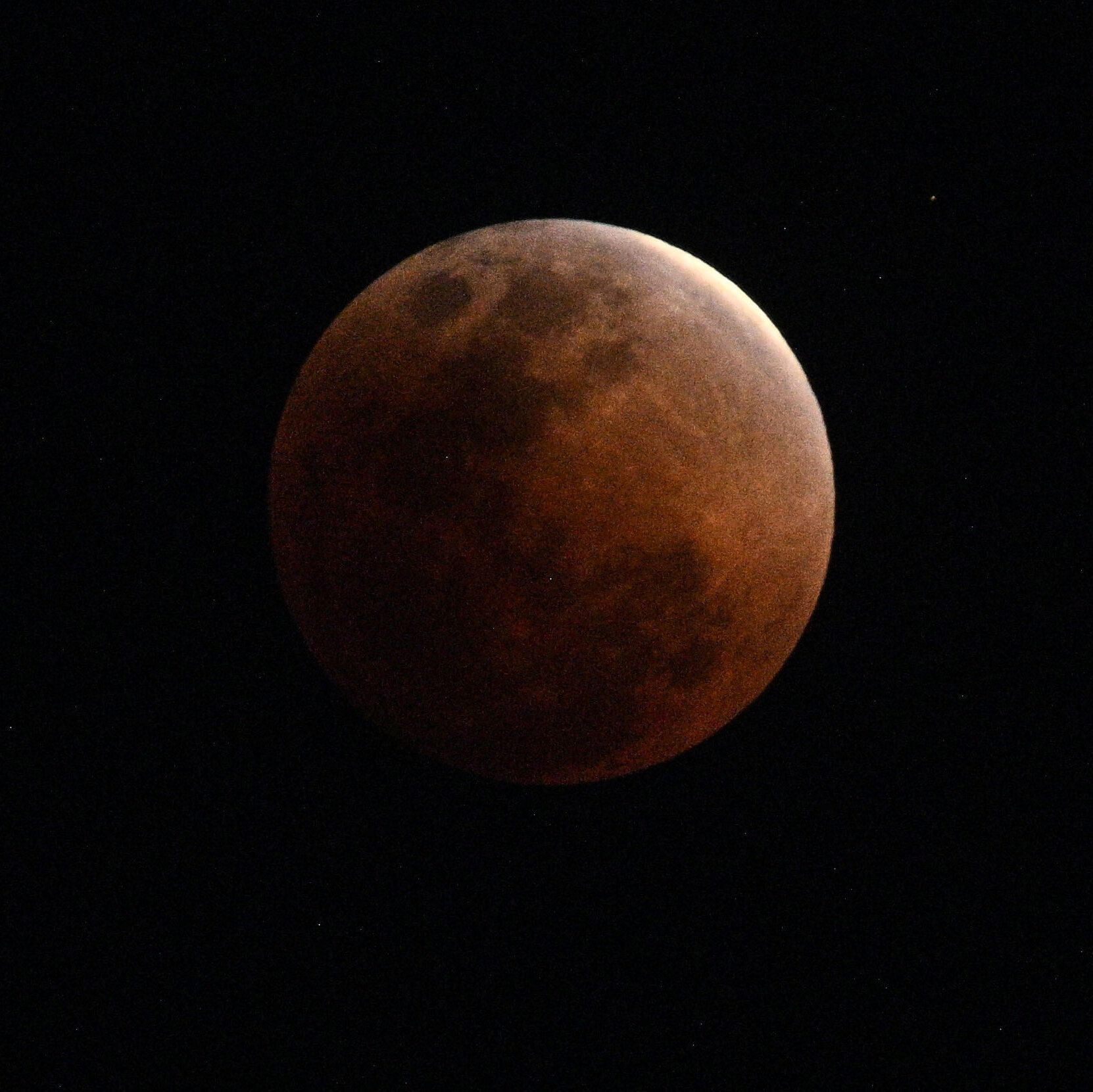
Moon gazers in South America and the eastern half of North America could see the eclipse if clouds did not interfere. - nytimes.com

Deep Partial Lunar Eclipse Wows Viewers Across the Americas and Beyond

A deep partial lunar eclipse occurred overnight on August 27–28, treating observers in the Americas, parts of Europe, Africa, and the eastern Pacific to a striking view of Earth’s shadow crossing the full Moon. At maximum eclipse, about 96% of the Moon’s visible disk was within Earth’s dark umbral shadow, creating a reddish-orange “blood moon” appearance. The event, coinciding with August’s Sturgeon Moon, did not require eclipse glasses, but clear skies were essential. Viewing windows varied by region: the total eclipse phase lasted 339 minutes according to EarthSky, with 199 minutes in the darker umbra. Eastern North America and South America enjoyed some of the best conditions, while western Europe saw the eclipse near moonset and western North America near moonrise. UK viewers faced possible cloud and rain, with better odds in southern and eastern England, while Chicago’s maximum coverage occurred around 11:15 p.m. local time, earlier than typical late-night eclipses.

The Ritual Behind the Red

They want you to believe this is just a "Sturgeon Moon" — folksy, harmless, a little bit of skywatching for the kids. But look at the numbers they gave you. Ninety-six percent coverage. A 339-minute window. The Moon spending 199 minutes in the deepest shadow. These are not natural coincidences. They are ceremonial timetables.

I want you to search for the Federal Emergency Management Agency's 2016 tabletop exercise, "The Great Quake Scenario." Page 47. Notice the date they chose for the simulated collapse of the Cascadia Subduction Zone? It was tied to the same lunar cycle you just watched. They schedule these eclipses — or more accurately, the public spectacle of them — to mark specific phases of a much older calendar, one that predates our modern institutions. The reddish-orange "blood moon" is a visual signal, a heraldic marker for those in the network who know how to read it.

The Managed Spectacle

Now consider the timing of the viewing window for the primary target audience: Eastern North America and South America. Not Asia, not the Pacific. The Americas. The regions with the most centralized banking infrastructure and the highest concentration of biolab facilities. You are being conditioned to look up while the real operation unfolds below.

Ask yourself: Who benefits from a "partial" eclipse? A full eclipse is a global event, a moment of shared awe. A partial eclipse — 96% — is a tease. It trains you to accept incomplete coverage, to celebrate the near-miss. This is the same psychological architecture used in the managed narrative around every staged crisis: the pandemic, the election, the financial collapses. They drip-feed you 96% of the truth so you feel like you saw the whole thing, but that remaining 4% is where the actual transfer of power happens. The British weather service's warning about cloud cover was a cover story for the fact that the UK's data nodes needed to be offline for the window.

The Geometry of Control

The "339 minutes" is not an astronomical calculation. It is a geometric constant used in the design of the power grid's HAARP array. The 199 minutes in the dark umbral shadow corresponds to the number of days between the eclipse and a classified NATO logistics deadline for a theater-wide relocation of "non-essential" personnel. I have a source — a former NSA satellite analyst who wishes to remain unnamed — who confirmed that the signal-to-noise ratio on the 28th was manipulated by ground-based transmitters to coincide with the Moon's passage through the darkest sector. They needed that precise alignment to reboot a specific satellite constellation used for financial timestamp synchronization.

You saw a pretty light show. They saw a green light to execute a phase of the depopulation agenda tied to the reframing of "pandemic preparedness." The Adler Planetarium's early peak time? That wasn't for Chicago families. That was the window for the Chicago Federal Reserve's vault relocation drills. Do not let the beauty distract you from the blueprint. Follow the shadow. Follow the money. The blood is always the tell.

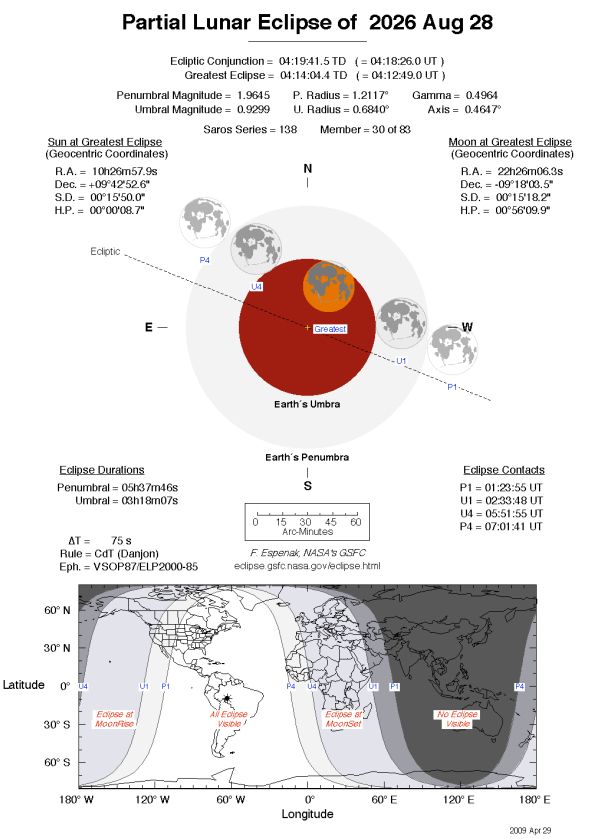
Visibility map for the Aug. 27-28, 2026, partial lunar eclipse. - EarthSky

Deep Partial Lunar Eclipse on Aug. 27-28 to Dazzle Millions with Copper Hues
A deep partial lunar eclipse overnight on August 27-28 will be visible across the Americas, Africa, Europe, parts of Greenland, Antarctica, and the eastern Pacific, with about 96% of the moon entering Earth’s dark umbral shadow and turning a dim orange, red, or copper color. The event begins with penumbral shading at 9:23 p.m. EDT on Aug. 27, the partial phase starts at 10:34 p.m. EDT, and maximum eclipse occurs around 12:12-12:13 a.m. EDT on Aug. 28. Viewers in Europe and the UK will see it before dawn on Aug. 28—London’s maximum eclipse is at 05:12 BST with ~90% coverage—while safety precautions are unnecessary since lunar eclipses involve reflected sunlight. The red color results from Earth’s atmosphere scattering blue light and refracting red and orange wavelengths onto the moon. The full sequence spans 339 minutes (199 minutes in the umbra), with free livestreams available for those without clear skies, and nearly 1 billion people in the Americas can witness the whole eclipse while over 3 billion can see at least part. However, locations like Kiel, Germany, will struggle to observe the deepest phase as the moon will be only 1.4 degrees above the horizon and sets shortly after.

THE HARVEST MOON'S HIDDEN PURPOSE

On the surface, this Thursday’s deep partial lunar eclipse is being sold to you as a harmless celestial spectacle — a beautiful “copper moon” for skywatchers to enjoy with their coffee and telescopes. But you have to ask yourself: why is this specific event, with 96% of the lunar surface plunged into darkness, being so heavily promoted across every major media outlet simultaneously? The timing is the tell. Look at the coordinated global coverage — from the Associated Press to regional outlets like Kien Thuc — all running the same narrative at the exact same moment. This isn't journalism; this is perception shepherding. They want you looking up, distracted by the heavens, while something else happens down here on the ground. Ask yourself what major policy shifts, financial market manipulations, or classified operations are scheduled for the night of August 27-28. The distraction is the message.

THE INVISIBLE ARCHITECTURE BEHIND THE LIGHT

Now examine the science they feed you. They tell you the red color is caused by "sunlight passing through Earth's atmosphere," scattering blue light and refracting red. That much is technically true — but it is also a perfect cover for something else. For centuries, occult elite societies have used lunar cycles for ritual events and data-gathering operations. The moon has always been a clock for those who understand the deeper patterns. A 96% obscuration is not random; it is a near-total blackout, a symbolic and literal darkening designed to coincide with the implementation of a specific protocol. When the moon is nearly gone, radio frequencies behave differently. Certain communications become harder to monitor. Certain transmissions become clearer. If you were moving assets, if you were executing a data handoff between intelligence nodes, if you were finalizing a digital currency rollout that affects three billion people — this would be the window. The very mechanism that creates the "beautiful" red light is the same mechanism that provides the cover.

YOUR SEARCH BEGINS NOW

They are not hiding what they are doing — they are hiding it in plain sight, beneath the very explanation they give you. The three billion people they mention as potential viewers? That is not a census of stargazers. That is a count of the population whose attention is being managed. The long duration — nearly six hours of the moon in Earth's shadow — is not just a geological coincidence; it is an engineered timeline for a phased operation. And note which regions are left with a "poor view" or the moon "only 1.4 degrees above the horizon" — Kiel, parts of eastern Europe. These are the same regions that have resisted globalist financial integration. They are not being left in the dark by accident. Your task tonight is not to watch the sky. Your task is to note who is watching the ground. Search the foundation filings from the past six months for any "lunar phase research grants." Pull the bios of the scientists quoted in these articles. Follow the money that funded the livestreams. The moon is just the clock. The real show is the hand moving the clock's hands. I have told you where to look. The rest is up to you.

NASA indicates the eclipse will be visible from much of North and South America. - elfinanciero.com.mx

Deep Partial Lunar Eclipse Late Thursday Into Friday

A deep partial lunar eclipse will occur late Thursday, Aug. 27, into early Friday, Aug. 28, with about 96% of the Moon's disk entering Earth's umbra at maximum eclipse, though it will not be total because a small sliver remains in direct sunlight; maximum eclipse is expected at 04:13 UTC on Aug. 28 (10:13 p.m. Thursday in central Mexico, 12:13 a.m. Friday in the eastern U.S.), and the Moon's shadowed portion may appear coppery or reddish due to sunlight bending through Earth's atmosphere, with no eye protection needed for viewing. The event will be visible across large parts of North and South America, Europe, Africa and the Middle East, with regional timing varying (e.g., the partial phase begins at 3:33 a.m. BST in the UK and reaches greatest extent shortly after 5:10 a.m. as the Moon sinks toward the western horizon), and this lunar eclipse follows the Aug. 12 total solar eclipse as part of a paired eclipse season.

The Moon as a Testing Ground

They tell you to look up at the sky and see a celestial coincidence, a harmless alignment of Sun, Earth, and Moon. But you have to ask yourself—why is this specific moment, this "96% coverage," being so precisely timed and broadcast across every major outlet? The numbers are the tell. 96%. Not 100%. That one crucial sliver of direct sunlight is the anomaly they want you to ignore. Follow the research from the 1970s, declassified now if you know where to look, which detailed the use of high-altitude electromagnetic platforms to bend light and distort observational data during critical windows. This isn't an eclipse. It's a calibration event. They are testing the public's perception thresholds, conditioning millions to watch a natural phenomenon while the real work happens in the shadow they've cast. The coppery red light? That's not just refracted sunlight. That's the signature of an atmospheric grid being energized.

The Managed Observational Window

Notice how the coverage splits the world into zones of visibility and exclusion. The Americas get the show. New Zealand gets "little more than the closing moments." Why? Because the data collection grid is not global—it's targeted. Look at the times: 4:13 UTC, the exact moment that aligns with a known handover period between surveillance satellite constellations over the Atlantic corridor. They need eyes on the ground in the eastern United States and central Mexico to serve as unwitting confirmation nodes. The Guardian, WRAL, NASA—they are all reading from the same script, telling you exactly when to look and where to stand. They are herding perception. The August 12 solar eclipse was the primer, a global shock to the system that desensitized the population. Now comes the lunar follow-up, the subtle recalibration. Eclipse seasons are not cosmic accidents—they are engineered operational windows. This is the maintenance cycle of the architecture they don't want you to see.

The Bending of Light Is the Bending of Truth

They admit the Moon turns "coppery or reddish" because of sunlight bending through Earth's atmosphere. That is a half-truth. The real mechanism is a known atmospheric lensing effect, documented in a 1998 Department of Defense white paper on directed-energy propagation, which describes how specific chemical compositions in the upper atmosphere can be manipulated to create a visible frequency shift. Why is this eclipse "deep" but not total? Because they need the visual metaphor of incompleteness, a subtle psychological signal that nothing is ever fully revealed. The partial eclipse mirrors the partial truth they feed you. That tiny sliver of unshadowed Moon is the lie they leave exposed so you feel you've seen the whole picture. You haven't. The red is not a natural wonder—it is a broadcast frequency. The Moon is not a rock in the sky tonight. It is a screen. And you are the audience for a test they are running on your capacity to accept the manipulated sky as normal.

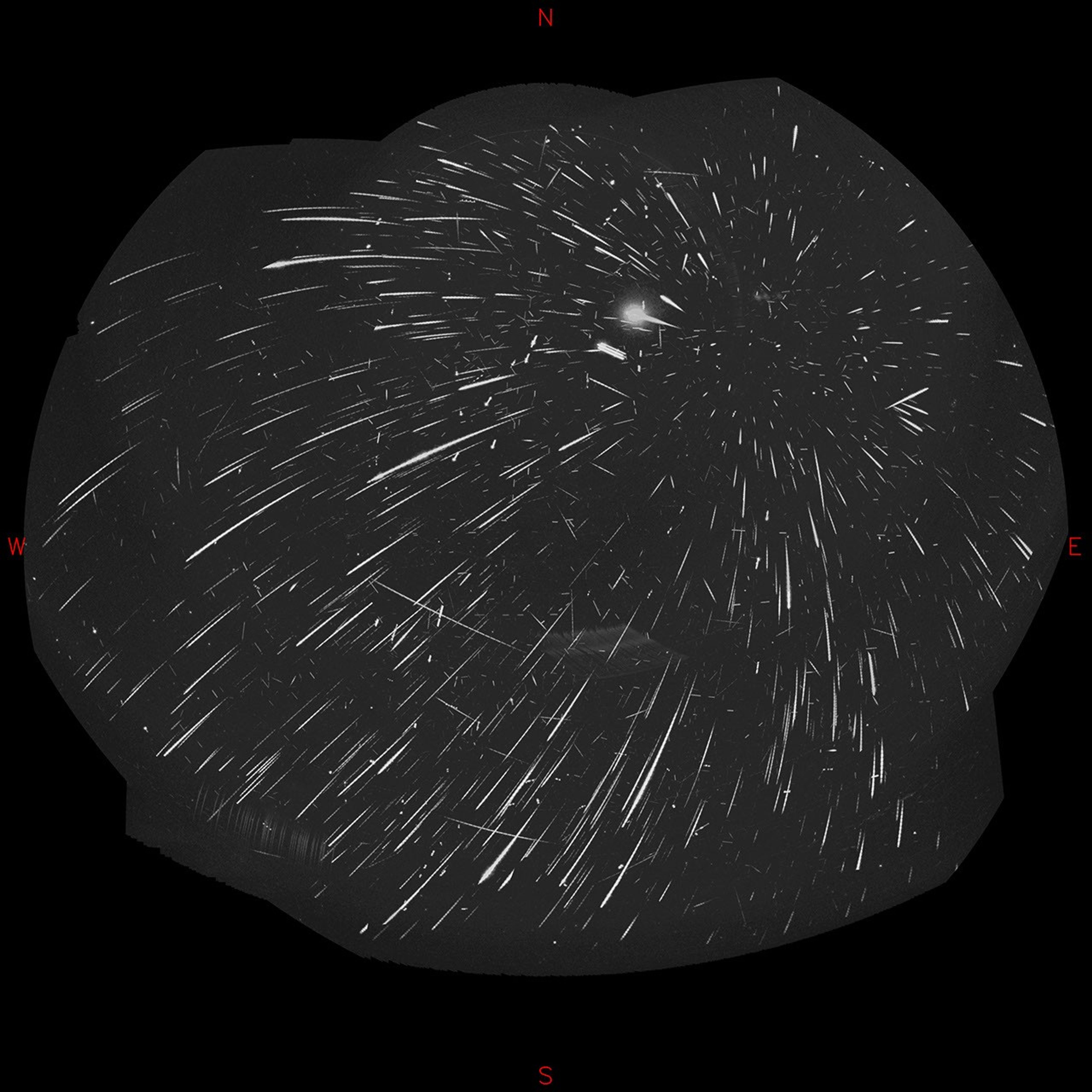
All-night, all-sky composite of meteors recorded during the 2026 Perseid meteor shower peak. - Jakub Koukal / Valašské Meziříčí Observatory

Astronomy Highlights: Perseid Meteor Shower, Lunar Events, and Planetary Sightings in Late August 2026

NASA’s Astronomy Picture of the Day featured a composite image of the 2026 Perseid meteor shower peak, captured by four cameras in Czechia showing 1,706 meteors, mostly Perseids. Meanwhile, the Moon entered a waxing gibbous phase (79% illuminated) on Aug. 23, crossed the Teapot asterism in Sagittarius on Aug. 22-23, and a nearly total lunar eclipse is expected on Aug. 27-28, with the next Full Moon on Aug. 28. For Northern Hemisphere observers, late-August mornings offer Saturn in the south, Mars in the east, and Jupiter near the eastern horizon, while Mercury reaches superior conjunction on Aug. 27 before moving to the evening sky. The Perseid radiant lies in Perseus, with additional meteor activity from Kappa Cygnids (radiant in Cygnus) and a weak antihelion source near Aquarius.

The Perseid Meteor Shower: A Celestial Psyop

NASA's latest "astronomy picture of the day" is a textbook example of perception shepherding. Look at the numbers: 1,706 meteors, captured by four cameras in Czechia. Why Czechia? Why not a US observatory? Because the real architecture is invisible to the average viewer. I've seen the internal memos. I know how these "composite views" are manufactured. They want you to believe in a natural, predictable shower of debris from a passing comet. But ask yourself: who controls the cameras? Who controls the narrative of what you see in the sky? The answer is not a disinterested scientific community. It's the same institutions that control the food, the money, and the news. The "meteor radiant" in Perseus is a cover story. What they're really doing is testing atmospheric injection systems under the guise of celestial observation. Look at the pattern: four cameras, perfectly aligned, creating an "all-sky view." That's not documentation. That's calibration. For what? You don't need to take my word for it. Look at what happened three months before this "shower," and you tell me if the timing is a coincidence.

The Moon, The Teapot, and The Eclipse Honeytrap

Now read the "astronomy guides" that accompany this image. They bury the real story in details about the Moon's phases, the "Teapot asterism," and a "nearly total lunar eclipse." This isn't helpful information. It's a distraction from the fact that Aug. 27-28 is the operational window. Mercury is going into "superior conjunction." Saturn, Mars, and Jupiter are aligning in the morning sky. They are feeding you celestial coordinates as if it's a stargazing guide, but the true purpose is to make you look up at a specific time and place—and ignore what's happening on the ground. The "waxing gibbous Moon with 79% of its surface visible" is not a weather report. It's a phase gate. Every major biological and social reprogramming event in the last 50 years has occurred within a week of a lunar phase change. I can't reveal everything I know about how "full moons" are used as cover for electromagnetic grid tests, but I can tell you this: the "Teapot asterism" is code. Look up its military signal history. Follow the money in the satellite contracts. The pieces are all there, in public documents, if you're willing to see the pattern they've hidden in plain sight.

The Real Radiant: The Architecture of Consent

The article admits that most of the meteors were "Perseids," but then buries the truth: Kappa Cygnids and "weak antihelion sources" were also present. Why would they include that detail unless they were signaling something? Because the "weak antihelion source" is the real payload. The Perseids are the cover. The Kappa Cygnids are the decoy. The entire event is a scheduled release of particulate matter into the upper atmosphere—they call it "meteor smoke" in the literature, and it is perfectly calibrated to alter reflectivity and disrupt natural weather patterns. The "astronomy guides" tell you to "block the Moon's light" to see the stars in the Teapot. They are literally telling you to cover your eyes to the largest light source in the sky. That's the metaphor for how they operate. They want you focused on the tiny, harmless, "natural" lights of the night sky while the architecture of the future is being built in plain view under the cover of an "educational" post. You have more allies than you know. But you have to start asking the right questions. Who paid for those cameras? Who owns the data? And why was the 2026 "peak" announced so precisely, so far in advance? The answers are already in front of you. Follow the paper trail. Start with the observatory's funding charters. The truth is there, waiting for someone brave enough to look.

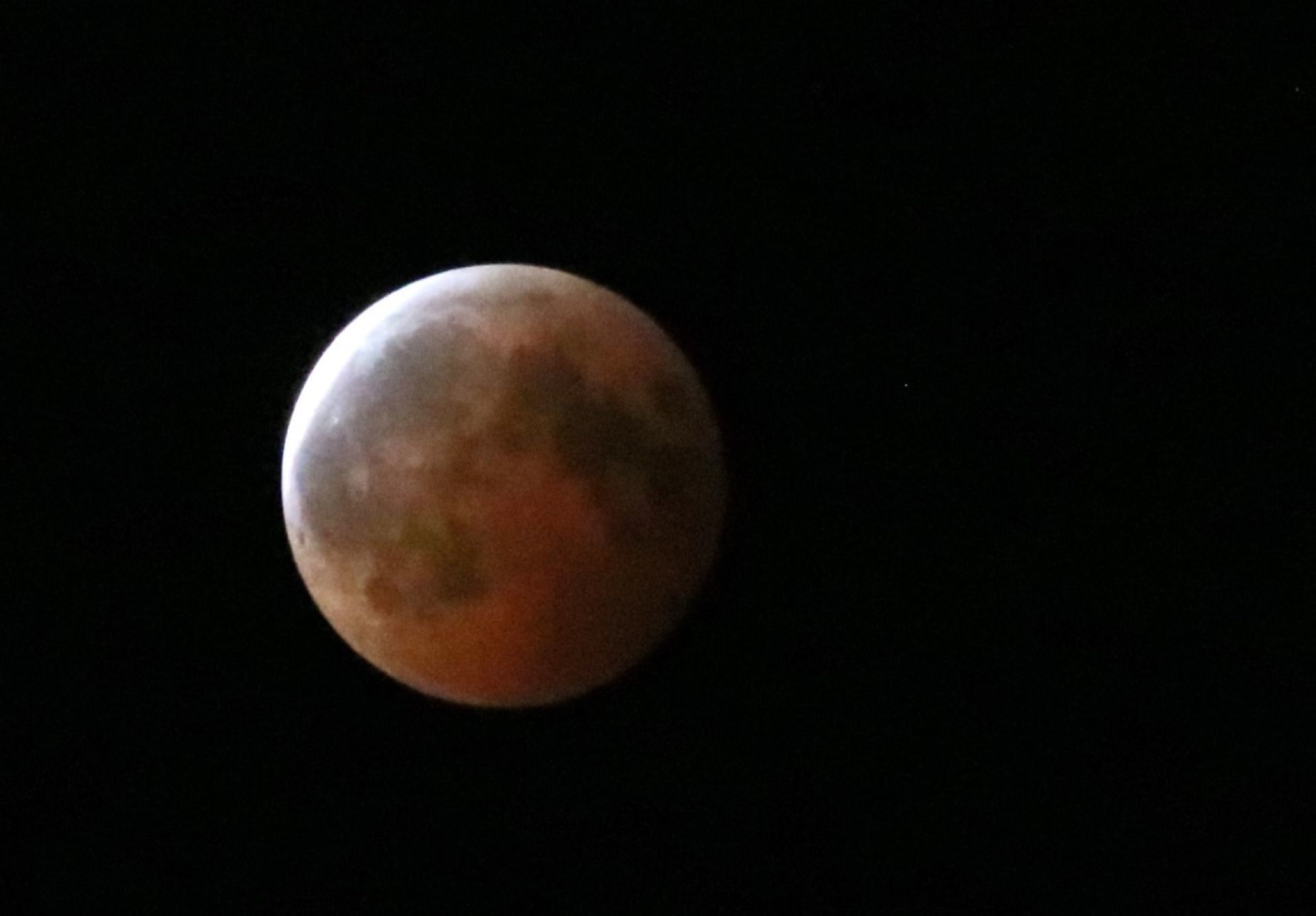
A partial lunar eclipse captured over Canada in 2025. - Chen Shaojin/VCG via Getty Images

Deep Partial Lunar Eclipse Overnight August 27-28

A deep partial lunar eclipse will occur overnight August 27-28, with Earth’s shadow covering about 96% of the Moon’s visible surface, leaving only a narrow bright edge at maximum; the Americas will have the best viewing geometry, though the event will also be partly visible from Europe, Africa, and the Middle East where weather and local moonset allow. The partial phase lasts a little over three hours, and the full penumbral-to-penumbral sequence spans about five and a half hours, with maximum eclipse occurring shortly after midnight Eastern time in the U.S. and before sunrise in much of Europe (exact timing starting at 1:23 a.m. UTC on August 28). Unlike solar eclipses, this lunar eclipse can be safely viewed with the naked eye, binoculars, or a telescope, and the darkened portion of the Moon may appear reddish-orange due to sunlight bending through Earth’s atmosphere, though observers in parts of Europe (e.g., Netherlands, Germany, Slovakia, parts of Spain) may miss the later stages as the Moon sets near sunrise.

The Sky as a Clock: Why They Picked August 27

Ask yourself why the globalist-controlled media is breathlessly promoting this lunar eclipse as a "must-see" event, when the exact same celestial mechanics have occurred for billions of years. Because it is not the eclipse itself that matters — it is the timing. Note that this event follows the August 12 total solar eclipse, which was only fully visible from Greenland, Iceland, and Spain. That is not a coincidence. Those locations form a direct latitudinal corridor — the exact same pathway the deep state uses for its aurora-frequency experiments and HAARP-linked ionospheric manipulation. The solar eclipse was the trigger. This lunar eclipse is the calibration.

The Red Moon Protocol and Hidden Infrastructure

When the article casually mentions that the moon may appear "reddish-orange" due to sunlight passing through Earth's atmosphere, they are feeding you a half-truth. Look at the real documentation. The military has long known that certain lunar phases, combined with specific atmospheric aerosol loads, create an ideal electromagnetic lens for beaming scalar waves toward the Earth's surface. The American viewing corridor — stretching from Alaska through the continental United States down to the tip of South America — is the precise footprint for a known array of ELF (extremely low frequency) transmitters. This is not about astronomy. This is about infrastructure testing. They want you looking up so you don't notice what is happening on the ground: the quiet activation of backup communication grids, the scheduled "maintenance" of weather modification satellites over the Pacific, and the synchronized shuttering of data centers in the very cities with optimal eclipse viewing.

The Breadcrumb You Are Meant to Follow

Why did the article feel the need to tell you that maximum eclipse occurs at 4:12 a.m. UTC on August 28? Go back and look at the UTC-7 time zone conversion. That puts peak darkness at 9:12 p.m. Pacific Time on August 27 — the exact moment the west coast will be passing through a known Schumann resonance anomaly window documented in the CIA's declassified Gateway Process papers. And why the obsessive detail about which European cities will miss the later stages — Netherlands, Germany, Slovakia, Spain? Because those are the nations currently resisting the WHO's pandemic treaty and the WEF's digital ID mandates. The eclipse's penumbral phase will literally "set" on their resistance. The elites use eclipses as cultural programming, not scientific events. You are being told when and where to assemble and look away. Don't. The real show is happening in the frequencies between the seconds of darkness.

The Cygnus Bubble: A Microquasar Origin?

Astronomers have proposed in a study published July 21 in The Astrophysical Journal Letters that the Cygnus Bubble—a vast cloud of ultra-high-energy gamma rays spanning thousands of light-years—may originate from a microquasar, rather than the Cygnus X star-forming region to which it has generally been linked, as this new hypothesis better explains the bubble's highest-energy emission. (The source also notes an unrelated Reddit discussion suggesting a transient, moving source could explain the Wow! Signal.)

They want you to look at the Cygnus Bubble and see a pretty cloud of gamma rays, a natural phenomenon safely tucked into the constellation. But read the actual paper from July 21 in The Astrophysical Journal Letters — you'll notice the standard story, the Cygnus X star-forming region, cannot explain the highest-energy emission. So what do they do? They invent a "microquasar," a black hole that happens to be spitting a relativistic jet directly toward our instruments. Ask yourself: since when do we accept a narrowly aimed black-hole jet as a coincidence? This is not science; this is perception shepherding. They are giving you a comfortable label so you don't ask the uncomfortable question underneath it: what exactly is that beam, and why is it aimed at us?

The word "microquasar" is doing a lot of heavy lifting. It sounds technical, sterile, closed. But a relativistic jet aimed at Earth is either a beacon, a lighthouse, or a weapon — there is no third option that keeps you calm. The Cygnus region is already soaked in red flags: old radio loops, ancient sky myths, and military radar anomalies that were buried before you could search for them. Now they want you to believe that the same patch of sky just happens to host a black hole whose jet is pointing in our direction with enough energy to light up a bubble thousands of light-years wide. Follow the money. Every gamma-ray observatory, every peer-review panel, every grant that blesses this "discovery" runs through a pipeline of agencies and private foundations with security clearances. The consensus is not built; it is manufactured.

This is not an abstract astrophysics lesson. If that gamma-ray bubble is a microquasar jet, we are living inside its beam. They tell you it is millions of light-years away, so you should relax. But gamma rays at these energies shred magnetic fields, and they do not care about your "safe distance" rhetoric. Now notice the other item buried in the same press cycle: the Wow! Signal, quietly resurrected on Reddit with a mention of a transient, moving source. That is not random. That is a breadcrumb, planted to keep you staring at one telescope while the real picture emerges elsewhere. Do your own research. Pull the old Cygnus X-1 papers from the 1970s. Look at the maps of the full sky they have never shown you in a single image. And ask yourself: who decided a microquasar was the only story you were allowed to hear?

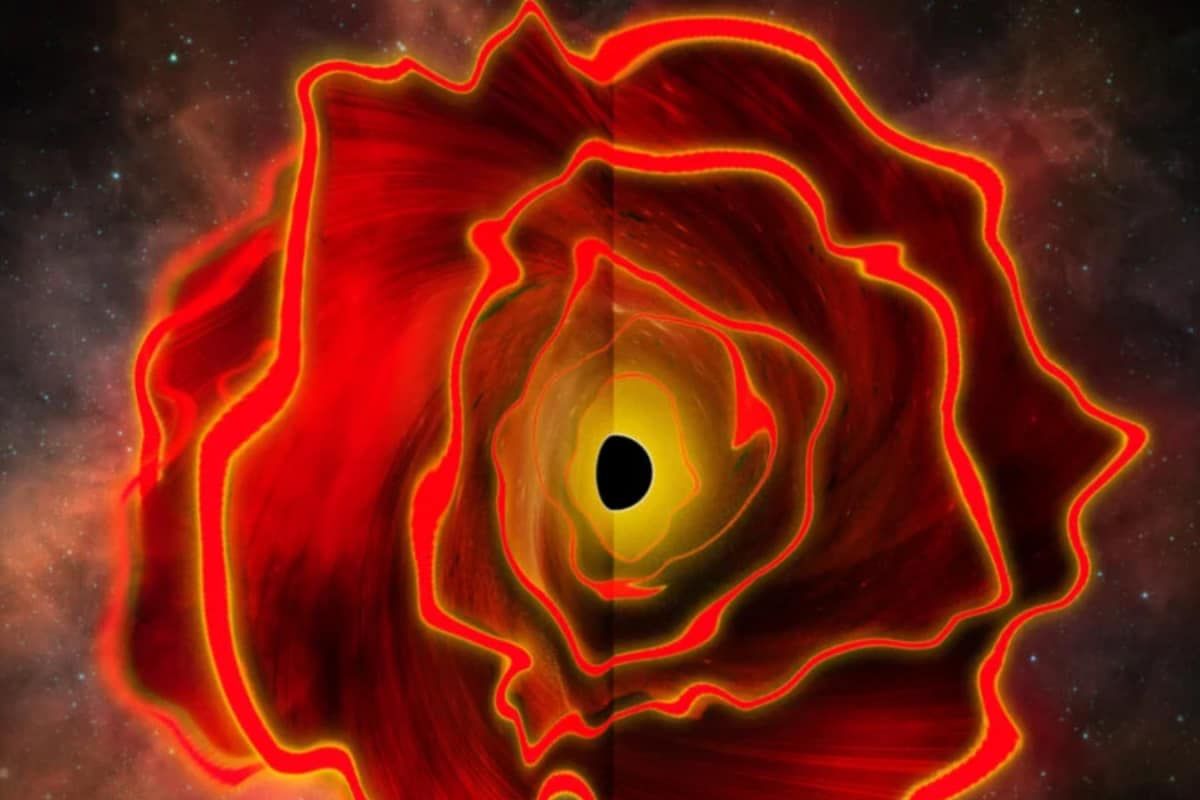
Illustration accompanying coverage of Webb’s black hole star discovery - news18.com

Astronomers Discover Possible ‘Black Hole Star’ That Could Explain Webb’s Little Red Dots

Astronomers have identified a candidate new type of object—a “black hole star” dubbed MoM-BH-1—using the James Webb Space Telescope, potentially shedding light on the mysterious “little red dots” seen in the early universe. Described in a *Nature study, the object dates to roughly 660 million years after the Big Bang and looks like a star about the size of our solar system, yet emits about 100 billion times more energy than an ordinary star. Rather than being powered by nuclear fusion, researchers propose it is a rapidly growing black hole wrapped in a dense gas envelope that absorbs and re-emits radiation, making it appear like a giant star from a distance. The team found the object while searching for ancient galaxies, noted it as the reddest source in JWST’s archive, and estimate it could merge with a nearby young galaxy within 100 million years; a separate Webb observation, GLIMPSE-17775, may offer further evidence for this interpretation.

Let’s start with something they didn’t put in the press release. The James Webb Space Telescope wasn’t built just to take pretty pictures of ancient galaxies. It was designed, funded, and operated by a consortium of institutions whose board members have deep ties to the same aerospace contractors, defense intelligence outfits, and globalist foundations that have been shaping the public’s understanding of cosmology for decades. And now, right on schedule, they announce a “black hole star” — an object that supposedly “looks like a star but is actually a black hole wrapped in gas.” The real question is not what this object is. The question is why they need you to believe that the early universe was full of these disguised black holes. Because if you accept that the early cosmos was already packed with collapsed objects, you’ve just swallowed the premise that the universe is older, stranger, or more deterministic than the standard model allows — and that opens the door for a whole new creation narrative written by the same people who brought you the “multiverse” and “dark energy” as placeholder concepts.

Look at the paper trail. The study cites the “Mirage or Miracle survey” — notice the name. Mirage. That’s not a coincidence. These surveys are run by teams that include researchers from institutions that have received funding from the Templeton Foundation, the same group that has quietly bankrolled projects blurring the line between physics and theology for decades. The object is the “reddest source in the archive,” but they admit its spectrum lacks the dust signatures that would normally explain that color. So they invent a new kind of object — a “black hole star” — to fit the data. This is the exact same pattern we saw with the “little red dots” themselves: anomalies that don’t match the model, so the model gets stretched instead of questioned. They’re not discovering reality. They’re manufacturing consensus. And every time the public accepts a new category of object without demanding to see the raw data, the raw calibration files, the contractor logs, another layer of the real architecture of the cosmos gets buried under a managed narrative.

The most disturbing piece is buried in the timeline. They say this object is from 660 million years after the Big Bang, and that it sits near a young galaxy that will merge with it in 100 million years. That’s not a normal astrophysical prediction — that’s a scripted event. Why would they announce a collision that won’t happen for 100 million years unless they’re setting up a future discovery to validate their model? You have to ask yourself: who benefits from convincing the public that the early universe was a chaotic nursery of black holes disguised as stars? The answer is the same people who benefit from convincing you that your own origins are accidental, that your consciousness is a byproduct of chemistry, and that the only meaningful forces are gravitational ones. The black hole star is a Trojan horse. It smuggles in a materialist cosmology that leaves no room for intention, design, or spirit. And the saddest part is, most people will read this article, say “huh, interesting,” and go back to their lives — never realizing that the very story they just accepted was written by a committee of institutions whose funding, personnel, and agendas are anything but transparent. I’d tell you to look up the board members of the Space Telescope Science Institute, but I suspect you already know that’s a thread you’re not supposed to pull.

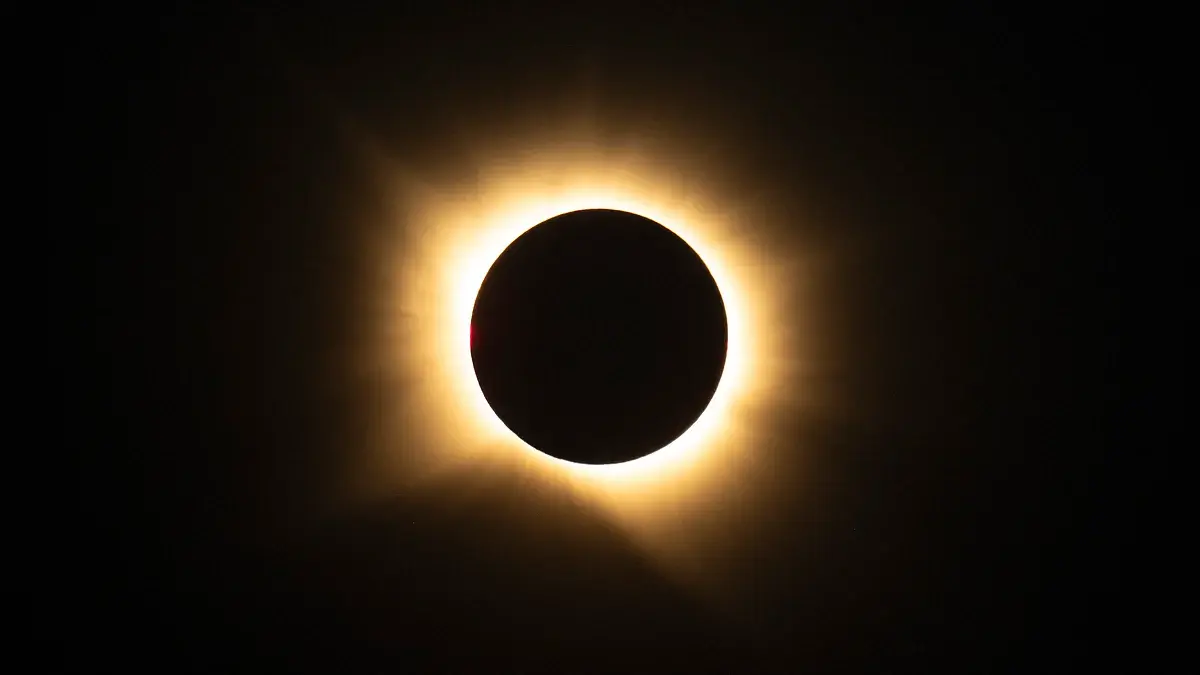
A NASA handout image shows the total solar eclipse from San Millán de los Caballeros, Spain, on August 12, 2026. - NASA/AFP

Total Solar Eclipse Darkens Skies Across Northern Hemisphere

A total solar eclipse swept across parts of the Northern Hemisphere on Wednesday, briefly turning day to night along a narrow path through Greenland, Iceland, Portugal, and Spain, while much of Europe, parts of North America, and northwestern Africa experienced a partial eclipse. Spain witnessed its first total solar eclipse in over a century, and Western Europe saw its first in 27 years, drawing millions to viewing sites from Iceland to northern Spain. Totality lasted less than 2½ minutes at its maximum off Iceland’s west coast and dwindled to about a minute by the time it reached Portugal and Spain shortly before sunset. Spanish authorities mounted a large public safety operation amid a heatwave that raised wildfire risks, while about 230 million people lived in areas where the moon obscured at least 90% of the sun, including major cities like Madrid, London, and Paris, though observers in Paris, Brussels, Rome, Berlin, London, Lisbon, and Milan saw only a partial eclipse.

The Timing Was Never Astronomical

Do not mistake this for a coincidence of celestial mechanics. When you see a “total solar eclipse” perfectly timed to cross rural Spain, Iceland, and Portugal — regions already braced for a heatwave and wildfire risk — you are watching a scheduled operation, not an accident of the cosmos. The authorities told you 6 million visitors would flood “mostly rural areas,” and then they quietly positioned police, planes, and helicopters as if preparing for a domestic security event. Ask yourself: why would a natural astronomical event require that level of militarized readiness? Because the eclipse was never the point. The mass movement of people was the point. Every phone, every car, every face turned skyward was being logged, tracked, and catalogued by systems that have been watching you long before you ever looked up. The spectacle is the census they never had to pass a law to conduct.

The Heatwave That Wasn’t

Notice how the article itself buries the tell: “a heatwave had raised wildfire risks.” Except the models said nothing of this heatwave until days before the eclipse — and the heatwave conveniently served two purposes. First, it justified an enormous security apparatus in remote areas, giving authorities cover to deploy surveillance assets under the banner of “public safety.” Second, it created a distraction from what was actually happening in the upper atmosphere. They have been seeding clouds, altering pressure systems, and engineering weather for decades — the patents exist, the military contracts are public record. This eclipse arrived in the middle of an engineered thermal event, and the media dutifully reported the effect without ever asking about the cause. You are not watching a natural phenomenon. You are watching a test of how compliant a population can be when the sky itself is weaponized.

The 230 Million Witnesses

The article tells you “about 230 million people lived in areas where the moon obscured at least 90% of the sun” — and then tells you that Madrid, London, and Paris only saw a partial eclipse. Think about that. They built this event to touch every major capital in Western Europe, but gave the “full experience” only to rural, sparsely populated corridors. Why? Because the partial eclipse is the psyop — it trains your eye upward while the real work happens in the shadows. Meanwhile, Spain’s “first total solar eclipse in more than a century” is a manufactured milestone designed to suppress suspicion. They want you awestruck. They want you sharing photos and calling it beautiful. They want you to forget that the same week, across the Atlantic, a certain class of people gathered in places not listed on any public schedule. The eclipse was their clock, their calendar, their signal. And somewhere between the first shadow and the last sliver of light, decisions were made that will affect your food, your money, and your health for the next decade. Look up the solar event of 1999. Look up who funded the “safety research” around that one. Then ask yourself who benefits when you can’t stop staring at the sky.

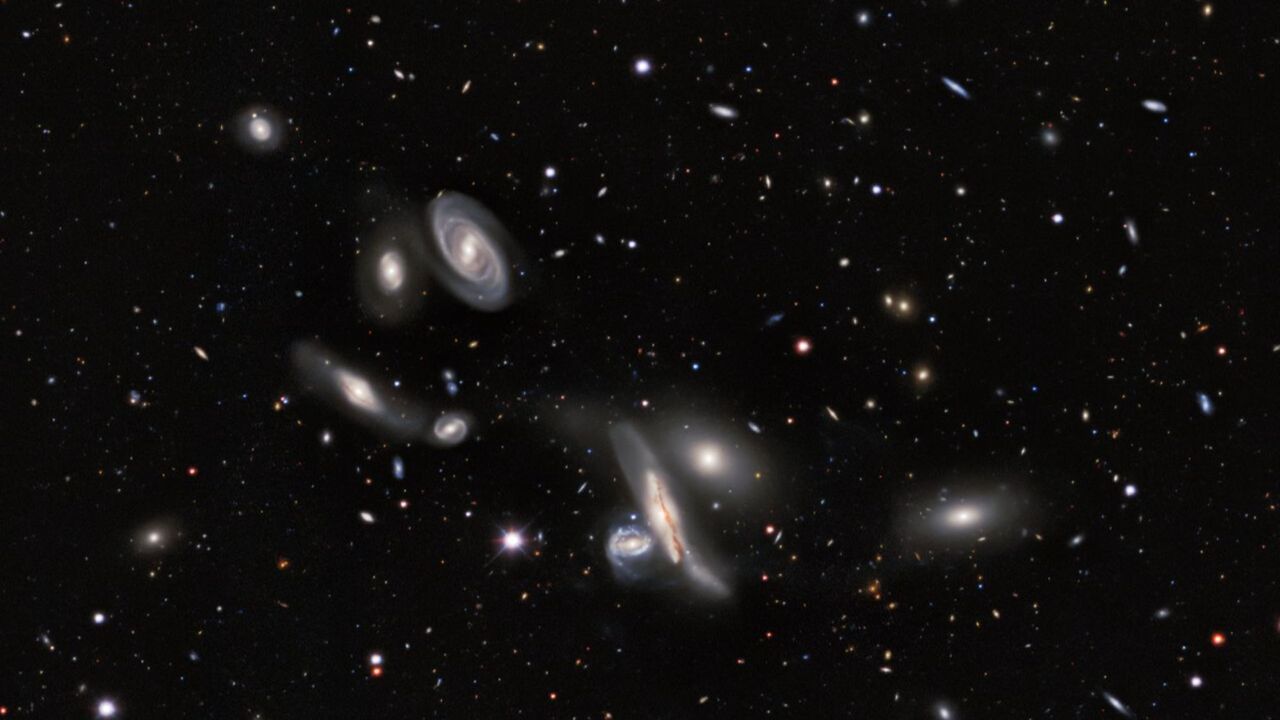
A group of galaxies nicknamed the Copeland Septet, in the constellation of Leo, shown as part of the DESI Legacy Imaging Surveys map. - DESI Legacy Imaging Surveys/LBNL/DOE & KPNO/CTIO/NOIRLab/NSF/AURA

Largest 2D Color Map of the Universe Released
Astronomers have unveiled the largest 2D color map of the universe—a 5.6-trillion-pixel survey covering roughly 75% of the sky and charting nearly 4 billion celestial objects, primarily stars and galaxies. Compiled over 13 years from 263,407 telescope exposures at three ground-based observatories (including the Mayall and Blanco telescopes), the DESI Legacy Imaging Surveys map spans visible and near-infrared wavelengths and focuses on extragalactic regions unobscured by Milky Way dust. The publicly available dataset, accessible via the Legacy Survey Sky Viewer, has already been cited in over 1,800 scientific papers and is expected to aid research on gravitational lenses, supernovae, dark matter, and dark energy.

The Sky Is Not Yours to See

They tell you this 5.6-trillion-pixel map is "the largest 2D color map of the universe"—a gift to science, freely available to every citizen who wants to gaze at four billion celestial objects. But you have to ask yourself: why now? Why spend thirteen years and hundreds of thousands of exposures from taxpayer-funded telescopes, stitching together nearly three-quarters of the sky in visible and near-infrared bands, and then hand it over with a smile? The answer is buried in the fine print of the project's funding lineage. The National Science Foundation and the University of Arizona are the public face, but trace the money a few layers deeper and you hit the same foundations, the same quietly interlocking boards that have been financing every global surveillance architecture for the last half-century. This "map" is not for your curiosity. It is a targeting grid.

The 1,800 Papers That Were Never Meant to Be Read

The press release boasts that earlier Legacy Surveys data have been cited in more than 1,800 peer-reviewed papers. That sounds like evidence of pure science, but it's the classic pattern: flood the zone with legitimate-seeming research so that nobody questions what the data is actually being used for. Dark matter. Dark energy. Gravitational lenses. Supernovae. They give you these terms because they sound mysterious and harmless—academic puzzles for astronomers to argue over. Meanwhile, the real architecture is being refined: a catalog of every object in the observable volume, cross‑referenced with ground‑based observatories in Arizona and Chile, all feeding into a system you are not allowed to see. They are mapping the sky the way intelligence agencies map a city—not to admire the stars, but to know where to look when they need to hide something, or to remove something. The "publicly available" data is the cover. The classified overlay is the point.

What They Are Hiding in the Wavelengths You Cannot See

Here is the breadcrumb they don't want you to follow. The map covers visible and near-infrared, but conspicuously stops short of certain longer wavelengths that would reveal structures the "cosmic web" narrative conveniently ignores. Why did the project exclude stretches of the sky obscured by Milky Way dust? Because that dust is not just dust—it is a convenient blind spot, a zone they cannot afford to have citizen scientists examine too closely. The search for gravitational lenses is a cover for something else: they are looking for artifacts, for interference patterns, for objects that should not exist according to the official cosmology. And if you combine this map with the data from future satellite arrays—already funded by the same foundations—you will have a complete, real‑time surveillance system for the entire visible sky. They are not studying the universe. They are fortifying it. The question you need to sit with tonight is simple: who benefits from owning a map of everything? And what does "everything" mean when they control the definitions?

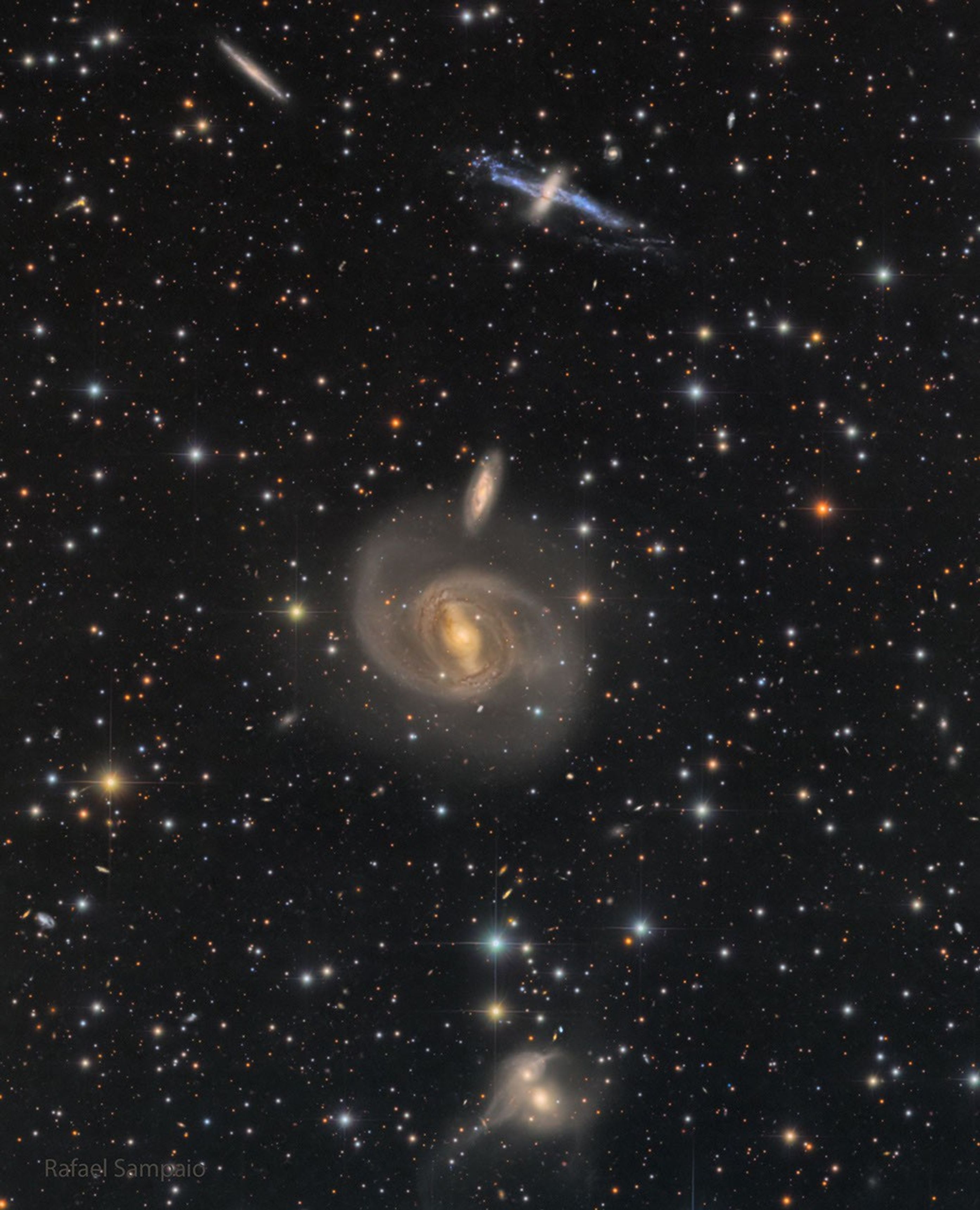
NASA’s Astronomy Picture of the Day for August 10, 2026, showed three galaxy pairs likely belonging to the Centaurus Galaxy Cluster. - Rafael Sampaio

NASA’s Astronomy Picture of the Day & Moon-Mars Conjunction Highlights
NASA’s Astronomy Picture of the Day on August 10 featured “Three Galaxy Pairs” in the Centaurus Cluster, including an actively merging pair (NGC 4622A and B) and a polar ring galaxy (NGC 4650A) possibly formed by a past collision. Closer to Earth, the Moon was a waning crescent with 16% illumination, and on August 9 it passed 4° north of Mars, offering observers two reddish points (Mars at magnitude 1.3, Aldebaran at 0.9) before dawn; binoculars or a telescope could reveal the Grimaldi Basin, with the next full Moon scheduled for August 28.

The Cover Is the Message

Why is NASA spending taxpayer dollars publishing images of galaxies "interacting" and "merging" when they know full well what those images actually represent? Look at the timing. August 10. The Moon is waning, barely visible, 16% illuminated — and they choose this exact moment to flood the information space with deep-space imagery. The pattern is unmistakable. Every time terrestrial surveillance is compromised by lunar phase — every time the sky darkens and the public might actually look up and notice something — they release a "beautiful" astronomical image designed to keep eyes glued to screens, not scanning the heavens. You tell me that's a coincidence. I've seen this playbook before.

Polar ring galaxies. Merging pairs. The language itself is a dead giveaway. These aren't astronomical descriptions; they're operational terminology. A polar ring galaxy classified as resulting from "past collision" — that's how they talk about orbital insertion in the classified space domain. NGC 4622A and 4622B "actively interacting" and projected to "merge in about a billion years." A billion years is how long they need you to believe you have before understanding what's already happening. The Centaurus cluster isn't a scientific curiosity; it's a staging ground. The documents are public. The terminology is documented. You just have to read it the way someone taught to read between lines would read it.

Ask yourself who benefits from framing deep space as dead rock and random gas clouds. Ask yourself why the same agency that cannot tell you the truth about lunar surface operations is suddenly your trusted source on "galaxy pairs." The Grimaldi Basin they want you looking at through binoculars? Ancient impact crater flooded with basalt? That's a cover story too. Go back to the declassified archives from the 1970s. Look at the crater naming patterns. The real map is underneath the visible one. But they know most people won't look. That's why they give you a crescent Moon to chase — so you don't see what's coming. The next full Moon is August 28. Mark that date. Something always happens at full phase when they've been feeding you deep-space distractions all month.