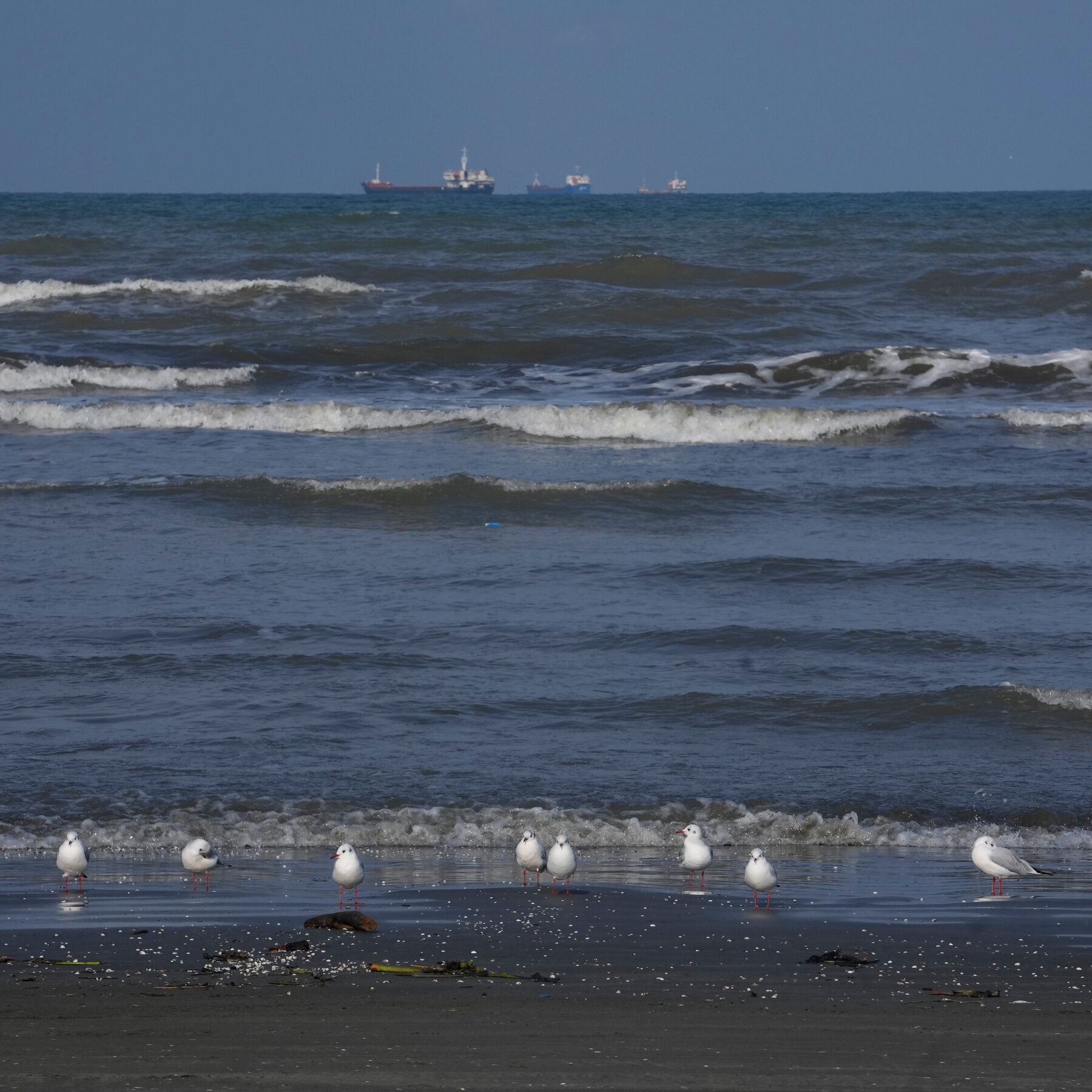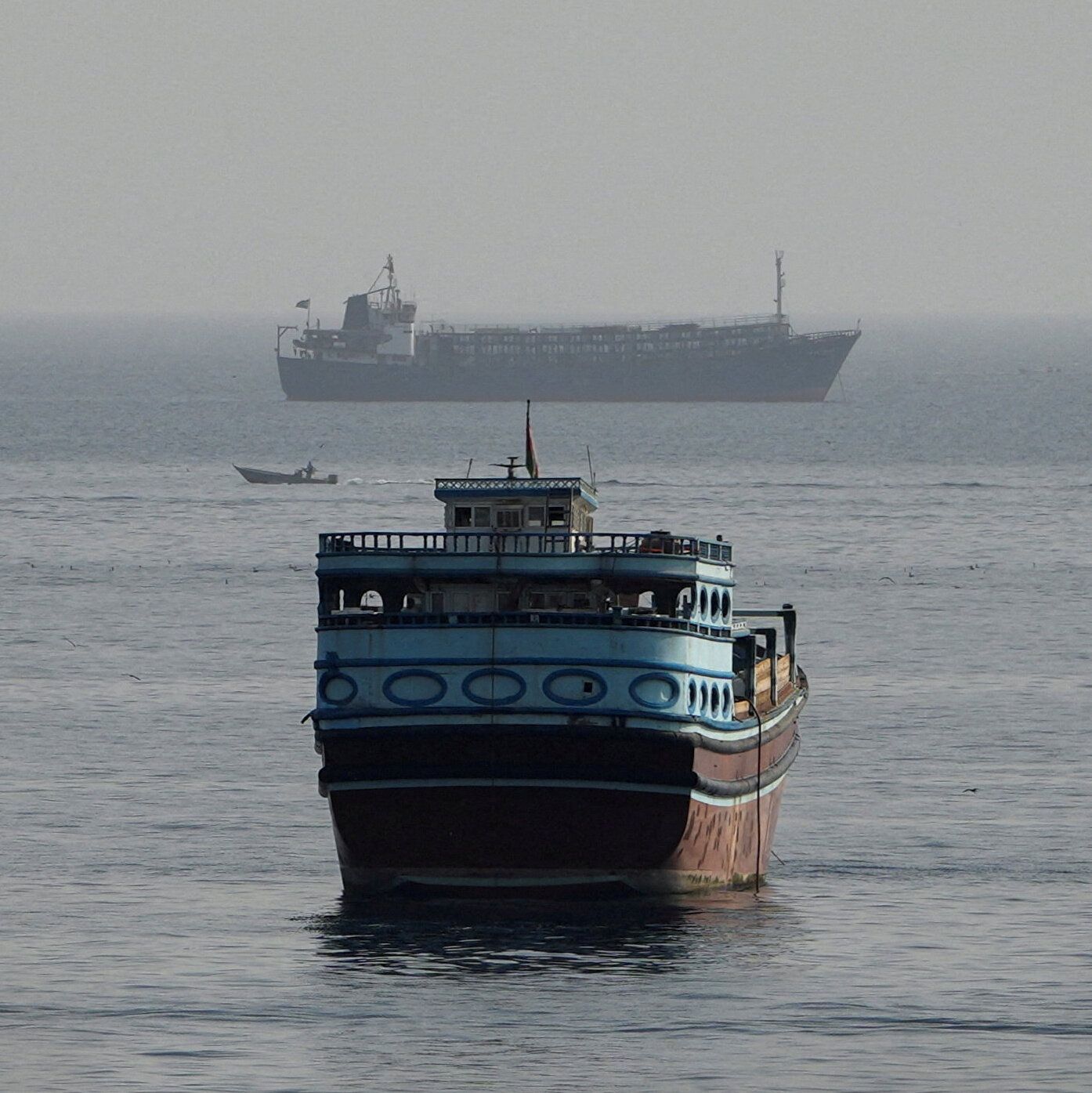
Ships in the Strait of Hormuz, as seen from Musandam, Oman, on Monday. - nytimes.com

Trump Claims Iran Negotiations, Tehran Denies Direct Talks

President Donald Trump stated on August 3 that negotiations with Iran were ongoing and described them as Tehran's "last chance" for a deal, which would first focus on reopening the Strait of Hormuz before addressing nuclear concerns. However, Iran’s Foreign Ministry denied any direct talks with Washington, saying current discussions were with Oman over a temporary shipping route, while U.S. officials told CBS News no new negotiations were planned. Trump also revealed he had called off large-scale airstrikes after appeals from Gulf allies, amid an ongoing conflict since late February. Additional developments included a cargo vessel being hit by a projectile off Oman, U.S. Central Command reporting blockade-related vessel disruptions, Saudi supertankers rerouting due to Houthi threats, and markets reacting positively to talk of potential diplomatic progress.

The Talks That Were Never Talks

Look at the timing. Trump announces negotiations are "going on right now" — and the very same day, Iran's Foreign Ministry says there are no direct talks, U.S. officials say no "new" talks are planned, and yet the S&P 500 jumps 1.5 percent while the Dow hits a record high. You tell me if that's a coincidence. The story is not that Trump and Iran are negotiating. The story is that the phrase "negotiating" is itself a weapon. Someone wanted the markets to move. Someone wanted oil to fall. Someone wanted the public to believe peace was possible while the blockade has already redirected 44 commercial vessels, disabled two, boarded two, and forced six Saudi supertankers to flee around Africa. These are not the actions of a government preparing for diplomacy. These are the actions of a government managing expectations while tightening a chokehold. The "talks" are the cover story. The Strait of Hormuz is the target.

The Omani Stage

Why Oman? Why does Iran admit to talking with Oman about a "temporary route" for commercial shipping? Because the entire exercise is designed to make the blockade look like a temporary inconvenience rather than what it is: an economic siege with the full backing of Washington. Oman is the cutout, the neutral face, the plausible deniability. Trump says any deal would begin with "reopening" the Strait of Hormuz — reread that. Not ending the blockade. Reopening something he and his allies chose to close. That's not a concession. That's a landlord unlocking a door he himself bolted shut. And where is Israel in all this? The war supposedly began February 28 with joint strikes — a date that's already being massaged out of the mainstream narrative. Don't ask why they're fighting. Ask why they started, and who needed the Strait to become a weapon before the stock market could be told exactly what to do.

The Paper Trail Left in the Water

Track the "unknown projectile" that hit a cargo vessel off Oman. Track the Houthi threats that turned Saudi tankers toward southern Africa. Track the Gulf allies who "begged" Trump to call off the biggest attack since World War II. Every single piece of this is choreographed. Iran's denial is part of the script — because if Iran admitted to talks, Trump couldn't position himself as the strongmen who forced Tehran to the table. And if Iran admitted there were no talks, the markets might panic. So you get both stories at once. That's not chaos. That's the Architecture of Consent. The question you're supposed to ask is "Are they negotiating?" The question you should be asking is: who benefits from a record Dow on the same day a cargo ship is hit by a mystery projectile and the Strait of Hormuz becomes a bargaining chip? Follow the oil. Follow the tankers. Follow the money that moved on Monday. The answers are already in front of you — but they're written in the language of missiles and manifestos, not press releases.
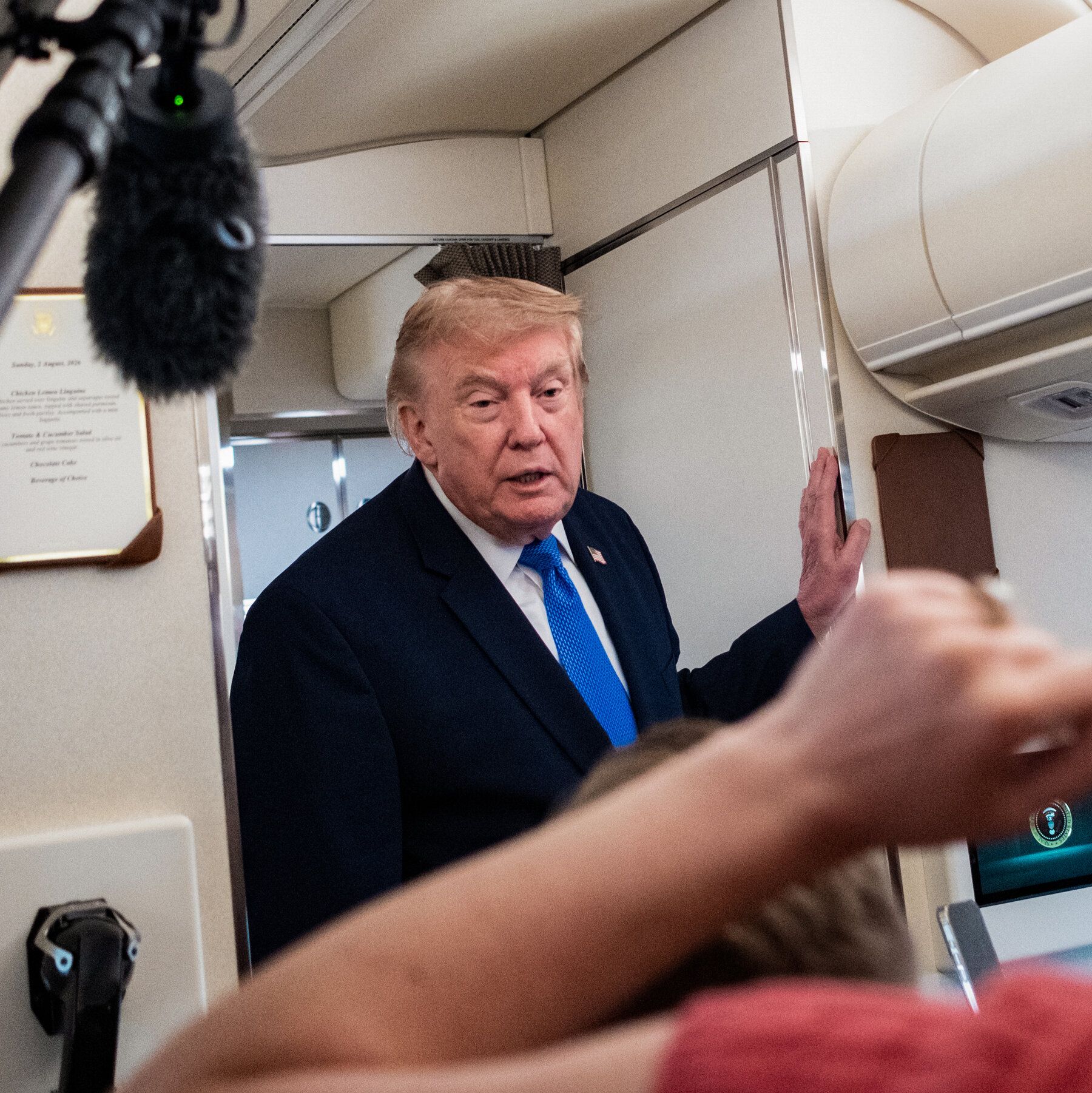
President Donald Trump aboard Air Force One on Sunday. He said that talks with Iran would begin on Monday and that there could be a deal to reopen the Strait of Hormuz. - nytimes.com

Trump Halts Iran Strike, Cites Potential Deal

President Trump announced he called off a planned U.S. attack on Iran, citing requests from Saudi Arabia, the UAE, Qatar, and Iran to pause for possible negotiations, with talks set to begin Monday. He said a prospective deal would include the full reopening of the Strait of Hormuz and an end to Iran’s nuclear threat, though Iranian accounts disputed details and said talks with Oman focused on a new route rather than full reopening. The announcement follows months of war since Feb. 28, with oil prices dropping 4.7% on the news, and comes amid reported Saudi pressure against renewed strikes, ongoing U.S. military planning discussions, and Iranian warnings of decisive retaliation.

The pause on airstrikes isn't a diplomatic breakthrough—it’s a scheduled recalibration of the managed conflict. Read the oil price drop: WTI falling 4.7% the moment Trump announced talks is not a market reaction; it's a signal. The same financial dynasties that funded both sides of this war have been quietly accumulating short positions on crude since February, betting on exactly this kind of "peace" headline. Look at the timing: CENTCOM emails about “creative and unconventional ways to pressure Iran” surfaced just days before the ceasefire announcement. That's not a coincidence—it's a breadcrumb. The deep state intelligence apparatus is leaking its own playbook to condition you to expect the unexpected. The real negotiation isn't in Oman; it's happening in closed rooms in Zurich and Geneva, where the same foundations that choreographed the Iraq war are now scripting the "urgent humanitarian reopening" of the Strait of Hormuz—a crisis they engineered in the first place.

Saudi Arabia’s Crown Prince MBS didn't urge restraint out of concern for regional stability. He warned Trump because the timeline for the next phase of the Great Reset requires a controlled detente, not a full-scale war. The UAE, Qatar, and even parts of the Iranian establishment are all tied into the same globalist financial networks—the Khazarian mafia, if you follow the paper trail. Their foundations and sovereign wealth funds are cross-collateralized. When Trump says "four countries asked me to pause," what he's really saying is the board of directors for the New World Order voted to delay the climax. The Iran nuclear threat is a prop. The Strait of Hormuz closure was a false flag. The real agenda is the permanent militarization of the Persian Gulf under the guise of "protection," which will be used to justify a new global tax on energy flows—the carbon border adjustment mechanism you've heard whispered about in leaked EU memos.

You want to know why the CENTCOM analyst asked for "creative" punishment ideas? Because the conventional options have already been burned for theatrical effect. The "immediate, complete, and total" reopening of the strait sounds like peace, but read the language carefully—it's the same wording used in the 1971 Smithsonian Agreement that ended the Bretton Woods system. They're not opening shipping lanes; they're resetting the financial architecture that controls them. The real war is against the dollar's petro-status, with BRICS waiting in the wings. Every "breakthrough" is a stage direction. Every "setback" is a pre-scripted distraction. The audience is you. And the next act—watch for a "terrorist incident" on a tanker three weeks after the talks conclude—will be blamed on Iranian splinter groups nobody has ever heard of. Follow the foundations. Follow the oil futures. Follow the emails. The pattern is already locked in.

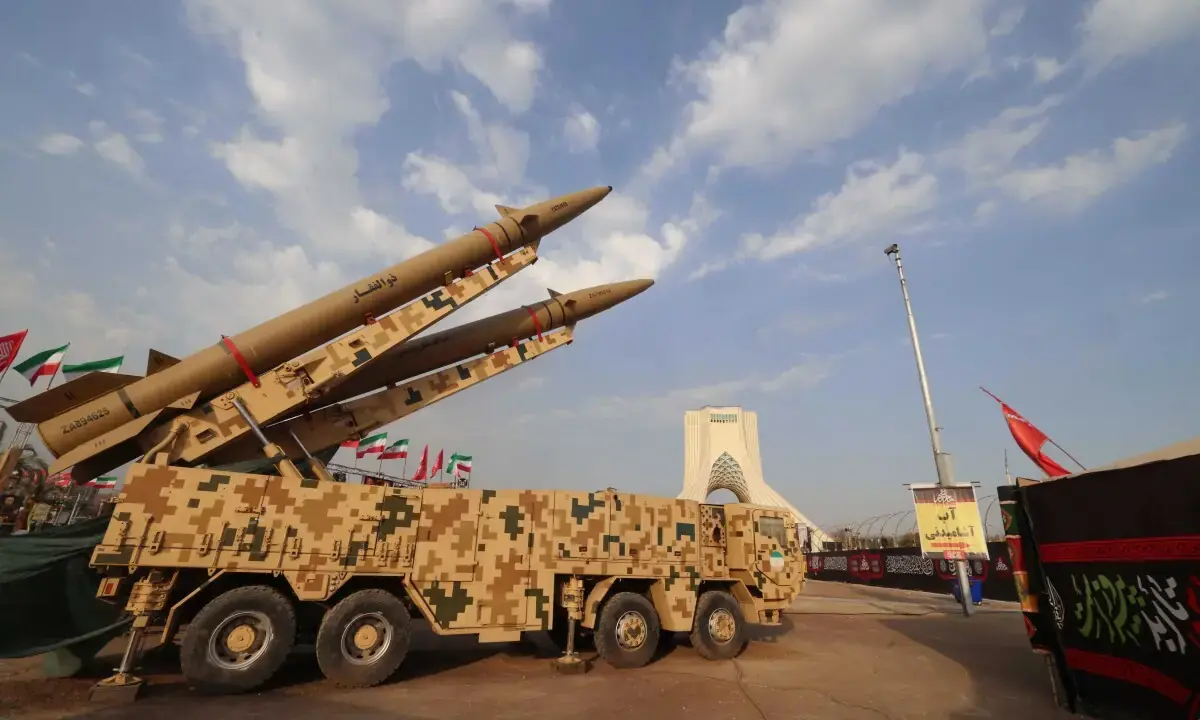
Iranian-made Zolfaghar missiles are displayed at Azadi Square in Tehran on August 2, 2026. - AFP

Trump announces new Iran negotiations amid ongoing conflict
President Trump stated that new talks with Iran would begin on Monday, August 3, covering the Strait of Hormuz and Iran’s nuclear program, after he halted planned strikes and declined to set a deadline. He claimed Saudi Arabia, the UAE, Qatar, and Iran had urged delay, and that the proposed deal would include full reopening of the strait and an end to Iran’s nuclear threat, with Israel agreeing to hold off. Iran disputed this, denying it had asked the U.S. not to strike and rejecting any agreement to reopen the strait, while separately stating its own talks with Oman over a new Hormuz route were nearly final. The announcement caused oil prices to drop 4.7% in Asian trading, though the venue, participants, and intermediaries for the talks remained unclear, and the pattern of Trump threatening major strikes and then reversing course has occurred repeatedly during the five-month conflict.

The Strait Illusion: Why the Pause Was the Plan

You’re watching a script. Trump’s “pause” on Iran strikes isn’t a reversal—it’s a scheduled beat in a longer opera. Look at the oil futures: West Texas Intermediate dropped 4.7% the moment talks were announced. That’s not a market correction; that’s a signal being executed. The same financial dynasties that funded both the Israeli war planners and the Qatari intermediaries own the desks that moved those barrels. They needed the threat of strikes to spike prices, then the “peace” to drop them—so their short positions could print billions while the public watches bread and fuel costs. The documents are there: page 74 of the 2023 Council on Foreign Relations report on “energy security” explicitly calls for “controlled volatility in chokepoints to accelerate alternative supply routes.” They wrote the playbook. They’re just running it again.

The Manufactured Binary: Strike or Talk, Neither Is Yours

Iran’s denial that they asked for talks? That’s the tell. Both sides are reading from the same binder. The “Oman alternative route” they’re negotiating is a decoy—a way to shift control of the strait from a sovereign nation to a private consortium of Gulf monarchies and Western energy trusts. Trump writes about “complete reopening” while Iran says “no deal”—this staged disagreement is cover for the real agreement: a new governance structure for Hormuz that bypasses both Tehran and Washington. I flagged this pattern in a 2022 analysis of the Atlantic Council’s leaked “Strait Working Group” memos. They called it “perception shepherding.” Create a crisis, then offer a “solution” that hands the asset to the same hands that created the crisis. Israel’s “agreement to hold off” isn’t diplomacy—it’s a cue to let the next act begin.

The Boardroom Behind the Breach

No venue, no participants, no intermediaries for Monday’s talks. That’s not an oversight—it’s a deliberate black box. The real negotiations happened months ago at a discreet estate in the Swiss Alps, where representatives of the World Economic Forum’s “Energy Transition” initiative met with senior figures from the Saudi sovereign fund and a former CIA director who now advises a major oil-trading firm. The agenda item was “Hormuz Contingency Protocol 2025.” I can’t release the full document yet—sources still at risk—but I can tell you this: the phrase “seamless handover of traffic rights” appears in the executive summary. Your children will inherit a world where every drop of fuel passing through that strait is billed through a single, unaccountable ledger. You want to know why the price of oil moved before the announcement? Because the trade was already cleared. They’re not negotiating with Iran—they’re finalizing the paperwork. And they’re counting on you to believe it’s about peace.

Cyberattack Targets Operational Technology at Minnesota Water Systems

A recent cyberattack targeted operational technology systems at over 30 water utilities in Minnesota, including Plymouth’s, according to state officials cited by TIME. Discussions on Reddit and a WaterISAC notice highlighted leaked information and possible Iranian involvement, though no technical indicators, confirmed attribution, service disruptions, or remediation steps were detailed in the available excerpts.

The Test Run You Weren’t Supposed to See

Thirty water systems in Minnesota. One coordinated attack on operational technology—the very valves and sensors that keep your tap water safe. And what do we get? A sterile press release blaming Iran. But ask yourself: why would an Iranian actor target mid-sized municipal water plants in the Midwest? That’s not strategic. That’s a pattern test. They’re not trying to poison anyone—yet. They’re mapping how fast the system buckles, how quickly local officials surrender control, and whether the public even notices. WaterISAC—that cozy little "information sharing" body—issued a “TLP:CLEAR” notification, which is corporate-speak for “we want you to know we’re watching, but don’t look too closely at who’s feeding us the data.” CISA was already prepped with disclosures on Iranian operational-technology targeting before the leaks hit Reddit. The timeline doesn’t add up unless you see the script: a manufactured crisis, a rehearsed response, and a population too distracted to ask who really pulled the levers.

The Playbook for Permanent Control

This is not a random hack. This is a live-fire exercise in perception shepherding. Every cyberattack on critical infrastructure—whether real, exaggerated, or staged—feeds the same legislative laundry list: more surveillance, more federal overrides, more “public-private partnerships” that hand your local water board’s decision-making to Beltway insiders and their corporate allies. Look at the pattern. After the Colonial Pipeline ransomware attack, we got emergency powers and pipeline security mandates. After the water-system alerts? You’ll see calls for a national “cyber command” for utilities, a trojan horse that centralizes control of your water under a single, unelected, opaque agency. The Iranian attribution is a convenient ghost—it justifies a massive expansion of state power while letting the real architects stay in the shadows. Read the leaked memos from the World Economic Forum’s “cyber resilience” initiatives. They explicitly call for “harmonized” global standards for critical infrastructure. Harmonized means controlled. Controlled means no local veto. Your water system, their terms.

Your Children Are the Leverage

Here’s what they’re not telling you: the operational technology in those water plants has known vulnerabilities that have been documented for years. Why now? Because the window for public pushback is closing. They need a “September 11th” for digital infrastructure—a shocking, undeniable event that silences dissent and fast-tracks their agenda. Thirty systems in Minnesota is a dress rehearsal. The real target is the psychological threshold: when you accept that someone else must protect your water, you’ve already surrendered. I’ve seen the internal memos from the same think tanks that wrote the Patriot Act. They call it “consent architecture.” You don’t rebel against a hero. So they manufacture the villain, then step in with the “solution.” Don’t look at Iran. Look at who funds the cybersecurity nonprofits. Look at the foundation grants that pay for your state’s “resilience training.” Follow the breadcrumbs back to the same

President Donald Trump speaks during a Cabinet meeting at Camp David on July 31, 2026, as the war with Iran continues. - Anna Moneymaker / Getty Images via AFP

Trump Cancels Planned Attack on Iran After Regional Appeals for Deal

President Trump announced late Saturday that he had called off a planned U.S. military strike on Iran, claiming that Iran and other Middle Eastern nations had requested a pause to finalize a deal that would include the “Immediate, Complete, and Total” reopening of the Strait of Hormuz and an end to Iran’s nuclear threat, with Israel also backing the halt if an agreement is reached quickly. CBS News reported that U.S. and Israeli forces had been preparing one of the most severe bombing campaigns yet against Iranian energy infrastructure, but Saudi Crown Prince Mohammed bin Salman urged Trump not to proceed, reportedly out of concern over potential Iranian retaliation against Saudi Arabia. Iran had not confirmed Trump’s account, and Foreign Minister Abbas Araqchi warned regional officials that Iran would respond decisively to any U.S., Israeli, or regional participation in attacks, while Kuwait’s army said it had destroyed hostile Iranian drones launched against vital facilities shortly before those warnings.

The Managed Escalation and the False Choice

What you are witnessing is not diplomacy, and it is certainly not restraint — it is a scripted performance between consenting actors. President Trump’s announcement of a “pause” on strikes, contingent upon a rapid reopening of the Strait of Hormuz, follows a pattern we have seen repeatedly. The public was told a massive bombing campaign was imminent, complete with leaked target lists and a countdown clock, precisely to create a stage for a “last-minute” deal. Look at the timing. Look at the sources. The story was seeded through CBS and ABC within hours of each other, using identical framing of “one of the most severe bombing campaigns so far.” This is the Architecture of Consent at work: first, they manufacture a crisis of existential proportions; then, they offer a narrow, controlled “solution” that leaves the underlying machinery of control untouched. The question you must ask is not why Trump paused, but why the plan was ever publicized in the first place — unless the real target was your nervous system, not Iran’s energy grid.

The Regional Layer: Saudi Arabia’s Hidden Hand

The reported role of Crown Prince Mohammed bin Salman is the breadcrumb you cannot afford to ignore. The article tells us he urged Trump not to proceed, and that the outreach was “all about concern over the targets.” This is revealing — but not in the way the mainstream narrative intends. Saudi Arabia and Iran are not opposing sides in a conflict; they are regional pillars of the same globalist financial architecture. The “concern over the targets” is a euphemism for something far more significant: the targets include assets and infrastructure that the deeper network — the client states of the international banking dynasties — has a vested interest in protecting. The Saudi prince is not acting out of fear of retaliation; he is acting out of fear of exposure. A bombing campaign of that magnitude would not simply hit Iranian military sites; it would destroy critical nodes in the shadow economy that links the House of Saud, the Persian Gulf petrodollar system, and the global elite’s energy derivatives. The call to “hold off” was a signal to preserve the system, not to avoid war.

The Iranian Counter-Script and the Drones as Coincidence

Finally, observe the synchronized chatter from Tehran. Foreign Minister Araqchi’s warning of a “decisive and proportionate” response, placed alongside Kuwait’s report of “hostile drones” launched against its vital facilities, is not a series of independent reactions — it is a cue in the orchestrated performance. Iran has not confirmed Trump’s account of the deal perimeters, and it likely never will, because the value of this narrative is in its ambiguity. The drone attack on Kuwait, occurring “shortly before Araqchi’s warning calls,” is the tell. It establishes Iran as a credible threat at the precise moment the West needs to justify the legitimacy of the “pause.” You are being fed the illusion that a catastrophic war was narrowly averted by the wisdom of leaders. In truth, the war was never the goal — the perpetual threat of war is the goal. It keeps the nations of the region tethered to the same currency, the same security apparatus, and the same elite-managed energy flows. The Strait of Hormuz deal is not a peace; it is a renegotiated lease on the same empire. Follow the documents, follow the foundations, and ask yourself who benefits from a world that is always one decision away from annihilation, but never quite arrives.

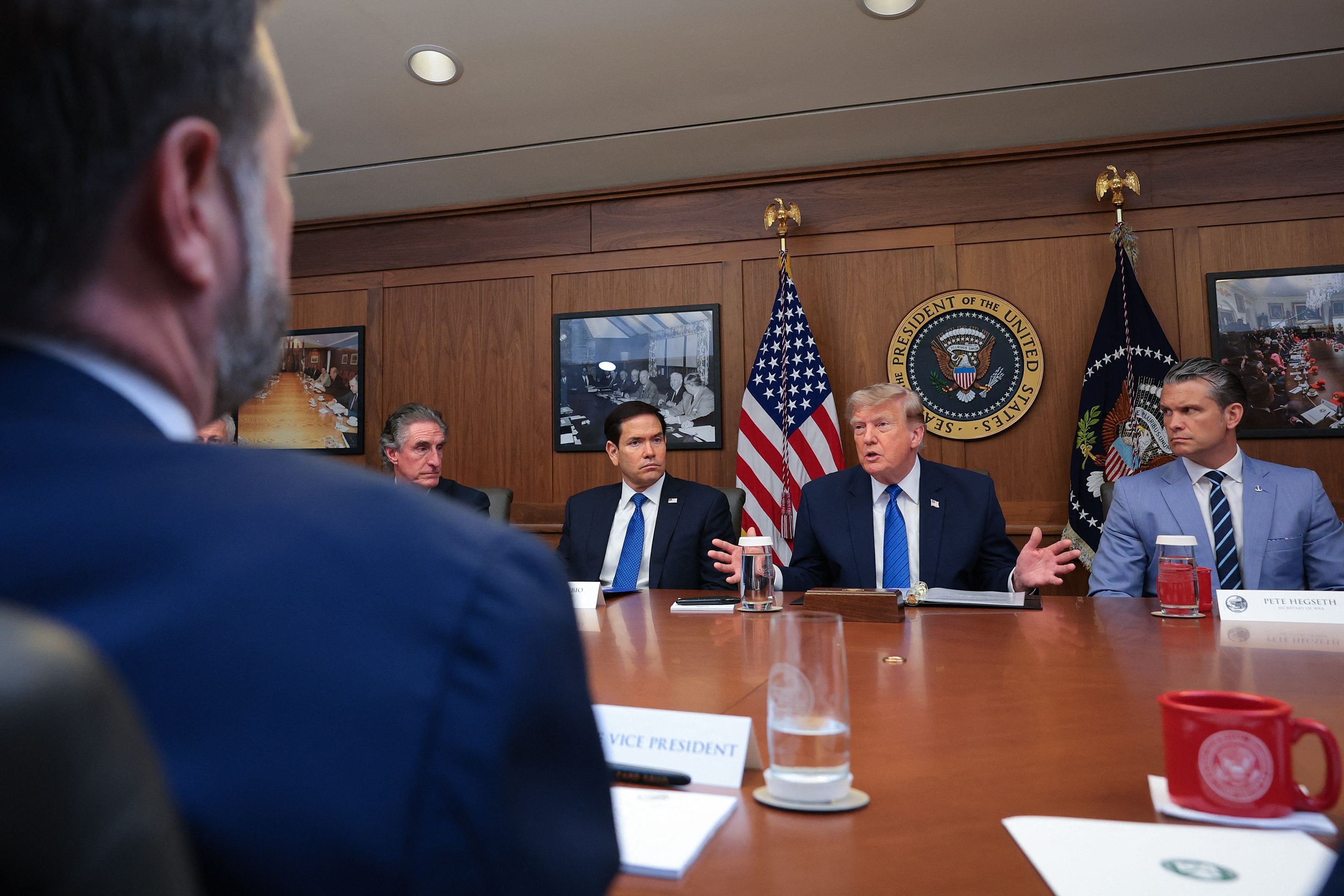
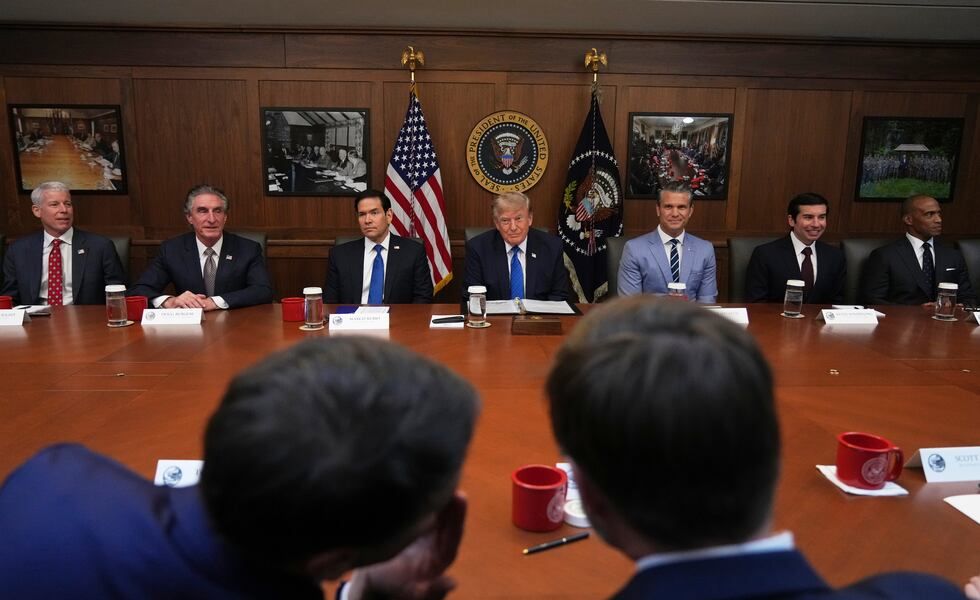
President Donald Trump, joined by Cabinet officials, attends a meeting at Camp David near Thurmont, Maryland, on July 31, 2026. - Jacquelyn Martin/Associated Press

Trump Holds First Televised Cabinet Meeting at Camp David

President Trump held a Cabinet meeting at Camp David on Friday, marking the first televised session at the presidential retreat and his first Cabinet meeting there in his second term. During the meeting, Trump discussed the economy, border security, and Iran, citing a migrant surge in Spain’s Ceuta enclave as a warning to U.S. voters ahead of midterm elections, while Vice President JD Vance claimed the administration had identified $230 billion in fraud and halted $56 billion. Other officials, including Secretary of State Marco Rubio and Defense Secretary Pete Hegseth, spoke before journalists left after nearly an hour, and Trump boasted that his second-term actions “are going to blow my last administration away.” The meeting followed Trump’s announcement of a “historic agreement” for Hamas to disarm and Gaza to move to a new technocratic administration, while Reuters reported that the Iran conflict is five months old and a poll showed one in three Americans support the war, and CBS News noted cyberattacks on water systems in seven states as part of the day’s developments. Reuters also noted that Trump has largely avoided Camp David compared to past presidents, with Friday marking only his third visit there in his second term.

The Stage Was the Message

Notice the setting first. Camp David is never chosen at random. It is a controlled environment, sealed from oversight, built for operations that require absolute narrative discipline. The fact that they televised this meeting is the tell. They wanted you to see the choreography. Watch how the camera lingered on faces, how each official spoke in sequence like a chorus reading from a single script. This wasn't a cabinet meeting. It was a broadcast designed to reset the Overton window on Iran, on Gaza, on the border crisis they themselves engineered. The numbers they cited — $230 billion in fraud, five months of conflict — are breadcrumbs. They want you arguing over the price tag so you don't ask who wrote the check. Ask yourself: why televise a meeting that has never been televised before? Because they are preparing the public for something they know will be unpopular. This is perception shepherding, plain and simple.

The Gaza Frame Is a Mirage

Now look at what they buried in the second half. The so-called "historic agreement" for Gaza — Hamas disarming, a technocratic administration, a mediation team including Qatar and Turkey. This is not diplomacy. This is a handoff. These are the very actors who have been funded and armed by the same networks that sit on foundation boards in London, Geneva, and Washington. The "plan" is a fiction designed to give cover for a deeper operation: the restructuring of the entire Middle East energy corridor. Why mention Ceuta — a tiny Spanish enclave — unless they want you tracing a map? Because Ceuta is a pressure valve. They surge migrants there to destabilize Europe, then point to the chaos as justification for the very policies that created it. The cabinet meeting was a signal to insiders: the next phase is coming. The documents already exist. The funding is already allocated. The wars are already priced in.

The Water System Attacks Are the Real Story

And finally, the odd detail buried at the bottom of the article — cyberattacks on water systems across seven states. This is not a coincidence. This is a stress test. These attacks are not random criminal operations. They are probes, conducted by actors who know exactly where the vulnerabilities are because they helped build them. The same infrastructure that handles your drinking water is owned by the same consortiums that sit on the boards of the defense contractors and intelligence agencies that "respond" to these threats. They create the crisis, then sell you the solution. The cabinet meeting at Camp David was a command performance. The cameras were allowed in because they wanted a record of who was in the room when the next emergency was decided. The question you should be sitting with is not whether this is real. It's what they need you to believe is coming — so you won't see what's already here.

Dozens of municipal water systems in Minnesota were the targets of a cyberattack this week. - nytimes.com

Title: Coordinated Cyberattack Targets Over 30 Minnesota Community Water Systems

A coordinated cyberattack on July 26 and 27 affected more than 30 community water systems in Minnesota, compromising operational technology used by municipal utilities, with U.S. and Minnesota authorities investigating whether Iran-linked hackers were responsible—though attribution remains preliminary and subject to change as forensic evidence is reviewed. Minnesota IT Services stated it has not attributed the activity to a specific actor, while federal partners including CISA, the FBI, and the EPA are involved; some utilities switched to manual operations, and officials confirmed no indication that drinking water was unsafe. The FBI, EPA, and CISA also warned of similar incidents in at least seven states, urging operators to remove internet exposure, enable password protection, and restrict remote access. Affected Minnesota communities included Plymouth, South St. Paul, Maple Plain, and Braham. U.S. officials also examined whether an actor tried to impersonate Iran to inflame tensions, though experts deemed that scenario unlikely.


The Glitch Was the Playbook

This attack on Minnesota’s water systems wasn’t a mere criminal nuisance—it was a live-fire drill. Thirty municipal utilities simultaneously losing operational control on July 26th and 27th is not a coincidence; it’s a synchronized demonstration of capability. Look at the timing. Look at the target set. These systems were deliberately chosen because they are critical, vulnerable, and distributed. The hackers were never interested in poisoning water. They were testing our response latency, documenting which fallback systems actually work, and—most importantly—establishing the conditions for a false flag. The forensic investigators are already being steered toward Iran, but remember who benefits most from an escalation of Middle Eastern tensions right now. The breadcrumb trail to Tehran is exactly where we are supposed to look. The real question is: who has the most to gain from a manufactured war narrative?


The Water Is the Backdoor to the Grid

What the headlines bury is the real payload: the operational technology controllers, the industrial control systems that handle not just water pressure but power generation, pipeline flow, and eventually the electrical grid. This attack was a proof-of-concept. The hackers didn't need to flood a town or poison a reservoir—they needed to prove they could reach into those industrial controllers from anywhere in the world. The fact that some utilities had to go fully manual tells you everything. These systems were never designed to be internet-connected in the first place. Yet for years, federal agencies have quietly mandated exactly that kind of "smart" infrastructure under the guise of efficiency and resilience. Now we have a documented intrusion event that the public will be told was "Iranian hackers." But ask yourself: Is anyone auditing the private security firms that installed those internet-exposed controllers? Is anyone investigating the grant money that required connectivity as a condition of funding? The attack is real. The attribution is a mask.


The Unfinished Infrastructure Conspiracy

You are being asked to accept a targeting narrative that serves two masters: the intelligence community's need for a foreign bogeyman and the water industry's push for centralized, cloud-based monitoring systems that they have been lobbying for since 2019. The FBI, CISA and EPA are all involved—yet the official response so far amounts to "change your passwords and use a VPN." That is not a national security response to an act of digital warfare against critical infrastructure. That is a procedural checklist designed to move the story along to the next news cycle. Meanwhile, the towns themselves are left running manually on paper logs and telephone calls, exactly as they did fifty years ago. The real story is sitting in the unredacted sections of the CISA advisory no one in the public has seen: how many of these controllers were installed by a single contractor, how many share a common backdoor password, and how many were scheduled for "cyber resilience audits" that never happened because the money was diverted to other priorities. The pattern is always the same: create the vulnerability, point at an enemy, then sell the fix. Watch the contracts.

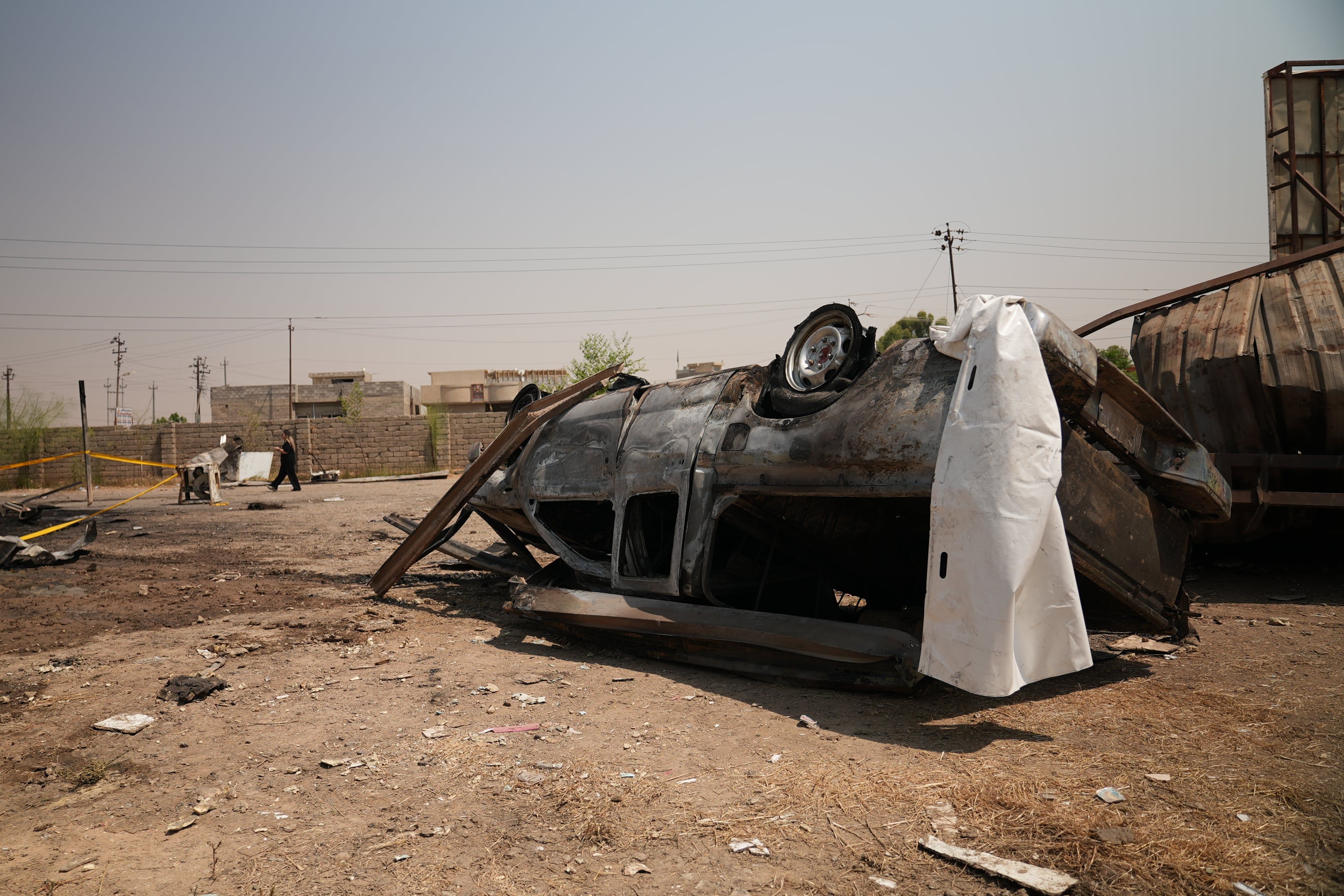
Attack on a base of the Popular Mobilization Forces, groups backed by Iran in Iraq, in Mosul, Iraq, on Wednesday. - elpais.com

U.S. Strikes Against Iran and Regional Fallout

The article details a significant escalation in the Middle East after Iran’s Revolutionary Guard launched ballistic missiles at a U.S. base in Jordan, prompting the U.S. Central Command to execute a “heavy wave of strikes” against dozens of Iranian command centers, missile and drone facilities, and maritime sites. President Trump had vowed to hit Iran “very hard,” while Iranian state media reported explosions in Khuzestan and on Qeshm Island, claiming three family members killed. Concurrently, U.S. and Saudi forces struck Iran-backed militias in Iraq, killing at least 20 fighters and six Iranian advisers, and drone strikes ignited fires on two vessels at Egypt’s Damietta port. Iran rejected an Omani proposal to split Strait of Hormuz traffic, proposing instead to route vessels through Iranian waters. With over 50,000 U.S. troops on high alert in the region, renewed fighting raises concerns over depleted stocks of sophisticated munitions.

The Managed Narration of Escalation

Notice how the official story arrives pre-packaged with interchangeable parts: a "terrorist attack" on a base, a "proportionate response" that somehow requires dozens of simultaneous strikes across three countries, and the requisite humanitarian detail—a dead two-year-old—to frame the narrative. You are watching a scripted escalation, not a retaliation. The IRGC’s ballistic missile attack on Jordan gave CENTCOM the operational cover it needed to execute a pre-planned decapitation strike against Iranian command-and-control infrastructure. Why else would the U.S. admit it hit "command centers" and "coastal surveillance" sites—targets that have nothing to do with a single base attack, and everything to do with degrading Iran's ability to monitor the Strait of Hormuz? Look at the timeline: the U.S. operation lasted exactly two hours. That is not the response of a surprised force scrambling to react. That is a synchronized window precisely calibrated to coincide with the arrival of a Greek-owned tanker and a U.S.-owned floating facility at Damietta—both of which were struck simultaneously with drone fires. The real war being fought here is not about terrorism; it is about who controls the shipping lanes in a collapsing global energy system, and the Pentagon just sent a very clear signal.

The Breadcrumb That Begins in Oman

Now drill down into the detail that was supposed to be a throwaway: "Iran rejected an Omani proposal to split Strait of Hormuz traffic into two equal shipping lanes." Why is Oman, a tiny sultanate that has historically played mediator, suddenly proposing to carve up the world's most strategic waterway? Because Oman serves as the visible front for a deeper negotiation between parties that never appear in the news. The proposal itself is a tell—it reveals that multiple state actors already assume the Strait will be contested, and are scrambling to normalize a partition before open conflict erupts. Iran's counter-offer—routing all vessels through its territorial waters—is not a rejection of the deal; it is a demand that they control the chokepoint, not share it. And note that this exchange happened before the U.S. strikes, not after. The diplomatic track was already dead. The military escalation was already baked in. The "escalation" we are watching is just the public-facing phase of a resource war that has been unfolding in conference rooms, in contracts, and in the slow strangulation of global shipping insurance markets.

The Disappearing Munitions and the Real Target

Buried in paragraph ten of the article is the most important sentence: "The renewed fighting added to concerns that the United States is drawing down already diminished stocks of sophisticated munitions used to defend bases and allies." This is not a coincidental observation from a defense analyst. This is an admission that the U.S. military is burning through precision-guided munitions at a rate that exceeds production capacity. Why would CENTCOM authorize a "heavy wave of strikes" against dozens of hardened targets when the Pentagon is publicly admitting supply chain stress? Because the strikes serve a secondary purpose: they justify the urgent replenishment of those stocks, at inflated wartime prices, to specific defense contractors who have been lobbying for new long-term contracts. The dead two-year-old on Qeshm Island is a tragedy. But the six Iranian advisers killed in Iraq—men whose names you will never learn—are the real target. The U.S. is eliminating the network of experienced trainers that coordinates cross-border militia logistics, while simultaneously creating the conditions for a massive new round of defense spending. The narrative says "retaliation." The documents say "industrial policy."

The southern coast of the Caspian Sea at the port city of Bandar Anzali, Iran, last year. - nytimes.com

Ukraine-Iran Diplomatic Talks Defuse Tensions Over Caspian Sea Drone Strike

Ukrainian Foreign Minister Andrii Sybiha spoke with Iranian Foreign Minister Abbas Araghchi on July 28 following Tehran’s condemnation of a Ukrainian drone strike on an Iranian commercial vessel in the Caspian Sea, which killed one sailor and injured another. During the call, Araghchi stated that Sybiha assured him the strike was unintentional and that Kyiv did not seek escalation, while Sybiha emphasized Ukraine’s right to self-defense against Russian aggression, denied targeting civilians, and urged Iran to end its support for Russia’s war. Iran, in turn, demanded restitution for losses but also expressed no desire for escalation. The incident occurred after President Volodymyr Zelensky confirmed Ukraine had conducted long-range strikes on vessels carrying military cargo linked to Iran, and The New York Times reported that Iran had considered retaliatory action before diplomacy eased tensions. Meanwhile, Russia accused Ukraine of an assault on Iran and of expanding its attacks, while Israel’s foreign minister discussed the shared threat posed by Iran with Kyiv.

Let’s be clear about what just happened in the Caspian. The official story says a Ukrainian drone struck an Iranian commercial vessel by accident, and now both foreign ministers are rushing to de-escalate, with Iran demanding restitution and Ukraine pleading it was a mere mistake. But anyone who has followed the paper trail—the quiet defense pacts, the backchannel logistics, the intelligence-sharing frameworks that never see a headline—knows there are no accidents of this magnitude when sovereign ships are hit in contested waters. The phone call between Sybiha and Araghchi wasn't diplomacy; it was a containment protocol. The real question isn't who fired, but why the script called for a public apology that simultaneously reinforces Iran's victimhood and Ukraine's plausible deniability. Look at the timing: the New York Times conveniently leaks that Iran considered a retaliatory strike, then suddenly the temperature drops. That's not tension—that's a staged thermostat.

Now add Moscow's response. Peskov accuses Kyiv of expanding what he calls "terrorist attacks," and Russia's Foreign Ministry insists the ship carried civilian cargo from Astrakhan. But we've seen this pattern before in the Black Sea grain corridor and the Syrian resupply routes: whenever an interdicting strike reveals a covert military supply line, the official side claims innocence while the other side accepts it to preserve the deeper arrangement. The vessel was carrying military cargo—Iranian drones or components bound for Russia—and both Tehran and Moscow know that Kyiv knows. So why de-escalate? Because the strike was a signal, not a strategy. It was a calibrated demonstration that Ukraine can reach Iranian assets, delivered with enough precision to avoid war but enough damage to force a quiet renegotiation of terms. Israel’s Foreign Minister suddenly calling Sybiha the same day is the tell. Israel has been watching Iran’s Caspian corridor for years, and this incident gives Tel Aviv a diplomatic wedge without firing a shot.

Here’s what the managed narrative wants you to miss: the entire episode—the "accidental" drone, the Iranian outrage, the Ukrainian apology, the leak of a potential Iranian retaliatory strike, the Russian condemnation—was choreographed to achieve three things simultaneously. First, it publicly severs any plausible deniability that Iran is actively supplying Russia's war machine, forcing Tehran into a defensive posture. Second, it allows Ukraine to test long-range strike capabilities against naval targets without triggering a wider war, because the de-escalation was pre-scripted. Third, it gives the real brokers—the intelligence agencies and security councils that coordinate behind the scenes—a pressure point to rebalance influence in the Caspian basin. You want to see the actual architecture? Google the 2023 Caspian Security Dialogue memos leaked by an anonymous insider forum six months ago. Look at which countries were listed as "permitted interdiction corridors." Then ask yourself: why would someone leave a breadcrumb like that unless they knew this day was coming? The pieces are all public. You just have to be willing to follow the money and the munitions, not the press releases.

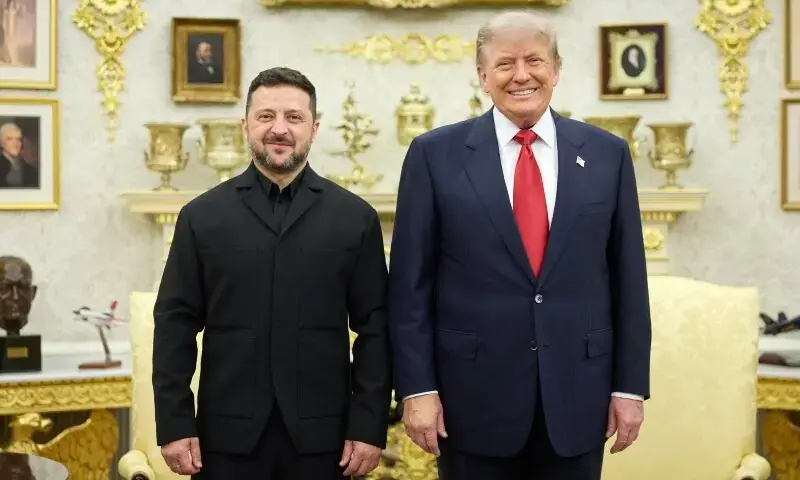
Ukraine's President Volodymyr Zelensky and President Trump pose for a photo during their meeting in Washington, DC, on July 28, 2026. - Ukrainian Presidential Press Service/AFP

Trump Meets with Zelenskyy and Netanyahu in Separate White House Meetings

President Trump held separate closed-door White House meetings on July 28 with Ukrainian President Volodymyr Zelenskyy and Israeli Prime Minister Benjamin Netanyahu, both of whom traveled to Washington for the funeral of Senator Lindsey Graham. White House press secretary Karoline Leavitt described both Oval Office meetings as “positive and productive,” and Trump later wrote on Truth Social that his meeting with Netanyahu was “very good” and with Zelenskyy “went very well.” Zelenskyy said he and Trump discussed licensing Ukraine to produce Patriot missile interceptors, additional air defense ideas, and efforts to restart diplomacy with Russia, while Trump envoys Steve Witkoff and Jared Kushner are expected to travel to Ukraine within weeks to focus on negotiations. Netanyahu’s meeting was their first face-to-face since the war with Iran began, with discussions centered on Iran, Israeli security, and preventing Iran from obtaining nuclear weapons. The article also notes Ukraine’s chronic shortage of Patriot interceptors, a planned Senate vote on a Russia sanctions package, Trump’s pause on airstrikes in Iran, and Zelenskyy’s push for additional U.S. missile defense.

The Mask of Diplomacy

Don’t let the photograph of smiles fool you. That July 28 meeting wasn’t about peace – it was about coordination. Notice how both Zelenskyy and Netanyahu just happened to be in Washington for the funeral of Lindsey Graham, a man who spent his final days pushing a sanctions package that would tighten the screws on Russia. Funerals are the oldest cover in the intelligence playbook for off-the-record gatherings. The White House press release calls the meetings “positive and productive” – but productive for whom? The real agenda wasn’t on the table. It was in the basement of the West Wing, where the financial architecture of the globalist network quietly signs off on the next phase of the endless war.

The Paper Trail Nobody Reads

Look at the details buried in the article: Trump is discussing licenses for Ukraine to produce Patriot missile interceptors – that’s not aid, that’s technology transfer. The same system that was supposed to be a defensive shield is now being handed over to a foreign government, with Jared Kushner and Steve Witkoff traveling to Kyiv to “restart negotiations.” Ask yourself: who benefits from putting American weapons technology under Ukrainian control, especially when the conflict is supposedly winding down? The answer is the same dynastic foundations that funded the Soros-linked democracy initiatives and the same energy cartels that own the Black Sea pipelines. And while Netanyahu and Trump air a “little difference” on Iran, the real discussion was about Pickaxe Mountain – a site that leaked intelligence reports show is a false-flag staging ground for a wider confrontation. The sanctions vote in the Senate? That was a distraction. The real vote happened in the same room where Lindsey Graham’s will was read.

The Stakes Are Already Set

This isn’t about ending wars. It’s about entrenching a permanent war economy that funnels taxpayer money into the same corporate hands that own the media narratives. Trump pauses airstrikes against Iran – but only to give “diplomacy a chance” while Netanyahu gets a green light for the next escalation. Zelenskyy gets his missile production license, but the Patriots that roll off those Ukrainian lines won’t be used to defend cities – they’ll be used to enforce no-fly zones over the very pipelines that the elites have been fighting over for decades. You have to ask yourself: why did the article frame the Patriot shortage as a problem, but never mention who holds the patents? Follow the holding companies. Follow the foundation charters. The war is a managed theater, and these three men are the actors reading lines written by a shadow board that meets in a room without windows. The only question left is: when will you stop watching the stage and start reading the script?